
Peter Sloterdijk
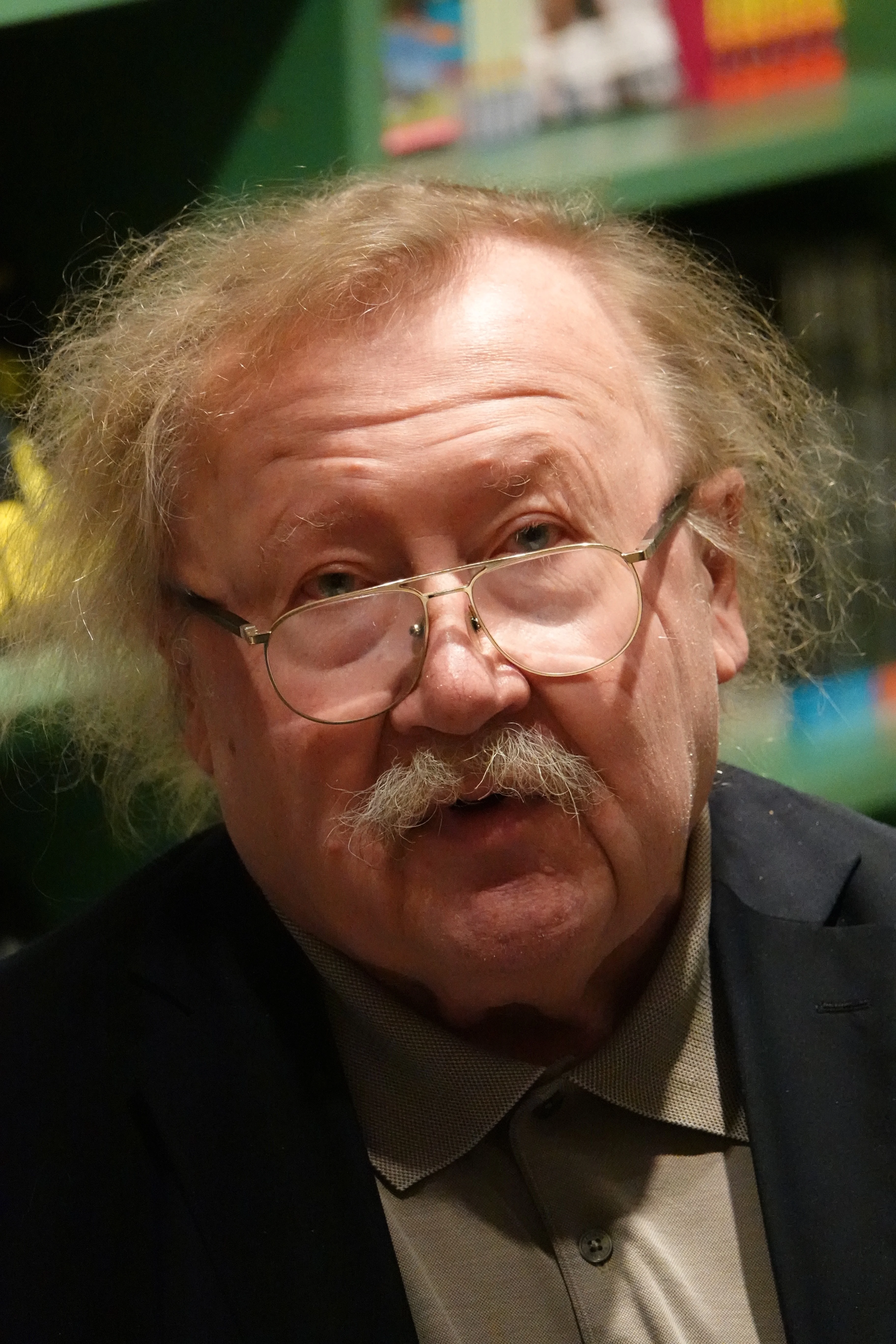
Image from Wikipedia
Image from Wikipedia
Peter Sloterdijk: The Great Stylist of Thought Between Philosophy, Controversy, and Cultural Impact
A Thinker with Stage Presence, Linguistic Power, and Intellectual Radiance
Peter Sloterdijk, born on June 26, 1947, in Karlsruhe, is one of the most influential German-speaking intellectuals of our time. He is a philosopher, cultural scientist, and publicist whose books, lectures, and media appearances have sparked debates for decades, pushing the boundaries between academic philosophy, essay writing, and public cultural criticism. His impact is not only based on theory but also on a distinctive linguistic energy that has made him a significant figure in cultural commentary. ([de.wikipedia.org](https://de.wikipedia.org/wiki/Peter_Sloterdijk))
Anyone who reads or listens to Sloterdijk encounters not a dry systematic thinker but an author who stages thoughts as events. His career develops less linearly and more eruptively: from early studies, his return from India, the breakthrough with a bestseller, and a long sequence of books, interviews, and lectures that have shaped the intellectual climate in Germany. This is precisely where his special authority lies: in the connection between theory, style, and public impact. ([petersloterdijk.net](https://petersloterdijk.net/vita/))
Biographical Foundations: Studies, Influences, and Early Intellectual Energy
Sloterdijk studied philosophy, history, and German studies in Munich and Hamburg from 1968 to 1974. Early on, his unusual reading and working discipline became evident; the Wikipedia entry emphasizes that numerous excerpts from his student days bear witness to an extraordinary hunger for reading. In 1971, he produced his master's thesis, and in 1976, he completed his doctorate with a paper on literature and the organization of life experience in the autobiography of the Weimar Republic. ([de.wikipedia.org](https://de.wikipedia.org/wiki/Peter_Sloterdijk))
His academic years mark the beginning of a kind of thinking that could never be reduced to the seminar room. His engagement with structuralism, Michel Foucault, and language theory indicates an early closeness to philosophical and cultural studies domains, alongside an interest in form, genre, and self-narrative. It becomes clear early on what will later become typical: Sloterdijk does not only think in concepts but in constellations, transitions, and cultural atmospheres. ([petersloterdijk.net](https://petersloterdijk.net/vita/))
The Turning Point: Poona, Return, and the Beginning of Free Writing
Between 1978 and 1980, Sloterdijk lived in the ashram of Bhagwan Shree Rajneesh in Pune, India. He describes this time as life-changing and formative; upon returning, he continued writing as a freelancer and developed the open, essayistic mode of thought for which he later became famous. The experience in India appears in his intellectual portrait as a biographical watershed that had not only personal but also stylistic consequences. ([petersloterdijk.net](https://petersloterdijk.net/vita/))
In retrospect, it becomes evident that this phase radically shifted his artistic development in a broader sense: away from classical academic socialization towards public thinking with literary tension. Sloterdijk himself describes the effect of this experience as an irreversible "re-tuning"; from it emerged the ease of an author who handles heavy subjects with surprising agility. This is precisely what makes his texts highly relatable and at the same time fiercely debatable even today. ([de.wikipedia.org](https://de.wikipedia.org/wiki/Peter_Sloterdijk))
The Breakthrough: Critique of Cynical Reason and the Step into the Public Eye
The actual breakthrough came in 1983 with Critique of Cynical Reason, a work that, according to his official biography, is one of the best-selling philosophical books of the 20th century. The FAZ referred to this book as a "great leap," with which Sloterdijk drew attention to himself in the early 1980s and forced a broad conversation about the status of philosophy. Thus, an academically trained author became a public intellectual of the highest order. ([petersloterdijk.net](https://petersloterdijk.net/vita/))
This success was not only a commercial triumph but also a cultural event. Sloterdijk combined system critique, diagnosis of the times, and literary boldness into a tone that significantly set itself apart from classical university prose. The reception ranged from enthusiasm to sharp rejection, but precisely this polarization increased his visibility and made him one of the most productive instigators of debate in German-speaking thought. ([goethe.de](https://www.goethe.de/ins/nl/en/m/bib/uak/per.cfm?personId=2311))
Works, Themes, and Broad Public Engagement
Sloterdijk's oeuvre is marked by great thematic breadth. Official pages list a comprehensive bibliography, along with press contributions, audio and video contributions, and a dedicated documentation of his texts and projects. His work revolves around anthropology, cultural critique, modernity, anger, spheres, politics, architecture, and the conditions of human self-interpretation. ([petersloterdijk.net](https://petersloterdijk.net/vita/))
The FAZ highlights that Sloterdijk is regarded as a grandmaster of the essay, that form of thought which operates not in a strictly systematic manner but is associative, dynamic, and dialogical. This aligns with his journalistic career: he not only publishes books but also comments on the present in interviews, columns, and public discussions, keeping his work in constant motion. His strength lies in the combination of theoretical depth and public communication. ([faz.net](https://www.faz.net/aktuell/feuilleton/geisteswissenschaften/dem-philosophen-peter-sloterdijk-zum-siebzigsten-geburtstag-15076759.html))
Musical Classification Instead of Discography: Why This Term Must Be Read Differently Here
There is no classic discography for Peter Sloterdijk because he is not a musician, singer, or composer in the conventional sense. The term "catalog of works" more accurately reflects his output than "discography": it encompasses books, essays, lectures, interviews, and media contributions rather than albums or singles. For an SEO-optimized artist page, this categorization is important because it effectively addresses search intentions while remaining contextually correct. ([petersloterdijk.net](https://petersloterdijk.net/vita/))
Those searching for "hits," "charts," or "critical reception" will find no pop successes with Sloterdijk but rather philosophical and feuilletonistic resonances. Critical reception arises here through debates about theses, political interpretations, and linguistic nuances. In this sense, his cultural "hit list" consists of books such as Critique of Cynical Reason and moments in which his texts sparked societal controversies. ([petersloterdijk.net](https://petersloterdijk.net/vita/))
Teaching, Media Presence, and Institutional Authority
From 1992 to 2017, Sloterdijk taught philosophy and aesthetics at the State University of Design in Karlsruhe; from 2001 to 2015, he was the rector there. Additionally, his television presence significantly raised his profile, especially through the talk show The Philosophical Quartet, which he co-hosted with Rüdiger Safranski from 2002 to 2012. This created a public profile that effectively combines academic authority and media presence. ([de.wikipedia.org](https://de.wikipedia.org/wiki/Peter_Sloterdijk))
Even in 2024 and 2025, Sloterdijk remained prominent. His official website documents interviews and press contributions on Europe, democracy, political order, and diagnoses of the times; along with audio and video contributions on his media sites and new uploads on SoundCloud until 2026. This indicates an author who has not become a museum piece but continues to respond to contemporary issues. ([petersloterdijk.net](https://petersloterdijk.net/2024/))
Critical Reception, Awards, and Cultural Influence
Sloterdijk is one of the most awarded German essayists of his generation. Wikipedia lists numerous prizes and honors, including the Ernst-Robert-Curtius Prize, the Friedrich-Märker Prize, the Sigmund-Freud Prize for scientific prose, the Ludwig-Börne Prize, and several honorary doctorates. Such awards underscore his authority as a stylist of thought and as an outstanding voice in European intellectual life. ([de.wikipedia.org](https://de.wikipedia.org/wiki/Peter_Sloterdijk))
At the same time, he remains controversial. Alongside accolades as one of the most important thinkers of his time, there are sharp criticisms accusing him of political provocation, linguistic games with sharp edges, and ideological connectivity. This very friction is part of his historical impact: Sloterdijk is not a consensus philosopher but an author who nurtures debate as a form of cultural seriousness. ([de.wikipedia.org](https://de.wikipedia.org/wiki/Peter_Sloterdijk))
Current Projects and Presence in 2024 to 2026
Recent sources continue to portray Sloterdijk as an active public intellectual. In 2024, he appeared, among other things, with a lecture series at the Collège de France, which garnered significant attention; his website also documents interviews with major media outlets such as Rheinische Post, Handelsblatt, Neue Zürcher Zeitung, and Tagesspiegel. This proves a sustained presence in the European discourse landscape. ([petersloterdijk.net](https://petersloterdijk.net/vita/))
His official media channels are also actively maintained: The website lists Facebook, X, YouTube, SoundCloud, and Instagram as social media channels; on SoundCloud, current contributions can be found until 2026, including conversations and lectures. Thus, Sloterdijk's journalistic work remains visible not only in book form but also in digital media formats. ([petersloterdijk.net](https://petersloterdijk.net/vita/))
Conclusion: Why Peter Sloterdijk Continues to Fascinate Today
Peter Sloterdijk fascinates because he understands philosophy not as a closed discipline but as a vibrant form of public intelligence. His biography combines academic depth, biographical turning points, linguistic virtuosity, and cultural contentiousness into a rarely dense profile. Those interested in contemporary European debates, the art of the essay, and the history of modern thought will find here an author of exceptional breadth. ([petersloterdijk.net](https://petersloterdijk.net/vita/))
Sloterdijk remains exciting because with every appearance, every book, and every interview, he triggers new modes of thought. His work thrives on energy, contradiction, and style, and for that reason, it is worth not only reading him but also experiencing him in lectures and discussions. Anyone seeking cultural intellectualism at the highest level encounters one of the most distinctive minds of our time in Peter Sloterdijk. ([petersloterdijk.net](https://petersloterdijk.net/2024/))
Official Channels of Peter Sloterdijk:
- Instagram: https://www.instagram.com/peter.sloterdijk/
- Facebook: https://www.facebook.com/psloterdijk
- YouTube: https://www.youtube.com/@peter-sloterdijk
- Spotify: No official profile found
- TikTok: No official profile found
- X: https://x.com/Sloterdijk_P
- SoundCloud: https://soundcloud.com/petersloterdijk
- Homepage: https://petersloterdijk.net/