
Dominique Horwitz
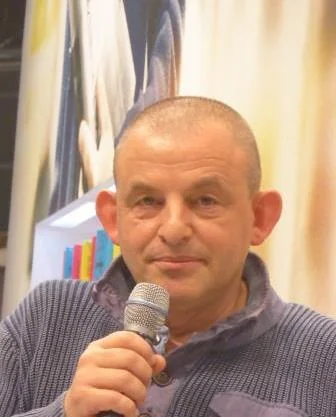
Image from Wikipedia
Image from Wikipedia
Dominique Horwitz: The Versatile Chansonnier Between Stage, Film, and Literary Passion
An artist who combines acting, chanson, and storytelling into his own signature style
Dominique Horwitz is one of those rare artistic personalities who cannot be confined to a single medium. Born in Paris in 1957, this French actor, singer, and writer has lived in Germany for decades, creating a distinctive profile through his music career, stage presence, and cinematic renown. In his artistic development, acting, chanson, and literary storytelling merge into work that is equally popular, sophisticated, and immediately emotional. ([de.wikipedia.org](https://de.wikipedia.org/wiki/Dominique_Horwitz?utm_source=openai))
From Paris to Berlin: Early Influences and Artistic Breakthrough
Horwitz grew up in Paris and moved to Berlin with his family in 1971. There, he attended the French Gymnasium and early on connected with the German cultural landscape, while not losing the French language and culture that would later become central to his stage identity. He began his film career in 1978, soon followed by initial stage engagements that marked his path between theater, cabaret, and television. This biographical movement between two countries and two linguistic realms continues to shape his work today. ([nationaltheater-weimar.de](https://www.nationaltheater-weimar.de/de/ueber-uns/ensemble-detail.php?PID=757&utm_source=openai))
The early years already showcase what distinguishes Horwitz as an artist: adaptability, precise role work, and a strong sense of rhythm and tone. The fact that he did not define himself solely through classical acting training but developed through practice, ensemble experience, and stage work lends his career a particular authenticity. His career did not start with a carefully calculated rise to stardom, but rather as a multifaceted artistic path with an open outcome. ([welt.de](https://www.welt.de/print-wams/article106589/Er-wollte-ein-Kaufmann-sein.html?utm_source=openai))
The Breakthrough in Cinema and Recognition as a Character Actor
A significant milestone was his film debut in Peter Lilienthal's movie David in 1979. Later, Dieter Wedel brought him back in front of the camera with Der große Bellheim, before he achieved international recognition in 1993 with the lead role in Joseph Vilsmaier's Stalingrad. This portrayal made Horwitz known to a broad audience and established him as an intense character actor with a serious, concentrated presence. ([nationaltheater-weimar.de](https://www.nationaltheater-weimar.de/de/ueber-uns/ensemble-detail.php?PID=757&utm_source=openai))
The award of the Golden Lion for Best Actor in 1992 further underscores this status. Horwitz was valued not only for his presence but also for his credibility, psychological depth, and ability to infuse characters with inner tension. This authority subsequently made his later musical-literary programs so compelling: he does not merely recite texts; he embodies them. ([volksoper.at](https://www.volksoper.at/volksoper_wien/ensemble/solisten/Horwitz_Dominique.de.php?utm_source=openai))
Theater as Laboratory: Formative Stages and Artistic Development
Following his initial engagements in Tübingen, he moved to the Bavarian State Theater and later to the Thalia Theater in Hamburg. These stages reflect a career deeply rooted in German city theater while constantly seeking new forms. For Horwitz, theater became not just a workplace but a laboratory for language, timing, atmosphere, and musical dramaturgy. ([nationaltheater-weimar.de](https://www.nationaltheater-weimar.de/de/ueber-uns/ensemble-detail.php?PID=757&utm_source=openai))
His later work as a director and reciter also follows this trajectory. In 2010, he directed A Midsummer Night's Dream at the Meiningen Theater, and in 2012 he made his opera directorial debut with Weber's Der Freischütz at the Theater Erfurt. In subsequent years, he repeatedly appeared as a speaker in symphonic and literary formats. This demonstrates an artistic development that does not rely on repetition but on the expansion of expressive breadth. ([de.wikipedia.org](https://de.wikipedia.org/wiki/Dominique_Horwitz?utm_source=openai))
Horwitz as Chansonnier: Jacques Brel as the Heart of a Second Career
Horwitz’s engagement with Jacques Brel has been particularly formative. It began in 1984 with a first Brel production at the Munich Residenztheater; in 1997, Dominique Horwitz sings Jacques Brel premiered in Hamburg, achieving great success in 1998 at the Bar jeder Vernunft. These projects are not a sideline but a central part of his music career. They connect acting, interpretation, and vocal intensity into a form that has become rare in the German-speaking world. ([broadwayworld.com](https://www.broadwayworld.com/germany/article/BWW-Reviews-Dominique-Horwitz-singt-Brel-im-Tipi-20120419?utm_source=openai))
Critics noted how Horwitz does not merely sing Brel’s songs but dives into their emotional and theatrical depths. Reports about his Brel evenings consistently highlight that he combines soul, wit, and depth, transforming the French chanson tradition into a vibrant, contemporary form. This is precisely where his special strength lies: he does not interpret from a superior position but from a physical, passionate closeness to the material. ([broadwayworld.com](https://www.broadwayworld.com/germany/article/BWW-Reviews-Dominique-Horwitz-singt-Brel-im-Tipi-20120419?utm_source=openai))
Discography and Musical Work: From Mendelssohn to Stravinsky
Horwitz is not a classic pop or studio singer, but his discography showcases a remarkable range of musical and literary recordings. The Heidelberg Theater mentions recordings of Felix Mendelssohn Bartholdy’s melodramatic works Antigone, Athalie, and Oedipus with the MDR Symphony Orchestra, as well as The Soldier's Tale featuring violinist Isabelle Faust. These productions attest to his grounding in the musical-literary genre. ([theaterheidelberg.de](https://www.theaterheidelberg.de/en/menschen/15887-dominique-horwitz?utm_source=openai))
Other sources also refer to his work in chanson programs, his engagement with Kurt Weill, Tom Waits, and French repertoire, as well as live performances with bands or orchestras. The Volksoper portrait highlights his Brel evenings, musical-literary performances, and collaboration with renowned conductors and instrumentalists. Thus, Horwitz’s musical work does not follow a chart logic but a curated, artistically focused repertoire culture. ([volksoper.at](https://www.volksoper.at/volksoper_wien/ensemble/solisten/Horwitz_Dominique.de.php?utm_source=openai))
Current Projects: Brel, Gainsbourg, and the Vibrant Presence of a Stage Artist
Horwitz remains active in the years 2024 to 2026. With Je t’aime… The Spectacular Life of Serge Gainsbourg, he toured in 2024, presenting a production with a live band as a musical-scenic evening about one of the most colorful figures in French pop and chanson history. The production emphasizes Horwitz’s strength in concentrating biography, music, and character study into a stage form that entertains and condenses simultaneously. ([landgraf.de](https://landgraf.de/crossover-saison-2024-2025/je-taime-das-spektakulaere-leben-des-serge-gainsbourg/?utm_source=openai))
Additionally, Horwitz sings Brel remains current in the schedule. Performances in Schwerin are documented for 2025, and for 2026, the Bar jeder Vernunft lists a reduced, intimate version with piano accompaniment. This continuity shows how closely Horwitz’s artistic identity is tied to Brel: as repertoire, as attitude, and as a stage experience that has been renewed over decades. ([off-to-mv.com](https://www.off-to-mv.com/event-search/e-horwitz-sings-brel?utm_source=openai))
Cultural Influence, Awards, and Public Perception
Horwitz’s significance extends far beyond individual successes. The Volksoper Vienna mentions, in addition to the Golden Lion, the Mephisto Prize for his Brel program and the Robert-Geisendörfer Prize. Such accolades mark a career that represents quality, continuity, and stylistic independence in the German-speaking cultural realm. His work confidently navigates between spoken theater, chanson evenings, readings, and musical performances. ([volksoper.at](https://www.volksoper.at/volksoper_wien/ensemble/solisten/Horwitz_Dominique.de.php?utm_source=openai))
Culturally intriguing is especially how Horwitz makes the French chanson tradition newly readable in Germany. He represents a generation of artists who transcend language boundaries without obscuring their origins and understand music not as an isolated genre but as a dramatic narrative form. It is this blend of authority, empathy, and stage intelligence that makes him equally interesting to theater and music audiences. ([broadwayworld.com](https://www.broadwayworld.com/germany/article/BWW-Reviews-Dominique-Horwitz-singt-Brel-im-Tipi-20120419?utm_source=openai))
Conclusion: Why Dominique Horwitz Remains Fascinating Today
Dominique Horwitz is fascinating because he does not tell a smooth career story but rather an artistic biography full of transitions, deepening, and new beginnings. His work combines acting, chanson, literature, and musical interpretation into a profile that remains exceptional in the German-speaking cultural space. Anyone who experiences him live does not see a routine artist but a performer who transforms language, music, and emotion into an intense stage moment with high concentration. ([nationaltheater-weimar.de](https://www.nationaltheater-weimar.de/de/ueber-uns/ensemble-detail.php?PID=757&utm_source=openai))
Especially in his Brel and Gainsbourg evenings, the full strength of his artistic development is revealed: Horwitz does not make music theater decorative, but existential. His stage presence thrives on experience, precision, and a voice that does not merely sing but tells. Those interested in sophisticated chansons, German-French cultural history, and credible live performance should definitely experience Dominique Horwitz on stage. ([berlin.de](https://www.berlin.de/en/tickets/show/dominique-horwitz-dominique-horwitz-singt-brel/2026-06-06-dominique-horwitz-singt-brel-2e8b85b4-16af-4fbc-ace6-f8847a8bf7aa/?utm_source=openai))
Official Channels of Dominique Horwitz:
- Instagram: No official profile found
- Facebook: No official profile found
- YouTube: No official profile found
- Spotify: No official profile found
- TikTok: No official profile found
Sources:
- Wikipedia - Dominique Horwitz
- Theater und Orchester Heidelberg - Dominique Horwitz
- Nationaltheater Weimar - Ensemble Detail Dominique Horwitz
- Volksoper Wien - Dominique Horwitz
- Bar jeder Vernunft - Press Information Dominique Horwitz
- TIPI am Kanzleramt - Press Information Dominique Horwitz
- Concert Management Landgraf - Je t’aime… The Spectacular Life of Serge Gainsbourg
- Off to MV - Horwitz sings Brel
- Berlin.de Tickets - Dominique Horwitz sings Brel