
Fürth
Frauenstraße, 90763 Fürth, Deutschland
St. Heinrich Fürth | Services & History
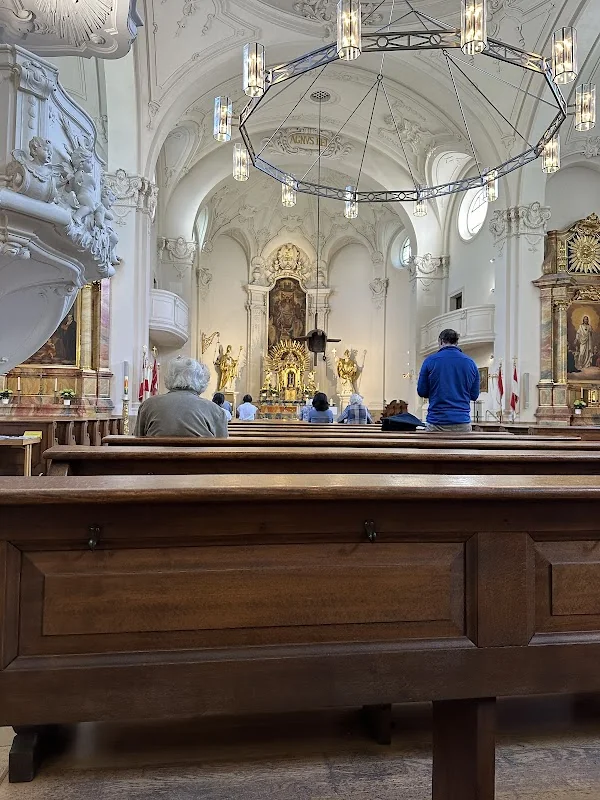
St. Heinrich in Fürth is primarily a matter of classification for many search queries: The autocomplete list is heavily influenced by place names, which is why local identity is at the forefront here. This refers to the Catholic parish church in the southern district of Fürth, built in neo-baroque style between 1908 and 1910 and consecrated in 1910. It is dedicated to the diocesan patrons Emperor Heinrich II and Kunigunde and today combines history, worship, music, and community life into a clear profile that is interesting for both visitors and seekers with a regional connection. ([tourismus-fuerth.de](https://www.tourismus-fuerth.de/poi/kirche-st-heinrich/))
History and Naming of St. Heinrich Fürth
The history of St. Heinrich begins with the strong growth of the Catholic population in Fürth. Around 1800, only 407 Catholics lived in the city and surrounding areas according to the chronicle; by 1890, this number had already risen to about 11,000, and by the turn of the century, it had increased significantly again. The city parish church of Our Lady, established in 1828, was originally intended for about 500 believers and could no longer accommodate this development. This created the need for a second Catholic church that would permanently meet the new community requirements. This initial situation is important because it explains why St. Heinrich was not built by chance but as a direct response to the social and religious dynamics of a growing industrial and trading city. ([st-heinrich-fuerth.de](https://st-heinrich-fuerth.de/service1/geschichte/kirchenbau))
As early as 1899, planning for a second Catholic parish church was initiated at the Gesellenhospiz, the Kolpinghaus. The Nuremberg church builder Prof. Josef Schmitz provided initial sketches in 1902, but the upper building authority rejected both a large Gothic design and a smaller hall church. A building was desired that would fit into the cityscape of an emerging factory town and would not compete with the existing churches. Thus, the neo-baroque form ultimately prevailed, which is described in the official chronicle as dignified yet deliberately simple. On November 15, 1908, the foundation stone was laid, construction progressed rapidly, the bells arrived in 1910, and the solemn consecration took place on October 23, 1910, by Archbishop Friedrich Philipp von Abert. The church was explicitly intended to also serve as a monument to the 900th anniversary celebration of Saint Heinrich and thus received its name and spiritual symbolism. ([st-heinrich-fuerth.de](https://st-heinrich-fuerth.de/service1/geschichte/kirchenbau))
The choice of name is more than a formal dedication. St. Heinrich refers to Emperor Heinrich II and his wife Kunigunde, thus to the diocesan patrons of the Archdiocese of Bamberg, to which Fürth belongs ecclesiastically. The tourist representation also emphasizes that the neo-baroque style reflects southern German religiosity and is meant to remind of a flourishing period of Roman Catholic faith in predominantly Protestant Fürth. This is where a significant part of the church's impact lies: it is not only a house of worship but also a consciously set sign of Catholic presence in a district that underwent significant changes around 1900. The fact that the church was elevated to parish church in 1922 shows how quickly the additional church became a solid pastoral center. Today, this development is as present in the city's history as it is in local community work. ([tourismus-fuerth.de](https://www.tourismus-fuerth.de/poi/kirche-st-heinrich/))
Regular Services and Lived Parish Life
Those searching for St. Heinrich Fürth often mean not only the building history but especially the current religious everyday life. The official service schedule shows a clear, recurring pattern: On Sundays, there is a Eucharistic celebration or Word of God service at 9:00 AM in alternation, on Tuesdays at 9:00 AM a Eucharistic celebration, on Thursdays at 7:00 PM usually every two weeks a Eucharistic celebration, and on Saturdays at 6:00 PM a Eucharistic celebration or Word of God service. This is supplemented by rosary prayers on Tuesday and Friday as well as a regular confession opportunity on Saturday. During Lent, additional forms such as Stations of the Cross and late-night services are added. This structure makes St. Heinrich a church that not only lives on Sundays but offers various spiritual access points throughout the week. ([st-heinrich-fuerth.de](https://st-heinrich-fuerth.de/gottesdienste/regelmaessige?utm_source=openai))
The community's activity is also evident from the weekly schedule. Among other things, there are choir rehearsals at the parish center, senior meetings, Bible study groups, senior dance, Schola rehearsals, Sunday coffee, and a One-World sale in the church. Such offerings are SEO-relevant because they fill the search terms around programs, dates, and community life with content. For visitors, this means: St. Heinrich is not only a historical church but a place where liturgy, conversation, music, and community are closely intertwined. Particularly important is the children's church, which takes place on Sundays at the parish center and only changes in detail irregularly. Those needing the latest times can find them according to the community notice always in the respective valid service schedule or in the current church information. ([st-heinrich-fuerth.de](https://st-heinrich-fuerth.de/unsere-gemeinde/pfarrleben/?utm_source=openai))
For a good user search, the specific service times are also important. The parish office is open on Mondays, Tuesdays, and Fridays from 9:00 AM to 12:00 PM and Thursdays from 2:00 PM to 5:00 PM; different regulations apply during holiday periods. Thus, St. Heinrich meets exactly what people expect from a local church inquiry: service times, contact options, and a visible place where the community remains accessible. In practice, this mix of spiritual offerings and easy accessibility is a significant advantage, as it provides orientation for both regular service attendees and people with specific concerns. ([st-heinrich-fuerth.de](https://st-heinrich-fuerth.de/kontakt/))
Parish Center and Ecumenical Center in the Southern District
A crucial part of the search interest in St. Heinrich Fürth concerns not only the church itself but also the parish center. The community clearly describes why this center was created: The former Kolpinghaus was too far from the center of the parish for many activities and was also in need of renovation. By acquiring the property at the corner of Sonnen- and Kaiserstraße, everything could finally be brought together in one place: church, parish house, and parish center. Construction began on October 5, 1981, the foundation stone was laid on October 30, 1981, the topping-out ceremony was celebrated on June 25, 1982, and the consecration took place on December 5, 1982. For those seeking a hall, group room, or community meeting place, this compact structure is an important unique selling point. ([st-heinrich-fuerth.de](https://st-heinrich-fuerth.de/service1/geschichte/pfarrzentrum/?utm_source=openai))
The parish center is not just an extension but a social meeting point. The chronicle mentions a separate youth section for youth work, a beautifully designed senior club room for seniors, a music room for choir and Schola, rooms for church associations, and the Heinrichsklause, where people can meet for a chat after the evening mass on Thursday and after the Sunday service. This mix of liturgy and everyday life creates the special atmosphere of a vibrant neighborhood center. Therefore, those searching for terms like parish center, groups, events, or community life will not find an abstract institution here but a place with a clear function for generations and interests. This makes the location valuable for SEO, as the user intention goes far beyond mere church attendance. ([st-heinrich-fuerth.de](https://st-heinrich-fuerth.de/service1/geschichte/pfarrzentrum/?utm_source=openai))
Additionally, the Ecumenical Center plays an important role in the expanded community understanding of St. Heinrich. After the withdrawal of American troops from the Kalb Housing Area at the end of 1995, the Kalb settlement was established in this area. As early as 1996, initial discussions about church work in the area were held. The former Child-Care Center, divided into three pavilions, served as a suitable location. Two pavilions were converted into Catholic and Protestant kindergartens and consecrated in September 1998; Pavilion C is still used jointly as a place of pastoral care. The description explicitly emphasizes the ecumenical attitude and states the goal of providing a home for children, youth, families, seniors, clubs, and associations in the Kalb settlement. This shows that St. Heinrich has not only grown historically but has also flexibly and community-oriented responded to urban development changes. ([st-heinrich-fuerth.de](https://st-heinrich-fuerth.de/service1/geschichte/oekumenisches-zentrum/?utm_source=openai))
Organ, Bells, and Church Music as Hallmarks
One of the most important features of St. Heinrich Fürth is the church music. The current organ is already the fourth instrument in the church's history. After a harmonium and a small organ with seven registers, an instrument with 29 registers was installed in 1931. The current organ comes from the company Eisenbarth in Passau and was built in 1965; the organ consecration took place on September 11, 1965. With 46 registers on three manuals and pedal, mechanical action, electric registration, and around 3300 pipes, it is not only usable liturgically but also suitable for concerts. The official organ description highlights that the instrument is actively used in the parish and forms the centerpiece of a concert series as well as the Fürth church music days. For local searches related to organ, concert, or church music, this is a strong signal. ([st-heinrich-fuerth.de](https://st-heinrich-fuerth.de/kirchenmusik/orgel?utm_source=openai))
The organ has also been maintained and modernized several times. During the renovation in 1993/94, it was completely disassembled, cleaned, and technically improved in parts; in 2018, it was cleaned again, and in 2019, the blower motor and the setter system were modernized. Additionally, since 1993, Andreas König has served as a regional cantor, shaping the instrument and the musical profile of the community. Regular choir rehearsals and Schola meetings at the parish center complement this. All of this is important for a landing page because it makes the building visible as a sound space and cultural venue beyond its architecture. Those searching for St. Heinrich in Fürth often look for a place with musical quality, and this quality is well documented here. ([st-heinrich-fuerth.de](https://st-heinrich-fuerth.de/kirchenmusik/orgel?utm_source=openai))
Equally defining are the bells. Originally, the church had four bells with a total weight of more than 100 quintals. In January 1942, three of the four bells were removed for war purposes; one 13 quintal bell remained. In 1953, three new bells were acquired, cast by Petit and Gebr. Edelbrock. The current collection includes the Emperor's bell, the Mary bell, the Cross bell, and the old Peter bell; together they weigh 6.05 tons. The Bavarian Broadcasting Corporation presented the ringing in 2001 in the series Zwölfuhrläuten. Thus, the bell ringing is not only an acoustic but also a historical hallmark of the church. It refers to memory, reconstruction, and the long endurance of a community that has found a fully resonant identity again even after losses. ([st-heinrich-fuerth.de](https://st-heinrich-fuerth.de/service1/geschichte/glocken/?utm_source=openai))
Directions, Location, and Practical Tips for Visitors
For visitors, St. Heinrich is easily accessible, especially by public transport. The official tourism site of Fürth recommends traveling by bus from Fürth main station to the Sonnenstraße stop. The church is located in the southern district so that it is suitable for groups, individual guests, and children of all ages; admission is also free. This information is particularly useful for users who are not looking for a theological description but for a clear visiting plan. Especially for a neighborhood church, easy orientation is often the decisive factor for actual use on site. ([tourismus-fuerth.de](https://www.tourismus-fuerth.de/poi/kirche-st-heinrich/))
The contact details of the parish are also clearly stated: The Catholic parish office of St. Heinrich Fürth is located according to the official website at Kaiserstraße 113, 90763 Fürth. The opening hours are Mondays, Tuesdays, and Fridays from 9:00 AM to 12:00 PM and Thursdays from 2:00 PM to 5:00 PM. Different times apply during holiday periods, and the central office of the pastoral care area is located in the Christkönig parish office at Friedrich-Ebert-Straße 5. For the local search intention around address, contact, and opening hours, this is an important service aspect. Summarizing the official visitor information, a clear picture emerges: St. Heinrich is not a hard-to-find specialty church but a well-embedded parish church with understandable accessibility, open community life, and clear contacts. ([st-heinrich-fuerth.de](https://st-heinrich-fuerth.de/kontakt/))
The strongest SEO performance of this page ultimately lies in the clean connection of local reference, history, and use. The autocomplete terms show many different cities, but for Fürth, the local classification counts above all: Catholic parish church, neo-baroque style, lively services, music, bells, parish center, and ecumenical presence in the neighborhood. This is precisely why St. Heinrich Fürth is a good example of how a church can present itself as both a historical site and an active community space. Those who visit this church experience not only a building but a grown part of the Fürth southern district with audible, visible, and social identity. ([st-heinrich-fuerth.de](https://st-heinrich-fuerth.de/service1/geschichte/kirchenbau))
Sources:
- St. Heinrich Fürth – Church Construction and History ([st-heinrich-fuerth.de](https://st-heinrich-fuerth.de/service1/geschichte/kirchenbau))
- St. Heinrich Fürth – Regular Services ([st-heinrich-fuerth.de](https://st-heinrich-fuerth.de/gottesdienste/regelmaessige?utm_source=openai))
- St. Heinrich Fürth – Parish Center ([st-heinrich-fuerth.de](https://st-heinrich-fuerth.de/service1/geschichte/pfarrzentrum/?utm_source=openai))
- St. Heinrich Fürth – Organ ([st-heinrich-fuerth.de](https://st-heinrich-fuerth.de/kirchenmusik/orgel?utm_source=openai))
- Tourism Fürth – Church St. Heinrich ([tourismus-fuerth.de](https://www.tourismus-fuerth.de/poi/kirche-st-heinrich/))
- FürthWiki – Church St. Heinrich and Kunigunde ([fuerthwiki.de](https://www.fuerthwiki.de/wiki/index.php?title=Kirche_St._Heinrich_und_Kunigunde&utm_source=openai))
Show moreShow less
St. Heinrich Fürth | Services & History
St. Heinrich in Fürth is primarily a matter of classification for many search queries: The autocomplete list is heavily influenced by place names, which is why local identity is at the forefront here. This refers to the Catholic parish church in the southern district of Fürth, built in neo-baroque style between 1908 and 1910 and consecrated in 1910. It is dedicated to the diocesan patrons Emperor Heinrich II and Kunigunde and today combines history, worship, music, and community life into a clear profile that is interesting for both visitors and seekers with a regional connection. ([tourismus-fuerth.de](https://www.tourismus-fuerth.de/poi/kirche-st-heinrich/))
History and Naming of St. Heinrich Fürth
The history of St. Heinrich begins with the strong growth of the Catholic population in Fürth. Around 1800, only 407 Catholics lived in the city and surrounding areas according to the chronicle; by 1890, this number had already risen to about 11,000, and by the turn of the century, it had increased significantly again. The city parish church of Our Lady, established in 1828, was originally intended for about 500 believers and could no longer accommodate this development. This created the need for a second Catholic church that would permanently meet the new community requirements. This initial situation is important because it explains why St. Heinrich was not built by chance but as a direct response to the social and religious dynamics of a growing industrial and trading city. ([st-heinrich-fuerth.de](https://st-heinrich-fuerth.de/service1/geschichte/kirchenbau))
As early as 1899, planning for a second Catholic parish church was initiated at the Gesellenhospiz, the Kolpinghaus. The Nuremberg church builder Prof. Josef Schmitz provided initial sketches in 1902, but the upper building authority rejected both a large Gothic design and a smaller hall church. A building was desired that would fit into the cityscape of an emerging factory town and would not compete with the existing churches. Thus, the neo-baroque form ultimately prevailed, which is described in the official chronicle as dignified yet deliberately simple. On November 15, 1908, the foundation stone was laid, construction progressed rapidly, the bells arrived in 1910, and the solemn consecration took place on October 23, 1910, by Archbishop Friedrich Philipp von Abert. The church was explicitly intended to also serve as a monument to the 900th anniversary celebration of Saint Heinrich and thus received its name and spiritual symbolism. ([st-heinrich-fuerth.de](https://st-heinrich-fuerth.de/service1/geschichte/kirchenbau))
The choice of name is more than a formal dedication. St. Heinrich refers to Emperor Heinrich II and his wife Kunigunde, thus to the diocesan patrons of the Archdiocese of Bamberg, to which Fürth belongs ecclesiastically. The tourist representation also emphasizes that the neo-baroque style reflects southern German religiosity and is meant to remind of a flourishing period of Roman Catholic faith in predominantly Protestant Fürth. This is where a significant part of the church's impact lies: it is not only a house of worship but also a consciously set sign of Catholic presence in a district that underwent significant changes around 1900. The fact that the church was elevated to parish church in 1922 shows how quickly the additional church became a solid pastoral center. Today, this development is as present in the city's history as it is in local community work. ([tourismus-fuerth.de](https://www.tourismus-fuerth.de/poi/kirche-st-heinrich/))
Regular Services and Lived Parish Life
Those searching for St. Heinrich Fürth often mean not only the building history but especially the current religious everyday life. The official service schedule shows a clear, recurring pattern: On Sundays, there is a Eucharistic celebration or Word of God service at 9:00 AM in alternation, on Tuesdays at 9:00 AM a Eucharistic celebration, on Thursdays at 7:00 PM usually every two weeks a Eucharistic celebration, and on Saturdays at 6:00 PM a Eucharistic celebration or Word of God service. This is supplemented by rosary prayers on Tuesday and Friday as well as a regular confession opportunity on Saturday. During Lent, additional forms such as Stations of the Cross and late-night services are added. This structure makes St. Heinrich a church that not only lives on Sundays but offers various spiritual access points throughout the week. ([st-heinrich-fuerth.de](https://st-heinrich-fuerth.de/gottesdienste/regelmaessige?utm_source=openai))
The community's activity is also evident from the weekly schedule. Among other things, there are choir rehearsals at the parish center, senior meetings, Bible study groups, senior dance, Schola rehearsals, Sunday coffee, and a One-World sale in the church. Such offerings are SEO-relevant because they fill the search terms around programs, dates, and community life with content. For visitors, this means: St. Heinrich is not only a historical church but a place where liturgy, conversation, music, and community are closely intertwined. Particularly important is the children's church, which takes place on Sundays at the parish center and only changes in detail irregularly. Those needing the latest times can find them according to the community notice always in the respective valid service schedule or in the current church information. ([st-heinrich-fuerth.de](https://st-heinrich-fuerth.de/unsere-gemeinde/pfarrleben/?utm_source=openai))
For a good user search, the specific service times are also important. The parish office is open on Mondays, Tuesdays, and Fridays from 9:00 AM to 12:00 PM and Thursdays from 2:00 PM to 5:00 PM; different regulations apply during holiday periods. Thus, St. Heinrich meets exactly what people expect from a local church inquiry: service times, contact options, and a visible place where the community remains accessible. In practice, this mix of spiritual offerings and easy accessibility is a significant advantage, as it provides orientation for both regular service attendees and people with specific concerns. ([st-heinrich-fuerth.de](https://st-heinrich-fuerth.de/kontakt/))
Parish Center and Ecumenical Center in the Southern District
A crucial part of the search interest in St. Heinrich Fürth concerns not only the church itself but also the parish center. The community clearly describes why this center was created: The former Kolpinghaus was too far from the center of the parish for many activities and was also in need of renovation. By acquiring the property at the corner of Sonnen- and Kaiserstraße, everything could finally be brought together in one place: church, parish house, and parish center. Construction began on October 5, 1981, the foundation stone was laid on October 30, 1981, the topping-out ceremony was celebrated on June 25, 1982, and the consecration took place on December 5, 1982. For those seeking a hall, group room, or community meeting place, this compact structure is an important unique selling point. ([st-heinrich-fuerth.de](https://st-heinrich-fuerth.de/service1/geschichte/pfarrzentrum/?utm_source=openai))
The parish center is not just an extension but a social meeting point. The chronicle mentions a separate youth section for youth work, a beautifully designed senior club room for seniors, a music room for choir and Schola, rooms for church associations, and the Heinrichsklause, where people can meet for a chat after the evening mass on Thursday and after the Sunday service. This mix of liturgy and everyday life creates the special atmosphere of a vibrant neighborhood center. Therefore, those searching for terms like parish center, groups, events, or community life will not find an abstract institution here but a place with a clear function for generations and interests. This makes the location valuable for SEO, as the user intention goes far beyond mere church attendance. ([st-heinrich-fuerth.de](https://st-heinrich-fuerth.de/service1/geschichte/pfarrzentrum/?utm_source=openai))
Additionally, the Ecumenical Center plays an important role in the expanded community understanding of St. Heinrich. After the withdrawal of American troops from the Kalb Housing Area at the end of 1995, the Kalb settlement was established in this area. As early as 1996, initial discussions about church work in the area were held. The former Child-Care Center, divided into three pavilions, served as a suitable location. Two pavilions were converted into Catholic and Protestant kindergartens and consecrated in September 1998; Pavilion C is still used jointly as a place of pastoral care. The description explicitly emphasizes the ecumenical attitude and states the goal of providing a home for children, youth, families, seniors, clubs, and associations in the Kalb settlement. This shows that St. Heinrich has not only grown historically but has also flexibly and community-oriented responded to urban development changes. ([st-heinrich-fuerth.de](https://st-heinrich-fuerth.de/service1/geschichte/oekumenisches-zentrum/?utm_source=openai))
Organ, Bells, and Church Music as Hallmarks
One of the most important features of St. Heinrich Fürth is the church music. The current organ is already the fourth instrument in the church's history. After a harmonium and a small organ with seven registers, an instrument with 29 registers was installed in 1931. The current organ comes from the company Eisenbarth in Passau and was built in 1965; the organ consecration took place on September 11, 1965. With 46 registers on three manuals and pedal, mechanical action, electric registration, and around 3300 pipes, it is not only usable liturgically but also suitable for concerts. The official organ description highlights that the instrument is actively used in the parish and forms the centerpiece of a concert series as well as the Fürth church music days. For local searches related to organ, concert, or church music, this is a strong signal. ([st-heinrich-fuerth.de](https://st-heinrich-fuerth.de/kirchenmusik/orgel?utm_source=openai))
The organ has also been maintained and modernized several times. During the renovation in 1993/94, it was completely disassembled, cleaned, and technically improved in parts; in 2018, it was cleaned again, and in 2019, the blower motor and the setter system were modernized. Additionally, since 1993, Andreas König has served as a regional cantor, shaping the instrument and the musical profile of the community. Regular choir rehearsals and Schola meetings at the parish center complement this. All of this is important for a landing page because it makes the building visible as a sound space and cultural venue beyond its architecture. Those searching for St. Heinrich in Fürth often look for a place with musical quality, and this quality is well documented here. ([st-heinrich-fuerth.de](https://st-heinrich-fuerth.de/kirchenmusik/orgel?utm_source=openai))
Equally defining are the bells. Originally, the church had four bells with a total weight of more than 100 quintals. In January 1942, three of the four bells were removed for war purposes; one 13 quintal bell remained. In 1953, three new bells were acquired, cast by Petit and Gebr. Edelbrock. The current collection includes the Emperor's bell, the Mary bell, the Cross bell, and the old Peter bell; together they weigh 6.05 tons. The Bavarian Broadcasting Corporation presented the ringing in 2001 in the series Zwölfuhrläuten. Thus, the bell ringing is not only an acoustic but also a historical hallmark of the church. It refers to memory, reconstruction, and the long endurance of a community that has found a fully resonant identity again even after losses. ([st-heinrich-fuerth.de](https://st-heinrich-fuerth.de/service1/geschichte/glocken/?utm_source=openai))
Directions, Location, and Practical Tips for Visitors
For visitors, St. Heinrich is easily accessible, especially by public transport. The official tourism site of Fürth recommends traveling by bus from Fürth main station to the Sonnenstraße stop. The church is located in the southern district so that it is suitable for groups, individual guests, and children of all ages; admission is also free. This information is particularly useful for users who are not looking for a theological description but for a clear visiting plan. Especially for a neighborhood church, easy orientation is often the decisive factor for actual use on site. ([tourismus-fuerth.de](https://www.tourismus-fuerth.de/poi/kirche-st-heinrich/))
The contact details of the parish are also clearly stated: The Catholic parish office of St. Heinrich Fürth is located according to the official website at Kaiserstraße 113, 90763 Fürth. The opening hours are Mondays, Tuesdays, and Fridays from 9:00 AM to 12:00 PM and Thursdays from 2:00 PM to 5:00 PM. Different times apply during holiday periods, and the central office of the pastoral care area is located in the Christkönig parish office at Friedrich-Ebert-Straße 5. For the local search intention around address, contact, and opening hours, this is an important service aspect. Summarizing the official visitor information, a clear picture emerges: St. Heinrich is not a hard-to-find specialty church but a well-embedded parish church with understandable accessibility, open community life, and clear contacts. ([st-heinrich-fuerth.de](https://st-heinrich-fuerth.de/kontakt/))
The strongest SEO performance of this page ultimately lies in the clean connection of local reference, history, and use. The autocomplete terms show many different cities, but for Fürth, the local classification counts above all: Catholic parish church, neo-baroque style, lively services, music, bells, parish center, and ecumenical presence in the neighborhood. This is precisely why St. Heinrich Fürth is a good example of how a church can present itself as both a historical site and an active community space. Those who visit this church experience not only a building but a grown part of the Fürth southern district with audible, visible, and social identity. ([st-heinrich-fuerth.de](https://st-heinrich-fuerth.de/service1/geschichte/kirchenbau))
Sources:
- St. Heinrich Fürth – Church Construction and History ([st-heinrich-fuerth.de](https://st-heinrich-fuerth.de/service1/geschichte/kirchenbau))
- St. Heinrich Fürth – Regular Services ([st-heinrich-fuerth.de](https://st-heinrich-fuerth.de/gottesdienste/regelmaessige?utm_source=openai))
- St. Heinrich Fürth – Parish Center ([st-heinrich-fuerth.de](https://st-heinrich-fuerth.de/service1/geschichte/pfarrzentrum/?utm_source=openai))
- St. Heinrich Fürth – Organ ([st-heinrich-fuerth.de](https://st-heinrich-fuerth.de/kirchenmusik/orgel?utm_source=openai))
- Tourism Fürth – Church St. Heinrich ([tourismus-fuerth.de](https://www.tourismus-fuerth.de/poi/kirche-st-heinrich/))
- FürthWiki – Church St. Heinrich and Kunigunde ([fuerthwiki.de](https://www.fuerthwiki.de/wiki/index.php?title=Kirche_St._Heinrich_und_Kunigunde&utm_source=openai))
St. Heinrich Fürth | Services & History
St. Heinrich in Fürth is primarily a matter of classification for many search queries: The autocomplete list is heavily influenced by place names, which is why local identity is at the forefront here. This refers to the Catholic parish church in the southern district of Fürth, built in neo-baroque style between 1908 and 1910 and consecrated in 1910. It is dedicated to the diocesan patrons Emperor Heinrich II and Kunigunde and today combines history, worship, music, and community life into a clear profile that is interesting for both visitors and seekers with a regional connection. ([tourismus-fuerth.de](https://www.tourismus-fuerth.de/poi/kirche-st-heinrich/))
History and Naming of St. Heinrich Fürth
The history of St. Heinrich begins with the strong growth of the Catholic population in Fürth. Around 1800, only 407 Catholics lived in the city and surrounding areas according to the chronicle; by 1890, this number had already risen to about 11,000, and by the turn of the century, it had increased significantly again. The city parish church of Our Lady, established in 1828, was originally intended for about 500 believers and could no longer accommodate this development. This created the need for a second Catholic church that would permanently meet the new community requirements. This initial situation is important because it explains why St. Heinrich was not built by chance but as a direct response to the social and religious dynamics of a growing industrial and trading city. ([st-heinrich-fuerth.de](https://st-heinrich-fuerth.de/service1/geschichte/kirchenbau))
As early as 1899, planning for a second Catholic parish church was initiated at the Gesellenhospiz, the Kolpinghaus. The Nuremberg church builder Prof. Josef Schmitz provided initial sketches in 1902, but the upper building authority rejected both a large Gothic design and a smaller hall church. A building was desired that would fit into the cityscape of an emerging factory town and would not compete with the existing churches. Thus, the neo-baroque form ultimately prevailed, which is described in the official chronicle as dignified yet deliberately simple. On November 15, 1908, the foundation stone was laid, construction progressed rapidly, the bells arrived in 1910, and the solemn consecration took place on October 23, 1910, by Archbishop Friedrich Philipp von Abert. The church was explicitly intended to also serve as a monument to the 900th anniversary celebration of Saint Heinrich and thus received its name and spiritual symbolism. ([st-heinrich-fuerth.de](https://st-heinrich-fuerth.de/service1/geschichte/kirchenbau))
The choice of name is more than a formal dedication. St. Heinrich refers to Emperor Heinrich II and his wife Kunigunde, thus to the diocesan patrons of the Archdiocese of Bamberg, to which Fürth belongs ecclesiastically. The tourist representation also emphasizes that the neo-baroque style reflects southern German religiosity and is meant to remind of a flourishing period of Roman Catholic faith in predominantly Protestant Fürth. This is where a significant part of the church's impact lies: it is not only a house of worship but also a consciously set sign of Catholic presence in a district that underwent significant changes around 1900. The fact that the church was elevated to parish church in 1922 shows how quickly the additional church became a solid pastoral center. Today, this development is as present in the city's history as it is in local community work. ([tourismus-fuerth.de](https://www.tourismus-fuerth.de/poi/kirche-st-heinrich/))
Regular Services and Lived Parish Life
Those searching for St. Heinrich Fürth often mean not only the building history but especially the current religious everyday life. The official service schedule shows a clear, recurring pattern: On Sundays, there is a Eucharistic celebration or Word of God service at 9:00 AM in alternation, on Tuesdays at 9:00 AM a Eucharistic celebration, on Thursdays at 7:00 PM usually every two weeks a Eucharistic celebration, and on Saturdays at 6:00 PM a Eucharistic celebration or Word of God service. This is supplemented by rosary prayers on Tuesday and Friday as well as a regular confession opportunity on Saturday. During Lent, additional forms such as Stations of the Cross and late-night services are added. This structure makes St. Heinrich a church that not only lives on Sundays but offers various spiritual access points throughout the week. ([st-heinrich-fuerth.de](https://st-heinrich-fuerth.de/gottesdienste/regelmaessige?utm_source=openai))
The community's activity is also evident from the weekly schedule. Among other things, there are choir rehearsals at the parish center, senior meetings, Bible study groups, senior dance, Schola rehearsals, Sunday coffee, and a One-World sale in the church. Such offerings are SEO-relevant because they fill the search terms around programs, dates, and community life with content. For visitors, this means: St. Heinrich is not only a historical church but a place where liturgy, conversation, music, and community are closely intertwined. Particularly important is the children's church, which takes place on Sundays at the parish center and only changes in detail irregularly. Those needing the latest times can find them according to the community notice always in the respective valid service schedule or in the current church information. ([st-heinrich-fuerth.de](https://st-heinrich-fuerth.de/unsere-gemeinde/pfarrleben/?utm_source=openai))
For a good user search, the specific service times are also important. The parish office is open on Mondays, Tuesdays, and Fridays from 9:00 AM to 12:00 PM and Thursdays from 2:00 PM to 5:00 PM; different regulations apply during holiday periods. Thus, St. Heinrich meets exactly what people expect from a local church inquiry: service times, contact options, and a visible place where the community remains accessible. In practice, this mix of spiritual offerings and easy accessibility is a significant advantage, as it provides orientation for both regular service attendees and people with specific concerns. ([st-heinrich-fuerth.de](https://st-heinrich-fuerth.de/kontakt/))
Parish Center and Ecumenical Center in the Southern District
A crucial part of the search interest in St. Heinrich Fürth concerns not only the church itself but also the parish center. The community clearly describes why this center was created: The former Kolpinghaus was too far from the center of the parish for many activities and was also in need of renovation. By acquiring the property at the corner of Sonnen- and Kaiserstraße, everything could finally be brought together in one place: church, parish house, and parish center. Construction began on October 5, 1981, the foundation stone was laid on October 30, 1981, the topping-out ceremony was celebrated on June 25, 1982, and the consecration took place on December 5, 1982. For those seeking a hall, group room, or community meeting place, this compact structure is an important unique selling point. ([st-heinrich-fuerth.de](https://st-heinrich-fuerth.de/service1/geschichte/pfarrzentrum/?utm_source=openai))
The parish center is not just an extension but a social meeting point. The chronicle mentions a separate youth section for youth work, a beautifully designed senior club room for seniors, a music room for choir and Schola, rooms for church associations, and the Heinrichsklause, where people can meet for a chat after the evening mass on Thursday and after the Sunday service. This mix of liturgy and everyday life creates the special atmosphere of a vibrant neighborhood center. Therefore, those searching for terms like parish center, groups, events, or community life will not find an abstract institution here but a place with a clear function for generations and interests. This makes the location valuable for SEO, as the user intention goes far beyond mere church attendance. ([st-heinrich-fuerth.de](https://st-heinrich-fuerth.de/service1/geschichte/pfarrzentrum/?utm_source=openai))
Additionally, the Ecumenical Center plays an important role in the expanded community understanding of St. Heinrich. After the withdrawal of American troops from the Kalb Housing Area at the end of 1995, the Kalb settlement was established in this area. As early as 1996, initial discussions about church work in the area were held. The former Child-Care Center, divided into three pavilions, served as a suitable location. Two pavilions were converted into Catholic and Protestant kindergartens and consecrated in September 1998; Pavilion C is still used jointly as a place of pastoral care. The description explicitly emphasizes the ecumenical attitude and states the goal of providing a home for children, youth, families, seniors, clubs, and associations in the Kalb settlement. This shows that St. Heinrich has not only grown historically but has also flexibly and community-oriented responded to urban development changes. ([st-heinrich-fuerth.de](https://st-heinrich-fuerth.de/service1/geschichte/oekumenisches-zentrum/?utm_source=openai))
Organ, Bells, and Church Music as Hallmarks
One of the most important features of St. Heinrich Fürth is the church music. The current organ is already the fourth instrument in the church's history. After a harmonium and a small organ with seven registers, an instrument with 29 registers was installed in 1931. The current organ comes from the company Eisenbarth in Passau and was built in 1965; the organ consecration took place on September 11, 1965. With 46 registers on three manuals and pedal, mechanical action, electric registration, and around 3300 pipes, it is not only usable liturgically but also suitable for concerts. The official organ description highlights that the instrument is actively used in the parish and forms the centerpiece of a concert series as well as the Fürth church music days. For local searches related to organ, concert, or church music, this is a strong signal. ([st-heinrich-fuerth.de](https://st-heinrich-fuerth.de/kirchenmusik/orgel?utm_source=openai))
The organ has also been maintained and modernized several times. During the renovation in 1993/94, it was completely disassembled, cleaned, and technically improved in parts; in 2018, it was cleaned again, and in 2019, the blower motor and the setter system were modernized. Additionally, since 1993, Andreas König has served as a regional cantor, shaping the instrument and the musical profile of the community. Regular choir rehearsals and Schola meetings at the parish center complement this. All of this is important for a landing page because it makes the building visible as a sound space and cultural venue beyond its architecture. Those searching for St. Heinrich in Fürth often look for a place with musical quality, and this quality is well documented here. ([st-heinrich-fuerth.de](https://st-heinrich-fuerth.de/kirchenmusik/orgel?utm_source=openai))
Equally defining are the bells. Originally, the church had four bells with a total weight of more than 100 quintals. In January 1942, three of the four bells were removed for war purposes; one 13 quintal bell remained. In 1953, three new bells were acquired, cast by Petit and Gebr. Edelbrock. The current collection includes the Emperor's bell, the Mary bell, the Cross bell, and the old Peter bell; together they weigh 6.05 tons. The Bavarian Broadcasting Corporation presented the ringing in 2001 in the series Zwölfuhrläuten. Thus, the bell ringing is not only an acoustic but also a historical hallmark of the church. It refers to memory, reconstruction, and the long endurance of a community that has found a fully resonant identity again even after losses. ([st-heinrich-fuerth.de](https://st-heinrich-fuerth.de/service1/geschichte/glocken/?utm_source=openai))
Directions, Location, and Practical Tips for Visitors
For visitors, St. Heinrich is easily accessible, especially by public transport. The official tourism site of Fürth recommends traveling by bus from Fürth main station to the Sonnenstraße stop. The church is located in the southern district so that it is suitable for groups, individual guests, and children of all ages; admission is also free. This information is particularly useful for users who are not looking for a theological description but for a clear visiting plan. Especially for a neighborhood church, easy orientation is often the decisive factor for actual use on site. ([tourismus-fuerth.de](https://www.tourismus-fuerth.de/poi/kirche-st-heinrich/))
The contact details of the parish are also clearly stated: The Catholic parish office of St. Heinrich Fürth is located according to the official website at Kaiserstraße 113, 90763 Fürth. The opening hours are Mondays, Tuesdays, and Fridays from 9:00 AM to 12:00 PM and Thursdays from 2:00 PM to 5:00 PM. Different times apply during holiday periods, and the central office of the pastoral care area is located in the Christkönig parish office at Friedrich-Ebert-Straße 5. For the local search intention around address, contact, and opening hours, this is an important service aspect. Summarizing the official visitor information, a clear picture emerges: St. Heinrich is not a hard-to-find specialty church but a well-embedded parish church with understandable accessibility, open community life, and clear contacts. ([st-heinrich-fuerth.de](https://st-heinrich-fuerth.de/kontakt/))
The strongest SEO performance of this page ultimately lies in the clean connection of local reference, history, and use. The autocomplete terms show many different cities, but for Fürth, the local classification counts above all: Catholic parish church, neo-baroque style, lively services, music, bells, parish center, and ecumenical presence in the neighborhood. This is precisely why St. Heinrich Fürth is a good example of how a church can present itself as both a historical site and an active community space. Those who visit this church experience not only a building but a grown part of the Fürth southern district with audible, visible, and social identity. ([st-heinrich-fuerth.de](https://st-heinrich-fuerth.de/service1/geschichte/kirchenbau))
Sources:
- St. Heinrich Fürth – Church Construction and History ([st-heinrich-fuerth.de](https://st-heinrich-fuerth.de/service1/geschichte/kirchenbau))
- St. Heinrich Fürth – Regular Services ([st-heinrich-fuerth.de](https://st-heinrich-fuerth.de/gottesdienste/regelmaessige?utm_source=openai))
- St. Heinrich Fürth – Parish Center ([st-heinrich-fuerth.de](https://st-heinrich-fuerth.de/service1/geschichte/pfarrzentrum/?utm_source=openai))
- St. Heinrich Fürth – Organ ([st-heinrich-fuerth.de](https://st-heinrich-fuerth.de/kirchenmusik/orgel?utm_source=openai))
- Tourism Fürth – Church St. Heinrich ([tourismus-fuerth.de](https://www.tourismus-fuerth.de/poi/kirche-st-heinrich/))
- FürthWiki – Church St. Heinrich and Kunigunde ([fuerthwiki.de](https://www.fuerthwiki.de/wiki/index.php?title=Kirche_St._Heinrich_und_Kunigunde&utm_source=openai))
Upcoming Events
No events found
Frequently Asked Questions
Reviews
Patrice Mwense Mahdi
9. February 2024
Very great church with a warm and friendly atmosphere. Great priest too.
Antonfischle
10. October 2025
Very beautiful church. Haven't seen such a beautiful church in a long time. The service was also very interesting. The beautiful paintings and the ceiling paintings were a lovely experience. That's why I give 5 stars.
Maria Maya
30. January 2024
Best sermon I've ever heard. Beautiful church with magnificent bell chimes. Great choir, likable pastor.
Erika AS
2. March 2025
Beautiful sunset in Furth
Thorsten Krüger
10. May 2024
Beautiful church.... Great pastor