
Fürth
Königstraße 89, 90762 Fürth, Deutschland
Jewish Museum Franconia in Fürth | Opening Hours & Exhibitions
The Jewish Museum Franconia in Fürth is more than just a classic exhibition venue: it connects a historical site at Königstraße 89 with a vibrant presentation of Jewish history in Franconia. The location in Fürth is part of a museum network with houses in Schnaittach and Schwabach; together they showcase the diversity of Franconian-Jewish life from its beginnings to the present. In Fürth, historical monuments, walk-in sukkahs, ritual baths, collections, and a modern extension come together. This creates a visit that not only informs but makes spaces, stories, and everyday culture directly experienceable. Those looking for photos, opening hours, exhibitions, or directions will find a house that consciously sees itself as a center for Jewish history and culture while also addressing current issues. For those who want to orient themselves in advance, it is particularly practical that the museum combines not only the permanent exhibition but also events, guided tours, a museum shop, a café, and other visitor offerings. ([juedisches-museum.org](https://www.juedisches-museum.org/museum/))
Opening Hours, Admission, and Visitor Services
For planning a visit, the opening hours in Fürth are particularly important: According to official visitor information, the Jewish Museum Franconia in Fürth is open from Tuesday to Sunday from 10 AM to 5 PM; Easter and Whit Monday are also regular opening days. The website also lists closing days, including Yom Kippur and December 2, 24, 25, 31, and January 1. Therefore, those arriving on holidays should always check the current status in advance. Admission prices are also transparently regulated: Fürth costs regularly 8 euros for the permanent and changing exhibitions, reduced 5 euros; further tiered prices apply for individual types of exhibitions, and a family ticket is also available. Certain groups can enter for free or receive further discounts. This makes the visit manageable, whether one comes alone, is traveling as a family, or is planning a longer cultural day in Fürth. It is especially pleasant that the location is more than just a ticket counter: The official site refers to the Mary S. Rosenberg Café, the Jakob Wassermann bookstore, and the museum shop, making it easy to turn the museum visit into a quiet stay with breaks, browsing, and reflection. For all those looking for guided tours or group offers, the museum points to open offerings and bookable formats with their own prices and registration options. ([juedisches-museum.org](https://www.juedisches-museum.org/besuch/?utm_source=openai))
Permanent Exhibition and Current Exhibitions
The central search interest surrounding the Jewish Museum Franconia in Fürth is almost always the exhibition, and this is precisely where the house unfolds its greatest strength. The permanent exhibition is titled History & Present of Jewish Life in JMF Fürth and presents Jewish life not as an abstract teaching theme but as concrete cultural and everyday history. According to the official museum description, the Fürth permanent exhibition showcases one of the most impressive collections of Franconian-Jewish culture. In 16 stations, Jewish life is traced from medieval beginnings to the present, highlighting themes such as home and exile, tradition and adaptation, destruction and new beginnings. The tour works with Judaica, everyday objects, historical spaces, and original testimonies, making history tangible. Those viewing the changing exhibitions will also see that the museum not only preserves but opens up new perspectives: On the official exhibition page, the areas of changing exhibitions, permanent exhibitions, virtual museum, and archive are clearly separated, showcasing the breadth of the house. For the visitor, this means: An appointment in Fürth can always look different because, alongside the fixed historical framework, additional formats, current themes, and digital access are available. It is precisely in the interplay of historical location and modern presentation that a visit is created that works on multiple levels. One can experience the exhibition as a first visit, as a repeat with new content, or as a supplement to guided tours, events, and digital offerings. ([museum.de](https://www.museum.de/museen/j%C3%BCdisches-museum-franken?utm_source=openai))
Directions, Parking, and Location at Königstraße 89
The location of the Jewish Museum Franconia in Fürth is a great advantage for many visitors, as the address Königstraße 89 is very central in the city. The official visitor information explicitly recommends the U-Bahn line U1 to Fürth Rathaus for arrival. Those coming by car will find the City Center underground garage at Königstraße 112-114 as a specific parking option within walking distance. This allows the visit to be easily integrated into a city stroll or a cultural walk without a long lead time. For orientation on-site, it is also helpful that the museum is accessible at Königstraße 89 or via the side entrance; this information also appears in the contact section of the website. The central location fits the function of the house: It is not just a museum in the classical sense but also a starting point for engaging with Jewish sites in Fürth and the Franconian environment. Therefore, those searching for directions, parking, and Königstraße receive not just an address but a well-embedded location with clear indications for various means of transport. This is particularly useful for day visitors, school classes, families, or groups who wish to combine the visit with additional stops. Those interested in the surroundings will also benefit from the fact that the city center, the town hall area, and other cultural sites are located close together. Practically, this means: Arriving is easy, orientation is clear, and the first step into the museum begins without complicated paths. ([juedisches-museum.org](https://www.juedisches-museum.org/besuch/))
History of the House and Jewish Life in Fürth
Those searching for the history of the Jewish Museum Franconia in Fürth quickly encounter a multifaceted narrative that goes far beyond a single building. The museum itself describes Franconia as a significant cradle of Jewish life in Southern Germany and sees itself as a center for knowledge and understanding of Jewish history and culture in Franconia. In Fürth, this history is particularly dense, as the city, according to the museum tour, has nearly 500 years of Jewish life and was the center of Jewish religiosity in Southern Germany from the 17th to the 19th century. This historical depth makes the location so appealing: The exhibition does not stand isolated in space but in an environment where Jewish history, urban development, and architecture come together. The museum's buildings originate from historical monuments from the 16th to 18th centuries, and the Fürth location is connected to the residence of the printing family Fromm. The guided tours also mention the families Fromm, Anspacher, and Arnstein, who lived there, whose living spaces are now part of the museum's narrative. For the visitor, this results in no distanced historical image but a concrete time travel: Life worlds, religious practices, social conflicts, and the development of Jewish communities become visible in the architectural and spatial context. The museum also emphasizes that it does not limit its work to the past but participates in current social debates. This connection between historical substance and contemporary relevance gives the house its special significance in Fürth and far beyond. ([juedisches-museum.org](https://www.juedisches-museum.org/museum/))
Accessibility and Guided Tours for Groups
Even regarding accessibility and guided tours, the Jewish Museum Franconia in Fürth provides concrete information that makes the visit more manageable. The official visitor information states that the new building in Fürth is barrier-free, while the old building is only partially accessible. Several exhibition levels are reachable by elevator, but there are different floor levels, door thresholds, and historical stairs; the sukkah and the mikveh are not accessible for wheelchair users. For this reason, the museum recommends accompaniment when visiting the old building. This honest and detailed communication is helpful as it does not create false expectations while still keeping many areas accessible. Those who prefer to come with a guided tour will also find a wide range of offerings: The museum offers bookable group tours, open offerings, city tours, museum tours, and cemetery tours. For Fürth, tours can be booked in German, English, and Russian; the number of participants per group is limited to 15 people. The content covers very different questions, from Jewish holidays and rituals to the history of Jewish life in Fürth and cemetery and city routes. This means the museum addresses not only individual visitors but also school classes, families, multipliers, and culturally historically interested groups. Therefore, those searching for guided tours, barrier-free access, or practical visiting conditions receive a rarely clear combination of historical depth and organizational transparency. This is a significant advantage for groups, as the museum visit can be well prepared in advance. ([juedisches-museum.org](https://www.juedisches-museum.org/besuch/))
Photos, Spaces, and Special Impressions
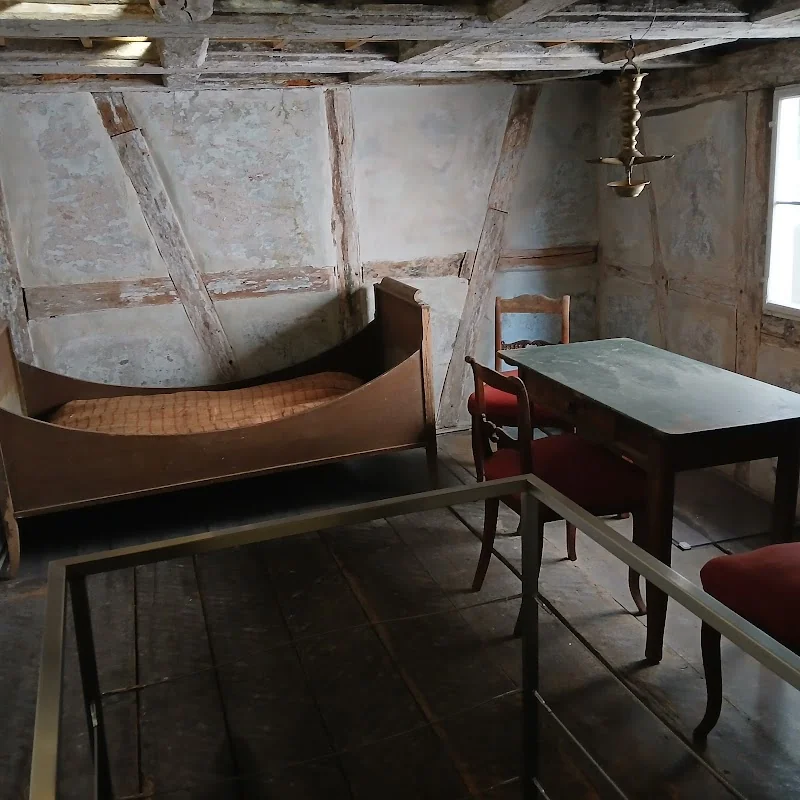
The interest in photos at the Jewish Museum Franconia in Fürth is absolutely understandable, as the place appears very visually striking even on the official pages. The museum's website shows the residence of the printing family Fromm, the extension, views into the foyer, and other exterior views; it immediately becomes clear how closely historical heritage and modern extension are connected. At the same time, the visitor information refers to the Mary S. Rosenberg Café, the Alfred Heilbronn museum garden, the Jakob Wassermann bookstore, and the museum shop. This mix of exhibition, stay, and public cultural space makes the visit multifaceted: One does not come only for individual showcases but experiences an ensemble of rooms, paths, and small resting places. The exhibition page also addresses this multidimensionality, as it additionally links to a virtual museum, a virtual tour of the house, and a panoramic version of the Fürth schoolyard. This is interesting for people who want to orient themselves in advance or are specifically looking for images and spatial effects. The photos convey not only architecture but also atmosphere: a historical place that does not appear museum-like and frozen but shows itself openly, learning-oriented, and contemporary. This is precisely what makes the place so memorable for many visitors. Those searching for reviews or impressions online typically find a strong connection between authenticity, history, and lively presentation. The museum itself provides the appropriate stage for this, as it repeatedly shows that Jewish life in Franconia is not a distant past but part of a history that is still palpable today. ([juedisches-museum.org](https://www.juedisches-museum.org/museum/))
For a successful visit, it is worthwhile to plan the appointment not only according to opening hours but also according to one's interest: Those who want to experience the permanent exhibition in detail should allow enough time for the historical stations, the rooms, and the additional offerings. Those focusing more on photos, architecture, and first impressions benefit from the virtual offerings and the clear image motifs on the website. And those who want to experience the place with a guided tour can particularly well place the historical depth of the house because the educational offerings range from the ritual bath to the sukkah to the major lines of Jewish history. This creates a museum visit that is equally informative, atmospheric, and well organized. ([juedisches-museum.org](https://www.juedisches-museum.org/fuehrungen/))
Sources:
Mehr anzeigenWeniger anzeigen
Jewish Museum Franconia in Fürth | Opening Hours & Exhibitions
The Jewish Museum Franconia in Fürth is more than just a classic exhibition venue: it connects a historical site at Königstraße 89 with a vibrant presentation of Jewish history in Franconia. The location in Fürth is part of a museum network with houses in Schnaittach and Schwabach; together they showcase the diversity of Franconian-Jewish life from its beginnings to the present. In Fürth, historical monuments, walk-in sukkahs, ritual baths, collections, and a modern extension come together. This creates a visit that not only informs but makes spaces, stories, and everyday culture directly experienceable. Those looking for photos, opening hours, exhibitions, or directions will find a house that consciously sees itself as a center for Jewish history and culture while also addressing current issues. For those who want to orient themselves in advance, it is particularly practical that the museum combines not only the permanent exhibition but also events, guided tours, a museum shop, a café, and other visitor offerings. ([juedisches-museum.org](https://www.juedisches-museum.org/museum/))
Opening Hours, Admission, and Visitor Services
For planning a visit, the opening hours in Fürth are particularly important: According to official visitor information, the Jewish Museum Franconia in Fürth is open from Tuesday to Sunday from 10 AM to 5 PM; Easter and Whit Monday are also regular opening days. The website also lists closing days, including Yom Kippur and December 2, 24, 25, 31, and January 1. Therefore, those arriving on holidays should always check the current status in advance. Admission prices are also transparently regulated: Fürth costs regularly 8 euros for the permanent and changing exhibitions, reduced 5 euros; further tiered prices apply for individual types of exhibitions, and a family ticket is also available. Certain groups can enter for free or receive further discounts. This makes the visit manageable, whether one comes alone, is traveling as a family, or is planning a longer cultural day in Fürth. It is especially pleasant that the location is more than just a ticket counter: The official site refers to the Mary S. Rosenberg Café, the Jakob Wassermann bookstore, and the museum shop, making it easy to turn the museum visit into a quiet stay with breaks, browsing, and reflection. For all those looking for guided tours or group offers, the museum points to open offerings and bookable formats with their own prices and registration options. ([juedisches-museum.org](https://www.juedisches-museum.org/besuch/?utm_source=openai))
Permanent Exhibition and Current Exhibitions
The central search interest surrounding the Jewish Museum Franconia in Fürth is almost always the exhibition, and this is precisely where the house unfolds its greatest strength. The permanent exhibition is titled History & Present of Jewish Life in JMF Fürth and presents Jewish life not as an abstract teaching theme but as concrete cultural and everyday history. According to the official museum description, the Fürth permanent exhibition showcases one of the most impressive collections of Franconian-Jewish culture. In 16 stations, Jewish life is traced from medieval beginnings to the present, highlighting themes such as home and exile, tradition and adaptation, destruction and new beginnings. The tour works with Judaica, everyday objects, historical spaces, and original testimonies, making history tangible. Those viewing the changing exhibitions will also see that the museum not only preserves but opens up new perspectives: On the official exhibition page, the areas of changing exhibitions, permanent exhibitions, virtual museum, and archive are clearly separated, showcasing the breadth of the house. For the visitor, this means: An appointment in Fürth can always look different because, alongside the fixed historical framework, additional formats, current themes, and digital access are available. It is precisely in the interplay of historical location and modern presentation that a visit is created that works on multiple levels. One can experience the exhibition as a first visit, as a repeat with new content, or as a supplement to guided tours, events, and digital offerings. ([museum.de](https://www.museum.de/museen/j%C3%BCdisches-museum-franken?utm_source=openai))
Directions, Parking, and Location at Königstraße 89
The location of the Jewish Museum Franconia in Fürth is a great advantage for many visitors, as the address Königstraße 89 is very central in the city. The official visitor information explicitly recommends the U-Bahn line U1 to Fürth Rathaus for arrival. Those coming by car will find the City Center underground garage at Königstraße 112-114 as a specific parking option within walking distance. This allows the visit to be easily integrated into a city stroll or a cultural walk without a long lead time. For orientation on-site, it is also helpful that the museum is accessible at Königstraße 89 or via the side entrance; this information also appears in the contact section of the website. The central location fits the function of the house: It is not just a museum in the classical sense but also a starting point for engaging with Jewish sites in Fürth and the Franconian environment. Therefore, those searching for directions, parking, and Königstraße receive not just an address but a well-embedded location with clear indications for various means of transport. This is particularly useful for day visitors, school classes, families, or groups who wish to combine the visit with additional stops. Those interested in the surroundings will also benefit from the fact that the city center, the town hall area, and other cultural sites are located close together. Practically, this means: Arriving is easy, orientation is clear, and the first step into the museum begins without complicated paths. ([juedisches-museum.org](https://www.juedisches-museum.org/besuch/))
History of the House and Jewish Life in Fürth
Those searching for the history of the Jewish Museum Franconia in Fürth quickly encounter a multifaceted narrative that goes far beyond a single building. The museum itself describes Franconia as a significant cradle of Jewish life in Southern Germany and sees itself as a center for knowledge and understanding of Jewish history and culture in Franconia. In Fürth, this history is particularly dense, as the city, according to the museum tour, has nearly 500 years of Jewish life and was the center of Jewish religiosity in Southern Germany from the 17th to the 19th century. This historical depth makes the location so appealing: The exhibition does not stand isolated in space but in an environment where Jewish history, urban development, and architecture come together. The museum's buildings originate from historical monuments from the 16th to 18th centuries, and the Fürth location is connected to the residence of the printing family Fromm. The guided tours also mention the families Fromm, Anspacher, and Arnstein, who lived there, whose living spaces are now part of the museum's narrative. For the visitor, this results in no distanced historical image but a concrete time travel: Life worlds, religious practices, social conflicts, and the development of Jewish communities become visible in the architectural and spatial context. The museum also emphasizes that it does not limit its work to the past but participates in current social debates. This connection between historical substance and contemporary relevance gives the house its special significance in Fürth and far beyond. ([juedisches-museum.org](https://www.juedisches-museum.org/museum/))
Accessibility and Guided Tours for Groups
Even regarding accessibility and guided tours, the Jewish Museum Franconia in Fürth provides concrete information that makes the visit more manageable. The official visitor information states that the new building in Fürth is barrier-free, while the old building is only partially accessible. Several exhibition levels are reachable by elevator, but there are different floor levels, door thresholds, and historical stairs; the sukkah and the mikveh are not accessible for wheelchair users. For this reason, the museum recommends accompaniment when visiting the old building. This honest and detailed communication is helpful as it does not create false expectations while still keeping many areas accessible. Those who prefer to come with a guided tour will also find a wide range of offerings: The museum offers bookable group tours, open offerings, city tours, museum tours, and cemetery tours. For Fürth, tours can be booked in German, English, and Russian; the number of participants per group is limited to 15 people. The content covers very different questions, from Jewish holidays and rituals to the history of Jewish life in Fürth and cemetery and city routes. This means the museum addresses not only individual visitors but also school classes, families, multipliers, and culturally historically interested groups. Therefore, those searching for guided tours, barrier-free access, or practical visiting conditions receive a rarely clear combination of historical depth and organizational transparency. This is a significant advantage for groups, as the museum visit can be well prepared in advance. ([juedisches-museum.org](https://www.juedisches-museum.org/besuch/))
Photos, Spaces, and Special Impressions
The interest in photos at the Jewish Museum Franconia in Fürth is absolutely understandable, as the place appears very visually striking even on the official pages. The museum's website shows the residence of the printing family Fromm, the extension, views into the foyer, and other exterior views; it immediately becomes clear how closely historical heritage and modern extension are connected. At the same time, the visitor information refers to the Mary S. Rosenberg Café, the Alfred Heilbronn museum garden, the Jakob Wassermann bookstore, and the museum shop. This mix of exhibition, stay, and public cultural space makes the visit multifaceted: One does not come only for individual showcases but experiences an ensemble of rooms, paths, and small resting places. The exhibition page also addresses this multidimensionality, as it additionally links to a virtual museum, a virtual tour of the house, and a panoramic version of the Fürth schoolyard. This is interesting for people who want to orient themselves in advance or are specifically looking for images and spatial effects. The photos convey not only architecture but also atmosphere: a historical place that does not appear museum-like and frozen but shows itself openly, learning-oriented, and contemporary. This is precisely what makes the place so memorable for many visitors. Those searching for reviews or impressions online typically find a strong connection between authenticity, history, and lively presentation. The museum itself provides the appropriate stage for this, as it repeatedly shows that Jewish life in Franconia is not a distant past but part of a history that is still palpable today. ([juedisches-museum.org](https://www.juedisches-museum.org/museum/))
For a successful visit, it is worthwhile to plan the appointment not only according to opening hours but also according to one's interest: Those who want to experience the permanent exhibition in detail should allow enough time for the historical stations, the rooms, and the additional offerings. Those focusing more on photos, architecture, and first impressions benefit from the virtual offerings and the clear image motifs on the website. And those who want to experience the place with a guided tour can particularly well place the historical depth of the house because the educational offerings range from the ritual bath to the sukkah to the major lines of Jewish history. This creates a museum visit that is equally informative, atmospheric, and well organized. ([juedisches-museum.org](https://www.juedisches-museum.org/fuehrungen/))
Sources:
Jewish Museum Franconia in Fürth | Opening Hours & Exhibitions
The Jewish Museum Franconia in Fürth is more than just a classic exhibition venue: it connects a historical site at Königstraße 89 with a vibrant presentation of Jewish history in Franconia. The location in Fürth is part of a museum network with houses in Schnaittach and Schwabach; together they showcase the diversity of Franconian-Jewish life from its beginnings to the present. In Fürth, historical monuments, walk-in sukkahs, ritual baths, collections, and a modern extension come together. This creates a visit that not only informs but makes spaces, stories, and everyday culture directly experienceable. Those looking for photos, opening hours, exhibitions, or directions will find a house that consciously sees itself as a center for Jewish history and culture while also addressing current issues. For those who want to orient themselves in advance, it is particularly practical that the museum combines not only the permanent exhibition but also events, guided tours, a museum shop, a café, and other visitor offerings. ([juedisches-museum.org](https://www.juedisches-museum.org/museum/))
Opening Hours, Admission, and Visitor Services
For planning a visit, the opening hours in Fürth are particularly important: According to official visitor information, the Jewish Museum Franconia in Fürth is open from Tuesday to Sunday from 10 AM to 5 PM; Easter and Whit Monday are also regular opening days. The website also lists closing days, including Yom Kippur and December 2, 24, 25, 31, and January 1. Therefore, those arriving on holidays should always check the current status in advance. Admission prices are also transparently regulated: Fürth costs regularly 8 euros for the permanent and changing exhibitions, reduced 5 euros; further tiered prices apply for individual types of exhibitions, and a family ticket is also available. Certain groups can enter for free or receive further discounts. This makes the visit manageable, whether one comes alone, is traveling as a family, or is planning a longer cultural day in Fürth. It is especially pleasant that the location is more than just a ticket counter: The official site refers to the Mary S. Rosenberg Café, the Jakob Wassermann bookstore, and the museum shop, making it easy to turn the museum visit into a quiet stay with breaks, browsing, and reflection. For all those looking for guided tours or group offers, the museum points to open offerings and bookable formats with their own prices and registration options. ([juedisches-museum.org](https://www.juedisches-museum.org/besuch/?utm_source=openai))
Permanent Exhibition and Current Exhibitions
The central search interest surrounding the Jewish Museum Franconia in Fürth is almost always the exhibition, and this is precisely where the house unfolds its greatest strength. The permanent exhibition is titled History & Present of Jewish Life in JMF Fürth and presents Jewish life not as an abstract teaching theme but as concrete cultural and everyday history. According to the official museum description, the Fürth permanent exhibition showcases one of the most impressive collections of Franconian-Jewish culture. In 16 stations, Jewish life is traced from medieval beginnings to the present, highlighting themes such as home and exile, tradition and adaptation, destruction and new beginnings. The tour works with Judaica, everyday objects, historical spaces, and original testimonies, making history tangible. Those viewing the changing exhibitions will also see that the museum not only preserves but opens up new perspectives: On the official exhibition page, the areas of changing exhibitions, permanent exhibitions, virtual museum, and archive are clearly separated, showcasing the breadth of the house. For the visitor, this means: An appointment in Fürth can always look different because, alongside the fixed historical framework, additional formats, current themes, and digital access are available. It is precisely in the interplay of historical location and modern presentation that a visit is created that works on multiple levels. One can experience the exhibition as a first visit, as a repeat with new content, or as a supplement to guided tours, events, and digital offerings. ([museum.de](https://www.museum.de/museen/j%C3%BCdisches-museum-franken?utm_source=openai))
Directions, Parking, and Location at Königstraße 89
The location of the Jewish Museum Franconia in Fürth is a great advantage for many visitors, as the address Königstraße 89 is very central in the city. The official visitor information explicitly recommends the U-Bahn line U1 to Fürth Rathaus for arrival. Those coming by car will find the City Center underground garage at Königstraße 112-114 as a specific parking option within walking distance. This allows the visit to be easily integrated into a city stroll or a cultural walk without a long lead time. For orientation on-site, it is also helpful that the museum is accessible at Königstraße 89 or via the side entrance; this information also appears in the contact section of the website. The central location fits the function of the house: It is not just a museum in the classical sense but also a starting point for engaging with Jewish sites in Fürth and the Franconian environment. Therefore, those searching for directions, parking, and Königstraße receive not just an address but a well-embedded location with clear indications for various means of transport. This is particularly useful for day visitors, school classes, families, or groups who wish to combine the visit with additional stops. Those interested in the surroundings will also benefit from the fact that the city center, the town hall area, and other cultural sites are located close together. Practically, this means: Arriving is easy, orientation is clear, and the first step into the museum begins without complicated paths. ([juedisches-museum.org](https://www.juedisches-museum.org/besuch/))
History of the House and Jewish Life in Fürth
Those searching for the history of the Jewish Museum Franconia in Fürth quickly encounter a multifaceted narrative that goes far beyond a single building. The museum itself describes Franconia as a significant cradle of Jewish life in Southern Germany and sees itself as a center for knowledge and understanding of Jewish history and culture in Franconia. In Fürth, this history is particularly dense, as the city, according to the museum tour, has nearly 500 years of Jewish life and was the center of Jewish religiosity in Southern Germany from the 17th to the 19th century. This historical depth makes the location so appealing: The exhibition does not stand isolated in space but in an environment where Jewish history, urban development, and architecture come together. The museum's buildings originate from historical monuments from the 16th to 18th centuries, and the Fürth location is connected to the residence of the printing family Fromm. The guided tours also mention the families Fromm, Anspacher, and Arnstein, who lived there, whose living spaces are now part of the museum's narrative. For the visitor, this results in no distanced historical image but a concrete time travel: Life worlds, religious practices, social conflicts, and the development of Jewish communities become visible in the architectural and spatial context. The museum also emphasizes that it does not limit its work to the past but participates in current social debates. This connection between historical substance and contemporary relevance gives the house its special significance in Fürth and far beyond. ([juedisches-museum.org](https://www.juedisches-museum.org/museum/))
Accessibility and Guided Tours for Groups
Even regarding accessibility and guided tours, the Jewish Museum Franconia in Fürth provides concrete information that makes the visit more manageable. The official visitor information states that the new building in Fürth is barrier-free, while the old building is only partially accessible. Several exhibition levels are reachable by elevator, but there are different floor levels, door thresholds, and historical stairs; the sukkah and the mikveh are not accessible for wheelchair users. For this reason, the museum recommends accompaniment when visiting the old building. This honest and detailed communication is helpful as it does not create false expectations while still keeping many areas accessible. Those who prefer to come with a guided tour will also find a wide range of offerings: The museum offers bookable group tours, open offerings, city tours, museum tours, and cemetery tours. For Fürth, tours can be booked in German, English, and Russian; the number of participants per group is limited to 15 people. The content covers very different questions, from Jewish holidays and rituals to the history of Jewish life in Fürth and cemetery and city routes. This means the museum addresses not only individual visitors but also school classes, families, multipliers, and culturally historically interested groups. Therefore, those searching for guided tours, barrier-free access, or practical visiting conditions receive a rarely clear combination of historical depth and organizational transparency. This is a significant advantage for groups, as the museum visit can be well prepared in advance. ([juedisches-museum.org](https://www.juedisches-museum.org/besuch/))
Photos, Spaces, and Special Impressions
The interest in photos at the Jewish Museum Franconia in Fürth is absolutely understandable, as the place appears very visually striking even on the official pages. The museum's website shows the residence of the printing family Fromm, the extension, views into the foyer, and other exterior views; it immediately becomes clear how closely historical heritage and modern extension are connected. At the same time, the visitor information refers to the Mary S. Rosenberg Café, the Alfred Heilbronn museum garden, the Jakob Wassermann bookstore, and the museum shop. This mix of exhibition, stay, and public cultural space makes the visit multifaceted: One does not come only for individual showcases but experiences an ensemble of rooms, paths, and small resting places. The exhibition page also addresses this multidimensionality, as it additionally links to a virtual museum, a virtual tour of the house, and a panoramic version of the Fürth schoolyard. This is interesting for people who want to orient themselves in advance or are specifically looking for images and spatial effects. The photos convey not only architecture but also atmosphere: a historical place that does not appear museum-like and frozen but shows itself openly, learning-oriented, and contemporary. This is precisely what makes the place so memorable for many visitors. Those searching for reviews or impressions online typically find a strong connection between authenticity, history, and lively presentation. The museum itself provides the appropriate stage for this, as it repeatedly shows that Jewish life in Franconia is not a distant past but part of a history that is still palpable today. ([juedisches-museum.org](https://www.juedisches-museum.org/museum/))
For a successful visit, it is worthwhile to plan the appointment not only according to opening hours but also according to one's interest: Those who want to experience the permanent exhibition in detail should allow enough time for the historical stations, the rooms, and the additional offerings. Those focusing more on photos, architecture, and first impressions benefit from the virtual offerings and the clear image motifs on the website. And those who want to experience the place with a guided tour can particularly well place the historical depth of the house because the educational offerings range from the ritual bath to the sukkah to the major lines of Jewish history. This creates a museum visit that is equally informative, atmospheric, and well organized. ([juedisches-museum.org](https://www.juedisches-museum.org/fuehrungen/))
Sources:
Upcoming Events
Jewish Recipes Baking in the Museum Kitchen: Lemon Tart
A holiday experience full of scent, knowledge, and enjoyment in Fürth: Children bake lemon tarts, discover Passover, and take a sample home. #FamilyTime
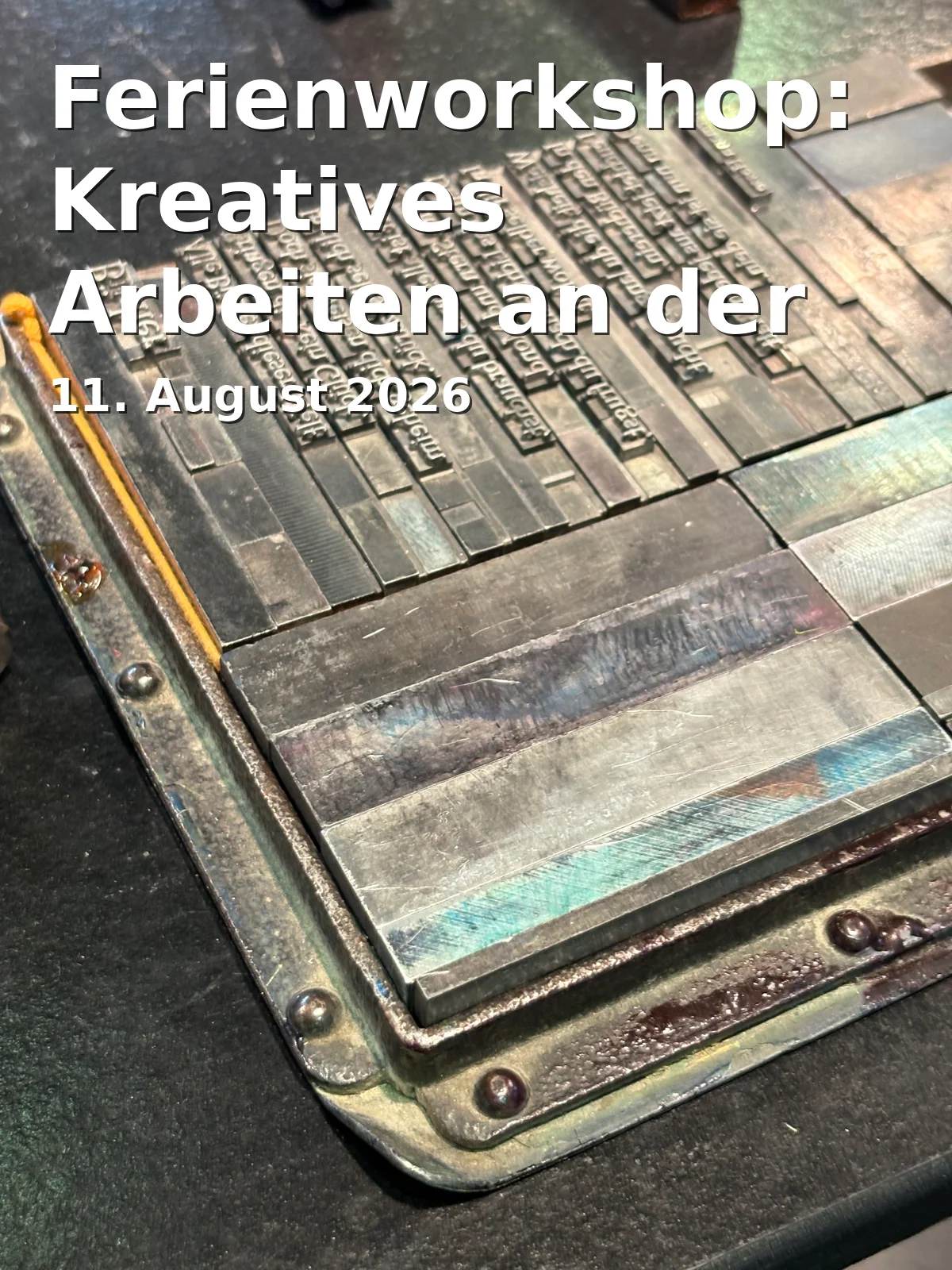
Holiday Workshop: Creative Work at the Printing Press
At the Jewish Museum in Fürth, children and teenagers create their own motifs and print them on a mobile printing press.
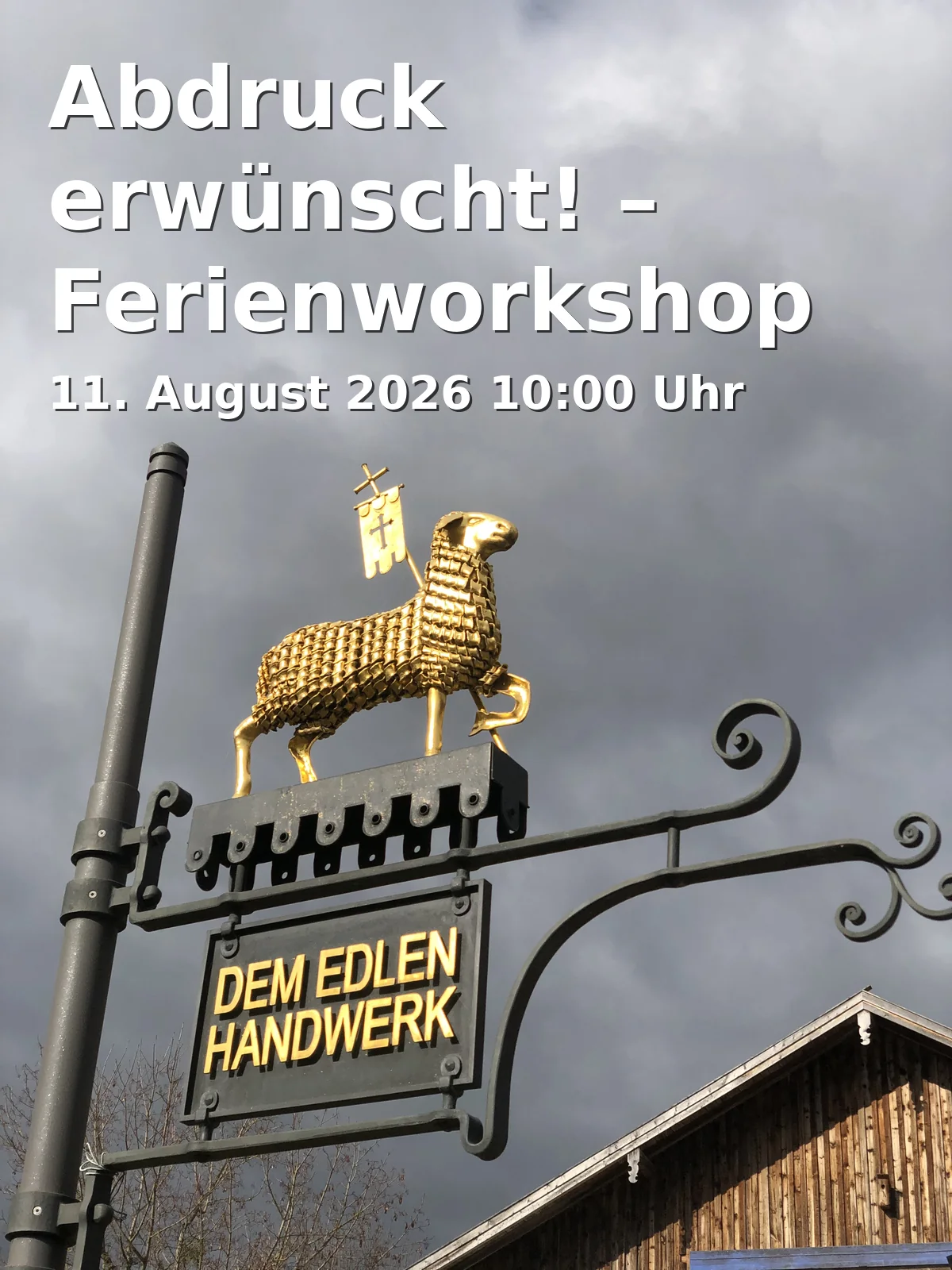
Prints Welcome! – Holiday Workshop with Printing Press in Fürth
Colors, shapes, and history come together in Fürth: In the holiday workshop Prints Welcome!, participants create their own prints. 11.08.2026, 10 AM to 2 PM, 8 Euros. #Fürth
Masl Tow! Tour for the 200th Birthday of Leopold Ullstein
Celebrate the 200th birthday of Leopold Ullstein in Fürth. Discover Jewish history on an exciting tour.
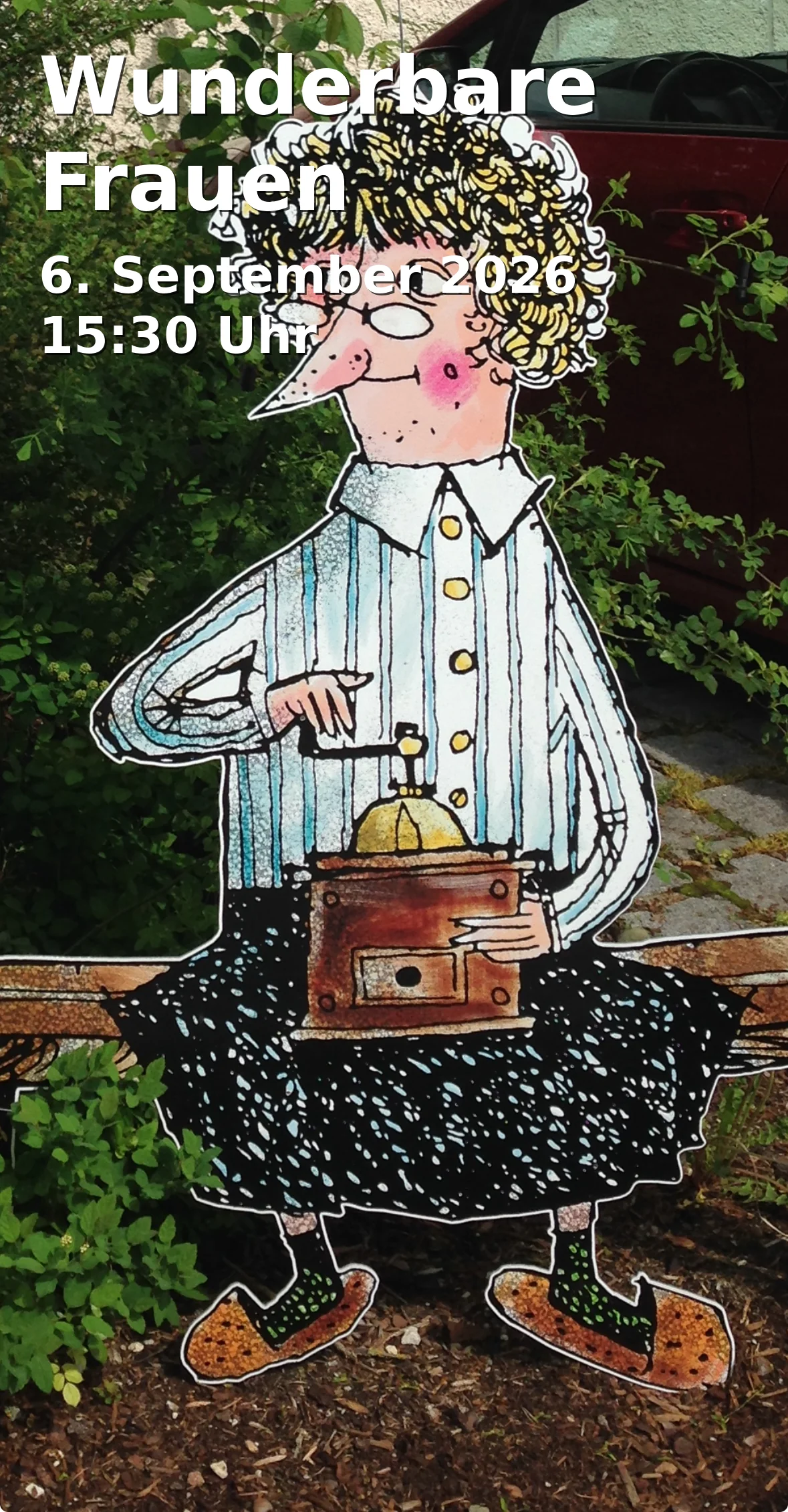
Wonderful Women
A special cultural event in Fürth: Wonderful Women connects religion, history, and female strength. On 06.09.2026 at 15:30. #Fürth #Culture
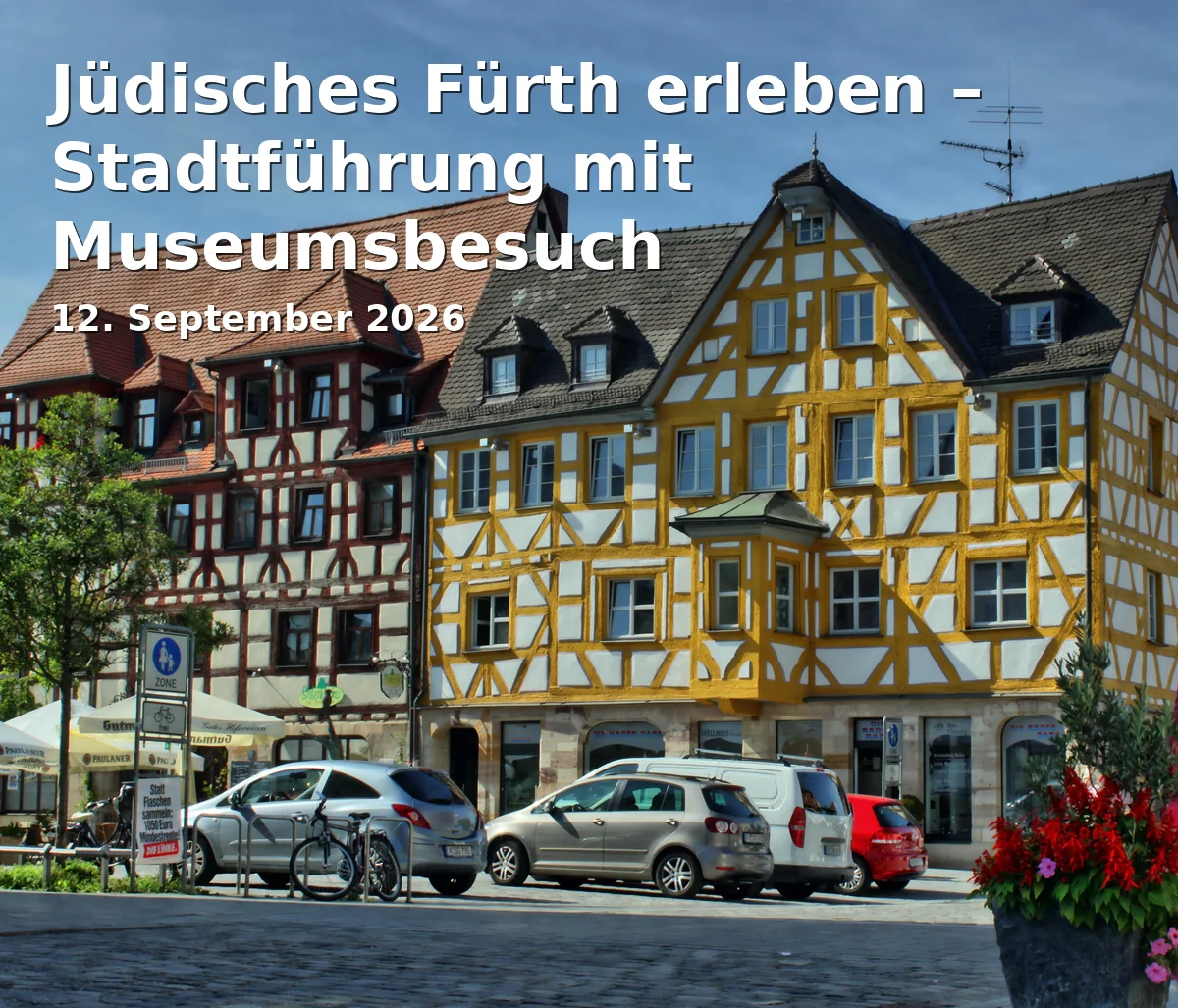
Experience Jewish Fürth – City Tour with Museum Visit
Experience the history of Jewish life in Fürth through a city tour with a museum visit.
A Good Start!
Open tour for the Jewish New Year festival Rosh Hashanah
Time Travel with Virtual Reality – the Synagogues of Fürth
A virtual time travel to Jewish Fürth: The historical courtyard becomes visible again in the museum. On 13.09.2026, free admission. #Fürth #History
The Synagogues of Fürth - a virtual journey through time
An emotional VR journey into Jewish Fürth: Experience synagogues, schoolyard, and cultural memory at Museum Franken. 13.09.2026, free admission. #Fürth
The Krautheimer Crèche in Fürth – Tour at the Jewish Museum Franconia
Hidden spaces, strong history, free admission: The Krautheimer Crèche in Fürth tells about care and remembrance from 13.09.2026 at 4 PM. #Fürth #Museum
Frequently Asked Questions
Reviews
Dominic Roussel
11. July 2017
Wonderful exhibit that pays great tribute to the Jewish families of the area. The staff is exemplary. Going above and beyond to fulfill their mandate. The energy and devotion is felt when going on a tour with them. With new expansions in progress, there is a lot to look forward to.
Ian Stenning
3. February 2020
The good: Light and airy museum with many artifacts/show pieces on Jewish life from religion, day to day life and of course persecution. Most exhibits had both German and English descriptions (great for myself and guests from the UK). I particularly enjoyed the ink stamps available of the Hebrew alphabet to write with. There was also a lady baking a traditional cake for people to try too (we visited Sunday afternoon). The not so good: As non Jewish I would have liked to have learnt more about the religion itself. From the reception area we immediately found ourselves in the kitchen (not knowing if we were supposed to be in there), and then up a floor into random objects. I couldn't get an immediate feel for any particular timeline or story as to what each room/floor was trying to achieve and took a while to realise that the building itself had some importance to local Jewish life. Although the visit was at times interesting, I certainly wouldn't bring future guests there as a 'must-see', which is a shame. I feel like it is capable of much more.
Stefan Munker
1. November 2018
An excellent portrayal of Jewish life and local history in an original home. Of special interest are the big ritual bath, and feast of booths room. Ask about special exhibits.
aa
25. January 2023
I recommend! Wish it was open for bit longer; it's a great, highly authentic museum nonetheless.
Daniel lischinsky
18. August 2021
Loved it! Educational! Very important not to forget the Jewish past in Fürth!