
Susi Juvan
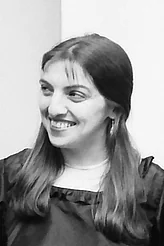
Image from Wikipedia
Image from Wikipedia
Susi Juvan – Painting between Perception, Memory, and Image Space
A significant German artist with a distinct style and strong presence in the art scene
Susi Juvan, born on February 5, 1952, in Ebersbach-Musbach, is one of the prominent contemporary German artists, combining observation, composition, and painterly density into an unmistakable visual language. Her art is not aimed at quick effects but at precise seeing, layering impressions, and a logic of images that continually draws the viewer into the space. She lives and works in Freiburg and Basel and has been exhibiting in museums, art associations, and galleries for decades. ([de.wikipedia.org](https://de.wikipedia.org/wiki/Susi_Juvan))
Biographical Roots between Upper Swabia, Karlsruhe, and Freiburg
Susi Juvan's artistic development begins in Upper Swabia and early on leads her into international and academic contexts. From 1968 to 1972, she studied drawing, painting, and design at Pasadena City College in Los Angeles County, before completing her studies at the State Academy of Fine Arts Karlsruhe, Freiburg branch, in 1978 as a master student of Peter Dreher. These stages already mark the foundation of her later work: precise observation, painterly discipline, and a sensitive handling of surface, light, and image structure. ([de.wikipedia.org](https://de.wikipedia.org/wiki/Susi_Juvan))
Her career is closely tied to Southwest Germany, yet it has never remained provincial. Early on, she emerges as a painter who engages with the possibilities of the image without confining herself to a single motif or rigid scheme. The official documentation of her career indicates exhibitions in art associations, galleries, and museums in Germany and abroad since 1975 – a sign of a continuously developed, independent position in the art field. ([susi-juvan.de](https://susi-juvan.de/Susi-Juvan/cv/))
The Artistic Breakthrough: Exhibitions, Awards, and Recognition
Recognition for Susi Juvan has grown over the years through exhibitions and awards. In 1979, she received the Upper Swabian Art Prize, the Reinhold-Schneider Prize as a support prize in 1982, and later received further important accolades, including the Reinhold-Schneider Prize in 2016. Such awards are not merely biographical data but mark the resonance of a work perceived as serious, consistent, and exceptional in its imagery within the art scene. ([de.wikipedia.org](https://de.wikipedia.org/wiki/Susi_Juvan))
Significant milestones in her exhibition history include presentations at the Zeppelin Museum Friedrichshafen, Kunstverein Freiburg, Kunstverein Pforzheim, the City Gallery Fruchthalle Rastatt, and the Morat Institute Freiburg. At the latest, the retrospective at the Morat Institute and the subsequent presentation at the Museum for New Art Freiburg underscore that Susi Juvan is not only viewed as a regional painter but as an artist of museum relevance. ([de.wikipedia.org](https://de.wikipedia.org/wiki/Susi_Juvan))
Painting as a Method: From Object to Structure
Juvan's painting works with models, found motifs, and collection images, without tipping into mere representation. An official museum contribution describes that she works with private snapshots, newspaper photos, or classic portrait paintings; the pure reference is not what is important, but rather the transformation in the painting process. Thus, images arise where the motif becomes a trigger for composition, rhythm, and color decisions. ([freiburg.de](https://www.freiburg.de/pb/2406890.html?utm_source=openai))
The technique also clearly shows her artistic development. Initially, Juvan painted large-scale works in egg tempera; later she switched to a mixed technique of oil and acrylic paint and has recently preferred to work with acrylic. This material history explains the special openness of her surfaces: transparent layers, condensed parts, gestural settings, and a composition that oscillates between control and openness. ([de.wikipedia.org](https://de.wikipedia.org/wiki/Susi_Juvan))
Image Space, Perception, and the Poetics of Seeing
A central key to Susi Juvan's work lies in the way she organizes space. In her texts and descriptions of works, it becomes clear that she does not think in classical central perspective but intertwines multiple viewpoints, levels, and moments of perception. Especially in the series around "Showcase" and in the work comments on "P·A·R·I·S·", a painting emerges that makes fleeting perception, memory, and the overlapping of viewpoints its actual theme. ([susi-juvan.de](https://susi-juvan.de/texts/showcase-views-of-fluid-space?utm_source=openai))
The texts of the artist and her conversational partners repeatedly emphasize that it is not about the individual object, but about the act of seeing itself. Horizons, stratifications, glass surfaces, reflections, and hidden parts create a logic of images where the gaze is never at rest. This focus on perception lends her work an analytical depth that goes beyond mere motif painting and connects to the great questions of modern painting. ([susi-juvan.de](https://susi-juvan.de/texts/showcase-views-of-fluid-space?utm_source=openai))
Significant Phases of Work and Exhibition Focuses
The overviews of her works on her official website show a long developmental line from the 1970s to the present. Series and groups of works such as "Life in the Armchair," "P·A·R·I·S·," "Showcase," "Berlin Triptych," "Versailles I-IV," and "Flick-Flack I-V" are mentioned. These titles already make it clear that Juvan likes to organize her visual worlds in multipart, serial formats, where variation, repetition, and change play a central role. ([susi-juvan.de](https://susi-juvan.de/))
This is particularly visible in exhibitions that show her development over time. The selection of exhibitions ranges from early presentations such as "Self-Talk" in 1978 and "Four Women" in 1980 to "Susi Juvan – Works on Paper" in 1993, to "Susi Juvan – Painting" in 2010 and the exhibition "Friendship Game Collection Grässlin: Museum for New Art" in 2019. This continuity attests to a career that does not respond to short-term trends but emphasizes painterly consistency. ([susi-juvan.de](https://susi-juvan.de/Susi-Juvan/exhibitions/))
Current Presence and New Visibility in 2025
Currently, Susi Juvan remains visible in the public art context. The Museum for New Art Freiburg displayed eight paintings from its own collection in a space of the permanent collection starting from May 13, 2025; the presentation will run until March 2026. Additionally, the municipal museum's website points out this selection is placed in the larger context of collection practices and the visibility of women artists. ([freiburg.de](https://www.freiburg.de/pb/2406890.html?utm_source=openai))
In conjunction, tours and program points revolving around her works took place in 2025, including at the Museum for New Art. Works from the years 1997 to 2019 were highlighted there, including "The One and the Other" and the five-part series "Kid." This shows that Juvan's art is not archived but remains a part of a lively museum communication and a current art historical debate. ([visit.freiburg.de](https://visit.freiburg.de/fuehrung-susi-juvan?utm_source=openai))
Cultural Influence and Art Historical Classification
Susi Juvan belongs to that generation of female artists who assert painting as an open field of thought. Her work connects objectivity, memory, and formal rigor while simultaneously being placed in the context of post-war and contemporary art in Southwest Germany. Her repeated presence within the context of the Museum for New Art Freiburg, the Morat Institute, and the art public in Freiburg speaks to a growing authority within the regional and supra-regional art scene. ([freiburg.de](https://www.freiburg.de/pb/2406890.html?utm_source=openai))
Moreover, there is a clear exhibition culture that reads her painting not as isolated single pieces but as a cohesive oeuvre. Awards, scholarships, stays abroad in Paris, Rome, and Cape Town, as well as membership in the Künstlerbund Baden-Württemberg, portray the image of an artist whose work is shaped by stations, exchange, and continuity. This creates an overall profile that remains relevant for collectors, museums, and art-interested visitors alike. ([susi-juvan.de](https://susi-juvan.de/Susi-Juvan/cv/))
Conclusion: A Painter Who Sharpens the Gaze and Opens the Image Space
Susi Juvan is fascinating because her art relies on quiet but intense means: on layering rather than volume, on perception rather than pose, and on painterly precision rather than mere effect. Her career reflects the consistency of an artist who has developed an unmistakable style over decades, asserting a firm place in contemporary painting. Those who see her works live experience not only images but also a school of seeing. ([de.wikipedia.org](https://de.wikipedia.org/wiki/Susi_Juvan))
A visit to the exhibitions is especially worthwhile because Juvan's painting unfolds its full effect in space: color, surface, layering, and image depth reveal a presence on site that any reproduction can only hint at. This is precisely the strength of this artist – and the reason why her works deserve continued attention. ([freiburg.de](https://www.freiburg.de/pb/2406890.html?utm_source=openai))
Official Channels of Susi Juvan:
- Instagram: No official profile found
- Facebook: No official profile found
- YouTube: No official profile found
- Spotify: No official profile found
- TikTok: No official profile found
Sources:
- Wikipedia – Susi Juvan
- Susi Juvan – Official Website
- Susi Juvan – CV
- Susi Juvan – Exhibitions
- Susi Juvan – News
- Susi Juvan – Archive
- Susi Juvan – Showcase. Views of fluid space
- City of Freiburg – Works by Susi Juvan at the Museum for New Art
- Freiburg Museums – Collection Showcase
- visit.freiburg.de – Tour: Susi Juvan
- Morat Institute – Works by Susi Juvan
- Wikipedia: Image and text source