
Susanne Siegert
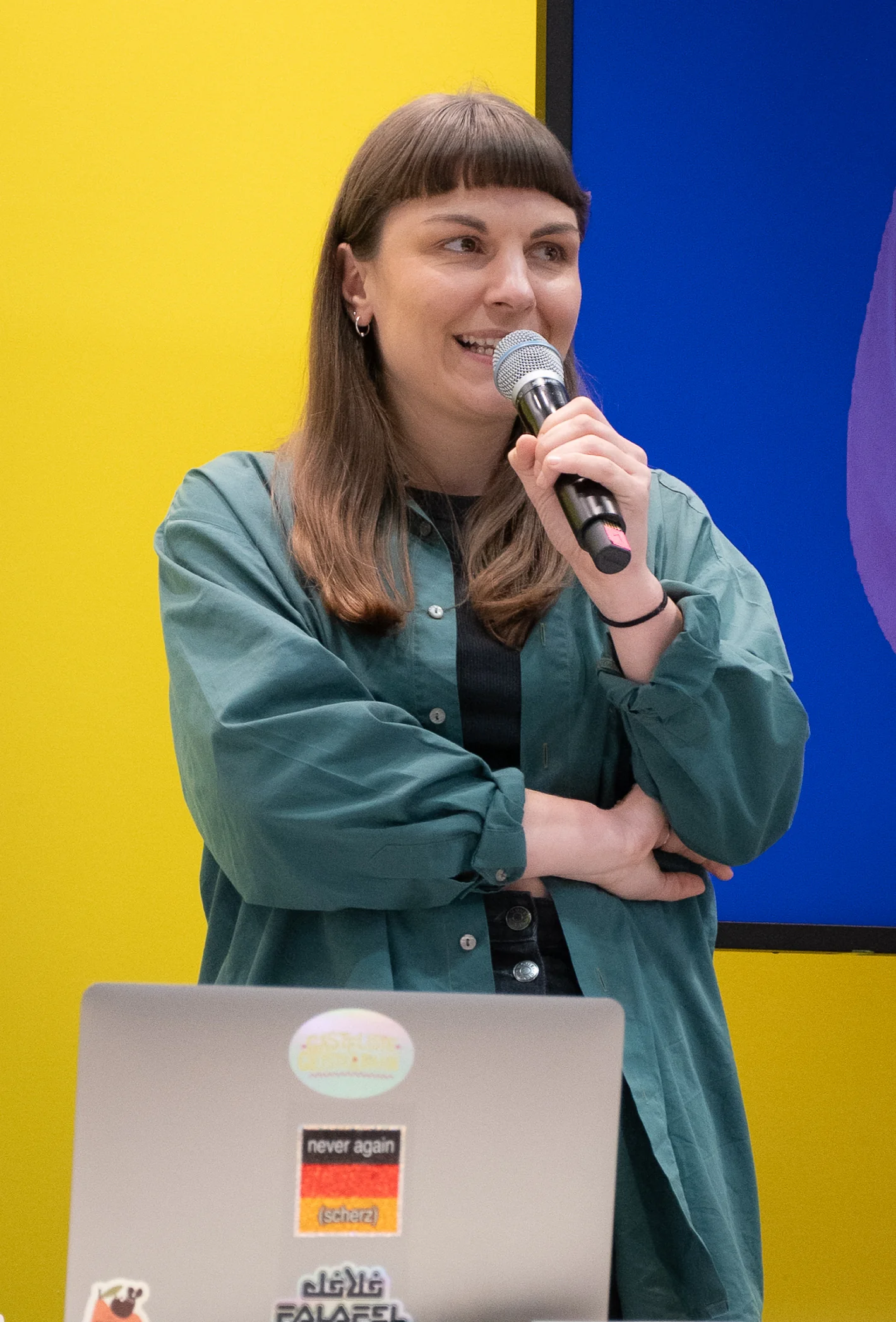
Image from Wikipedia
Image from Wikipedia
Susanne Siegert: The Voice of a New Culture of Remembrance in the Digital Age
A Journalist Tailoring History to the Present
Susanne Siegert belongs to a generation of authors and digital mediators who understand the culture of remembrance not as a ritual, but as a vibrant public task. Born in 1992, she worked in online marketing and public relations, including a position as a speaker at the Arolsen Archives, before focusing more on digital history communication since 2022. She is particularly known for her educational work on Holocaust Education, Nazi crimes, and historically-political education on social media. ([de.wikipedia.org](https://de.wikipedia.org/wiki/Susanne_Siegert?utm_source=openai))
Biographical Development: From Research Focus to Public Communication
The core of Siegert's work lies in the connection between journalistic research, pedagogical clarity, and social responsibility. She informs about the history of National Socialism not abstractly, but through concrete biographies, sources, and local references, making historical events comprehensible to a broad audience. In interviews and portraits, she describes her aim to particularly reach young people and raise awareness about the Nazi past through her work. ([annefrank.de](https://www.annefrank.de/bildungsarbeit/projekte/erinnern-vor-ort/susanne-siegert?utm_source=openai))
Her popularity grew primarily through the account @keine.erinnerungskultur on Instagram and TikTok, where she publishes content on the Holocaust, memorial work, and culture of remembrance. Various media and institutions emphasize that her channel now achieves a significant reach, making her one of the visible voices of digital culture of remembrance in Germany. This public presence has made her a sought-after interlocutor for the press, educational initiatives, and museums. ([de.wikipedia.org](https://de.wikipedia.org/wiki/Susanne_Siegert?utm_source=openai))
Career and Breakthrough: Digital History Communication with Reach
Her actual breakthrough did not come through traditional media careers, but through building a digital brand with a clear thematic focus. Siegert utilizes short video formats to correct myths, contextualize sources, and make suppressed stories visible; she consistently emphasizes the responsibility of treating historical content with accuracy and respect in conversations. The combination of research closely tied to scholarship and accessible language is why her contributions not only achieve wide reach but also generate trust. ([web.de](https://web.de/magazine/wissen/geschichte/scrollen-erinnern-susanne-siegert-spricht-ns-verbrechen-tiktok-41083412?utm_source=openai))
Specialized audiences have also responded positively to this form of communication: The Grimme Institute identifies her TikTok channel as part of a new, relevant online public space where the culture of remembrance meets the logic of the platforms. Meanwhile, institutions such as the Brandenburg Memorials Foundation and the Federal Agency for Civic Education point out that her formats are part of a broader debate about digital education and historical responsibility. Siegert’s profile exemplifies a new type of journalism bridging social media, educational work, and public history. ([grimme-institut.de](https://www.grimme-institut.de/fileadmin/Grimme_Nutzer_Dateien/Online_Award/Dokumente/2024/GOA-Publikation_2024_2024-10-16.pdf?utm_source=openai))
Current Projects and Publications
Her recent projects include ongoing work on digitally conveying Holocaust history and the publication of her book "Reimagining Remembrance," which addresses a more personal, reflective approach to memory. In it, the author connects her practical experiences from social media with a broader cultural-political perspective on memorial culture. Press reports in 2024 and 2025 indicate that she is engaging in a debate that is being held in schools, memorial sites, and editorial offices alike. ([piper.de](https://www.piper.de/autoren/susanne-siegert-7903?utm_source=openai))
In recent interviews, she also discusses the limits and possibilities of platforms like TikTok and Instagram, source criticism, and the question of how young audiences can still be reached. This blend of present-day relevance and historical accuracy has made her work particularly significant in recent years. The response ranges from regional educational formats to nationwide media discussions and professional events. ([unicross.uni-freiburg.de](https://www.unicross.uni-freiburg.de/der-holocaust-im-tiktok-zeitalt/?utm_source=openai))
Signature Content: Historical Precision Over Mere Simplification
Siegert's style is precise, accessible, and clearly positioned. She works with historical original sources, contextualization, and employs a language that does not oversimplify complex issues but organizes them understandably. This creates a form of history communication that is neither didactic nor distant, but immediate, responsible, and relatable for a young audience. ([web.de](https://web.de/magazine/wissen/geschichte/scrollen-erinnern-susanne-siegert-spricht-ns-verbrechen-tiktok-41083412?utm_source=openai))
Her approach to social media as a site for historical education is particularly significant. Rather than seeking mere attention, she relies on traceable research methods, correction of half-truths, and a clear distinction between emotion and historical verifiability. This stance differentiates her work from superficial content production and grants it high credibility in public debate. ([unicross.uni-freiburg.de](https://www.unicross.uni-freiburg.de/der-holocaust-im-tiktok-zeitalt/?utm_source=openai))
Cultural Influence and Public Perception
Susanne Siegert has contributed to bringing culture of remembrance from institutional frameworks into the everyday life of digital public spheres. Media reports highlight how she conveys topics such as Holocaust myths, family research, and perpetrator history in a way that continues to resonate in comment sections, classrooms, and family conversations. This is precisely where her cultural significance lies: she does not make history smaller but closer. ([web.de](https://web.de/magazine/wissen/geschichte/scrollen-erinnern-susanne-siegert-spricht-ns-verbrechen-tiktok-41083412?utm_source=openai))
The reach of her account further underscores this influence. Various sources report more than 160,000, 190,000, or over 300,000 followers, which especially shows that her content reaches a large and growing public; exact numbers vary depending on the time of assessment and platform indication. What remains crucial is not just the sheer number, but the fact that historical education in a short video format here indeed generates resonance. ([politikorange.de](https://politikorange.de/startseite/2025/05/zwischen-social-media-und-realitaet-wie-wir-heute-erinnern/?utm_source=openai))
Conclusion: Why Susanne Siegert Remains So Engaging
Susanne Siegert is fascinating because she conveys a highly complex topic with journalistic clarity, digital sensibility, and a noticeable stance. She demonstrates that culture of remembrance is not static, but continually evolves in new media, new narrative forms, and new audiences. Anyone looking to understand how historical education operates in the 21st century will find in her work a concise and important example. ([bpb.de](https://www.bpb.de/lernen/digitale-bildung/werkstatt/549668/geschichte-n-im-kurzformat-wissensvermittlung-auf-tiktok/?utm_source=openai))
For this reason, it is worthwhile to continue following her work and to experience her directly at public readings, discussions, or digital formats. Susanne Siegert represents a culture of remembrance that not only preserves but actively conveys, challenges, and contextualizes. This is exactly where her special authority and ongoing relevance lie. ([gedenkstaetten-hamburg.de](https://www.gedenkstaetten-hamburg.de/de/aktuelles/news/gedenken-neu-denken-bericht-ueber-lesung-und-gespraech-mit-susanne-siegert?utm_source=openai))
Official Channels of Susanne Siegert:
- Instagram: https://www.instagram.com/keine.erinnerungskultur/
- TikTok: https://www.tiktok.com/@keine.erinnerungskultur
- Facebook: no official profile found
- YouTube: no official profile found
- Spotify: no official profile found
Sources:
- Wikipedia – Susanne Siegert
- Piper – Susanne Siegert
- FAZ – Influencer Susanne Siegert on Holocaust Memorial Work
- BRIGITTE – Susanne Siegert in Conversation about the Culture of Remembrance
- GEO – How Susanne Siegert Educates about the Holocaust on TikTok
- bpb – History in Short Formats
- Grimme Institute – Grimme Online Award Publication 2024
- Anne Frank Center – Susanne Siegert
- Gedenkstätten Hamburg – Rethinking Remembrance
- Hannoversche Allgemeine – keine.erinnerungskultur
Upcoming Events
Reimagining Remembrance with Susanne Siegert
An evening for all who want to see culture of remembrance anew: Susanne Siegert reads in Bonn about commemoration, responsibility, and attitude. 06.09.2026, 5 PM. #Bonn #CultureOfRemembrance
Reading & Discussion: Susanne Siegert reads from "Rethinking Remembrance"
An evening for clever minds: Susanne Siegert reads and speaks in Regensburg about new remembrance. 24.06.2026, admission free. #Literature