
Robert Redford
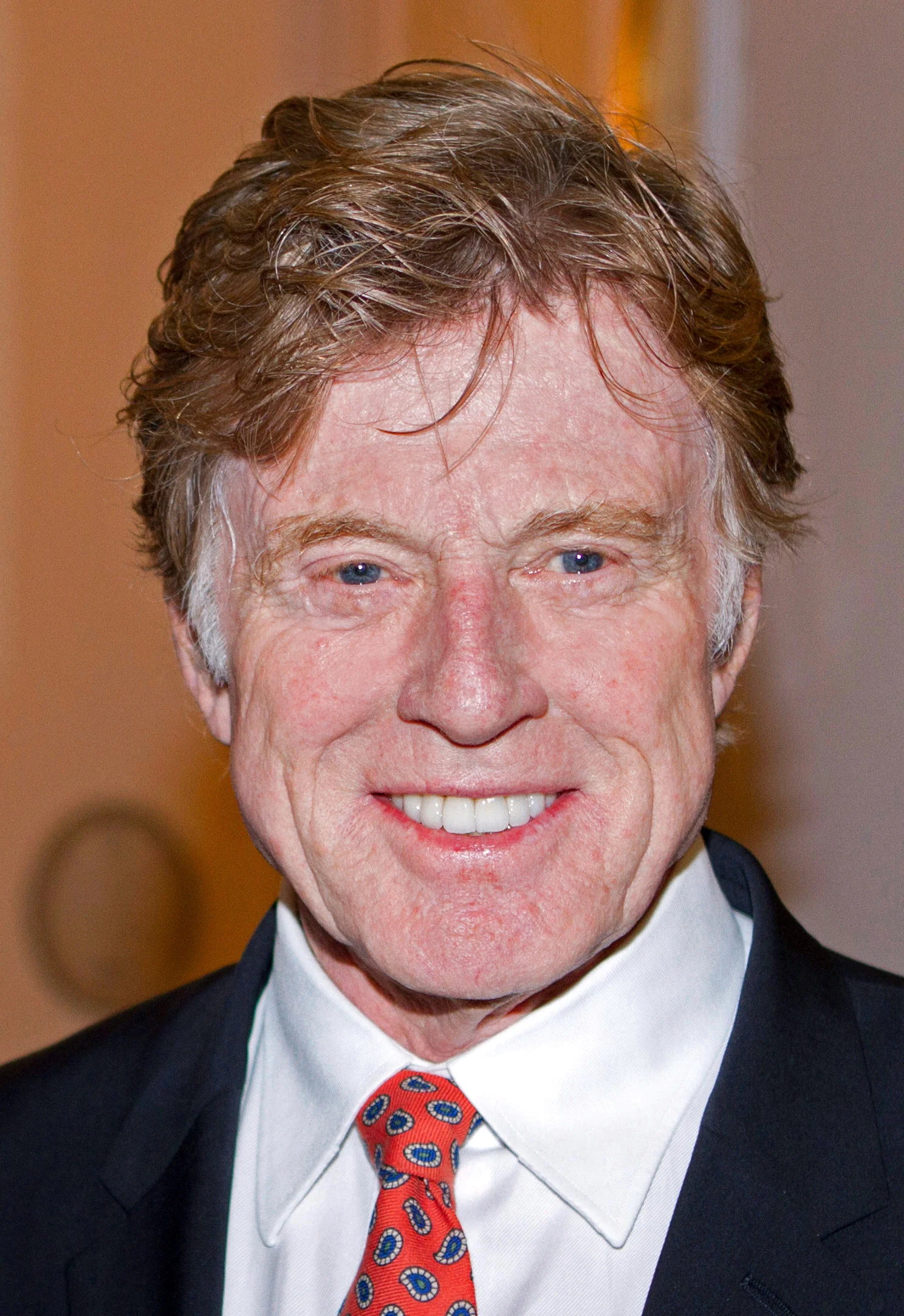
Image from Wikipedia
Image from Wikipedia
Robert Redford – Cinema Icon, Visionary Director, and Founder of the Sundance Universe
A Life Dedicated to Film Art, Independence, and the Environment: Why Robert Redford Shapes Generations
Charles Robert Redford, Jr. (1936–2025) was much more than a charismatic movie star. He combined artistic development with social engagement, crafting a precise directorial style that balanced intimacy with morality, and created the Sundance Institute and the Sundance Film Festival—platforms on which American independent cinema found its current greatness. From Santa Monica to Sundance, from Butch Cassidy to Ordinary People: While Redford did not have a music career, his stage presence, sense of dramaturgy, and influence on production, composition of cinematic images, and the cultural history of cinema are unmistakable. His life's work embodies curiosity, integrity, and an unceasing search for relevant stories.
Early Years and Artistic Influences
Growing up on the Pacific coast, Redford initially studied art before being drawn into acting lessons and theater work in New York, entering the world of the stage. His journey through the arts—painting, acting, and later directing—sharpened an interdisciplinary understanding of composition, rhythm, and timing. This early aesthetic education shaped his musicality in performance, his elegant scene arrangements, and his instinct for allowing moments to speak without words. Redford forged an artistic identity that prioritized authenticity over glamour and centered on the human experience.
Breakthrough on Broadway and Jump to Hollywood
With Neil Simon's "Barefoot in the Park," Redford achieved his breakthrough on stage, which led to a film adaptation that established him as a leading man. By the time of "Butch Cassidy and the Sundance Kid" (1969) alongside Paul Newman, Redford defined a new screen character: agile, ironic, and vulnerable—an emblem of New Hollywood that combined laid-back coolness with existential seriousness. This role not only named his later life project, "Sundance," but also marked the beginning of a musicality in cinematic storytelling, where gaze, pauses, and image composition fused into a distinctive tone.
The Golden 1970s: Box Office Magnet and Face of New Hollywood
The 1970s made Redford a box office magnet. Works like "The Sting" (1973), "The Way We Were" (1973), "Three Days of the Condor" (1975), and "All the President’s Men" (1976) combined genre expertise with social relevance. As a beloved figure with remarkable charisma, he frequently dominated annual polls of cinema operators; his name became synonymous with quality cinema that blended tension, romance, and political awareness. Redford's stage presence thrived on understatement: controlled gestures, concise glances, and an economical way of performing that cameras loved. This precision—one might say the "timbre" of his performance—made characters complex and real.
Directorial Debut and Mastery: Ordinary People and the Aesthetics of Subtlety
In 1980, Redford stepped behind the camera with "Ordinary People"—winning the Oscar for Best Director right off the bat. The family drama became a lesson in how directorial restraint can unleash tremendous emotional power. Redford worked with psychological precision: clear spatial divisions, subdued camera movements, and fine accents in dialogue and editing. This directorial approach influenced his subsequent film production—as a producer and director, he sought stories where moral dilemmas, social tensions, and fragile relationships were told without pathos, but with great empathy.
Global Success and Romantic Icon: Out of Africa and the Poetry of Images
With "Out of Africa" (1985), Redford wrote film history alongside Meryl Streep. The film combined epic landscapes with intimate character work. Redford's screen persona—contemplative, self-controlled, yet sensitive—provided a delicate counterpoint to the opulent visual language. One can sense the signature of an artist who treats visual composition like a conductor: atmospheres are established, motifs gently varied, and the dramaturgy finds an organic balance between vastness and closeness.
Late Roles, New Nuances: All Is Lost and the Art of Silence
With "All Is Lost" (2013), Redford radicalized his performance: nearly dialogue-free, alone at sea, supported by physicality, breath, gaze, and sounds. This role is a prime example of cinematic "chamber music": minimal means, maximum impact. Here, Redford’s artistic development showed how deftly he sets rhythm, tempo, and pauses as dramatic "notes." Even appearances in contemporary mainstream—such as Alexander Pierce in "Captain America: The Winter Soldier"—documented his versatility between auteur cinema and pop culture.
Sundance: Institution, Laboratory, and Cultural Engine of Independent Cinema
In 1981, Redford founded the Sundance Institute—a production, mentoring, and support lab that sustainably supports emerging directors through labs, scholarships, and the Sundance Film Festival. Sundance has produced formative voices in independent cinema; the festival established itself as the largest platform for US independent film. Redford's vision was to create spaces for risk-taking, diversity, and new narrative forms far removed from studio operations. This is culturally significant: Sundance shifted the power center of cinematic innovation towards authors whose works are today writing film history.
Production, Selection, Impact: Redford's Curatorial Signature
As a producer and mentor, Redford paid attention to content with social resonance: investigative journalism, environmental ethics, civil rights, and identity are recurring themes. His selection was less a "label" than an attitude: credible characters, clear conflict lines, carefully composed dramaturgies. In summary, an oeuvre emerged that does not rely on volume but on resonance. This resonance—among the press, audiences, and in film economics—changed perceptions of what American cinema can achieve beyond the studios.
Style and Aesthetics: Minimalism, Morality, and Long Breath
Redford's expertise unfolds in the dialogue between image and silence. His films favor precise arrangements over flashy tricks. The tone—thought of musically—lies in the nuances: gaze lines, distances, and permeability for ambivalence. This aesthetics demands trust in both performers and viewers. It leaves complex moral questions unaddressed without providing didactic answers. Redford's cinema thus stands in contrast to over-determination: it offers spaces for resonance, for the "silent score" of emotions.
Awards and Recognition: From Oscars to Honorary Awards
The authority of his work is reflected in awards: the Oscar for Best Director (1981) for "Ordinary People," the Honorary Oscar (2002) for lifetime achievement, numerous awards from international festivals as well as honors from professional associations and critics. These awards recognize not only individual achievements in direction and acting but also Redford's systemic impact—his role as an enabler and protector of independent voices in film. His filmography—from "The Great Gatsby" to "All the President’s Men" to "The Old Man & The Gun"—shows a dynamic connection between audience attractiveness and artistic rigor.
Commitment to the Environment and Society
For decades, Redford has been a reliable voice for environmental protection, public lands, indigenous rights, and climate justice. As a long-time trustee of the Natural Resources Defense Council, he combined prominence with political responsibility. Together with Sibylle Szaggars Redford, he brought The Way of the Rain to the world—a multidisciplinary project that uses music, dance, film, and spoken word to raise awareness of our planet's vulnerability. His artistic development and activism mutually influenced each other: both are based on empathy, respect, and the conviction that art can effect change.
A Farewell and a Lasting Legacy
Robert Redford passed away on September 16, 2025, at his home in Sundance, Utah. The film world and cultural institutions responded with tributes that centered on his work as an actor, director, producer, and festival founder. His influence remains particularly palpable in the ongoing mission of Sundance: to nurture young talent, broaden perspectives, and artistically engage with social issues. Memorial events and festival tributes made clear how strongly Redford's stance—artistically precise and humanly directed—shapes the DNA of an entire ecosystem.
Current Relevance: Sundance Today and Tomorrow
Even after Redford's death, his idea lives on: labs, funding programs, and the festival remain the largest resonance space for US independent cinema. Tributes and new awards in Redford's name emphasize the long-term mission to strengthen independent voices and inspire social imagination. Thus, his work remains current—in every world premiere, in every debut that dares to tell stories beyond the mainstream.
Filmography: Selected Key Works and Reception
Although Redford was not a musician, his "discography" reads like a cinematic setlist that shapes epochs: "Butch Cassidy and the Sundance Kid" (1969) as an iconic Western; "The Sting" (1973) as a perfectly crafted heist film; "The Way We Were" (1973) as a romantic melodrama; "Three Days of the Condor" (1975) as a nerve-wracking political thriller; "All the President’s Men" (1976) as a lesson on press freedom; "Ordinary People" (1980) as a directorial masterpiece; "The Natural" (1984) as a mythical sports drama; "Out of Africa" (1985) as an epic romance; "All Is Lost" (2013) as a condensed study of isolation and survival. Critics repeatedly praised Redford's ability to connect mass appeal with ambition, his intelligent acting, and his sensitive direction.
Conclusion: Why Robert Redford is More Important Today than Ever
Redford's legacy is threefold: he shaped figures of doubt and dignity as an actor; established a school of subtlety as a director that understands sensitivity as strength; and created an ecosystem as the founder of Sundance that opens up the future of cinema. Anyone wishing to understand how art creates impact—aesthetically, culturally, politically—cannot overlook Redford. An invitation to all: experience his films anew on the big screen, discover those voices at the next festival that carry on his vision, and let yourself be moved by the power of independent stories.
Official Channels of Robert Redford:
- Instagram: No official profile found
- Facebook: No official profile found
- YouTube: No official profile found
- Spotify: No official profile found
- TikTok: No official profile found
Sources:
- Wikipedia (en) – Robert Redford
- Wikipedia (de) – Robert Redford
- Oscars.org – 53rd Academy Awards: Ordinary People & Best Director
- The Guardian – Obituary & Career Overview
- AP News – Sundance 2026: Tributes to Robert Redford
- Sundance Film Festival – Official Festival Page
- Sundance Institute – About & Mission
- The Redford Center – Official Website
- The Redford Center – Robert Redford (1936–2025)
- NRDC – Tribute to Robert Redford's Environmental Commitment
- IMDb – Biography
- Wikipedia: Image and Text Source
Upcoming Events
Three Days of the Condor – Best of Cinema
A 4K classic full of paranoia and elegance awaits you at CineStar Erlangen. Robert Redford and Sydney Pollack deliver pure thrill. #BestOfCinema
Best of Cinema: The Three Days of the Condor
Paranoia, precision, great cinema: The Three Days of the Condor at Kinopolis Landshut. On May 5, 2026, at 10:00 PM, tickets from €6.99. Experience restored tension in top image and sound. Secure your seats now! #BestOfCinema