
Park Chan-wook
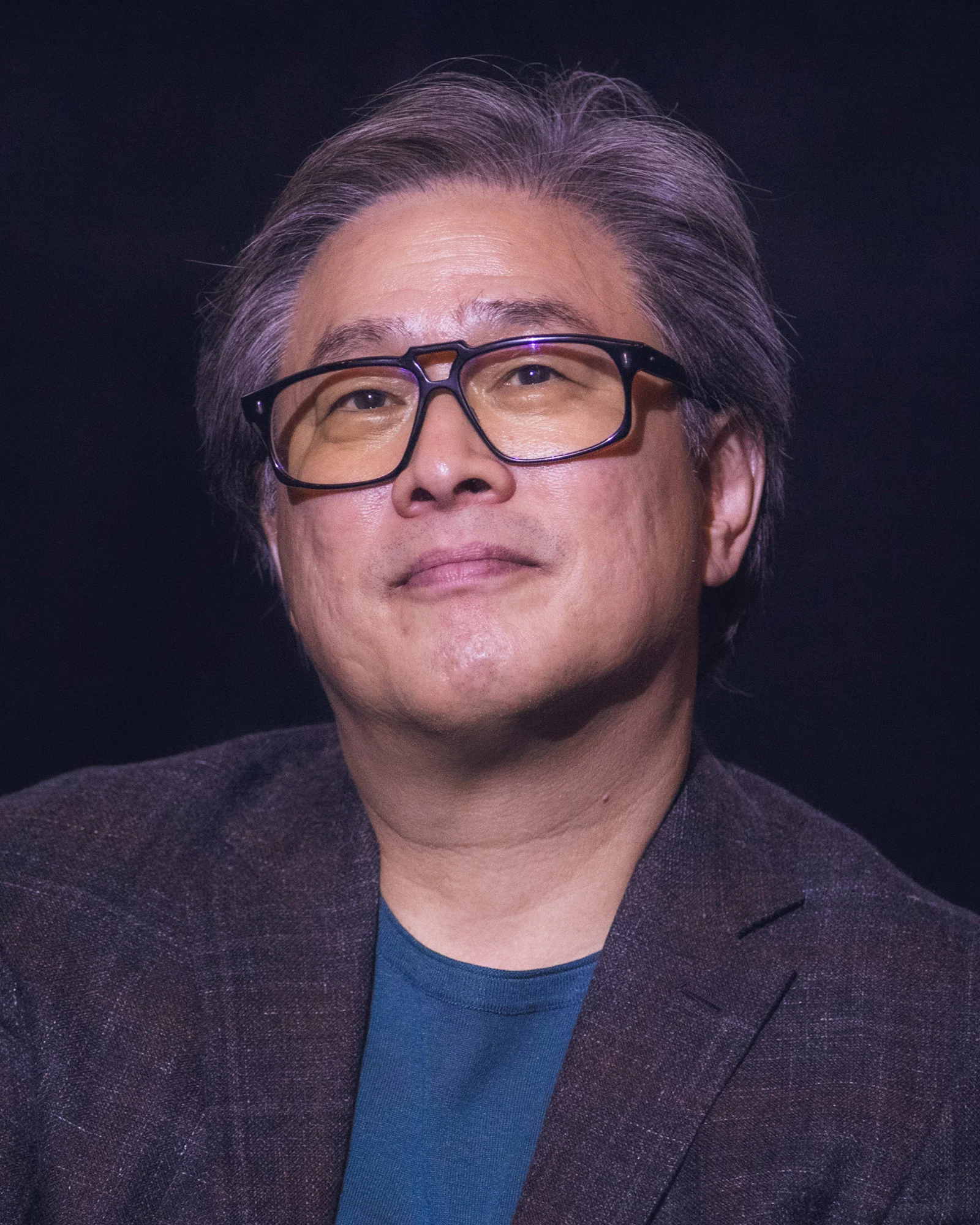
Image from Wikipedia
Image from Wikipedia
Park Chan-wook – Korea's Master of Cinematic Thrills and Radical Elegance
A Filmmaker Who Breaks Genre Boundaries – From the “Vengeance Trilogy” to “Decision to Leave”
Park Chan-wook, born on August 23, 1963, in Seoul, is one of the most influential directors of the 21st century. He has no music career – yet his cinematic stage presence is legendary: He narrates with razor-sharp composition, nuanced actor arrangements, and a visual language that transforms violence, love, and morality into an aesthetically controlled tremor. Since the late 1980s, he has shaped the artistic development of modern Korean cinema, from his international breakthrough with “Oldboy” to recent triumphs such as “Decision to Leave” and the HBO miniseries “The Sympathizer.”
Biography: From Film Critic to Auteur Director
After studying at Sogang University, Park initially moved to film sets through film criticism. Early directorial works in the 1990s remained commercially modest, yet they sharpened his eye for rhythm, editing dramaturgy, and mise-en-scène. The turning point came in 2000 with “Joint Security Area” – a political thriller that granted Park creative independence and set the stage for the founding of his production company Moho Film. From here, he established a signature style that combines accurately composed tableaus, deep moral ambiguities, and darkly humorous breaks. This artistic development culminated in a series of works that have significantly influenced the global perception of Korean cinema. ([en.wikipedia.org](https://en.wikipedia.org/wiki/Park_Chan-wook?utm_source=openai))
Career Highlights: The “Vengeance Trilogy” and the Birth of a Myth
With “Sympathy for Mr. Vengeance” (2002), “Oldboy” (2003), and “Lady Vengeance” (2005), Park redefined the modern revenge tragedy. Especially “Oldboy” had a profound international impact: a powerful montage and movement ballet, whose famous corridor sequence is considered a prime example of choreography, visual axis guidance, and sound design. In 2004, “Oldboy” won the Grand Prix at Cannes – a prestigious accolade that catapulted Park firmly into the A-list of world cinema. His style: uncompromising, yet never arbitrary; every shot is purposefully placed, every composition tells a story. ([en.wikipedia.org](https://en.wikipedia.org/wiki/Park_Chan-wook?utm_source=openai))
Internationalization: “Stoker,” “The Handmaiden,” and the Maturity of Auteur Cinema
With “Stoker” (2013), Park tested his visual language in the English-speaking world while maintaining the controlled intensity of the editing. A milestone followed in 2016 with “The Handmaiden” – a sensual, nested adaptation of Sarah Waters' “Fingersmith,” which combines virtuosity in set design, costumes, lighting, and musical dramaturgy. The film garnered global critical acclaim and, with excellent Rotten Tomatoes and Metacritic scores, ranks among Park's masterful works. “The Handmaiden” showcases Park as a composer of vision: every movement, every object in the visual space acts like a note in a precisely set arrangement. ([en.wikipedia.org](https://en.wikipedia.org/wiki/The_Handmaiden?utm_source=openai))
Triumph at Cannes: “Decision to Leave” and the Art of Restraint
In 2022, Park won the directing award at Cannes for “Decision to Leave” – a neo-noir melodrama that intertwines desire and duty in a melancholic-sensual crime story. Instead of excessive violence, Park here focuses on visual axes, acoustic fine-tuning, and an elliptical dramaturgy that modulates the characters' emotions deeply. “Decision to Leave” refines Park's production aesthetics: The camera breathes, the cuts sing, and Jo Yeong-wook's music weaves tension like an inaudible pulse. The success at Cannes underscored Park's authority as one of the leading directors of our time. ([festival-cannes.com](https://www.festival-cannes.com/en/f/heojil-kyolshim/?utm_source=openai))
World-Class Serial Storytelling: “The Sympathizer”
With the HBO miniseries “The Sympathizer” (A24, 2024), Park brought his signature style to prestige television. As co-creator, showrunner, and director of the first episodes, he distilled historical experience, espionage plots, and black comedy into a highly precise narrative sound. The visual language remains distinctly Park: elliptical transitions, contrapuntal musical dramaturgy, immaculate color compositions. The response was positive and highlighted how adeptly Park transitions between film and serialized formats without losing artistic coherence. ([en.wikipedia.org](https://en.wikipedia.org/wiki/The_Sympathizer_%28miniseries%29?utm_source=openai))
Current Projects: “No Other Choice” and the Return of Bitter Satire
With “No Other Choice” (2025) – an adaptation of Donald Westlake's novel “The Ax” – Park returned to the feature-length lens on morality and system critique. The black comedy about a laid-off family man employs the full spectrum of his arsenal: harsh irony, tense spatial staging, precise sound architecture. Following the start of filming in 2024, the film celebrated festival premieres in 2025, was picked up by NEON for North America, and pre-sold in over 200 territories – a distribution success that underscores Park's brand power in the global arthouse and prestige sector. Critics praised its wit, humanity, and formal elegance. ([en.wikipedia.org](https://en.wikipedia.org/wiki/No_Other_Choice?utm_source=openai))
Discography of Images: A Filmography That Functions Like an Album
Viewing Park's work as a “discography” of images reveals thematic motifs akin to passacaglia: guilt and atonement, revenge and forgiveness, desire and control. Among the central “tracks” of his filmography are “Joint Security Area,” the “Vengeance Trilogy,” “Thirst” (Jury Prize Cannes 2009), “The Handmaiden,” “Decision to Leave,” the miniseries “The Little Drummer Girl” and “The Sympathizer,” and “No Other Choice.” Each work varies the themes of power and powerlessness through composition, montage, and acoustic textures – often in congenial partnership with composer Jo Yeong-wook, whose melodic motifs weave through Park's images like guiding lines. ([en.wikipedia.org](https://en.wikipedia.org/wiki/Park_Chan-wook?utm_source=openai))
Style and Work Analysis: Composition, Arrangement, Production
Park works like a musical arranger: he layers visual motifs, modulates tempo through editing sequences, and uses props as rhythmic markers. His camera remains precise – no unmotivated movement, no random lighting. The production of his films is characterized by careful previsualization, stringent storyboarding processes, and close integration with sound design. He often employs off-screen sounds as dramatic undercurrents that intertwine character psychology and audience perception. This technical vocabulary – from depth of field to axis placement – forms a distinctive signature. ([en.wikipedia.org](https://en.wikipedia.org/wiki/Park_Chan-wook?utm_source=openai))
Cultural Influence and Reception
Park has sharpened the self-understanding of Korean cinema internationally. His films regularly feature in top sections of Cannes, shape jury grids, and are celebrated by critics as highlights of contemporary cinema. “The Handmaiden” is regarded as a masterpiece; “Decision to Leave” dominated award lists and critics' polls in 2022; “No Other Choice” confirmed the relevance of his satirical approach in 2025. This influence extends beyond cinema: series, festival programming, and film schools reference Park as a benchmark for visual dramaturgy, sound composition, and moral complexity in genre cinema. ([screendaily.com](https://www.screendaily.com/news/park-chan-wooks-decision-to-leave-tops-screens-final-2022-cannes-jury-grid/5171289.article?utm_source=openai))
Awards and Recognition
Park's major honors include the directing award from Cannes 2022 for “Decision to Leave,” the Grand Prix from 2004 for “Oldboy,” and numerous national awards such as the Blue Dragon Film Awards 2022, which crowned “Decision to Leave” as the big winner. These accolades seal his authority: he belongs to that echelon that combines artistic radicalism with audience success and global visibility. ([en.wikipedia.org](https://en.wikipedia.org/wiki/2022_Cannes_Film_Festival?utm_source=openai))
Collaborations and Recurring Partners
Park maintains long-standing artistic alliances – with editor Kim Sang-bum, cinematographers from his Moho Film universe, and composer Jo Yeong-wook. These continuities ensure the precision of his visual and auditory architecture and enable a development of works that remains consistent despite genre shifts. His approach to actors – from Tang Wei and Park Hae-il to Lee Byung-hun – combines finely crafted character direction with physical presence before the camera. ([en.wikipedia.org](https://en.wikipedia.org/wiki/Park_Chan-wook?utm_source=openai))
Contextualization: Why Park Chan-wook is More Important Now Than Ever
In a time when audiovisual content flows abundantly, Park reminds us of the power of cinema as an experiential space. His films are meticulously produced compositions that place body, ethics, and society into vibrant tension. He remains a morally alert voice that never aestheticizes violence but rather negotiates it as an ethical question – and that is why it resonates deeply. His artistic development demonstrates how a consistent signature, technical mastery, and thematic radicalism can achieve global relevance.
Conclusion
Park Chan-wook is an author of rare consistency: his films are meticulously arranged scores of views, cuts, and sounds that challenge our understanding of genre, guilt, and desire. Those who experience his works in cinema feel how precisely image, sound, and direction culminate in a physical experience. Recommendation: catch “Decision to Leave” on the big screen, experience “The Sympathizer” as a serial variation of his signature – and don’t miss upcoming premieres.
Official Channels of Park Chan-wook:
- Instagram: No official profile found
- Facebook: No official profile found
- YouTube: No official profile found
- Spotify: No official profile found
- TikTok: No official profile found
Sources:
- Wikipedia – Park Chan-wook (EN)
- Festival de Cannes – Decision to Leave (Official Festival Page)
- The Guardian – Cannes 2022: South Korea scoops record awards haul
- Forbes – ‘Decision To Leave’ wins Best Director at Cannes (2022)
- Wikipedia – The Sympathizer (Miniseries)
- TIME – How The Sympathizer counters Hollywood’s Vietnam War narratives
- Wikipedia – No Other Choice (2025)
- GamesRadar – “No Other Choice” critical response (2025)
- Wikipedia – The Handmaiden (Reception)
- Wikipedia – Blue Dragon Film Awards 2022
- Wikipedia: Image and text source
Upcoming Events
Best of Cinema: Oldboy
Experience Oldboy at Kinopolis Landshut: Cannes-awarded cult thriller, iconic imagery, strong acoustics. On 03.03.2026, 22:00, from 8.99 €. Intense cinematic experience – secure tickets now. #Oldboy #Landshut #BestOfCinema
No other Choice
A dark masterpiece between black humor and social downfall: No other Choice at Schauburg Filmpalast Gelsenkirchen. April 21, 2026, 5:45 PM. #Cinema