Maria Callas
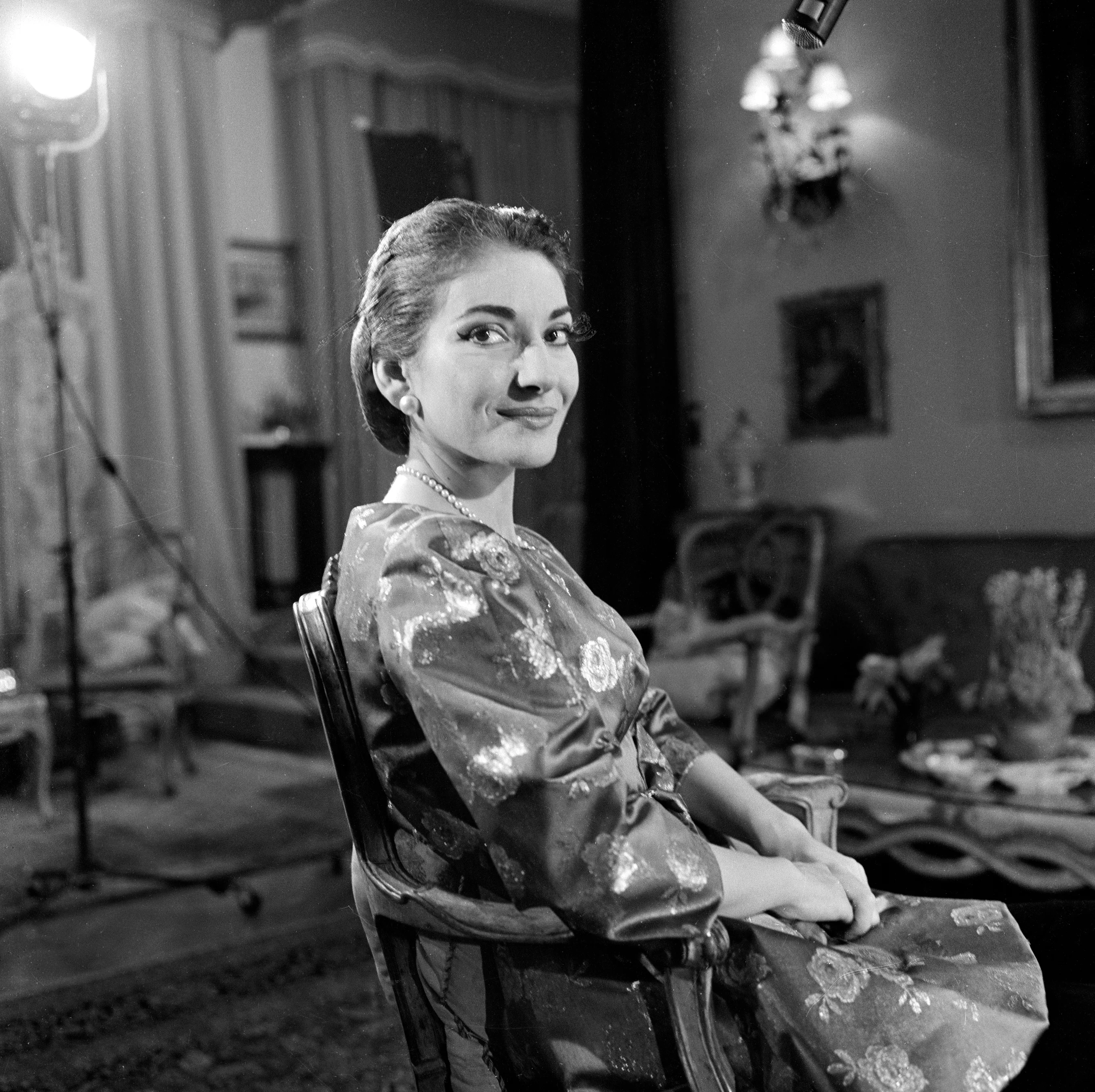
Image from Wikipedia
Image from Wikipedia
Maria Callas – The Voice That Redefined Opera
La Divina: Maria Callas Between Vocal Brilliance, Dramatic Truth, and Opera Legend
Maria Callas, born on December 2, 1923, in New York City and who passed away in Paris in 1977, is considered one of the most influential sopranos of the 20th century. As a Greek-American singer with Italian citizenship, she combined technical mastery, relentless expressiveness, and a stage presence that not only sang operatic characters but also infused them with psychological depth. Her music career set a standard for modern opera interpretation and made her an artist against whom singers, directors, and music lovers continue to measure themselves today. (en.wikipedia.org)
Early Years and Artistic Formation
Callas grew up in an environment marked by migration, familial tensions, and early pressure to perform. In Greece, she received her vocal training under Elvira de Hidalgo at the Athens Conservatory and developed a reputation as an exceptionally serious music student even as a teenager. Her early stage experiences in Athens, including initial roles at the Greek National Opera, laid the foundation for a career that sought not routine but maximum dramatic truth. (biography.com)
Even at this stage, what would later make Callas unmistakable was evident: a rare combination of vocal agility, strong articulation, and theatrical intelligence. Her repertoire consisted of 43 complete roles, as well as arias from an additional 34 operas, and her vocal range spanned nearly three octaves. This range was coupled with a bel canto technique that she understood not as decorative virtuosity, but as a means of character portrayal. (en.wikipedia.org)
The International Breakthrough: Italy, Belcanto, and La Scala
The international breakthrough came in Italy, the center of her artistic maturation. Particularly the performance of Aida in Mexico City in 1950 became a turning point: With a crystal-clear high E, she captivated the orchestra, choir, and audience, quickly establishing herself as a world star. Deutschlandfunk Kultur describes that evening as the moment when not only her career but also her international presence irrevocably gained momentum. (deutschlandfunkkultur.de)
From 1951 onward, La Scala in Milan became her artistic home. There, under conductors and directors like Tullio Serafin, Herbert von Karajan, and Luchino Visconti, she shaped a new operatic aesthetic in which musical precision and dramatic emphasis merged. Her debuts and revivals in works such as I vespri siciliani, La traviata, La sonnambula, Anna Bolena, and Iphigénie en Tauride made it clear that Callas was not merely singing roles, but historically reinterpreting them. (en.wikipedia.org)
The Voice as an Instrument of Character Psychology
Maria Callas' voice was never merely beautiful in the conventional sense. It possessed enormous flexibility, the capacity for wide-ranging arcs, and the rare gift of infusing each phrase with dramatic intent. Apple Music Classical describes her as an interpreter who mastered Puccini's dramatic roles just as convincingly as the embellishments of bel canto; it is precisely in this dual talent that her historical greatness lies. (classical.music.apple.com)
Her stature was particularly evident in roles such as Medea, Violetta in La traviata, and Norma. Callas brought the title roles of Bellini, Donizetti, and Rossini back to the forefront of operatic culture and significantly contributed to the rediscovery and serious appreciation of these works in the 20th century. In Norma, Il pirata, Anna Bolena, Lucia di Lammermoor, and Armida, she set standards that visibly influenced later singers like Joan Sutherland and Montserrat Caballé. (en.wikipedia.org)
Discography, Recordings, and Critical Reception
The discography of Maria Callas is at the heart of her myth. Her recordings document not only an extraordinary singer but also an artist who shaped operatic history on record: including performances of Tosca, La traviata, Norma, Medea, Il turco in Italia, Madama Butterfly, and Rigoletto. The list of her documented operatic roles shows a career that moved between studio work and live performances, imparting a high level of intensity to both formats. (en.wikipedia.org)
The critical reception consistently highlighted two elements: technical control and dramatic authority. Deutschlandfunk Kultur emphasizes her role in reviving bel canto, while Apple Music Classical highlights her ability to infuse the operas of Bellini, Donizetti, and Rossini with new vitality. This is where her cultural influence lies: Callas transformed bel canto from a museum style into a living musical drama filled with emotional risk. (deutschlandfunkkultur.de)
Stage Presence, Personality, and Opera Myth
Maria Callas became a legend also due to her stage presence. Her interpretations were uncompromising, focused, and often electrifying, as she fused vocal technique and dramatic character into a single entity. This intensity earned her the reputation of a demanding diva, yet this very reputation is inseparable from her historical impact: Callas demanded authenticity from opera, not just vocal brilliance. (biography.com)
Her influence extended beyond her own career. Visconti later stated that he only began directing opera because of Callas, and her work in the great houses of Europe shaped the understanding of what music theater can look like on stage. The combination of dramatic density, stylistic discipline, and emotional fervor made her a reference point for later generations of singers and directors. (en.wikipedia.org)
Current Projects, Legacy, and New Attention in 2024/2025
Even decades after her death, Maria Callas remains culturally present. In 2017, the Maria Callas Foundation was launched to keep her legacy visible through exhibitions, publications, and projects; that same year, an exhibition was held in Paris, which later traveled to Monaco. Additionally, Warner Classics lists the official Maria Callas website as approved by the estate's administrators and refers to ongoing digital and artistic activations of the Callas brand. (mariacallas.fr)
New attention was drawn to Callas in 2024 and 2025 through the feature film Maria by Pablo Larraín, starring Angelina Jolie. The film premiered at the 81st Venice International Film Festival on August 29, 2024, subsequently screening in select theaters, on Netflix, and in other international regions, where it received positive reviews. Concurrently, the Maria Callas Museum in Athens engaged in contemporary outreach of her heritage through social media campaigns, exhibitions, and participatory formats. (en.wikipedia.org)
Conclusion: Why Maria Callas Remains Immortal
Maria Callas remains compelling because she transformed opera into a living, psychologically charged total artwork. Her voice combined virtuosity with risk, her role interpretations became reference points in operatic history, and her influence stretches from the bel canto renaissance to contemporary biopics, exhibitions, and archival projects. Those who experience Maria Callas do not just hear a great soprano but an artist who reinvented the idea of opera with every phrase. (en.wikipedia.org)
Official Channels of Maria Callas:
- Instagram: No official profile found
- Facebook: No official profile found
- YouTube: No official profile found
- Spotify: No official profile found
- TikTok: No official profile found
Sources:
Upcoming Events
Master Class Maria Callas
Masterclass Maria Callas
Masterclass Maria Callas
Masterclass Maria Callas
Master Class - Maria Callas