
Katja Petrowskaja
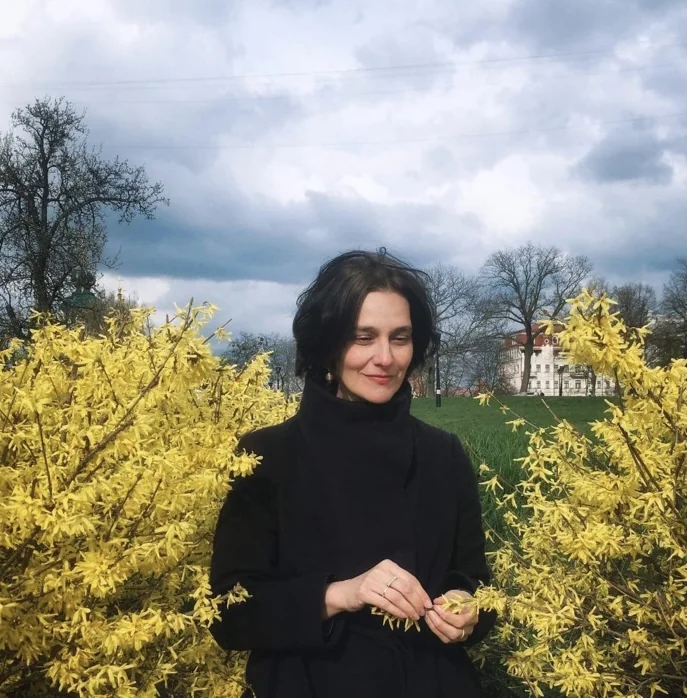
Image from Wikipedia
Image from Wikipedia
Katja Petrowskaja: Literature Between Memory, Image, and War Experience
An Author who Transforms History into Language
Katja Petrowskaja is one of the most distinctive voices in contemporary German literature. Born in 1970 in Kyiv and raised amidst Soviet post-war experiences, Jewish family history, and later stages in Moscow, Tartu, Stanford, and Berlin, she has shaped literature from biography with great inner tension. Since 1999, she has lived in Germany, working as a writer, literary scholar, and journalist. Her name signifies prose that not only narrates memory but also reveals it in a probing, precise, and vividly powerful manner. ([en.wikipedia.org](https://en.wikipedia.org/wiki/Katja_Petrowskaja))
Biographical Roots: Kyiv, Moscow, Tartu, and Historical Imprints
Petrowskaja's background is not mere background noise for her writing, but the emotional and intellectual core of her work. She grew up in Kyiv as Kateryna, later in Moscow, after her family experienced the consequences of Chernobyl; her father was a literature professor, and her mother a teacher. This constellation of academic education, language, and historical experience explains why her texts often begin where personal memory intersects with European history. Her studies in literature and Slavic studies in Tartu, as well as her later doctoral promotion in Moscow, embed her artistic development deep within the mental history of Eastern Europe. ([en.wikipedia.org](https://en.wikipedia.org/wiki/Katja_Petrowskaja))
The Literary Breakthrough with “Maybe Esther”
Katja Petrowskaja achieved a significant breakthrough with her debut “Maybe Esther.” The book was published in 2014, following the success of her reading in Klagenfurt, and made her suddenly known to a larger audience. Suhrkamp described the text as the story of a Babushka in Nazi-occupied Kyiv; the jury praised it as “wonderful, powerful, loosely woven yet light.” This tension encapsulates the special quality of her prose: Petrowskaja combines family history, historical research, and literary condensation into a form of memory novel that eludes any simple chronology. ([suhrkamp.de](https://www.suhrkamp.de/nachricht/ingeborg-bachmann-preis-2013-fuer-katja-petrowskaja-b-1770))
Awards, Resonance, and the Authority of Critique
With the Ingeborg Bachmann Prize, Petrowskaja won one of the most prestigious awards in the German-speaking literary scene in 2013. In 2014, she received the Aspekte Literature Prize, which further confirmed her literary stature beyond the festival context. The international resonance of her debut was significant: the work was translated into over 20, and later more than 30 languages, and received numerous accolades. For an author who writes in German, albeit it is not her earliest literary language, this marks a particular form of authority: Her language sounds searching, focused, and at the same time confident. ([suhrkamp.de](https://www.suhrkamp.de/nachricht/ingeborg-bachmann-preis-2013-fuer-katja-petrowskaja-b-1770))
Writing as an Art of Observation: Photo, Image, and Essay
A central feature of Petrowskaja's style is her work with images. Even in her debut, photographs play a significant role; later, she regularly published photo reflections on historical and contemporary images, portraits, landscapes, and street photography. This makes her texts border-crossers between essay, report, and literary miniature. Especially since Russia's invasion of Ukraine in 2022, this approach has intensified: Her essayistic reflections on images have increasingly focused on war, survival, and the fragile evidence of the photographic moment. ([lcb.de](https://lcb.de/programm/studio-lcb-katja-petrowskaja/))
Current Projects: “As If It Were Over” and the Presence of War
In 2025, Katja Petrowskaja remains a highly present author in public discourse. The Literary Colloquium Berlin presented a project titled “As If It Were Over,” which collects her recent image essays; the event is scheduled for June 2025 in collaboration with Deutschlandfunk. The literary movement described there is remarkable: Petrowskaja consistently directs attention to photos that reflect war and survival in war. Thus, observation becomes more than mere illustration; it transforms into a morally and aesthetically charged form of contemporary analysis. ([lcb.de](https://lcb.de/programm/studio-lcb-katja-petrowskaja/))
Discography of Books: from Debut to Essayistic Condensation
Katja Petrowskaja does not have a classical discography; her artistic development is reflected in a body of work characterized by literary research and essayistic precision. An early publication listed in sources is “The Chosen Ones: A Summer at the Holiday Camp in Orlionok” from 2012, a pictorial report with essay components. However, the core of her oeuvre is represented by “Maybe Esther,” which has been internationally received in various languages and editions. In newer contexts, her work as a columnist for the Frankfurter Allgemeine Sonntagszeitung also stands out, further sharpening her writing mode between literature, journalism, and cultural observation. ([en.wikipedia.org](https://en.wikipedia.org/wiki/Katja_Petrowskaja))
Style and Musical Metaphor of Language
Although Katja Petrowskaja is not a musician, her prose possesses an almost musical structure: motifs recur, themes are varied, and memories modulate from paragraph to paragraph. Her sentences work with rhythmic condensation, with pauses, counterpoints, and subtle dynamic shifts. The result is a literary composition that does not rely on effects but on resonance. Readers of her texts sense a stage presence of thought: precise, calm, intense, and with great emotional range. ([en.wikipedia.org](https://en.wikipedia.org/wiki/Katja_Petrowskaja))
Cultural Influence: German Literature with an Eastern European Perspective
Petrowskaja has expanded German literature by incorporating a perspective in which migration, multilingualism, and historical wounds do not appear as marginal themes but as central material for storytelling. DW characterized her Bachmann Prize in 2013 as a sign of a “new facet” of German literature and referred to the European significance of the competition. Thus, her texts are more than mere personal literature of remembrance; they are part of a cultural dialogue about the 20th and 21st centuries, Jewish history, Ukrainian experience, and literary writing after political catastrophes. ([dw.com](https://www.dw.com/en/language-necessary-struggle-for-bachmann-winner/a-16937303))
Classification by Institutions and Literary Publicity
Institutions such as the German Academy for Language and Literature also recognize Petrowskaja's position in contemporary literature: She has been a member since 2021. The Literary Colloquium Berlin explicitly points to her continued work on image texts and the connection between Ukraine, memory, and war experiences in 2025. Such milestones demonstrate an author whose work is not only acclaimed but also continually discussed in the most important literary spaces of German-speaking cultural life. ([deutscheakademie.de](https://www.deutscheakademie.de/en/academy/members/katja-petrowskaja))
Conclusion: An Unmistakable Voice of Contemporary Literature
Katja Petrowskaja fascinates because she makes literature from history without smoothing it over. Her books and essays connect personal memory, historical research, and a clear, image-rich language into a rare form of literary truthfulness. Anyone seeking to understand contemporary literature cannot overlook her. And anyone wanting to experience how deeply language can resonate should definitely witness Petrowskaja live when she reads, speaks, and lets her texts resonate in space. ([en.wikipedia.org](https://en.wikipedia.org/wiki/Katja_Petrowskaja))
Official Channels of Katja Petrowskaja:
- Instagram: no official profile found
- Facebook: no official profile found
- YouTube: no official profile found
- Spotify: no official profile found
- TikTok: no official profile found
Sources:
- Wikipedia – Katja Petrowskaja
- Suhrkamp – Ingeborg Bachmann Prize 2013 for Katja Petrowskaja
- DW – Creative process
- Literary Colloquium Berlin – Studio LCB: Katja Petrowskaja
- Der Audio Verlag – Katja Petrowskaja
- German Academy for Language and Literature – Katja Petrowskaja
- Fondation Jan Michalski – Katja Petrowskaja
Upcoming Events
Award Ceremony for the Jakob-Wassermann-Literature Prize 2026