
Jordi Galceran
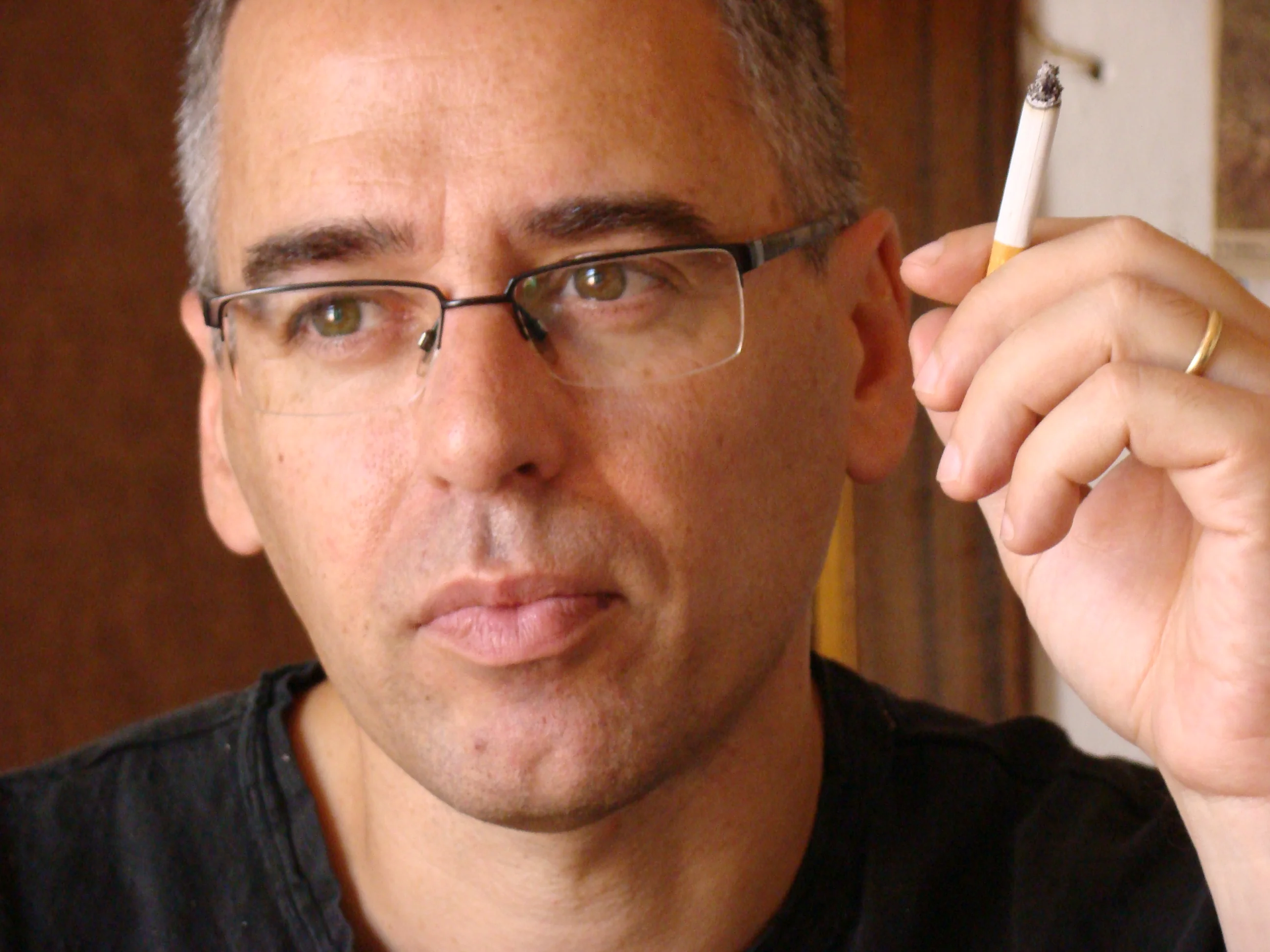
Image from Wikipedia
Image from Wikipedia
Jordi Galceran – Dramaturg, translator, master of intelligent comedy
The Catalan successful author who conquered the world stage with El mètode Grönholm
Jordi Galceran Ferrer (born March 5, 1964, in Barcelona) is considered one of the most influential Spanish-Catalan playwrights of the present day. The dramatist, screenwriter, and translator wrote the international stage hit El mètode Grönholm, which has been exported to dozens of countries, seen by millions, and adapted for the screen. His artistic development ranges from the early thriller drive of his first plays through satirically sharp social comedies to mature works that combine formal precision, witty dialogue, and thematic depth. His work balances tension and humor, psychological accuracy, and audience-pleasing theatricality—a hallmark that impresses both critics and spectators alike.
Biography: From Philology to the Stage
Galceran studied Catalan Philology at the Universitat de Barcelona and began writing for the stage in 1988. His talent became apparent early on: in 1995 he won the Born Prize with Paraules encadenades, and in the same year, Dakota received the Ignasi Iglesias Prize; in 1997 he was awarded the prestigious Serra d’Or Prize for Paraules encadenades. These successes gave a powerful boost to his word-music career—his stage presence as an author: he transitioned entirely from public service to the free arts and simultaneously began writing for Catalan television (TV3). His artistic development is rooted in the linguistic precision of philology and the joy of scenic dialogue.
Career Progression and Breakthrough: El mètode Grönholm as a Global Phenomenon
The major breakthrough came in 2003 with El mètode Grönholm (The Grönholm Method). The play—a fast-paced comedy about the psychological cruelty of modern assessment centers—premiered at the Teatre Nacional de Catalunya (directed by Sergi Belbel) and quickly became an international hit. In Spain, Latin America, Europe, and beyond, the production attracted millions; the sharp dialogues and the sophisticated arrangement of the examination games made the work a blueprint for contemporary bureaucratic satire. In 2005, Marcelo Piñeyro adapted the work into the film El método—a further testament to the dramatic density and cinematic quality of the material.
Successes, Awards, Recognition
Galceran's compositional balance of suspense and comedy has received numerous awards. In addition to the Born Prize, the Ignasi Iglesias Prize, and the Serra d’Or Prize, he also received the Butaca Prize (for Gaudí, later for Paradís), the Ercilla Prize for El mètode Grönholm, the Max Prize (best author in Catalan), and the Mayte Prize. Critics highlight his dramaturgical economy, the tautly proportioned structure, the clear character guidance, and the keen observation of contemporary work and love relationships. His plays exhibit precisely set turning points, coupled with rhythmic comedy—a quality that establishes his authority in current Spanish-language theater.
Development of Work: From Thriller to Social Comedy
His early works like Paraules encadenades (thriller pulse, psychological chamber play) and Dakota mark his turn towards precisely timed dialogue. Later, Galceran expanded his repertoire: with Gaudí (2002) and Paradís (2005), he co-wrote two musicals with Esteve Miralles and composer Albert Guinovart that showcased his affinity for scenic rhythm and musical structure. With Burundanga (2012) and El crèdit (2012), he sharpened his profile as a chronicler of social micro-dramas: issues of love and trust, economic dependencies, shifts in power and roles—always driven by pace, timing, and comedic precision. The plays received enormous audience resonance, especially in Madrid, where Burundanga remained in the repertoire for years.
Recent Works and Current Projects (2024–2026)
Recently, Galceran has continued his line of pointed comedy. Fitzroy, a chamber scenario at the edge of a mountain range, places the classic Galceran dialogue in the context of alpinism: four women negotiate their relationships, ambitions, and blind spots at base camp—between waiting, wanting, and truth. After successful runs in Barcelona, the production is set to arrive at the Teatro Maravillas in Madrid in early 2025. Meanwhile, the repertoire effect remains unbroken: Burundanga is touring and being interpreted anew by regional ensembles; El mètode Grönholm also continues to see new productions. Additionally, Galceran was recently responsible for the Spanish stage adaptation of Yasmina Reza's Un dios salvaje, set to run in 2025/26 in Madrid with a prominent cast. These activities show the sustainable impact of his brand: linguistically economical comedies that reflect human vulnerability and power play at their core.
Dramaturgy and Style: Rhythm, Economy, Scenic Precision
Galceran's dramaturgical signature is characterized by razor-sharp dialogues, precise compositional arcs, and a consistent economy of signs. His arrangement uses classic comedic mechanisms—escalation, confusion, role reversal, moral stress tests—in contemporary contexts. The production of his plays demands precise timing and differentiated character work from the performers. In El mètode Grönholm, he compresses the stage into a laboratory of capitalist competition; in El crèdit, negotiation becomes a war of relationships; in Burundanga, demonstrations of love clash with political grotesque. These clear forms provide directors and ensembles with a robust score that works across diverse markets—from Barcelona to Buenos Aires, from Madrid to Berlin.
Classification and Influence: Catalan Theater with Global Reach
Galceran is part of the tradition of modern Catalan comedic craft, which combines sharp societal observation with audience-friendly formal rigor. His international authority is based on the transferability of central themes—work, love, trust, power—and a language that retains its impact in translation. The fact that El mètode Grönholm has been played and filmed worldwide anchors him in recent theater history as one of the central voices of the Spanish-speaking stage. At the same time, his continuous work as a translator and adapter keeps the repertoire porous: he conveys international material for the Spanish market, thus strengthening cultural exchange processes.
Work for Film & Television: Adaptations, Screenplays, Crossovers
The stage remains the core, but film and TV expand Galceran's impact: Palabras encadenadas was filmed as Killing Words in 2003; his involvement in the screenplay of Fragile (2005, directed by Jaume Balagueró) demonstrates his versatility in the tension genre. For TV3, he wrote episodes and seasons of several series (including Nissaga de poder, El cor de la ciutat, Laura, La memòria dels cargols). These transitions between genres refine his dialogue directing; cinematic economy and serial serialization strengthen his scenic rhythm—a transfer of skills that remains palpable in the theater.
Discography & Work List (Selection)
As a theater author, Galceran has a comprehensive list of works; the following selection outlines his dramatic "discography" in a metaphorical sense: Paraules encadenades (Born Prize 1995; Serra d’Or 1997), Dakota (Ignasi Iglesias 1995), Surf (1998), Fuita (1998), Gaudí – Musical (2002, with Esteve Miralles and Albert Guinovart), El mètode Grönholm (2003), Paradís – Musical (2005, with Miralles/Guinovart), Carnaval (2006), Cancun (2008), Burundanga (2012), El crèdit (2012), Conversaciones con mamá (2014), Polònia (2014), Fitzroy (2023/2025 in Barcelona/Madrid). The repertoire is regularly restaged in Spain, Latin America, and Europe—an indication of the sustainable relevance of these texts.
Critical Reception: Laughter with Bite
Reviews emphasize the "fusteria teatral"—the meticulous craftsmanship with which Galceran constructs comedy: hinges, screws, rhythm shifts, "ups and downs" like in a dramatic rollercoaster. His best comedies explode emotionally because they put characters under moral pressure in seemingly banal settings. Recent reviews of Fitzroy highlighted the intelligent, quick dialogues and the skillful spatial dramaturgy; the original premiere of El mètode Grönholm was regarded as a sharp-witted satire of capitalism with a human core. This double readability—surface humor and depth of social analysis—makes his plays attractive to a wide audience.
Linguistic and Translation Work: Bridges Between Cultural Spaces
As a bilingual author (Catalan/Spanish), Galceran thinks of his works in a translingual manner. Many plays exist in both languages; translations into German, French, Italian, and other languages further disseminate the material. As a translator and adapter, he translates international texts for Spanish stages—a curatorial effort that opens up repertoire and audiences. This dual role strengthens his authority in the field: he shapes both originals and the circulation of texts that engage in dialogue with domestic theater.
Conclusion: Why Jordi Galceran Matters Today
Galceran provides what contemporary theater needs: intelligent, playable pieces with perfect timing that provoke both laughter and reflection. He combines the precision of craft with social relevance—from the office labyrinth of modern hiring processes to questions of trust, guilt, and power. Anyone who wants to experience how comedy works in the 21st century should attend one of his productions. His work shows that when dramaturgy is right, stages around the world speak the same language. Call to action: seize the next opportunity to experience Jordi Galceran's productions live—the mix of pace, wit, and insight works strongest in the theater space.
Official Channels of Jordi Galceran:
- Instagram: No official profile found
- Facebook: No official profile found
- YouTube: No official profile found
- Spotify: No official profile found
- TikTok: No official profile found
Sources:
- Wikipedia (es) – Jordi Galceran
- Wikipedia (en) – Jordi Galceran
- AELC – Jordi Galceran (Castellano)
- AELC – Jordi Galceran (English)
- AELC – Work List (Selection)
- AELC – Critical Comments
- Teatre Nacional de Catalunya – El mètode Grönholm
- El País – Premiere of El mètode Grönholm (2003)
- Wikipedia (es) – El método (Film, 2005)
- Madridiario – Fitzroy: the new from Jordi Galcerán (2025)
- HuffPost (ES) – Fitzroy: review/commentary (2025)
- Ayuntamiento de Almería – Burundanga Guest Performance (2025)
- Wikipedia: Image and text source