
Jesper Munk
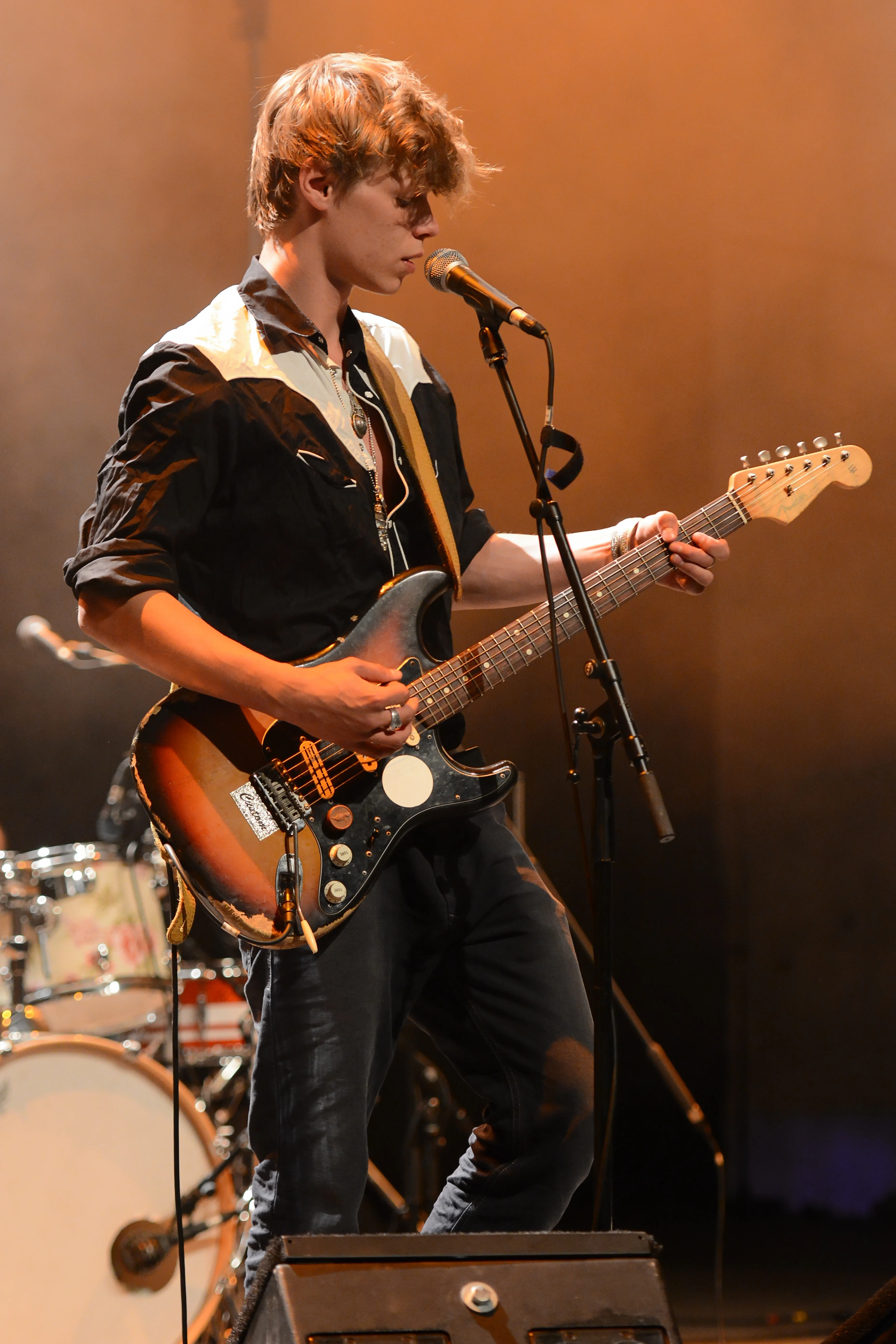
Image from Wikipedia
Image from Wikipedia
Jesper Munk
Between Blues Fire and Indie Soul: Why Jesper Munk Has Been Electrifying the German Music Scene for Years
Jesper Munk, born on May 31, 1992, in Munich, has established himself as one of the most exciting German-Danish singer-songwriters with a distinctive voice, excellent guitar playing, and bold artistic development. From street musician with blues roots to a versatile crooner, from an indie-label debut to orchestral live recordings: his music career tells a story of curiosity, friction, and maturity. Those who listen to Munk today experience stylistic sovereignty between blues, soul, rock, folk, chanson, and modern indie – carried by a stage presence that combines intimacy and intensity.
Origins, Early Influences, and First Steps
Growing up in a creative environment, Munk took to the guitar and the stage early on. His beginnings as a street musician shaped his timing, dynamics, and sense of drama in arrangements – traits that would later influence both his songwriting and live interpretations. Influential artists ranged from Tom Waits and Etta James to the Rolling Stones and contemporary indie and soul references. The experience of testing songs acoustically “up close” sharpened his sense of tension curves, phrasing, and space in sound.
Breakthrough and First Chapter: For In My Way It Lies (2013)
With his debut album For In My Way It Lies, Munk made an immediate impact in 2013. The sound: gritty blues with a vintage patina, edgy guitar tone, and a voice that sounded significantly older than its biological age. The production remained deliberately raw and direct – a documentary glance at a young artist who prioritizes the magic of the first note over technical perfection. Live, the material felt even more compelling: improvisational moments, dynamic breaks, and small risk-taking infused the performance with the energy that quickly caught the attention of the club scene.
CLAIM (2015) and the Shift Towards Pop, Soul, and Cinematic Blues
The second album Claim marked the next stage of development in 2015: more emphasis on composition, a broader range in arrangements, and greater studio depth. Between blue-eyed soul, garage blues, and laid-back urban grooves, songs crystallized that were radio-friendly yet retained artistic soul. Chart entries and widespread press attention confirmed the album’s vibrancy – Claim became the first career milestone, with songs like Morning Coffee and Shakespeare & Heartbreak becoming fan favorites to this day.
Favourite Stranger (2018): A Stylistic Shift
With Favourite Stranger, Munk turned the stylistic compass in 2018: the blues remained in his DNA, but the sound shifted towards indie, crooning, and urban soul. Slower tempos, finer textures, and a noticeably matured vocal delivery defined the production. Compositionally, the focus grew on harmonic details, voicings, and subtle contrasts – an album that positioned Munk as a style-conscious narrator who skillfully blends pop aesthetics with jazz gestures.
Side Projects, Friction, and Expanding Horizons: P.D.O.A. and Plattenbau
Parallel to his solo career, Munk opened the doors to the Berlin underground scene. With P.D.O.A. and the art/noise formation Plattenbau, he explored intentional stylistic breaks: raw edges, post-punk energy, industrial noise textures. This phase sharpened his senses for sound colors beyond the mainstream – distortion as a narrative element, dissonance as a dramatic lever, reduction as a statement. Back in the solo context, this schooling acted as a catalyst: more courage for emptiness, more joy in sonic risk.
Taped Heart Sounds (2022): An Analog Aesthetic as an Artistic Statement
With Taped Heart Sounds, Munk presented a passionately analog cover project in 2022. Recorded with The Cassette Heads on a Tascam multi-track cassette recorder, he celebrated the tactile quality of tape sound: natural saturation, subtle tape compression, organic imperfections. Interpretively, Munk explores the balance between reverence and personal signature – his arrangements breathe, and his phrasing allows space for micro-gestures. An album that translates the experience of a live session into the studio and captures the warmth of the moment.
Yesterdaze (2024): A Return to Original Material – Produced by Jesper Munk
With Yesterdaze, Munk returned in 2024 to original material – simultaneously taking on the production. The pieces navigate between neo-soul and slow-wave, between chanson warmth and jazz-infused harmonic shifts. At the center is a crooner timbre that does not hide vulnerability but transforms it into musical strength. Production-wise, a “lo-fi-to-hi-fi” approach dominates: intimate textures in the verses that open up to high-resolution breadth in the choruses. The result is a coherent, moodily balanced album that artfully bridges nostalgia and the present.
“best of … live” (2025): Orchestral Colors, Band Drive, and the 10th Anniversary of Claim
In 2025, Munk celebrated the 10th anniversary of Claim with a comprehensive tour and a two-part live release: on one side, the opulent arrangements with the German Film Orchestra Babelsberg, and on the other, the earthy, grooving energy of his band The Cassette Heads. Central to this are evergreen pieces like Morning Coffee, Shakespeare & Heartbreak, Courage For Love, and Reeperbahn – tracks that gain new depths in orchestral garments. The live versions work with dramatic intensifications: string sections enhance melodic arcs, brass instruments provide emphasis, and the rhythmic foundation of The Cassette Heads gives the classics urban punch.
Songwriting, Composition, and Production: Sound as Narrative
Munk’s compositions thrive on clear melodic frameworks that he combines with harmonic color changes and subtle syncopated challenges. In arrangements, he lets voices breathe: lead vocal and guitar are given space; keys, brass, or strings complement as commentators rather than as masking elements. In production, Munk prefers organic signal chains – tube warmth, tape saturation, minimal compression – and a micro-dynamic balance that can weave intimacy and grandeur. The effect is a “close” sound that still unfolds stage presence.
Discography – Selected Milestones
For In My Way It Lies (2013) established Munk as a young blues innovator. Claim (2015) brought the first wide resonance and bundled the radio qualities of his songwriting with a character-driven performance. Favourite Stranger (2018) marked a stylistic turning point towards indie soul and crooning. The EP Darling Colour (2019) documented experimental drive. Taped Heart Sounds (2022) made an analog production statement with The Cassette Heads. Yesterdaze (2024) represents maturation, self-production, and an individual sonic compass. The double live album best of … live (2025) completes the circle between large-scale orchestration and band-oriented directness.
Critical Reception and Cultural Context
The music press documented Munk’s journey with striking consistency: early works were recognized as exceptionally mature, while the middle phase highlighted his adaptability and affinity for soul and indie aesthetics. Particularly praised were his voice – raw yet supple – the ability to craft finely crafted refrains, and stylistic confidence in reduction. Culturally, Munk acts as a bridge-builder: he connects to blues and soul traditions but frees them from purist orthodoxy, opening them to contemporary indie and jazz idioms.
Live Qualities: Stage Presence Between Club Intimacy and Orchestral Grandeur
On stage, Munk combines storytelling with controlled ecstasy: dynamic crescendos, risky rubato moments, and unexpected breaks. His band interacts dialogically – bass and drums act as a bouncing axis, while keys and guitar provide contrasts and melodic counterpoints. With an orchestra, the sound spectrum expands into cinematic spaces; the familiar songs gain light and shadow, and dramatic depth. This combination of immediacy and grandeur explains why Munk has a special pulling power live.
“Voices of the Fans” – Resonance on Social Media
Fan reactions clearly show: Jesper Munk captivates people around the world. On Instagram, one fan raves: “The warmth of his voice makes every song shine.” A comment on YouTube sums it up: “This live version packed goosebumps into every note.” On Facebook, it reads: “What a crooner – modern, honest, and full of soul.” Such voices illustrate how Munk’s music translates intimate stories into big emotions without forcing pathos.
Conclusion: An Artist Between Tradition and Tomorrow
Jesper Munk remains exciting because he continually shifts boundaries – with respect for tradition, but without fear of experimentation and friction. His artistic development ranges from the rawness of early blues through indie soul and chanson finesse to orchestral grandeur. Those who experience him live feel the core of his music: real emotion, intelligent dramaturgy, a sense of sound as narrative. Recommendation: Listen now – and experience the full spectrum on stage during the next tour.
Official Channels of Jesper Munk:
- Instagram: https://www.instagram.com/jespermunkmusic/
- Facebook: https://www.facebook.com/jespermunkmusic/
- YouTube: https://www.youtube.com/JesperMunkMusic
- Spotify: https://open.spotify.com/artist/7lS8dsCoC7M6QbNp3MRpmw
- TikTok: No official profile found
Sources:
- Jesper Munk – Official Website
- Glitterhouse Records – Album Page “Yesterdaze”
- Apple Music – Jesper Munk (Discography, Release Dates)
- Bandcamp – Glitterhouse: “Yesterdaze”
- Wikipedia – Jesper Munk (Biography, Discography, Charts)
- Rausgegangen – Tour Announcement “best of … live & 10th anniversary of claim”
- BANDUP – Tour Announcement 2025 (“best of … live”)
- IN München – Review “best of … live”, 30.10.2025
- BASH – Event Page with Social Media References
- MusicMetricsVault – Streaming/Audience Numbers (as of 2025)
- Wikipedia: Image and Text Source
Upcoming Events
Jesper Munk Solo
Intimate solo concert by Jesper Munk at Rocketclub Landshut: big voice, reduced arrangements, pure closeness. 24.04.2026, 21:00, advance sale from €27.50. Experience, feel, book. #JesperMunkLive
The Muffat Fest
Munich's cultural venue celebrates with sound, DJs and summer night flair: The Muffat Fest brings Jesper Munk & Co. live on stage. #Munich