
Helmut Schüller
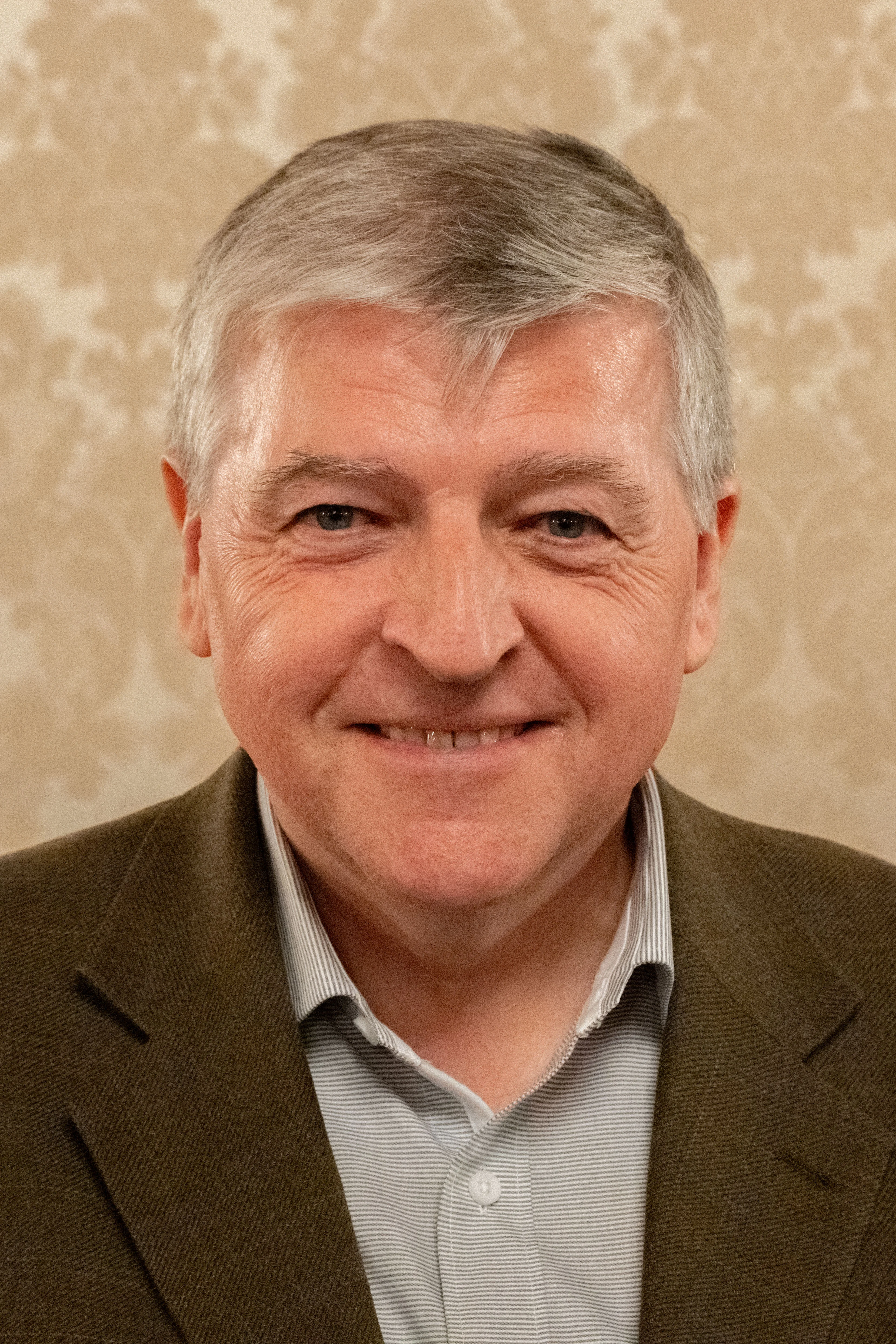
Image from Wikipedia
Image from Wikipedia
Helmut Schüller – Voice of Renewal in the Catholic Church
A Combative Clergyman Between Pastoral Care, Reform Impulse, and Public Impact
Helmut Schüller, born on December 24, 1952, in Vienna, is considered one of the most prominent Catholic priests in Austria. His biography narrates a story of theological grounding, pastoral practice, and a consistent artistic development in a broader sense: shaping church life as a social, spiritual, and cultural space. He became well-known as the director of Caritas facilities, as the vicar general of the Archdiocese of Vienna, and as the initiator of an international reform movement of priests and laypeople. For decades, his stage has been the public arena – with pointed rhetoric, clear dramaturgy, and a presence that is both pastoral and political.
The music career in a narrower sense does not play a role in his life; however, Schüller shapes the rhythm of debates, resonance spaces, and audience density similarly to a word artist. His appearances, sermons, and lectures are carefully composed "arrangements" of biblical hermeneutics, pastoral experience, and socioethical arguments – fueled by a power of expression that mobilizes both supporters and critics.
Biography and Education: From Hollabrunn to Vienna and Freiburg
Raised in Vienna and shaped by the Hollabrunn boys' seminar, Helmut Schüller studied theology at the universities of Vienna and Freiburg im Breisgau until he earned his doctorate. After his ordination in 1977, he worked as a chaplain and religious teacher – an early phase closely connected to community life, during which his understanding of "arrangement" and the "composition" of lived liturgy sharpened. This musicality of speech and shaping, transferred to pastoral care, became the hallmark of his later public appearances. The experiences in teaching and youth pastoral work formed a rich repository of practical knowledge that underpinned his later authority in church political discourse.
As diocesan youth pastor starting in 1981, he learned to "produce" communication across generations – a skill that shaped his artistic development as a speaker. During these years, he solidified his style: straightforward, dialogical, with dramaturgically set accents. His genre: the engaged sermon, the pastoral intervention, the public speech.
Caritas and Responsibility: Leadership, Crisis Management, and Social Ethics
In 1988, Schüller took over the direction of Caritas of the Archdiocese of Vienna, and in 1991 he became president of Caritas Austria. These positions mark the phase in which the "production" of his work – organizationally, structurally, communicatively – grows to a national stage. He was responsible for social programs, developed strategic "arrangements" between the church, state, and civil society, and gained a reputation as a manager in service of humanity. The position required precision, team leadership, and the ability to harmonize complex "scores" of finance, social work, and church mission effectively.
The 1990s confronted him with violence and hostility, including threats from a series of letter bombs. In his work, pastoral empathy was combined with fearless public presence – a multi-layered stage presence that creates closeness and demonstrates conviction. The experience of socioethical practice strengthened his later authority as a reformer who aims to change structures without abandoning the pastoral core.
Vicar General and Conflict: Institutional Church, Tensions, and Course Correction
In 1995, the new Archbishop of Vienna, Christoph Cardinal Schönborn, appointed Helmut Schüller as vicar general. As the "music director" of the administration, so to speak, he coordinated processes, set priorities, and distributed "voices" within the diocesan structure. However, profound differences led to his dismissal from office in 1999. This break marks a turning point: from now on, Schüller acts with the freedom of a pastor and intellectual who clearly articulates his beliefs and is no longer bound by the tightest constraints of the Curia.
The conflict sharpened his profile. On the "stage" of public life, he transformed from an administrative official into a reform-oriented spokesperson, trying to reset the score of church leadership responsibility. He remained rooted in pastoral care and demonstrated how community leadership, proclamation, and social mission can be envisioned as a coherent "composition."
Ombudsperson and Prevention: Rules, Accountability, and a Culture of Trust
As head of the Ombudsperson office of the Archdiocese of Vienna for victims of sexual abuse, Schüller developed rules for church employees in the 1990s and 2000s. His work focused on precision in procedures, transparency, and the protection of those affected – a necessary "arrangement" to regain credibility. The pastoral practice, he insists, must never overshadow institutional responsibility. This commitment to standards and cultural change shaped his reputation as a trustworthy representative of the church.
Especially in this role, Schüller's ability to turn moral principles into manageable processes was evident. It is the art of connecting ethos and structure – a guiding motif that also carries his later reform proposals.
Reform Movement and "Call to Disobedience": From Probstdorf to the Global Public
In 2006, Helmut Schüller, along with allies, presented the Priests' Initiative. The starting point was a diagnosis of "over-instrumentation" in pastoral care: too large pastoral units, too little closeness, too much administration. The initiative called for a synodal renewal, strengthening local communities, and opening up church ministries – in the "score" of the church, more voices should become audible: women, married people, the broad congregation. In 2011, the widely noted "Call to Disobedience" followed, which sparked debates both in Austria and internationally.
Schüller's role as a spokesperson and chairman combines stage presence with networking competence. He conducts discourses, sets breaks and crescendos in media debates, and maintains the "tempo" of the reform debate even against resistance. The initiative professionalized its communication, published positions on women in church leadership, Eucharistic practice, and synodal decision-making processes, and grew to become a significant player in the reform discourse.
Publications and Texts: Linguistic Power, Condensation, and Pastoral Poetics
Although there is no discography, Schüller's books and contributions document his stylistic fingerprint. The publications demonstrate a language that seeks condensation and clarity, carefully "arranged" between theological reflection and pastoral practice. His writing resembles chamber music of argument: no loudness for its own sake, but thematic development, recurring leitmotifs of central thoughts, and a tonality that remains attuned to hope.
Remarkably enduring is the way Schüller clarifies terms, designs narratives, and understands the "dynamics" of the community as a living sound body. His texts open spaces – for cooperation, for conscience, for the responsibility of God's people.
Stage Presence and International Resonance: Lectures, Dialogues, Media
As a speaker, Helmut Schüller is succinct, dialogically agile, and approachable. His lectures, discussion formats, and media appearances follow a well-calculated dramaturgy: a clear base pulse, pointed accents, a finale that invites participation. On platforms both within and outside Austria, he articulated the concerns of the Priests' Initiative and connected local community realities with the "global music" of the world church – a crossover of theology, social situation analysis, and pastoral experiential knowledge.
The public reception varies between agreement and dissent. Critical voices point to loyalty issues with the church's teaching authority, while supporters emphasize the necessity of synodal participation. This multi-voicedness defines the cultural impact of his engagement: Schüller compels engagement, and he keeps the tempo until all voices are heard.
Cultural Influence: The Church as a Resonance Space for Civil Society
In a time of societal fragmentation, Schüller understands the community as a resonance space. His "compositions" – sermons, spiritual accompaniment, position papers – are designed for participation. He perceives liturgy as a school of attention and church leadership as the art of balance. Thus, he provides impulses that extend beyond the Catholic Church: to issues of democracy, gender justice, social justice, and the responsibility of institutions.
His authority is rooted in experience and expertise: decades of pastoral practice, leadership experience in major Caritas works, intimate knowledge of church administration, and deep understanding of theological tradition. This combination builds trust – even where his proposals demand bold course changes.
Current Work and Projects: Synodality, Community Strengthening, Women in Leadership Roles
In recent years, Schüller has focused his work on synodal processes, community strengthening, and the concrete improvement of pastoral conditions. As chairman of a broadly networked movement, he fosters dialogue formats, publishes statements, and strengthens regional initiatives against oversized pastoral units. The agenda remains clear: the church as a learning organization, where the spirit and responsibility of all baptized people work together – not as a "solo project," but as a multi-voiced choir.
In publications, interviews, and press releases, he continues to signal steps towards openness within the church: participation of women in all leadership questions, responsible Eucharistic practice, streamlined administrative processes, and strengthening a culture that prevents and addresses abuse. These projects aim for sustainable impact – on structures that resonate because they serve the Gospel.
Style and Work Character: The Craft of Words, Ethos of Practice
Schüller's "genre" is the pastoral-political speech. Its craftsmanship: stringent argumentation, vivid imagery, rhythmic construction. Its "production": dialogical processes that turn words into action. Its arrangement: theological tradition in conversation with contemporary culture. Thus, a work character emerges that cannot be measured in albums and singles, but in community cultures, public debates, and in concrete improvements of pastoral practice.
This artistic development of words – from the ambo to the agora – explains why Schüller's work can also be read as a cultural project: It orchestrates voices, enables solos, and understands the power of the refrain: proximity, justice, responsibility.
Conclusion: Why Helmut Schüller Inspires – and Why It’s Worth Experiencing Him Live
Helmut Schüller combines experience, expertise, authority, and trustworthiness into a rare mix. He knows the community, he knows the administration, he knows the public debate. His voice carries because it speaks from practice and aims for change. Those who experience him live – at a lecture, in a sermon, in a discussion forum – feel the dynamism of a word artist: not for self-serving purposes, but as a service to a church that wants to be close to the people. Those who value the church as a resonance space of a diverse society will discover a powerful, sonorous signature in Schüller's work.
Official Channels of Helmut Schüller:
- Instagram: No official profile found
- Facebook: No official profile found
- YouTube: No official profile found
- Spotify: No official profile found
- TikTok: No official profile found
Sources:
- Wikipedia – Helmut Schüller
- Priests' Initiative – Board/Chair Helmut Schüller
- Priests' Initiative – Topics & Positions
- Priests' Initiative – Press & Press Releases
- Austria-Forum – Helmut Schüller
- Der Standard – Chat with Helmut Schüller
- Der Spiegel – Photo Series on the "Call to Disobedience"
- Wikipedia: Image and Text Source