
Helene Weigel
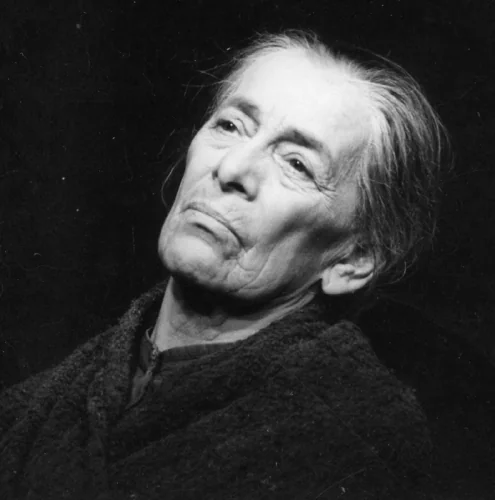
Image from Wikipedia
Image from Wikipedia
Helene Weigel: The Quiet Power of Epic Theater
An Exceptional Figure in Acting, Theater Management, and Brecht Icon
Helene Weigel was one of those artists who not only shaped theater history but also permanently transformed it. As an Austrian-German actress, artistic director, and co-founder of the Berliner Ensemble, she combined artistic precision with organizational determination and became one of the central figures of modern German-speaking theater. Her journey took her from Vienna to Frankfurt and Berlin, leading to the helm of a stage that gained international recognition under her leadership. ([deutsche-biographie.de](https://www.deutsche-biographie.de/pnd118630091.html?language=en))
Biography: Background, Education, and Early Influences
Helene Weigel, born Helene Weigl on May 12, 1900, in Vienna, passed away on May 6, 1971, in East Berlin. She came from a Jewish family whose bourgeois yet culturally open environment fostered her development from an early age. The reform pedagogy of her school years also had a significant influence; the combination of education, independence, and artistic curiosity shaped a personality that could never be reduced to that of a mere interpreter. ([deutsche-biographie.de](https://www.deutsche-biographie.de/pnd118630091.html?language=en))
After her acting training, she moved to Frankfurt in 1919 and then to Berlin in 1922. There, she studied dramaturgy with Max Reinhardt, performed at the Volksbühne and the Deutsches Theater, and began to make a name for herself in German theater life. The Berlin years became a crucial laboratory for her art: here, she developed the tension of concentration, laconicism, and inner presence that would later become her trademark. ([de.wikipedia.org](https://de.wikipedia.org/wiki/Helene_Weigel))
The Breakthrough: From Character Actress to Independent Stage Personality
Early reviews described Weigel's performance as expressive, idiosyncratic, and unusually body-conscious. Her facial expressions, harsh vocal tone, and ability to portray characters not only sentimentally but with a clear, often ruthless precision were particularly highlighted. As early as the 1920s, she gained attention with roles in Woyzeck, Die Ratten, Penthesilea, and Molière's The Doctor in Spite of Himself, establishing herself as an artist balancing naturalism, expressionism, and modern role truth. ([berliner-ensemble.de](https://www.berliner-ensemble.de/magazin/helene-weigels-weg-die-asiatische-theaterkunst))
Her artistic breakthrough reached a new level with her encounter with Bertolt Brecht in 1923. Brecht tailored the mute Kattrin in Mother Courage and Her Children to her, allowing her to have an impact on stage beyond language barriers. This decision already demonstrates how precisely Weigel's acting power was perceived: not as a loud presence, but as controlled, highly concentrated stage energy that densified space rather than filled it. ([de.wikipedia.org](https://de.wikipedia.org/wiki/Helene_Weigel))
Exile, Return, and the Formation of a Theater Aesthetic
After the Nazis came to power in 1933, the Brechts lived in exile in Denmark, Sweden, Finland, and later in the USA. For Weigel, this period was a turning point, as she could only work as an actress under limited conditions. Yet, this forced pause deepened her collaboration with Brecht, whose texts and role models decisively shaped her later artistic signature. ([de.wikipedia.org](https://de.wikipedia.org/wiki/Helene_Weigel))
In 1948, Brecht and Weigel returned to East Berlin, and with the premiere of Mother Courage and Her Children at the Deutsches Theater in 1949, a new phase of German theater history began. Weigel became the artistic director of the newly founded Berliner Ensemble, taking on not only an administrative role but also responsibility for an ensemble, an aesthetic, and a cultural-political project. Her strength lay not in pathos but in consistency, organization, and tactical intelligence. ([deutsche-biographie.de](https://www.deutsche-biographie.de/pnd118630091.html?language=en))
The Berliner Ensemble: Directorship, Power, and Artistic Discipline
As artistic director, Weigel led the Berliner Ensemble for decades with remarkable persistence. She recruited staff to build the stage, organized performance schedules, enforced interests, and kept the theater on course during artistically and politically challenging years. Sources emphasize her tenacity in negotiations, her organizational talent, and her contribution to ensuring that Brecht's idea of a theater of its own became a lasting reality. ([deutsche-biographie.de](https://www.deutsche-biographie.de/pnd118630091.html?language=en))
Under her influence, the ensemble developed a global reputation, which became evident with their guest performance in Paris in 1954. The Berliner Ensemble received the first prize at the Theater Festival of Nations for Mother Courage. Later, guest performances took them to major stages in Germany as well as to Warsaw, Krakow, Lodz, Paris, and London. Weigel's work, therefore, connected local anchoring in East Berlin with an astonishing international impact. ([de.wikipedia.org](https://de.wikipedia.org/wiki/Helene_Weigel))
Acting Style: Reduction, Voice, and Epic Theater
Weigel's significance for epic theater lies primarily in her ability for stylistic condensation. With her, Brecht developed an acting style that did not rely on illusionistic merger but on distance, visibility, and intellectual sharpness. Her particularly well-known deep and expressive voice, her reduced gestures, and her quiet, narrating performance became a school of precision that countered the pathos of the time with a different, quieter authority. ([deutsche-biographie.de](https://www.deutsche-biographie.de/pnd118630091.html?language=en))
In her roles as proletarian women, Weigel found an artistic language that merged political consciousness with emotional discipline. The character of Mother Courage became her standout role, as did the mother from Brecht's play of the same name. Critics and later biographers saw in her an actress who sought neither naturalistic overwhelm nor decorative elegance but uncovered the inner structure of a character. ([deutsche-biographie.de](https://www.deutsche-biographie.de/pnd118630091.html?language=en))
Repertoire, Records, and Documented Stage Work
Weigel's theater work can be traced through a vast repertoire ranging from classics to Brecht's plays. Among her roles are Marie in Woyzeck, Pauline Piperkarcka in Die Ratten, Meroe in Penthesilea, Frau Carrar in The Guns of Frau Carrar, and Pelagea Wlassowa in The Mother. This range shows that her art was not limited to a single type of role but remained flexible between classical tragedy, social drama, and political teaching piece. ([de.wikipedia.org](https://de.wikipedia.org/wiki/Helene_Weigel))
Additionally, there are radio play and film recordings that document her presence beyond the stage. In the documentation of her work, not only does the historical significance of the actress reflect but also the will to systematically secure and communicate Brecht's work. After Brecht's death, she managed his estate strictly according to his model productions, contributing significantly to preventing this theater tradition from disintegrating. ([hdg.de](https://www.hdg.de/lemo/biografie/helene-weigel.html))
Awards, Impact, and Cultural Influence
Weigel received multiple accolades, including the title of professor for her 60th birthday, the Patriotic Order of Merit in silver and later in gold, as well as the Star of Peoples' Friendships in silver. As early as 1950, she was a founding member of the German Academy of Arts in East Berlin and became an institution in the cultural life of the GDR. However, her influence extended beyond state honors: she became a symbolic figure for artistic discipline, institutional development, and the political readability of theater. ([hdg.de](https://www.hdg.de/lemo/biografie/helene-weigel.html))
Her impact on contemporary theater is twofold. On one hand, she represents a great actress who achieves psychological truth not through exaggeration but through accuracy. On the other hand, she embodies the rare connection of stage art and managerial power: an artistic director who not only managed but shaped style, repertoire, and institution. It is precisely in this that her enduring cultural authority lies. ([deutsche-biographie.de](https://www.deutsche-biographie.de/pnd118630091.html?language=en))
Current Placement and Sustainable Relevance
Even decades after her death, Helene Weigel remains a central reference for acting, directing, and theater organization. The Berliner Ensemble will commemorate her 125th birthday in 2025 with a Helene Weigel year; additionally, the courtyard of the house will be renamed Helene-Weigel-Hof in January 2025. Such signs show that her significance is by no means archival or stagnant but actively lives on in current theater memory. ([de.wikipedia.org](https://de.wikipedia.org/wiki/Helene_Weigel))
For those who consider Helene Weigel today, they see not only Brecht's partner but an independent designer of the 20th century. Her art connects silence and authority, her work connects repertoire and institution, and her name connects theater history and cultural policy. For this reason, engaging with her remains worthwhile: she represents a form of theater that demands conviction, and she continues to invite audiences to reexperience acting as a precise art of thinking and acting on stage. ([deutsche-biographie.de](https://www.deutsche-biographie.de/pnd118630091.html?language=en))
Conclusion
Helene Weigel fascinates because she not only played theater but organized, protected, and shaped its style. Her stage presence was quiet, yet her impact was monumental; her artistic development led from character actress to a formative figure of epic theater. Those who wish to understand how modern theater arises at the intersection of art, politics, and institutions encounter one of the most important figures in Helene Weigel. Her work remains a powerful argument for experiencing theater not just visually but live. ([deutsche-biographie.de](https://www.deutsche-biographie.de/pnd118630091.html?language=en))
Official Channels of Helene Weigel:
- Instagram: no official profile found
- Facebook: no official profile found
- YouTube: no official profile found
- Spotify: no official profile found
- TikTok: no official profile found
Sources:
Upcoming Events
Helene Weigel – Revolutionary in the Spotlight
An evening for theater enthusiasts and film fans: Helene Weigel at the Deutsches Theater Munich. Archival material, close ties to Brecht, and a grand stage biography. #DOKfest2026
DOK.fest Augsburg: Helene Weigel (with discussion)
An evening for theater history and strong images: Helene Weigel at DOK.fest Augsburg in Thalia Cinema. Film and discussion on 14.05.2026. #Theater