
Hartmut Haenchen
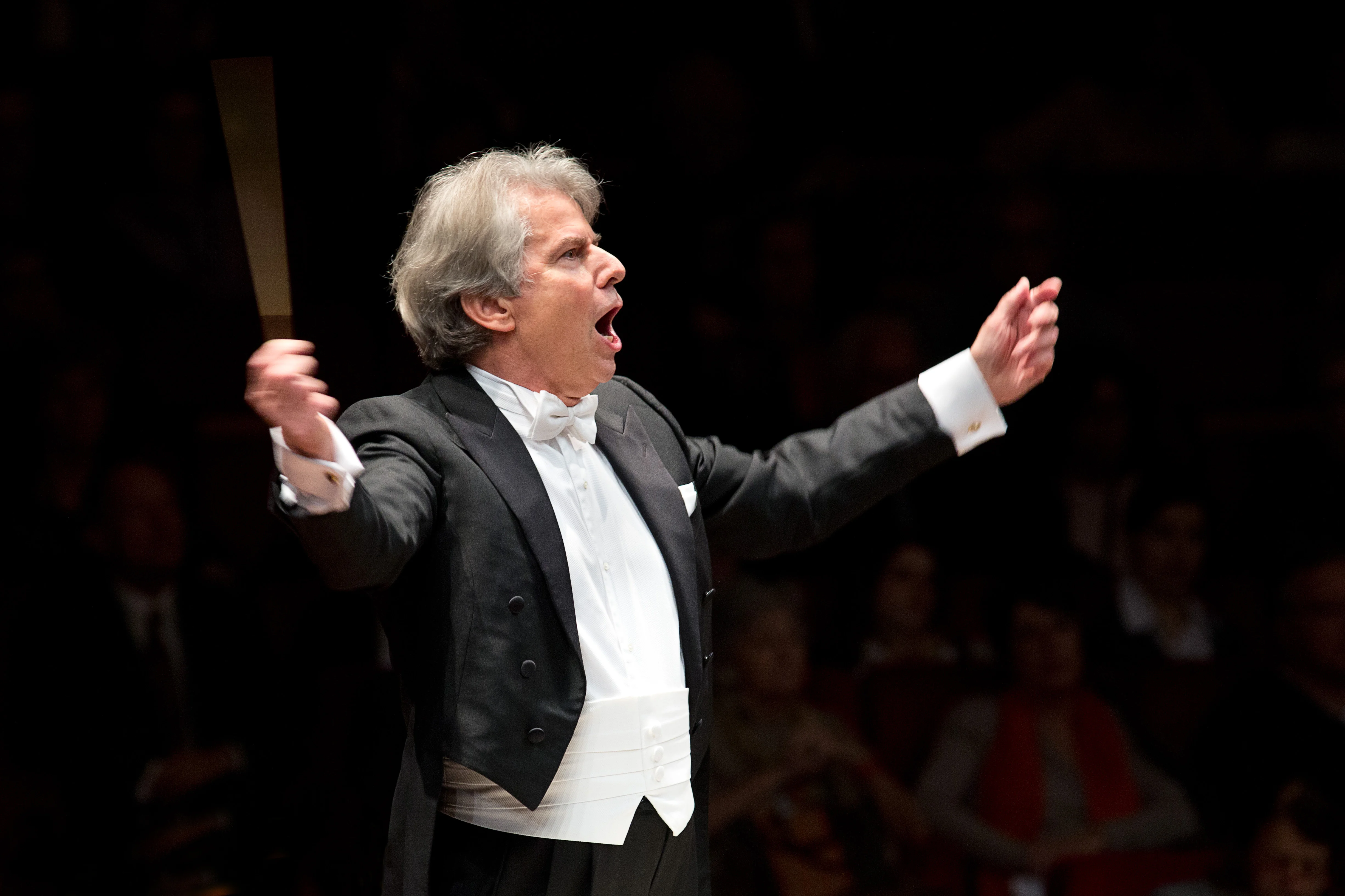
Image from Wikipedia
Image from Wikipedia
Hartmut Haenchen – The Precise Sound Architect Between Dresden, Bayreuth, and Amsterdam
A Conductor with Intellect, Historical Depth, and International Radiance
Hartmut Haenchen, born on March 21, 1943, in Dresden, is one of the most notable German conductors of his generation. His career combines musical discipline, analytical depth, and an unusually consistent artistic signature that unfolds across opera, concert, and recording artistry. Early on, he was influenced by the tradition of the Dresdner Kreuzchor; later, he developed into a conductor particularly appreciated for Wagner, Strauss, and Mahler. ([haenchen.net](https://www.haenchen.net/biografie/official-english-biography/))
Early Influences in Dresden: Choral Culture, Education, and Early Recognition
Haenchen's musical journey began not in the spotlight, but in the discipline of a long-established choral system. In Dresden, he gained practical musical experience early as a member of the Kreuzchor before studying conducting and singing at the Hochschule für Musik Carl Maria von Weber. As a teenager, he attracted attention: at the age of 15, he conducted performances as a cantor, and at 17, his revival of Johann Adolph Hasse's Requiem garnered interest beyond the region. ([en.wikipedia.org](https://en.wikipedia.org/wiki/Hartmut_Haenchen?utm_source=openai))
These early stages are crucial for his later profile, as they anticipated two characteristics that would shape his entire music career: a sovereign command of vocal line and the ability to deeply penetrate scores structurally. The conductor's later career developed from this combination of singer sensitivity and analytical precision. Additionally, masterclasses in Berlin, Leningrad, and at the Carinthian Summer, as well as encounters with the rehearsal contexts of Bayreuth and Karajan, significantly broadened his horizons. ([en.wikipedia.org](https://en.wikipedia.org/wiki/Hartmut_Haenchen?utm_source=openai))
Career Beginning in the GDR: Breakthrough Despite Restrictions
He began his professional career in 1966 as the director of the Robert-Franz-Singakademie and conductor of the Philharmonie Halle. With this, Haenchen made an early statement for a path that did not limit itself to conducting alone, but rather united choral work, opera, and symphonic repertoire. By 1971, he won first prize at the Carl-Maria-von-Weber Competition in Dresden, a significant marker of his growing reputation. ([haenchen.net](https://www.haenchen.net/biografie/deutsche-biografie/))
In the 1970s, his path took him through Zwickau, Berlin, Dresden, and Schwerin into central institutions of the German music landscape. He served as the first concertmaster at the stages of the city of Zwickau, later conducting the Dresdner Philharmonie and leading the Philharmonic Choir, and finally as music director of the Mecklenburg State Orchestra Schwerin. At the same time, he remained a guest at venues such as the Staatsoper Berlin, the Komische Oper, and the Staatsoper Dresden. Despite the restrictions of the GDR, he received special permits to work with western top orchestras like the Berlin Philharmonic and the Concertgebouw Orchestra. ([haenchen.net](https://www.haenchen.net/biografie/deutsche-biografie/))
Amsterdam and the International Opera Career
In 1986, Haenchen moved his base to the Netherlands, taking on the position of chief conductor of the Dutch Philharmonic Orchestra and the Chamber Orchestra, as well as music director of the Dutch National Opera. This step marked his international breakthrough at the highest level: from then on, he regularly conducted leading opera houses and orchestras across Europe and beyond. His artistic authority grew through a combination of repertoire breadth, stylistic accuracy, and clear interpretation of works. ([haenchen.net](https://www.haenchen.net/biografie/official-english-biography/))
His position in the opera field became particularly strong. Official biographies mention productions in Toulouse, Madrid, Milan, London, Paris, Brussels, and Copenhagen; in addition, there are relationships with orchestras such as the Royal Stockholm Philharmonic, the Royal Danish Orchestra, the New Japan Philharmonic, and the Orchestre de Paris. In the perception of the specialized press, he is considered one of the great Wagner conductors of our time, as well as a distinguished interpreter of Richard Strauss and Gustav Mahler. ([haenchen.net](https://www.haenchen.net/biografie/official-english-biography/))
Interpretation Style: Clarity, Source Critique, and Musical Integrity
Haenchen's conducting is characterized by a remarkable balance of structure and expression. His work focuses on transparency, text comprehensibility, and motivic precision; especially in Wagner and Bruckner, his interest in score fidelity does not come across as a rigid dogma, but rather as historically informed interpretation. The official biography describes his musical integrity and intellectual approach as reasons for his standing in the music world. ([haenchen.net](https://www.haenchen.net/biografie/official-english-biography/))
For the audience, this creates a sound language often perceived as human, clear, and energetic. Haenchen does not seek effect for its own sake, but rather the inner logic of the work. This is at the core of his artistic development: he combines analytical sharpness with a stage presence that supports both opera and concert equally. ([haenchen.net](https://www.haenchen.net/biografie/official-english-biography/))
Discography and Recordings: An Extensive Documentary Work
With over 130 recordings, Hartmut Haenchen has left a remarkable documentary body of work, produced for labels such as Berlin Classics, Capriccio, EuroArts, OpusArte, Pentatone, Philips, Sony Classical, Vanguard, and ICA Classics. The discography includes particularly important recordings with the former Chamber Orchestra Carl Philipp Emanuel Bach, including multiple award-winning releases. Among his highlighted releases are a Mahler Symphony No. 6 DVD on ICA Classics, which received the Diapason d’Or, as well as Mozart's last symphonies on Berlin Classics, which also garnered numerous awards. ([haenchen.net](https://www.haenchen.net/biografie/official-english-biography/))
The discography is not just a list of recordings but a reflection of his musical priorities. It shows the grounding in classical-romantic repertoire, the depth of his Mozart and Mahler interpretations, and the close connection to historical and text-critical issues. In parallel, he has published numerous books and music theoretical works, including studies on Wagner, Mahler, and the performance practice of the 18th century. ([haenchen.net](https://www.haenchen.net/biografie/official-english-biography/))
Critical Reception, Awards, and Cultural Authority
The music press has repeatedly honored Haenchen as an extraordinary Wagner interpreter and a conductor with great intellectual substance. In 2017, the magazine Opernwelt named him Conductor of the Year; in 2018, he received the Richard Wagner Prize from the Richard Wagner Foundation Leipzig. He has also been awarded the Federal Cross of Merit, the Grand Prix de la Critique, the Diapason d’Or, and other distinctions that attest to his authority in the international music scene. ([haenchen.net](https://www.haenchen.net/biografie/official-english-biography/))
Particularly important for his cultural standing in the Netherlands has been his close connection to Amsterdam. There, he not only received high honors, but was also appointed honorary conductor of the Dutch Philharmonic in 2023. In 2006, the Dutch queen even granted him honorary nationality; the biography also mentions his elevation to the Order of the Dutch Lion, the highest honor ever received by a German. These honors reflect the depth of his influence on the musical life between Germany and the Netherlands. ([haenchen.net](https://www.haenchen.net/biografie/deutsche-biografie/))
Current Projects, Late Highlights, and Artistic Presence
Even at an advanced age, Haenchen remains present and productive. The official website reports the Mortier Award for his lifetime achievement in 2025, and current notices on the site continue to document concerts, projects, and repertoire focuses, including the ongoing Bruckner cycle in the 2025/26 season. The website also points to concerts and interviews from 2024 and 2025, underscoring the ongoing relevance of his music career. ([haenchen.net](https://www.haenchen.net/aktuell/?utm_source=openai))
His recent and planned activities show no routine but late mastery. Haenchen remains a conductor who thinks in large forms while taking the details of the score seriously. The fact that he continues to be in demand internationally speaks to a stage presence based on experience, authority, and unchanging creative will. ([haenchen.net](https://www.haenchen.net/biografie/official-english-biography/))
Cultural Influence: Between Fidelity to Works, Research, and Mediation
Hartmut Haenchen represents conducting that goes beyond mere concert activity. His books, essays, and lectures demonstrate the same ambition as his performances: music should be historically informed, analytically penetrated, and at the same time emotionally tangible. Thus, he belongs to that group of artists who not only interpret but also shape musical debates. ([haenchen.net](https://www.haenchen.net/biografie/official-english-biography/))
Especially in Wagner, Bruckner, and Mahler, he has developed a style that connects the monumental with clarity. For music lovers, this creates a special tension: Haenchen makes large forms transparent without diminishing their drama. His career tells of persistence, intellectual independence, and a rare connection of intellect and sound imagination. ([haenchen.net](https://www.haenchen.net/biografie/official-english-biography/))
Conclusion: A Conductor Who Unites Depth, Discipline, and Presence
Hartmut Haenchen remains exciting because he has preserved his stance at every phase of his career. From the Dresdner Boys' Choir to the opera houses of the GDR and the great stages of Europe, he developed a music career characterized by curiosity, precision, and international recognition. Encountering him means meeting not just a mere conductor, but an interpretive thinker with a distinctive signature. ([haenchen.net](https://www.haenchen.net/biografie/official-english-biography/))
Especially in live performances, his artistic development reveals its full impact: the calm authority at the podium, the structural clarity of the interpretation, and the ability to bring genuine musical events out of scores. For all who wish to experience opera and symphonic music in its deepest form, every encounter with Hartmut Haenchen is worthwhile. Hearing him on stage means experiencing musical intelligence, historical depth, and emotional tension in a moment. ([haenchen.net](https://www.haenchen.net/biografie/official-english-biography/))
Official Channels of Hartmut Haenchen:
- Instagram: No official profile found
- Facebook: No official profile found
- YouTube: No official profile found
- Spotify: No official profile found
- TikTok: No official profile found