
Ganes
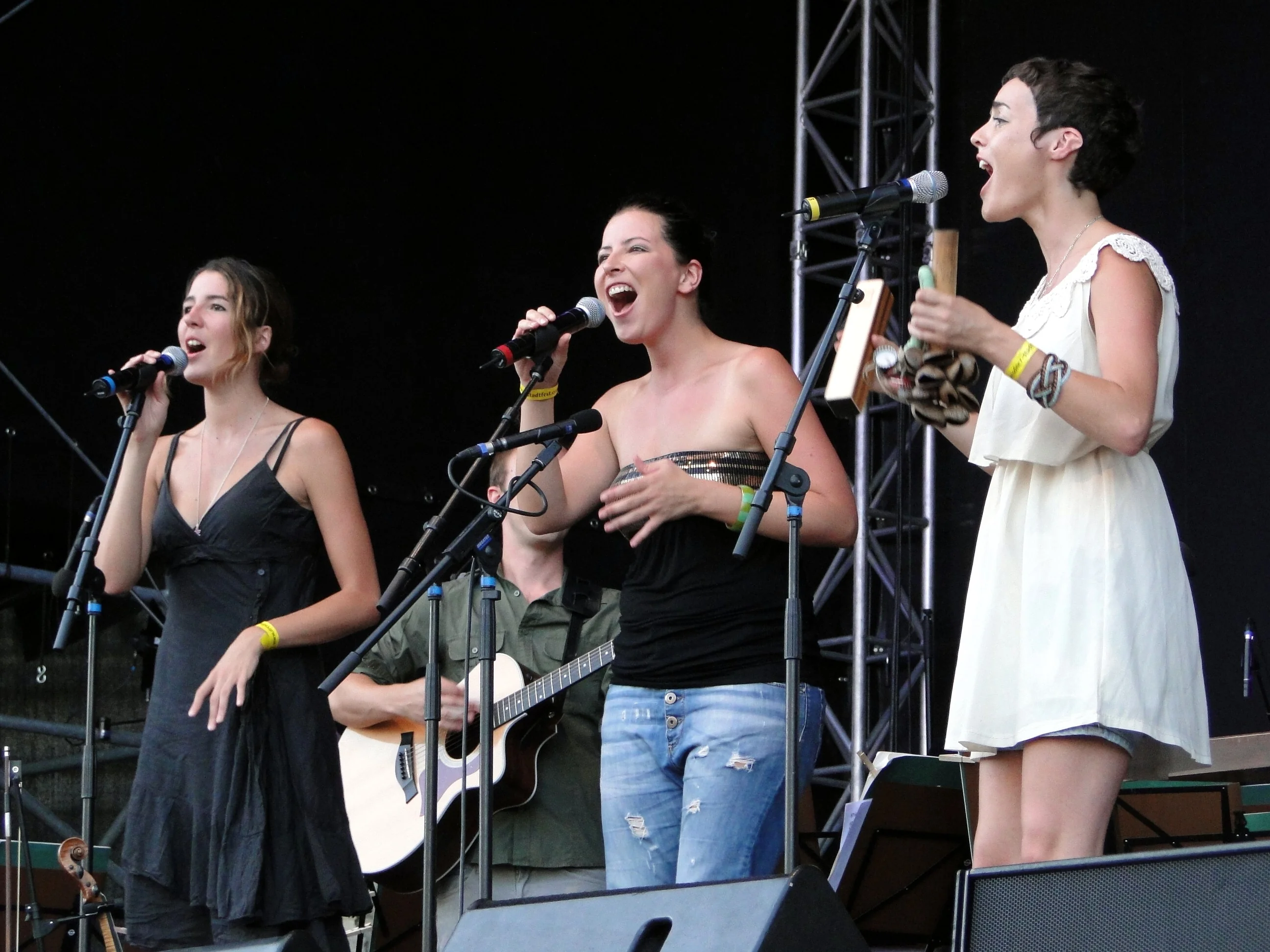
Image from Wikipedia
Image from Wikipedia
Ganes – Ladin Pop with Alpine Poetry and Modern Radiance
Between Dolomites, Myths, and Pop: Why Ganes Captures Hearts and Cultural Sections
Ganes is one of the most fascinating pop trios in the Alpine region: Hailing from La Val in South Tyrol, Elisabeth Schuen, Marlene Schuen, and since 2018, Natalie Plöger sing their songs in Ladin – a minority language with Rhaeto-Romanic roots. With crystal-clear harmonies, imaginative arrangements, and vivid poetry, they connect local mythologies with contemporary pop aesthetics. Their artistic journey spans from early albums with Sony Music through an extensive music career in German-speaking regions to recent concept works that elegantly intertwine tradition, identity, and the present.
Origin and Language: Ladin as an Artistic Engine
The foundation of Ganes' artistic development is rooted in their origins in the Dolomites: La Val – a village that resonates through its landscape and culture in the band's textures, melodies, and rhythms. The group decided early on to place Ladin at the center of their compositions. This decision is not only a stylistic feature but also a statement about the visibility of a minority language. Their lyrics serve as miniatures of life in the mountains: imagery of nature, water metaphors, fragments of myths, and everyday scenes are translated into a pop language that resonates universally, even for those who do not understand Ladin. Thus, an international comprehensibility emerges from regional anchoring.
Founding, Early Years, and Artistic Development
Ganes was founded by sisters Elisabeth and Marlene Schuen along with their cousin Maria Moling. The early years produced albums like “Rai de sorëdl” (2010), “Mai guai” (2011), and “Parores & Neores” (2012), whose mix of pop, folk, jazz nuances, and chamber music colors defined their sound. With “Caprize” (2014), the discography opened up to even more accessible hooks without sacrificing sonic delicacy. In 2016, “An cunta che” was created, a concept album that recalls the Fanes mythos – a key work for the band’s narrative style and a striking testament to their ability to translate mythical narratives into modern pop stories.
At the turn of 2017/2018, Maria Moling left the group – a significant change met with confidence by Ganes. With bassist and singer Natalie Plöger, the trio gained a musician who grounds the sound and expands the vocals. The stage presence remained intimate, while the ensemble sound gained depth. Since then, their artistic development pulses between acoustic finesse, poetic storytelling, and selective electronic colors.
Discography and Milestones
The discography of Ganes can be read in two arcs: an early phase between 2010 and 2016, in which the ladin pop concept was refined, and a newer, thematically nuanced phase starting from 2021. After “Rai de sorëdl,” “Mai guai,” “Parores & Neores,” “Caprize,” and “An cunta che,” the band embarked on a new chapter in 2021 with “Or brüm.” The album title (“Blue Gold”) refers to the central motif of water – a poetic and sonic core that reflects in wave-like textures, floating vocal harmonies, and organic arrangements. In 2023, the trio released “A cordes,” an acoustic distillation of their repertoire that transparently showcases their core competencies – multi-part singing, finely woven instrumentation, and dynamically breathing forms. 2024 saw the release of “Vives!”: eleven songs celebrating life and community while bridging tradition and present. Production, composition, and arrangement intertwine closely here; the result is a warm-sounding, rhythmically buoyant album with intricate sound colors.
For the band's musical history, these albums mark precise artistic coordinates: “Or brüm” as a programmatic sound poem centered around water, “A cordes” as a chamber music close-up of the song substance, and “Vives!” as an expansively vibrant cycle that stylistically reaches wide – from alpine idioms to lively Mariachi influences.
Style, Composition, and Production: Sound Architecture with Alpine Pop DNA
The stylistic profile of Ganes is characterized by an exquisite balance of intimacy and expansiveness. Compositional work features clearly defined melodies, clever vocal leads, and polyrhythmic lightness that feels danceable without being intrusive. Arrangements focus on texture shifts – from bowed strings and lap steel colors to plucked double bass lines and soft synth surfaces. The production allows voices to breathe: the three-part harmony remains a motif around which instruments group in transparent layers. Technically, Ganes achieve their effect less through volume than through dynamics, articulation, and micro-fine timbral contrasts. Thus, a signature sound is created that enchants pop ears and delights audiophile listeners.
Musically, Ganes can be seen as part of a European movement that brings regional languages into pop culture and thus expands aesthetics: Rhaeto-Romanic meets singer-songwriter pop, Alpine folklore combines with modern songcraft. This constellation makes the group review-friendly – straddling world music, indie pop, and contemporary song art.
Cultural Impact: Visibility for a Minority Language
Ganes contribute to cultural mediation. Their songs make the ladin language audible and demonstrate how art can create identity. Concerts in Germany, Austria, Switzerland, and Italy serve as messages from an Alpine microcosm opening up to a wider audience. In interviews and portraits, the band repeatedly emphasizes the inspiring power of the Dolomites, the cycles of myths, and village life – not folklorically, but as contemporary art. This approach generates a dual resonance: locally (as the preservation and renewal of their own culture) and internationally (as an independent aesthetic). Herein lies the sustainable cultural value: language, landscape, and music enter into dialogue.
On Stage: Intimate Presence, Precise Dramaturgy
Live, Ganes captivates with a stage presence that combines closeness and contour. The setlist dramaturgically weaves arcs – from balladic calm through buoyant mid-tempo tracks to jubilant refrains. The double bass anchors, strings and guitars intertwine, and the voices guide the audience through stories that come alive in concert. The artistic development is particularly evident on stage: acoustic passages sit alongside arranged tutti moments, spontaneous narratives beside carefully built crescendos. This mixture creates the atmosphere for which Ganes is appreciated: poetic, friendly, highly musical.
“Vives!” (2024): A Celebration of Life – in Eleven Chapters
“Vives!” is more than an album title – it is an aesthetic program. The compositions celebrate community, rituals, and memories; the production focuses on brilliance, rhythmic elegance, and melodic clarity. Sonically, Alpine idioms and Latin American-inspired colors – such as trumpet and string accents – merge into a sensual fusion. The result feels like a small world in which village stories, drinking songs, anecdotes, and longing images flow together. The single architecture takes a back seat to the album conception: “Vives!” aims to be heard as a cycle, a sequence of moods that breathe from the first to the last track.
Career Milestones and Collaborations: From Hubert von Goisern to Their Own Signature
A defining chapter of their early music career was the participation on the concert ship of Hubert von Goisern. This experience sharpened their stage routine, repertoire, and sense of narrative arcs. From the proximity to the Alpine music landscape, Ganes developed a distinctive pop language: less as a backing band, but rather as a self-determined collective of songwriting, arrangement, and production. This path strengthened their authority and credibility – a crucial EEAT factor for reception in cultural sections, radio, and concert venues.
Awards, Reception, and Resonance
The critical reception of Ganes has followed them since their early albums: media in the Alpine region have portrayed the trio as sounding ambassadors of Ladin; concert reviews highlight their sound culture, multi-part singing, and poetic imagery. Recent programs – “Or brüm,” “A cordes,” and “Vives!” – show how the band thinks cyclically about their themes and deepens them musically. Audience resonance confirms the relevance of this approach: Ganes concerts are described as emotional, finely crafted, and simultaneously accessible.
Current Projects 2024/2025: Album, Tours, Vibrant Presence
With “Vives!” (released at the end of September 2024), Ganes set a fresh focus. Tour dates in 2024 marked the album premieres, with additional concerts following in German-speaking areas in 2025. The physical release – partly as a special mediabook – underscores their curated ambition. Digitally, the band remains present via streaming platforms; the sustainable expansion of their concert activities shows that Ganes cultivate their audience both analog and online. In content, “Vives!” proves to be a bridge: community-building, performative, clearly articulated, and musically multifaceted.
Conclusion: Why Ganes Are More Important Today Than Ever
Ganes connect artistic development with cultural responsibility. They illustrate how a minority language in pop music does not remain exotic but expresses a vibrant, modern identity. Their discography documents this journey: from sunbeam debut to myth-inspired concept works to the life-affirming “Vives!” Those who love pop, poetry, and precision will find a sound world that elegantly oscillates between village life and world stage. Recommendation: experience live – for the voices, the arrangements, and that special moment when a ladin refrain writes itself effortlessly into the heart.
Voices of the Fans
The reactions from fans clearly show: Ganes captivates people far beyond the Dolomites. On Instagram, a listener enthusiastically shares: “These voices shine – every concert is a small celebration.” On Facebook, one reads comments such as: “I don’t understand Ladin – but I feel every word.” Such feedback reflects the special connection of language, music, and atmosphere that Ganes create both live and on record.
Official Channels of Ganes:
- Instagram: https://www.instagram.com/ganes.music/
- Facebook: https://www.facebook.com/ganesband
- YouTube: No official profile found
- Spotify: https://open.spotify.com/intl-de/album/4qakMA4hFEF0aWt1J8wEcW?si=X_RUFydET56OhK79cNmY4Q
- TikTok: No official profile found
Sources:
- Ganes – Official Website
- ARGEkultur Salzburg – Event page with official social links
- Wikipedia (DE) – Ganes (Band profile, discography, lineup)
- Apple Music – Ganes: “Vives!” (Release, Label/Distribution)
- Spotify – “Vives!” (Album presence)
- dorf tv – Ganes Live Portrait
- BARFUSS – Video portrait “The Pop Trio”
- BR/Prisma – “bergheimat: Ganes and their South Tyrol”
- jpc – Ganes: “Or brüm” (Product page, Label information)
- Wikipedia: Image and text source
Upcoming Events
Ganes - Vives!
Ladin pop with goosebumps: Ganes celebrate Vives! in the city hall festive hall Landshut. 22.04.2026, 8:00 PM, tickets from €25. Vocal magic, acoustic wonder, unforgettable concert experience. #GanesLive
Ganes: New Folk Music at Schloss Elmau
Ganes, known for folk music from the Alpine region, plays at Schloss Elmau on June 27, 2026. An evening full of musical magic awaits you.