
Chiquinha Gonzaga
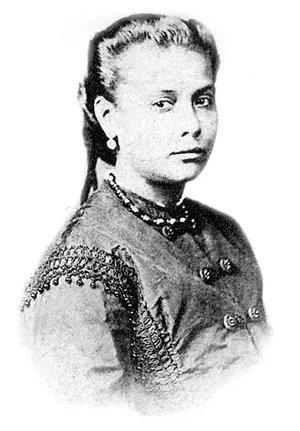
Image from Wikipedia
Image from Wikipedia
Chiquinha Gonzaga: The Rebellious Pioneer of Brazilian Choro
An Artist Who Redefined Music in Brazil
Francisca Edwiges Neves Gonzaga, better known as Chiquinha Gonzaga, is one of the defining figures in the history of Brazilian music. She was born on October 17, 1847, in Rio de Janeiro and passed away there on February 28, 1935. As a composer, pianist, and the first female conductor in Brazil, she combined artistic boldness with social independence, leaving behind a body of work that significantly shaped Choro, popular piano music, and theater music. ([en.wikipedia.org](https://en.wikipedia.org/wiki/Chiquinha_Gonzaga?utm_source=openai))
Biography: Between Bourgeois Heritage and Artistic Self-Liberation
Chiquinha Gonzaga grew up in an era when women were scarcely visible in public musical life. Nevertheless, she developed a strong musical identity early on and challenged the strict role expectations of the 19th century. Several sources describe her as a woman who performed not only as a performer but also as an independent artist, arranger, and composer in a culture dominated by men. ([upo.es](https://www.upo.es/revistas/index.php/ccs/article/view/9383?utm_source=openai))
Her life path exemplifies the connection between an artistic career and personal emancipation. Research and musicological classifications emphasize that she distanced herself early from traditional life designs to work as a professional musician. It was this self-determination that made her a symbol of female creativity in Brazil. ([upo.es](https://www.upo.es/revistas/index.php/ccs/article/view/9383?utm_source=openai))
The Breakthrough: From Salon to Brazilian Popular Music
The actual artistic breakthrough came when Chiquinha Gonzaga began to perform in the popular musical circles of Rio de Janeiro and connected with the so-called Chorões. Wikipedia and various biographical sources cite her collaboration with Joaquim Calado as pivotal; she became the first woman in his group, thus engaging in a practice that was central to the development of Choro. Her piano playing fused European dance forms with Brazilian rhythms, creating a new sound that had an immediate impact on the audience. ([en.wikipedia.org](https://en.wikipedia.org/wiki/Chiquinha_Gonzaga?utm_source=openai))
Her early piece Atraente is considered a key work from this phase. Expert sources describe it as a composition published in 1877, which already demonstrates the fusion of Polka elements with Afro-Brazilian rhythms. This is precisely where Chiquinha Gonzaga’s historical significance lies: she helped to shape a distinct Brazilian popular and concert language from imported forms. ([wophil.org](https://wophil.org/cotm-chiquinha-gonzaga/?utm_source=openai))
Choro, Theater, and Carnival: The Repertoire of a Stylistic Composer
Chiquinha Gonzaga's discography and compositional legacy includes hundreds of pieces, ranging from polkas, tangos, waltzes, modinhas, habaneras, to schottisches. The stylistic range showcases a musician who remarkably integrated popular entertainment, salon aesthetics, and urban dance culture. Sources from Choro research describe her as a pioneer whose works made the transition from European dance music to Brazilian popular music audible. ([choromusic.com](https://www.choromusic.com/catalogo/compositores/chiquinha-gonzaga/biography.html?utm_source=openai))
Her theater work is particularly important. Pieces like Forrobodó and Jurití became audience successes because they brought elements of Brazilian everyday and entertainment culture to the stage. These pieces showcase Chiquinha Gonzaga not only as a composer but also as a precise dramatist of musical situations, working with arrangement, melodic lines, and rhythmic tension. ([en.wikipedia.org](https://en.wikipedia.org/wiki/Chiquinha_Gonzaga?utm_source=openai))
Ó Abre Alas: The Birth of a Carnival Anthem
One work remains emblematic of her fame to this day: Ó Abre Alas, composed in 1899. The source from Wikipedia refers to the piece as the first Carnival march composition in Brazil; other expert sources highlight that it is a song that redefined Carnival musically and remains present in cultural memory. With this piece, Chiquinha Gonzaga achieved a popularity that extended far beyond the musical scene. ([pt.wikipedia.org](https://pt.wikipedia.org/wiki/%C3%93_Abre_Alas?utm_source=openai))
Particularly, Ó Abre Alas showcases her ability to combine mass appeal with compositional substance. The piece possesses that immediate singability that transforms a good Carnival format into a collective anthem. In the history of Brazilian music, it marks a moment when popular music was no longer seen merely as entertainment but as a cultural language of the city. ([pt.wikipedia.org](https://pt.wikipedia.org/wiki/%C3%93_Abre_Alas?utm_source=openai))
Style and Musical Development: Between Popularity and Compositional Refinement
Chiquinha Gonzaga's style thrives on clarity, rhythmic energy, and melodic immediacy. At the same time, her compositions exhibit a fine understanding of form and harmony, which positions her music at the intersection of salon, street, and theater. This mixture made her accessible to the audience and relevant in music history. ([choromusic.com](https://www.choromusic.com/catalogo/compositores/chiquinha-gonzaga/biography.html?utm_source=openai))
Historically, she counts among the most important female voices in Brazil, as she did not work within just one genre but connected multiple fields: Choro, Carnival marches, operettas, and piano pieces. Research sources also emphasize her role as the first woman to publicly conduct in Brazil and as the country's first female conductor. This dual authority as both a composer and leader of ensembles gave her musical career exceptional weight. ([wophil.org](https://wophil.org/cotm-chiquinha-gonzaga/?utm_source=openai))
Cultural Influence, Reception, and Enduring Legacy
Chiquinha Gonzaga's cultural influence extends far beyond her lifetime. She is regarded as a trailblazer for women in Brazilian music and as an early voice of a confident, urban national style. Sources such as Classic FM, Elbphilharmonie, and scholarly articles emphasize her role as a pioneer, abolitionist, and symbol of artistic independence in a patriarchal society. ([classicfm.com](https://www.classicfm.com/discover-music/chiquinha-gonzaga-brazil-first-woman-conductor-choro-composer/?utm_source=openai))
Her reception remains vibrant: revivals, research, festivals, and current releases keep her name alive. Search results reference, for example, an album released in 2024 on Apple Music, as well as concert and festival formats that place Chiquinha Gonzaga in new contexts today. Although these are not "current projects" of the artist herself, they demonstrate the enduring relevance of her work in the present. ([music.apple.com](https://music.apple.com/us/artist/chiquinha-gonzaga/1804207057?utm_source=openai))
Discography and Legacy of Works
A classic discography in today's sense does not naturally exist for a 19th-century artist; however, her body of work is well-documented. Among her most well-known titles are Atraente, Ó Abre Alas, Forrobodó, and Jurití; additionally, there are numerous piano pieces, stage music, and popular songs. This selection suffices to capture her aesthetic range and historical significance. ([en.wikipedia.org](https://en.wikipedia.org/wiki/Chiquinha_Gonzaga?utm_source=openai))
The critical reception describes Chiquinha Gonzaga as the "first great female" figure of Brazilian popular music. This is not merely an honorary designation but an indication of her dual achievement: she wrote music that worked, and she changed the conditions under which women could write and publicly represent music. This is precisely the lasting fascination of her career. ([upo.es](https://www.upo.es/revistas/index.php/ccs/article/view/9383?utm_source=openai))
Conclusion: Why Chiquinha Gonzaga Continues to Inspire Today
Chiquinha Gonzaga is fascinating because she combined musical innovation with biographical consequence. Her compositions opened up a modern popular soundscape for Brazil, while her life as an independent artist broke through boundaries set for her generation. Those who wish to understand Brazilian music encounter a central architect of its history here. ([elbphilharmonie.de](https://www.elbphilharmonie.de/en/mediatheque/brazilian-legends/997?utm_source=openai))
For this reason, it is worthwhile to rediscover her work repeatedly – in concert halls, in recordings, and in music historical contexts. Chiquinha Gonzaga remains an invitation to not only hear Brazilian music but to experience it as a cultural force. ([wophil.org](https://wophil.org/cotm-chiquinha-gonzaga/?utm_source=openai))
Official Channels of Chiquinha Gonzaga:
- Instagram: No official profile found
- Facebook: No official profile found
- YouTube: No official profile found
- Spotify: No official profile found
- TikTok: No official profile found
Sources:
- Wikipedia - Chiquinha Gonzaga
- Wikipedia - Chiquinha Gonzaga (English)
- Comparative Cultural Studies - Chiquinha Gonzaga: a woman in song
- Classic FM - Who was Chiquinha Gonzaga?
- Elbphilharmonie Mediathek - Brazilian Legends
- Choro Music - Biography Chiquinha Gonzaga
- ChiquinhaGonzaga.com - Biography of Chiquinha Gonzaga
- Wikipedia: Image and text source