
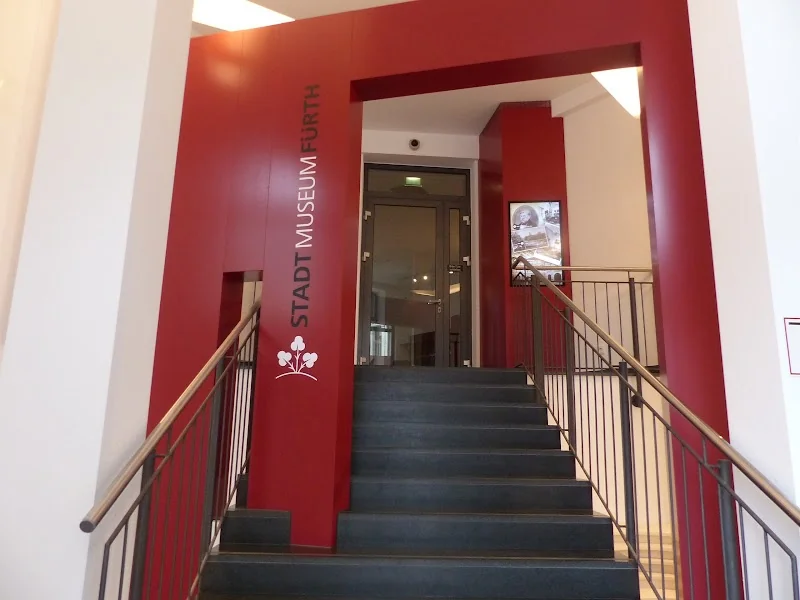
Ottostraße 2, Fürth
Ottostraße 2, 90762 Fürth, Germany
City Museum Fürth | Opening Hours & Admission
The City Museum Fürth is a place where city history is not only exhibited but experienced as a living narrative. The late classicist building was constructed in 1869 and served as a school until 2003; among the well-known former students are Leopold Ullstein, Gustav Schickedanz, and Ludwig Erhard. Today, this very place is one of the most important addresses for those who want to not only see Fürth but understand it. The city describes the museum as a journey through the more than 1000-year history of the cloverleaf city, while the museum's detail page locates the urban historical exhibition in about 800 square meters and categorizes it into a chronological and thematic diversity. This connects architecture, education, and memory culture in a convincing way and is suitable for families, history enthusiasts, school classes, and visitors who want to plan a focused cultural visit in the city center of Fürth. ([fuerth.de](https://www.fuerth.de/service-fuerther-rathaus/aemter-von-a-bis-z/detail/stadtmuseum-fuerth-312586/))
Opening Hours and Admission Prices at the City Museum Fürth
Those who want to plan their visit carefully should first check the opening hours, as they are clearly structured and help with daily planning. The City Museum Fürth is open on Tuesdays, Wednesdays, and Thursdays from 10 AM to 4 PM, Saturdays and Sundays from 10 AM to 5 PM; on public holidays, the hours are also 10 AM to 5 PM. The museum is closed on Mondays and Fridays. This clear weekly structure is particularly helpful for guests who want to combine their museum visit with a stroll through Fürth's city center, a restaurant visit, or an event. The museum also remains attractive in terms of pricing: The current municipal price overview lists 4 euros for adults, 3 euros reduced, and 7 euros for families for the permanent exhibition. Separate rates apply for guided tours, groups, school classes, and museum educational offerings, allowing the visit to be well adapted to different target groups. For individual formats, such as the evening culture, prices may vary. There, admission costs 7 euros or 5 euros reduced and also entitles visitors to attend the exhibitions. This makes planning transparent and simultaneously shows that the museum is not just a classic exhibition venue but a flexible cultural space with various access models. This is particularly relevant for inquiries about opening hours and admission prices, as visitors can quickly grasp when to come and what to budget. ([fuerth.de](https://www.fuerth.de/service-fuerther-rathaus/aemter-von-a-bis-z/detail/stadtmuseum-fuerth-312586/))
The Permanent Exhibition: Fürth's History on 800 Square Meters
The centerpiece of the City Museum Fürth is the permanent exhibition, which tells the development of the city not as a rigid sequence of dates but as a multifaceted journey through time. The municipal cultural page describes the museum as a place with over 1000 square meters of exhibition space, where visitors can embark on an exciting journey through the history of Fürth; the museum detail page specifies the urban historical exhibition at about 800 square meters and emphasizes the connection of chronology and thematic diversity. Economic, demographic, and cultural historical aspects are at the forefront, precisely the questions that make a city what it is today: How did Fürth grow from a small market town to a modern metropolis? How did trade, crafts, administration, education, and everyday life change the lives of people? How did a local structure develop into an urban identity that still resonates today? The museum answers such questions not dryly but with a clear narrative stance that makes connections visible. This makes the permanent exhibition suitable for very different visitor groups: For locals, it offers new perspectives on the familiar, for guests a compact introduction to the city, and for families a content-rich yet easily accessible form of knowledge transfer. Those looking for an exhibition that connects local memory, social development, and cultural identity will find exactly the right format here. The combination of the building's architecture and the content of the exhibition further enhances the impression, as the building itself becomes part of the narrative. ([fuerth.de](https://www.fuerth.de/service-fuerther-rathaus/aemter-von-a-bis-z/detail/stadtmuseum-fuerth-312586/))
Special Exhibition at the City Museum Fürth: 175 Years of Fürth Town Hall
A special attraction for current inquiries about special exhibitions, programs, and photos is the exhibition A First-Class Building – 175 Years of Fürth Town Hall. It can be seen from November 1 to May 3 at the City Museum Fürth and is dedicated to one of the city's most important landmarks. The exhibition tells the eventful history of the town hall from its beginnings to the present and places the building within the political and urban development of Fürth. After being elevated to city status in 1808 and to first-class city status in 1818, Fürth needed a new administration, as the place had previously been a lively market town under various rulers. This need led to the creation of a representative town hall, which was ultimately realized over 175 years ago at the initiative of the first mayor, Franz Joseph von Bäumen, and was handed over to its purpose on New Year's Eve 1850. The exhibition showcases designs by prominent architects such as Leo von Klenze and Eduard Bürklein, as well as contemporary engravings, lithographs, and old and new photographs and postcards. The result is more than just an architectural presentation: The exhibition makes visible how city administration, self-understanding, and architectural identity have mutually influenced each other. For visitors, this is particularly exciting, as the development of the entire city can be read exemplarily at the town hall. Therefore, those looking for a special exhibition that conveys history vividly, visually, and rooted in the local area will find a very strong focus in the museum's annual program. ([fuerth.de](https://www.fuerth.de/kultur-freizeit/veranstaltungen-termine/veranstaltungstipps/die-wechselvolle-geschichte-des-fuerther-rathausbaus/))
Evening Culture, Concerts, and Readings at the City Museum Fürth
The City Museum Fürth is not only an exhibition venue during the day but also a cultural meeting point in the evening. This is exactly what the evening culture stands for, which will return in 2026 with concerts, readings, and lectures on the program. The offerings are deliberately diverse: They range from musical evenings with Eisi, Miller the Killer & Kola, or Trio Kusche to jazz and blues, as well as literary formats and lectures. The program description also features Sonnie Ronnie & The Shotguns, Young at heart, Elmar Tannert, Josef Rauch, Batacuda, and Hillmans Blues Band, illustrating the breadth of the series well. Admission is 7 euros or 5 euros reduced, and it also entitles visitors to attend the exhibitions; tickets are available in advance at the museum box office. This is particularly attractive for visitors who want to combine cultural evenings with a museum visit without having to plan multiple separate admissions. Thematically, the series fits very well with the museum, as it does not leave the city's history in the past but connects it with contemporary themes, voices, and forms. Particularly striking is also the openness to narrative and criminalistic content: The program includes readings like Murder in Knoblauchsland, showing that the museum also allows for literary tension, local color, and humorous formats. This is precisely the strength of the evening culture: It creates a framework in which music, language, and city history come together, making the museum an experiential living place. ([fuerth.de](https://www.fuerth.de/fileadmin/redaktion/08-Veranstaltungen/Programmhefte-Broschueren/Abend-Kultur-Stadtmuseum-Fuerth-2026.pdf))
Address, Directions, Parking, and Barrier-Free Visit
For specific travel, the City Museum Fürth is very easy to find: It is located at Ottostraße 2, 90762 Fürth. This is important for inquiries about the address and Ottostraße, as it allows the museum visit to be quickly integrated into one's route planning. The city also mentions two disabled parking spaces at Ottostraße 2a at the corner of Mathildenstraße, which is an important practical help for visitors with mobility impairments. The entrance is barrier-free and opens at the push of a button; the exhibition rooms and the accessible restroom can be reached via a wheelchair lift. The museum also offers an audio guide that includes easy language, and guided tours for visually impaired people are available upon request. An induction loop is available for events. This means that the museum not only meets formal accessibility requirements but also makes participation in exhibitions and formats truly practical. Those who want to further secure their arrival can orient themselves using the city map, VGN, BayernInfo, or Bahnland Bayern, as specified on the municipal detail page. For families with strollers, older guests, or groups, this means: The visit is not only worthwhile in terms of content but also well manageable organizationally. This is a real plus point, especially for a city center visit in Fürth, as culture should not fail due to hurdles. ([fuerth.de](https://www.fuerth.de/service-fuerther-rathaus/aemter-von-a-bis-z/detail/stadtmuseum-fuerth-312586/))
Guided Tours, Museum Education, and Group Offers at the City Museum Fürth
Those who want to experience the City Museum Fürth not only individually but as part of a guided tour, project, or group tour will find a solid offering. The city explicitly mentions guided tours, events, museum education, and rentals as part of the museum profile, making it clear that this is not just a display but also a transmission. This is particularly interesting for school classes, clubs, senior groups, and city tour formats. In the current event announcements from the city, combined tours regularly appear, where a city walk is combined with a visit to the museum; such formats make it clear that the museum is intended as a place of learning and experience. The pricing is also sensibly structured, as separate rates apply for groups and educational formats. Thematically, such visits benefit primarily from the fact that the exhibitions do not just show objects but place them in larger contexts: urban development, administration, economy, culture, and the everyday life of people. This makes the place so fruitful for groups, as many topics can be connected here. Those coming with children can utilize the clarity of the permanent exhibition as well as the changing special exhibitions and the evening culture for older children or teenagers. Those visiting Fürth briefly as guests will receive a compact, well-curated introduction to the city's history. Thus, a museum emerges that does not rely solely on a one-time visit but on recurring use, thematic updates, and targeted transmission. This is precisely why the City Museum Fürth is so relevant for inquiries about programs, exhibitions, admission, opening hours, and events: It offers not a single attraction but a whole cultural world in a concentrated format. ([fuerth.de](https://www.fuerth.de/service-fuerther-rathaus/aemter-von-a-bis-z/detail/stadtmuseum-fuerth-312586/))
Why a Visit to the City Museum Fürth is Especially Worthwhile
Ultimately, the City Museum Fürth is a place where several interests can be very well bundled: historical curiosity, family outings, educational visits, current special exhibitions, and evening events. The house is housed in a striking old school building, tells the city's history in an understandable way, and complements the permanent exhibition with special themes that continually create new reasons for a visit. Those looking for opening hours today will find clear times; those comparing admission prices will find fair conditions; those interested in programs will discover a reliable format with music, literature, and lectures in the evening culture. At the same time, the museum remains close to the city itself, as it does not explain Fürth abstractly but assembles it from local stories, buildings, and developments. This mixture of scientifically grounded presentation and accessible display makes the visit so attractive. Particularly strong is the fact that the museum does not remain isolated in the past but is repeatedly connected with the present and everyday life. Thus, the question of the best keyword for the museum ultimately becomes a very practical recommendation: Those who want to understand Fürth should visit the City Museum, as history, architecture, and culture come together in a compact, easily accessible house. ([fuerth.de](https://www.fuerth.de/service-fuerther-rathaus/aemter-von-a-bis-z/detail/stadtmuseum-fuerth-312586/))
Sources:
- City Museum Fürth - City of Fürth ([fuerth.de](https://www.fuerth.de/service-fuerther-rathaus/aemter-von-a-bis-z/detail/stadtmuseum-fuerth-312586/))
- Culture in Fürth - City of Fürth ([fuerth.de](https://www.fuerth.de/kultur-freizeit/kultur/))
- Exhibition 175 Years of Fürth Town Hall - City of Fürth ([fuerth.de](https://www.fuerth.de/kultur-freizeit/veranstaltungen-termine/veranstaltungstipps/die-wechselvolle-geschichte-des-fuerther-rathausbaus/))
- Evening Culture 2026 at the City Museum Fürth - City of Fürth ([fuerth.de](https://www.fuerth.de/fileadmin/redaktion/08-Veranstaltungen/Programmhefte-Broschueren/Abend-Kultur-Stadtmuseum-Fuerth-2026.pdf))
- City Museum Fürth Measure | Old Prices | New Prices - City Council Fürth ([stadtrat.fuerth.de](https://stadtrat.fuerth.de/getfile.asp?id=4287058&type=do&utm_source=openai))
Mehr anzeigenWeniger anzeigen
City Museum Fürth | Opening Hours & Admission
The City Museum Fürth is a place where city history is not only exhibited but experienced as a living narrative. The late classicist building was constructed in 1869 and served as a school until 2003; among the well-known former students are Leopold Ullstein, Gustav Schickedanz, and Ludwig Erhard. Today, this very place is one of the most important addresses for those who want to not only see Fürth but understand it. The city describes the museum as a journey through the more than 1000-year history of the cloverleaf city, while the museum's detail page locates the urban historical exhibition in about 800 square meters and categorizes it into a chronological and thematic diversity. This connects architecture, education, and memory culture in a convincing way and is suitable for families, history enthusiasts, school classes, and visitors who want to plan a focused cultural visit in the city center of Fürth. ([fuerth.de](https://www.fuerth.de/service-fuerther-rathaus/aemter-von-a-bis-z/detail/stadtmuseum-fuerth-312586/))
Opening Hours and Admission Prices at the City Museum Fürth
Those who want to plan their visit carefully should first check the opening hours, as they are clearly structured and help with daily planning. The City Museum Fürth is open on Tuesdays, Wednesdays, and Thursdays from 10 AM to 4 PM, Saturdays and Sundays from 10 AM to 5 PM; on public holidays, the hours are also 10 AM to 5 PM. The museum is closed on Mondays and Fridays. This clear weekly structure is particularly helpful for guests who want to combine their museum visit with a stroll through Fürth's city center, a restaurant visit, or an event. The museum also remains attractive in terms of pricing: The current municipal price overview lists 4 euros for adults, 3 euros reduced, and 7 euros for families for the permanent exhibition. Separate rates apply for guided tours, groups, school classes, and museum educational offerings, allowing the visit to be well adapted to different target groups. For individual formats, such as the evening culture, prices may vary. There, admission costs 7 euros or 5 euros reduced and also entitles visitors to attend the exhibitions. This makes planning transparent and simultaneously shows that the museum is not just a classic exhibition venue but a flexible cultural space with various access models. This is particularly relevant for inquiries about opening hours and admission prices, as visitors can quickly grasp when to come and what to budget. ([fuerth.de](https://www.fuerth.de/service-fuerther-rathaus/aemter-von-a-bis-z/detail/stadtmuseum-fuerth-312586/))
The Permanent Exhibition: Fürth's History on 800 Square Meters
The centerpiece of the City Museum Fürth is the permanent exhibition, which tells the development of the city not as a rigid sequence of dates but as a multifaceted journey through time. The municipal cultural page describes the museum as a place with over 1000 square meters of exhibition space, where visitors can embark on an exciting journey through the history of Fürth; the museum detail page specifies the urban historical exhibition at about 800 square meters and emphasizes the connection of chronology and thematic diversity. Economic, demographic, and cultural historical aspects are at the forefront, precisely the questions that make a city what it is today: How did Fürth grow from a small market town to a modern metropolis? How did trade, crafts, administration, education, and everyday life change the lives of people? How did a local structure develop into an urban identity that still resonates today? The museum answers such questions not dryly but with a clear narrative stance that makes connections visible. This makes the permanent exhibition suitable for very different visitor groups: For locals, it offers new perspectives on the familiar, for guests a compact introduction to the city, and for families a content-rich yet easily accessible form of knowledge transfer. Those looking for an exhibition that connects local memory, social development, and cultural identity will find exactly the right format here. The combination of the building's architecture and the content of the exhibition further enhances the impression, as the building itself becomes part of the narrative. ([fuerth.de](https://www.fuerth.de/service-fuerther-rathaus/aemter-von-a-bis-z/detail/stadtmuseum-fuerth-312586/))
Special Exhibition at the City Museum Fürth: 175 Years of Fürth Town Hall
A special attraction for current inquiries about special exhibitions, programs, and photos is the exhibition A First-Class Building – 175 Years of Fürth Town Hall. It can be seen from November 1 to May 3 at the City Museum Fürth and is dedicated to one of the city's most important landmarks. The exhibition tells the eventful history of the town hall from its beginnings to the present and places the building within the political and urban development of Fürth. After being elevated to city status in 1808 and to first-class city status in 1818, Fürth needed a new administration, as the place had previously been a lively market town under various rulers. This need led to the creation of a representative town hall, which was ultimately realized over 175 years ago at the initiative of the first mayor, Franz Joseph von Bäumen, and was handed over to its purpose on New Year's Eve 1850. The exhibition showcases designs by prominent architects such as Leo von Klenze and Eduard Bürklein, as well as contemporary engravings, lithographs, and old and new photographs and postcards. The result is more than just an architectural presentation: The exhibition makes visible how city administration, self-understanding, and architectural identity have mutually influenced each other. For visitors, this is particularly exciting, as the development of the entire city can be read exemplarily at the town hall. Therefore, those looking for a special exhibition that conveys history vividly, visually, and rooted in the local area will find a very strong focus in the museum's annual program. ([fuerth.de](https://www.fuerth.de/kultur-freizeit/veranstaltungen-termine/veranstaltungstipps/die-wechselvolle-geschichte-des-fuerther-rathausbaus/))
Evening Culture, Concerts, and Readings at the City Museum Fürth
The City Museum Fürth is not only an exhibition venue during the day but also a cultural meeting point in the evening. This is exactly what the evening culture stands for, which will return in 2026 with concerts, readings, and lectures on the program. The offerings are deliberately diverse: They range from musical evenings with Eisi, Miller the Killer & Kola, or Trio Kusche to jazz and blues, as well as literary formats and lectures. The program description also features Sonnie Ronnie & The Shotguns, Young at heart, Elmar Tannert, Josef Rauch, Batacuda, and Hillmans Blues Band, illustrating the breadth of the series well. Admission is 7 euros or 5 euros reduced, and it also entitles visitors to attend the exhibitions; tickets are available in advance at the museum box office. This is particularly attractive for visitors who want to combine cultural evenings with a museum visit without having to plan multiple separate admissions. Thematically, the series fits very well with the museum, as it does not leave the city's history in the past but connects it with contemporary themes, voices, and forms. Particularly striking is also the openness to narrative and criminalistic content: The program includes readings like Murder in Knoblauchsland, showing that the museum also allows for literary tension, local color, and humorous formats. This is precisely the strength of the evening culture: It creates a framework in which music, language, and city history come together, making the museum an experiential living place. ([fuerth.de](https://www.fuerth.de/fileadmin/redaktion/08-Veranstaltungen/Programmhefte-Broschueren/Abend-Kultur-Stadtmuseum-Fuerth-2026.pdf))
Address, Directions, Parking, and Barrier-Free Visit
For specific travel, the City Museum Fürth is very easy to find: It is located at Ottostraße 2, 90762 Fürth. This is important for inquiries about the address and Ottostraße, as it allows the museum visit to be quickly integrated into one's route planning. The city also mentions two disabled parking spaces at Ottostraße 2a at the corner of Mathildenstraße, which is an important practical help for visitors with mobility impairments. The entrance is barrier-free and opens at the push of a button; the exhibition rooms and the accessible restroom can be reached via a wheelchair lift. The museum also offers an audio guide that includes easy language, and guided tours for visually impaired people are available upon request. An induction loop is available for events. This means that the museum not only meets formal accessibility requirements but also makes participation in exhibitions and formats truly practical. Those who want to further secure their arrival can orient themselves using the city map, VGN, BayernInfo, or Bahnland Bayern, as specified on the municipal detail page. For families with strollers, older guests, or groups, this means: The visit is not only worthwhile in terms of content but also well manageable organizationally. This is a real plus point, especially for a city center visit in Fürth, as culture should not fail due to hurdles. ([fuerth.de](https://www.fuerth.de/service-fuerther-rathaus/aemter-von-a-bis-z/detail/stadtmuseum-fuerth-312586/))
Guided Tours, Museum Education, and Group Offers at the City Museum Fürth
Those who want to experience the City Museum Fürth not only individually but as part of a guided tour, project, or group tour will find a solid offering. The city explicitly mentions guided tours, events, museum education, and rentals as part of the museum profile, making it clear that this is not just a display but also a transmission. This is particularly interesting for school classes, clubs, senior groups, and city tour formats. In the current event announcements from the city, combined tours regularly appear, where a city walk is combined with a visit to the museum; such formats make it clear that the museum is intended as a place of learning and experience. The pricing is also sensibly structured, as separate rates apply for groups and educational formats. Thematically, such visits benefit primarily from the fact that the exhibitions do not just show objects but place them in larger contexts: urban development, administration, economy, culture, and the everyday life of people. This makes the place so fruitful for groups, as many topics can be connected here. Those coming with children can utilize the clarity of the permanent exhibition as well as the changing special exhibitions and the evening culture for older children or teenagers. Those visiting Fürth briefly as guests will receive a compact, well-curated introduction to the city's history. Thus, a museum emerges that does not rely solely on a one-time visit but on recurring use, thematic updates, and targeted transmission. This is precisely why the City Museum Fürth is so relevant for inquiries about programs, exhibitions, admission, opening hours, and events: It offers not a single attraction but a whole cultural world in a concentrated format. ([fuerth.de](https://www.fuerth.de/service-fuerther-rathaus/aemter-von-a-bis-z/detail/stadtmuseum-fuerth-312586/))
Why a Visit to the City Museum Fürth is Especially Worthwhile
Ultimately, the City Museum Fürth is a place where several interests can be very well bundled: historical curiosity, family outings, educational visits, current special exhibitions, and evening events. The house is housed in a striking old school building, tells the city's history in an understandable way, and complements the permanent exhibition with special themes that continually create new reasons for a visit. Those looking for opening hours today will find clear times; those comparing admission prices will find fair conditions; those interested in programs will discover a reliable format with music, literature, and lectures in the evening culture. At the same time, the museum remains close to the city itself, as it does not explain Fürth abstractly but assembles it from local stories, buildings, and developments. This mixture of scientifically grounded presentation and accessible display makes the visit so attractive. Particularly strong is the fact that the museum does not remain isolated in the past but is repeatedly connected with the present and everyday life. Thus, the question of the best keyword for the museum ultimately becomes a very practical recommendation: Those who want to understand Fürth should visit the City Museum, as history, architecture, and culture come together in a compact, easily accessible house. ([fuerth.de](https://www.fuerth.de/service-fuerther-rathaus/aemter-von-a-bis-z/detail/stadtmuseum-fuerth-312586/))
Sources:
- City Museum Fürth - City of Fürth ([fuerth.de](https://www.fuerth.de/service-fuerther-rathaus/aemter-von-a-bis-z/detail/stadtmuseum-fuerth-312586/))
- Culture in Fürth - City of Fürth ([fuerth.de](https://www.fuerth.de/kultur-freizeit/kultur/))
- Exhibition 175 Years of Fürth Town Hall - City of Fürth ([fuerth.de](https://www.fuerth.de/kultur-freizeit/veranstaltungen-termine/veranstaltungstipps/die-wechselvolle-geschichte-des-fuerther-rathausbaus/))
- Evening Culture 2026 at the City Museum Fürth - City of Fürth ([fuerth.de](https://www.fuerth.de/fileadmin/redaktion/08-Veranstaltungen/Programmhefte-Broschueren/Abend-Kultur-Stadtmuseum-Fuerth-2026.pdf))
- City Museum Fürth Measure | Old Prices | New Prices - City Council Fürth ([stadtrat.fuerth.de](https://stadtrat.fuerth.de/getfile.asp?id=4287058&type=do&utm_source=openai))
City Museum Fürth | Opening Hours & Admission
The City Museum Fürth is a place where city history is not only exhibited but experienced as a living narrative. The late classicist building was constructed in 1869 and served as a school until 2003; among the well-known former students are Leopold Ullstein, Gustav Schickedanz, and Ludwig Erhard. Today, this very place is one of the most important addresses for those who want to not only see Fürth but understand it. The city describes the museum as a journey through the more than 1000-year history of the cloverleaf city, while the museum's detail page locates the urban historical exhibition in about 800 square meters and categorizes it into a chronological and thematic diversity. This connects architecture, education, and memory culture in a convincing way and is suitable for families, history enthusiasts, school classes, and visitors who want to plan a focused cultural visit in the city center of Fürth. ([fuerth.de](https://www.fuerth.de/service-fuerther-rathaus/aemter-von-a-bis-z/detail/stadtmuseum-fuerth-312586/))
Opening Hours and Admission Prices at the City Museum Fürth
Those who want to plan their visit carefully should first check the opening hours, as they are clearly structured and help with daily planning. The City Museum Fürth is open on Tuesdays, Wednesdays, and Thursdays from 10 AM to 4 PM, Saturdays and Sundays from 10 AM to 5 PM; on public holidays, the hours are also 10 AM to 5 PM. The museum is closed on Mondays and Fridays. This clear weekly structure is particularly helpful for guests who want to combine their museum visit with a stroll through Fürth's city center, a restaurant visit, or an event. The museum also remains attractive in terms of pricing: The current municipal price overview lists 4 euros for adults, 3 euros reduced, and 7 euros for families for the permanent exhibition. Separate rates apply for guided tours, groups, school classes, and museum educational offerings, allowing the visit to be well adapted to different target groups. For individual formats, such as the evening culture, prices may vary. There, admission costs 7 euros or 5 euros reduced and also entitles visitors to attend the exhibitions. This makes planning transparent and simultaneously shows that the museum is not just a classic exhibition venue but a flexible cultural space with various access models. This is particularly relevant for inquiries about opening hours and admission prices, as visitors can quickly grasp when to come and what to budget. ([fuerth.de](https://www.fuerth.de/service-fuerther-rathaus/aemter-von-a-bis-z/detail/stadtmuseum-fuerth-312586/))
The Permanent Exhibition: Fürth's History on 800 Square Meters
The centerpiece of the City Museum Fürth is the permanent exhibition, which tells the development of the city not as a rigid sequence of dates but as a multifaceted journey through time. The municipal cultural page describes the museum as a place with over 1000 square meters of exhibition space, where visitors can embark on an exciting journey through the history of Fürth; the museum detail page specifies the urban historical exhibition at about 800 square meters and emphasizes the connection of chronology and thematic diversity. Economic, demographic, and cultural historical aspects are at the forefront, precisely the questions that make a city what it is today: How did Fürth grow from a small market town to a modern metropolis? How did trade, crafts, administration, education, and everyday life change the lives of people? How did a local structure develop into an urban identity that still resonates today? The museum answers such questions not dryly but with a clear narrative stance that makes connections visible. This makes the permanent exhibition suitable for very different visitor groups: For locals, it offers new perspectives on the familiar, for guests a compact introduction to the city, and for families a content-rich yet easily accessible form of knowledge transfer. Those looking for an exhibition that connects local memory, social development, and cultural identity will find exactly the right format here. The combination of the building's architecture and the content of the exhibition further enhances the impression, as the building itself becomes part of the narrative. ([fuerth.de](https://www.fuerth.de/service-fuerther-rathaus/aemter-von-a-bis-z/detail/stadtmuseum-fuerth-312586/))
Special Exhibition at the City Museum Fürth: 175 Years of Fürth Town Hall
A special attraction for current inquiries about special exhibitions, programs, and photos is the exhibition A First-Class Building – 175 Years of Fürth Town Hall. It can be seen from November 1 to May 3 at the City Museum Fürth and is dedicated to one of the city's most important landmarks. The exhibition tells the eventful history of the town hall from its beginnings to the present and places the building within the political and urban development of Fürth. After being elevated to city status in 1808 and to first-class city status in 1818, Fürth needed a new administration, as the place had previously been a lively market town under various rulers. This need led to the creation of a representative town hall, which was ultimately realized over 175 years ago at the initiative of the first mayor, Franz Joseph von Bäumen, and was handed over to its purpose on New Year's Eve 1850. The exhibition showcases designs by prominent architects such as Leo von Klenze and Eduard Bürklein, as well as contemporary engravings, lithographs, and old and new photographs and postcards. The result is more than just an architectural presentation: The exhibition makes visible how city administration, self-understanding, and architectural identity have mutually influenced each other. For visitors, this is particularly exciting, as the development of the entire city can be read exemplarily at the town hall. Therefore, those looking for a special exhibition that conveys history vividly, visually, and rooted in the local area will find a very strong focus in the museum's annual program. ([fuerth.de](https://www.fuerth.de/kultur-freizeit/veranstaltungen-termine/veranstaltungstipps/die-wechselvolle-geschichte-des-fuerther-rathausbaus/))
Evening Culture, Concerts, and Readings at the City Museum Fürth
The City Museum Fürth is not only an exhibition venue during the day but also a cultural meeting point in the evening. This is exactly what the evening culture stands for, which will return in 2026 with concerts, readings, and lectures on the program. The offerings are deliberately diverse: They range from musical evenings with Eisi, Miller the Killer & Kola, or Trio Kusche to jazz and blues, as well as literary formats and lectures. The program description also features Sonnie Ronnie & The Shotguns, Young at heart, Elmar Tannert, Josef Rauch, Batacuda, and Hillmans Blues Band, illustrating the breadth of the series well. Admission is 7 euros or 5 euros reduced, and it also entitles visitors to attend the exhibitions; tickets are available in advance at the museum box office. This is particularly attractive for visitors who want to combine cultural evenings with a museum visit without having to plan multiple separate admissions. Thematically, the series fits very well with the museum, as it does not leave the city's history in the past but connects it with contemporary themes, voices, and forms. Particularly striking is also the openness to narrative and criminalistic content: The program includes readings like Murder in Knoblauchsland, showing that the museum also allows for literary tension, local color, and humorous formats. This is precisely the strength of the evening culture: It creates a framework in which music, language, and city history come together, making the museum an experiential living place. ([fuerth.de](https://www.fuerth.de/fileadmin/redaktion/08-Veranstaltungen/Programmhefte-Broschueren/Abend-Kultur-Stadtmuseum-Fuerth-2026.pdf))
Address, Directions, Parking, and Barrier-Free Visit
For specific travel, the City Museum Fürth is very easy to find: It is located at Ottostraße 2, 90762 Fürth. This is important for inquiries about the address and Ottostraße, as it allows the museum visit to be quickly integrated into one's route planning. The city also mentions two disabled parking spaces at Ottostraße 2a at the corner of Mathildenstraße, which is an important practical help for visitors with mobility impairments. The entrance is barrier-free and opens at the push of a button; the exhibition rooms and the accessible restroom can be reached via a wheelchair lift. The museum also offers an audio guide that includes easy language, and guided tours for visually impaired people are available upon request. An induction loop is available for events. This means that the museum not only meets formal accessibility requirements but also makes participation in exhibitions and formats truly practical. Those who want to further secure their arrival can orient themselves using the city map, VGN, BayernInfo, or Bahnland Bayern, as specified on the municipal detail page. For families with strollers, older guests, or groups, this means: The visit is not only worthwhile in terms of content but also well manageable organizationally. This is a real plus point, especially for a city center visit in Fürth, as culture should not fail due to hurdles. ([fuerth.de](https://www.fuerth.de/service-fuerther-rathaus/aemter-von-a-bis-z/detail/stadtmuseum-fuerth-312586/))
Guided Tours, Museum Education, and Group Offers at the City Museum Fürth
Those who want to experience the City Museum Fürth not only individually but as part of a guided tour, project, or group tour will find a solid offering. The city explicitly mentions guided tours, events, museum education, and rentals as part of the museum profile, making it clear that this is not just a display but also a transmission. This is particularly interesting for school classes, clubs, senior groups, and city tour formats. In the current event announcements from the city, combined tours regularly appear, where a city walk is combined with a visit to the museum; such formats make it clear that the museum is intended as a place of learning and experience. The pricing is also sensibly structured, as separate rates apply for groups and educational formats. Thematically, such visits benefit primarily from the fact that the exhibitions do not just show objects but place them in larger contexts: urban development, administration, economy, culture, and the everyday life of people. This makes the place so fruitful for groups, as many topics can be connected here. Those coming with children can utilize the clarity of the permanent exhibition as well as the changing special exhibitions and the evening culture for older children or teenagers. Those visiting Fürth briefly as guests will receive a compact, well-curated introduction to the city's history. Thus, a museum emerges that does not rely solely on a one-time visit but on recurring use, thematic updates, and targeted transmission. This is precisely why the City Museum Fürth is so relevant for inquiries about programs, exhibitions, admission, opening hours, and events: It offers not a single attraction but a whole cultural world in a concentrated format. ([fuerth.de](https://www.fuerth.de/service-fuerther-rathaus/aemter-von-a-bis-z/detail/stadtmuseum-fuerth-312586/))
Why a Visit to the City Museum Fürth is Especially Worthwhile
Ultimately, the City Museum Fürth is a place where several interests can be very well bundled: historical curiosity, family outings, educational visits, current special exhibitions, and evening events. The house is housed in a striking old school building, tells the city's history in an understandable way, and complements the permanent exhibition with special themes that continually create new reasons for a visit. Those looking for opening hours today will find clear times; those comparing admission prices will find fair conditions; those interested in programs will discover a reliable format with music, literature, and lectures in the evening culture. At the same time, the museum remains close to the city itself, as it does not explain Fürth abstractly but assembles it from local stories, buildings, and developments. This mixture of scientifically grounded presentation and accessible display makes the visit so attractive. Particularly strong is the fact that the museum does not remain isolated in the past but is repeatedly connected with the present and everyday life. Thus, the question of the best keyword for the museum ultimately becomes a very practical recommendation: Those who want to understand Fürth should visit the City Museum, as history, architecture, and culture come together in a compact, easily accessible house. ([fuerth.de](https://www.fuerth.de/service-fuerther-rathaus/aemter-von-a-bis-z/detail/stadtmuseum-fuerth-312586/))
Sources:
- City Museum Fürth - City of Fürth ([fuerth.de](https://www.fuerth.de/service-fuerther-rathaus/aemter-von-a-bis-z/detail/stadtmuseum-fuerth-312586/))
- Culture in Fürth - City of Fürth ([fuerth.de](https://www.fuerth.de/kultur-freizeit/kultur/))
- Exhibition 175 Years of Fürth Town Hall - City of Fürth ([fuerth.de](https://www.fuerth.de/kultur-freizeit/veranstaltungen-termine/veranstaltungstipps/die-wechselvolle-geschichte-des-fuerther-rathausbaus/))
- Evening Culture 2026 at the City Museum Fürth - City of Fürth ([fuerth.de](https://www.fuerth.de/fileadmin/redaktion/08-Veranstaltungen/Programmhefte-Broschueren/Abend-Kultur-Stadtmuseum-Fuerth-2026.pdf))
- City Museum Fürth Measure | Old Prices | New Prices - City Council Fürth ([stadtrat.fuerth.de](https://stadtrat.fuerth.de/getfile.asp?id=4287058&type=do&utm_source=openai))
Upcoming Events
No events found
Frequently Asked Questions
Reviews
Holger Specht
17. February 2026
A very nice museum that presents Fürth's city history in a very engaging way, from the construction of St. Martin's Chapel in what is now Wiesengrund and its presumed founding, through its first recorded mention in 1007, to the present day. There are many exhibits and scent stations, as well as a highly recommended VR experience of a journey through 18th-century Fürth, from the Maxbrücke bridge, across the market square, to St. Michael's Church. The history of the local football club, SpVgg Fürth, is also featured... and all this for a truly very reasonable entrance fee (€4.00 for adults). You really can't go wrong with a visit!
Peter Munnichs
17. June 2025
What a lovely, beautiful, and surprising museum about the history and residents of Fürth. You'll find a true treasure trove of connections to historical events here, in sports, economics, life, and politics. The 1954 World Cup was won in part thanks to a Further footballer: Karl May. One of the former German Chancellors, Ludwig Erhard, was born in Fürth. The Grundig factories were founded in Fürth, and Quelle (a mail-order company) originated in this city. Henry Kissinger, the former Secretary of State under President Nixon, also hails from Fürth. There's simply too much to list and describe. Go see for yourself and be amazed. The staff's dedication is especially rewarding, offering interesting anecdotes and background information about Fürth and the surrounding area.
Oliver Ladwein
4. November 2025
Take some time to understand more about life and how we interact with each other. Come and visit.
Aleksander Stelmach
1. September 2024
A very nice museum. Worth a visit to learn about the city's history. The 3D glasses are amazing. It's a shame you can't take photos inside, but it was worth the 3 euros 😁
Alper Yurttas
24. August 2024
A small but very beautiful museum. It has interesting details about the history of Fürth. The entrance fee is reasonable, 3 euros. You can get your ticket stamped at the machine in the museum and keep it as a souvenir; the staff will help you with this. Definitely try the VR glasses; they take you on a realistic journey through the streets of Fürth in 1740.