
Fürth
Richard-Wagner-Platz 2-10, 90443 Nürnberg, Deutschland
State Theater Nuremberg | Schedule & Tickets
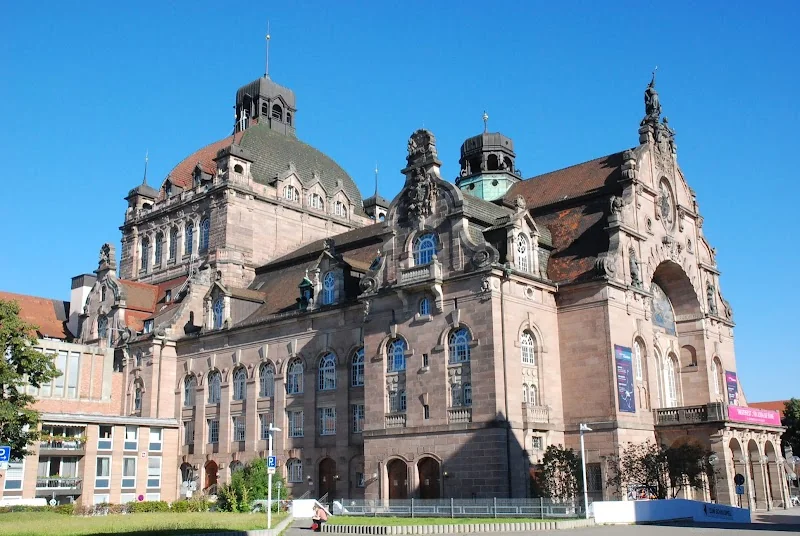
The State Theater Nuremberg is the cultural heart of the Franconian metropolitan region and one of the major multi-genre theaters in Germany. With its venues, the Opera House and the Drama House at Richard Wagner Square, as well as additional stages like the Chamber Plays and the 3rd floor, it forms a lively ensemble of opera, drama, ballet, and concerts. The distinctive Opera House, built between 1903 and 1905 according to plans by theater architect Heinrich Seeling and opened in 1905, continues to shape the city's skyline today. In 2005, the former municipal stages were transformed into the current state stage of the Free State of Bavaria, which presents a diverse program each season. The Nuremberg State Philharmonic regularly performs in the Meistersingerhalle, while song evenings and house formats are concentrated in the Gluck Hall of the Opera House. Visitors can reach the venues by subway (U2/U21, U3) via the Opera House stop, while drivers can use the Theater parking garage with theater rates. The official website consolidates the schedule, tickets, seating plans, and services from accessible offers to gastronomy pre-orders – in short: everything that makes for a successful theater evening in Nuremberg.
Today's Schedule and 2025/26: Overview of Opera, Drama, Ballet, and Concert
The schedule of the State Theater Nuremberg is available online and allows for targeted filtering by genre, date, and venue. Those who want to decide last minute what is on tonight can find start times, expected durations, possible introductions (often 30 minutes before the performance starts), and casts at a glance. In the ongoing season 2025/26, the genres cover a wide spectrum: from repertoire operas and revivals to contemporary works and major drama classics, as well as new choreographies of ballet. As a guideline: On the weekend of December 20 to 21, 2025, the ballet premiere and evenings titled Noise Signal Silence were scheduled in the Opera House, a chamber concert by the orchestra academy in the Gluck Hall, and Mozart's The Magic Flute – each with exact time slots and introduction notes. Meanwhile, the drama presented contemporary themes like This Play Goes Wrong and literary adaptations like Little Man, What Now?. Such examples illustrate the diversity that the State Theater curates anew every day. For orientation throughout the year, the season overview 2025/26 is recommended, which sorts premieres, revivals, and series by month and often includes short summaries. Notices of sensitive content – such as strobe effects, gunshots, themes like suicide or sexualized violence – are transparently indicated on the service pages and linked to the respective play pages. This helps to plan the theater visit appropriately for different target groups. It is also practical that the Gluck Hall in the Opera House regularly consolidates smaller formats like song evenings, introductions, matinees, and series for young audiences (e.g., Children in Gluck); thus, large opera evenings and more intimate concert experiences can be combined in the same house. Tip: For highly demanded dates, the waiting list function of the ticket service is worthwhile, which the house actively uses when seats become available.
Tickets, Subscriptions & Vouchers: Sales Channels, Advance Sales, Service, and Cancellations
Tickets can be comfortably purchased online, by phone, or at the theater box offices. The day box office in the Opera House is open Monday to Friday from 12 to 5 PM and Saturday from 10 AM to 1 PM; the evening box office opens 60 minutes before the performance starts. Online purchased tickets are delivered as e-tickets directly via email; alternatively, postal delivery is possible for a fee with sufficient advance notice. The advance sale for the genres opera, ballet, and concert usually starts on the first working day in August for the entire season; for drama, additional dates are released rolling every two months in advance. Those who want to plan long-term benefit from subscriptions: They secure fixed seats, offer price advantages, and combine highlights such as Verdi's La Traviata, Kaija Saariaho's Innocence, Bernstein's West Side Story, or ballet evenings like New Ballets Russes or Les Ballets Actuels. The webshop lists the dates included in the subscriptions, price categories for adults and U27, as well as notes on introductions. Flexibility is provided by the cancellation policy: Up to 96 hours before the performance starts, tickets can be converted online in the customer account into a value voucher for a fee of 10%; for later returns, the ticket service strives for resale, which, if successful, is also compensated with a voucher (minus 10%). Value vouchers with a validity of three years are suitable as gift ideas. Practical for the intermission: The gastro ticket allows for pre-ordering drinks and small snacks; in the evening, these are then ready at a reserved standing table in the Opera or Drama House. For inquiries, the house's hotline and email service are available; reservations by phone are held for up to six days (and at least three working days before the date). This covers all booking paths from spontaneous visits today to seasonal subscriptions.
Seating Plan & Seats: Opera House (1,031), Drama House (538) and Chamber Plays
For seat selection, the State Theater Nuremberg provides detailed seating plans for download. The Opera House has 1,031 seats, divided into stalls, boxes, and tiers; the official seating plan indicates price groups I to VIII and facilitates orientation according to sightlines and distance to the stage. The Drama House offers 538 seats with a clear arrangement of rows and accessible entrances. For smaller formats, the Chamber Plays and the 3rd floor are available; technical documents confirm a seating capacity of around 205 seats in the Chamber Plays and about 42 seats in the Blue Box (now XRT/3rd floor). Depending on the production, the use of certain seating areas may vary – for example, when projections or surtitles are used. In the Opera House, surtitles are usually displayed on two monitors at the sides at the height of the 1st tier, often in German and English. Visitors with hearing aids will find an induction loop in the Opera House; suitable seating is marked. Wheelchair spaces are provided in the stalls upon prior booking through the ticket service; access is via the elevator located outside on the left side of the building, which connects the stalls and 1st tier (2nd and 3rd tiers are only accessible via stairs). Those who value maximum proximity to the stage action should choose central stalls seats; for overall view and surtitles, seats in the 1st tier are often optimal. For particularly sought-after opera and ballet evenings, early booking in the upper price groups is recommended, which offer the best combination of sight and surtitles view. For concert series of the Nuremberg State Philharmonic, the Meistersingerhalle is additionally used, whose seating plan is provided separately. The official plans provide a reliable, production-tested basis – those who are unsure can receive personal recommendations regarding sightlines and price groups through the ticket service.
Ballet at the State Theater Nuremberg: New Handwriting, Clear Profiles
The ballet has been shaping a distinctive profile since the 2025/26 season with new artistic leadership. The company connects to the idea of a House of Dance with an international choreographic signature and presents several focuses each season – including energetic evenings that bundle contemporary movement languages. Already in December 2025, Noise Signal Silence was on the program in the Opera House, a compilation featuring works by Richard Siegal, known for precise rhythm, clear lines, and surprising spatial compositions. The Nuremberg ballet evenings are often conceived as cross-genre encounters by bringing together musical curation (by the State Philharmonic or chamber ensembles) and choreographic handwriting. Throughout the season, new ballet packages follow – sometimes under titles like New Ballets Russes or Les Ballets Actuels – and connect classical references with the present. The Opera House as a stage provides the grand framework: The technically equipped stage with rigging and side stages allows for quick scene changes, while the auditorium maintains a balance between proximity to the physical work and spatial overview. The repertoire also shows openness to collaborations: guest choreographies, cross-company projects, and festival contributions make Nuremberg visible as a dance location. Those who want to follow the development can use the season overviews and subscription formats, in which ballet evenings are cleverly intertwined with opera and concert dates – thus creating a dramaturgy across genres that consistently corresponds to the multi-genre concept of the house.
La Traviata, The Robbers & Innocence: Productions in Focus
A look at the 2025/26 season exemplifies the range of the repertoire. Verdi's La Traviata returned to the Opera House in October 2025 – a work that regularly celebrates audience successes in Nuremberg and is firmly anchored in subscription series. At the same time, the house positions Innocence by Kaija Saariaho, a significant opera of recent history, with performances in Nuremberg, including in November 2025 at the Opera House. This illustrates the ambition to curate classical preservation and contemporary music theater equally. On the drama side, The Robbers by Friedrich Schiller negotiates moral boundary crossings and violence – the service notes explicitly mention themes such as stage blood, gunshots, femicide, suicide, and sexualized violence, as well as the use of strobe effects in the context of this production. Such advance information is deliberately placed to orient visitors – also with regard to accompanying youth. The program is complemented by formats in the Gluck Hall: Songs in Gluck brings ensemble members to the stage in chamber music proximity; series for children and families (e.g., Children in Gluck) are also firmly established. The return of major titles like The Magic Flute or The Flying Dutchman in the calendar reflects the long-term planning of performances, mixing revivals with new productions. Those who want to build their personal highlights chain can use subscriptions with curated packages (opera friends, changing series on weekends, etc.) or create their own schedule via single tickets. Thematically, the house opens beyond classical boundaries – musicals like West Side Story stand alongside German-language drama and concert projects of the State Philharmonic.
Arrival, Public Transport & Parking: U2/U3 at the Door, Theater Parking Rate €4.00
The central location at Richard Wagner Square facilitates arrival. Visitors can reach the Opera House station via subway lines U2/U21 and U3; from there, there is direct access to the Opera House, while the Drama House and Chamber Plays are just a few steps away. The admission ticket serves as a VGN combo ticket for the round trip on the day of the performance – valid from four hours before the start until the end of service (2nd class, surcharge-free trains within the VGN area). For drivers, the Theater parking garage between the Opera and Drama House is available. There, visitors receive the theater flat rate of €4.00 for the performance: Press the theater button at the barrier upon entry, pay the ticket at the machine (immediately or before exiting), the flat rate is activated about 60 minutes before the start and can be paid until about three hours after the performance ends. Alternatively, the nearby Sterntor parking garage offers a flat rate of €4.00: The license plate is recorded upon entry; before exiting, the theater ticket (also as an e-ticket on the smartphone) is scanned at the ticket machine, and the reduced rate is automatically applied – payment is possible until about eight hours after the performance starts. The Theater parking garage is open 24 hours, entrance height 1.90 m, access via Karl-Pschigode-Platz. For people with mobility impairments, the State Theater provides special information: An elevator on the left outside the Opera House connects the stalls and 1st tier; since there is no barrier-free transition directly from the parking garage to the Opera House, disabled parking spaces at Richard Wagner Square (access via Frauentorgraben) are recommended. The website also lists details about wheelchair spaces, induction loop in the Opera House, and barrier-free tours.
Ensemble, History & House Service: What Makes the State Theater Special
As a state stage, the house brings together strong artistic profiles in all genres: opera ensemble and choir, the Nuremberg State Philharmonic, the drama ensemble, and the ballet form a structure that is organized throughout the season around premieres, revivals, concert cycles, and special formats. On the genre pages, the ensembles are accessible with biographies, photos, and current projects. The Opera House itself carries a multifaceted history as a building: The outer appearance connects to historicism and Art Nouveau; the distinctive east facade with bronze figures was reconstructed during the renovation phases of the 1990s. In 1935, due to political staging wishes, interventions were made in the interiors under Paul Schultze-Naumburg, which displaced Art Nouveau elements and impaired acoustics; after war damage, reconstruction began, and a first limited operation started in 1945. Long-term renovation phases began in 1989; in the 1990s, the facade and auditorium were fundamentally revised. The city of Nuremberg is simultaneously pursuing plans for a future-proof Opera House that strengthens operations and the environment at Richard Wagner Square. In daily operations, the house impresses with clear service structures: The box office and hotline hours are transparent; notes on late admission (not guaranteed), content effects (e.g., strobe light), gastronomy (pre-order via gastro ticket), and tours (including special roof and technical routes) are centrally bundled. Finally, the subscription seating plans facilitate quick orientation regarding price groups and seat categories in all halls. In summary, the State Theater Nuremberg connects its evolved building and institutional history with a public-friendly service – from the VGN combo ticket to the theater parking rate to the barrier-free infrastructure – which ensures that the visit is not only artistically but also organizationally smooth.
Sources:
- State Theater Nuremberg – Arrival & Parking – Official Website
- Theater Parking Garage – Operator Information (Rates, Address, Opening Hours)
- State Theater Nuremberg – Subscription Seating Plans (Opera House, Drama House, Chamber Plays, Meistersingerhalle)
- Opera House Nuremberg – Seating Plan (PDF, 1,031 Seats)
- Drama House Nuremberg – Seating Plan (PDF, 538 Seats)
- iwb Engineers – Drama House Nuremberg (Capacity Chamber Plays/Blue Box)
- State Theater Nuremberg – Ticket Purchase (Hotline, Box Office Hours, Advance Sales, Cancellations, Vouchers)
- State Theater Nuremberg – Gastronomy & Gastro Ticket
- State Theater Nuremberg – Barrier-Free (Elevator, Wheelchair Spaces, Induction Loop)
- State Theater Nuremberg – Schedule 2025/26 (Examples in December 2025)
- State Theater Nuremberg – Opera House Subscription (Featured Productions including Innocence, La Traviata, West Side Story)
- Wikipedia – State Theater Nuremberg (Year of Construction, Architect, Venues, Status as State Stage)
- Project Opera House Nuremberg – City of Nuremberg (Construction and Historical Context)
- State Theater Nuremberg – Good to Know (Late Admission, Content and Effect Notes)
Mehr anzeigenWeniger anzeigen
State Theater Nuremberg | Schedule & Tickets
The State Theater Nuremberg is the cultural heart of the Franconian metropolitan region and one of the major multi-genre theaters in Germany. With its venues, the Opera House and the Drama House at Richard Wagner Square, as well as additional stages like the Chamber Plays and the 3rd floor, it forms a lively ensemble of opera, drama, ballet, and concerts. The distinctive Opera House, built between 1903 and 1905 according to plans by theater architect Heinrich Seeling and opened in 1905, continues to shape the city's skyline today. In 2005, the former municipal stages were transformed into the current state stage of the Free State of Bavaria, which presents a diverse program each season. The Nuremberg State Philharmonic regularly performs in the Meistersingerhalle, while song evenings and house formats are concentrated in the Gluck Hall of the Opera House. Visitors can reach the venues by subway (U2/U21, U3) via the Opera House stop, while drivers can use the Theater parking garage with theater rates. The official website consolidates the schedule, tickets, seating plans, and services from accessible offers to gastronomy pre-orders – in short: everything that makes for a successful theater evening in Nuremberg.
Today's Schedule and 2025/26: Overview of Opera, Drama, Ballet, and Concert
The schedule of the State Theater Nuremberg is available online and allows for targeted filtering by genre, date, and venue. Those who want to decide last minute what is on tonight can find start times, expected durations, possible introductions (often 30 minutes before the performance starts), and casts at a glance. In the ongoing season 2025/26, the genres cover a wide spectrum: from repertoire operas and revivals to contemporary works and major drama classics, as well as new choreographies of ballet. As a guideline: On the weekend of December 20 to 21, 2025, the ballet premiere and evenings titled Noise Signal Silence were scheduled in the Opera House, a chamber concert by the orchestra academy in the Gluck Hall, and Mozart's The Magic Flute – each with exact time slots and introduction notes. Meanwhile, the drama presented contemporary themes like This Play Goes Wrong and literary adaptations like Little Man, What Now?. Such examples illustrate the diversity that the State Theater curates anew every day. For orientation throughout the year, the season overview 2025/26 is recommended, which sorts premieres, revivals, and series by month and often includes short summaries. Notices of sensitive content – such as strobe effects, gunshots, themes like suicide or sexualized violence – are transparently indicated on the service pages and linked to the respective play pages. This helps to plan the theater visit appropriately for different target groups. It is also practical that the Gluck Hall in the Opera House regularly consolidates smaller formats like song evenings, introductions, matinees, and series for young audiences (e.g., Children in Gluck); thus, large opera evenings and more intimate concert experiences can be combined in the same house. Tip: For highly demanded dates, the waiting list function of the ticket service is worthwhile, which the house actively uses when seats become available.
Tickets, Subscriptions & Vouchers: Sales Channels, Advance Sales, Service, and Cancellations
Tickets can be comfortably purchased online, by phone, or at the theater box offices. The day box office in the Opera House is open Monday to Friday from 12 to 5 PM and Saturday from 10 AM to 1 PM; the evening box office opens 60 minutes before the performance starts. Online purchased tickets are delivered as e-tickets directly via email; alternatively, postal delivery is possible for a fee with sufficient advance notice. The advance sale for the genres opera, ballet, and concert usually starts on the first working day in August for the entire season; for drama, additional dates are released rolling every two months in advance. Those who want to plan long-term benefit from subscriptions: They secure fixed seats, offer price advantages, and combine highlights such as Verdi's La Traviata, Kaija Saariaho's Innocence, Bernstein's West Side Story, or ballet evenings like New Ballets Russes or Les Ballets Actuels. The webshop lists the dates included in the subscriptions, price categories for adults and U27, as well as notes on introductions. Flexibility is provided by the cancellation policy: Up to 96 hours before the performance starts, tickets can be converted online in the customer account into a value voucher for a fee of 10%; for later returns, the ticket service strives for resale, which, if successful, is also compensated with a voucher (minus 10%). Value vouchers with a validity of three years are suitable as gift ideas. Practical for the intermission: The gastro ticket allows for pre-ordering drinks and small snacks; in the evening, these are then ready at a reserved standing table in the Opera or Drama House. For inquiries, the house's hotline and email service are available; reservations by phone are held for up to six days (and at least three working days before the date). This covers all booking paths from spontaneous visits today to seasonal subscriptions.
Seating Plan & Seats: Opera House (1,031), Drama House (538) and Chamber Plays
For seat selection, the State Theater Nuremberg provides detailed seating plans for download. The Opera House has 1,031 seats, divided into stalls, boxes, and tiers; the official seating plan indicates price groups I to VIII and facilitates orientation according to sightlines and distance to the stage. The Drama House offers 538 seats with a clear arrangement of rows and accessible entrances. For smaller formats, the Chamber Plays and the 3rd floor are available; technical documents confirm a seating capacity of around 205 seats in the Chamber Plays and about 42 seats in the Blue Box (now XRT/3rd floor). Depending on the production, the use of certain seating areas may vary – for example, when projections or surtitles are used. In the Opera House, surtitles are usually displayed on two monitors at the sides at the height of the 1st tier, often in German and English. Visitors with hearing aids will find an induction loop in the Opera House; suitable seating is marked. Wheelchair spaces are provided in the stalls upon prior booking through the ticket service; access is via the elevator located outside on the left side of the building, which connects the stalls and 1st tier (2nd and 3rd tiers are only accessible via stairs). Those who value maximum proximity to the stage action should choose central stalls seats; for overall view and surtitles, seats in the 1st tier are often optimal. For particularly sought-after opera and ballet evenings, early booking in the upper price groups is recommended, which offer the best combination of sight and surtitles view. For concert series of the Nuremberg State Philharmonic, the Meistersingerhalle is additionally used, whose seating plan is provided separately. The official plans provide a reliable, production-tested basis – those who are unsure can receive personal recommendations regarding sightlines and price groups through the ticket service.
Ballet at the State Theater Nuremberg: New Handwriting, Clear Profiles
The ballet has been shaping a distinctive profile since the 2025/26 season with new artistic leadership. The company connects to the idea of a House of Dance with an international choreographic signature and presents several focuses each season – including energetic evenings that bundle contemporary movement languages. Already in December 2025, Noise Signal Silence was on the program in the Opera House, a compilation featuring works by Richard Siegal, known for precise rhythm, clear lines, and surprising spatial compositions. The Nuremberg ballet evenings are often conceived as cross-genre encounters by bringing together musical curation (by the State Philharmonic or chamber ensembles) and choreographic handwriting. Throughout the season, new ballet packages follow – sometimes under titles like New Ballets Russes or Les Ballets Actuels – and connect classical references with the present. The Opera House as a stage provides the grand framework: The technically equipped stage with rigging and side stages allows for quick scene changes, while the auditorium maintains a balance between proximity to the physical work and spatial overview. The repertoire also shows openness to collaborations: guest choreographies, cross-company projects, and festival contributions make Nuremberg visible as a dance location. Those who want to follow the development can use the season overviews and subscription formats, in which ballet evenings are cleverly intertwined with opera and concert dates – thus creating a dramaturgy across genres that consistently corresponds to the multi-genre concept of the house.
La Traviata, The Robbers & Innocence: Productions in Focus
A look at the 2025/26 season exemplifies the range of the repertoire. Verdi's La Traviata returned to the Opera House in October 2025 – a work that regularly celebrates audience successes in Nuremberg and is firmly anchored in subscription series. At the same time, the house positions Innocence by Kaija Saariaho, a significant opera of recent history, with performances in Nuremberg, including in November 2025 at the Opera House. This illustrates the ambition to curate classical preservation and contemporary music theater equally. On the drama side, The Robbers by Friedrich Schiller negotiates moral boundary crossings and violence – the service notes explicitly mention themes such as stage blood, gunshots, femicide, suicide, and sexualized violence, as well as the use of strobe effects in the context of this production. Such advance information is deliberately placed to orient visitors – also with regard to accompanying youth. The program is complemented by formats in the Gluck Hall: Songs in Gluck brings ensemble members to the stage in chamber music proximity; series for children and families (e.g., Children in Gluck) are also firmly established. The return of major titles like The Magic Flute or The Flying Dutchman in the calendar reflects the long-term planning of performances, mixing revivals with new productions. Those who want to build their personal highlights chain can use subscriptions with curated packages (opera friends, changing series on weekends, etc.) or create their own schedule via single tickets. Thematically, the house opens beyond classical boundaries – musicals like West Side Story stand alongside German-language drama and concert projects of the State Philharmonic.
Arrival, Public Transport & Parking: U2/U3 at the Door, Theater Parking Rate €4.00
The central location at Richard Wagner Square facilitates arrival. Visitors can reach the Opera House station via subway lines U2/U21 and U3; from there, there is direct access to the Opera House, while the Drama House and Chamber Plays are just a few steps away. The admission ticket serves as a VGN combo ticket for the round trip on the day of the performance – valid from four hours before the start until the end of service (2nd class, surcharge-free trains within the VGN area). For drivers, the Theater parking garage between the Opera and Drama House is available. There, visitors receive the theater flat rate of €4.00 for the performance: Press the theater button at the barrier upon entry, pay the ticket at the machine (immediately or before exiting), the flat rate is activated about 60 minutes before the start and can be paid until about three hours after the performance ends. Alternatively, the nearby Sterntor parking garage offers a flat rate of €4.00: The license plate is recorded upon entry; before exiting, the theater ticket (also as an e-ticket on the smartphone) is scanned at the ticket machine, and the reduced rate is automatically applied – payment is possible until about eight hours after the performance starts. The Theater parking garage is open 24 hours, entrance height 1.90 m, access via Karl-Pschigode-Platz. For people with mobility impairments, the State Theater provides special information: An elevator on the left outside the Opera House connects the stalls and 1st tier; since there is no barrier-free transition directly from the parking garage to the Opera House, disabled parking spaces at Richard Wagner Square (access via Frauentorgraben) are recommended. The website also lists details about wheelchair spaces, induction loop in the Opera House, and barrier-free tours.
Ensemble, History & House Service: What Makes the State Theater Special
As a state stage, the house brings together strong artistic profiles in all genres: opera ensemble and choir, the Nuremberg State Philharmonic, the drama ensemble, and the ballet form a structure that is organized throughout the season around premieres, revivals, concert cycles, and special formats. On the genre pages, the ensembles are accessible with biographies, photos, and current projects. The Opera House itself carries a multifaceted history as a building: The outer appearance connects to historicism and Art Nouveau; the distinctive east facade with bronze figures was reconstructed during the renovation phases of the 1990s. In 1935, due to political staging wishes, interventions were made in the interiors under Paul Schultze-Naumburg, which displaced Art Nouveau elements and impaired acoustics; after war damage, reconstruction began, and a first limited operation started in 1945. Long-term renovation phases began in 1989; in the 1990s, the facade and auditorium were fundamentally revised. The city of Nuremberg is simultaneously pursuing plans for a future-proof Opera House that strengthens operations and the environment at Richard Wagner Square. In daily operations, the house impresses with clear service structures: The box office and hotline hours are transparent; notes on late admission (not guaranteed), content effects (e.g., strobe light), gastronomy (pre-order via gastro ticket), and tours (including special roof and technical routes) are centrally bundled. Finally, the subscription seating plans facilitate quick orientation regarding price groups and seat categories in all halls. In summary, the State Theater Nuremberg connects its evolved building and institutional history with a public-friendly service – from the VGN combo ticket to the theater parking rate to the barrier-free infrastructure – which ensures that the visit is not only artistically but also organizationally smooth.
Sources:
- State Theater Nuremberg – Arrival & Parking – Official Website
- Theater Parking Garage – Operator Information (Rates, Address, Opening Hours)
- State Theater Nuremberg – Subscription Seating Plans (Opera House, Drama House, Chamber Plays, Meistersingerhalle)
- Opera House Nuremberg – Seating Plan (PDF, 1,031 Seats)
- Drama House Nuremberg – Seating Plan (PDF, 538 Seats)
- iwb Engineers – Drama House Nuremberg (Capacity Chamber Plays/Blue Box)
- State Theater Nuremberg – Ticket Purchase (Hotline, Box Office Hours, Advance Sales, Cancellations, Vouchers)
- State Theater Nuremberg – Gastronomy & Gastro Ticket
- State Theater Nuremberg – Barrier-Free (Elevator, Wheelchair Spaces, Induction Loop)
- State Theater Nuremberg – Schedule 2025/26 (Examples in December 2025)
- State Theater Nuremberg – Opera House Subscription (Featured Productions including Innocence, La Traviata, West Side Story)
- Wikipedia – State Theater Nuremberg (Year of Construction, Architect, Venues, Status as State Stage)
- Project Opera House Nuremberg – City of Nuremberg (Construction and Historical Context)
- State Theater Nuremberg – Good to Know (Late Admission, Content and Effect Notes)
State Theater Nuremberg | Schedule & Tickets
The State Theater Nuremberg is the cultural heart of the Franconian metropolitan region and one of the major multi-genre theaters in Germany. With its venues, the Opera House and the Drama House at Richard Wagner Square, as well as additional stages like the Chamber Plays and the 3rd floor, it forms a lively ensemble of opera, drama, ballet, and concerts. The distinctive Opera House, built between 1903 and 1905 according to plans by theater architect Heinrich Seeling and opened in 1905, continues to shape the city's skyline today. In 2005, the former municipal stages were transformed into the current state stage of the Free State of Bavaria, which presents a diverse program each season. The Nuremberg State Philharmonic regularly performs in the Meistersingerhalle, while song evenings and house formats are concentrated in the Gluck Hall of the Opera House. Visitors can reach the venues by subway (U2/U21, U3) via the Opera House stop, while drivers can use the Theater parking garage with theater rates. The official website consolidates the schedule, tickets, seating plans, and services from accessible offers to gastronomy pre-orders – in short: everything that makes for a successful theater evening in Nuremberg.
Today's Schedule and 2025/26: Overview of Opera, Drama, Ballet, and Concert
The schedule of the State Theater Nuremberg is available online and allows for targeted filtering by genre, date, and venue. Those who want to decide last minute what is on tonight can find start times, expected durations, possible introductions (often 30 minutes before the performance starts), and casts at a glance. In the ongoing season 2025/26, the genres cover a wide spectrum: from repertoire operas and revivals to contemporary works and major drama classics, as well as new choreographies of ballet. As a guideline: On the weekend of December 20 to 21, 2025, the ballet premiere and evenings titled Noise Signal Silence were scheduled in the Opera House, a chamber concert by the orchestra academy in the Gluck Hall, and Mozart's The Magic Flute – each with exact time slots and introduction notes. Meanwhile, the drama presented contemporary themes like This Play Goes Wrong and literary adaptations like Little Man, What Now?. Such examples illustrate the diversity that the State Theater curates anew every day. For orientation throughout the year, the season overview 2025/26 is recommended, which sorts premieres, revivals, and series by month and often includes short summaries. Notices of sensitive content – such as strobe effects, gunshots, themes like suicide or sexualized violence – are transparently indicated on the service pages and linked to the respective play pages. This helps to plan the theater visit appropriately for different target groups. It is also practical that the Gluck Hall in the Opera House regularly consolidates smaller formats like song evenings, introductions, matinees, and series for young audiences (e.g., Children in Gluck); thus, large opera evenings and more intimate concert experiences can be combined in the same house. Tip: For highly demanded dates, the waiting list function of the ticket service is worthwhile, which the house actively uses when seats become available.
Tickets, Subscriptions & Vouchers: Sales Channels, Advance Sales, Service, and Cancellations
Tickets can be comfortably purchased online, by phone, or at the theater box offices. The day box office in the Opera House is open Monday to Friday from 12 to 5 PM and Saturday from 10 AM to 1 PM; the evening box office opens 60 minutes before the performance starts. Online purchased tickets are delivered as e-tickets directly via email; alternatively, postal delivery is possible for a fee with sufficient advance notice. The advance sale for the genres opera, ballet, and concert usually starts on the first working day in August for the entire season; for drama, additional dates are released rolling every two months in advance. Those who want to plan long-term benefit from subscriptions: They secure fixed seats, offer price advantages, and combine highlights such as Verdi's La Traviata, Kaija Saariaho's Innocence, Bernstein's West Side Story, or ballet evenings like New Ballets Russes or Les Ballets Actuels. The webshop lists the dates included in the subscriptions, price categories for adults and U27, as well as notes on introductions. Flexibility is provided by the cancellation policy: Up to 96 hours before the performance starts, tickets can be converted online in the customer account into a value voucher for a fee of 10%; for later returns, the ticket service strives for resale, which, if successful, is also compensated with a voucher (minus 10%). Value vouchers with a validity of three years are suitable as gift ideas. Practical for the intermission: The gastro ticket allows for pre-ordering drinks and small snacks; in the evening, these are then ready at a reserved standing table in the Opera or Drama House. For inquiries, the house's hotline and email service are available; reservations by phone are held for up to six days (and at least three working days before the date). This covers all booking paths from spontaneous visits today to seasonal subscriptions.
Seating Plan & Seats: Opera House (1,031), Drama House (538) and Chamber Plays
For seat selection, the State Theater Nuremberg provides detailed seating plans for download. The Opera House has 1,031 seats, divided into stalls, boxes, and tiers; the official seating plan indicates price groups I to VIII and facilitates orientation according to sightlines and distance to the stage. The Drama House offers 538 seats with a clear arrangement of rows and accessible entrances. For smaller formats, the Chamber Plays and the 3rd floor are available; technical documents confirm a seating capacity of around 205 seats in the Chamber Plays and about 42 seats in the Blue Box (now XRT/3rd floor). Depending on the production, the use of certain seating areas may vary – for example, when projections or surtitles are used. In the Opera House, surtitles are usually displayed on two monitors at the sides at the height of the 1st tier, often in German and English. Visitors with hearing aids will find an induction loop in the Opera House; suitable seating is marked. Wheelchair spaces are provided in the stalls upon prior booking through the ticket service; access is via the elevator located outside on the left side of the building, which connects the stalls and 1st tier (2nd and 3rd tiers are only accessible via stairs). Those who value maximum proximity to the stage action should choose central stalls seats; for overall view and surtitles, seats in the 1st tier are often optimal. For particularly sought-after opera and ballet evenings, early booking in the upper price groups is recommended, which offer the best combination of sight and surtitles view. For concert series of the Nuremberg State Philharmonic, the Meistersingerhalle is additionally used, whose seating plan is provided separately. The official plans provide a reliable, production-tested basis – those who are unsure can receive personal recommendations regarding sightlines and price groups through the ticket service.
Ballet at the State Theater Nuremberg: New Handwriting, Clear Profiles
The ballet has been shaping a distinctive profile since the 2025/26 season with new artistic leadership. The company connects to the idea of a House of Dance with an international choreographic signature and presents several focuses each season – including energetic evenings that bundle contemporary movement languages. Already in December 2025, Noise Signal Silence was on the program in the Opera House, a compilation featuring works by Richard Siegal, known for precise rhythm, clear lines, and surprising spatial compositions. The Nuremberg ballet evenings are often conceived as cross-genre encounters by bringing together musical curation (by the State Philharmonic or chamber ensembles) and choreographic handwriting. Throughout the season, new ballet packages follow – sometimes under titles like New Ballets Russes or Les Ballets Actuels – and connect classical references with the present. The Opera House as a stage provides the grand framework: The technically equipped stage with rigging and side stages allows for quick scene changes, while the auditorium maintains a balance between proximity to the physical work and spatial overview. The repertoire also shows openness to collaborations: guest choreographies, cross-company projects, and festival contributions make Nuremberg visible as a dance location. Those who want to follow the development can use the season overviews and subscription formats, in which ballet evenings are cleverly intertwined with opera and concert dates – thus creating a dramaturgy across genres that consistently corresponds to the multi-genre concept of the house.
La Traviata, The Robbers & Innocence: Productions in Focus
A look at the 2025/26 season exemplifies the range of the repertoire. Verdi's La Traviata returned to the Opera House in October 2025 – a work that regularly celebrates audience successes in Nuremberg and is firmly anchored in subscription series. At the same time, the house positions Innocence by Kaija Saariaho, a significant opera of recent history, with performances in Nuremberg, including in November 2025 at the Opera House. This illustrates the ambition to curate classical preservation and contemporary music theater equally. On the drama side, The Robbers by Friedrich Schiller negotiates moral boundary crossings and violence – the service notes explicitly mention themes such as stage blood, gunshots, femicide, suicide, and sexualized violence, as well as the use of strobe effects in the context of this production. Such advance information is deliberately placed to orient visitors – also with regard to accompanying youth. The program is complemented by formats in the Gluck Hall: Songs in Gluck brings ensemble members to the stage in chamber music proximity; series for children and families (e.g., Children in Gluck) are also firmly established. The return of major titles like The Magic Flute or The Flying Dutchman in the calendar reflects the long-term planning of performances, mixing revivals with new productions. Those who want to build their personal highlights chain can use subscriptions with curated packages (opera friends, changing series on weekends, etc.) or create their own schedule via single tickets. Thematically, the house opens beyond classical boundaries – musicals like West Side Story stand alongside German-language drama and concert projects of the State Philharmonic.
Arrival, Public Transport & Parking: U2/U3 at the Door, Theater Parking Rate €4.00
The central location at Richard Wagner Square facilitates arrival. Visitors can reach the Opera House station via subway lines U2/U21 and U3; from there, there is direct access to the Opera House, while the Drama House and Chamber Plays are just a few steps away. The admission ticket serves as a VGN combo ticket for the round trip on the day of the performance – valid from four hours before the start until the end of service (2nd class, surcharge-free trains within the VGN area). For drivers, the Theater parking garage between the Opera and Drama House is available. There, visitors receive the theater flat rate of €4.00 for the performance: Press the theater button at the barrier upon entry, pay the ticket at the machine (immediately or before exiting), the flat rate is activated about 60 minutes before the start and can be paid until about three hours after the performance ends. Alternatively, the nearby Sterntor parking garage offers a flat rate of €4.00: The license plate is recorded upon entry; before exiting, the theater ticket (also as an e-ticket on the smartphone) is scanned at the ticket machine, and the reduced rate is automatically applied – payment is possible until about eight hours after the performance starts. The Theater parking garage is open 24 hours, entrance height 1.90 m, access via Karl-Pschigode-Platz. For people with mobility impairments, the State Theater provides special information: An elevator on the left outside the Opera House connects the stalls and 1st tier; since there is no barrier-free transition directly from the parking garage to the Opera House, disabled parking spaces at Richard Wagner Square (access via Frauentorgraben) are recommended. The website also lists details about wheelchair spaces, induction loop in the Opera House, and barrier-free tours.
Ensemble, History & House Service: What Makes the State Theater Special
As a state stage, the house brings together strong artistic profiles in all genres: opera ensemble and choir, the Nuremberg State Philharmonic, the drama ensemble, and the ballet form a structure that is organized throughout the season around premieres, revivals, concert cycles, and special formats. On the genre pages, the ensembles are accessible with biographies, photos, and current projects. The Opera House itself carries a multifaceted history as a building: The outer appearance connects to historicism and Art Nouveau; the distinctive east facade with bronze figures was reconstructed during the renovation phases of the 1990s. In 1935, due to political staging wishes, interventions were made in the interiors under Paul Schultze-Naumburg, which displaced Art Nouveau elements and impaired acoustics; after war damage, reconstruction began, and a first limited operation started in 1945. Long-term renovation phases began in 1989; in the 1990s, the facade and auditorium were fundamentally revised. The city of Nuremberg is simultaneously pursuing plans for a future-proof Opera House that strengthens operations and the environment at Richard Wagner Square. In daily operations, the house impresses with clear service structures: The box office and hotline hours are transparent; notes on late admission (not guaranteed), content effects (e.g., strobe light), gastronomy (pre-order via gastro ticket), and tours (including special roof and technical routes) are centrally bundled. Finally, the subscription seating plans facilitate quick orientation regarding price groups and seat categories in all halls. In summary, the State Theater Nuremberg connects its evolved building and institutional history with a public-friendly service – from the VGN combo ticket to the theater parking rate to the barrier-free infrastructure – which ensures that the visit is not only artistically but also organizationally smooth.
Sources:
- State Theater Nuremberg – Arrival & Parking – Official Website
- Theater Parking Garage – Operator Information (Rates, Address, Opening Hours)
- State Theater Nuremberg – Subscription Seating Plans (Opera House, Drama House, Chamber Plays, Meistersingerhalle)
- Opera House Nuremberg – Seating Plan (PDF, 1,031 Seats)
- Drama House Nuremberg – Seating Plan (PDF, 538 Seats)
- iwb Engineers – Drama House Nuremberg (Capacity Chamber Plays/Blue Box)
- State Theater Nuremberg – Ticket Purchase (Hotline, Box Office Hours, Advance Sales, Cancellations, Vouchers)
- State Theater Nuremberg – Gastronomy & Gastro Ticket
- State Theater Nuremberg – Barrier-Free (Elevator, Wheelchair Spaces, Induction Loop)
- State Theater Nuremberg – Schedule 2025/26 (Examples in December 2025)
- State Theater Nuremberg – Opera House Subscription (Featured Productions including Innocence, La Traviata, West Side Story)
- Wikipedia – State Theater Nuremberg (Year of Construction, Architect, Venues, Status as State Stage)
- Project Opera House Nuremberg – City of Nuremberg (Construction and Historical Context)
- State Theater Nuremberg – Good to Know (Late Admission, Content and Effect Notes)
Upcoming Events
No events found
Frequently Asked Questions
Reviews
Dandylicious
8. December 2025
The opera house, which is totally impressive from the outside with its protruding balcony and the wonderful mosaic depicting the three mythical Norns under the World Ash, has experienced a tumultuous, sometimes dramatic history since its opening in 1905. It was architecturally disfigured by the Nazis, who misused it for their party congresses, heavily damaged in World War II, and then restored several times - not always for the better. Since 2005, this large multi-genre house located on the Old Town Ring has belonged to the Bavarian State Theatres and really offers a series of noteworthy productions every season that invite a visit. Just recently, we had a great time at the colorful, quirky & political new production of 'La Cage aux Folles', where the brilliant Gaines Hall shone as 'Albin'. Before the upcoming general renovation, which will likely take more than a decade, you should definitely check out the charmingly dusty auditorium and enjoy the special, pseudo-classical ambiance of the Gluck Hall (How about a musical ladies' tea?) with a few glasses of champagne. 🎼🥂
Meyerhöfer Karl-Heinz
17. October 2025
Here opera: Many people don't like opera, for whatever reason. There are good and bad operas. But the atmosphere in an opera house is something really special. Admittedly, the Nuremberg opera house is a bit dated, but it still has a lot to offer. The acoustics can be a bit overdriven at times, but the set designs are still great. It's just something special when you're sitting in the opera, the curtain rises, and the performance begins. You should definitely experience this at least once. The Nuremberg opera also has excellent organization. You can order drinks and snacks in advance for the intermission (even online before the event). Everything is set up at your numbered table. The cloakroom is free and works very quickly. Before each performance, there is a briefing in the upper hall about the plot, the music, and its history. The parking garage is below and costs 4 euros for the show.
SCHIRMI
1. November 2025
A great experience. We were total newcomers to opera and thought we'd try a few seats in the cheaper category with slight visibility issues as a starting point. Everything was fine so far, after all, the more money you spend, the better the experience gets. Unfortunately, one seat was really, really poorly located, and due to a very large spotlight, we had no view of the stage at all. Next time, we'll choose better seats. But still, seat 809 ef should not be sold. That's why one star deduction.
Helmut Seidl
27. June 2025
We were at the performance of 'A Cage Full of Fools' yesterday. Delicious comedy. You could really switch off and forget the worries of everyday life. A big compliment to the actors of the piece. Wonderful, wonderful.
er vc
22. March 2025
Not just watching films but also feeling them, you can only achieve that in the theater. 🎭 We visited the State Theater in Nuremberg today and were very impressed. Visually, it still has an old classical style, but the furnishings are super modern and clean. The stay was extraordinarily pleasant. Would love to come back!