
Fürth
Amalienstraße 64, 90763 Fürth, Deutschland
St. Paul Fürth | Photos & Reviews
St. Paul in the Fürth South City is more than just a church with a well-known address. Those looking for photos, reviews, directions, or the unique sound of the organ will quickly find themselves at a location that stands out both sacredly and culturally. The community describes St. Paul as Protestant in the Fürth South City; at the same time, the deanery pages show that the church is a fixed point for services, church music, and special events. With its distinctive tower, historic architectural character, and vibrant community work, St. Paul is a place that is not only visited but often consciously experienced. For visitors who want to inform themselves in advance, the location on Amalienstraße, the proximity to the main train station, the musical use, and the well-documented history are particularly relevant. That is precisely why the location is equally suitable for SEO interest, local orientation, and cultural discovery. ([sankt-paul.de](https://www.sankt-paul.de/))
Address, Directions, and Parking around St. Paul Fürth
For orientation, it is initially important to distinguish between the church and the parish office at St. Paul. In the event and deanery pages, the church itself is listed at Amalienstraße 64, 90763 Fürth, while the parish office is officially located at Dr.-Martin-Luther-Platz 2. This distinction is particularly useful for visitors, as the two addresses appear in different contexts. Those attending a service, concert, or special event should therefore check the event information and orient themselves to the church address. This is a typical detail that is often overlooked in a church community with a strong event profile, but it significantly eases arrival. ([fuerth-evangelisch.de](https://www.fuerth-evangelisch.de/kirchenmusiktage?utm_source=openai))
Practically, the central location in the South City is especially advantageous. The community itself emphasizes that its rooms are only about a five-minute walk from the Fürth main train station or the subway. For drivers, it is also relevant that the city of Fürth designates resident parking areas for the South City; the municipal street directory lists Amalienstraße and Dr.-Martin-Luther-Platz, among others. This implies that parking in the immediate vicinity is not always relaxed, and a close look at the parking regulations remains sensible. Those arriving for an event with a fixed start time are usually better advised to use public transport or arrive early. Especially for concerts, special services, or large community evenings, this central yet urban location is more of an advantage than a disadvantage, as it connects good access with an urban environment. ([sankt-paul.de](https://www.sankt-paul.de/anschrift/vermietungen?utm_source=openai))
History and Architecture of St. Paul's Church
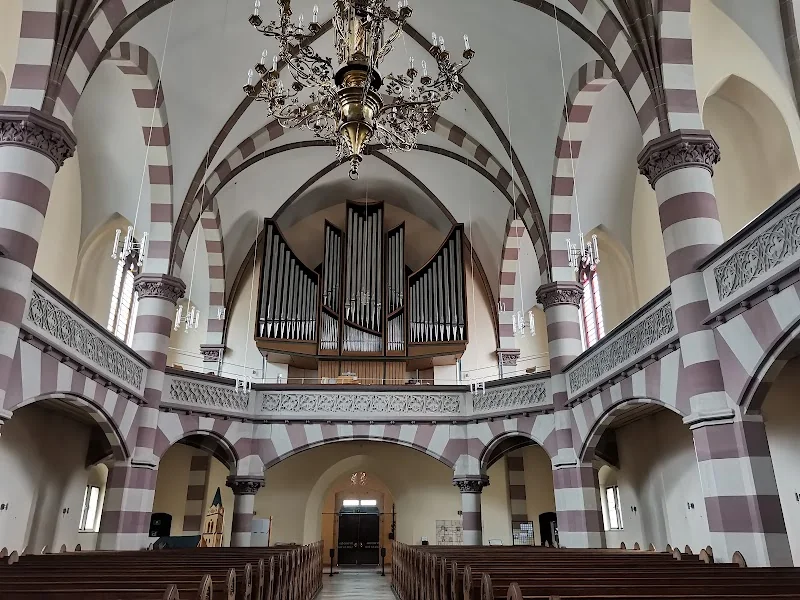
The history of St. Paul begins with an inauguration on September 17, 1900. The official historical presentation describes the church as a pioneer of a new district, as at the time of its creation, it initially stood alone among gardens and potato fields. Later, the surroundings developed significantly with workers' housing and increasing settlement. This connection between urban development and church construction makes St. Paul an exciting example of how sacred architecture plays a formative role in a growing suburb. The church was built in a historicist style with orientation to Gothic models, consciously using a form language that conveys dignity, verticality, and liturgical rigor. For those seeking history, architecture, or the architectural background, St. Paul thus provides a clear added value beyond its mere use as a place of worship. ([sankt-paul.de](https://sankt-paul.de/geschichte))
The architectural figures are also remarkable. The church was originally designed for about 1000 seats, still has the tallest church tower in Fürth, and is described in sources as having a tower height of 70 meters. The nave measures 37 meters in length and 17 meters in width and height, making the space appear monumental despite its ecclesiastical function. During World War II, the building suffered damage, primarily from incendiary bombs in 1943, destroying the sacristy and breaking windows. After the war, the damage was repaired in 1948; further renovations followed in 1969, 1986/87, and 1999. Particularly interesting is that the interior design was changed in 1969 to reflect the taste of the time and was partially restored to a historical state in 1999. Therefore, those visiting St. Paul today experience not only a building from 1900 but a church whose appearance has been continuously updated and adapted over decades. ([sankt-paul.de](https://sankt-paul.de/geschichte))
Organs, Bells, and Church Music as a Trademark
A key reason why St. Paul is known beyond the city limits lies in its musical tradition. The community refers to St. Paul's Church as the holder of the largest organ in the Fürth deanery. The current main organ was built in 1963 and 1964 by E. F. Walcker and Cie. from Ludwigsburg; it has three manuals, 54 registers, and more than 4000 pipes. This is remarkable for its acoustic effect because the organ is not only a liturgical accompanying instrument but a true concert instrument with a wide tonal range. The earlier organ system from 1900 was built by Strebel from Nuremberg, but the current instrument significantly shapes the musical reputation of the church. Therefore, those searching for church music, organs, or concert venues will find one of the central addresses in Fürth here. ([sankt-paul.de](https://sankt-paul.de/geschichte))
The musical identity also includes the choir organ behind the altar. It was installed in 1972 at the initiative of dedicated church wardens and with many donations, has two manuals and 13 registers, and also comes from Walcker. Both organs can be played from the same console, which is not only technically interesting but also particularly appealing for double concerts. The community explicitly describes this as a special experience, which is sometimes utilized in concerts. Additionally, the significance for the Fürth Church Music Days, whose roots are said to lie in St. Paul, is notable. The bell history is also rich: the first four bells from 1899 were partially melted down during World War II, and new bells were added later. The ensemble is complemented by the choir windows made by Adolf V. Saile in 1957, which give the church a strong artistic identity. All of this makes St. Paul a place where architecture, sound, and image interact. ([sankt-paul.de](https://sankt-paul.de/geschichte))
Services, Events, and Community Life in St. Paul Fürth
St. Paul is not only a monument and concert venue but also an active community with a regular program. The service page lists formats such as Taizé prayer, praise service, church with children, midday prayer, and other special services. This shows that the community addresses different target groups and utilizes the church space in various liturgical and musical forms. Particularly interesting for families is the church's offer for children, which is consciously tailored to the perception of the youngest. For visitors looking for a vibrant community profile, this is an important signal: St. Paul is not a static space but a place with ongoing daily life, recurring formats, and a program that goes beyond the classic Sunday service. The services and events make the church relevant for a broad audience, from regular attendees to curious first-time visitors. ([sankt-paul.de](https://www.sankt-paul.de/gottesdienste?utm_source=openai))
Additionally, the regional significance in the deanery is strong. The Fürth deanery page describes St. Paul as the mother church for the Erlöserkirche in Dambach and as the origin of important impulses, including for the Fürth Church Music Days. The social and neighborhood connection is also strongly pronounced; the community works in the South City on a network of education, neighborhood, children's and youth work, and church life. Events such as preventive evenings, dialect services, choir concerts, or church cabaret formats show that the program is intentionally diverse. This is particularly relevant for SEO analysis: people are not only searching for the address or photos but also for programs, service formats, and events. St. Paul meets these search intentions in a way that is both informative and emotionally engaging. ([sankt-paul.de](https://www.sankt-paul.de/))
Photos, 360° Tour, and Special Impressions on Site
For those who want to visually get to know St. Paul in advance, there are several good starting points. The official website offers a 360° tour of St. Paul Church, which is directly accessible via Google Maps and thus provides a realistic impression of spatial effects, sightlines, and interior space. Especially for a church used as a concert and event venue, such visual impressions are valuable because they indirectly make size, acoustics, and atmosphere experienceable. The images and information about the history of the organs, bells, and choir windows also support this impression. For people who want not just an exterior image but a real spatial impression when searching for photos, this is a clear advantage. The digital access thus complements the classic on-site experience and aids in planning a visit. ([sankt-paul.de](https://www.sankt-paul.de/programm-fuer-das-125-jaehrige-jubilaeum/360deg-rundgang-durch-die-kirche-st-paul?utm_source=openai))
The surrounding area also provides interesting photographic motifs. The city of Fürth points out that the area around St. Paul Church was reorganized as part of a redesign in 2018; among other things, a small playground was created at Dr.-Martin-Luther-Platz. Such details do not change the historical character of the church, but they show that the surroundings are still being developed urbanly. Together with the 70-meter-high tower, the neo-Gothic and historicist elements, and the colored choir windows, a picture emerges that is well-suited for photo requests, social media, and local city or architectural research. Therefore, those searching for St. Paul Fürth photos will find not just a single motif but a mix of monumentality, urbanity, and ecclesiastical detail richness. Especially in daylight, when the tower, facade structure, and square space come together, the place is likely to offer strong visual contrasts. ([sankt-paul.de](https://sankt-paul.de/geschichte))
Rental, Community Hall, and Use as an Event Venue
For events, St. Paul is also practically interesting. The community explicitly describes its church space as a special area for concerts, readings, guest performances, and productions. At the same time, it names St. Paul Church as Fürth's largest church space with room for 700 to 800 visitors. This is remarkable for a church because it allows for both solemn services and larger cultural events. Additional information about the facilities includes sufficient sanitary facilities, a cloakroom, and good transport connections, making the place attractive from an organizational perspective. The community also points out that the proximity to the main train station and the subway facilitates use. For organizers and guests, this is a real advantage because not only does the space itself work, but also the logistics. ([sankt-paul.de](https://www.sankt-paul.de/anschrift/vermietungen?utm_source=openai))
The community center is also important for use. According to the rental page, there is a community hall with chairs for about 180 people or with tables for about 120 people, a community room for about 40 people or 30 with tables, and a group room for about 20 people or 12 with tables available. This means that St. Paul can be read not only as a church but also as a versatile event venue that accommodates various formats from small working groups to larger cultural events. Additionally, the church is repeatedly mentioned by cultural and deanery pages as a place for choirs, oratorios, and church musical highlights. Those looking for a location with a sacred character, good acoustics, and additional infrastructure will find a realistically usable address here. The combination of main church, community hall, and strong musical tradition makes St. Paul a location with clear usage diversity. ([sankt-paul.de](https://www.sankt-paul.de/anschrift/vermietungen?utm_source=openai))
Sources:
Mehr anzeigenWeniger anzeigen
St. Paul Fürth | Photos & Reviews
St. Paul in the Fürth South City is more than just a church with a well-known address. Those looking for photos, reviews, directions, or the unique sound of the organ will quickly find themselves at a location that stands out both sacredly and culturally. The community describes St. Paul as Protestant in the Fürth South City; at the same time, the deanery pages show that the church is a fixed point for services, church music, and special events. With its distinctive tower, historic architectural character, and vibrant community work, St. Paul is a place that is not only visited but often consciously experienced. For visitors who want to inform themselves in advance, the location on Amalienstraße, the proximity to the main train station, the musical use, and the well-documented history are particularly relevant. That is precisely why the location is equally suitable for SEO interest, local orientation, and cultural discovery. ([sankt-paul.de](https://www.sankt-paul.de/))
Address, Directions, and Parking around St. Paul Fürth
For orientation, it is initially important to distinguish between the church and the parish office at St. Paul. In the event and deanery pages, the church itself is listed at Amalienstraße 64, 90763 Fürth, while the parish office is officially located at Dr.-Martin-Luther-Platz 2. This distinction is particularly useful for visitors, as the two addresses appear in different contexts. Those attending a service, concert, or special event should therefore check the event information and orient themselves to the church address. This is a typical detail that is often overlooked in a church community with a strong event profile, but it significantly eases arrival. ([fuerth-evangelisch.de](https://www.fuerth-evangelisch.de/kirchenmusiktage?utm_source=openai))
Practically, the central location in the South City is especially advantageous. The community itself emphasizes that its rooms are only about a five-minute walk from the Fürth main train station or the subway. For drivers, it is also relevant that the city of Fürth designates resident parking areas for the South City; the municipal street directory lists Amalienstraße and Dr.-Martin-Luther-Platz, among others. This implies that parking in the immediate vicinity is not always relaxed, and a close look at the parking regulations remains sensible. Those arriving for an event with a fixed start time are usually better advised to use public transport or arrive early. Especially for concerts, special services, or large community evenings, this central yet urban location is more of an advantage than a disadvantage, as it connects good access with an urban environment. ([sankt-paul.de](https://www.sankt-paul.de/anschrift/vermietungen?utm_source=openai))
History and Architecture of St. Paul's Church
The history of St. Paul begins with an inauguration on September 17, 1900. The official historical presentation describes the church as a pioneer of a new district, as at the time of its creation, it initially stood alone among gardens and potato fields. Later, the surroundings developed significantly with workers' housing and increasing settlement. This connection between urban development and church construction makes St. Paul an exciting example of how sacred architecture plays a formative role in a growing suburb. The church was built in a historicist style with orientation to Gothic models, consciously using a form language that conveys dignity, verticality, and liturgical rigor. For those seeking history, architecture, or the architectural background, St. Paul thus provides a clear added value beyond its mere use as a place of worship. ([sankt-paul.de](https://sankt-paul.de/geschichte))
The architectural figures are also remarkable. The church was originally designed for about 1000 seats, still has the tallest church tower in Fürth, and is described in sources as having a tower height of 70 meters. The nave measures 37 meters in length and 17 meters in width and height, making the space appear monumental despite its ecclesiastical function. During World War II, the building suffered damage, primarily from incendiary bombs in 1943, destroying the sacristy and breaking windows. After the war, the damage was repaired in 1948; further renovations followed in 1969, 1986/87, and 1999. Particularly interesting is that the interior design was changed in 1969 to reflect the taste of the time and was partially restored to a historical state in 1999. Therefore, those visiting St. Paul today experience not only a building from 1900 but a church whose appearance has been continuously updated and adapted over decades. ([sankt-paul.de](https://sankt-paul.de/geschichte))
Organs, Bells, and Church Music as a Trademark
A key reason why St. Paul is known beyond the city limits lies in its musical tradition. The community refers to St. Paul's Church as the holder of the largest organ in the Fürth deanery. The current main organ was built in 1963 and 1964 by E. F. Walcker and Cie. from Ludwigsburg; it has three manuals, 54 registers, and more than 4000 pipes. This is remarkable for its acoustic effect because the organ is not only a liturgical accompanying instrument but a true concert instrument with a wide tonal range. The earlier organ system from 1900 was built by Strebel from Nuremberg, but the current instrument significantly shapes the musical reputation of the church. Therefore, those searching for church music, organs, or concert venues will find one of the central addresses in Fürth here. ([sankt-paul.de](https://sankt-paul.de/geschichte))
The musical identity also includes the choir organ behind the altar. It was installed in 1972 at the initiative of dedicated church wardens and with many donations, has two manuals and 13 registers, and also comes from Walcker. Both organs can be played from the same console, which is not only technically interesting but also particularly appealing for double concerts. The community explicitly describes this as a special experience, which is sometimes utilized in concerts. Additionally, the significance for the Fürth Church Music Days, whose roots are said to lie in St. Paul, is notable. The bell history is also rich: the first four bells from 1899 were partially melted down during World War II, and new bells were added later. The ensemble is complemented by the choir windows made by Adolf V. Saile in 1957, which give the church a strong artistic identity. All of this makes St. Paul a place where architecture, sound, and image interact. ([sankt-paul.de](https://sankt-paul.de/geschichte))
Services, Events, and Community Life in St. Paul Fürth
St. Paul is not only a monument and concert venue but also an active community with a regular program. The service page lists formats such as Taizé prayer, praise service, church with children, midday prayer, and other special services. This shows that the community addresses different target groups and utilizes the church space in various liturgical and musical forms. Particularly interesting for families is the church's offer for children, which is consciously tailored to the perception of the youngest. For visitors looking for a vibrant community profile, this is an important signal: St. Paul is not a static space but a place with ongoing daily life, recurring formats, and a program that goes beyond the classic Sunday service. The services and events make the church relevant for a broad audience, from regular attendees to curious first-time visitors. ([sankt-paul.de](https://www.sankt-paul.de/gottesdienste?utm_source=openai))
Additionally, the regional significance in the deanery is strong. The Fürth deanery page describes St. Paul as the mother church for the Erlöserkirche in Dambach and as the origin of important impulses, including for the Fürth Church Music Days. The social and neighborhood connection is also strongly pronounced; the community works in the South City on a network of education, neighborhood, children's and youth work, and church life. Events such as preventive evenings, dialect services, choir concerts, or church cabaret formats show that the program is intentionally diverse. This is particularly relevant for SEO analysis: people are not only searching for the address or photos but also for programs, service formats, and events. St. Paul meets these search intentions in a way that is both informative and emotionally engaging. ([sankt-paul.de](https://www.sankt-paul.de/))
Photos, 360° Tour, and Special Impressions on Site
For those who want to visually get to know St. Paul in advance, there are several good starting points. The official website offers a 360° tour of St. Paul Church, which is directly accessible via Google Maps and thus provides a realistic impression of spatial effects, sightlines, and interior space. Especially for a church used as a concert and event venue, such visual impressions are valuable because they indirectly make size, acoustics, and atmosphere experienceable. The images and information about the history of the organs, bells, and choir windows also support this impression. For people who want not just an exterior image but a real spatial impression when searching for photos, this is a clear advantage. The digital access thus complements the classic on-site experience and aids in planning a visit. ([sankt-paul.de](https://www.sankt-paul.de/programm-fuer-das-125-jaehrige-jubilaeum/360deg-rundgang-durch-die-kirche-st-paul?utm_source=openai))
The surrounding area also provides interesting photographic motifs. The city of Fürth points out that the area around St. Paul Church was reorganized as part of a redesign in 2018; among other things, a small playground was created at Dr.-Martin-Luther-Platz. Such details do not change the historical character of the church, but they show that the surroundings are still being developed urbanly. Together with the 70-meter-high tower, the neo-Gothic and historicist elements, and the colored choir windows, a picture emerges that is well-suited for photo requests, social media, and local city or architectural research. Therefore, those searching for St. Paul Fürth photos will find not just a single motif but a mix of monumentality, urbanity, and ecclesiastical detail richness. Especially in daylight, when the tower, facade structure, and square space come together, the place is likely to offer strong visual contrasts. ([sankt-paul.de](https://sankt-paul.de/geschichte))
Rental, Community Hall, and Use as an Event Venue
For events, St. Paul is also practically interesting. The community explicitly describes its church space as a special area for concerts, readings, guest performances, and productions. At the same time, it names St. Paul Church as Fürth's largest church space with room for 700 to 800 visitors. This is remarkable for a church because it allows for both solemn services and larger cultural events. Additional information about the facilities includes sufficient sanitary facilities, a cloakroom, and good transport connections, making the place attractive from an organizational perspective. The community also points out that the proximity to the main train station and the subway facilitates use. For organizers and guests, this is a real advantage because not only does the space itself work, but also the logistics. ([sankt-paul.de](https://www.sankt-paul.de/anschrift/vermietungen?utm_source=openai))
The community center is also important for use. According to the rental page, there is a community hall with chairs for about 180 people or with tables for about 120 people, a community room for about 40 people or 30 with tables, and a group room for about 20 people or 12 with tables available. This means that St. Paul can be read not only as a church but also as a versatile event venue that accommodates various formats from small working groups to larger cultural events. Additionally, the church is repeatedly mentioned by cultural and deanery pages as a place for choirs, oratorios, and church musical highlights. Those looking for a location with a sacred character, good acoustics, and additional infrastructure will find a realistically usable address here. The combination of main church, community hall, and strong musical tradition makes St. Paul a location with clear usage diversity. ([sankt-paul.de](https://www.sankt-paul.de/anschrift/vermietungen?utm_source=openai))
Sources:
St. Paul Fürth | Photos & Reviews
St. Paul in the Fürth South City is more than just a church with a well-known address. Those looking for photos, reviews, directions, or the unique sound of the organ will quickly find themselves at a location that stands out both sacredly and culturally. The community describes St. Paul as Protestant in the Fürth South City; at the same time, the deanery pages show that the church is a fixed point for services, church music, and special events. With its distinctive tower, historic architectural character, and vibrant community work, St. Paul is a place that is not only visited but often consciously experienced. For visitors who want to inform themselves in advance, the location on Amalienstraße, the proximity to the main train station, the musical use, and the well-documented history are particularly relevant. That is precisely why the location is equally suitable for SEO interest, local orientation, and cultural discovery. ([sankt-paul.de](https://www.sankt-paul.de/))
Address, Directions, and Parking around St. Paul Fürth
For orientation, it is initially important to distinguish between the church and the parish office at St. Paul. In the event and deanery pages, the church itself is listed at Amalienstraße 64, 90763 Fürth, while the parish office is officially located at Dr.-Martin-Luther-Platz 2. This distinction is particularly useful for visitors, as the two addresses appear in different contexts. Those attending a service, concert, or special event should therefore check the event information and orient themselves to the church address. This is a typical detail that is often overlooked in a church community with a strong event profile, but it significantly eases arrival. ([fuerth-evangelisch.de](https://www.fuerth-evangelisch.de/kirchenmusiktage?utm_source=openai))
Practically, the central location in the South City is especially advantageous. The community itself emphasizes that its rooms are only about a five-minute walk from the Fürth main train station or the subway. For drivers, it is also relevant that the city of Fürth designates resident parking areas for the South City; the municipal street directory lists Amalienstraße and Dr.-Martin-Luther-Platz, among others. This implies that parking in the immediate vicinity is not always relaxed, and a close look at the parking regulations remains sensible. Those arriving for an event with a fixed start time are usually better advised to use public transport or arrive early. Especially for concerts, special services, or large community evenings, this central yet urban location is more of an advantage than a disadvantage, as it connects good access with an urban environment. ([sankt-paul.de](https://www.sankt-paul.de/anschrift/vermietungen?utm_source=openai))
History and Architecture of St. Paul's Church
The history of St. Paul begins with an inauguration on September 17, 1900. The official historical presentation describes the church as a pioneer of a new district, as at the time of its creation, it initially stood alone among gardens and potato fields. Later, the surroundings developed significantly with workers' housing and increasing settlement. This connection between urban development and church construction makes St. Paul an exciting example of how sacred architecture plays a formative role in a growing suburb. The church was built in a historicist style with orientation to Gothic models, consciously using a form language that conveys dignity, verticality, and liturgical rigor. For those seeking history, architecture, or the architectural background, St. Paul thus provides a clear added value beyond its mere use as a place of worship. ([sankt-paul.de](https://sankt-paul.de/geschichte))
The architectural figures are also remarkable. The church was originally designed for about 1000 seats, still has the tallest church tower in Fürth, and is described in sources as having a tower height of 70 meters. The nave measures 37 meters in length and 17 meters in width and height, making the space appear monumental despite its ecclesiastical function. During World War II, the building suffered damage, primarily from incendiary bombs in 1943, destroying the sacristy and breaking windows. After the war, the damage was repaired in 1948; further renovations followed in 1969, 1986/87, and 1999. Particularly interesting is that the interior design was changed in 1969 to reflect the taste of the time and was partially restored to a historical state in 1999. Therefore, those visiting St. Paul today experience not only a building from 1900 but a church whose appearance has been continuously updated and adapted over decades. ([sankt-paul.de](https://sankt-paul.de/geschichte))
Organs, Bells, and Church Music as a Trademark
A key reason why St. Paul is known beyond the city limits lies in its musical tradition. The community refers to St. Paul's Church as the holder of the largest organ in the Fürth deanery. The current main organ was built in 1963 and 1964 by E. F. Walcker and Cie. from Ludwigsburg; it has three manuals, 54 registers, and more than 4000 pipes. This is remarkable for its acoustic effect because the organ is not only a liturgical accompanying instrument but a true concert instrument with a wide tonal range. The earlier organ system from 1900 was built by Strebel from Nuremberg, but the current instrument significantly shapes the musical reputation of the church. Therefore, those searching for church music, organs, or concert venues will find one of the central addresses in Fürth here. ([sankt-paul.de](https://sankt-paul.de/geschichte))
The musical identity also includes the choir organ behind the altar. It was installed in 1972 at the initiative of dedicated church wardens and with many donations, has two manuals and 13 registers, and also comes from Walcker. Both organs can be played from the same console, which is not only technically interesting but also particularly appealing for double concerts. The community explicitly describes this as a special experience, which is sometimes utilized in concerts. Additionally, the significance for the Fürth Church Music Days, whose roots are said to lie in St. Paul, is notable. The bell history is also rich: the first four bells from 1899 were partially melted down during World War II, and new bells were added later. The ensemble is complemented by the choir windows made by Adolf V. Saile in 1957, which give the church a strong artistic identity. All of this makes St. Paul a place where architecture, sound, and image interact. ([sankt-paul.de](https://sankt-paul.de/geschichte))
Services, Events, and Community Life in St. Paul Fürth
St. Paul is not only a monument and concert venue but also an active community with a regular program. The service page lists formats such as Taizé prayer, praise service, church with children, midday prayer, and other special services. This shows that the community addresses different target groups and utilizes the church space in various liturgical and musical forms. Particularly interesting for families is the church's offer for children, which is consciously tailored to the perception of the youngest. For visitors looking for a vibrant community profile, this is an important signal: St. Paul is not a static space but a place with ongoing daily life, recurring formats, and a program that goes beyond the classic Sunday service. The services and events make the church relevant for a broad audience, from regular attendees to curious first-time visitors. ([sankt-paul.de](https://www.sankt-paul.de/gottesdienste?utm_source=openai))
Additionally, the regional significance in the deanery is strong. The Fürth deanery page describes St. Paul as the mother church for the Erlöserkirche in Dambach and as the origin of important impulses, including for the Fürth Church Music Days. The social and neighborhood connection is also strongly pronounced; the community works in the South City on a network of education, neighborhood, children's and youth work, and church life. Events such as preventive evenings, dialect services, choir concerts, or church cabaret formats show that the program is intentionally diverse. This is particularly relevant for SEO analysis: people are not only searching for the address or photos but also for programs, service formats, and events. St. Paul meets these search intentions in a way that is both informative and emotionally engaging. ([sankt-paul.de](https://www.sankt-paul.de/))
Photos, 360° Tour, and Special Impressions on Site
For those who want to visually get to know St. Paul in advance, there are several good starting points. The official website offers a 360° tour of St. Paul Church, which is directly accessible via Google Maps and thus provides a realistic impression of spatial effects, sightlines, and interior space. Especially for a church used as a concert and event venue, such visual impressions are valuable because they indirectly make size, acoustics, and atmosphere experienceable. The images and information about the history of the organs, bells, and choir windows also support this impression. For people who want not just an exterior image but a real spatial impression when searching for photos, this is a clear advantage. The digital access thus complements the classic on-site experience and aids in planning a visit. ([sankt-paul.de](https://www.sankt-paul.de/programm-fuer-das-125-jaehrige-jubilaeum/360deg-rundgang-durch-die-kirche-st-paul?utm_source=openai))
The surrounding area also provides interesting photographic motifs. The city of Fürth points out that the area around St. Paul Church was reorganized as part of a redesign in 2018; among other things, a small playground was created at Dr.-Martin-Luther-Platz. Such details do not change the historical character of the church, but they show that the surroundings are still being developed urbanly. Together with the 70-meter-high tower, the neo-Gothic and historicist elements, and the colored choir windows, a picture emerges that is well-suited for photo requests, social media, and local city or architectural research. Therefore, those searching for St. Paul Fürth photos will find not just a single motif but a mix of monumentality, urbanity, and ecclesiastical detail richness. Especially in daylight, when the tower, facade structure, and square space come together, the place is likely to offer strong visual contrasts. ([sankt-paul.de](https://sankt-paul.de/geschichte))
Rental, Community Hall, and Use as an Event Venue
For events, St. Paul is also practically interesting. The community explicitly describes its church space as a special area for concerts, readings, guest performances, and productions. At the same time, it names St. Paul Church as Fürth's largest church space with room for 700 to 800 visitors. This is remarkable for a church because it allows for both solemn services and larger cultural events. Additional information about the facilities includes sufficient sanitary facilities, a cloakroom, and good transport connections, making the place attractive from an organizational perspective. The community also points out that the proximity to the main train station and the subway facilitates use. For organizers and guests, this is a real advantage because not only does the space itself work, but also the logistics. ([sankt-paul.de](https://www.sankt-paul.de/anschrift/vermietungen?utm_source=openai))
The community center is also important for use. According to the rental page, there is a community hall with chairs for about 180 people or with tables for about 120 people, a community room for about 40 people or 30 with tables, and a group room for about 20 people or 12 with tables available. This means that St. Paul can be read not only as a church but also as a versatile event venue that accommodates various formats from small working groups to larger cultural events. Additionally, the church is repeatedly mentioned by cultural and deanery pages as a place for choirs, oratorios, and church musical highlights. Those looking for a location with a sacred character, good acoustics, and additional infrastructure will find a realistically usable address here. The combination of main church, community hall, and strong musical tradition makes St. Paul a location with clear usage diversity. ([sankt-paul.de](https://www.sankt-paul.de/anschrift/vermietungen?utm_source=openai))
Sources:
Upcoming Events
Large Neighborhood Festival in Fürth's Southern City
Fürth invites: The Large Neighborhood Festival brings the Southern City together on July 9, 2026. Free, open, and full of community. #Fürth #SouthernCity #Neighborhood
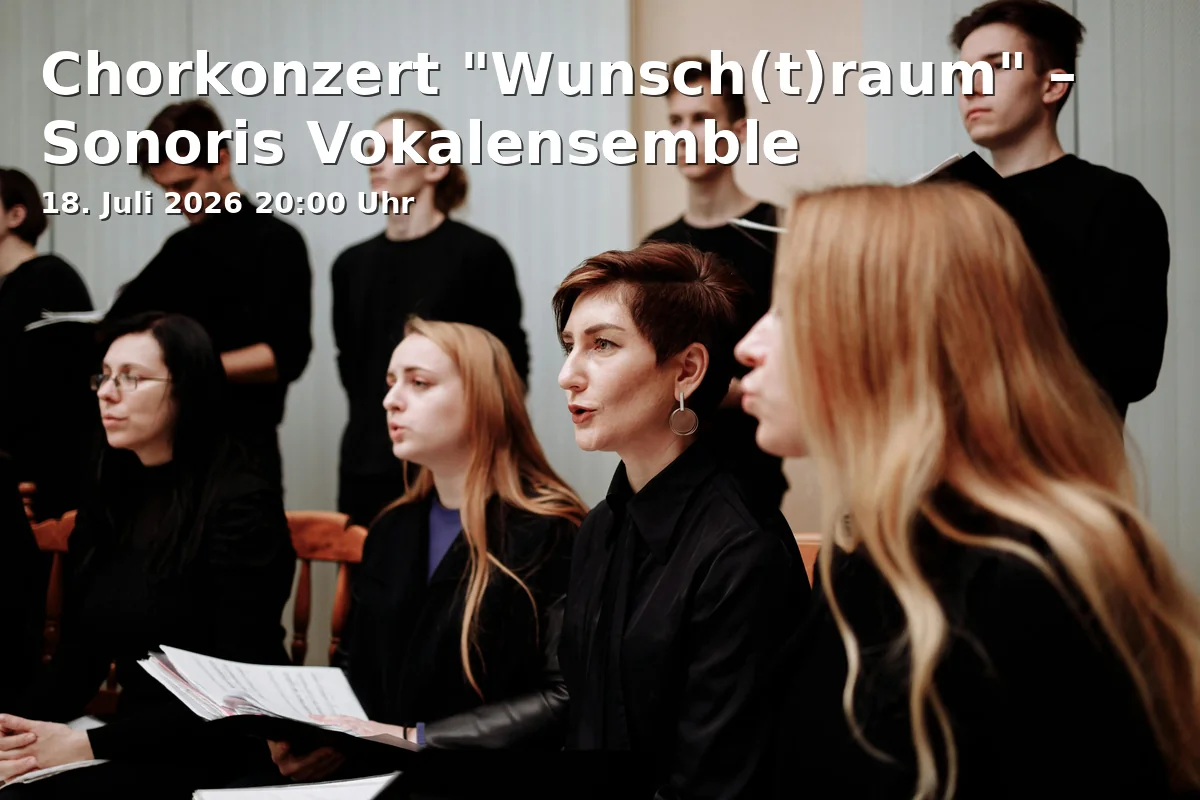
Choral Concert "Wish(dream)" – Sonoris Vocal Ensemble
A summer evening for choral fans: Sonoris Vocal Ensemble fills St. Paul in Fürth with longing, sound, and great expressiveness. 07/18/2026, 8 PM. #ChoralConcert
Frequently Asked Questions
Reviews
Johannes Lenz
2. June 2026
We attended the State Children’s Choir Day in Fürth at St. Paul’s with #Littlefeet. It’s a lovely, simple church surrounded by a beautiful square with a kindergarten and the parish hall right across the street. We had a lot of fun, sang a lot, and saw the wonderful volunteer work done by the parishioners, ensuring that all the children were well taken care of. We definitely recommend this place!
Null Inactive (No Email Service)
14. June 2023
Attempting to automate their imaginary friend using "AI" that makes up false output at least 50% of the time. This is literally - according to the gospel - worshipping false idols! It is unfathomable that any genuine God-fearing person would endorse such heresy and a compelling confirmation of the sheer utter hypocrisy of Christian teachings full stop. False prophets and blasphemers such as this "Church" must be condemned by those religious and the non-religious alike! It is bad enough that many justify awful acts against others in the name of God - these cultists would now have people use as justification a biased and faulty machine badly pretending to be God! This is clearly nothing more than Satanism given license by corrupted deviant heretics! You won't find God here but you will now find the truest representation of the hubris, ego and deception most common to swindlers, grifters and the modern day bastardisation of spirituality. If the bible is truly to be believed - there is no clearer sign yet of the impending apocalypse than this perversion.
Muaen Sheikh
26. October 2020
Its look good when you walking at 🌃
Tom
11. November 2021
90763 Fürth Amalienstraße 64 St. Paul Evangelisch-Lutherische Kirche Fürth Südstadt, 5 steps of 15cm, ramp 5%, wheelchair accessible side entrance, automatic door opener, 1st door B 83 cm, 2nd door B 170 cm, threshold 0 cm, inductive hearing system, bus stop Paulskirche 35m, paths smooth and tightly jointed,
U. und G. Loose
21. January 2026
Beautifully located. Otherwise dense development, but open spaces around the church.