
Hiltmannsdorfer Str., Fürth
Hiltmannsdorfer Str., 90768 Fürth, Germany
Schmalholz | Natural Area & Access
Schmalholz is not a traditional event venue with a stage, seating rows, or ticket area in Fürth, but rather a developed natural area on the outskirts of Burgfarrnbach. For local orientation, this place is nonetheless important, as it repeatedly appears in city maps, during excursions, and in nature conservation contexts. The area is preserved as a place name and is described as a forest piece about 800 by 300 meters in size, located west of Burgfarrnbach. To the north, the Würzburger Straße borders the area, to the south, the Farrnbach and Hiltmannsdorfer Straße run, and in this environment is also the Grafenweiher. Therefore, those looking for Schmalholz are primarily searching for a landscape-shaped fringe area of Fürth, not a tourist attraction. This mix of quiet location, water reference, forest, and proximity to the settlement makes the area particularly interesting for nature observation and short walks. ([fuerthwiki.de](https://www.fuerthwiki.de/wiki/index.php/Schmalholz))
Where is Schmalholz located in Burgfarrnbach?
The location of Schmalholz can best be understood through Burgfarrnbach. The district forms the urban framework in which the forest area opens up at the western edge. According to FürthWiki, the area begins where the development thins out and the landscape with its paths, ditches, and bodies of water becomes more prominent. Orientation is easy because several distinctive lines define the area: to the north, the Würzburger Straße, to the south, the Farrnbach and the Hiltmannsdorfer Straße. Additionally, the Grafenweiher is in immediate proximity, further emphasizing the water-shaped character of the surroundings. This location also explains why Schmalholz is used for walks, environmental education, and excursions. Those coming from the city do not reach a closed excursion destination but a transition between the settlement area and the landscape. This transitional pattern is precisely what makes it appealing, as here the everyday life of the city meets a relatively quiet, nature-close section on the outskirts of Burgfarrnbach. ([fuerthwiki.de](https://www.fuerthwiki.de/wiki/index.php/Schmalholz))
The city of Fürth names the corner of Hiltmannsdorfer Straße / Westliche Hummelstraße as a meeting point for an event in Schmalholz and adds coordinates that further specify the location. This is helpful for visitors as it shows how the area is practically accessed: not through a large building but through street edges and a specific meeting point. In practice, this means that one orients oneself to the fringe location of the natural area and does not search for a central address with a house number. Therefore, Schmalholz is a good example of the connection between nature and urban structure. It is independent enough in terms of landscape to have a name but open enough to remain accessible via paths and streets. This type of place is typical for Fürth, as the city has many green spaces that are not staged as parks but function as a living part of the urban landscape. ([fuerth.de](https://www.fuerth.de/kultur-freizeit/veranstaltungen-termine/veranstaltungskalender/veranstaltungsdetails/voegel-im-schmalholz-0900-02-05-2026-395443/))
Access to Schmalholz: Meeting Point and Orientation
For access, it is important to understand that Schmalholz is not an event center with parking management but a landscape area accessed by the surrounding streets. The city of Fürth explicitly names the corner of Hiltmannsdorfer Straße / Westliche Hummelstraße as a meeting point during an excursion. This shows that the outer streets serve as access lines and that visitors gather at a well-located edge point. Those arriving on foot or by bicycle benefit from the fact that the natural area is directly reachable from Burgfarrnbach. Those traveling from further away should keep an eye on the location at the western edge of the town and not look for a main entrance as one would for an event hall. Orientation here works through districts, path edges, and landscape references. This is particularly sensible for nature tours, as it creates a clear meeting point without unnecessarily technical access to the sensitive inner area. ([fuerth.de](https://www.fuerth.de/kultur-freizeit/veranstaltungen-termine/veranstaltungskalender/veranstaltungsdetails/voegel-im-schmalholz-0900-02-05-2026-395443/))
The coordinates that the city of Fürth provides for the event also make it clear that access can be described very precisely. This is particularly useful when traveling with navigation devices or if one is unfamiliar with the local area. Nevertheless, the character of the area remains nature-oriented: it is not about a closed infrastructure but about access to a forest piece located at the edge of the built-up area. Therefore, it makes sense to plan the approach with the thought that one will explore the destination on foot rather than driving directly into the area. For visitors, this is also the most pleasant entry, as the path from the street space into the landscape makes the change of location immediately noticeable. Schmalholz works well as an arrival place for nature experiences precisely because the transition from street to forest is quickly and clearly perceivable. ([fuerth.de](https://www.fuerth.de/kultur-freizeit/veranstaltungen-termine/veranstaltungskalender/veranstaltungsdetails/voegel-im-schmalholz-0900-02-05-2026-395443/))
Parking in Schmalholz and Rules in the Nature Conservation Area
When it comes to parking, caution is advised, as Schmalholz is located in a protected landscape area. The landscape protection ordinance of the city of Fürth explicitly names the existing forest areas in the city forest, Schmalholz, Zennwald, Wäsig, Streng-Park, in the Michelbach Valley, and north of Mannhof as regional climate and emission protection forests. At the same time, the ordinance prohibits driving and parking outside the paths and places designated for public traffic and outside approved private roads. This means for visitors: not every free area is automatically a parking lot, and especially in a sensitive natural area, one should only park where it is explicitly allowed. The legal framework is clearly aimed at protection and consideration. Therefore, Schmalholz is not treated as a place for spontaneous shortcuts by car but as a landscape area whose character should be preserved. ([fuerth.de](https://www.fuerth.de/fileadmin/redaktion/01-Rathaus/Ortsrecht/64_1_landschaftsschutzverordnung_im_gebiet_der_stadt_fuerth.pdf))
Practically, this means that one should plan the journey so that no unnecessary trips into the natural area are needed. If one visits Schmalholz for an excursion, a observation tour, or a walk, it is advisable to stick to the officially named meeting point at the edge of the area and to use the car only outside the protected areas where street space and traffic rules allow. The city of Fürth also describes the area as a sensitive natural space with different habitats, and that is precisely why restraint when parking is not a minor aspect but part of the visitor experience. Those who treat the place with respect help keep paths open, animals undisturbed, and the landscape impression preserved. This is particularly important in Schmalholz because the place works precisely because of its tranquility and its nature-close structure. ([fuerth.de](https://www.fuerth.de/kultur-freizeit/veranstaltungen-termine/veranstaltungskalender/veranstaltungsdetails/voegel-im-schmalholz-0900-02-05-2026-395443/))
Habitats, Ponds, and Bird Watching in Schmalholz
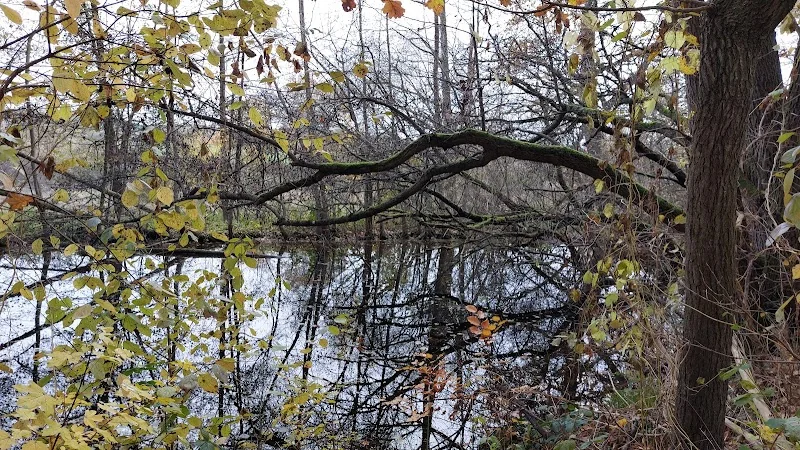
The city of Fürth describes Schmalholz as an area with a variety of habitats, and therein lies its special appeal. Part of the area is underwater due to the work of beavers, creating wet and open areas that are distinctly different from dry forest. Additionally, there are ponds where one can observe ducks and occasionally even a kingfisher. Old or dead trees are important for woodpeckers as they provide food and nesting opportunities, while in the bushes, common whitethroats and robins can be found. This mixture of water, dead wood, bushes, and forest structure makes Schmalholz ecologically exciting because several habitats lie closely together. Visitors therefore experience not only a forest walk but also a small lesson on the diversity of urban nature. The area shows how strongly nature can act, especially when it is not neatly tidied up but allowed to retain its different structures. ([fuerth.de](https://www.fuerth.de/kultur-freizeit/veranstaltungen-termine/veranstaltungskalender/veranstaltungsdetails/voegel-im-schmalholz-0900-02-05-2026-395443/))
For bird watching, Schmalholz is a good place because the species do not just stay in one spot but distribute throughout the entire mosaic of the terrain. The city explicitly recommends bringing binoculars during an excursion, which underscores the observational character of the area. Those who are attentive can very well recognize the relationships between water, old tree stock, and bushes: where water is present, different animals can be found than at the drier forest edge; where dead wood remains, woodpeckers benefit; where denser shrubs grow, smaller songbirds feel comfortable. This structural diversity is what makes Schmalholz valuable for nature enthusiasts. It is not a park with orderly rows of signs but a lively area where ecological processes remain visible. In practice, this means that Schmalholz is an ideal place for quiet observation, nature education, and short, focused excursions. ([fuerth.de](https://www.fuerth.de/kultur-freizeit/veranstaltungen-termine/veranstaltungskalender/veranstaltungsdetails/voegel-im-schmalholz-0900-02-05-2026-395443/))
History and Origin of the Place Name Schmalholz
The name Schmalholz has a longer and more interesting history than the current impression of a small forest piece initially suggests. According to FürthWiki, it is considered a place name that only appears in the early 19th century. Previously, other forms were used for the area, namely “Schwalholz,” “Schwallholz,” or “Schwallhölzer.” The common interpretation that the name simply refers to a narrow piece of forest does not quite fit this explanation. Instead, the word history points more to an administrative error and older forms related to water and damming. This makes the place name a piece of local language and landscape history. Schmalholz is therefore not only a geographical term but also an indication of how names can change over time and how strongly they are influenced by administration, use, and oral tradition. ([fuerthwiki.de](https://www.fuerthwiki.de/wiki/index.php/Schmalholz))
Particularly enlightening is the reference to water management. FürthWiki explains that “Schwall” can also mean damming or a sudden increase in outflow and that the name must therefore be traced back to the diversion weir of the Mühlbach of the Burgfarrnbacher Mühle from the Farrnbach. The old weir threshold was therefore located about 80 meters below the Hiltmannsdorfer Bridge and formerly formed a distinctive boundary that even coincides with the city boundary to this day. This makes it clear that the name of the area originated from a very concrete landscape situation: water was directed, a weir was important, and this technical and topographical situation has left traces in the name. Such details make Schmalholz historically interesting because they show how closely place names, use, and landscape are interconnected in Fürth. The current natural area thus carries a memory of earlier water and boundary conditions. ([fuerthwiki.de](https://www.fuerthwiki.de/wiki/index.php/Schmalholz))
Why Schmalholz Remains an Important Natural Area for Fürth
Schmalholz is significant for Fürth because it is explicitly named as part of the larger forest areas in the landscape protection ordinance. The city does not only pursue the protection of individual trees or small islands but aims to preserve a continuous habitat for animals and plants, especially for birds and insects. At the same time, the character of the landscape should be preserved, and the recreational value for the population secured. Schmalholz thus fulfills several functions at once: it is a natural area, a local recreation area, and a protection area. This is particularly important in an urban landscape because such areas are not easily replaceable. They help with climate, biodiversity, and tranquility in everyday life. Schmalholz is therefore one of the areas that structure the outskirts not only visually but also ecologically. Therefore, those who visit the place do not simply experience a forest but a consciously protected part of the urban fabric. ([fuerth.de](https://www.fuerth.de/fileadmin/redaktion/01-Rathaus/Ortsrecht/64_1_landschaftsschutzverordnung_im_gebiet_der_stadt_fuerth.pdf))
The city of Fürth also demonstrates with its event offerings that Schmalholz is a place for environmental education and nature experience. An excursion like “Birds in Schmalholz” makes the landscape experienceable for a broader audience and connects information with direct nature contact. This is precisely the special strength of the area: it is close enough to allow low-threshold visits and sensitive enough to require consideration and protection. Those who are out and about here move in an area that does not rely on grand staging but on quiet impressions, bird songs, water surfaces, and old trees. This makes Schmalholz equally interesting for families, nature lovers, and city walkers. It is a place where Fürth's green spaces are shown in concentrated form: landscape-wise, ecologically, and historically. For inquiries about access, parking, bird watching, or the origin of the name, this mix provides the most relevant information. ([fuerth.de](https://www.fuerth.de/kultur-freizeit/veranstaltungen-termine/veranstaltungskalender/veranstaltungsdetails/voegel-im-schmalholz-0900-02-05-2026-395443/))
Sources:
Mehr anzeigenWeniger anzeigen
Schmalholz | Natural Area & Access
Schmalholz is not a traditional event venue with a stage, seating rows, or ticket area in Fürth, but rather a developed natural area on the outskirts of Burgfarrnbach. For local orientation, this place is nonetheless important, as it repeatedly appears in city maps, during excursions, and in nature conservation contexts. The area is preserved as a place name and is described as a forest piece about 800 by 300 meters in size, located west of Burgfarrnbach. To the north, the Würzburger Straße borders the area, to the south, the Farrnbach and Hiltmannsdorfer Straße run, and in this environment is also the Grafenweiher. Therefore, those looking for Schmalholz are primarily searching for a landscape-shaped fringe area of Fürth, not a tourist attraction. This mix of quiet location, water reference, forest, and proximity to the settlement makes the area particularly interesting for nature observation and short walks. ([fuerthwiki.de](https://www.fuerthwiki.de/wiki/index.php/Schmalholz))
Where is Schmalholz located in Burgfarrnbach?
The location of Schmalholz can best be understood through Burgfarrnbach. The district forms the urban framework in which the forest area opens up at the western edge. According to FürthWiki, the area begins where the development thins out and the landscape with its paths, ditches, and bodies of water becomes more prominent. Orientation is easy because several distinctive lines define the area: to the north, the Würzburger Straße, to the south, the Farrnbach and the Hiltmannsdorfer Straße. Additionally, the Grafenweiher is in immediate proximity, further emphasizing the water-shaped character of the surroundings. This location also explains why Schmalholz is used for walks, environmental education, and excursions. Those coming from the city do not reach a closed excursion destination but a transition between the settlement area and the landscape. This transitional pattern is precisely what makes it appealing, as here the everyday life of the city meets a relatively quiet, nature-close section on the outskirts of Burgfarrnbach. ([fuerthwiki.de](https://www.fuerthwiki.de/wiki/index.php/Schmalholz))
The city of Fürth names the corner of Hiltmannsdorfer Straße / Westliche Hummelstraße as a meeting point for an event in Schmalholz and adds coordinates that further specify the location. This is helpful for visitors as it shows how the area is practically accessed: not through a large building but through street edges and a specific meeting point. In practice, this means that one orients oneself to the fringe location of the natural area and does not search for a central address with a house number. Therefore, Schmalholz is a good example of the connection between nature and urban structure. It is independent enough in terms of landscape to have a name but open enough to remain accessible via paths and streets. This type of place is typical for Fürth, as the city has many green spaces that are not staged as parks but function as a living part of the urban landscape. ([fuerth.de](https://www.fuerth.de/kultur-freizeit/veranstaltungen-termine/veranstaltungskalender/veranstaltungsdetails/voegel-im-schmalholz-0900-02-05-2026-395443/))
Access to Schmalholz: Meeting Point and Orientation
For access, it is important to understand that Schmalholz is not an event center with parking management but a landscape area accessed by the surrounding streets. The city of Fürth explicitly names the corner of Hiltmannsdorfer Straße / Westliche Hummelstraße as a meeting point during an excursion. This shows that the outer streets serve as access lines and that visitors gather at a well-located edge point. Those arriving on foot or by bicycle benefit from the fact that the natural area is directly reachable from Burgfarrnbach. Those traveling from further away should keep an eye on the location at the western edge of the town and not look for a main entrance as one would for an event hall. Orientation here works through districts, path edges, and landscape references. This is particularly sensible for nature tours, as it creates a clear meeting point without unnecessarily technical access to the sensitive inner area. ([fuerth.de](https://www.fuerth.de/kultur-freizeit/veranstaltungen-termine/veranstaltungskalender/veranstaltungsdetails/voegel-im-schmalholz-0900-02-05-2026-395443/))
The coordinates that the city of Fürth provides for the event also make it clear that access can be described very precisely. This is particularly useful when traveling with navigation devices or if one is unfamiliar with the local area. Nevertheless, the character of the area remains nature-oriented: it is not about a closed infrastructure but about access to a forest piece located at the edge of the built-up area. Therefore, it makes sense to plan the approach with the thought that one will explore the destination on foot rather than driving directly into the area. For visitors, this is also the most pleasant entry, as the path from the street space into the landscape makes the change of location immediately noticeable. Schmalholz works well as an arrival place for nature experiences precisely because the transition from street to forest is quickly and clearly perceivable. ([fuerth.de](https://www.fuerth.de/kultur-freizeit/veranstaltungen-termine/veranstaltungskalender/veranstaltungsdetails/voegel-im-schmalholz-0900-02-05-2026-395443/))
Parking in Schmalholz and Rules in the Nature Conservation Area
When it comes to parking, caution is advised, as Schmalholz is located in a protected landscape area. The landscape protection ordinance of the city of Fürth explicitly names the existing forest areas in the city forest, Schmalholz, Zennwald, Wäsig, Streng-Park, in the Michelbach Valley, and north of Mannhof as regional climate and emission protection forests. At the same time, the ordinance prohibits driving and parking outside the paths and places designated for public traffic and outside approved private roads. This means for visitors: not every free area is automatically a parking lot, and especially in a sensitive natural area, one should only park where it is explicitly allowed. The legal framework is clearly aimed at protection and consideration. Therefore, Schmalholz is not treated as a place for spontaneous shortcuts by car but as a landscape area whose character should be preserved. ([fuerth.de](https://www.fuerth.de/fileadmin/redaktion/01-Rathaus/Ortsrecht/64_1_landschaftsschutzverordnung_im_gebiet_der_stadt_fuerth.pdf))
Practically, this means that one should plan the journey so that no unnecessary trips into the natural area are needed. If one visits Schmalholz for an excursion, a observation tour, or a walk, it is advisable to stick to the officially named meeting point at the edge of the area and to use the car only outside the protected areas where street space and traffic rules allow. The city of Fürth also describes the area as a sensitive natural space with different habitats, and that is precisely why restraint when parking is not a minor aspect but part of the visitor experience. Those who treat the place with respect help keep paths open, animals undisturbed, and the landscape impression preserved. This is particularly important in Schmalholz because the place works precisely because of its tranquility and its nature-close structure. ([fuerth.de](https://www.fuerth.de/kultur-freizeit/veranstaltungen-termine/veranstaltungskalender/veranstaltungsdetails/voegel-im-schmalholz-0900-02-05-2026-395443/))
Habitats, Ponds, and Bird Watching in Schmalholz
The city of Fürth describes Schmalholz as an area with a variety of habitats, and therein lies its special appeal. Part of the area is underwater due to the work of beavers, creating wet and open areas that are distinctly different from dry forest. Additionally, there are ponds where one can observe ducks and occasionally even a kingfisher. Old or dead trees are important for woodpeckers as they provide food and nesting opportunities, while in the bushes, common whitethroats and robins can be found. This mixture of water, dead wood, bushes, and forest structure makes Schmalholz ecologically exciting because several habitats lie closely together. Visitors therefore experience not only a forest walk but also a small lesson on the diversity of urban nature. The area shows how strongly nature can act, especially when it is not neatly tidied up but allowed to retain its different structures. ([fuerth.de](https://www.fuerth.de/kultur-freizeit/veranstaltungen-termine/veranstaltungskalender/veranstaltungsdetails/voegel-im-schmalholz-0900-02-05-2026-395443/))
For bird watching, Schmalholz is a good place because the species do not just stay in one spot but distribute throughout the entire mosaic of the terrain. The city explicitly recommends bringing binoculars during an excursion, which underscores the observational character of the area. Those who are attentive can very well recognize the relationships between water, old tree stock, and bushes: where water is present, different animals can be found than at the drier forest edge; where dead wood remains, woodpeckers benefit; where denser shrubs grow, smaller songbirds feel comfortable. This structural diversity is what makes Schmalholz valuable for nature enthusiasts. It is not a park with orderly rows of signs but a lively area where ecological processes remain visible. In practice, this means that Schmalholz is an ideal place for quiet observation, nature education, and short, focused excursions. ([fuerth.de](https://www.fuerth.de/kultur-freizeit/veranstaltungen-termine/veranstaltungskalender/veranstaltungsdetails/voegel-im-schmalholz-0900-02-05-2026-395443/))
History and Origin of the Place Name Schmalholz
The name Schmalholz has a longer and more interesting history than the current impression of a small forest piece initially suggests. According to FürthWiki, it is considered a place name that only appears in the early 19th century. Previously, other forms were used for the area, namely “Schwalholz,” “Schwallholz,” or “Schwallhölzer.” The common interpretation that the name simply refers to a narrow piece of forest does not quite fit this explanation. Instead, the word history points more to an administrative error and older forms related to water and damming. This makes the place name a piece of local language and landscape history. Schmalholz is therefore not only a geographical term but also an indication of how names can change over time and how strongly they are influenced by administration, use, and oral tradition. ([fuerthwiki.de](https://www.fuerthwiki.de/wiki/index.php/Schmalholz))
Particularly enlightening is the reference to water management. FürthWiki explains that “Schwall” can also mean damming or a sudden increase in outflow and that the name must therefore be traced back to the diversion weir of the Mühlbach of the Burgfarrnbacher Mühle from the Farrnbach. The old weir threshold was therefore located about 80 meters below the Hiltmannsdorfer Bridge and formerly formed a distinctive boundary that even coincides with the city boundary to this day. This makes it clear that the name of the area originated from a very concrete landscape situation: water was directed, a weir was important, and this technical and topographical situation has left traces in the name. Such details make Schmalholz historically interesting because they show how closely place names, use, and landscape are interconnected in Fürth. The current natural area thus carries a memory of earlier water and boundary conditions. ([fuerthwiki.de](https://www.fuerthwiki.de/wiki/index.php/Schmalholz))
Why Schmalholz Remains an Important Natural Area for Fürth
Schmalholz is significant for Fürth because it is explicitly named as part of the larger forest areas in the landscape protection ordinance. The city does not only pursue the protection of individual trees or small islands but aims to preserve a continuous habitat for animals and plants, especially for birds and insects. At the same time, the character of the landscape should be preserved, and the recreational value for the population secured. Schmalholz thus fulfills several functions at once: it is a natural area, a local recreation area, and a protection area. This is particularly important in an urban landscape because such areas are not easily replaceable. They help with climate, biodiversity, and tranquility in everyday life. Schmalholz is therefore one of the areas that structure the outskirts not only visually but also ecologically. Therefore, those who visit the place do not simply experience a forest but a consciously protected part of the urban fabric. ([fuerth.de](https://www.fuerth.de/fileadmin/redaktion/01-Rathaus/Ortsrecht/64_1_landschaftsschutzverordnung_im_gebiet_der_stadt_fuerth.pdf))
The city of Fürth also demonstrates with its event offerings that Schmalholz is a place for environmental education and nature experience. An excursion like “Birds in Schmalholz” makes the landscape experienceable for a broader audience and connects information with direct nature contact. This is precisely the special strength of the area: it is close enough to allow low-threshold visits and sensitive enough to require consideration and protection. Those who are out and about here move in an area that does not rely on grand staging but on quiet impressions, bird songs, water surfaces, and old trees. This makes Schmalholz equally interesting for families, nature lovers, and city walkers. It is a place where Fürth's green spaces are shown in concentrated form: landscape-wise, ecologically, and historically. For inquiries about access, parking, bird watching, or the origin of the name, this mix provides the most relevant information. ([fuerth.de](https://www.fuerth.de/kultur-freizeit/veranstaltungen-termine/veranstaltungskalender/veranstaltungsdetails/voegel-im-schmalholz-0900-02-05-2026-395443/))
Sources:
Schmalholz | Natural Area & Access
Schmalholz is not a traditional event venue with a stage, seating rows, or ticket area in Fürth, but rather a developed natural area on the outskirts of Burgfarrnbach. For local orientation, this place is nonetheless important, as it repeatedly appears in city maps, during excursions, and in nature conservation contexts. The area is preserved as a place name and is described as a forest piece about 800 by 300 meters in size, located west of Burgfarrnbach. To the north, the Würzburger Straße borders the area, to the south, the Farrnbach and Hiltmannsdorfer Straße run, and in this environment is also the Grafenweiher. Therefore, those looking for Schmalholz are primarily searching for a landscape-shaped fringe area of Fürth, not a tourist attraction. This mix of quiet location, water reference, forest, and proximity to the settlement makes the area particularly interesting for nature observation and short walks. ([fuerthwiki.de](https://www.fuerthwiki.de/wiki/index.php/Schmalholz))
Where is Schmalholz located in Burgfarrnbach?
The location of Schmalholz can best be understood through Burgfarrnbach. The district forms the urban framework in which the forest area opens up at the western edge. According to FürthWiki, the area begins where the development thins out and the landscape with its paths, ditches, and bodies of water becomes more prominent. Orientation is easy because several distinctive lines define the area: to the north, the Würzburger Straße, to the south, the Farrnbach and the Hiltmannsdorfer Straße. Additionally, the Grafenweiher is in immediate proximity, further emphasizing the water-shaped character of the surroundings. This location also explains why Schmalholz is used for walks, environmental education, and excursions. Those coming from the city do not reach a closed excursion destination but a transition between the settlement area and the landscape. This transitional pattern is precisely what makes it appealing, as here the everyday life of the city meets a relatively quiet, nature-close section on the outskirts of Burgfarrnbach. ([fuerthwiki.de](https://www.fuerthwiki.de/wiki/index.php/Schmalholz))
The city of Fürth names the corner of Hiltmannsdorfer Straße / Westliche Hummelstraße as a meeting point for an event in Schmalholz and adds coordinates that further specify the location. This is helpful for visitors as it shows how the area is practically accessed: not through a large building but through street edges and a specific meeting point. In practice, this means that one orients oneself to the fringe location of the natural area and does not search for a central address with a house number. Therefore, Schmalholz is a good example of the connection between nature and urban structure. It is independent enough in terms of landscape to have a name but open enough to remain accessible via paths and streets. This type of place is typical for Fürth, as the city has many green spaces that are not staged as parks but function as a living part of the urban landscape. ([fuerth.de](https://www.fuerth.de/kultur-freizeit/veranstaltungen-termine/veranstaltungskalender/veranstaltungsdetails/voegel-im-schmalholz-0900-02-05-2026-395443/))
Access to Schmalholz: Meeting Point and Orientation
For access, it is important to understand that Schmalholz is not an event center with parking management but a landscape area accessed by the surrounding streets. The city of Fürth explicitly names the corner of Hiltmannsdorfer Straße / Westliche Hummelstraße as a meeting point during an excursion. This shows that the outer streets serve as access lines and that visitors gather at a well-located edge point. Those arriving on foot or by bicycle benefit from the fact that the natural area is directly reachable from Burgfarrnbach. Those traveling from further away should keep an eye on the location at the western edge of the town and not look for a main entrance as one would for an event hall. Orientation here works through districts, path edges, and landscape references. This is particularly sensible for nature tours, as it creates a clear meeting point without unnecessarily technical access to the sensitive inner area. ([fuerth.de](https://www.fuerth.de/kultur-freizeit/veranstaltungen-termine/veranstaltungskalender/veranstaltungsdetails/voegel-im-schmalholz-0900-02-05-2026-395443/))
The coordinates that the city of Fürth provides for the event also make it clear that access can be described very precisely. This is particularly useful when traveling with navigation devices or if one is unfamiliar with the local area. Nevertheless, the character of the area remains nature-oriented: it is not about a closed infrastructure but about access to a forest piece located at the edge of the built-up area. Therefore, it makes sense to plan the approach with the thought that one will explore the destination on foot rather than driving directly into the area. For visitors, this is also the most pleasant entry, as the path from the street space into the landscape makes the change of location immediately noticeable. Schmalholz works well as an arrival place for nature experiences precisely because the transition from street to forest is quickly and clearly perceivable. ([fuerth.de](https://www.fuerth.de/kultur-freizeit/veranstaltungen-termine/veranstaltungskalender/veranstaltungsdetails/voegel-im-schmalholz-0900-02-05-2026-395443/))
Parking in Schmalholz and Rules in the Nature Conservation Area
When it comes to parking, caution is advised, as Schmalholz is located in a protected landscape area. The landscape protection ordinance of the city of Fürth explicitly names the existing forest areas in the city forest, Schmalholz, Zennwald, Wäsig, Streng-Park, in the Michelbach Valley, and north of Mannhof as regional climate and emission protection forests. At the same time, the ordinance prohibits driving and parking outside the paths and places designated for public traffic and outside approved private roads. This means for visitors: not every free area is automatically a parking lot, and especially in a sensitive natural area, one should only park where it is explicitly allowed. The legal framework is clearly aimed at protection and consideration. Therefore, Schmalholz is not treated as a place for spontaneous shortcuts by car but as a landscape area whose character should be preserved. ([fuerth.de](https://www.fuerth.de/fileadmin/redaktion/01-Rathaus/Ortsrecht/64_1_landschaftsschutzverordnung_im_gebiet_der_stadt_fuerth.pdf))
Practically, this means that one should plan the journey so that no unnecessary trips into the natural area are needed. If one visits Schmalholz for an excursion, a observation tour, or a walk, it is advisable to stick to the officially named meeting point at the edge of the area and to use the car only outside the protected areas where street space and traffic rules allow. The city of Fürth also describes the area as a sensitive natural space with different habitats, and that is precisely why restraint when parking is not a minor aspect but part of the visitor experience. Those who treat the place with respect help keep paths open, animals undisturbed, and the landscape impression preserved. This is particularly important in Schmalholz because the place works precisely because of its tranquility and its nature-close structure. ([fuerth.de](https://www.fuerth.de/kultur-freizeit/veranstaltungen-termine/veranstaltungskalender/veranstaltungsdetails/voegel-im-schmalholz-0900-02-05-2026-395443/))
Habitats, Ponds, and Bird Watching in Schmalholz
The city of Fürth describes Schmalholz as an area with a variety of habitats, and therein lies its special appeal. Part of the area is underwater due to the work of beavers, creating wet and open areas that are distinctly different from dry forest. Additionally, there are ponds where one can observe ducks and occasionally even a kingfisher. Old or dead trees are important for woodpeckers as they provide food and nesting opportunities, while in the bushes, common whitethroats and robins can be found. This mixture of water, dead wood, bushes, and forest structure makes Schmalholz ecologically exciting because several habitats lie closely together. Visitors therefore experience not only a forest walk but also a small lesson on the diversity of urban nature. The area shows how strongly nature can act, especially when it is not neatly tidied up but allowed to retain its different structures. ([fuerth.de](https://www.fuerth.de/kultur-freizeit/veranstaltungen-termine/veranstaltungskalender/veranstaltungsdetails/voegel-im-schmalholz-0900-02-05-2026-395443/))
For bird watching, Schmalholz is a good place because the species do not just stay in one spot but distribute throughout the entire mosaic of the terrain. The city explicitly recommends bringing binoculars during an excursion, which underscores the observational character of the area. Those who are attentive can very well recognize the relationships between water, old tree stock, and bushes: where water is present, different animals can be found than at the drier forest edge; where dead wood remains, woodpeckers benefit; where denser shrubs grow, smaller songbirds feel comfortable. This structural diversity is what makes Schmalholz valuable for nature enthusiasts. It is not a park with orderly rows of signs but a lively area where ecological processes remain visible. In practice, this means that Schmalholz is an ideal place for quiet observation, nature education, and short, focused excursions. ([fuerth.de](https://www.fuerth.de/kultur-freizeit/veranstaltungen-termine/veranstaltungskalender/veranstaltungsdetails/voegel-im-schmalholz-0900-02-05-2026-395443/))
History and Origin of the Place Name Schmalholz
The name Schmalholz has a longer and more interesting history than the current impression of a small forest piece initially suggests. According to FürthWiki, it is considered a place name that only appears in the early 19th century. Previously, other forms were used for the area, namely “Schwalholz,” “Schwallholz,” or “Schwallhölzer.” The common interpretation that the name simply refers to a narrow piece of forest does not quite fit this explanation. Instead, the word history points more to an administrative error and older forms related to water and damming. This makes the place name a piece of local language and landscape history. Schmalholz is therefore not only a geographical term but also an indication of how names can change over time and how strongly they are influenced by administration, use, and oral tradition. ([fuerthwiki.de](https://www.fuerthwiki.de/wiki/index.php/Schmalholz))
Particularly enlightening is the reference to water management. FürthWiki explains that “Schwall” can also mean damming or a sudden increase in outflow and that the name must therefore be traced back to the diversion weir of the Mühlbach of the Burgfarrnbacher Mühle from the Farrnbach. The old weir threshold was therefore located about 80 meters below the Hiltmannsdorfer Bridge and formerly formed a distinctive boundary that even coincides with the city boundary to this day. This makes it clear that the name of the area originated from a very concrete landscape situation: water was directed, a weir was important, and this technical and topographical situation has left traces in the name. Such details make Schmalholz historically interesting because they show how closely place names, use, and landscape are interconnected in Fürth. The current natural area thus carries a memory of earlier water and boundary conditions. ([fuerthwiki.de](https://www.fuerthwiki.de/wiki/index.php/Schmalholz))
Why Schmalholz Remains an Important Natural Area for Fürth
Schmalholz is significant for Fürth because it is explicitly named as part of the larger forest areas in the landscape protection ordinance. The city does not only pursue the protection of individual trees or small islands but aims to preserve a continuous habitat for animals and plants, especially for birds and insects. At the same time, the character of the landscape should be preserved, and the recreational value for the population secured. Schmalholz thus fulfills several functions at once: it is a natural area, a local recreation area, and a protection area. This is particularly important in an urban landscape because such areas are not easily replaceable. They help with climate, biodiversity, and tranquility in everyday life. Schmalholz is therefore one of the areas that structure the outskirts not only visually but also ecologically. Therefore, those who visit the place do not simply experience a forest but a consciously protected part of the urban fabric. ([fuerth.de](https://www.fuerth.de/fileadmin/redaktion/01-Rathaus/Ortsrecht/64_1_landschaftsschutzverordnung_im_gebiet_der_stadt_fuerth.pdf))
The city of Fürth also demonstrates with its event offerings that Schmalholz is a place for environmental education and nature experience. An excursion like “Birds in Schmalholz” makes the landscape experienceable for a broader audience and connects information with direct nature contact. This is precisely the special strength of the area: it is close enough to allow low-threshold visits and sensitive enough to require consideration and protection. Those who are out and about here move in an area that does not rely on grand staging but on quiet impressions, bird songs, water surfaces, and old trees. This makes Schmalholz equally interesting for families, nature lovers, and city walkers. It is a place where Fürth's green spaces are shown in concentrated form: landscape-wise, ecologically, and historically. For inquiries about access, parking, bird watching, or the origin of the name, this mix provides the most relevant information. ([fuerth.de](https://www.fuerth.de/kultur-freizeit/veranstaltungen-termine/veranstaltungskalender/veranstaltungsdetails/voegel-im-schmalholz-0900-02-05-2026-395443/))
Sources:
Upcoming Events
No events found
Frequently Asked Questions
Reviews
No reviews found