
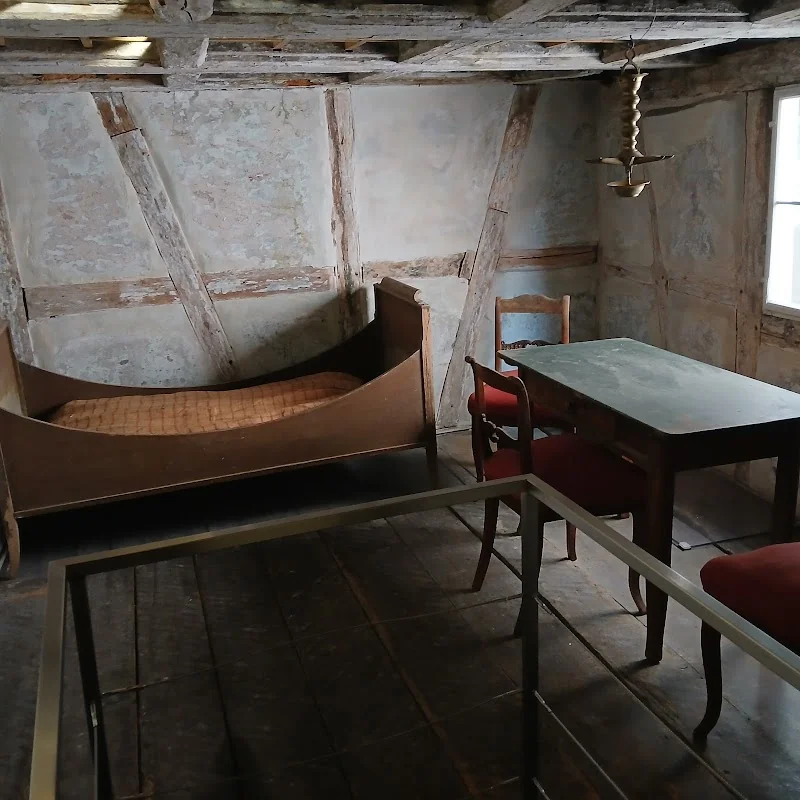
Königstraße 89, Fürth
Königstraße 89, 90762 Fürth, Germany
Jewish Museum of Franconia in Fuerth | Tickets & Opening Hours
The Jewish Museum of Franconia in Fuerth is not a museum that one visits casually. It is a place where architecture, memory, and everyday culture come together. At Königstraße 89, visitors encounter a historic Jewish residential building with a ritual bath and a sukkah, a modern extension, a study library, as well as a café, bookstore, and museum shop. Those searching for Jewish Museum Fuerth, Jewish Museum Franconia, Jewish Museum of Franconia in Fuerth photos, or specific visitor information will find a tour that brings together religious practice, urban history, and Jewish life in Franconia in a compact space. The house sees itself as a center for understanding Jewish history and culture in Franconia and conveys the diversity of Franconian-Jewish life from its beginnings to the present day. It is precisely this connection between a historical site and scientifically grounded mediation that makes the museum particularly appealing. ([juedisches-museum.org](https://www.juedisches-museum.org/museum/))
What is special is that the museum not only talks about Jewish history but operates in a building that is itself part of that history. All buildings of the Jewish Museum of Franconia are located in historical monuments from the 16th to 18th centuries, making Jewish life not abstract but spatially tangible. In Fuerth, this is particularly evident, as the place opens up immediate access with Judaica, everyday objects, and original building traces. The museum connects research, exhibitions, educational programs, events, and publications and, according to its own understanding, also participates in current social debates. This is precisely why the visit is equally exciting for families, school classes, culturally interested individuals, and travelers: one not only gets to know a museum but a vibrant center of memory and mediation. ([juedisches-museum.org](https://www.juedisches-museum.org/museum/))
History and Present of Jewish Life in Franconia
The history of the Jewish Museum of Franconia is closely linked to the Jewish history of Franconia. On the official museum website, Franconia is described as a significant cradle of Jewish life in Southern Germany, and the house sees itself as a place where this nearly thousand-year history becomes visible and comprehensible. The museum is supported by a sponsoring association founded in 1990; the support association has existed since 1988 and has supported numerous projects, exhibitions, and the extension building in Fuerth. This institutional anchoring shows that the museum is not just a single exhibition house but a network with three locations in Fuerth, Schnaittach, and Schwabach. It is important to know for search queries like Jewish Museum Franconia or Jewish Life Franconia that the locations together convey the diversity of Jewish history in urban, small-town, and rural areas. ([juedisches-museum.org](https://www.juedisches-museum.org/museum/))
For Fuerth, the permanent exhibition is particularly focused on local history. It tells the story and present of Jewish life in Franconia through Judaica and everyday objects and points to the special significance of Fuerth as a religious center. The historic building was constructed in 1702 by the Jewish merchant and community leader Hirsch Fromm; the ritual bath and the front building have been preserved to this day and shape the character of the museum. The exhibition thus not only makes a historical place of life visible but also the transformation of Jewish existence in Fuerth from the 18th and 19th centuries to the present. This perspective is complemented by the department of Citizen Worlds, which opened in 2018 and highlights the social and economic change of the 19th century. Jewish entrepreneurs, lawyers, doctors, and patrons are addressed, as well as their role in the urban society. ([juedisches-museum.org](https://www.juedisches-museum.org/dauerausstellung-fuerth/))
Another focus is the Fuerth schoolyard, which encompassed an entire urban world as the religious center of the Jewish community for more than 300 years. The museum claims to show the first 3-D overall representation and panoramic version of this area since its destruction in 1938. This is particularly valuable for the museum visit because it makes not only individual objects visible but also a lost urban space. The reconstruction conveys how closely religious, communal, and economic spaces were once located in Fuerth. So, those who inquire about the background of the museum receive more than just a collection of data: it is about the recovery of a historical memory space, local identity, and the narration of Jewish history as part of Franconian urban history. ([juedisches-museum.org](https://www.juedisches-museum.org/dauerausstellung-fuerth/))
Ritual Bath, Sukkah, and Judaica in the Historic Residential House
Among the most impressive elements of the Fuerth location are the ritual bath and the sukkah in the historic residential house of the Fromm, Anspacher, and Arnstein families. The mikveh is located in the basement and conveys a very direct feeling for religious practice in everyday life with its adventurous path, cooler atmosphere, and visible traces of the house. Precisely because this ritual bath is not experienced as an isolated exhibit but in its original context, it unfolds its special effect. In the sukkah in the rear extension, one can understand how Jewish families celebrated the Feast of Tabernacles. The preserved coffered ceiling and the flexible construction make it clear how closely architecture and ritual were intertwined. For visitors, this is not only historically exciting but also spatially memorable because the museum narrates the use of the house in the original locations. ([juedisches-museum.org](https://www.juedisches-museum.org/dauerausstellung-fuerth/))
The permanent exhibition leads from these architectural testimonies to an extensive Judaica collection and everyday objects, with which the museum vividly illustrates the history of Jewish life in Franconia. The mix of religious items, personal memorabilia, and cultural-historical objects allows for an access that not only tells broad political lines but also makes everyday life, festivals, and domestic practice visible. Particularly interesting is that the exhibition not only shows the past but also raises the question of how Jewish communities have created memory spaces over centuries. This is precisely where the strength of the house lies: it simultaneously makes religious, social, and familial dimensions tangible. Those interested in mikveh, sukkah, Judaica, or the history of a Jewish residential house will find in Fuerth a place where these themes are not presented side by side but intertwined. ([juedisches-museum.org](https://www.juedisches-museum.org/dauerausstellung-fuerth/))
3D Schoolyard, Citizen Worlds, and Special Museum Contents
A central highlight is the reconstruction of the Fuerth schoolyard. According to the museum, the 3-D representation is the first overall view of this former Jewish center since its destruction. The schoolyard was for centuries a dense structure of synagogues, Talmud schools, community offices, rabbi apartments, libraries, ritual baths, and kosher butchers. Through the panoramic version and the 3D model, this lost structure becomes tangible again. For visitors, this means a change of perspective: one sees not only individual objects but understands that Jewish life in Fuerth was organized in a complex urban space. Especially those interested in Jewish Museum Fuerth photos will also find images and a digital tour on the website that can prepare them well for the museum visit. ([juedisches-museum.org](https://www.juedisches-museum.org/dauerausstellung-fuerth/))
The Citizen Worlds department complements this historical depth dimension with the social development of the 19th century. It opened in 2018 and shows how Jewish residents of Fuerth utilized new rights, founded businesses, rose in politics and professions, and shaped public life. The museum thus makes not only religious and ritual-historical aspects visible but also the modernization of Jewish life in a bourgeois city. This dual perspective is important for location searches, as it explains why the museum cannot be reduced to a narrow thematic area. It is simultaneously a house of religious practice, a place of local urban history, and a platform for the exploration of bourgeois living environments. This combination ensures that the permanent exhibition works for different target groups: for school classes as well as for culturally interested adults or travelers looking for a special Fuerth attraction. ([juedisches-museum.org](https://www.juedisches-museum.org/dauerausstellung-fuerth/))
Access, Parking, and Barrier-Free Access
For access, the location in the center of Fuerth is very practical. The museum is located at Königstraße 89, the U-Bahn U1 stops at Rathaus, and the website mentions the underground parking garage City Center at Königstraße 112-114 as a parking option. This makes the location easily accessible by both public transport and car. Those searching for an address like Jewish Museum Fuerth access or Jewish Museum Fuerth parking will find a clear, central solution here. Additionally, it is important that the new building of the museum is barrier-free and thus remains easily usable for visitors with limited mobility. The old part of the building, on the other hand, is only partially barrier-free due to historical reasons, which is understandable for a house of this kind. ([juedisches-museum.org](https://www.juedisches-museum.org/besuch/))
The official description of accessibility is pleasantly concrete. Four exhibition levels in the old building are accessible by elevator, but different floor levels and door thresholds remain. The mikveh and sukkah are only accessible by stairs, which is why the museum recommends a companion for wheelchair users. At the same time, the museum points out that companions receive free admission. The new building and the study library are barrier-free, which makes the visit easier, especially if one wants to use the modern extension, the library, or supplementary offers. So, those looking for a barrier-free museum in Fuerth should know that the house offers a good mix of accessibility and authentic monument structure, which, however, is naturally not step-free everywhere. This is important for travel planning and saves surprises on site. ([juedisches-museum.org](https://www.juedisches-museum.org/besuch/))
Opening Hours, Tickets, and Tours at JMF Fuerth
The opening hours are particularly relevant for planning a visit. The Jewish Museum of Franconia in Fuerth is open from Tuesday to Sunday from 10 AM to 5 PM according to the website; the Mary S. Rosenberg Café and the Jakob Wassermann bookstore with museum shop have the same hours. Easter and Whit Monday are also open. This allows for a museum visit to be well combined with a café visit or a stop in the shop. Those searching for Jewish Museum Franconia Fuerth opening hours or tickets will find a very clear orientation. The website also states that the Krautheimer study library in JMF Fuerth is closed and that the Krautheimer crib in Fuerth is only open during guided tours. ([juedisches-museum.org](https://www.juedisches-museum.org/besuch/))
When it comes to admission prices, a distinction is made between the permanent exhibition and tours. For the Fuerth permanent exhibition, the website lists 6 euros regular, 3 euros reduced, and 8 euros for the combination ticket. Separate prices apply for open tours, including 8 euros regular and 6 euros reduced, plus a reduced museum admission; teenagers pay 3 euros, and children up to and including 13 years are free. This tiered structure is helpful for families, school classes, and individual visitors alike. Bookable group tours are also explicitly provided, making the location interesting for organized visits. Those looking for a place with personal mediation, well-structured pricing, and clear booking options will find a very reliable museum logic here. ([juedisches-museum.org](https://www.juedisches-museum.org/dauerausstellung-fuerth/))
The tours themselves are broadly structured and range from general introductions to the history and present of Jewish life to thematic offerings on rituals, urban history, cemeteries, sukkah, or cultural questions. On the website and in the event calendar, there are open tours, lectures, workshops, and special dates that identify the museum as an active educational site. This is particularly interesting for people who want to delve deeper into a topic rather than just view an exhibition. The combination of museum, booking system, and thematic tours is also attractive for families or school groups. So, those who engage with the search terms Jewish Museum Fuerth tickets, tours, or programs quickly realize that the location goes far beyond a classic showcase visit. ([juedisches-museum.org](https://www.juedisches-museum.org/besuch/))
Photos, Museum Garden, Café, and Museum Shop
Those looking for photos or a first visual impression will find several images of the permanent exhibition on the official museum website, including interior views of the ritual bath, the sukkah, and the panoramic representation of the schoolyard. These visual elements are not just decorative but help to understand the historical character of the house even before the visit. The museum presents itself as very accessible for people who want to orient themselves in advance or are searching for Jewish Museum Franconia in Fuerth photos. The digital 3D tour, which makes the space of the museum tangible in advance and can facilitate the decision to visit, is also particularly helpful. ([juedisches-museum.org](https://www.juedisches-museum.org/dauerausstellung-fuerth/))
Complementary offerings also contribute to the visit experience. At JMF Fuerth, there is the Mary S. Rosenberg Café as well as the Jakob Wassermann bookstore and the museum shop. The website also highlights the Alfred Heilbronn Museum Garden, which works with plants such as almond, date, fig, pomegranate, etrog, wine, hops, and herbs, and addresses the symbolic significance of fruits and plants in Judaism. This is more than decoration: the garden translates religious and cultural themes into a sensually tangible form. So, those who want to combine a museum visit with a break, a purchase in the shop, or a look into the garden find a very rounded place to stay in Fuerth. This is a clear plus for families and curious first-time visitors. ([juedisches-museum.org](https://www.juedisches-museum.org/besuch/))
The museum's event profile also emphasizes this vibrant character. The calendar features tours, lectures, workshops, and collaborations with educational institutions and social initiatives. The topics range from Jewish holidays and rituals to the history of Jewish Fuerth to contemporary issues, memory culture, and Jewish culture in Franconia. This ensures that the house does not remain solely with a purely historical narrative but connects the past, present, and mediation. So, those looking for a cultural destination with depth will discover in the Jewish Museum of Franconia a place where one can see, learn, read, discuss, and also simply linger. This mix of collection, garden, café, shop, and program work makes the Fuerth address a particularly versatile location. ([juedisches-museum.org](https://www.juedisches-museum.org/fuehrungen/?utm_source=openai))
Why the Jewish Museum of Franconia in Fuerth is so Special
The Jewish Museum of Franconia in Fuerth is a location where many search queries converge: Jewish Museum Fuerth, Jewish Museum Franconia, Jewish Museum Franconia, opening hours, tickets, access, parking, mikveh, sukkah, photos, and tours. The reason is simple: here there is not only a thematic museum but an authentic historical site with strong regional anchoring, modern mediation, and a clear view of the Jewish history of Franconia. The combination of the original house, the reconstruction of the Fuerth schoolyard, Citizen Worlds, educational work, and complementary offerings makes the location attractive for both spontaneous visitors and targeted cultural trips. Those who embark on the tour do not receive a quick slide but a nuanced picture of religion, everyday life, change, and memory. ([juedisches-museum.org](https://www.juedisches-museum.org/dauerausstellung-fuerth/))
That is precisely why it is worth planning the visit well. The central location at Königstraße 89, the U-Bahn connection via Rathaus, the parking option in the City Center underground garage, the clear opening hours from Tuesday to Sunday, and the transparent pricing structure make orientation easy. At the same time, the historic house with its thresholds, stairs, and original rooms remains authentic and impressive. Those who want to discover the center of Fuerth find here a cultural place that does not need to be loud to make an impression. It connects the present and history in a way that resonates long after the visit. ([juedisches-museum.org](https://www.juedisches-museum.org/besuch/))
Sources:
Show moreShow less
Jewish Museum of Franconia in Fuerth | Tickets & Opening Hours
The Jewish Museum of Franconia in Fuerth is not a museum that one visits casually. It is a place where architecture, memory, and everyday culture come together. At Königstraße 89, visitors encounter a historic Jewish residential building with a ritual bath and a sukkah, a modern extension, a study library, as well as a café, bookstore, and museum shop. Those searching for Jewish Museum Fuerth, Jewish Museum Franconia, Jewish Museum of Franconia in Fuerth photos, or specific visitor information will find a tour that brings together religious practice, urban history, and Jewish life in Franconia in a compact space. The house sees itself as a center for understanding Jewish history and culture in Franconia and conveys the diversity of Franconian-Jewish life from its beginnings to the present day. It is precisely this connection between a historical site and scientifically grounded mediation that makes the museum particularly appealing. ([juedisches-museum.org](https://www.juedisches-museum.org/museum/))
What is special is that the museum not only talks about Jewish history but operates in a building that is itself part of that history. All buildings of the Jewish Museum of Franconia are located in historical monuments from the 16th to 18th centuries, making Jewish life not abstract but spatially tangible. In Fuerth, this is particularly evident, as the place opens up immediate access with Judaica, everyday objects, and original building traces. The museum connects research, exhibitions, educational programs, events, and publications and, according to its own understanding, also participates in current social debates. This is precisely why the visit is equally exciting for families, school classes, culturally interested individuals, and travelers: one not only gets to know a museum but a vibrant center of memory and mediation. ([juedisches-museum.org](https://www.juedisches-museum.org/museum/))
History and Present of Jewish Life in Franconia
The history of the Jewish Museum of Franconia is closely linked to the Jewish history of Franconia. On the official museum website, Franconia is described as a significant cradle of Jewish life in Southern Germany, and the house sees itself as a place where this nearly thousand-year history becomes visible and comprehensible. The museum is supported by a sponsoring association founded in 1990; the support association has existed since 1988 and has supported numerous projects, exhibitions, and the extension building in Fuerth. This institutional anchoring shows that the museum is not just a single exhibition house but a network with three locations in Fuerth, Schnaittach, and Schwabach. It is important to know for search queries like Jewish Museum Franconia or Jewish Life Franconia that the locations together convey the diversity of Jewish history in urban, small-town, and rural areas. ([juedisches-museum.org](https://www.juedisches-museum.org/museum/))
For Fuerth, the permanent exhibition is particularly focused on local history. It tells the story and present of Jewish life in Franconia through Judaica and everyday objects and points to the special significance of Fuerth as a religious center. The historic building was constructed in 1702 by the Jewish merchant and community leader Hirsch Fromm; the ritual bath and the front building have been preserved to this day and shape the character of the museum. The exhibition thus not only makes a historical place of life visible but also the transformation of Jewish existence in Fuerth from the 18th and 19th centuries to the present. This perspective is complemented by the department of Citizen Worlds, which opened in 2018 and highlights the social and economic change of the 19th century. Jewish entrepreneurs, lawyers, doctors, and patrons are addressed, as well as their role in the urban society. ([juedisches-museum.org](https://www.juedisches-museum.org/dauerausstellung-fuerth/))
Another focus is the Fuerth schoolyard, which encompassed an entire urban world as the religious center of the Jewish community for more than 300 years. The museum claims to show the first 3-D overall representation and panoramic version of this area since its destruction in 1938. This is particularly valuable for the museum visit because it makes not only individual objects visible but also a lost urban space. The reconstruction conveys how closely religious, communal, and economic spaces were once located in Fuerth. So, those who inquire about the background of the museum receive more than just a collection of data: it is about the recovery of a historical memory space, local identity, and the narration of Jewish history as part of Franconian urban history. ([juedisches-museum.org](https://www.juedisches-museum.org/dauerausstellung-fuerth/))
Ritual Bath, Sukkah, and Judaica in the Historic Residential House
Among the most impressive elements of the Fuerth location are the ritual bath and the sukkah in the historic residential house of the Fromm, Anspacher, and Arnstein families. The mikveh is located in the basement and conveys a very direct feeling for religious practice in everyday life with its adventurous path, cooler atmosphere, and visible traces of the house. Precisely because this ritual bath is not experienced as an isolated exhibit but in its original context, it unfolds its special effect. In the sukkah in the rear extension, one can understand how Jewish families celebrated the Feast of Tabernacles. The preserved coffered ceiling and the flexible construction make it clear how closely architecture and ritual were intertwined. For visitors, this is not only historically exciting but also spatially memorable because the museum narrates the use of the house in the original locations. ([juedisches-museum.org](https://www.juedisches-museum.org/dauerausstellung-fuerth/))
The permanent exhibition leads from these architectural testimonies to an extensive Judaica collection and everyday objects, with which the museum vividly illustrates the history of Jewish life in Franconia. The mix of religious items, personal memorabilia, and cultural-historical objects allows for an access that not only tells broad political lines but also makes everyday life, festivals, and domestic practice visible. Particularly interesting is that the exhibition not only shows the past but also raises the question of how Jewish communities have created memory spaces over centuries. This is precisely where the strength of the house lies: it simultaneously makes religious, social, and familial dimensions tangible. Those interested in mikveh, sukkah, Judaica, or the history of a Jewish residential house will find in Fuerth a place where these themes are not presented side by side but intertwined. ([juedisches-museum.org](https://www.juedisches-museum.org/dauerausstellung-fuerth/))
3D Schoolyard, Citizen Worlds, and Special Museum Contents
A central highlight is the reconstruction of the Fuerth schoolyard. According to the museum, the 3-D representation is the first overall view of this former Jewish center since its destruction. The schoolyard was for centuries a dense structure of synagogues, Talmud schools, community offices, rabbi apartments, libraries, ritual baths, and kosher butchers. Through the panoramic version and the 3D model, this lost structure becomes tangible again. For visitors, this means a change of perspective: one sees not only individual objects but understands that Jewish life in Fuerth was organized in a complex urban space. Especially those interested in Jewish Museum Fuerth photos will also find images and a digital tour on the website that can prepare them well for the museum visit. ([juedisches-museum.org](https://www.juedisches-museum.org/dauerausstellung-fuerth/))
The Citizen Worlds department complements this historical depth dimension with the social development of the 19th century. It opened in 2018 and shows how Jewish residents of Fuerth utilized new rights, founded businesses, rose in politics and professions, and shaped public life. The museum thus makes not only religious and ritual-historical aspects visible but also the modernization of Jewish life in a bourgeois city. This dual perspective is important for location searches, as it explains why the museum cannot be reduced to a narrow thematic area. It is simultaneously a house of religious practice, a place of local urban history, and a platform for the exploration of bourgeois living environments. This combination ensures that the permanent exhibition works for different target groups: for school classes as well as for culturally interested adults or travelers looking for a special Fuerth attraction. ([juedisches-museum.org](https://www.juedisches-museum.org/dauerausstellung-fuerth/))
Access, Parking, and Barrier-Free Access
For access, the location in the center of Fuerth is very practical. The museum is located at Königstraße 89, the U-Bahn U1 stops at Rathaus, and the website mentions the underground parking garage City Center at Königstraße 112-114 as a parking option. This makes the location easily accessible by both public transport and car. Those searching for an address like Jewish Museum Fuerth access or Jewish Museum Fuerth parking will find a clear, central solution here. Additionally, it is important that the new building of the museum is barrier-free and thus remains easily usable for visitors with limited mobility. The old part of the building, on the other hand, is only partially barrier-free due to historical reasons, which is understandable for a house of this kind. ([juedisches-museum.org](https://www.juedisches-museum.org/besuch/))
The official description of accessibility is pleasantly concrete. Four exhibition levels in the old building are accessible by elevator, but different floor levels and door thresholds remain. The mikveh and sukkah are only accessible by stairs, which is why the museum recommends a companion for wheelchair users. At the same time, the museum points out that companions receive free admission. The new building and the study library are barrier-free, which makes the visit easier, especially if one wants to use the modern extension, the library, or supplementary offers. So, those looking for a barrier-free museum in Fuerth should know that the house offers a good mix of accessibility and authentic monument structure, which, however, is naturally not step-free everywhere. This is important for travel planning and saves surprises on site. ([juedisches-museum.org](https://www.juedisches-museum.org/besuch/))
Opening Hours, Tickets, and Tours at JMF Fuerth
The opening hours are particularly relevant for planning a visit. The Jewish Museum of Franconia in Fuerth is open from Tuesday to Sunday from 10 AM to 5 PM according to the website; the Mary S. Rosenberg Café and the Jakob Wassermann bookstore with museum shop have the same hours. Easter and Whit Monday are also open. This allows for a museum visit to be well combined with a café visit or a stop in the shop. Those searching for Jewish Museum Franconia Fuerth opening hours or tickets will find a very clear orientation. The website also states that the Krautheimer study library in JMF Fuerth is closed and that the Krautheimer crib in Fuerth is only open during guided tours. ([juedisches-museum.org](https://www.juedisches-museum.org/besuch/))
When it comes to admission prices, a distinction is made between the permanent exhibition and tours. For the Fuerth permanent exhibition, the website lists 6 euros regular, 3 euros reduced, and 8 euros for the combination ticket. Separate prices apply for open tours, including 8 euros regular and 6 euros reduced, plus a reduced museum admission; teenagers pay 3 euros, and children up to and including 13 years are free. This tiered structure is helpful for families, school classes, and individual visitors alike. Bookable group tours are also explicitly provided, making the location interesting for organized visits. Those looking for a place with personal mediation, well-structured pricing, and clear booking options will find a very reliable museum logic here. ([juedisches-museum.org](https://www.juedisches-museum.org/dauerausstellung-fuerth/))
The tours themselves are broadly structured and range from general introductions to the history and present of Jewish life to thematic offerings on rituals, urban history, cemeteries, sukkah, or cultural questions. On the website and in the event calendar, there are open tours, lectures, workshops, and special dates that identify the museum as an active educational site. This is particularly interesting for people who want to delve deeper into a topic rather than just view an exhibition. The combination of museum, booking system, and thematic tours is also attractive for families or school groups. So, those who engage with the search terms Jewish Museum Fuerth tickets, tours, or programs quickly realize that the location goes far beyond a classic showcase visit. ([juedisches-museum.org](https://www.juedisches-museum.org/besuch/))
Photos, Museum Garden, Café, and Museum Shop
Those looking for photos or a first visual impression will find several images of the permanent exhibition on the official museum website, including interior views of the ritual bath, the sukkah, and the panoramic representation of the schoolyard. These visual elements are not just decorative but help to understand the historical character of the house even before the visit. The museum presents itself as very accessible for people who want to orient themselves in advance or are searching for Jewish Museum Franconia in Fuerth photos. The digital 3D tour, which makes the space of the museum tangible in advance and can facilitate the decision to visit, is also particularly helpful. ([juedisches-museum.org](https://www.juedisches-museum.org/dauerausstellung-fuerth/))
Complementary offerings also contribute to the visit experience. At JMF Fuerth, there is the Mary S. Rosenberg Café as well as the Jakob Wassermann bookstore and the museum shop. The website also highlights the Alfred Heilbronn Museum Garden, which works with plants such as almond, date, fig, pomegranate, etrog, wine, hops, and herbs, and addresses the symbolic significance of fruits and plants in Judaism. This is more than decoration: the garden translates religious and cultural themes into a sensually tangible form. So, those who want to combine a museum visit with a break, a purchase in the shop, or a look into the garden find a very rounded place to stay in Fuerth. This is a clear plus for families and curious first-time visitors. ([juedisches-museum.org](https://www.juedisches-museum.org/besuch/))
The museum's event profile also emphasizes this vibrant character. The calendar features tours, lectures, workshops, and collaborations with educational institutions and social initiatives. The topics range from Jewish holidays and rituals to the history of Jewish Fuerth to contemporary issues, memory culture, and Jewish culture in Franconia. This ensures that the house does not remain solely with a purely historical narrative but connects the past, present, and mediation. So, those looking for a cultural destination with depth will discover in the Jewish Museum of Franconia a place where one can see, learn, read, discuss, and also simply linger. This mix of collection, garden, café, shop, and program work makes the Fuerth address a particularly versatile location. ([juedisches-museum.org](https://www.juedisches-museum.org/fuehrungen/?utm_source=openai))
Why the Jewish Museum of Franconia in Fuerth is so Special
The Jewish Museum of Franconia in Fuerth is a location where many search queries converge: Jewish Museum Fuerth, Jewish Museum Franconia, Jewish Museum Franconia, opening hours, tickets, access, parking, mikveh, sukkah, photos, and tours. The reason is simple: here there is not only a thematic museum but an authentic historical site with strong regional anchoring, modern mediation, and a clear view of the Jewish history of Franconia. The combination of the original house, the reconstruction of the Fuerth schoolyard, Citizen Worlds, educational work, and complementary offerings makes the location attractive for both spontaneous visitors and targeted cultural trips. Those who embark on the tour do not receive a quick slide but a nuanced picture of religion, everyday life, change, and memory. ([juedisches-museum.org](https://www.juedisches-museum.org/dauerausstellung-fuerth/))
That is precisely why it is worth planning the visit well. The central location at Königstraße 89, the U-Bahn connection via Rathaus, the parking option in the City Center underground garage, the clear opening hours from Tuesday to Sunday, and the transparent pricing structure make orientation easy. At the same time, the historic house with its thresholds, stairs, and original rooms remains authentic and impressive. Those who want to discover the center of Fuerth find here a cultural place that does not need to be loud to make an impression. It connects the present and history in a way that resonates long after the visit. ([juedisches-museum.org](https://www.juedisches-museum.org/besuch/))
Sources:
Jewish Museum of Franconia in Fuerth | Tickets & Opening Hours
The Jewish Museum of Franconia in Fuerth is not a museum that one visits casually. It is a place where architecture, memory, and everyday culture come together. At Königstraße 89, visitors encounter a historic Jewish residential building with a ritual bath and a sukkah, a modern extension, a study library, as well as a café, bookstore, and museum shop. Those searching for Jewish Museum Fuerth, Jewish Museum Franconia, Jewish Museum of Franconia in Fuerth photos, or specific visitor information will find a tour that brings together religious practice, urban history, and Jewish life in Franconia in a compact space. The house sees itself as a center for understanding Jewish history and culture in Franconia and conveys the diversity of Franconian-Jewish life from its beginnings to the present day. It is precisely this connection between a historical site and scientifically grounded mediation that makes the museum particularly appealing. ([juedisches-museum.org](https://www.juedisches-museum.org/museum/))
What is special is that the museum not only talks about Jewish history but operates in a building that is itself part of that history. All buildings of the Jewish Museum of Franconia are located in historical monuments from the 16th to 18th centuries, making Jewish life not abstract but spatially tangible. In Fuerth, this is particularly evident, as the place opens up immediate access with Judaica, everyday objects, and original building traces. The museum connects research, exhibitions, educational programs, events, and publications and, according to its own understanding, also participates in current social debates. This is precisely why the visit is equally exciting for families, school classes, culturally interested individuals, and travelers: one not only gets to know a museum but a vibrant center of memory and mediation. ([juedisches-museum.org](https://www.juedisches-museum.org/museum/))
History and Present of Jewish Life in Franconia
The history of the Jewish Museum of Franconia is closely linked to the Jewish history of Franconia. On the official museum website, Franconia is described as a significant cradle of Jewish life in Southern Germany, and the house sees itself as a place where this nearly thousand-year history becomes visible and comprehensible. The museum is supported by a sponsoring association founded in 1990; the support association has existed since 1988 and has supported numerous projects, exhibitions, and the extension building in Fuerth. This institutional anchoring shows that the museum is not just a single exhibition house but a network with three locations in Fuerth, Schnaittach, and Schwabach. It is important to know for search queries like Jewish Museum Franconia or Jewish Life Franconia that the locations together convey the diversity of Jewish history in urban, small-town, and rural areas. ([juedisches-museum.org](https://www.juedisches-museum.org/museum/))
For Fuerth, the permanent exhibition is particularly focused on local history. It tells the story and present of Jewish life in Franconia through Judaica and everyday objects and points to the special significance of Fuerth as a religious center. The historic building was constructed in 1702 by the Jewish merchant and community leader Hirsch Fromm; the ritual bath and the front building have been preserved to this day and shape the character of the museum. The exhibition thus not only makes a historical place of life visible but also the transformation of Jewish existence in Fuerth from the 18th and 19th centuries to the present. This perspective is complemented by the department of Citizen Worlds, which opened in 2018 and highlights the social and economic change of the 19th century. Jewish entrepreneurs, lawyers, doctors, and patrons are addressed, as well as their role in the urban society. ([juedisches-museum.org](https://www.juedisches-museum.org/dauerausstellung-fuerth/))
Another focus is the Fuerth schoolyard, which encompassed an entire urban world as the religious center of the Jewish community for more than 300 years. The museum claims to show the first 3-D overall representation and panoramic version of this area since its destruction in 1938. This is particularly valuable for the museum visit because it makes not only individual objects visible but also a lost urban space. The reconstruction conveys how closely religious, communal, and economic spaces were once located in Fuerth. So, those who inquire about the background of the museum receive more than just a collection of data: it is about the recovery of a historical memory space, local identity, and the narration of Jewish history as part of Franconian urban history. ([juedisches-museum.org](https://www.juedisches-museum.org/dauerausstellung-fuerth/))
Ritual Bath, Sukkah, and Judaica in the Historic Residential House
Among the most impressive elements of the Fuerth location are the ritual bath and the sukkah in the historic residential house of the Fromm, Anspacher, and Arnstein families. The mikveh is located in the basement and conveys a very direct feeling for religious practice in everyday life with its adventurous path, cooler atmosphere, and visible traces of the house. Precisely because this ritual bath is not experienced as an isolated exhibit but in its original context, it unfolds its special effect. In the sukkah in the rear extension, one can understand how Jewish families celebrated the Feast of Tabernacles. The preserved coffered ceiling and the flexible construction make it clear how closely architecture and ritual were intertwined. For visitors, this is not only historically exciting but also spatially memorable because the museum narrates the use of the house in the original locations. ([juedisches-museum.org](https://www.juedisches-museum.org/dauerausstellung-fuerth/))
The permanent exhibition leads from these architectural testimonies to an extensive Judaica collection and everyday objects, with which the museum vividly illustrates the history of Jewish life in Franconia. The mix of religious items, personal memorabilia, and cultural-historical objects allows for an access that not only tells broad political lines but also makes everyday life, festivals, and domestic practice visible. Particularly interesting is that the exhibition not only shows the past but also raises the question of how Jewish communities have created memory spaces over centuries. This is precisely where the strength of the house lies: it simultaneously makes religious, social, and familial dimensions tangible. Those interested in mikveh, sukkah, Judaica, or the history of a Jewish residential house will find in Fuerth a place where these themes are not presented side by side but intertwined. ([juedisches-museum.org](https://www.juedisches-museum.org/dauerausstellung-fuerth/))
3D Schoolyard, Citizen Worlds, and Special Museum Contents
A central highlight is the reconstruction of the Fuerth schoolyard. According to the museum, the 3-D representation is the first overall view of this former Jewish center since its destruction. The schoolyard was for centuries a dense structure of synagogues, Talmud schools, community offices, rabbi apartments, libraries, ritual baths, and kosher butchers. Through the panoramic version and the 3D model, this lost structure becomes tangible again. For visitors, this means a change of perspective: one sees not only individual objects but understands that Jewish life in Fuerth was organized in a complex urban space. Especially those interested in Jewish Museum Fuerth photos will also find images and a digital tour on the website that can prepare them well for the museum visit. ([juedisches-museum.org](https://www.juedisches-museum.org/dauerausstellung-fuerth/))
The Citizen Worlds department complements this historical depth dimension with the social development of the 19th century. It opened in 2018 and shows how Jewish residents of Fuerth utilized new rights, founded businesses, rose in politics and professions, and shaped public life. The museum thus makes not only religious and ritual-historical aspects visible but also the modernization of Jewish life in a bourgeois city. This dual perspective is important for location searches, as it explains why the museum cannot be reduced to a narrow thematic area. It is simultaneously a house of religious practice, a place of local urban history, and a platform for the exploration of bourgeois living environments. This combination ensures that the permanent exhibition works for different target groups: for school classes as well as for culturally interested adults or travelers looking for a special Fuerth attraction. ([juedisches-museum.org](https://www.juedisches-museum.org/dauerausstellung-fuerth/))
Access, Parking, and Barrier-Free Access
For access, the location in the center of Fuerth is very practical. The museum is located at Königstraße 89, the U-Bahn U1 stops at Rathaus, and the website mentions the underground parking garage City Center at Königstraße 112-114 as a parking option. This makes the location easily accessible by both public transport and car. Those searching for an address like Jewish Museum Fuerth access or Jewish Museum Fuerth parking will find a clear, central solution here. Additionally, it is important that the new building of the museum is barrier-free and thus remains easily usable for visitors with limited mobility. The old part of the building, on the other hand, is only partially barrier-free due to historical reasons, which is understandable for a house of this kind. ([juedisches-museum.org](https://www.juedisches-museum.org/besuch/))
The official description of accessibility is pleasantly concrete. Four exhibition levels in the old building are accessible by elevator, but different floor levels and door thresholds remain. The mikveh and sukkah are only accessible by stairs, which is why the museum recommends a companion for wheelchair users. At the same time, the museum points out that companions receive free admission. The new building and the study library are barrier-free, which makes the visit easier, especially if one wants to use the modern extension, the library, or supplementary offers. So, those looking for a barrier-free museum in Fuerth should know that the house offers a good mix of accessibility and authentic monument structure, which, however, is naturally not step-free everywhere. This is important for travel planning and saves surprises on site. ([juedisches-museum.org](https://www.juedisches-museum.org/besuch/))
Opening Hours, Tickets, and Tours at JMF Fuerth
The opening hours are particularly relevant for planning a visit. The Jewish Museum of Franconia in Fuerth is open from Tuesday to Sunday from 10 AM to 5 PM according to the website; the Mary S. Rosenberg Café and the Jakob Wassermann bookstore with museum shop have the same hours. Easter and Whit Monday are also open. This allows for a museum visit to be well combined with a café visit or a stop in the shop. Those searching for Jewish Museum Franconia Fuerth opening hours or tickets will find a very clear orientation. The website also states that the Krautheimer study library in JMF Fuerth is closed and that the Krautheimer crib in Fuerth is only open during guided tours. ([juedisches-museum.org](https://www.juedisches-museum.org/besuch/))
When it comes to admission prices, a distinction is made between the permanent exhibition and tours. For the Fuerth permanent exhibition, the website lists 6 euros regular, 3 euros reduced, and 8 euros for the combination ticket. Separate prices apply for open tours, including 8 euros regular and 6 euros reduced, plus a reduced museum admission; teenagers pay 3 euros, and children up to and including 13 years are free. This tiered structure is helpful for families, school classes, and individual visitors alike. Bookable group tours are also explicitly provided, making the location interesting for organized visits. Those looking for a place with personal mediation, well-structured pricing, and clear booking options will find a very reliable museum logic here. ([juedisches-museum.org](https://www.juedisches-museum.org/dauerausstellung-fuerth/))
The tours themselves are broadly structured and range from general introductions to the history and present of Jewish life to thematic offerings on rituals, urban history, cemeteries, sukkah, or cultural questions. On the website and in the event calendar, there are open tours, lectures, workshops, and special dates that identify the museum as an active educational site. This is particularly interesting for people who want to delve deeper into a topic rather than just view an exhibition. The combination of museum, booking system, and thematic tours is also attractive for families or school groups. So, those who engage with the search terms Jewish Museum Fuerth tickets, tours, or programs quickly realize that the location goes far beyond a classic showcase visit. ([juedisches-museum.org](https://www.juedisches-museum.org/besuch/))
Photos, Museum Garden, Café, and Museum Shop
Those looking for photos or a first visual impression will find several images of the permanent exhibition on the official museum website, including interior views of the ritual bath, the sukkah, and the panoramic representation of the schoolyard. These visual elements are not just decorative but help to understand the historical character of the house even before the visit. The museum presents itself as very accessible for people who want to orient themselves in advance or are searching for Jewish Museum Franconia in Fuerth photos. The digital 3D tour, which makes the space of the museum tangible in advance and can facilitate the decision to visit, is also particularly helpful. ([juedisches-museum.org](https://www.juedisches-museum.org/dauerausstellung-fuerth/))
Complementary offerings also contribute to the visit experience. At JMF Fuerth, there is the Mary S. Rosenberg Café as well as the Jakob Wassermann bookstore and the museum shop. The website also highlights the Alfred Heilbronn Museum Garden, which works with plants such as almond, date, fig, pomegranate, etrog, wine, hops, and herbs, and addresses the symbolic significance of fruits and plants in Judaism. This is more than decoration: the garden translates religious and cultural themes into a sensually tangible form. So, those who want to combine a museum visit with a break, a purchase in the shop, or a look into the garden find a very rounded place to stay in Fuerth. This is a clear plus for families and curious first-time visitors. ([juedisches-museum.org](https://www.juedisches-museum.org/besuch/))
The museum's event profile also emphasizes this vibrant character. The calendar features tours, lectures, workshops, and collaborations with educational institutions and social initiatives. The topics range from Jewish holidays and rituals to the history of Jewish Fuerth to contemporary issues, memory culture, and Jewish culture in Franconia. This ensures that the house does not remain solely with a purely historical narrative but connects the past, present, and mediation. So, those looking for a cultural destination with depth will discover in the Jewish Museum of Franconia a place where one can see, learn, read, discuss, and also simply linger. This mix of collection, garden, café, shop, and program work makes the Fuerth address a particularly versatile location. ([juedisches-museum.org](https://www.juedisches-museum.org/fuehrungen/?utm_source=openai))
Why the Jewish Museum of Franconia in Fuerth is so Special
The Jewish Museum of Franconia in Fuerth is a location where many search queries converge: Jewish Museum Fuerth, Jewish Museum Franconia, Jewish Museum Franconia, opening hours, tickets, access, parking, mikveh, sukkah, photos, and tours. The reason is simple: here there is not only a thematic museum but an authentic historical site with strong regional anchoring, modern mediation, and a clear view of the Jewish history of Franconia. The combination of the original house, the reconstruction of the Fuerth schoolyard, Citizen Worlds, educational work, and complementary offerings makes the location attractive for both spontaneous visitors and targeted cultural trips. Those who embark on the tour do not receive a quick slide but a nuanced picture of religion, everyday life, change, and memory. ([juedisches-museum.org](https://www.juedisches-museum.org/dauerausstellung-fuerth/))
That is precisely why it is worth planning the visit well. The central location at Königstraße 89, the U-Bahn connection via Rathaus, the parking option in the City Center underground garage, the clear opening hours from Tuesday to Sunday, and the transparent pricing structure make orientation easy. At the same time, the historic house with its thresholds, stairs, and original rooms remains authentic and impressive. Those who want to discover the center of Fuerth find here a cultural place that does not need to be loud to make an impression. It connects the present and history in a way that resonates long after the visit. ([juedisches-museum.org](https://www.juedisches-museum.org/besuch/))
Sources:
Frequently Asked Questions
Reviews
Dominic Roussel
11. July 2017
Wonderful exhibit that pays great tribute to the Jewish families of the area. The staff is exemplary. Going above and beyond to fulfill their mandate. The energy and devotion is felt when going on a tour with them. With new expansions in progress, there is a lot to look forward to.
Ian Stenning
3. February 2020
The good: Light and airy museum with many artifacts/show pieces on Jewish life from religion, day to day life and of course persecution. Most exhibits had both German and English descriptions (great for myself and guests from the UK). I particularly enjoyed the ink stamps available of the Hebrew alphabet to write with. There was also a lady baking a traditional cake for people to try too (we visited Sunday afternoon). The not so good: As non Jewish I would have liked to have learnt more about the religion itself. From the reception area we immediately found ourselves in the kitchen (not knowing if we were supposed to be in there), and then up a floor into random objects. I couldn't get an immediate feel for any particular timeline or story as to what each room/floor was trying to achieve and took a while to realise that the building itself had some importance to local Jewish life. Although the visit was at times interesting, I certainly wouldn't bring future guests there as a 'must-see', which is a shame. I feel like it is capable of much more.
Stefan Munker
1. November 2018
An excellent portrayal of Jewish life and local history in an original home. Of special interest are the big ritual bath, and feast of booths room. Ask about special exhibits.
aa
25. January 2023
I recommend! Wish it was open for bit longer; it's a great, highly authentic museum nonetheless.
Daniel lischinsky
18. August 2021
Loved it! Educational! Very important not to forget the Jewish past in Fürth!