
Fürth
Hornschuchpromenade, 90762 Fürth, Deutschland
Hornschuchpromenade | Parking & Reconstruction
The Hornschuchpromenade is much more than just a street with a beautiful name in Fürth. It is an urban piece of city history, a prominent part of the Fürth grand promenade, and at the same time a residential area where the development of the cloverleaf city can be particularly impressively read. Those searching for Hornschuchpromenade Fürth usually mean not just a single address, but a whole ensemble of buildings from the founding era, Art Nouveau, green spaces, historical facades, and current urban development. This exact mixture makes the promenade so searchable in inquiries and so interesting for visitors, residents, and anyone interested in architecture, monument protection, access, or parking in Fürth. The official classification as a listed ensemble and the current redesign with more greenery, eased crossings, and new parking regulations show that history is not only preserved here but also translated into the present. ([geodaten.bayern.de](https://www.geodaten.bayern.de/denkmal_static_data/externe_denkmalliste/pdf/denkmalliste_merge_563000.pdf))
History of Hornschuchpromenade and its Monument Ensemble
The historical depth of Hornschuchpromenade does not begin with the magnificent apartment buildings of the late 19th century, but with the urban development along the former Ludwigsbahn. According to the Bavarian State Office for Monument Preservation, the area on the north side of the Ludwigsbahn, opened in 1835, was already established as a narrow urban green space, i.e., as a promenade, in 1838. The then upper wine street was named Promenade in 1890 and has been called Hornschuchpromenade since 1912, which commemorates a benefactor of the city. In parallel, the former Bahnhofstraße running to the south was called Königswarterstraße since 1875; this name also refers to a wealthy patron of Fürth. These names already show that the street did not grow randomly, but became part of a conscious bourgeois representation landscape. The ensemble consists of the buildings of both streets, the adjacent side streets, and the small park in the middle. The interplay of street, green, and architecture created a cohesive urban image that is described in the official monument list as exceptionally well preserved. ([geodaten.bayern.de](https://www.geodaten.bayern.de/denkmal_static_data/externe_denkmalliste/pdf/denkmalliste_merge_563000.pdf))
Particularly important for the historical classification is the fact that the development began in 1883 and was completed in the early 20th century with a distinctive Fürth version of Art Nouveau. The State Office describes Hornschuchpromenade and Königswarterstraße as a representative facility of the wealthy and influential bourgeoisie of the trading and industrial city of Fürth. Contemporaneously, the urban cohesion was even compared to Parisian boulevards. This comparison is not just a pretty image but shows how strongly the facility was perceived at that time as urban, generous, and modern. Even today, the special quality of the promenade lies in this dense unity of street, green space, and facades, which, despite individual disturbances, has almost completely remained intact in its overall effect. Therefore, Hornschuchpromenade is one of the most important answers to inquiries such as Hornschuchpromenade history, monument protection, and historical Fürth grand street. ([geodaten.bayern.de](https://www.geodaten.bayern.de/denkmal_static_data/externe_denkmalliste/pdf/denkmalliste_merge_563000.pdf))
The city of Fürth itself also emphasizes the significance of this place. In its leisure and city portrait, Hornschuchpromenade is explicitly mentioned together with Königswarterstraße as Fürth's grand promenade. It states that between 1883 and 1904, a now-listed ensemble in historicism and Art Nouveau was created. This makes it clear: The promenade is not just any street, but a central building block of the listed city of Fürth. For visitors interested in architectural history, Hornschuchpromenade is therefore almost an open-air museum of the bourgeois representation culture of the late 19th and early 20th centuries. For residents, it is also an identity-forming residential area that shapes the character of the district. ([fuerth.de](https://www.fuerth.de/kultur-freizeit/freizeit/fuerth-im-freien/))
Architecture between Historicism and Art Nouveau
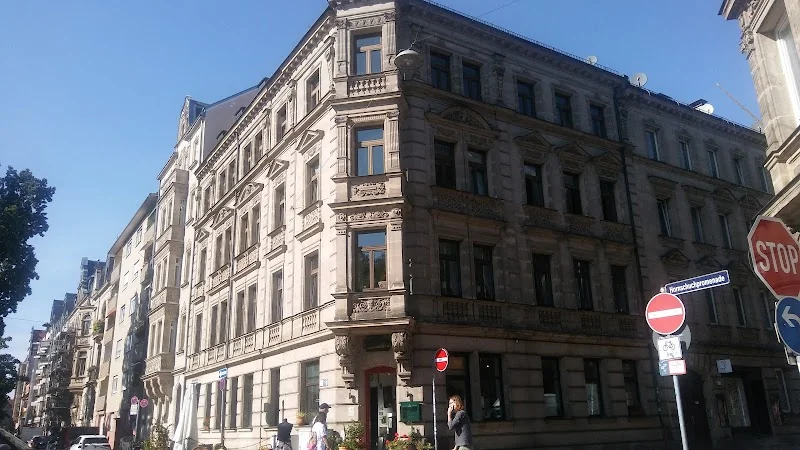
The architecture of Hornschuchpromenade thrives on its diversity within a common scale. According to the monument list of the Bavarian State Office for Monument Preservation, since 1883, mostly four-story stately apartment buildings with elaborately designed sandstone facades have been built along both streets. The range of forms extends from Neo-Renaissance to Neo-Baroque and German Renaissance to a distinctive Fürth version of Art Nouveau. For the effect of the promenade, it is crucial that the facades do not stand alone but connect into building groups and sight axes. It is precisely this spatial sequence that creates the elegance that many searchers associate with terms like Hornschuchpromenade maps, Hornschuchpromenade Fürth, and Hornschuchpromenade apartment: It is not just an address, but a cohesive, high-quality urban artwork. The buildings are close enough to appear urban and yet so representative that the street reads like a grand bourgeois stage. ([geodaten.bayern.de](https://www.geodaten.bayern.de/denkmal_static_data/externe_denkmalliste/pdf/denkmalliste_merge_563000.pdf))
The city of Fürth also highlights the special architecture and speaks of a listed facility in historicism and Art Nouveau. For visitors, this is particularly exciting because the transitions between the stylistic worlds can be well traced along Hornschuchpromenade. Historicist forms bring order, structure, and decorative weight, while Art Nouveau appears with softer lines, ornamental details, and a stronger individualization of the facades. This development is not only visible in individual houses in Fürth but as a complete image of an entire promenade. Therefore, walking along the street not only offers beautiful houses but also an architectural narrative about prosperity, taste, and urban development. The fact that the facility has remained so cohesively preserved is exceptional for Southern Germany and makes Hornschuchpromenade a place that has significance in public perception far beyond Fürth. ([fuerth.de](https://www.fuerth.de/kultur-freizeit/freizeit/fuerth-im-freien/))
Also interesting is the urban framework. The State Office describes the facility as slightly converging, with a park in the middle and a narrow west facade created by the constriction at Luisenstraße. This spatial movement gives the promenade its boulevard-like character. At certain points, new buildings and later interventions show that even a monument ensemble is not completely rigid. Nevertheless, the basic idea of the representative residential street remains discernible to this day. Hornschuchpromenade is thus a good example of how monument protection does not just preserve individual houses but protects entire urban contexts. Those searching for Hornschuchpromenade 11, Hornschuchpromenade 16, Hornschuchpromenade 25, Hornschuchpromenade 31, or Hornschuchpromenade 43 are actually looking in a historically grown residential quarter with high architectural density and a distinctive recognition value. ([geodaten.bayern.de](https://www.geodaten.bayern.de/denkmal_static_data/externe_denkmalliste/pdf/denkmalliste_merge_563000.pdf))
Parking at Hornschuchpromenade, Access, and Resident Parking
For many users, the practical question of parking is crucial, not the history. Here, too, the city of Fürth provides current and concrete information. As part of the redesign, the stationary traffic will be reorganized. The city describes that parking spaces will in the future only be arranged on the side facing the buildings to consider tree and fire brigade concerns. At the same time, short-term parking in Hornschuchpromenade remains possible. For residents, resident parking will be ordered throughout the entire investigation area. This means: Those specifically looking to park at Hornschuchpromenade Fürth will not find a classic parking garage street, but an organized solution with resident parking and continued short-term offerings. ([fuerth.de](https://www.fuerth.de/bauen-mobilitaet/aktuelle-bauprojekte/strassen-wege-bruecken-plaetze/hornschuchpromenade/))
Very important for practice are the alternative options. The city refers to the parking garage on Jakobinenstraße, which is located not far from Hornschuchpromenade and is particularly intended for long-term parking for residents. Additionally, the city mentions the Hornschuchcenter parking garage, also with long-term parking spaces. Both locations are said to be about 300 meters walking distance away. Thus, despite its historical structure, Hornschuchpromenade is not cut off from parking options but is connected via several nearby options. For visitors arriving by car, this is good news, as the location in the densely built city center usually requires a bit more planning than a typical suburban street. Therefore, anyone searching for Hornschuchpromenade with a navigation system, maps, or city map should also consider the nearby parking garage. ([fuerth.de](https://www.fuerth.de/bauen-mobilitaet/aktuelle-bauprojekte/strassen-wege-bruecken-plaetze/hornschuchpromenade/))
The traffic management is also noticeably changing. The one-way street system counterclockwise will remain according to the current documents, while the permitted speed will be reduced to 20 km/h. Crossing points will be designed with raised crossings to emphasize pedestrian traffic and slow down motorized traffic. These measures show that Hornschuchpromenade is not intended as a fast thoroughfare but as a high-quality, spatially sensitive area. For people coming on foot, this improves the quality of stay; for drivers, it means they must navigate more slowly, attentively, and with a bit more consideration. This is precisely the character of the promenade: not as much throughput as possible, but a calm, representative urban space. ([fuerth.de](https://www.fuerth.de/bauen-mobilitaet/aktuelle-bauprojekte/strassen-wege-bruecken-plaetze/hornschuchpromenade/))
The overall mobility situation in Fürth also helps with classification. The city centralizes parking information on its pages for cars, motorcycles, and parking and also refers to available parking spaces in the city area as well as parking garage occupancy. Therefore, anyone planning a visit should not only orient themselves at Hornschuchpromenade itself but also at the surrounding inner-city parking offers. This is especially sensible when construction work is simultaneously underway or when one wants to target a specific house number like Hornschuchpromenade 16a, 16, or 25. Access usually occurs via the inner-city road network; what matters next is the choice between short stops, resident parking, and nearby parking garages. ([fuerth.de](https://www.fuerth.de/bauen-mobilitaet/mobilitaet/kfz-und-parken/?utm_source=openai))
Redesign, Green Spaces, and Traffic Calming in Fürth
Currently, Hornschuchpromenade is undergoing an extensive redesign process. The city of Fürth describes the project as a redesign of the entire public space in the area of Hornschuchpromenade and Willy-Brandt-Anlage. The goal is to reorganize sidewalks, green spaces, pedestrian and bicycle paths, and the street space, improving the quality of stay. According to the city, the measure is planned to take several years; current documents mention construction phases extending from 2025 to at least 2027 and beyond. For the search Hornschuchpromenade reconstruction, it is therefore important to know: This is not a single short-term construction site but a long-term urban development project. ([fuerth.de](https://www.fuerth.de/bauen-mobilitaet/aktuelle-bauprojekte/strassen-wege-bruecken-plaetze/hornschuchpromenade/?utm_source=openai))
A central goal is more greenery. The city refers to its green concept and states that about 2500 square meters of additional greenery are to be created at Hornschuchpromenade. This is a clear statement about the future quality of the space: less sealing, more vegetation, better infiltration, and long-term secured old trees. Especially in a densely built city center location, this is a strong signal. Hornschuchpromenade will thus not only receive a technical renovation but also a design enhancement. For residents, this means more shade, more value for staying, and a friendlier living environment. For visitors, it means that the historical character is not frozen in a museum tone but is complemented by contemporary open space planning. ([fuerth.de](https://www.fuerth.de/service-fuerther-rathaus/aktuelles/detail/die-umgestaltung-der-hornschuchpromenade-kann-beginnen/))
Traffic calming is also part of the redesign. Raised crossings are planned at crossing points to strengthen pedestrians and slow down motorized individual traffic. The roadways and sidewalks will be newly divided according to the planning documents; the sidewalks are to be widened, the roadways made clearer, and the crossings designed to be more barrier-free or safer. From the city's perspective, this is necessary to meet the special requirements of the district: historical environment, high pedestrian share, monument protection, tree and rescue routes, and the wishes of residents for organized parking space. The redesign is thus a classic case of urban development in the existing context, where several goals are to be achieved simultaneously. ([fuerth.de](https://www.fuerth.de/bauen-mobilitaet/aktuelle-bauprojekte/strassen-wege-bruecken-plaetze/hornschuchpromenade/))
The current construction site and project communication from the city also shows that the work is not only planned but already being implemented. In spring 2026, the city names specific construction phases and reports that the expansion of Königswarterstraße and Rudolf-Breitscheid-Straße has been running in sections since October 2025. This is relevant for Hornschuchpromenade because the entire space around the grand streets is functionally interconnected. Therefore, anyone who is out and about there today encounters a historical promenade in transition: a street that does not lose its character but receives new standards for greenery, safety, and use. For those searching for Hornschuchpromenade Fürth reconstruction, this tension between preservation and renewal is the core of the current situation. ([fuerth.de](https://www.fuerth.de/bauen-mobilitaet/aktuelle-bauprojekte/strassen-wege-bruecken-plaetze/hornschuchpromenade/?utm_source=openai))
Hornschuchpromenade 16a, Apartment, Maps, and Orientation
Many inquiries about Hornschuchpromenade are very specific and address-related. This is understandable, as the street is not only a monument ensemble but also a residential and usage space with individual house numbers. Those searching for Hornschuchpromenade 16a Fürth find an official municipal address: Here is the childcare support center, where the presentation of childcare facilities takes place. This shows that the street consists not only of representative facades but also of functioning everyday places with public use. For users looking for an apartment, a practice, or a specific house number, Hornschuchpromenade is thus a normal but particularly high-quality urban residential environment with a clear address logic. ([fuerth.de](https://www.fuerth.de/bildung-soziales/bildungseinrichtungen/kindertageseinrichtungen/kindertagespflege/?utm_source=openai))
The question of Hornschuchpromenade maps can best be answered with the thought that the street is part of a larger historical context. The promenade belongs to the ensemble Hornschuchpromenade/Königswarterstraße, which consists of the buildings of both streets and the small park in the middle. Therefore, it is not always sufficient for orientation to enter just a single house number; it is also sensible to refer to the neighboring streets, especially Königswarterstraße, Kirchenstraße, Jakobinenstraße, and Luisenstraße. Especially due to the current renovations, the accessibility of individual sections may change temporarily. For reliable orientation, a city map, geoportal, and the city of Fürth's information are the best choice. This way, the sought address can be placed in the historical and traffic context without relying solely on a rigid map view. ([geodaten.bayern.de](https://www.geodaten.bayern.de/denkmal_static_data/externe_denkmalliste/pdf/denkmalliste_merge_563000.pdf))
Those searching for Hornschuchpromenade apartment, Hornschuchpromenade 11, Hornschuchpromenade 18, Hornschuchpromenade 25, Hornschuchpromenade 31, or Hornschuchpromenade 43 encounter the typical structure of a historical residential street: individual house numbers stand for specific buildings, but the actual quality lies in the ensemble. The Bavarian State Office for Monument Preservation emphasizes the almost seamless cohesion and the noble residential character of the quarter. This also makes it clear why these house numbers appear so frequently in search behavior: People are not just looking for a building but for an entire location with identity-forming effect. Hornschuchpromenade connects private living with public history. This is precisely what creates its special charm for residents, interested parties, and visitors. ([geodaten.bayern.de](https://www.geodaten.bayern.de/denkmal_static_data/externe_denkmalliste/pdf/denkmalliste_merge_563000.pdf))
For everyday use, this means: Hornschuchpromenade is best understood as a historical residential area with high urban quality. Those living there or looking for an apartment benefit from a central location, a representative environment, and very good cultural embedding in the Fürth cityscape. Those with just an appointment should pay attention to the current traffic management and plan for parking garages or resident parking if necessary. Those interested in architecture should explore the street on foot, as this is when the facade divisions, sandstone structures, and the transition between street and green work best. Hornschuchpromenade is thus not a place to be quickly checked off. It is one of those Fürth urban spaces where map, address, history, and present intertwine. ([fuerth.de](https://www.fuerth.de/kultur-freizeit/freizeit/fuerth-im-freien/))
Frequently Asked Questions about Hornschuchpromenade in Fürth
The most searched topics can be condensed into a few core questions: history, parking, reconstruction, residential area, and orientation. That is exactly why Hornschuchpromenade is so interesting for SEO. It serves search intentions like Hornschuchpromenade Fürth, Hornschuchpromenade parking, Hornschuchpromenade maps, and Hornschuchpromenade reconstruction at the same time. For editorial classification, this means: The most important story is not a single event or a single building, but the interplay of historical grand street, well-kept residential quarter, and ongoing urban development. Those visiting the promenade experience a quarter that is not only preserved but actively developed. This is unusually modern for a historical street. ([geodaten.bayern.de](https://www.geodaten.bayern.de/denkmal_static_data/externe_denkmalliste/pdf/denkmalliste_merge_563000.pdf))
Hornschuchpromenade is thus a rare case of urban continuity. The street emerged along one of Germany's oldest railway lines, was established as a promenade, later built with grand bourgeois apartment buildings, and remains a prestigious residential area to this day. At the same time, the city responds with contemporary measures to today's demands: more greenery, less sealing, organized parking spaces, and safe pedestrian crossings. This is precisely where its relevance lies. Therefore, anyone looking for a short answer can say: Hornschuchpromenade is Fürth's historical grand street in transition, with monument protection, residential quality, and a new urban future. ([geodaten.bayern.de](https://www.geodaten.bayern.de/denkmal_static_data/externe_denkmalliste/pdf/denkmalliste_merge_563000.pdf))
Sources:
Show moreShow less
Hornschuchpromenade | Parking & Reconstruction
The Hornschuchpromenade is much more than just a street with a beautiful name in Fürth. It is an urban piece of city history, a prominent part of the Fürth grand promenade, and at the same time a residential area where the development of the cloverleaf city can be particularly impressively read. Those searching for Hornschuchpromenade Fürth usually mean not just a single address, but a whole ensemble of buildings from the founding era, Art Nouveau, green spaces, historical facades, and current urban development. This exact mixture makes the promenade so searchable in inquiries and so interesting for visitors, residents, and anyone interested in architecture, monument protection, access, or parking in Fürth. The official classification as a listed ensemble and the current redesign with more greenery, eased crossings, and new parking regulations show that history is not only preserved here but also translated into the present. ([geodaten.bayern.de](https://www.geodaten.bayern.de/denkmal_static_data/externe_denkmalliste/pdf/denkmalliste_merge_563000.pdf))
History of Hornschuchpromenade and its Monument Ensemble
The historical depth of Hornschuchpromenade does not begin with the magnificent apartment buildings of the late 19th century, but with the urban development along the former Ludwigsbahn. According to the Bavarian State Office for Monument Preservation, the area on the north side of the Ludwigsbahn, opened in 1835, was already established as a narrow urban green space, i.e., as a promenade, in 1838. The then upper wine street was named Promenade in 1890 and has been called Hornschuchpromenade since 1912, which commemorates a benefactor of the city. In parallel, the former Bahnhofstraße running to the south was called Königswarterstraße since 1875; this name also refers to a wealthy patron of Fürth. These names already show that the street did not grow randomly, but became part of a conscious bourgeois representation landscape. The ensemble consists of the buildings of both streets, the adjacent side streets, and the small park in the middle. The interplay of street, green, and architecture created a cohesive urban image that is described in the official monument list as exceptionally well preserved. ([geodaten.bayern.de](https://www.geodaten.bayern.de/denkmal_static_data/externe_denkmalliste/pdf/denkmalliste_merge_563000.pdf))
Particularly important for the historical classification is the fact that the development began in 1883 and was completed in the early 20th century with a distinctive Fürth version of Art Nouveau. The State Office describes Hornschuchpromenade and Königswarterstraße as a representative facility of the wealthy and influential bourgeoisie of the trading and industrial city of Fürth. Contemporaneously, the urban cohesion was even compared to Parisian boulevards. This comparison is not just a pretty image but shows how strongly the facility was perceived at that time as urban, generous, and modern. Even today, the special quality of the promenade lies in this dense unity of street, green space, and facades, which, despite individual disturbances, has almost completely remained intact in its overall effect. Therefore, Hornschuchpromenade is one of the most important answers to inquiries such as Hornschuchpromenade history, monument protection, and historical Fürth grand street. ([geodaten.bayern.de](https://www.geodaten.bayern.de/denkmal_static_data/externe_denkmalliste/pdf/denkmalliste_merge_563000.pdf))
The city of Fürth itself also emphasizes the significance of this place. In its leisure and city portrait, Hornschuchpromenade is explicitly mentioned together with Königswarterstraße as Fürth's grand promenade. It states that between 1883 and 1904, a now-listed ensemble in historicism and Art Nouveau was created. This makes it clear: The promenade is not just any street, but a central building block of the listed city of Fürth. For visitors interested in architectural history, Hornschuchpromenade is therefore almost an open-air museum of the bourgeois representation culture of the late 19th and early 20th centuries. For residents, it is also an identity-forming residential area that shapes the character of the district. ([fuerth.de](https://www.fuerth.de/kultur-freizeit/freizeit/fuerth-im-freien/))
Architecture between Historicism and Art Nouveau
The architecture of Hornschuchpromenade thrives on its diversity within a common scale. According to the monument list of the Bavarian State Office for Monument Preservation, since 1883, mostly four-story stately apartment buildings with elaborately designed sandstone facades have been built along both streets. The range of forms extends from Neo-Renaissance to Neo-Baroque and German Renaissance to a distinctive Fürth version of Art Nouveau. For the effect of the promenade, it is crucial that the facades do not stand alone but connect into building groups and sight axes. It is precisely this spatial sequence that creates the elegance that many searchers associate with terms like Hornschuchpromenade maps, Hornschuchpromenade Fürth, and Hornschuchpromenade apartment: It is not just an address, but a cohesive, high-quality urban artwork. The buildings are close enough to appear urban and yet so representative that the street reads like a grand bourgeois stage. ([geodaten.bayern.de](https://www.geodaten.bayern.de/denkmal_static_data/externe_denkmalliste/pdf/denkmalliste_merge_563000.pdf))
The city of Fürth also highlights the special architecture and speaks of a listed facility in historicism and Art Nouveau. For visitors, this is particularly exciting because the transitions between the stylistic worlds can be well traced along Hornschuchpromenade. Historicist forms bring order, structure, and decorative weight, while Art Nouveau appears with softer lines, ornamental details, and a stronger individualization of the facades. This development is not only visible in individual houses in Fürth but as a complete image of an entire promenade. Therefore, walking along the street not only offers beautiful houses but also an architectural narrative about prosperity, taste, and urban development. The fact that the facility has remained so cohesively preserved is exceptional for Southern Germany and makes Hornschuchpromenade a place that has significance in public perception far beyond Fürth. ([fuerth.de](https://www.fuerth.de/kultur-freizeit/freizeit/fuerth-im-freien/))
Also interesting is the urban framework. The State Office describes the facility as slightly converging, with a park in the middle and a narrow west facade created by the constriction at Luisenstraße. This spatial movement gives the promenade its boulevard-like character. At certain points, new buildings and later interventions show that even a monument ensemble is not completely rigid. Nevertheless, the basic idea of the representative residential street remains discernible to this day. Hornschuchpromenade is thus a good example of how monument protection does not just preserve individual houses but protects entire urban contexts. Those searching for Hornschuchpromenade 11, Hornschuchpromenade 16, Hornschuchpromenade 25, Hornschuchpromenade 31, or Hornschuchpromenade 43 are actually looking in a historically grown residential quarter with high architectural density and a distinctive recognition value. ([geodaten.bayern.de](https://www.geodaten.bayern.de/denkmal_static_data/externe_denkmalliste/pdf/denkmalliste_merge_563000.pdf))
Parking at Hornschuchpromenade, Access, and Resident Parking
For many users, the practical question of parking is crucial, not the history. Here, too, the city of Fürth provides current and concrete information. As part of the redesign, the stationary traffic will be reorganized. The city describes that parking spaces will in the future only be arranged on the side facing the buildings to consider tree and fire brigade concerns. At the same time, short-term parking in Hornschuchpromenade remains possible. For residents, resident parking will be ordered throughout the entire investigation area. This means: Those specifically looking to park at Hornschuchpromenade Fürth will not find a classic parking garage street, but an organized solution with resident parking and continued short-term offerings. ([fuerth.de](https://www.fuerth.de/bauen-mobilitaet/aktuelle-bauprojekte/strassen-wege-bruecken-plaetze/hornschuchpromenade/))
Very important for practice are the alternative options. The city refers to the parking garage on Jakobinenstraße, which is located not far from Hornschuchpromenade and is particularly intended for long-term parking for residents. Additionally, the city mentions the Hornschuchcenter parking garage, also with long-term parking spaces. Both locations are said to be about 300 meters walking distance away. Thus, despite its historical structure, Hornschuchpromenade is not cut off from parking options but is connected via several nearby options. For visitors arriving by car, this is good news, as the location in the densely built city center usually requires a bit more planning than a typical suburban street. Therefore, anyone searching for Hornschuchpromenade with a navigation system, maps, or city map should also consider the nearby parking garage. ([fuerth.de](https://www.fuerth.de/bauen-mobilitaet/aktuelle-bauprojekte/strassen-wege-bruecken-plaetze/hornschuchpromenade/))
The traffic management is also noticeably changing. The one-way street system counterclockwise will remain according to the current documents, while the permitted speed will be reduced to 20 km/h. Crossing points will be designed with raised crossings to emphasize pedestrian traffic and slow down motorized traffic. These measures show that Hornschuchpromenade is not intended as a fast thoroughfare but as a high-quality, spatially sensitive area. For people coming on foot, this improves the quality of stay; for drivers, it means they must navigate more slowly, attentively, and with a bit more consideration. This is precisely the character of the promenade: not as much throughput as possible, but a calm, representative urban space. ([fuerth.de](https://www.fuerth.de/bauen-mobilitaet/aktuelle-bauprojekte/strassen-wege-bruecken-plaetze/hornschuchpromenade/))
The overall mobility situation in Fürth also helps with classification. The city centralizes parking information on its pages for cars, motorcycles, and parking and also refers to available parking spaces in the city area as well as parking garage occupancy. Therefore, anyone planning a visit should not only orient themselves at Hornschuchpromenade itself but also at the surrounding inner-city parking offers. This is especially sensible when construction work is simultaneously underway or when one wants to target a specific house number like Hornschuchpromenade 16a, 16, or 25. Access usually occurs via the inner-city road network; what matters next is the choice between short stops, resident parking, and nearby parking garages. ([fuerth.de](https://www.fuerth.de/bauen-mobilitaet/mobilitaet/kfz-und-parken/?utm_source=openai))
Redesign, Green Spaces, and Traffic Calming in Fürth
Currently, Hornschuchpromenade is undergoing an extensive redesign process. The city of Fürth describes the project as a redesign of the entire public space in the area of Hornschuchpromenade and Willy-Brandt-Anlage. The goal is to reorganize sidewalks, green spaces, pedestrian and bicycle paths, and the street space, improving the quality of stay. According to the city, the measure is planned to take several years; current documents mention construction phases extending from 2025 to at least 2027 and beyond. For the search Hornschuchpromenade reconstruction, it is therefore important to know: This is not a single short-term construction site but a long-term urban development project. ([fuerth.de](https://www.fuerth.de/bauen-mobilitaet/aktuelle-bauprojekte/strassen-wege-bruecken-plaetze/hornschuchpromenade/?utm_source=openai))
A central goal is more greenery. The city refers to its green concept and states that about 2500 square meters of additional greenery are to be created at Hornschuchpromenade. This is a clear statement about the future quality of the space: less sealing, more vegetation, better infiltration, and long-term secured old trees. Especially in a densely built city center location, this is a strong signal. Hornschuchpromenade will thus not only receive a technical renovation but also a design enhancement. For residents, this means more shade, more value for staying, and a friendlier living environment. For visitors, it means that the historical character is not frozen in a museum tone but is complemented by contemporary open space planning. ([fuerth.de](https://www.fuerth.de/service-fuerther-rathaus/aktuelles/detail/die-umgestaltung-der-hornschuchpromenade-kann-beginnen/))
Traffic calming is also part of the redesign. Raised crossings are planned at crossing points to strengthen pedestrians and slow down motorized individual traffic. The roadways and sidewalks will be newly divided according to the planning documents; the sidewalks are to be widened, the roadways made clearer, and the crossings designed to be more barrier-free or safer. From the city's perspective, this is necessary to meet the special requirements of the district: historical environment, high pedestrian share, monument protection, tree and rescue routes, and the wishes of residents for organized parking space. The redesign is thus a classic case of urban development in the existing context, where several goals are to be achieved simultaneously. ([fuerth.de](https://www.fuerth.de/bauen-mobilitaet/aktuelle-bauprojekte/strassen-wege-bruecken-plaetze/hornschuchpromenade/))
The current construction site and project communication from the city also shows that the work is not only planned but already being implemented. In spring 2026, the city names specific construction phases and reports that the expansion of Königswarterstraße and Rudolf-Breitscheid-Straße has been running in sections since October 2025. This is relevant for Hornschuchpromenade because the entire space around the grand streets is functionally interconnected. Therefore, anyone who is out and about there today encounters a historical promenade in transition: a street that does not lose its character but receives new standards for greenery, safety, and use. For those searching for Hornschuchpromenade Fürth reconstruction, this tension between preservation and renewal is the core of the current situation. ([fuerth.de](https://www.fuerth.de/bauen-mobilitaet/aktuelle-bauprojekte/strassen-wege-bruecken-plaetze/hornschuchpromenade/?utm_source=openai))
Hornschuchpromenade 16a, Apartment, Maps, and Orientation
Many inquiries about Hornschuchpromenade are very specific and address-related. This is understandable, as the street is not only a monument ensemble but also a residential and usage space with individual house numbers. Those searching for Hornschuchpromenade 16a Fürth find an official municipal address: Here is the childcare support center, where the presentation of childcare facilities takes place. This shows that the street consists not only of representative facades but also of functioning everyday places with public use. For users looking for an apartment, a practice, or a specific house number, Hornschuchpromenade is thus a normal but particularly high-quality urban residential environment with a clear address logic. ([fuerth.de](https://www.fuerth.de/bildung-soziales/bildungseinrichtungen/kindertageseinrichtungen/kindertagespflege/?utm_source=openai))
The question of Hornschuchpromenade maps can best be answered with the thought that the street is part of a larger historical context. The promenade belongs to the ensemble Hornschuchpromenade/Königswarterstraße, which consists of the buildings of both streets and the small park in the middle. Therefore, it is not always sufficient for orientation to enter just a single house number; it is also sensible to refer to the neighboring streets, especially Königswarterstraße, Kirchenstraße, Jakobinenstraße, and Luisenstraße. Especially due to the current renovations, the accessibility of individual sections may change temporarily. For reliable orientation, a city map, geoportal, and the city of Fürth's information are the best choice. This way, the sought address can be placed in the historical and traffic context without relying solely on a rigid map view. ([geodaten.bayern.de](https://www.geodaten.bayern.de/denkmal_static_data/externe_denkmalliste/pdf/denkmalliste_merge_563000.pdf))
Those searching for Hornschuchpromenade apartment, Hornschuchpromenade 11, Hornschuchpromenade 18, Hornschuchpromenade 25, Hornschuchpromenade 31, or Hornschuchpromenade 43 encounter the typical structure of a historical residential street: individual house numbers stand for specific buildings, but the actual quality lies in the ensemble. The Bavarian State Office for Monument Preservation emphasizes the almost seamless cohesion and the noble residential character of the quarter. This also makes it clear why these house numbers appear so frequently in search behavior: People are not just looking for a building but for an entire location with identity-forming effect. Hornschuchpromenade connects private living with public history. This is precisely what creates its special charm for residents, interested parties, and visitors. ([geodaten.bayern.de](https://www.geodaten.bayern.de/denkmal_static_data/externe_denkmalliste/pdf/denkmalliste_merge_563000.pdf))
For everyday use, this means: Hornschuchpromenade is best understood as a historical residential area with high urban quality. Those living there or looking for an apartment benefit from a central location, a representative environment, and very good cultural embedding in the Fürth cityscape. Those with just an appointment should pay attention to the current traffic management and plan for parking garages or resident parking if necessary. Those interested in architecture should explore the street on foot, as this is when the facade divisions, sandstone structures, and the transition between street and green work best. Hornschuchpromenade is thus not a place to be quickly checked off. It is one of those Fürth urban spaces where map, address, history, and present intertwine. ([fuerth.de](https://www.fuerth.de/kultur-freizeit/freizeit/fuerth-im-freien/))
Frequently Asked Questions about Hornschuchpromenade in Fürth
The most searched topics can be condensed into a few core questions: history, parking, reconstruction, residential area, and orientation. That is exactly why Hornschuchpromenade is so interesting for SEO. It serves search intentions like Hornschuchpromenade Fürth, Hornschuchpromenade parking, Hornschuchpromenade maps, and Hornschuchpromenade reconstruction at the same time. For editorial classification, this means: The most important story is not a single event or a single building, but the interplay of historical grand street, well-kept residential quarter, and ongoing urban development. Those visiting the promenade experience a quarter that is not only preserved but actively developed. This is unusually modern for a historical street. ([geodaten.bayern.de](https://www.geodaten.bayern.de/denkmal_static_data/externe_denkmalliste/pdf/denkmalliste_merge_563000.pdf))
Hornschuchpromenade is thus a rare case of urban continuity. The street emerged along one of Germany's oldest railway lines, was established as a promenade, later built with grand bourgeois apartment buildings, and remains a prestigious residential area to this day. At the same time, the city responds with contemporary measures to today's demands: more greenery, less sealing, organized parking spaces, and safe pedestrian crossings. This is precisely where its relevance lies. Therefore, anyone looking for a short answer can say: Hornschuchpromenade is Fürth's historical grand street in transition, with monument protection, residential quality, and a new urban future. ([geodaten.bayern.de](https://www.geodaten.bayern.de/denkmal_static_data/externe_denkmalliste/pdf/denkmalliste_merge_563000.pdf))
Sources:
Hornschuchpromenade | Parking & Reconstruction
The Hornschuchpromenade is much more than just a street with a beautiful name in Fürth. It is an urban piece of city history, a prominent part of the Fürth grand promenade, and at the same time a residential area where the development of the cloverleaf city can be particularly impressively read. Those searching for Hornschuchpromenade Fürth usually mean not just a single address, but a whole ensemble of buildings from the founding era, Art Nouveau, green spaces, historical facades, and current urban development. This exact mixture makes the promenade so searchable in inquiries and so interesting for visitors, residents, and anyone interested in architecture, monument protection, access, or parking in Fürth. The official classification as a listed ensemble and the current redesign with more greenery, eased crossings, and new parking regulations show that history is not only preserved here but also translated into the present. ([geodaten.bayern.de](https://www.geodaten.bayern.de/denkmal_static_data/externe_denkmalliste/pdf/denkmalliste_merge_563000.pdf))
History of Hornschuchpromenade and its Monument Ensemble
The historical depth of Hornschuchpromenade does not begin with the magnificent apartment buildings of the late 19th century, but with the urban development along the former Ludwigsbahn. According to the Bavarian State Office for Monument Preservation, the area on the north side of the Ludwigsbahn, opened in 1835, was already established as a narrow urban green space, i.e., as a promenade, in 1838. The then upper wine street was named Promenade in 1890 and has been called Hornschuchpromenade since 1912, which commemorates a benefactor of the city. In parallel, the former Bahnhofstraße running to the south was called Königswarterstraße since 1875; this name also refers to a wealthy patron of Fürth. These names already show that the street did not grow randomly, but became part of a conscious bourgeois representation landscape. The ensemble consists of the buildings of both streets, the adjacent side streets, and the small park in the middle. The interplay of street, green, and architecture created a cohesive urban image that is described in the official monument list as exceptionally well preserved. ([geodaten.bayern.de](https://www.geodaten.bayern.de/denkmal_static_data/externe_denkmalliste/pdf/denkmalliste_merge_563000.pdf))
Particularly important for the historical classification is the fact that the development began in 1883 and was completed in the early 20th century with a distinctive Fürth version of Art Nouveau. The State Office describes Hornschuchpromenade and Königswarterstraße as a representative facility of the wealthy and influential bourgeoisie of the trading and industrial city of Fürth. Contemporaneously, the urban cohesion was even compared to Parisian boulevards. This comparison is not just a pretty image but shows how strongly the facility was perceived at that time as urban, generous, and modern. Even today, the special quality of the promenade lies in this dense unity of street, green space, and facades, which, despite individual disturbances, has almost completely remained intact in its overall effect. Therefore, Hornschuchpromenade is one of the most important answers to inquiries such as Hornschuchpromenade history, monument protection, and historical Fürth grand street. ([geodaten.bayern.de](https://www.geodaten.bayern.de/denkmal_static_data/externe_denkmalliste/pdf/denkmalliste_merge_563000.pdf))
The city of Fürth itself also emphasizes the significance of this place. In its leisure and city portrait, Hornschuchpromenade is explicitly mentioned together with Königswarterstraße as Fürth's grand promenade. It states that between 1883 and 1904, a now-listed ensemble in historicism and Art Nouveau was created. This makes it clear: The promenade is not just any street, but a central building block of the listed city of Fürth. For visitors interested in architectural history, Hornschuchpromenade is therefore almost an open-air museum of the bourgeois representation culture of the late 19th and early 20th centuries. For residents, it is also an identity-forming residential area that shapes the character of the district. ([fuerth.de](https://www.fuerth.de/kultur-freizeit/freizeit/fuerth-im-freien/))
Architecture between Historicism and Art Nouveau
The architecture of Hornschuchpromenade thrives on its diversity within a common scale. According to the monument list of the Bavarian State Office for Monument Preservation, since 1883, mostly four-story stately apartment buildings with elaborately designed sandstone facades have been built along both streets. The range of forms extends from Neo-Renaissance to Neo-Baroque and German Renaissance to a distinctive Fürth version of Art Nouveau. For the effect of the promenade, it is crucial that the facades do not stand alone but connect into building groups and sight axes. It is precisely this spatial sequence that creates the elegance that many searchers associate with terms like Hornschuchpromenade maps, Hornschuchpromenade Fürth, and Hornschuchpromenade apartment: It is not just an address, but a cohesive, high-quality urban artwork. The buildings are close enough to appear urban and yet so representative that the street reads like a grand bourgeois stage. ([geodaten.bayern.de](https://www.geodaten.bayern.de/denkmal_static_data/externe_denkmalliste/pdf/denkmalliste_merge_563000.pdf))
The city of Fürth also highlights the special architecture and speaks of a listed facility in historicism and Art Nouveau. For visitors, this is particularly exciting because the transitions between the stylistic worlds can be well traced along Hornschuchpromenade. Historicist forms bring order, structure, and decorative weight, while Art Nouveau appears with softer lines, ornamental details, and a stronger individualization of the facades. This development is not only visible in individual houses in Fürth but as a complete image of an entire promenade. Therefore, walking along the street not only offers beautiful houses but also an architectural narrative about prosperity, taste, and urban development. The fact that the facility has remained so cohesively preserved is exceptional for Southern Germany and makes Hornschuchpromenade a place that has significance in public perception far beyond Fürth. ([fuerth.de](https://www.fuerth.de/kultur-freizeit/freizeit/fuerth-im-freien/))
Also interesting is the urban framework. The State Office describes the facility as slightly converging, with a park in the middle and a narrow west facade created by the constriction at Luisenstraße. This spatial movement gives the promenade its boulevard-like character. At certain points, new buildings and later interventions show that even a monument ensemble is not completely rigid. Nevertheless, the basic idea of the representative residential street remains discernible to this day. Hornschuchpromenade is thus a good example of how monument protection does not just preserve individual houses but protects entire urban contexts. Those searching for Hornschuchpromenade 11, Hornschuchpromenade 16, Hornschuchpromenade 25, Hornschuchpromenade 31, or Hornschuchpromenade 43 are actually looking in a historically grown residential quarter with high architectural density and a distinctive recognition value. ([geodaten.bayern.de](https://www.geodaten.bayern.de/denkmal_static_data/externe_denkmalliste/pdf/denkmalliste_merge_563000.pdf))
Parking at Hornschuchpromenade, Access, and Resident Parking
For many users, the practical question of parking is crucial, not the history. Here, too, the city of Fürth provides current and concrete information. As part of the redesign, the stationary traffic will be reorganized. The city describes that parking spaces will in the future only be arranged on the side facing the buildings to consider tree and fire brigade concerns. At the same time, short-term parking in Hornschuchpromenade remains possible. For residents, resident parking will be ordered throughout the entire investigation area. This means: Those specifically looking to park at Hornschuchpromenade Fürth will not find a classic parking garage street, but an organized solution with resident parking and continued short-term offerings. ([fuerth.de](https://www.fuerth.de/bauen-mobilitaet/aktuelle-bauprojekte/strassen-wege-bruecken-plaetze/hornschuchpromenade/))
Very important for practice are the alternative options. The city refers to the parking garage on Jakobinenstraße, which is located not far from Hornschuchpromenade and is particularly intended for long-term parking for residents. Additionally, the city mentions the Hornschuchcenter parking garage, also with long-term parking spaces. Both locations are said to be about 300 meters walking distance away. Thus, despite its historical structure, Hornschuchpromenade is not cut off from parking options but is connected via several nearby options. For visitors arriving by car, this is good news, as the location in the densely built city center usually requires a bit more planning than a typical suburban street. Therefore, anyone searching for Hornschuchpromenade with a navigation system, maps, or city map should also consider the nearby parking garage. ([fuerth.de](https://www.fuerth.de/bauen-mobilitaet/aktuelle-bauprojekte/strassen-wege-bruecken-plaetze/hornschuchpromenade/))
The traffic management is also noticeably changing. The one-way street system counterclockwise will remain according to the current documents, while the permitted speed will be reduced to 20 km/h. Crossing points will be designed with raised crossings to emphasize pedestrian traffic and slow down motorized traffic. These measures show that Hornschuchpromenade is not intended as a fast thoroughfare but as a high-quality, spatially sensitive area. For people coming on foot, this improves the quality of stay; for drivers, it means they must navigate more slowly, attentively, and with a bit more consideration. This is precisely the character of the promenade: not as much throughput as possible, but a calm, representative urban space. ([fuerth.de](https://www.fuerth.de/bauen-mobilitaet/aktuelle-bauprojekte/strassen-wege-bruecken-plaetze/hornschuchpromenade/))
The overall mobility situation in Fürth also helps with classification. The city centralizes parking information on its pages for cars, motorcycles, and parking and also refers to available parking spaces in the city area as well as parking garage occupancy. Therefore, anyone planning a visit should not only orient themselves at Hornschuchpromenade itself but also at the surrounding inner-city parking offers. This is especially sensible when construction work is simultaneously underway or when one wants to target a specific house number like Hornschuchpromenade 16a, 16, or 25. Access usually occurs via the inner-city road network; what matters next is the choice between short stops, resident parking, and nearby parking garages. ([fuerth.de](https://www.fuerth.de/bauen-mobilitaet/mobilitaet/kfz-und-parken/?utm_source=openai))
Redesign, Green Spaces, and Traffic Calming in Fürth
Currently, Hornschuchpromenade is undergoing an extensive redesign process. The city of Fürth describes the project as a redesign of the entire public space in the area of Hornschuchpromenade and Willy-Brandt-Anlage. The goal is to reorganize sidewalks, green spaces, pedestrian and bicycle paths, and the street space, improving the quality of stay. According to the city, the measure is planned to take several years; current documents mention construction phases extending from 2025 to at least 2027 and beyond. For the search Hornschuchpromenade reconstruction, it is therefore important to know: This is not a single short-term construction site but a long-term urban development project. ([fuerth.de](https://www.fuerth.de/bauen-mobilitaet/aktuelle-bauprojekte/strassen-wege-bruecken-plaetze/hornschuchpromenade/?utm_source=openai))
A central goal is more greenery. The city refers to its green concept and states that about 2500 square meters of additional greenery are to be created at Hornschuchpromenade. This is a clear statement about the future quality of the space: less sealing, more vegetation, better infiltration, and long-term secured old trees. Especially in a densely built city center location, this is a strong signal. Hornschuchpromenade will thus not only receive a technical renovation but also a design enhancement. For residents, this means more shade, more value for staying, and a friendlier living environment. For visitors, it means that the historical character is not frozen in a museum tone but is complemented by contemporary open space planning. ([fuerth.de](https://www.fuerth.de/service-fuerther-rathaus/aktuelles/detail/die-umgestaltung-der-hornschuchpromenade-kann-beginnen/))
Traffic calming is also part of the redesign. Raised crossings are planned at crossing points to strengthen pedestrians and slow down motorized individual traffic. The roadways and sidewalks will be newly divided according to the planning documents; the sidewalks are to be widened, the roadways made clearer, and the crossings designed to be more barrier-free or safer. From the city's perspective, this is necessary to meet the special requirements of the district: historical environment, high pedestrian share, monument protection, tree and rescue routes, and the wishes of residents for organized parking space. The redesign is thus a classic case of urban development in the existing context, where several goals are to be achieved simultaneously. ([fuerth.de](https://www.fuerth.de/bauen-mobilitaet/aktuelle-bauprojekte/strassen-wege-bruecken-plaetze/hornschuchpromenade/))
The current construction site and project communication from the city also shows that the work is not only planned but already being implemented. In spring 2026, the city names specific construction phases and reports that the expansion of Königswarterstraße and Rudolf-Breitscheid-Straße has been running in sections since October 2025. This is relevant for Hornschuchpromenade because the entire space around the grand streets is functionally interconnected. Therefore, anyone who is out and about there today encounters a historical promenade in transition: a street that does not lose its character but receives new standards for greenery, safety, and use. For those searching for Hornschuchpromenade Fürth reconstruction, this tension between preservation and renewal is the core of the current situation. ([fuerth.de](https://www.fuerth.de/bauen-mobilitaet/aktuelle-bauprojekte/strassen-wege-bruecken-plaetze/hornschuchpromenade/?utm_source=openai))
Hornschuchpromenade 16a, Apartment, Maps, and Orientation
Many inquiries about Hornschuchpromenade are very specific and address-related. This is understandable, as the street is not only a monument ensemble but also a residential and usage space with individual house numbers. Those searching for Hornschuchpromenade 16a Fürth find an official municipal address: Here is the childcare support center, where the presentation of childcare facilities takes place. This shows that the street consists not only of representative facades but also of functioning everyday places with public use. For users looking for an apartment, a practice, or a specific house number, Hornschuchpromenade is thus a normal but particularly high-quality urban residential environment with a clear address logic. ([fuerth.de](https://www.fuerth.de/bildung-soziales/bildungseinrichtungen/kindertageseinrichtungen/kindertagespflege/?utm_source=openai))
The question of Hornschuchpromenade maps can best be answered with the thought that the street is part of a larger historical context. The promenade belongs to the ensemble Hornschuchpromenade/Königswarterstraße, which consists of the buildings of both streets and the small park in the middle. Therefore, it is not always sufficient for orientation to enter just a single house number; it is also sensible to refer to the neighboring streets, especially Königswarterstraße, Kirchenstraße, Jakobinenstraße, and Luisenstraße. Especially due to the current renovations, the accessibility of individual sections may change temporarily. For reliable orientation, a city map, geoportal, and the city of Fürth's information are the best choice. This way, the sought address can be placed in the historical and traffic context without relying solely on a rigid map view. ([geodaten.bayern.de](https://www.geodaten.bayern.de/denkmal_static_data/externe_denkmalliste/pdf/denkmalliste_merge_563000.pdf))
Those searching for Hornschuchpromenade apartment, Hornschuchpromenade 11, Hornschuchpromenade 18, Hornschuchpromenade 25, Hornschuchpromenade 31, or Hornschuchpromenade 43 encounter the typical structure of a historical residential street: individual house numbers stand for specific buildings, but the actual quality lies in the ensemble. The Bavarian State Office for Monument Preservation emphasizes the almost seamless cohesion and the noble residential character of the quarter. This also makes it clear why these house numbers appear so frequently in search behavior: People are not just looking for a building but for an entire location with identity-forming effect. Hornschuchpromenade connects private living with public history. This is precisely what creates its special charm for residents, interested parties, and visitors. ([geodaten.bayern.de](https://www.geodaten.bayern.de/denkmal_static_data/externe_denkmalliste/pdf/denkmalliste_merge_563000.pdf))
For everyday use, this means: Hornschuchpromenade is best understood as a historical residential area with high urban quality. Those living there or looking for an apartment benefit from a central location, a representative environment, and very good cultural embedding in the Fürth cityscape. Those with just an appointment should pay attention to the current traffic management and plan for parking garages or resident parking if necessary. Those interested in architecture should explore the street on foot, as this is when the facade divisions, sandstone structures, and the transition between street and green work best. Hornschuchpromenade is thus not a place to be quickly checked off. It is one of those Fürth urban spaces where map, address, history, and present intertwine. ([fuerth.de](https://www.fuerth.de/kultur-freizeit/freizeit/fuerth-im-freien/))
Frequently Asked Questions about Hornschuchpromenade in Fürth
The most searched topics can be condensed into a few core questions: history, parking, reconstruction, residential area, and orientation. That is exactly why Hornschuchpromenade is so interesting for SEO. It serves search intentions like Hornschuchpromenade Fürth, Hornschuchpromenade parking, Hornschuchpromenade maps, and Hornschuchpromenade reconstruction at the same time. For editorial classification, this means: The most important story is not a single event or a single building, but the interplay of historical grand street, well-kept residential quarter, and ongoing urban development. Those visiting the promenade experience a quarter that is not only preserved but actively developed. This is unusually modern for a historical street. ([geodaten.bayern.de](https://www.geodaten.bayern.de/denkmal_static_data/externe_denkmalliste/pdf/denkmalliste_merge_563000.pdf))
Hornschuchpromenade is thus a rare case of urban continuity. The street emerged along one of Germany's oldest railway lines, was established as a promenade, later built with grand bourgeois apartment buildings, and remains a prestigious residential area to this day. At the same time, the city responds with contemporary measures to today's demands: more greenery, less sealing, organized parking spaces, and safe pedestrian crossings. This is precisely where its relevance lies. Therefore, anyone looking for a short answer can say: Hornschuchpromenade is Fürth's historical grand street in transition, with monument protection, residential quality, and a new urban future. ([geodaten.bayern.de](https://www.geodaten.bayern.de/denkmal_static_data/externe_denkmalliste/pdf/denkmalliste_merge_563000.pdf))
Sources:
Upcoming Events
No events found
Frequently Asked Questions
Reviews
No reviews found