
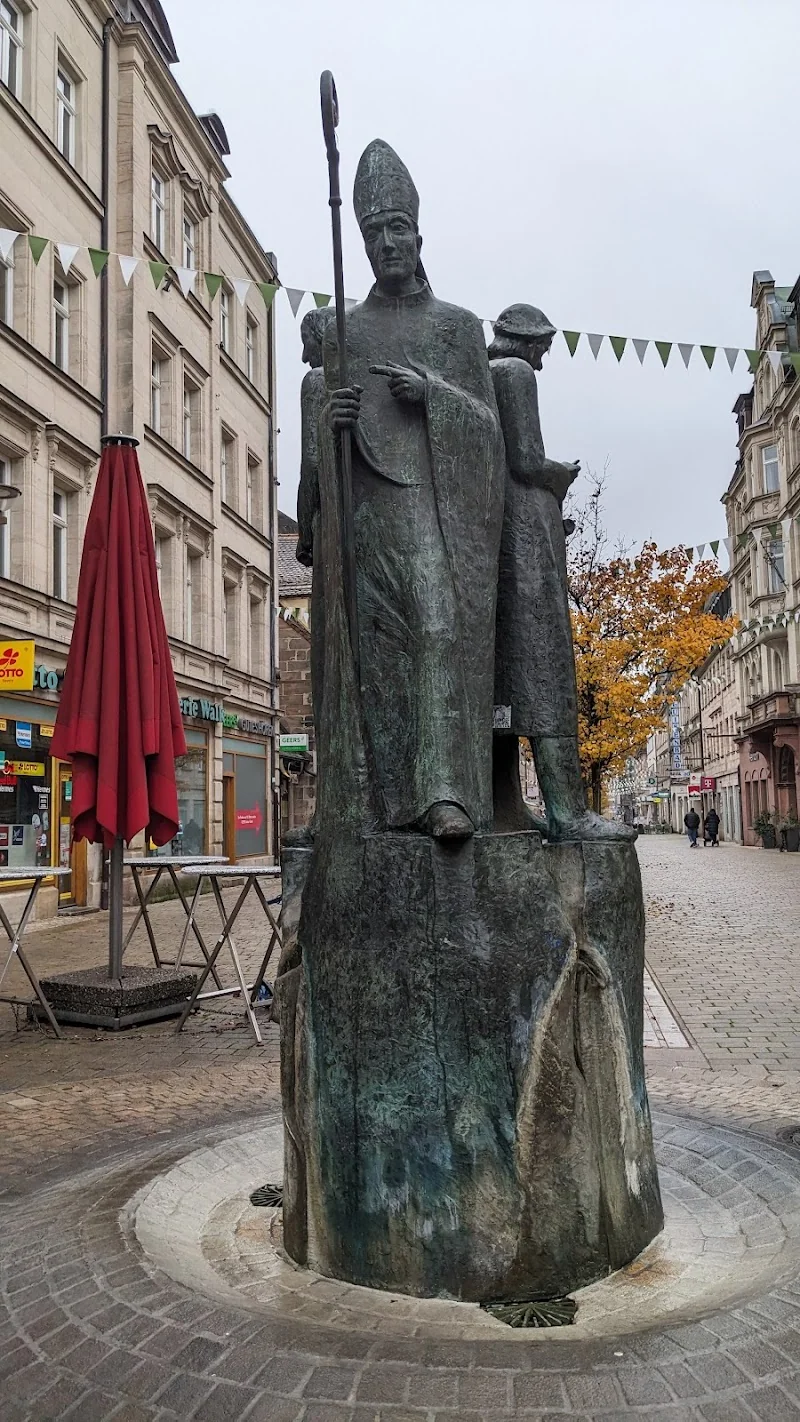
Schwabacher Str. 6-54, Fürth
Schwabacher Str. 6-54, 90762 Fürth, Germany
Pedestrian Zone Fürth | Shops & Parking
The pedestrian zone in Fürth is the urban heart of the city center and a place where everyday life, shopping, and city feeling come together in a compact space. According to the city, it is centrally located in the city center, connecting the town hall with Fürther Freiheit and the southern Friedrichstraße, and offers a wide range of dining and shopping options over approximately 670 meters. This mix is also the reason why so many inquiries arise around shops, cafés, parking, photos, and delivery traffic: Those who visit the pedestrian zone want to experience a vibrant urban space where short distances, historic facades, and modern quality of stay come together. In recent years, the area has also visibly evolved, making the zone today not only functional but also atmospherically one of the most defining places in the Fürth city center. ([fuerth.de](https://www.fuerth.de/bauen-mobilitaet/mobilitaet/zu-fuss-unterwegs/?utm_source=openai))
Shops, Cafés, and Shopping Options in the Pedestrian Zone Fürth
Those searching for the pedestrian zone in Fürth are often looking for a compact shopping and dining area that facilitates everyday life while inviting leisurely strolls. The city describes the zone itself as an area with a wide selection of dining and shopping options; it also emphasizes the role of Fürth City as a shopping location, where the attractive pedestrian zone, along with the New Center, the flair, and the medium-sized retail trade, plays an important role. This aligns very well with actual search patterns: Terms like shops, Italian restaurants, pizza, hairdresser, pharmacy, ice cream parlor, café, or optics show that visitors expect not just a single address but a diverse city center offering. The pedestrian zone particularly meets this need because it bundles various everyday routes, allowing for spontaneous purchases, errands, and breaks without long distances. ([fuerth.de](https://www.fuerth.de/bauen-mobilitaet/mobilitaet/zu-fuss-unterwegs/?utm_source=openai))
This mix is particularly valuable for the cityscape because the pedestrian zone does not appear as a closed commercial block but as a grown urban space with functional and social added value. One can shop in the morning, have a coffee at noon, window shop in the afternoon, and still use the route through the city center in the evening without constantly having to switch to other districts. This is precisely the strength of a good pedestrian zone: It naturally organizes frequency, encounters, and duration of stay. Fürth benefits from the fact that the city center consists not only of large anchor attractions but also of a dense succession of smaller uses that make the route attractive. Therefore, those looking for walkable services or spontaneous enjoyment find here a classic city center profile that has evolved over time without losing its fundamental function. ([fuerth.de](https://www.fuerth.de/wirtschaft/einkaufen-und-einzelhandel/?utm_source=openai))
Parking, Access, and Parking Garages Around the Pedestrian Zone Fürth
Regarding parking, the pedestrian zone Fürth is clearly oriented towards city center logic. The city provides current parking garage occupancy on its page for motor vehicles and parking and additionally refers to the residents' garage on Jakobinenstraße. This is particularly practical for visitors who want to plan their arrival in advance and do not want to search for available parking spaces on-site. Additionally, the city points out that there are designated disabled parking spaces in the city center for certain user groups. Mentioned are, among others, spaces at Alexanderstraße 24 and 28 opposite, as well as at Schwabacher Straße 95, corner of Fichtenstraße. This makes it clear: The city center is organized for different mobility needs, not just for the classic short-term visit by car. ([fuerth.de](https://www.fuerth.de/bauen-mobilitaet/mobilitaet/kfz-und-parken/))
Even for people without their own car, the pedestrian zone remains easily accessible, as it is centrally located, making the routes to the shopping and dining areas short. Those arriving by car ideally park in one of the city center areas, which the city transparently makes available through its digital information. Those who continue on foot reach the zone without detours and immediately experience the true character of the place: no through traffic, but a city for walking, looking, and lingering. In practice, this also means that the pedestrian zone is particularly well-suited for short city visits. The car is parked outside or at the edge, and the rest is done on foot. This interplay of parking spaces, short distances, and a compact city center makes the pedestrian zone uncomplicated for visitors and simultaneously attractive for retail. The city also points to car-sharing offers, which further complements the mobility mix. ([fuerth.de](https://www.fuerth.de/bauen-mobilitaet/mobilitaet/kfz-und-parken/))
Another advantage is the clear orientation in the public space. Instead of confusing peripheral areas, Fürth has a city center that is coordinated with the interplay of parking, footpaths, and surrounding streets. Those who inform themselves before the trip can better assess parking spaces and alternative mobility forms, which saves time and nerves, especially during peak times. This structure is important for the pedestrian zone itself because it slows down the stay from the beginning: One does not arrive by car right in the middle but consciously approaches the area and then experiences it as a real pedestrian space. This also corresponds to the city's guiding principle, which aims to gradually improve the attractiveness and accessibility of its paths. Thus, parking does not become an opponent of the pedestrian zone but its functional forecourt. ([fuerth.de](https://www.fuerth.de/bauen-mobilitaet/mobilitaet/kfz-und-parken/))
Delivery Traffic, Cycling, and Barrier-Free Paths in the Pedestrian Zone Fürth
The pedestrian zone Fürth is not a rigid restricted area but a finely regulated city center area. The city points out that cycling in the pedestrian zone is only allowed at certain times except for a few sections, and this is indicated on-site. At the same time, city planning documents show that in certain partial areas, the designation restriction for delivery traffic is free. This is an important note for visitors, residents, and businesses, as it allows for the supply of shops without sacrificing the pedestrian quality of the area. The pedestrian zone thus does not work against urban use but with it. This balance makes modern city centers efficient: They must remain accessible, but they must not revert to being mere transit areas. ([fuerth.de](https://www.fuerth.de/bauen-mobilitaet/mobilitaet/zu-fuss-unterwegs/?utm_source=openai))
For barrier-free paths, the city center also offers concrete points of reference. The city mentions designated disabled parking spaces, especially in the city center, and refers to barrier-free toilet locations, such as at Alexanderstraße 9. Such details are crucial for many visitors as they show that a pedestrian zone is not only intended for fit pedestrians but also for people with disabilities, families with strollers, or older visitors. In practice, this means: short distances, clear signage, and a space that is not only measured by quick passage but by comfortable staying. The combination of walkable density and targeted assistance makes the pedestrian zone Fürth a place where accessibility is understood not as an addition but as part of the quality of the city center. ([fuerth.de](https://www.fuerth.de/bauen-mobilitaet/mobilitaet/kfz-und-parken/behindertenparkplaetze/?utm_source=openai))
The bicycle is also not a foreign object here but a considered mode of transport. The city consciously regulates its use temporally and sectionally so that pedestrians retain priority, while short trips or deliveries remain possible in certain configurations. This type of regulation fits a lively city center where different needs coexist. Those visiting the area quickly notice: The pedestrian zone is not an isolated promenade but a functional part of the city where mobility, trade, and safety are brought together. The fact that the city is also working on the safety, accessibility, and attractiveness of the paths underscores this approach. This creates an urban space that prioritizes consideration without losing practical utility. ([fuerth.de](https://www.fuerth.de/bauen-mobilitaet/mobilitaet/zu-fuss-unterwegs/?utm_source=openai))
Photos, Fountain Field, and New Urban Design in the Pedestrian Zone Fürth
Those photographing the pedestrian zone Fürth or searching for images quickly encounter the mix of historic facades and newer design elements. Particularly striking is the fountain field at the corner of Schwabacher Straße and Blumenstraße. The city describes a rectangular area of four by ten meters, where two rows of ten fountains each, at varying heights up to a maximum of 100 centimeters, bubble. Such details make the pedestrian zone visually strong because they bring movement, water, and light into an otherwise clearly structured urban space. For photos, this means: not only classic street views but motifs with dynamics, perspective, and a clear local recognition value. ([fuerth.de](https://www.fuerth.de/bauen-mobilitaet/aktuelle-bauprojekte/parks-gruen-und-spielflaechen/fontaenenfeld-in-der-fussgaengerzone/?utm_source=openai))
The transformation in the adjacent street spaces becomes even clearer. According to the city, Alexanderstraße has been extensively rebuilt on the section between Schwabacher Straße and Hallstraße and now forms a design gap closure between already renovated street sections of the pedestrian zone. This involved the addition of granite cobblestones, more greenery, three column elms, bicycle parking facilities, and two parking spaces for cargo bikes. Moststraße was also mentioned as the next building block in 2025: With the redesign, the gap closure of the new, significantly expanded pedestrian zone between Hall- and Schwabacher Straße will be created. Planned or implemented were granite paving across the entire width of the street, the omission of sidewalks and curbs, a central channel, more atmospheric facade lighting, additional parking options, and mobile greenery. This is a clear enhancement of the public space. ([fuerth.de](https://www.fuerth.de/bauen-mobilitaet/aktuelle-bauprojekte/strassen-wege-bruecken-plaetze/alexanderstrasse/?utm_source=openai))
For visitors, this has several consequences. First, the pedestrian zone appears more modern and quieter because the traffic areas are clearly tailored to pedestrian traffic. Second, more places to stay are created that serve not only for passing through but for lingering. Third, the city center becomes more photographically attractive as the character of the old town, well-maintained paving, water features, and new green structures combine to create a lively backdrop. The city itself also uses this quality communicatively, for example, with anniversaries, photo points, and city center actions that make the place visible as a space of identification. So, those looking for photos, impressions, or a good motif for social media find here a mix of classic Schwabacher Straße and modern city center design. ([fuerth.de](https://www.fuerth.de/service-fuerther-rathaus/aktuelles/detail/immer-was-los-unter-dem-rathausturm/?utm_source=openai))
50 Years of Pedestrian Zone Fürth: History, Change, and Significance
The history of the pedestrian zone Fürth begins with a bold urban planning step. On October 3, 1975, the first section of Schwabacher Straße between Max- and Mathildenstraße was opened exclusively for pedestrians. The city remembers this as a small revolution and emphasizes that the Fürth pedestrian zone was among the first in Bavaria. This is important for context, as it shows how early Fürth opted for a city center with less car traffic and more quality of stay. Today, this step seems obvious, but at the time it was a clear signal for a new approach to public space. ([fuerth.de](https://www.fuerth.de/kultur-freizeit/veranstaltungen-termine/veranstaltungstipps/fuerth-feiert-50-jahre-fussgaengerzone/?utm_source=openai))
From this first section, a significantly larger city center area has developed over the decades. The city mentions in its retrospectives further expansions and renovations: traffic-calmed parts on Blumen- and Mathildenstraße, later sections on Rudolf-Breitscheid- and Hallstraße, then the area in front of the Ludwig-Erhard-Center at the town hall, and finally the adjacent sections of Alexander- and Moststraße. The pedestrian zone is thus not a static space but a city project that continually adapts to new requirements. This developmental capability explains why the place remains relevant today: It connects retail, urban identity, and modern urban planning in a cohesive center. ([fuerth.de](https://www.fuerth.de/kultur-freizeit/veranstaltungen-termine/veranstaltungstipps/fuerth-feiert-50-jahre-fussgaengerzone/?utm_source=openai))
In 2025, Fürth finally celebrated 50 years of the pedestrian zone. The city linked the anniversary with festivities, actions, and a conscious highlighting of the city center as a place of identification. For visitors, this is more than just a historical date, as it shows how strongly the pedestrian zone is woven into the city's self-image. So, those walking through Schwabacher Straße today are moving through a space that has been planned, expanded, redesigned, and celebrated over decades. This is precisely what creates the special mix of tradition and present that makes Fürth's pedestrian zone so distinctive. It is a shopping street, urban space, and symbol of the development of the city center at the same time. ([fuerth.de](https://www.fuerth.de/service-fuerther-rathaus/aktuelles/detail/ein-jahr-voller-jubilaeen/?utm_source=openai))
Why the Pedestrian Zone Fürth Works So Well in Everyday Life
The strength of the pedestrian zone Fürth lies not only in its historical value or individual measures but in its practicality for everyday life. The city describes the area as a central part of the city center that connects short distances, a wide selection of dining and shopping options, and different forms of mobility. This is precisely the decisive point for many visitors: One can use the zone as a destination for targeted shopping, but also for a quick coffee, a spontaneous appointment, or a city stroll without a fixed plan. Because the area is centrally located, arrival and orientation are straightforward, and because the public space visibly evolves, the stay feels significantly more pleasant than in a purely transit street. ([fuerth.de](https://www.fuerth.de/bauen-mobilitaet/mobilitaet/zu-fuss-unterwegs/?utm_source=openai))
Additionally, the pedestrian zone repeatedly becomes a venue for city actions. The city uses open Sundays, city center actions, and anniversaries to strengthen the quality of stay and the perception of the place. Such events show that the pedestrian zone works not only on weekdays but also serves as a stage for encounters and trade during special occasions. For visitors, this means: The zone thrives on both regularity and events. Those who want to feel the current atmosphere should pay attention to actions, opening hours, and possible construction sites or detours, as the image in an active city center changes slightly each time. This mix of reliable structure and urban movement makes the pedestrian zone Fürth a place that one does not just see once but experiences anew time and again. ([fuerth.de](https://www.fuerth.de/kultur-freizeit/veranstaltungen-termine/veranstaltungskalender/veranstaltungsdetails/verkaufsoffener-sonntag-1300-15-03-2026-407006/?utm_source=openai))
In the end, a clear impression remains: The pedestrian zone Fürth is not just a section of Schwabacher Straße but a grown city center area with history, everyday utility, and future orientation. Those looking for shops, parking, delivery traffic, photos, or the best routes through the city will find many answers in one place. And that is precisely why the pedestrian zone remains so important for the city: It makes Fürth a city center that one wants to experience on foot because it is built, maintained, and continuously developed for that purpose. ([fuerth.de](https://www.fuerth.de/bauen-mobilitaet/mobilitaet/zu-fuss-unterwegs/?utm_source=openai))
Sources:
- City of Fürth - Walking Around
- City of Fürth - Fürth Celebrates 50 Years of Pedestrian Zone
- City of Fürth - Redesign of Moststraße Begins
- City of Fürth - Expansion of Alexanderstraße
- City of Fürth - Shopping and Retail
- City of Fürth - Fountain Field in the Pedestrian Zone
- City of Fürth - Motor Vehicles and Parking
- infra Fürth - Parking
Mehr anzeigenWeniger anzeigen
Pedestrian Zone Fürth | Shops & Parking
The pedestrian zone in Fürth is the urban heart of the city center and a place where everyday life, shopping, and city feeling come together in a compact space. According to the city, it is centrally located in the city center, connecting the town hall with Fürther Freiheit and the southern Friedrichstraße, and offers a wide range of dining and shopping options over approximately 670 meters. This mix is also the reason why so many inquiries arise around shops, cafés, parking, photos, and delivery traffic: Those who visit the pedestrian zone want to experience a vibrant urban space where short distances, historic facades, and modern quality of stay come together. In recent years, the area has also visibly evolved, making the zone today not only functional but also atmospherically one of the most defining places in the Fürth city center. ([fuerth.de](https://www.fuerth.de/bauen-mobilitaet/mobilitaet/zu-fuss-unterwegs/?utm_source=openai))
Shops, Cafés, and Shopping Options in the Pedestrian Zone Fürth
Those searching for the pedestrian zone in Fürth are often looking for a compact shopping and dining area that facilitates everyday life while inviting leisurely strolls. The city describes the zone itself as an area with a wide selection of dining and shopping options; it also emphasizes the role of Fürth City as a shopping location, where the attractive pedestrian zone, along with the New Center, the flair, and the medium-sized retail trade, plays an important role. This aligns very well with actual search patterns: Terms like shops, Italian restaurants, pizza, hairdresser, pharmacy, ice cream parlor, café, or optics show that visitors expect not just a single address but a diverse city center offering. The pedestrian zone particularly meets this need because it bundles various everyday routes, allowing for spontaneous purchases, errands, and breaks without long distances. ([fuerth.de](https://www.fuerth.de/bauen-mobilitaet/mobilitaet/zu-fuss-unterwegs/?utm_source=openai))
This mix is particularly valuable for the cityscape because the pedestrian zone does not appear as a closed commercial block but as a grown urban space with functional and social added value. One can shop in the morning, have a coffee at noon, window shop in the afternoon, and still use the route through the city center in the evening without constantly having to switch to other districts. This is precisely the strength of a good pedestrian zone: It naturally organizes frequency, encounters, and duration of stay. Fürth benefits from the fact that the city center consists not only of large anchor attractions but also of a dense succession of smaller uses that make the route attractive. Therefore, those looking for walkable services or spontaneous enjoyment find here a classic city center profile that has evolved over time without losing its fundamental function. ([fuerth.de](https://www.fuerth.de/wirtschaft/einkaufen-und-einzelhandel/?utm_source=openai))
Parking, Access, and Parking Garages Around the Pedestrian Zone Fürth
Regarding parking, the pedestrian zone Fürth is clearly oriented towards city center logic. The city provides current parking garage occupancy on its page for motor vehicles and parking and additionally refers to the residents' garage on Jakobinenstraße. This is particularly practical for visitors who want to plan their arrival in advance and do not want to search for available parking spaces on-site. Additionally, the city points out that there are designated disabled parking spaces in the city center for certain user groups. Mentioned are, among others, spaces at Alexanderstraße 24 and 28 opposite, as well as at Schwabacher Straße 95, corner of Fichtenstraße. This makes it clear: The city center is organized for different mobility needs, not just for the classic short-term visit by car. ([fuerth.de](https://www.fuerth.de/bauen-mobilitaet/mobilitaet/kfz-und-parken/))
Even for people without their own car, the pedestrian zone remains easily accessible, as it is centrally located, making the routes to the shopping and dining areas short. Those arriving by car ideally park in one of the city center areas, which the city transparently makes available through its digital information. Those who continue on foot reach the zone without detours and immediately experience the true character of the place: no through traffic, but a city for walking, looking, and lingering. In practice, this also means that the pedestrian zone is particularly well-suited for short city visits. The car is parked outside or at the edge, and the rest is done on foot. This interplay of parking spaces, short distances, and a compact city center makes the pedestrian zone uncomplicated for visitors and simultaneously attractive for retail. The city also points to car-sharing offers, which further complements the mobility mix. ([fuerth.de](https://www.fuerth.de/bauen-mobilitaet/mobilitaet/kfz-und-parken/))
Another advantage is the clear orientation in the public space. Instead of confusing peripheral areas, Fürth has a city center that is coordinated with the interplay of parking, footpaths, and surrounding streets. Those who inform themselves before the trip can better assess parking spaces and alternative mobility forms, which saves time and nerves, especially during peak times. This structure is important for the pedestrian zone itself because it slows down the stay from the beginning: One does not arrive by car right in the middle but consciously approaches the area and then experiences it as a real pedestrian space. This also corresponds to the city's guiding principle, which aims to gradually improve the attractiveness and accessibility of its paths. Thus, parking does not become an opponent of the pedestrian zone but its functional forecourt. ([fuerth.de](https://www.fuerth.de/bauen-mobilitaet/mobilitaet/kfz-und-parken/))
Delivery Traffic, Cycling, and Barrier-Free Paths in the Pedestrian Zone Fürth
The pedestrian zone Fürth is not a rigid restricted area but a finely regulated city center area. The city points out that cycling in the pedestrian zone is only allowed at certain times except for a few sections, and this is indicated on-site. At the same time, city planning documents show that in certain partial areas, the designation restriction for delivery traffic is free. This is an important note for visitors, residents, and businesses, as it allows for the supply of shops without sacrificing the pedestrian quality of the area. The pedestrian zone thus does not work against urban use but with it. This balance makes modern city centers efficient: They must remain accessible, but they must not revert to being mere transit areas. ([fuerth.de](https://www.fuerth.de/bauen-mobilitaet/mobilitaet/zu-fuss-unterwegs/?utm_source=openai))
For barrier-free paths, the city center also offers concrete points of reference. The city mentions designated disabled parking spaces, especially in the city center, and refers to barrier-free toilet locations, such as at Alexanderstraße 9. Such details are crucial for many visitors as they show that a pedestrian zone is not only intended for fit pedestrians but also for people with disabilities, families with strollers, or older visitors. In practice, this means: short distances, clear signage, and a space that is not only measured by quick passage but by comfortable staying. The combination of walkable density and targeted assistance makes the pedestrian zone Fürth a place where accessibility is understood not as an addition but as part of the quality of the city center. ([fuerth.de](https://www.fuerth.de/bauen-mobilitaet/mobilitaet/kfz-und-parken/behindertenparkplaetze/?utm_source=openai))
The bicycle is also not a foreign object here but a considered mode of transport. The city consciously regulates its use temporally and sectionally so that pedestrians retain priority, while short trips or deliveries remain possible in certain configurations. This type of regulation fits a lively city center where different needs coexist. Those visiting the area quickly notice: The pedestrian zone is not an isolated promenade but a functional part of the city where mobility, trade, and safety are brought together. The fact that the city is also working on the safety, accessibility, and attractiveness of the paths underscores this approach. This creates an urban space that prioritizes consideration without losing practical utility. ([fuerth.de](https://www.fuerth.de/bauen-mobilitaet/mobilitaet/zu-fuss-unterwegs/?utm_source=openai))
Photos, Fountain Field, and New Urban Design in the Pedestrian Zone Fürth
Those photographing the pedestrian zone Fürth or searching for images quickly encounter the mix of historic facades and newer design elements. Particularly striking is the fountain field at the corner of Schwabacher Straße and Blumenstraße. The city describes a rectangular area of four by ten meters, where two rows of ten fountains each, at varying heights up to a maximum of 100 centimeters, bubble. Such details make the pedestrian zone visually strong because they bring movement, water, and light into an otherwise clearly structured urban space. For photos, this means: not only classic street views but motifs with dynamics, perspective, and a clear local recognition value. ([fuerth.de](https://www.fuerth.de/bauen-mobilitaet/aktuelle-bauprojekte/parks-gruen-und-spielflaechen/fontaenenfeld-in-der-fussgaengerzone/?utm_source=openai))
The transformation in the adjacent street spaces becomes even clearer. According to the city, Alexanderstraße has been extensively rebuilt on the section between Schwabacher Straße and Hallstraße and now forms a design gap closure between already renovated street sections of the pedestrian zone. This involved the addition of granite cobblestones, more greenery, three column elms, bicycle parking facilities, and two parking spaces for cargo bikes. Moststraße was also mentioned as the next building block in 2025: With the redesign, the gap closure of the new, significantly expanded pedestrian zone between Hall- and Schwabacher Straße will be created. Planned or implemented were granite paving across the entire width of the street, the omission of sidewalks and curbs, a central channel, more atmospheric facade lighting, additional parking options, and mobile greenery. This is a clear enhancement of the public space. ([fuerth.de](https://www.fuerth.de/bauen-mobilitaet/aktuelle-bauprojekte/strassen-wege-bruecken-plaetze/alexanderstrasse/?utm_source=openai))
For visitors, this has several consequences. First, the pedestrian zone appears more modern and quieter because the traffic areas are clearly tailored to pedestrian traffic. Second, more places to stay are created that serve not only for passing through but for lingering. Third, the city center becomes more photographically attractive as the character of the old town, well-maintained paving, water features, and new green structures combine to create a lively backdrop. The city itself also uses this quality communicatively, for example, with anniversaries, photo points, and city center actions that make the place visible as a space of identification. So, those looking for photos, impressions, or a good motif for social media find here a mix of classic Schwabacher Straße and modern city center design. ([fuerth.de](https://www.fuerth.de/service-fuerther-rathaus/aktuelles/detail/immer-was-los-unter-dem-rathausturm/?utm_source=openai))
50 Years of Pedestrian Zone Fürth: History, Change, and Significance
The history of the pedestrian zone Fürth begins with a bold urban planning step. On October 3, 1975, the first section of Schwabacher Straße between Max- and Mathildenstraße was opened exclusively for pedestrians. The city remembers this as a small revolution and emphasizes that the Fürth pedestrian zone was among the first in Bavaria. This is important for context, as it shows how early Fürth opted for a city center with less car traffic and more quality of stay. Today, this step seems obvious, but at the time it was a clear signal for a new approach to public space. ([fuerth.de](https://www.fuerth.de/kultur-freizeit/veranstaltungen-termine/veranstaltungstipps/fuerth-feiert-50-jahre-fussgaengerzone/?utm_source=openai))
From this first section, a significantly larger city center area has developed over the decades. The city mentions in its retrospectives further expansions and renovations: traffic-calmed parts on Blumen- and Mathildenstraße, later sections on Rudolf-Breitscheid- and Hallstraße, then the area in front of the Ludwig-Erhard-Center at the town hall, and finally the adjacent sections of Alexander- and Moststraße. The pedestrian zone is thus not a static space but a city project that continually adapts to new requirements. This developmental capability explains why the place remains relevant today: It connects retail, urban identity, and modern urban planning in a cohesive center. ([fuerth.de](https://www.fuerth.de/kultur-freizeit/veranstaltungen-termine/veranstaltungstipps/fuerth-feiert-50-jahre-fussgaengerzone/?utm_source=openai))
In 2025, Fürth finally celebrated 50 years of the pedestrian zone. The city linked the anniversary with festivities, actions, and a conscious highlighting of the city center as a place of identification. For visitors, this is more than just a historical date, as it shows how strongly the pedestrian zone is woven into the city's self-image. So, those walking through Schwabacher Straße today are moving through a space that has been planned, expanded, redesigned, and celebrated over decades. This is precisely what creates the special mix of tradition and present that makes Fürth's pedestrian zone so distinctive. It is a shopping street, urban space, and symbol of the development of the city center at the same time. ([fuerth.de](https://www.fuerth.de/service-fuerther-rathaus/aktuelles/detail/ein-jahr-voller-jubilaeen/?utm_source=openai))
Why the Pedestrian Zone Fürth Works So Well in Everyday Life
The strength of the pedestrian zone Fürth lies not only in its historical value or individual measures but in its practicality for everyday life. The city describes the area as a central part of the city center that connects short distances, a wide selection of dining and shopping options, and different forms of mobility. This is precisely the decisive point for many visitors: One can use the zone as a destination for targeted shopping, but also for a quick coffee, a spontaneous appointment, or a city stroll without a fixed plan. Because the area is centrally located, arrival and orientation are straightforward, and because the public space visibly evolves, the stay feels significantly more pleasant than in a purely transit street. ([fuerth.de](https://www.fuerth.de/bauen-mobilitaet/mobilitaet/zu-fuss-unterwegs/?utm_source=openai))
Additionally, the pedestrian zone repeatedly becomes a venue for city actions. The city uses open Sundays, city center actions, and anniversaries to strengthen the quality of stay and the perception of the place. Such events show that the pedestrian zone works not only on weekdays but also serves as a stage for encounters and trade during special occasions. For visitors, this means: The zone thrives on both regularity and events. Those who want to feel the current atmosphere should pay attention to actions, opening hours, and possible construction sites or detours, as the image in an active city center changes slightly each time. This mix of reliable structure and urban movement makes the pedestrian zone Fürth a place that one does not just see once but experiences anew time and again. ([fuerth.de](https://www.fuerth.de/kultur-freizeit/veranstaltungen-termine/veranstaltungskalender/veranstaltungsdetails/verkaufsoffener-sonntag-1300-15-03-2026-407006/?utm_source=openai))
In the end, a clear impression remains: The pedestrian zone Fürth is not just a section of Schwabacher Straße but a grown city center area with history, everyday utility, and future orientation. Those looking for shops, parking, delivery traffic, photos, or the best routes through the city will find many answers in one place. And that is precisely why the pedestrian zone remains so important for the city: It makes Fürth a city center that one wants to experience on foot because it is built, maintained, and continuously developed for that purpose. ([fuerth.de](https://www.fuerth.de/bauen-mobilitaet/mobilitaet/zu-fuss-unterwegs/?utm_source=openai))
Sources:
- City of Fürth - Walking Around
- City of Fürth - Fürth Celebrates 50 Years of Pedestrian Zone
- City of Fürth - Redesign of Moststraße Begins
- City of Fürth - Expansion of Alexanderstraße
- City of Fürth - Shopping and Retail
- City of Fürth - Fountain Field in the Pedestrian Zone
- City of Fürth - Motor Vehicles and Parking
- infra Fürth - Parking
Pedestrian Zone Fürth | Shops & Parking
The pedestrian zone in Fürth is the urban heart of the city center and a place where everyday life, shopping, and city feeling come together in a compact space. According to the city, it is centrally located in the city center, connecting the town hall with Fürther Freiheit and the southern Friedrichstraße, and offers a wide range of dining and shopping options over approximately 670 meters. This mix is also the reason why so many inquiries arise around shops, cafés, parking, photos, and delivery traffic: Those who visit the pedestrian zone want to experience a vibrant urban space where short distances, historic facades, and modern quality of stay come together. In recent years, the area has also visibly evolved, making the zone today not only functional but also atmospherically one of the most defining places in the Fürth city center. ([fuerth.de](https://www.fuerth.de/bauen-mobilitaet/mobilitaet/zu-fuss-unterwegs/?utm_source=openai))
Shops, Cafés, and Shopping Options in the Pedestrian Zone Fürth
Those searching for the pedestrian zone in Fürth are often looking for a compact shopping and dining area that facilitates everyday life while inviting leisurely strolls. The city describes the zone itself as an area with a wide selection of dining and shopping options; it also emphasizes the role of Fürth City as a shopping location, where the attractive pedestrian zone, along with the New Center, the flair, and the medium-sized retail trade, plays an important role. This aligns very well with actual search patterns: Terms like shops, Italian restaurants, pizza, hairdresser, pharmacy, ice cream parlor, café, or optics show that visitors expect not just a single address but a diverse city center offering. The pedestrian zone particularly meets this need because it bundles various everyday routes, allowing for spontaneous purchases, errands, and breaks without long distances. ([fuerth.de](https://www.fuerth.de/bauen-mobilitaet/mobilitaet/zu-fuss-unterwegs/?utm_source=openai))
This mix is particularly valuable for the cityscape because the pedestrian zone does not appear as a closed commercial block but as a grown urban space with functional and social added value. One can shop in the morning, have a coffee at noon, window shop in the afternoon, and still use the route through the city center in the evening without constantly having to switch to other districts. This is precisely the strength of a good pedestrian zone: It naturally organizes frequency, encounters, and duration of stay. Fürth benefits from the fact that the city center consists not only of large anchor attractions but also of a dense succession of smaller uses that make the route attractive. Therefore, those looking for walkable services or spontaneous enjoyment find here a classic city center profile that has evolved over time without losing its fundamental function. ([fuerth.de](https://www.fuerth.de/wirtschaft/einkaufen-und-einzelhandel/?utm_source=openai))
Parking, Access, and Parking Garages Around the Pedestrian Zone Fürth
Regarding parking, the pedestrian zone Fürth is clearly oriented towards city center logic. The city provides current parking garage occupancy on its page for motor vehicles and parking and additionally refers to the residents' garage on Jakobinenstraße. This is particularly practical for visitors who want to plan their arrival in advance and do not want to search for available parking spaces on-site. Additionally, the city points out that there are designated disabled parking spaces in the city center for certain user groups. Mentioned are, among others, spaces at Alexanderstraße 24 and 28 opposite, as well as at Schwabacher Straße 95, corner of Fichtenstraße. This makes it clear: The city center is organized for different mobility needs, not just for the classic short-term visit by car. ([fuerth.de](https://www.fuerth.de/bauen-mobilitaet/mobilitaet/kfz-und-parken/))
Even for people without their own car, the pedestrian zone remains easily accessible, as it is centrally located, making the routes to the shopping and dining areas short. Those arriving by car ideally park in one of the city center areas, which the city transparently makes available through its digital information. Those who continue on foot reach the zone without detours and immediately experience the true character of the place: no through traffic, but a city for walking, looking, and lingering. In practice, this also means that the pedestrian zone is particularly well-suited for short city visits. The car is parked outside or at the edge, and the rest is done on foot. This interplay of parking spaces, short distances, and a compact city center makes the pedestrian zone uncomplicated for visitors and simultaneously attractive for retail. The city also points to car-sharing offers, which further complements the mobility mix. ([fuerth.de](https://www.fuerth.de/bauen-mobilitaet/mobilitaet/kfz-und-parken/))
Another advantage is the clear orientation in the public space. Instead of confusing peripheral areas, Fürth has a city center that is coordinated with the interplay of parking, footpaths, and surrounding streets. Those who inform themselves before the trip can better assess parking spaces and alternative mobility forms, which saves time and nerves, especially during peak times. This structure is important for the pedestrian zone itself because it slows down the stay from the beginning: One does not arrive by car right in the middle but consciously approaches the area and then experiences it as a real pedestrian space. This also corresponds to the city's guiding principle, which aims to gradually improve the attractiveness and accessibility of its paths. Thus, parking does not become an opponent of the pedestrian zone but its functional forecourt. ([fuerth.de](https://www.fuerth.de/bauen-mobilitaet/mobilitaet/kfz-und-parken/))
Delivery Traffic, Cycling, and Barrier-Free Paths in the Pedestrian Zone Fürth
The pedestrian zone Fürth is not a rigid restricted area but a finely regulated city center area. The city points out that cycling in the pedestrian zone is only allowed at certain times except for a few sections, and this is indicated on-site. At the same time, city planning documents show that in certain partial areas, the designation restriction for delivery traffic is free. This is an important note for visitors, residents, and businesses, as it allows for the supply of shops without sacrificing the pedestrian quality of the area. The pedestrian zone thus does not work against urban use but with it. This balance makes modern city centers efficient: They must remain accessible, but they must not revert to being mere transit areas. ([fuerth.de](https://www.fuerth.de/bauen-mobilitaet/mobilitaet/zu-fuss-unterwegs/?utm_source=openai))
For barrier-free paths, the city center also offers concrete points of reference. The city mentions designated disabled parking spaces, especially in the city center, and refers to barrier-free toilet locations, such as at Alexanderstraße 9. Such details are crucial for many visitors as they show that a pedestrian zone is not only intended for fit pedestrians but also for people with disabilities, families with strollers, or older visitors. In practice, this means: short distances, clear signage, and a space that is not only measured by quick passage but by comfortable staying. The combination of walkable density and targeted assistance makes the pedestrian zone Fürth a place where accessibility is understood not as an addition but as part of the quality of the city center. ([fuerth.de](https://www.fuerth.de/bauen-mobilitaet/mobilitaet/kfz-und-parken/behindertenparkplaetze/?utm_source=openai))
The bicycle is also not a foreign object here but a considered mode of transport. The city consciously regulates its use temporally and sectionally so that pedestrians retain priority, while short trips or deliveries remain possible in certain configurations. This type of regulation fits a lively city center where different needs coexist. Those visiting the area quickly notice: The pedestrian zone is not an isolated promenade but a functional part of the city where mobility, trade, and safety are brought together. The fact that the city is also working on the safety, accessibility, and attractiveness of the paths underscores this approach. This creates an urban space that prioritizes consideration without losing practical utility. ([fuerth.de](https://www.fuerth.de/bauen-mobilitaet/mobilitaet/zu-fuss-unterwegs/?utm_source=openai))
Photos, Fountain Field, and New Urban Design in the Pedestrian Zone Fürth
Those photographing the pedestrian zone Fürth or searching for images quickly encounter the mix of historic facades and newer design elements. Particularly striking is the fountain field at the corner of Schwabacher Straße and Blumenstraße. The city describes a rectangular area of four by ten meters, where two rows of ten fountains each, at varying heights up to a maximum of 100 centimeters, bubble. Such details make the pedestrian zone visually strong because they bring movement, water, and light into an otherwise clearly structured urban space. For photos, this means: not only classic street views but motifs with dynamics, perspective, and a clear local recognition value. ([fuerth.de](https://www.fuerth.de/bauen-mobilitaet/aktuelle-bauprojekte/parks-gruen-und-spielflaechen/fontaenenfeld-in-der-fussgaengerzone/?utm_source=openai))
The transformation in the adjacent street spaces becomes even clearer. According to the city, Alexanderstraße has been extensively rebuilt on the section between Schwabacher Straße and Hallstraße and now forms a design gap closure between already renovated street sections of the pedestrian zone. This involved the addition of granite cobblestones, more greenery, three column elms, bicycle parking facilities, and two parking spaces for cargo bikes. Moststraße was also mentioned as the next building block in 2025: With the redesign, the gap closure of the new, significantly expanded pedestrian zone between Hall- and Schwabacher Straße will be created. Planned or implemented were granite paving across the entire width of the street, the omission of sidewalks and curbs, a central channel, more atmospheric facade lighting, additional parking options, and mobile greenery. This is a clear enhancement of the public space. ([fuerth.de](https://www.fuerth.de/bauen-mobilitaet/aktuelle-bauprojekte/strassen-wege-bruecken-plaetze/alexanderstrasse/?utm_source=openai))
For visitors, this has several consequences. First, the pedestrian zone appears more modern and quieter because the traffic areas are clearly tailored to pedestrian traffic. Second, more places to stay are created that serve not only for passing through but for lingering. Third, the city center becomes more photographically attractive as the character of the old town, well-maintained paving, water features, and new green structures combine to create a lively backdrop. The city itself also uses this quality communicatively, for example, with anniversaries, photo points, and city center actions that make the place visible as a space of identification. So, those looking for photos, impressions, or a good motif for social media find here a mix of classic Schwabacher Straße and modern city center design. ([fuerth.de](https://www.fuerth.de/service-fuerther-rathaus/aktuelles/detail/immer-was-los-unter-dem-rathausturm/?utm_source=openai))
50 Years of Pedestrian Zone Fürth: History, Change, and Significance
The history of the pedestrian zone Fürth begins with a bold urban planning step. On October 3, 1975, the first section of Schwabacher Straße between Max- and Mathildenstraße was opened exclusively for pedestrians. The city remembers this as a small revolution and emphasizes that the Fürth pedestrian zone was among the first in Bavaria. This is important for context, as it shows how early Fürth opted for a city center with less car traffic and more quality of stay. Today, this step seems obvious, but at the time it was a clear signal for a new approach to public space. ([fuerth.de](https://www.fuerth.de/kultur-freizeit/veranstaltungen-termine/veranstaltungstipps/fuerth-feiert-50-jahre-fussgaengerzone/?utm_source=openai))
From this first section, a significantly larger city center area has developed over the decades. The city mentions in its retrospectives further expansions and renovations: traffic-calmed parts on Blumen- and Mathildenstraße, later sections on Rudolf-Breitscheid- and Hallstraße, then the area in front of the Ludwig-Erhard-Center at the town hall, and finally the adjacent sections of Alexander- and Moststraße. The pedestrian zone is thus not a static space but a city project that continually adapts to new requirements. This developmental capability explains why the place remains relevant today: It connects retail, urban identity, and modern urban planning in a cohesive center. ([fuerth.de](https://www.fuerth.de/kultur-freizeit/veranstaltungen-termine/veranstaltungstipps/fuerth-feiert-50-jahre-fussgaengerzone/?utm_source=openai))
In 2025, Fürth finally celebrated 50 years of the pedestrian zone. The city linked the anniversary with festivities, actions, and a conscious highlighting of the city center as a place of identification. For visitors, this is more than just a historical date, as it shows how strongly the pedestrian zone is woven into the city's self-image. So, those walking through Schwabacher Straße today are moving through a space that has been planned, expanded, redesigned, and celebrated over decades. This is precisely what creates the special mix of tradition and present that makes Fürth's pedestrian zone so distinctive. It is a shopping street, urban space, and symbol of the development of the city center at the same time. ([fuerth.de](https://www.fuerth.de/service-fuerther-rathaus/aktuelles/detail/ein-jahr-voller-jubilaeen/?utm_source=openai))
Why the Pedestrian Zone Fürth Works So Well in Everyday Life
The strength of the pedestrian zone Fürth lies not only in its historical value or individual measures but in its practicality for everyday life. The city describes the area as a central part of the city center that connects short distances, a wide selection of dining and shopping options, and different forms of mobility. This is precisely the decisive point for many visitors: One can use the zone as a destination for targeted shopping, but also for a quick coffee, a spontaneous appointment, or a city stroll without a fixed plan. Because the area is centrally located, arrival and orientation are straightforward, and because the public space visibly evolves, the stay feels significantly more pleasant than in a purely transit street. ([fuerth.de](https://www.fuerth.de/bauen-mobilitaet/mobilitaet/zu-fuss-unterwegs/?utm_source=openai))
Additionally, the pedestrian zone repeatedly becomes a venue for city actions. The city uses open Sundays, city center actions, and anniversaries to strengthen the quality of stay and the perception of the place. Such events show that the pedestrian zone works not only on weekdays but also serves as a stage for encounters and trade during special occasions. For visitors, this means: The zone thrives on both regularity and events. Those who want to feel the current atmosphere should pay attention to actions, opening hours, and possible construction sites or detours, as the image in an active city center changes slightly each time. This mix of reliable structure and urban movement makes the pedestrian zone Fürth a place that one does not just see once but experiences anew time and again. ([fuerth.de](https://www.fuerth.de/kultur-freizeit/veranstaltungen-termine/veranstaltungskalender/veranstaltungsdetails/verkaufsoffener-sonntag-1300-15-03-2026-407006/?utm_source=openai))
In the end, a clear impression remains: The pedestrian zone Fürth is not just a section of Schwabacher Straße but a grown city center area with history, everyday utility, and future orientation. Those looking for shops, parking, delivery traffic, photos, or the best routes through the city will find many answers in one place. And that is precisely why the pedestrian zone remains so important for the city: It makes Fürth a city center that one wants to experience on foot because it is built, maintained, and continuously developed for that purpose. ([fuerth.de](https://www.fuerth.de/bauen-mobilitaet/mobilitaet/zu-fuss-unterwegs/?utm_source=openai))
Sources:
- City of Fürth - Walking Around
- City of Fürth - Fürth Celebrates 50 Years of Pedestrian Zone
- City of Fürth - Redesign of Moststraße Begins
- City of Fürth - Expansion of Alexanderstraße
- City of Fürth - Shopping and Retail
- City of Fürth - Fountain Field in the Pedestrian Zone
- City of Fürth - Motor Vehicles and Parking
- infra Fürth - Parking
Upcoming Events
No events found
Frequently Asked Questions
Reviews
Mario 12
7. October 2024
Slowly falling apart. H+M gone. Eurospar gone. ... Horridos on the rise. Stickers and graffiti.
Heidi Cramer
1. January 2026
Veronika Solnceva
23. May 2025
Tom Voll
3. May 2025