
Fürth
90762 Fürth, Deutschland
Fürth Main Station | Route & Maps
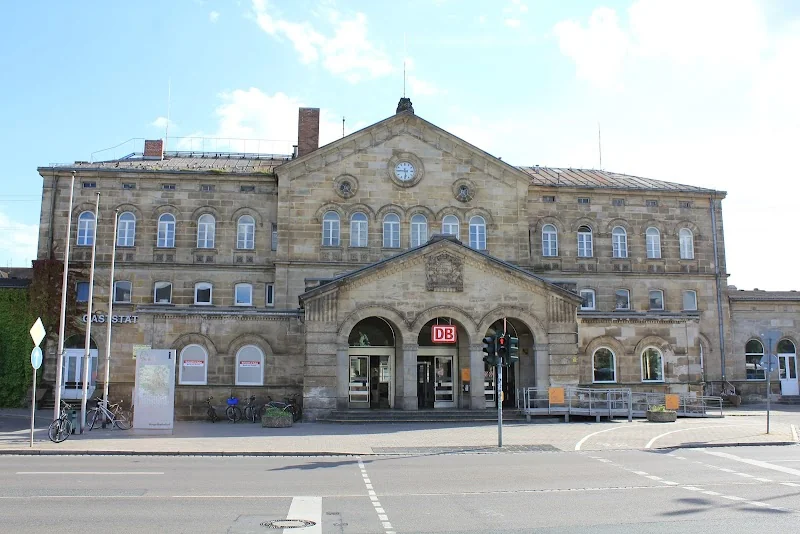
Fürth Main Station is much more than just a stop for many people in the city and the region: It is a place of arrival, a transfer point, a core of orientation, and direct access to the city center. The official address Bahnhofplatz 9, 90762 Fürth, makes it easy to find, and the service world on bahnhof.de provides several tools for a stress-free arrival, including live departures, maps, elevators, site plans, and replacement transport. This combination of location, mobility, and practicality makes the station particularly interesting for anyone wanting to quickly reach the center, the U1, the S1, or an appointment around Bahnhofplatz. At the same time, the surrounding area is characterized by short distances to Fürther Freiheit, shopping and dining options, as well as medical facilities in close proximity. Those who view the station not just as a transit point but as an urban starting point will find a surprisingly dense mix of services, history, and city life here. ([bahnhof.de](https://www.bahnhof.de/fuerth-bay-hbf))
Access, Route, and Map to Fürth Main Station
First-time visitors to Fürth Main Station benefit from its clear location at Bahnhofplatz and the official orientation offerings from Deutsche Bahn. The station's website not only provides the address and information about the travel center but also the most important digital aids: live departures, timetables in PDF, replacement transport plans, elevator information, and a map for the station, platform, and surrounding area. This is particularly practical when traveling with luggage, strollers, or under time pressure, as one can already prepare for the walk before leaving the train, car, or bus. For many visitors, Fürther Freiheit serves as the most important geographical anchor, as it is only a few minutes' walk away and connects the station directly with the city center. The official tourism site describes the Freiheit as accessible on foot from the main station, and the proximity to events, market areas, and urban daily life explains why the route to the station is so frequently searched. ([bahnhof.de](https://www.bahnhof.de/fuerth-bay-hbf))
From a practical route planning perspective, the station is very pleasant because it functions almost as a natural center in the city. Those arriving by car will find several parking options in the vicinity, including around Fürther Freiheit and in nearby parking garages in the city center. Those traveling on foot can use the station as a starting point for short walks to shopping arcades, market areas, and dining options. And those arriving by public transport have several options to continue their route flexibly with the U1, S1, and bus lines at the main station. This is precisely why the search terms route, maps, address, and access fit so well with this location: They describe a station whose strength lies not only in rail traffic but in the immediate connection of rail, city, and orientation. ([vgn.de](https://www.vgn.de/fuer/stadt-menschen/fuerth/))
Subway, S-Bahn, and Bus Stops at the Station
The greatest strength of Fürth Main Station lies in its connectivity. The VGN line overview lists the U-Bahn U1 with the axis Fürth Hardhöhe - Nürnberg Plärrer - Main Station - Langwasser Süd as well as the S-Bahn S1 with the connection Bamberg - Erlangen - Fürth - Nürnberg - Lauf (li Pegn) - Hersbruck (li Pegn) - Hartmannshof. This makes it immediately clear why so many people search for subway, S-Bahn, and bus stops: The station is a true transfer hub where urban traffic, regional traffic, and cross-border routes converge. For trips to Erlangen, the S1 is particularly relevant as it connects the city directly by rail. For inner-city destinations, the U1 is the obvious choice as it links the station with important stops in Nürnberg and Fürth. The VGN also mentions several bus lines serving the location, including 172, 173, 33, and 39. This makes the station not only a rail hub but also a bus hub. ([vgn.de](https://www.vgn.de/fuer/stadt-menschen/fuerth/))
In everyday life, this combination primarily means flexibility. Those coming from outside can continue into the city from the main station without being tied to a single mode of transport. Those arriving from the surrounding area can choose between the U-Bahn, S-Bahn, and bus depending on their destination, and those with a final walk ahead can quickly find the right exit using the map at the station or the VGN overview. The keywords fürth main station u-bahn and fürth main station bus stop therefore reflect a very concrete user interest: travelers want to know how to move on most quickly, where the transfer is located, and which line they need for the next segment. The station responds with a dense network of connections that is well anchored in the center of Fürth and throughout the metropolitan triangle of Nürnberg-Fürth-Erlangen. ([vgn.de](https://www.vgn.de/fuer/stadt-menschen/fuerth/))
Additionally, the integration into the regional network aids in travel planning. VGN refers to ticket and fare information, customer offices, and the central line routes in the region. Thus, Fürth is not only a stop but a well-organized transfer point where one can quickly find their way into later travel segments. The station is directly related to other important destinations such as Nürnberg Main Station or the airport and city traffic in the region. So, if you are looking for not just a stop but a functioning route, you will find exactly that at Fürth Main Station: planable connections, clear lines, and a location that makes switching between walking, U-Bahn, S-Bahn, and bus very easy. ([vgn.de](https://www.vgn.de/fuer/stadt-menschen/fuerth/))
Lockers, Toilets, and Accessibility Features
For many travelers, small details determine how pleasant a station feels. At Fürth Main Station, these include lockers, toilets, bicycle parking spaces, and the taxi stand. bahnhof.de explicitly lists these amenities, and the locker page even specifies the exact dimensions and prices: There are eight lockers measuring 24 × 42 × 76 centimeters for 2 euros per 24 hours and three larger lockers measuring 44 × 61 × 93 centimeters for 3 euros per 24 hours. This is particularly helpful for day trips, business appointments, or stopovers in the city. So, those traveling with suitcases, backpacks, or shopping bags can leave their luggage at the station and explore the city center more easily. The combination of lockers and toilets is a real plus for commuters, families, or visitors with longer stays, as it makes the station practical for everyday use and positions it not just as a transit point but as a functional place to stay. ([bahnhof.de](https://www.bahnhof.de/fuerth-bay-hbf))
The service infrastructure also includes the DB Travel Center, mobile service staff, mobility services, and lost property services. bahnhof.de states that the mobile service staff and mobility services are available daily from 7 AM to 7 PM; the video travel center is also available on several days. The mobility service center answers questions about accessibility and organizes assistance with boarding, transferring, or alighting. The elevator page also refers to the contact of the mobility service center in case an elevator is not operational. This is an important point because the station becomes significantly easier to plan for travelers with limited mobility, for people with walkers, for parents with strollers, or for those with heavy luggage. The city of Fürth has also pointed out that the main station has been included in the Bavarian action program for barrier-free stations and is frequented daily by over 10,000 commuters. This shows how central the issue of accessibility is at this location. ([bahnhof.de](https://www.bahnhof.de/fuerth-bay-hbf))
Even smaller service questions are well covered at the location. The railway's lost property service is available on-site, and bahnhof.de provides clear times for personal assistance. This may seem unremarkable, but it is enormously valuable in everyday life, as especially at large stations, the small needs often count: quickly reporting a lost phone, finding the right platform, checking the elevator, or asking someone on-site about a transfer question. For search queries like fürth main station lockers or fürth main station address, not only the location is important but also the fact that the station is a well-organized service point. Those using the main station receive not only tracks but a bundled offering of orientation, luggage storage, and assistance. ([bahnhof.de](https://www.bahnhof.de/fuerth-bay-hbf))
Parking, Taxi, and Orientation Around the Station
The keyword fürth main station parking is obvious, as many people want to know if they can safely park their car and how to continue on foot from a central station. bahnhof.de lists a parking category for the location, and in the same area, taxi and bicycle parking spaces are also noted. For practical planning, this is important because the station does not stand isolated in the area but is embedded in a dense network of city center, parking garages, and footpaths. The surroundings of Fürther Freiheit offer additional parking options, and tourism and dining sites mention several nearby parking garages, such as in the vicinity of Fürther Freiheit, Schwabacher Straße, and the city center. Therefore, those arriving by car can use the station as a starting point but also as a stopover on the way to the city. This is particularly attractive for day visitors, business travelers, and people with luggage who want the shortest possible distances between parking, station, and destination. ([bahnhof.de](https://www.bahnhof.de/fuerth-bay-hbf))
Orientation on-site is further facilitated by the clear structure of Bahnhofplatz. Fürth Main Station is located in direct proximity to Fürther Freiheit, which is accessible on foot and is described as a central market and event space. The square is not only historically significant but also practical, as it marks the transition between the train and the city center. For people visiting the station for the first time, this combination of Bahnhofplatz, Freiheit, footpaths, and adjacent shopping streets is particularly helpful. The medical environment also benefits from this good location: The Medic-Center Fürth Main Station even mentions public transport access for its practice at Bahnhofplatz 9 and points out the available elevator. This makes it clear that the station is a sensible address not only for train travelers but also for people with appointments in the vicinity. ([tourismus-fuerth.de](https://www.tourismus-fuerth.de/poi/fuerther-freiheit-100036885/?utm_source=openai))
Shops, Food, and Medical Services Nearby
The search for shops and food around Fürth Main Station targets exactly what makes urban stations attractive: short distances to shopping, coffee, lunch breaks, and evening programs. The tourism information of the city of Fürth describes the city center and Fürther Freiheit as places where market stalls, shopping opportunities, and dining are closely located. The Neue Mitte in Fürth is described as a shopping arcade with shops and dining establishments; it is conveniently accessible by bus and train due to its central location and also offers an underground garage. For the station, this means: Those arriving here not only have the transfer point but also the starting point for a shopping spree or a quick snack nearby. This is precisely why search terms like fürth main station shops and fürth main station food are so frequently used in connection with the station. It is not about the station itself as a place to shop but about the very short distance to a vibrant city center structure that can extend the stay pleasantly. ([tourismus-fuerth.de](https://www.tourismus-fuerth.de/poi/neue-mitte-fuerth-100121699/?utm_source=openai))
Medical and practical everyday services are also visible in the vicinity. Directly at Bahnhofplatz 9 is the Medic-Center Fürth Main Station; the practice mentions general medicine and specialized diabetic care and refers to access via public transport. The MEDICON pharmacy on Schwabacher Straße 46 describes itself as a location in the city center and explicitly mentions parking garages, parking spaces, and the U1 stop Fürth Main Station as well as the bus stop Maxstraße for access options. This concretely links the keywords fürth main station doctor, fürth main station pharmacy, and fürth main station medic center with real offerings. For travelers, this is practical because a station environment should consist not only of transport but also of supply. So, if someone needs prescriptions, advice, or a quick examination while passing by, they will find suitable points of contact nearby that fit well into the everyday life of the station. ([medic-center-nuernberg.de](https://www.medic-center-nuernberg.de/showpage.php?SiteID=794))
History and Significance of Fürth Main Station
The historical role of Fürth Main Station is extraordinarily closely linked to urban development. The Tourist Information Fürth explains that the station has held its current title since 1922 and refers to the railway building constructed in 1863 on the Nürnberg - Würzburg line. Architect Eduard Rüber was commissioned with the construction, and on June 19, 1865, the first train left the station. In 1876, the Nürnberg - Bamberg line was also routed through Fürth, necessitating the addition of two wings in 1904. These dates show that the station is not just a modern transport structure but a historically evolved link between the city, region, and railway development. Particularly interesting is the transition from the older Ludwigsbahnhof on today's Freiheit to the new main station, as it illustrates how the urban focus of Fürth has shifted with the growth of rail traffic. The station is thus not just a stop but a documented piece of mobility and urban history. ([tourismus-fuerth.de](https://www.tourismus-fuerth.de/poi/hauptbahnhof))
The city of Fürth emphasizes in its transport and location presentation that Fürth is considered the city of the first German railway and has a modern main station. Through the nearby Nürnberg Main Station, the city is connected to the Eurocity network, the national IC network, and the ICE high-speed network of Deutsche Bahn. This is an important indication of why the location is still so relevant today: It functions regionally, supra-regionally, and as access to the metropolitan region at the same time. Therefore, those traveling via Fürth Main Station are at a point where local routes, commuter flows, and major long-distance transport axes converge. The connection of tradition and present shapes the impact of the place to this day and also explains why so many people search for route, maps, subway, or parking. The station is not only historically important but also firmly anchored in daily commuting and travel traffic. ([fuerth.de](https://www.fuerth.de/wirtschaft/wirtschaftsstandort/lage-und-anbindung/))
Its significance is also reflected in current political and infrastructural developments. The city of Fürth announced that the main station has been included in the Bavarian action program for barrier-free stations and is among the ten most significant and largest stations in Bavaria. At the same time, it is frequented daily by over 10,000 commuters. These figures explain why the station plays such a strong role in public perception: It is not a casual stopover but a central part of urban daily life. For visitors, this means a reliable environment with well-developed connections, for the city a strong mobility center, and for the region a station that connects history and present in a compact space. Therefore, entering Fürth Main Station also means entering a piece of Fürth identity. ([fuerth.de](https://www.fuerth.de/service-fuerther-rathaus/aktuelles/detail/hauptbahnhof-wird-barrierefrei/))
Sources:
- Fürth (Bay) Hbf - Official Station Information
- Fürth (Bay) Hbf - Lockers
- VGN - Fürth, Lines and Connections
- Tourism Fürth - Fürth Station / Main Station
- Tourism Fürth - Fürther Freiheit
- City of Fürth - Location and Connection
- City of Fürth - Main Station Becomes Barrier-Free
- Medic-Center Fürth Main Station
- MEDICON Pharmacy Fürth - City Center
- Tourism Fürth - Neue Mitte Fürth
Show moreShow less
Fürth Main Station | Route & Maps
Fürth Main Station is much more than just a stop for many people in the city and the region: It is a place of arrival, a transfer point, a core of orientation, and direct access to the city center. The official address Bahnhofplatz 9, 90762 Fürth, makes it easy to find, and the service world on bahnhof.de provides several tools for a stress-free arrival, including live departures, maps, elevators, site plans, and replacement transport. This combination of location, mobility, and practicality makes the station particularly interesting for anyone wanting to quickly reach the center, the U1, the S1, or an appointment around Bahnhofplatz. At the same time, the surrounding area is characterized by short distances to Fürther Freiheit, shopping and dining options, as well as medical facilities in close proximity. Those who view the station not just as a transit point but as an urban starting point will find a surprisingly dense mix of services, history, and city life here. ([bahnhof.de](https://www.bahnhof.de/fuerth-bay-hbf))
Access, Route, and Map to Fürth Main Station
First-time visitors to Fürth Main Station benefit from its clear location at Bahnhofplatz and the official orientation offerings from Deutsche Bahn. The station's website not only provides the address and information about the travel center but also the most important digital aids: live departures, timetables in PDF, replacement transport plans, elevator information, and a map for the station, platform, and surrounding area. This is particularly practical when traveling with luggage, strollers, or under time pressure, as one can already prepare for the walk before leaving the train, car, or bus. For many visitors, Fürther Freiheit serves as the most important geographical anchor, as it is only a few minutes' walk away and connects the station directly with the city center. The official tourism site describes the Freiheit as accessible on foot from the main station, and the proximity to events, market areas, and urban daily life explains why the route to the station is so frequently searched. ([bahnhof.de](https://www.bahnhof.de/fuerth-bay-hbf))
From a practical route planning perspective, the station is very pleasant because it functions almost as a natural center in the city. Those arriving by car will find several parking options in the vicinity, including around Fürther Freiheit and in nearby parking garages in the city center. Those traveling on foot can use the station as a starting point for short walks to shopping arcades, market areas, and dining options. And those arriving by public transport have several options to continue their route flexibly with the U1, S1, and bus lines at the main station. This is precisely why the search terms route, maps, address, and access fit so well with this location: They describe a station whose strength lies not only in rail traffic but in the immediate connection of rail, city, and orientation. ([vgn.de](https://www.vgn.de/fuer/stadt-menschen/fuerth/))
Subway, S-Bahn, and Bus Stops at the Station
The greatest strength of Fürth Main Station lies in its connectivity. The VGN line overview lists the U-Bahn U1 with the axis Fürth Hardhöhe - Nürnberg Plärrer - Main Station - Langwasser Süd as well as the S-Bahn S1 with the connection Bamberg - Erlangen - Fürth - Nürnberg - Lauf (li Pegn) - Hersbruck (li Pegn) - Hartmannshof. This makes it immediately clear why so many people search for subway, S-Bahn, and bus stops: The station is a true transfer hub where urban traffic, regional traffic, and cross-border routes converge. For trips to Erlangen, the S1 is particularly relevant as it connects the city directly by rail. For inner-city destinations, the U1 is the obvious choice as it links the station with important stops in Nürnberg and Fürth. The VGN also mentions several bus lines serving the location, including 172, 173, 33, and 39. This makes the station not only a rail hub but also a bus hub. ([vgn.de](https://www.vgn.de/fuer/stadt-menschen/fuerth/))
In everyday life, this combination primarily means flexibility. Those coming from outside can continue into the city from the main station without being tied to a single mode of transport. Those arriving from the surrounding area can choose between the U-Bahn, S-Bahn, and bus depending on their destination, and those with a final walk ahead can quickly find the right exit using the map at the station or the VGN overview. The keywords fürth main station u-bahn and fürth main station bus stop therefore reflect a very concrete user interest: travelers want to know how to move on most quickly, where the transfer is located, and which line they need for the next segment. The station responds with a dense network of connections that is well anchored in the center of Fürth and throughout the metropolitan triangle of Nürnberg-Fürth-Erlangen. ([vgn.de](https://www.vgn.de/fuer/stadt-menschen/fuerth/))
Additionally, the integration into the regional network aids in travel planning. VGN refers to ticket and fare information, customer offices, and the central line routes in the region. Thus, Fürth is not only a stop but a well-organized transfer point where one can quickly find their way into later travel segments. The station is directly related to other important destinations such as Nürnberg Main Station or the airport and city traffic in the region. So, if you are looking for not just a stop but a functioning route, you will find exactly that at Fürth Main Station: planable connections, clear lines, and a location that makes switching between walking, U-Bahn, S-Bahn, and bus very easy. ([vgn.de](https://www.vgn.de/fuer/stadt-menschen/fuerth/))
Lockers, Toilets, and Accessibility Features
For many travelers, small details determine how pleasant a station feels. At Fürth Main Station, these include lockers, toilets, bicycle parking spaces, and the taxi stand. bahnhof.de explicitly lists these amenities, and the locker page even specifies the exact dimensions and prices: There are eight lockers measuring 24 × 42 × 76 centimeters for 2 euros per 24 hours and three larger lockers measuring 44 × 61 × 93 centimeters for 3 euros per 24 hours. This is particularly helpful for day trips, business appointments, or stopovers in the city. So, those traveling with suitcases, backpacks, or shopping bags can leave their luggage at the station and explore the city center more easily. The combination of lockers and toilets is a real plus for commuters, families, or visitors with longer stays, as it makes the station practical for everyday use and positions it not just as a transit point but as a functional place to stay. ([bahnhof.de](https://www.bahnhof.de/fuerth-bay-hbf))
The service infrastructure also includes the DB Travel Center, mobile service staff, mobility services, and lost property services. bahnhof.de states that the mobile service staff and mobility services are available daily from 7 AM to 7 PM; the video travel center is also available on several days. The mobility service center answers questions about accessibility and organizes assistance with boarding, transferring, or alighting. The elevator page also refers to the contact of the mobility service center in case an elevator is not operational. This is an important point because the station becomes significantly easier to plan for travelers with limited mobility, for people with walkers, for parents with strollers, or for those with heavy luggage. The city of Fürth has also pointed out that the main station has been included in the Bavarian action program for barrier-free stations and is frequented daily by over 10,000 commuters. This shows how central the issue of accessibility is at this location. ([bahnhof.de](https://www.bahnhof.de/fuerth-bay-hbf))
Even smaller service questions are well covered at the location. The railway's lost property service is available on-site, and bahnhof.de provides clear times for personal assistance. This may seem unremarkable, but it is enormously valuable in everyday life, as especially at large stations, the small needs often count: quickly reporting a lost phone, finding the right platform, checking the elevator, or asking someone on-site about a transfer question. For search queries like fürth main station lockers or fürth main station address, not only the location is important but also the fact that the station is a well-organized service point. Those using the main station receive not only tracks but a bundled offering of orientation, luggage storage, and assistance. ([bahnhof.de](https://www.bahnhof.de/fuerth-bay-hbf))
Parking, Taxi, and Orientation Around the Station
The keyword fürth main station parking is obvious, as many people want to know if they can safely park their car and how to continue on foot from a central station. bahnhof.de lists a parking category for the location, and in the same area, taxi and bicycle parking spaces are also noted. For practical planning, this is important because the station does not stand isolated in the area but is embedded in a dense network of city center, parking garages, and footpaths. The surroundings of Fürther Freiheit offer additional parking options, and tourism and dining sites mention several nearby parking garages, such as in the vicinity of Fürther Freiheit, Schwabacher Straße, and the city center. Therefore, those arriving by car can use the station as a starting point but also as a stopover on the way to the city. This is particularly attractive for day visitors, business travelers, and people with luggage who want the shortest possible distances between parking, station, and destination. ([bahnhof.de](https://www.bahnhof.de/fuerth-bay-hbf))
Orientation on-site is further facilitated by the clear structure of Bahnhofplatz. Fürth Main Station is located in direct proximity to Fürther Freiheit, which is accessible on foot and is described as a central market and event space. The square is not only historically significant but also practical, as it marks the transition between the train and the city center. For people visiting the station for the first time, this combination of Bahnhofplatz, Freiheit, footpaths, and adjacent shopping streets is particularly helpful. The medical environment also benefits from this good location: The Medic-Center Fürth Main Station even mentions public transport access for its practice at Bahnhofplatz 9 and points out the available elevator. This makes it clear that the station is a sensible address not only for train travelers but also for people with appointments in the vicinity. ([tourismus-fuerth.de](https://www.tourismus-fuerth.de/poi/fuerther-freiheit-100036885/?utm_source=openai))
Shops, Food, and Medical Services Nearby
The search for shops and food around Fürth Main Station targets exactly what makes urban stations attractive: short distances to shopping, coffee, lunch breaks, and evening programs. The tourism information of the city of Fürth describes the city center and Fürther Freiheit as places where market stalls, shopping opportunities, and dining are closely located. The Neue Mitte in Fürth is described as a shopping arcade with shops and dining establishments; it is conveniently accessible by bus and train due to its central location and also offers an underground garage. For the station, this means: Those arriving here not only have the transfer point but also the starting point for a shopping spree or a quick snack nearby. This is precisely why search terms like fürth main station shops and fürth main station food are so frequently used in connection with the station. It is not about the station itself as a place to shop but about the very short distance to a vibrant city center structure that can extend the stay pleasantly. ([tourismus-fuerth.de](https://www.tourismus-fuerth.de/poi/neue-mitte-fuerth-100121699/?utm_source=openai))
Medical and practical everyday services are also visible in the vicinity. Directly at Bahnhofplatz 9 is the Medic-Center Fürth Main Station; the practice mentions general medicine and specialized diabetic care and refers to access via public transport. The MEDICON pharmacy on Schwabacher Straße 46 describes itself as a location in the city center and explicitly mentions parking garages, parking spaces, and the U1 stop Fürth Main Station as well as the bus stop Maxstraße for access options. This concretely links the keywords fürth main station doctor, fürth main station pharmacy, and fürth main station medic center with real offerings. For travelers, this is practical because a station environment should consist not only of transport but also of supply. So, if someone needs prescriptions, advice, or a quick examination while passing by, they will find suitable points of contact nearby that fit well into the everyday life of the station. ([medic-center-nuernberg.de](https://www.medic-center-nuernberg.de/showpage.php?SiteID=794))
History and Significance of Fürth Main Station
The historical role of Fürth Main Station is extraordinarily closely linked to urban development. The Tourist Information Fürth explains that the station has held its current title since 1922 and refers to the railway building constructed in 1863 on the Nürnberg - Würzburg line. Architect Eduard Rüber was commissioned with the construction, and on June 19, 1865, the first train left the station. In 1876, the Nürnberg - Bamberg line was also routed through Fürth, necessitating the addition of two wings in 1904. These dates show that the station is not just a modern transport structure but a historically evolved link between the city, region, and railway development. Particularly interesting is the transition from the older Ludwigsbahnhof on today's Freiheit to the new main station, as it illustrates how the urban focus of Fürth has shifted with the growth of rail traffic. The station is thus not just a stop but a documented piece of mobility and urban history. ([tourismus-fuerth.de](https://www.tourismus-fuerth.de/poi/hauptbahnhof))
The city of Fürth emphasizes in its transport and location presentation that Fürth is considered the city of the first German railway and has a modern main station. Through the nearby Nürnberg Main Station, the city is connected to the Eurocity network, the national IC network, and the ICE high-speed network of Deutsche Bahn. This is an important indication of why the location is still so relevant today: It functions regionally, supra-regionally, and as access to the metropolitan region at the same time. Therefore, those traveling via Fürth Main Station are at a point where local routes, commuter flows, and major long-distance transport axes converge. The connection of tradition and present shapes the impact of the place to this day and also explains why so many people search for route, maps, subway, or parking. The station is not only historically important but also firmly anchored in daily commuting and travel traffic. ([fuerth.de](https://www.fuerth.de/wirtschaft/wirtschaftsstandort/lage-und-anbindung/))
Its significance is also reflected in current political and infrastructural developments. The city of Fürth announced that the main station has been included in the Bavarian action program for barrier-free stations and is among the ten most significant and largest stations in Bavaria. At the same time, it is frequented daily by over 10,000 commuters. These figures explain why the station plays such a strong role in public perception: It is not a casual stopover but a central part of urban daily life. For visitors, this means a reliable environment with well-developed connections, for the city a strong mobility center, and for the region a station that connects history and present in a compact space. Therefore, entering Fürth Main Station also means entering a piece of Fürth identity. ([fuerth.de](https://www.fuerth.de/service-fuerther-rathaus/aktuelles/detail/hauptbahnhof-wird-barrierefrei/))
Sources:
- Fürth (Bay) Hbf - Official Station Information
- Fürth (Bay) Hbf - Lockers
- VGN - Fürth, Lines and Connections
- Tourism Fürth - Fürth Station / Main Station
- Tourism Fürth - Fürther Freiheit
- City of Fürth - Location and Connection
- City of Fürth - Main Station Becomes Barrier-Free
- Medic-Center Fürth Main Station
- MEDICON Pharmacy Fürth - City Center
- Tourism Fürth - Neue Mitte Fürth
Fürth Main Station | Route & Maps
Fürth Main Station is much more than just a stop for many people in the city and the region: It is a place of arrival, a transfer point, a core of orientation, and direct access to the city center. The official address Bahnhofplatz 9, 90762 Fürth, makes it easy to find, and the service world on bahnhof.de provides several tools for a stress-free arrival, including live departures, maps, elevators, site plans, and replacement transport. This combination of location, mobility, and practicality makes the station particularly interesting for anyone wanting to quickly reach the center, the U1, the S1, or an appointment around Bahnhofplatz. At the same time, the surrounding area is characterized by short distances to Fürther Freiheit, shopping and dining options, as well as medical facilities in close proximity. Those who view the station not just as a transit point but as an urban starting point will find a surprisingly dense mix of services, history, and city life here. ([bahnhof.de](https://www.bahnhof.de/fuerth-bay-hbf))
Access, Route, and Map to Fürth Main Station
First-time visitors to Fürth Main Station benefit from its clear location at Bahnhofplatz and the official orientation offerings from Deutsche Bahn. The station's website not only provides the address and information about the travel center but also the most important digital aids: live departures, timetables in PDF, replacement transport plans, elevator information, and a map for the station, platform, and surrounding area. This is particularly practical when traveling with luggage, strollers, or under time pressure, as one can already prepare for the walk before leaving the train, car, or bus. For many visitors, Fürther Freiheit serves as the most important geographical anchor, as it is only a few minutes' walk away and connects the station directly with the city center. The official tourism site describes the Freiheit as accessible on foot from the main station, and the proximity to events, market areas, and urban daily life explains why the route to the station is so frequently searched. ([bahnhof.de](https://www.bahnhof.de/fuerth-bay-hbf))
From a practical route planning perspective, the station is very pleasant because it functions almost as a natural center in the city. Those arriving by car will find several parking options in the vicinity, including around Fürther Freiheit and in nearby parking garages in the city center. Those traveling on foot can use the station as a starting point for short walks to shopping arcades, market areas, and dining options. And those arriving by public transport have several options to continue their route flexibly with the U1, S1, and bus lines at the main station. This is precisely why the search terms route, maps, address, and access fit so well with this location: They describe a station whose strength lies not only in rail traffic but in the immediate connection of rail, city, and orientation. ([vgn.de](https://www.vgn.de/fuer/stadt-menschen/fuerth/))
Subway, S-Bahn, and Bus Stops at the Station
The greatest strength of Fürth Main Station lies in its connectivity. The VGN line overview lists the U-Bahn U1 with the axis Fürth Hardhöhe - Nürnberg Plärrer - Main Station - Langwasser Süd as well as the S-Bahn S1 with the connection Bamberg - Erlangen - Fürth - Nürnberg - Lauf (li Pegn) - Hersbruck (li Pegn) - Hartmannshof. This makes it immediately clear why so many people search for subway, S-Bahn, and bus stops: The station is a true transfer hub where urban traffic, regional traffic, and cross-border routes converge. For trips to Erlangen, the S1 is particularly relevant as it connects the city directly by rail. For inner-city destinations, the U1 is the obvious choice as it links the station with important stops in Nürnberg and Fürth. The VGN also mentions several bus lines serving the location, including 172, 173, 33, and 39. This makes the station not only a rail hub but also a bus hub. ([vgn.de](https://www.vgn.de/fuer/stadt-menschen/fuerth/))
In everyday life, this combination primarily means flexibility. Those coming from outside can continue into the city from the main station without being tied to a single mode of transport. Those arriving from the surrounding area can choose between the U-Bahn, S-Bahn, and bus depending on their destination, and those with a final walk ahead can quickly find the right exit using the map at the station or the VGN overview. The keywords fürth main station u-bahn and fürth main station bus stop therefore reflect a very concrete user interest: travelers want to know how to move on most quickly, where the transfer is located, and which line they need for the next segment. The station responds with a dense network of connections that is well anchored in the center of Fürth and throughout the metropolitan triangle of Nürnberg-Fürth-Erlangen. ([vgn.de](https://www.vgn.de/fuer/stadt-menschen/fuerth/))
Additionally, the integration into the regional network aids in travel planning. VGN refers to ticket and fare information, customer offices, and the central line routes in the region. Thus, Fürth is not only a stop but a well-organized transfer point where one can quickly find their way into later travel segments. The station is directly related to other important destinations such as Nürnberg Main Station or the airport and city traffic in the region. So, if you are looking for not just a stop but a functioning route, you will find exactly that at Fürth Main Station: planable connections, clear lines, and a location that makes switching between walking, U-Bahn, S-Bahn, and bus very easy. ([vgn.de](https://www.vgn.de/fuer/stadt-menschen/fuerth/))
Lockers, Toilets, and Accessibility Features
For many travelers, small details determine how pleasant a station feels. At Fürth Main Station, these include lockers, toilets, bicycle parking spaces, and the taxi stand. bahnhof.de explicitly lists these amenities, and the locker page even specifies the exact dimensions and prices: There are eight lockers measuring 24 × 42 × 76 centimeters for 2 euros per 24 hours and three larger lockers measuring 44 × 61 × 93 centimeters for 3 euros per 24 hours. This is particularly helpful for day trips, business appointments, or stopovers in the city. So, those traveling with suitcases, backpacks, or shopping bags can leave their luggage at the station and explore the city center more easily. The combination of lockers and toilets is a real plus for commuters, families, or visitors with longer stays, as it makes the station practical for everyday use and positions it not just as a transit point but as a functional place to stay. ([bahnhof.de](https://www.bahnhof.de/fuerth-bay-hbf))
The service infrastructure also includes the DB Travel Center, mobile service staff, mobility services, and lost property services. bahnhof.de states that the mobile service staff and mobility services are available daily from 7 AM to 7 PM; the video travel center is also available on several days. The mobility service center answers questions about accessibility and organizes assistance with boarding, transferring, or alighting. The elevator page also refers to the contact of the mobility service center in case an elevator is not operational. This is an important point because the station becomes significantly easier to plan for travelers with limited mobility, for people with walkers, for parents with strollers, or for those with heavy luggage. The city of Fürth has also pointed out that the main station has been included in the Bavarian action program for barrier-free stations and is frequented daily by over 10,000 commuters. This shows how central the issue of accessibility is at this location. ([bahnhof.de](https://www.bahnhof.de/fuerth-bay-hbf))
Even smaller service questions are well covered at the location. The railway's lost property service is available on-site, and bahnhof.de provides clear times for personal assistance. This may seem unremarkable, but it is enormously valuable in everyday life, as especially at large stations, the small needs often count: quickly reporting a lost phone, finding the right platform, checking the elevator, or asking someone on-site about a transfer question. For search queries like fürth main station lockers or fürth main station address, not only the location is important but also the fact that the station is a well-organized service point. Those using the main station receive not only tracks but a bundled offering of orientation, luggage storage, and assistance. ([bahnhof.de](https://www.bahnhof.de/fuerth-bay-hbf))
Parking, Taxi, and Orientation Around the Station
The keyword fürth main station parking is obvious, as many people want to know if they can safely park their car and how to continue on foot from a central station. bahnhof.de lists a parking category for the location, and in the same area, taxi and bicycle parking spaces are also noted. For practical planning, this is important because the station does not stand isolated in the area but is embedded in a dense network of city center, parking garages, and footpaths. The surroundings of Fürther Freiheit offer additional parking options, and tourism and dining sites mention several nearby parking garages, such as in the vicinity of Fürther Freiheit, Schwabacher Straße, and the city center. Therefore, those arriving by car can use the station as a starting point but also as a stopover on the way to the city. This is particularly attractive for day visitors, business travelers, and people with luggage who want the shortest possible distances between parking, station, and destination. ([bahnhof.de](https://www.bahnhof.de/fuerth-bay-hbf))
Orientation on-site is further facilitated by the clear structure of Bahnhofplatz. Fürth Main Station is located in direct proximity to Fürther Freiheit, which is accessible on foot and is described as a central market and event space. The square is not only historically significant but also practical, as it marks the transition between the train and the city center. For people visiting the station for the first time, this combination of Bahnhofplatz, Freiheit, footpaths, and adjacent shopping streets is particularly helpful. The medical environment also benefits from this good location: The Medic-Center Fürth Main Station even mentions public transport access for its practice at Bahnhofplatz 9 and points out the available elevator. This makes it clear that the station is a sensible address not only for train travelers but also for people with appointments in the vicinity. ([tourismus-fuerth.de](https://www.tourismus-fuerth.de/poi/fuerther-freiheit-100036885/?utm_source=openai))
Shops, Food, and Medical Services Nearby
The search for shops and food around Fürth Main Station targets exactly what makes urban stations attractive: short distances to shopping, coffee, lunch breaks, and evening programs. The tourism information of the city of Fürth describes the city center and Fürther Freiheit as places where market stalls, shopping opportunities, and dining are closely located. The Neue Mitte in Fürth is described as a shopping arcade with shops and dining establishments; it is conveniently accessible by bus and train due to its central location and also offers an underground garage. For the station, this means: Those arriving here not only have the transfer point but also the starting point for a shopping spree or a quick snack nearby. This is precisely why search terms like fürth main station shops and fürth main station food are so frequently used in connection with the station. It is not about the station itself as a place to shop but about the very short distance to a vibrant city center structure that can extend the stay pleasantly. ([tourismus-fuerth.de](https://www.tourismus-fuerth.de/poi/neue-mitte-fuerth-100121699/?utm_source=openai))
Medical and practical everyday services are also visible in the vicinity. Directly at Bahnhofplatz 9 is the Medic-Center Fürth Main Station; the practice mentions general medicine and specialized diabetic care and refers to access via public transport. The MEDICON pharmacy on Schwabacher Straße 46 describes itself as a location in the city center and explicitly mentions parking garages, parking spaces, and the U1 stop Fürth Main Station as well as the bus stop Maxstraße for access options. This concretely links the keywords fürth main station doctor, fürth main station pharmacy, and fürth main station medic center with real offerings. For travelers, this is practical because a station environment should consist not only of transport but also of supply. So, if someone needs prescriptions, advice, or a quick examination while passing by, they will find suitable points of contact nearby that fit well into the everyday life of the station. ([medic-center-nuernberg.de](https://www.medic-center-nuernberg.de/showpage.php?SiteID=794))
History and Significance of Fürth Main Station
The historical role of Fürth Main Station is extraordinarily closely linked to urban development. The Tourist Information Fürth explains that the station has held its current title since 1922 and refers to the railway building constructed in 1863 on the Nürnberg - Würzburg line. Architect Eduard Rüber was commissioned with the construction, and on June 19, 1865, the first train left the station. In 1876, the Nürnberg - Bamberg line was also routed through Fürth, necessitating the addition of two wings in 1904. These dates show that the station is not just a modern transport structure but a historically evolved link between the city, region, and railway development. Particularly interesting is the transition from the older Ludwigsbahnhof on today's Freiheit to the new main station, as it illustrates how the urban focus of Fürth has shifted with the growth of rail traffic. The station is thus not just a stop but a documented piece of mobility and urban history. ([tourismus-fuerth.de](https://www.tourismus-fuerth.de/poi/hauptbahnhof))
The city of Fürth emphasizes in its transport and location presentation that Fürth is considered the city of the first German railway and has a modern main station. Through the nearby Nürnberg Main Station, the city is connected to the Eurocity network, the national IC network, and the ICE high-speed network of Deutsche Bahn. This is an important indication of why the location is still so relevant today: It functions regionally, supra-regionally, and as access to the metropolitan region at the same time. Therefore, those traveling via Fürth Main Station are at a point where local routes, commuter flows, and major long-distance transport axes converge. The connection of tradition and present shapes the impact of the place to this day and also explains why so many people search for route, maps, subway, or parking. The station is not only historically important but also firmly anchored in daily commuting and travel traffic. ([fuerth.de](https://www.fuerth.de/wirtschaft/wirtschaftsstandort/lage-und-anbindung/))
Its significance is also reflected in current political and infrastructural developments. The city of Fürth announced that the main station has been included in the Bavarian action program for barrier-free stations and is among the ten most significant and largest stations in Bavaria. At the same time, it is frequented daily by over 10,000 commuters. These figures explain why the station plays such a strong role in public perception: It is not a casual stopover but a central part of urban daily life. For visitors, this means a reliable environment with well-developed connections, for the city a strong mobility center, and for the region a station that connects history and present in a compact space. Therefore, entering Fürth Main Station also means entering a piece of Fürth identity. ([fuerth.de](https://www.fuerth.de/service-fuerther-rathaus/aktuelles/detail/hauptbahnhof-wird-barrierefrei/))
Sources:
- Fürth (Bay) Hbf - Official Station Information
- Fürth (Bay) Hbf - Lockers
- VGN - Fürth, Lines and Connections
- Tourism Fürth - Fürth Station / Main Station
- Tourism Fürth - Fürther Freiheit
- City of Fürth - Location and Connection
- City of Fürth - Main Station Becomes Barrier-Free
- Medic-Center Fürth Main Station
- MEDICON Pharmacy Fürth - City Center
- Tourism Fürth - Neue Mitte Fürth
Frequently Asked Questions
Reviews
Diwash Bhandari
14. December 2025
Fürth hbf doesn't have a toilet. Nor does it have a lift for strollers or people in wheelchairs. I don't know who manages this train station. Even the platforms are super old and in desperate need of renovations. This is most likely the worst Hbf I have ever seen. It seems like the authorities have no obligation to maintain this station. Just think, they don't even have a toilet/WC.
Cheick Ba
6. January 2025
Fürth main station is just a shame for a city with 140,000 people. The platforms are small, but the ICE high-speed trains run through at over 100 km per hour. There is only one elevator to the S-Bahn platform, but none to all the other platforms. The old station building was just renovated and I love the Brezen Kolb in the station tunnel.
Alper Yurttas
12. March 2025
Everything was good, but I just can't understand the numbering of the platforms. There are platforms 1, 2, and 3, and then 20 and 21. Nothing in between 😀
So Jso
12. February 2019
Small, clean, good place. Love the Esprit brand :)
Krishna Ajay
26. November 2020
Get the bus at the station to go to Ikea.