
Fürth
Max-Planck-Straße 15, 90766 Fürth, Deutschland
Ev. Luth. Parish Office Heilig-Geist-Kirche | Contact & Directions
The Evang.-Luth. congregation Heilig Geist in Fürth is much more than a single church building on Hardhöhe. Here, the parish office, place of worship, community rooms, and diverse neighborhood work come together at a location that has become a familiar anchor for many people in the district. For more than fifty years, the community has brought together people with very different life stories on the prominent church grounds, and it is precisely from this that its special character emerges: open, inviting, and anchored in the everyday life of the neighborhood. The building complex is prominently located at Max-Planck-Straße 15, the church is open daily, and the location is used for both quiet visits and lively community events. Anyone seeking orientation, spiritual guidance, or simply a reliable place in Fürth will find here an address with clear structure, easily accessible location, and a community that consciously connects faith, music, encounter, and social responsibility. ([fuerth-evangelisch.de](https://www.fuerth-evangelisch.de/fuerth-heilig-geist-kirche))
Directions, Contact, and Opening Hours at Max-Planck-Straße
The church center and parish office of Heilig-Geist-Kirche is located at Max-Planck-Straße 15 in 90766 Fürth on Hardhöhe. The community can be reached by phone at 0911 731703, by fax at 0911 757170, and by email through the parish office. The contact page also lists fixed opening hours for the parish office: Monday from 3:00 PM to 5:00 PM, Tuesday from 9:00 AM to 11:00 AM, Wednesday from 10:00 AM to 12:00 PM and from 2:30 PM to 4:00 PM, and Thursday from 9:00 AM to 11:00 AM. This is helpful for visitors, as it allows for the planning of pastoral conversations, organizational concerns, or a brief personal appointment. The church itself is open daily from 9:00 AM to 5:00 PM according to the deanery page, so there is also space for a quiet visit outside of service times. Anyone looking for a place where administration, encounter, and spiritual life come together directly will find here a very clear and user-friendly structure. ([heilig-geist-fuerth.de](https://www.heilig-geist-fuerth.de/kontakt))
For driving directions, the community explicitly recommends access via Soldnerstraße, at the pedestrian crossing by the secondary school. This makes orientation on site relatively simple, even if the church center itself is located more in a residential and neighborhood environment than on a major traffic axis. The location is also easily accessible by public transport: U-Bahn line 1 stops at the Hardhöhe station, and bus lines 171 and 176 also stop at Hardhöhe. This connection makes the place interesting for community members from Fürth and the surrounding area as well as for people coming for pastoral care, music, family offerings, or an event. Hardhöhe is clearly connected to the community, and the address thus serves not only as a mailing address but as a real meeting point in everyday life. Those visiting for the first time should simply orient themselves at the U-Bahn station and at the access via Soldnerstraße. ([heilig-geist-fuerth.de](https://www.heilig-geist-fuerth.de/kontakt))
History of Heilig-Geist-Kirche on Hardhöhe
The history of the community is relatively young but remarkable in its development. In the early 1960s, house groups and subsequently house services emerged in the newly developed district on Fürth's Hardhöhe. At that time, Vicar Wilfried von Zitzewitz from St. Martin was responsible. Thus, the community did not grow out of an old village core but in an environment where many people were newly arriving and had to gradually build a common identity. This initial situation continues to shape the Heilig-Geist community to this day: it has become a place where newcomers, families, later refugees, and people with very different religious experiences live together as a community. In 1963, the community became formally independent, and on November 3, 1963, the church center was consecrated. This gave Hardhöhe a fixed spiritual center that structured the rapidly growing district not only architecturally but also socially and spiritually. ([heilig-geist-fuerth.de](https://www.heilig-geist-fuerth.de/gemeinde/geschichte))
The church building itself was constructed in 1962/63 according to the plans of architect Theo Steinhauser and was also consecrated on November 3, 1963. Early on, additional defining elements were added: in 1965, the ringing was supplemented with four bells, in 1967 the organ was installed, and in the following decades, the community house, church, and tower were renovated multiple times. Particularly important was the comprehensive renovation in 2012 and 2013. During this time, the community rooms were integrated into the church building, the church center was reorganized, and the remodeled church was reconsecrated on November 3, 2013. For the community, this was more than a construction measure. The location became more compact, inviting, and versatile. From a rather separate ensemble emerged a church center where worship, administration, encounter, music, and group work come closely together. This renovation shows that the community has continually adapted its development to the needs of the neighborhood. ([heilig-geist-fuerth.de](https://www.heilig-geist-fuerth.de/gemeinde/geschichte))
The social aspect of the history is also significant. The community took on responsibility early on and became the sponsor of daycare centers and an after-school care program. Later, neighborhood work under the keyword GeH Hin, the diaconal association, the work of the Fürth food bank, and other initiatives were added. In retrospect, it becomes clear that Heilig Geist was never just a place for Sunday worship but a center for very different life situations. Even in the early years, people from very different backgrounds came together, including families from other neighborhoods, refugees, and later newcomers from different regions. Contacts with a partner congregation in the Czech city of Pilsen are also part of the history. Since the 1970s, work related to the One World has played an important role, such as through bazaars and solidarity actions. All of this shows that the Heilig-Geist community on Hardhöhe has not only been built but has been consciously shaped over decades. ([heilig-geist-fuerth.de](https://www.heilig-geist-fuerth.de/gemeinde/geschichte))
Worship Services, Taizé Prayer, and Spiritual Life
The regular Sunday service is the spiritual center of the community. The bells ring at 9:15 AM from the tower to send people on their way, and the service begins at 9:30 AM with a short organ prelude. This is followed by prayers, communal singing, and the sermon, making the celebration last about an hour. This format is intentionally low-threshold and clearly structured: those seeking peace receive a reliable framework, and those wishing to participate more actively find opportunities for involvement in the service design. Additionally, the community regularly celebrates Holy Communion in a large circle around the altar. Before and after the service, the One World sale is also open, making the visit not only liturgical but also socially and practically embedded. The services are thus not an isolated program point but part of a vibrant community day where encounter, prayer, and engagement intertwine. ([heilig-geist-fuerth.de](https://www.heilig-geist-fuerth.de/glaube/gottesdienste))
A special profile is given to spiritual life through the Taizé prayer. In rotation with the congregations of St. Martin and Christkönig, a Taizé prayer takes place in Heilig-Geist-Kirche every third month. The community explicitly describes this form as a space of reconciliation, supported by typical Taizé songs, prayers, silence, and candlelight. This fits well with the character of the place: Heilig Geist is not a loud event location but a community that consciously focuses on atmosphere, gathering, and inner peace. Especially in a neighborhood where many people are very differently engaged in everyday life, this mix of music, silence, and communal form can be a strong counterpoint to the hustle and bustle. Those looking for a place for contemplative services, ecumenical impulses, or a quieter spiritual format will find here a community that sensibly combines classic Sunday liturgy and meditative elements. ([heilig-geist-fuerth.de](https://www.heilig-geist-fuerth.de/glaube/gottesdienste))
Rooms, Foyer, Community Hall, and Bell Tower
The church space itself is the architectural centerpiece of the complex. Particularly defining is the altar wall, a concrete sculpture by Munich sculptor Karlheinz Hofmann. It depicts the Pentecost miracle, i.e., the outpouring of the Holy Spirit on the disciples, on an area of 11 by 13 meters. The design appears powerful but not oppressive. This impression is important for the space: it does not aim to intimidate monumentally but to make spiritual presence visible. Additionally, there is the altar Bible with the dedication from former Chancellor Ludwig Erhard, who, as a son of the city of Fürth, gifted this to the community. The altar itself is made of light travertine, and the altar cross with three rock crystals marks the liturgical center. The paraments on the altar and pulpit also contribute to the special effect, as do the bronze candelabrum and the Easter candle, which burns during services, baptisms, and communion. These details show how carefully the space has been designed and how strongly symbolism and material interact in Heilig-Geist-Kirche. ([heilig-geist-fuerth.de](https://www.heilig-geist-fuerth.de/raeume/kirche))
The renovation in 2012/13 also created a baptismal chapel. This was made possible by relocating the organ from the south side of the room to the north side. This gave the church a gallery and an independent baptism area below. There stands the baptismal font made of light travertine with a bronze basin, and behind it is the only stained glass window in the church. It shows a dove as a symbol of the Holy Spirit and baptism, as well as a water surface that breaks colorfully. Together with the changed spatial layout, this solution makes it clear that the church center has not only grown historically but has been consciously further developed. The connection of baptism, communion, and Pentecost motif is architecturally very clearly readable here. Especially visitors interested in church space, art, and liturgy receive a rarely dense connection of theological statement and spatial design at this place. ([heilig-geist-fuerth.de](https://www.heilig-geist-fuerth.de/raeume/kirche))
The building also includes a foyer, which after the renovation is used for exhibitions, receptions, and the regular One World sale. It serves as a bridge between church and everyday life and is a visible meeting point in the house with its red counter. The community hall is located on the upper floor of the community center and is also accessible by elevator. It is available to community groups but is also used for cultural events such as readings and small concerts, as well as for meetings. With row seating, it accommodates about 80 guests. This area is complemented by a tea kitchen on the same floor. This makes the place functionally very versatile: services, group work, conversations, cultural formats, and internal meetings can take place directly in the same building. This mix of sacred space, meeting zone, and multipurpose hall makes Heilig-Geist-Kirche an surprisingly flexible location in the neighborhood. ([heilig-geist-fuerth.de](https://www.heilig-geist-fuerth.de/raeume/gemeindesaal?utm_source=openai))
Organ, Sound, and Bell Tower
Musically, Heilig-Geist-Kirche also has a clear profile. The organ was built in 1967 by Steinmeyer & Co. in Oettingen. It has two manuals and a pedal and is explicitly understood by the community as an instrument that meets the requirements of liturgical use. This is particularly interesting: it is not about a pure concert monument but an instrument that supports liturgical everyday life. Due to the renovation in 2012/13, the organ had to be relocated and then re-tuned so that it fits well into the space again. This shows how seriously the community takes the connection between architecture and sound. For services, choral accompaniment, and the musical design of the church year, the organ remains a central component of the house to this day. Those interested in church music will find here a historically grown but functionally further developed instrument with a clear role in community life. ([heilig-geist-fuerth.de](https://www.heilig-geist-fuerth.de/musik/orgel))
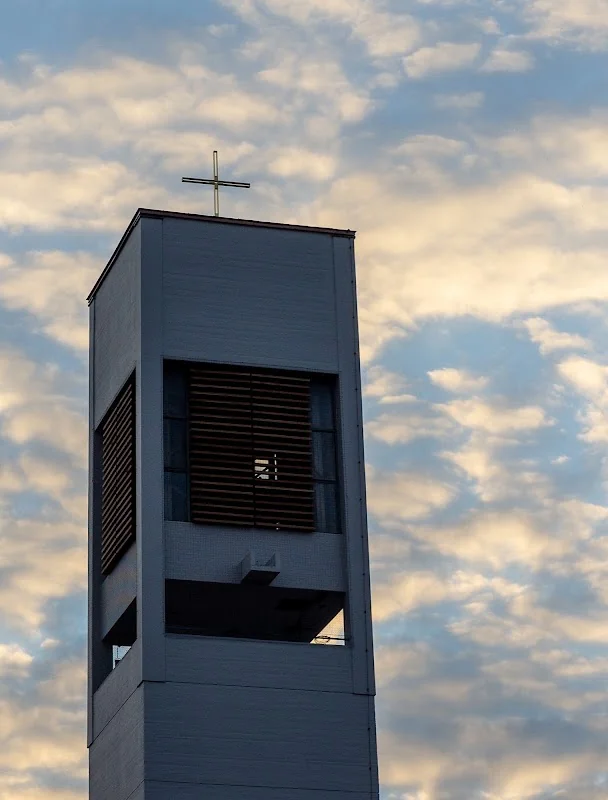
The free-standing bell tower is also part of the strong appearance of the ensemble. It is 30 meters high, built of exposed concrete, and houses the bell chamber with four bells. From the platform below, there is a wide view over the neighborhood and as far as Nuremberg, making the tower also a landmark in the urban landscape. The tower clock strikes every quarter hour, and at 7:00 AM and 6:00 PM, the daily ringing sounds over Hardhöhe. On Sundays, the bells call the community to worship with the tones d, f, g, and a. Each of the four bells has its own function and symbolism, so the tower plays an important role not only acoustically but also in content. For visitors who perceive the church from afar, the ringing is often the first contact. For the neighborhood, it is part of the rhythm of the quarter. Thus, the bell tower connects liturgy, everyday life, and neighborhood identity in a very vivid way. ([heilig-geist-fuerth.de](https://www.heilig-geist-fuerth.de/raeume/glockenturm?utm_source=openai))
Children, Youth, and Neighborhood Work on Hardhöhe
The Heilig-Geist community clearly sees itself as a family and neighborhood community. The website explicitly highlights offerings for children and families, including crawling groups, family church, children's days, and singing school. For children and youth, there are fixed groups and formats that connect community, faith, and music. The singing school rehearses weekly in the community center, and for youth, there are confirmation courses, teen meetings, youngsters groups, and other offerings tailored to different age levels. Particularly important is the attitude: young people should not only participate but also try things out, co-create, and ask questions. This fits well with the character of the community, which consciously opens its space for young people and thus continuously involves new generations. Families looking for a place where children are not only included but actively welcomed will find here a very broad and well-networked offering. ([heilig-geist-fuerth.de](https://www.heilig-geist-fuerth.de/leben/kinder-und-familien?utm_source=openai))
In the adult circle and in social work, the community is also strongly rooted in the neighborhood. There are pastoral care offerings, an open attitude for conversations, and the request to reach out directly in challenging life situations. Additionally, there are the diaconal association, the Fürth food bank, collaborations in the Hardhöhe network, and neighborhood work under GeH Hin. The community thus consciously sees itself not only as a place of worship but as part of a social network that supports people in everyday life. This is also evident in the daycare centers and after-school care programs run by the community, as well as in the regular activities in the area of One World and in ecumenical and neighborhood offerings. For Hardhöhe, Heilig Geist is thus a significant place where church, social work, music, and education intertwine. Those who only know the location as a parish office or church will discover a much broader profile with a clear impact on the entire neighborhood. ([heilig-geist-fuerth.de](https://www.heilig-geist-fuerth.de/glaube/seelsorge?utm_source=openai))
Sources:
- Evang.-Luth. Congregation Heilig Geist Fürth – Homepage
- Evang.-Luth. Deanery Fürth – Fürth Heilig-Geist-Kirche
- Evang.-Luth. Congregation Heilig Geist Fürth – Contact
- Evang.-Luth. Congregation Heilig Geist Fürth – Church
- Evang.-Luth. Congregation Heilig Geist Fürth – History
- Evang.-Luth. Congregation Heilig Geist Fürth – Community Hall
- Evang.-Luth. Congregation Heilig Geist Fürth – Organ
Mehr anzeigenWeniger anzeigen
Ev. Luth. Parish Office Heilig-Geist-Kirche | Contact & Directions
The Evang.-Luth. congregation Heilig Geist in Fürth is much more than a single church building on Hardhöhe. Here, the parish office, place of worship, community rooms, and diverse neighborhood work come together at a location that has become a familiar anchor for many people in the district. For more than fifty years, the community has brought together people with very different life stories on the prominent church grounds, and it is precisely from this that its special character emerges: open, inviting, and anchored in the everyday life of the neighborhood. The building complex is prominently located at Max-Planck-Straße 15, the church is open daily, and the location is used for both quiet visits and lively community events. Anyone seeking orientation, spiritual guidance, or simply a reliable place in Fürth will find here an address with clear structure, easily accessible location, and a community that consciously connects faith, music, encounter, and social responsibility. ([fuerth-evangelisch.de](https://www.fuerth-evangelisch.de/fuerth-heilig-geist-kirche))
Directions, Contact, and Opening Hours at Max-Planck-Straße
The church center and parish office of Heilig-Geist-Kirche is located at Max-Planck-Straße 15 in 90766 Fürth on Hardhöhe. The community can be reached by phone at 0911 731703, by fax at 0911 757170, and by email through the parish office. The contact page also lists fixed opening hours for the parish office: Monday from 3:00 PM to 5:00 PM, Tuesday from 9:00 AM to 11:00 AM, Wednesday from 10:00 AM to 12:00 PM and from 2:30 PM to 4:00 PM, and Thursday from 9:00 AM to 11:00 AM. This is helpful for visitors, as it allows for the planning of pastoral conversations, organizational concerns, or a brief personal appointment. The church itself is open daily from 9:00 AM to 5:00 PM according to the deanery page, so there is also space for a quiet visit outside of service times. Anyone looking for a place where administration, encounter, and spiritual life come together directly will find here a very clear and user-friendly structure. ([heilig-geist-fuerth.de](https://www.heilig-geist-fuerth.de/kontakt))
For driving directions, the community explicitly recommends access via Soldnerstraße, at the pedestrian crossing by the secondary school. This makes orientation on site relatively simple, even if the church center itself is located more in a residential and neighborhood environment than on a major traffic axis. The location is also easily accessible by public transport: U-Bahn line 1 stops at the Hardhöhe station, and bus lines 171 and 176 also stop at Hardhöhe. This connection makes the place interesting for community members from Fürth and the surrounding area as well as for people coming for pastoral care, music, family offerings, or an event. Hardhöhe is clearly connected to the community, and the address thus serves not only as a mailing address but as a real meeting point in everyday life. Those visiting for the first time should simply orient themselves at the U-Bahn station and at the access via Soldnerstraße. ([heilig-geist-fuerth.de](https://www.heilig-geist-fuerth.de/kontakt))
History of Heilig-Geist-Kirche on Hardhöhe
The history of the community is relatively young but remarkable in its development. In the early 1960s, house groups and subsequently house services emerged in the newly developed district on Fürth's Hardhöhe. At that time, Vicar Wilfried von Zitzewitz from St. Martin was responsible. Thus, the community did not grow out of an old village core but in an environment where many people were newly arriving and had to gradually build a common identity. This initial situation continues to shape the Heilig-Geist community to this day: it has become a place where newcomers, families, later refugees, and people with very different religious experiences live together as a community. In 1963, the community became formally independent, and on November 3, 1963, the church center was consecrated. This gave Hardhöhe a fixed spiritual center that structured the rapidly growing district not only architecturally but also socially and spiritually. ([heilig-geist-fuerth.de](https://www.heilig-geist-fuerth.de/gemeinde/geschichte))
The church building itself was constructed in 1962/63 according to the plans of architect Theo Steinhauser and was also consecrated on November 3, 1963. Early on, additional defining elements were added: in 1965, the ringing was supplemented with four bells, in 1967 the organ was installed, and in the following decades, the community house, church, and tower were renovated multiple times. Particularly important was the comprehensive renovation in 2012 and 2013. During this time, the community rooms were integrated into the church building, the church center was reorganized, and the remodeled church was reconsecrated on November 3, 2013. For the community, this was more than a construction measure. The location became more compact, inviting, and versatile. From a rather separate ensemble emerged a church center where worship, administration, encounter, music, and group work come closely together. This renovation shows that the community has continually adapted its development to the needs of the neighborhood. ([heilig-geist-fuerth.de](https://www.heilig-geist-fuerth.de/gemeinde/geschichte))
The social aspect of the history is also significant. The community took on responsibility early on and became the sponsor of daycare centers and an after-school care program. Later, neighborhood work under the keyword GeH Hin, the diaconal association, the work of the Fürth food bank, and other initiatives were added. In retrospect, it becomes clear that Heilig Geist was never just a place for Sunday worship but a center for very different life situations. Even in the early years, people from very different backgrounds came together, including families from other neighborhoods, refugees, and later newcomers from different regions. Contacts with a partner congregation in the Czech city of Pilsen are also part of the history. Since the 1970s, work related to the One World has played an important role, such as through bazaars and solidarity actions. All of this shows that the Heilig-Geist community on Hardhöhe has not only been built but has been consciously shaped over decades. ([heilig-geist-fuerth.de](https://www.heilig-geist-fuerth.de/gemeinde/geschichte))
Worship Services, Taizé Prayer, and Spiritual Life
The regular Sunday service is the spiritual center of the community. The bells ring at 9:15 AM from the tower to send people on their way, and the service begins at 9:30 AM with a short organ prelude. This is followed by prayers, communal singing, and the sermon, making the celebration last about an hour. This format is intentionally low-threshold and clearly structured: those seeking peace receive a reliable framework, and those wishing to participate more actively find opportunities for involvement in the service design. Additionally, the community regularly celebrates Holy Communion in a large circle around the altar. Before and after the service, the One World sale is also open, making the visit not only liturgical but also socially and practically embedded. The services are thus not an isolated program point but part of a vibrant community day where encounter, prayer, and engagement intertwine. ([heilig-geist-fuerth.de](https://www.heilig-geist-fuerth.de/glaube/gottesdienste))
A special profile is given to spiritual life through the Taizé prayer. In rotation with the congregations of St. Martin and Christkönig, a Taizé prayer takes place in Heilig-Geist-Kirche every third month. The community explicitly describes this form as a space of reconciliation, supported by typical Taizé songs, prayers, silence, and candlelight. This fits well with the character of the place: Heilig Geist is not a loud event location but a community that consciously focuses on atmosphere, gathering, and inner peace. Especially in a neighborhood where many people are very differently engaged in everyday life, this mix of music, silence, and communal form can be a strong counterpoint to the hustle and bustle. Those looking for a place for contemplative services, ecumenical impulses, or a quieter spiritual format will find here a community that sensibly combines classic Sunday liturgy and meditative elements. ([heilig-geist-fuerth.de](https://www.heilig-geist-fuerth.de/glaube/gottesdienste))
Rooms, Foyer, Community Hall, and Bell Tower
The church space itself is the architectural centerpiece of the complex. Particularly defining is the altar wall, a concrete sculpture by Munich sculptor Karlheinz Hofmann. It depicts the Pentecost miracle, i.e., the outpouring of the Holy Spirit on the disciples, on an area of 11 by 13 meters. The design appears powerful but not oppressive. This impression is important for the space: it does not aim to intimidate monumentally but to make spiritual presence visible. Additionally, there is the altar Bible with the dedication from former Chancellor Ludwig Erhard, who, as a son of the city of Fürth, gifted this to the community. The altar itself is made of light travertine, and the altar cross with three rock crystals marks the liturgical center. The paraments on the altar and pulpit also contribute to the special effect, as do the bronze candelabrum and the Easter candle, which burns during services, baptisms, and communion. These details show how carefully the space has been designed and how strongly symbolism and material interact in Heilig-Geist-Kirche. ([heilig-geist-fuerth.de](https://www.heilig-geist-fuerth.de/raeume/kirche))
The renovation in 2012/13 also created a baptismal chapel. This was made possible by relocating the organ from the south side of the room to the north side. This gave the church a gallery and an independent baptism area below. There stands the baptismal font made of light travertine with a bronze basin, and behind it is the only stained glass window in the church. It shows a dove as a symbol of the Holy Spirit and baptism, as well as a water surface that breaks colorfully. Together with the changed spatial layout, this solution makes it clear that the church center has not only grown historically but has been consciously further developed. The connection of baptism, communion, and Pentecost motif is architecturally very clearly readable here. Especially visitors interested in church space, art, and liturgy receive a rarely dense connection of theological statement and spatial design at this place. ([heilig-geist-fuerth.de](https://www.heilig-geist-fuerth.de/raeume/kirche))
The building also includes a foyer, which after the renovation is used for exhibitions, receptions, and the regular One World sale. It serves as a bridge between church and everyday life and is a visible meeting point in the house with its red counter. The community hall is located on the upper floor of the community center and is also accessible by elevator. It is available to community groups but is also used for cultural events such as readings and small concerts, as well as for meetings. With row seating, it accommodates about 80 guests. This area is complemented by a tea kitchen on the same floor. This makes the place functionally very versatile: services, group work, conversations, cultural formats, and internal meetings can take place directly in the same building. This mix of sacred space, meeting zone, and multipurpose hall makes Heilig-Geist-Kirche an surprisingly flexible location in the neighborhood. ([heilig-geist-fuerth.de](https://www.heilig-geist-fuerth.de/raeume/gemeindesaal?utm_source=openai))
Organ, Sound, and Bell Tower
Musically, Heilig-Geist-Kirche also has a clear profile. The organ was built in 1967 by Steinmeyer & Co. in Oettingen. It has two manuals and a pedal and is explicitly understood by the community as an instrument that meets the requirements of liturgical use. This is particularly interesting: it is not about a pure concert monument but an instrument that supports liturgical everyday life. Due to the renovation in 2012/13, the organ had to be relocated and then re-tuned so that it fits well into the space again. This shows how seriously the community takes the connection between architecture and sound. For services, choral accompaniment, and the musical design of the church year, the organ remains a central component of the house to this day. Those interested in church music will find here a historically grown but functionally further developed instrument with a clear role in community life. ([heilig-geist-fuerth.de](https://www.heilig-geist-fuerth.de/musik/orgel))
The free-standing bell tower is also part of the strong appearance of the ensemble. It is 30 meters high, built of exposed concrete, and houses the bell chamber with four bells. From the platform below, there is a wide view over the neighborhood and as far as Nuremberg, making the tower also a landmark in the urban landscape. The tower clock strikes every quarter hour, and at 7:00 AM and 6:00 PM, the daily ringing sounds over Hardhöhe. On Sundays, the bells call the community to worship with the tones d, f, g, and a. Each of the four bells has its own function and symbolism, so the tower plays an important role not only acoustically but also in content. For visitors who perceive the church from afar, the ringing is often the first contact. For the neighborhood, it is part of the rhythm of the quarter. Thus, the bell tower connects liturgy, everyday life, and neighborhood identity in a very vivid way. ([heilig-geist-fuerth.de](https://www.heilig-geist-fuerth.de/raeume/glockenturm?utm_source=openai))
Children, Youth, and Neighborhood Work on Hardhöhe
The Heilig-Geist community clearly sees itself as a family and neighborhood community. The website explicitly highlights offerings for children and families, including crawling groups, family church, children's days, and singing school. For children and youth, there are fixed groups and formats that connect community, faith, and music. The singing school rehearses weekly in the community center, and for youth, there are confirmation courses, teen meetings, youngsters groups, and other offerings tailored to different age levels. Particularly important is the attitude: young people should not only participate but also try things out, co-create, and ask questions. This fits well with the character of the community, which consciously opens its space for young people and thus continuously involves new generations. Families looking for a place where children are not only included but actively welcomed will find here a very broad and well-networked offering. ([heilig-geist-fuerth.de](https://www.heilig-geist-fuerth.de/leben/kinder-und-familien?utm_source=openai))
In the adult circle and in social work, the community is also strongly rooted in the neighborhood. There are pastoral care offerings, an open attitude for conversations, and the request to reach out directly in challenging life situations. Additionally, there are the diaconal association, the Fürth food bank, collaborations in the Hardhöhe network, and neighborhood work under GeH Hin. The community thus consciously sees itself not only as a place of worship but as part of a social network that supports people in everyday life. This is also evident in the daycare centers and after-school care programs run by the community, as well as in the regular activities in the area of One World and in ecumenical and neighborhood offerings. For Hardhöhe, Heilig Geist is thus a significant place where church, social work, music, and education intertwine. Those who only know the location as a parish office or church will discover a much broader profile with a clear impact on the entire neighborhood. ([heilig-geist-fuerth.de](https://www.heilig-geist-fuerth.de/glaube/seelsorge?utm_source=openai))
Sources:
- Evang.-Luth. Congregation Heilig Geist Fürth – Homepage
- Evang.-Luth. Deanery Fürth – Fürth Heilig-Geist-Kirche
- Evang.-Luth. Congregation Heilig Geist Fürth – Contact
- Evang.-Luth. Congregation Heilig Geist Fürth – Church
- Evang.-Luth. Congregation Heilig Geist Fürth – History
- Evang.-Luth. Congregation Heilig Geist Fürth – Community Hall
- Evang.-Luth. Congregation Heilig Geist Fürth – Organ
Ev. Luth. Parish Office Heilig-Geist-Kirche | Contact & Directions
The Evang.-Luth. congregation Heilig Geist in Fürth is much more than a single church building on Hardhöhe. Here, the parish office, place of worship, community rooms, and diverse neighborhood work come together at a location that has become a familiar anchor for many people in the district. For more than fifty years, the community has brought together people with very different life stories on the prominent church grounds, and it is precisely from this that its special character emerges: open, inviting, and anchored in the everyday life of the neighborhood. The building complex is prominently located at Max-Planck-Straße 15, the church is open daily, and the location is used for both quiet visits and lively community events. Anyone seeking orientation, spiritual guidance, or simply a reliable place in Fürth will find here an address with clear structure, easily accessible location, and a community that consciously connects faith, music, encounter, and social responsibility. ([fuerth-evangelisch.de](https://www.fuerth-evangelisch.de/fuerth-heilig-geist-kirche))
Directions, Contact, and Opening Hours at Max-Planck-Straße
The church center and parish office of Heilig-Geist-Kirche is located at Max-Planck-Straße 15 in 90766 Fürth on Hardhöhe. The community can be reached by phone at 0911 731703, by fax at 0911 757170, and by email through the parish office. The contact page also lists fixed opening hours for the parish office: Monday from 3:00 PM to 5:00 PM, Tuesday from 9:00 AM to 11:00 AM, Wednesday from 10:00 AM to 12:00 PM and from 2:30 PM to 4:00 PM, and Thursday from 9:00 AM to 11:00 AM. This is helpful for visitors, as it allows for the planning of pastoral conversations, organizational concerns, or a brief personal appointment. The church itself is open daily from 9:00 AM to 5:00 PM according to the deanery page, so there is also space for a quiet visit outside of service times. Anyone looking for a place where administration, encounter, and spiritual life come together directly will find here a very clear and user-friendly structure. ([heilig-geist-fuerth.de](https://www.heilig-geist-fuerth.de/kontakt))
For driving directions, the community explicitly recommends access via Soldnerstraße, at the pedestrian crossing by the secondary school. This makes orientation on site relatively simple, even if the church center itself is located more in a residential and neighborhood environment than on a major traffic axis. The location is also easily accessible by public transport: U-Bahn line 1 stops at the Hardhöhe station, and bus lines 171 and 176 also stop at Hardhöhe. This connection makes the place interesting for community members from Fürth and the surrounding area as well as for people coming for pastoral care, music, family offerings, or an event. Hardhöhe is clearly connected to the community, and the address thus serves not only as a mailing address but as a real meeting point in everyday life. Those visiting for the first time should simply orient themselves at the U-Bahn station and at the access via Soldnerstraße. ([heilig-geist-fuerth.de](https://www.heilig-geist-fuerth.de/kontakt))
History of Heilig-Geist-Kirche on Hardhöhe
The history of the community is relatively young but remarkable in its development. In the early 1960s, house groups and subsequently house services emerged in the newly developed district on Fürth's Hardhöhe. At that time, Vicar Wilfried von Zitzewitz from St. Martin was responsible. Thus, the community did not grow out of an old village core but in an environment where many people were newly arriving and had to gradually build a common identity. This initial situation continues to shape the Heilig-Geist community to this day: it has become a place where newcomers, families, later refugees, and people with very different religious experiences live together as a community. In 1963, the community became formally independent, and on November 3, 1963, the church center was consecrated. This gave Hardhöhe a fixed spiritual center that structured the rapidly growing district not only architecturally but also socially and spiritually. ([heilig-geist-fuerth.de](https://www.heilig-geist-fuerth.de/gemeinde/geschichte))
The church building itself was constructed in 1962/63 according to the plans of architect Theo Steinhauser and was also consecrated on November 3, 1963. Early on, additional defining elements were added: in 1965, the ringing was supplemented with four bells, in 1967 the organ was installed, and in the following decades, the community house, church, and tower were renovated multiple times. Particularly important was the comprehensive renovation in 2012 and 2013. During this time, the community rooms were integrated into the church building, the church center was reorganized, and the remodeled church was reconsecrated on November 3, 2013. For the community, this was more than a construction measure. The location became more compact, inviting, and versatile. From a rather separate ensemble emerged a church center where worship, administration, encounter, music, and group work come closely together. This renovation shows that the community has continually adapted its development to the needs of the neighborhood. ([heilig-geist-fuerth.de](https://www.heilig-geist-fuerth.de/gemeinde/geschichte))
The social aspect of the history is also significant. The community took on responsibility early on and became the sponsor of daycare centers and an after-school care program. Later, neighborhood work under the keyword GeH Hin, the diaconal association, the work of the Fürth food bank, and other initiatives were added. In retrospect, it becomes clear that Heilig Geist was never just a place for Sunday worship but a center for very different life situations. Even in the early years, people from very different backgrounds came together, including families from other neighborhoods, refugees, and later newcomers from different regions. Contacts with a partner congregation in the Czech city of Pilsen are also part of the history. Since the 1970s, work related to the One World has played an important role, such as through bazaars and solidarity actions. All of this shows that the Heilig-Geist community on Hardhöhe has not only been built but has been consciously shaped over decades. ([heilig-geist-fuerth.de](https://www.heilig-geist-fuerth.de/gemeinde/geschichte))
Worship Services, Taizé Prayer, and Spiritual Life
The regular Sunday service is the spiritual center of the community. The bells ring at 9:15 AM from the tower to send people on their way, and the service begins at 9:30 AM with a short organ prelude. This is followed by prayers, communal singing, and the sermon, making the celebration last about an hour. This format is intentionally low-threshold and clearly structured: those seeking peace receive a reliable framework, and those wishing to participate more actively find opportunities for involvement in the service design. Additionally, the community regularly celebrates Holy Communion in a large circle around the altar. Before and after the service, the One World sale is also open, making the visit not only liturgical but also socially and practically embedded. The services are thus not an isolated program point but part of a vibrant community day where encounter, prayer, and engagement intertwine. ([heilig-geist-fuerth.de](https://www.heilig-geist-fuerth.de/glaube/gottesdienste))
A special profile is given to spiritual life through the Taizé prayer. In rotation with the congregations of St. Martin and Christkönig, a Taizé prayer takes place in Heilig-Geist-Kirche every third month. The community explicitly describes this form as a space of reconciliation, supported by typical Taizé songs, prayers, silence, and candlelight. This fits well with the character of the place: Heilig Geist is not a loud event location but a community that consciously focuses on atmosphere, gathering, and inner peace. Especially in a neighborhood where many people are very differently engaged in everyday life, this mix of music, silence, and communal form can be a strong counterpoint to the hustle and bustle. Those looking for a place for contemplative services, ecumenical impulses, or a quieter spiritual format will find here a community that sensibly combines classic Sunday liturgy and meditative elements. ([heilig-geist-fuerth.de](https://www.heilig-geist-fuerth.de/glaube/gottesdienste))
Rooms, Foyer, Community Hall, and Bell Tower
The church space itself is the architectural centerpiece of the complex. Particularly defining is the altar wall, a concrete sculpture by Munich sculptor Karlheinz Hofmann. It depicts the Pentecost miracle, i.e., the outpouring of the Holy Spirit on the disciples, on an area of 11 by 13 meters. The design appears powerful but not oppressive. This impression is important for the space: it does not aim to intimidate monumentally but to make spiritual presence visible. Additionally, there is the altar Bible with the dedication from former Chancellor Ludwig Erhard, who, as a son of the city of Fürth, gifted this to the community. The altar itself is made of light travertine, and the altar cross with three rock crystals marks the liturgical center. The paraments on the altar and pulpit also contribute to the special effect, as do the bronze candelabrum and the Easter candle, which burns during services, baptisms, and communion. These details show how carefully the space has been designed and how strongly symbolism and material interact in Heilig-Geist-Kirche. ([heilig-geist-fuerth.de](https://www.heilig-geist-fuerth.de/raeume/kirche))
The renovation in 2012/13 also created a baptismal chapel. This was made possible by relocating the organ from the south side of the room to the north side. This gave the church a gallery and an independent baptism area below. There stands the baptismal font made of light travertine with a bronze basin, and behind it is the only stained glass window in the church. It shows a dove as a symbol of the Holy Spirit and baptism, as well as a water surface that breaks colorfully. Together with the changed spatial layout, this solution makes it clear that the church center has not only grown historically but has been consciously further developed. The connection of baptism, communion, and Pentecost motif is architecturally very clearly readable here. Especially visitors interested in church space, art, and liturgy receive a rarely dense connection of theological statement and spatial design at this place. ([heilig-geist-fuerth.de](https://www.heilig-geist-fuerth.de/raeume/kirche))
The building also includes a foyer, which after the renovation is used for exhibitions, receptions, and the regular One World sale. It serves as a bridge between church and everyday life and is a visible meeting point in the house with its red counter. The community hall is located on the upper floor of the community center and is also accessible by elevator. It is available to community groups but is also used for cultural events such as readings and small concerts, as well as for meetings. With row seating, it accommodates about 80 guests. This area is complemented by a tea kitchen on the same floor. This makes the place functionally very versatile: services, group work, conversations, cultural formats, and internal meetings can take place directly in the same building. This mix of sacred space, meeting zone, and multipurpose hall makes Heilig-Geist-Kirche an surprisingly flexible location in the neighborhood. ([heilig-geist-fuerth.de](https://www.heilig-geist-fuerth.de/raeume/gemeindesaal?utm_source=openai))
Organ, Sound, and Bell Tower
Musically, Heilig-Geist-Kirche also has a clear profile. The organ was built in 1967 by Steinmeyer & Co. in Oettingen. It has two manuals and a pedal and is explicitly understood by the community as an instrument that meets the requirements of liturgical use. This is particularly interesting: it is not about a pure concert monument but an instrument that supports liturgical everyday life. Due to the renovation in 2012/13, the organ had to be relocated and then re-tuned so that it fits well into the space again. This shows how seriously the community takes the connection between architecture and sound. For services, choral accompaniment, and the musical design of the church year, the organ remains a central component of the house to this day. Those interested in church music will find here a historically grown but functionally further developed instrument with a clear role in community life. ([heilig-geist-fuerth.de](https://www.heilig-geist-fuerth.de/musik/orgel))
The free-standing bell tower is also part of the strong appearance of the ensemble. It is 30 meters high, built of exposed concrete, and houses the bell chamber with four bells. From the platform below, there is a wide view over the neighborhood and as far as Nuremberg, making the tower also a landmark in the urban landscape. The tower clock strikes every quarter hour, and at 7:00 AM and 6:00 PM, the daily ringing sounds over Hardhöhe. On Sundays, the bells call the community to worship with the tones d, f, g, and a. Each of the four bells has its own function and symbolism, so the tower plays an important role not only acoustically but also in content. For visitors who perceive the church from afar, the ringing is often the first contact. For the neighborhood, it is part of the rhythm of the quarter. Thus, the bell tower connects liturgy, everyday life, and neighborhood identity in a very vivid way. ([heilig-geist-fuerth.de](https://www.heilig-geist-fuerth.de/raeume/glockenturm?utm_source=openai))
Children, Youth, and Neighborhood Work on Hardhöhe
The Heilig-Geist community clearly sees itself as a family and neighborhood community. The website explicitly highlights offerings for children and families, including crawling groups, family church, children's days, and singing school. For children and youth, there are fixed groups and formats that connect community, faith, and music. The singing school rehearses weekly in the community center, and for youth, there are confirmation courses, teen meetings, youngsters groups, and other offerings tailored to different age levels. Particularly important is the attitude: young people should not only participate but also try things out, co-create, and ask questions. This fits well with the character of the community, which consciously opens its space for young people and thus continuously involves new generations. Families looking for a place where children are not only included but actively welcomed will find here a very broad and well-networked offering. ([heilig-geist-fuerth.de](https://www.heilig-geist-fuerth.de/leben/kinder-und-familien?utm_source=openai))
In the adult circle and in social work, the community is also strongly rooted in the neighborhood. There are pastoral care offerings, an open attitude for conversations, and the request to reach out directly in challenging life situations. Additionally, there are the diaconal association, the Fürth food bank, collaborations in the Hardhöhe network, and neighborhood work under GeH Hin. The community thus consciously sees itself not only as a place of worship but as part of a social network that supports people in everyday life. This is also evident in the daycare centers and after-school care programs run by the community, as well as in the regular activities in the area of One World and in ecumenical and neighborhood offerings. For Hardhöhe, Heilig Geist is thus a significant place where church, social work, music, and education intertwine. Those who only know the location as a parish office or church will discover a much broader profile with a clear impact on the entire neighborhood. ([heilig-geist-fuerth.de](https://www.heilig-geist-fuerth.de/glaube/seelsorge?utm_source=openai))
Sources:
- Evang.-Luth. Congregation Heilig Geist Fürth – Homepage
- Evang.-Luth. Deanery Fürth – Fürth Heilig-Geist-Kirche
- Evang.-Luth. Congregation Heilig Geist Fürth – Contact
- Evang.-Luth. Congregation Heilig Geist Fürth – Church
- Evang.-Luth. Congregation Heilig Geist Fürth – History
- Evang.-Luth. Congregation Heilig Geist Fürth – Community Hall
- Evang.-Luth. Congregation Heilig Geist Fürth – Organ
Upcoming Events
Crawling Group Holy Spirit on Hardhöhe
A gentle family experience in Fürth: The Crawling Group Holy Spirit invites babies, toddlers, and parents to play, discover, and exchange. #FamilyTime
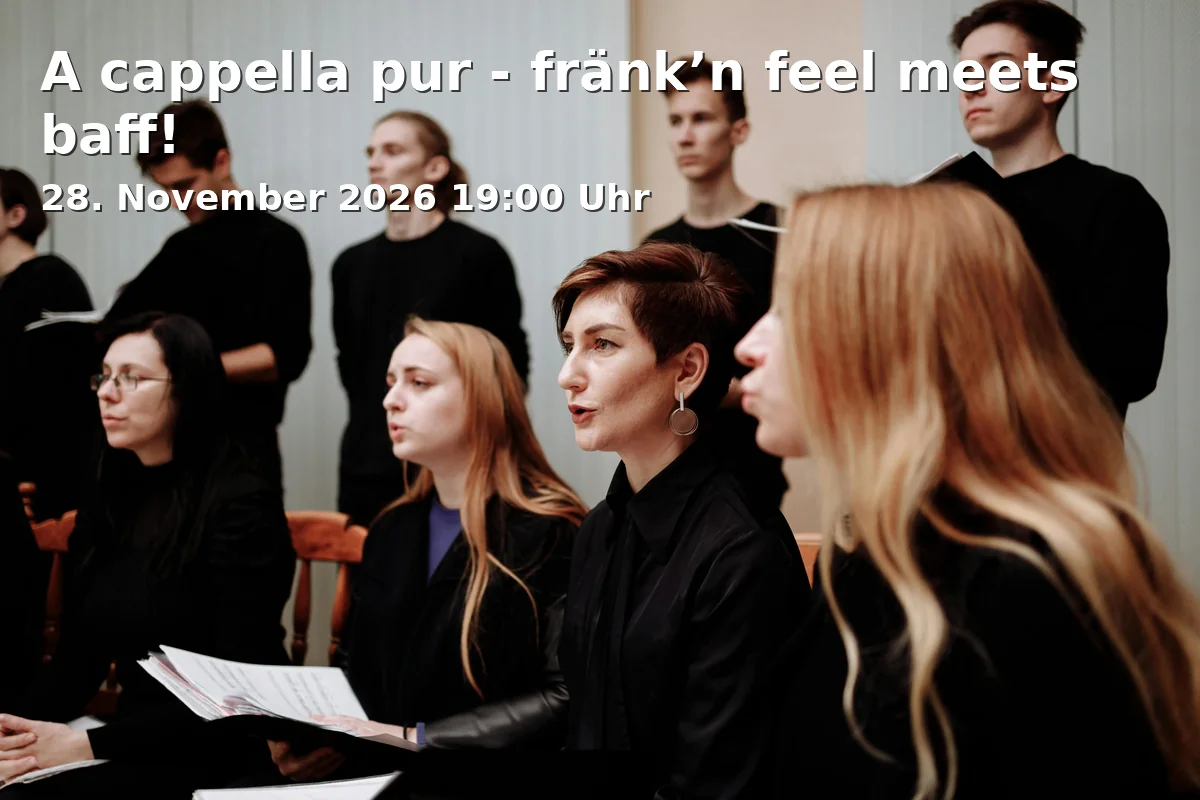
A cappella pure - fränk’n feel meets baff!
Fürth experiences an a cappella evening full of energy, harmony, and surprises at the Heilig-Geist-Kirche. 28.11.2026, from 25.80 euros. #A Cappella
Frequently Asked Questions
Reviews
Thomas
6. September 2025
The bells ring every day at 7 AM. Very annoying when you want to sleep in on the weekend. I find this to be a noise nuisance.
Birgit Schmitt-Groner
28. October 2023
My nephew recently celebrated his wedding in the church with his lovely bride. The pastor spoke such beautiful words about the two of them. The organ was played so beautifully by a woman. What I found so extraordinary about the church is that there’s no rigid seating arrangement. There are individual chairs that are nicely padded and can be arranged as needed. The church isn’t as stiff and almost intimidating as many others. You feel comfortable, and then there’s the warmth of the pastor - just perfect. After the ceremony, there was a reception in the foyer with small drinks and snacks. I’ve never seen a church so individualized. Highly recommend.
Sabrina
6. March 2023
The Holy Spirit Church impresses with its modern architectural style. The atmosphere of the church is very inviting, you feel comfortable right away. The service for our child's baptism was beautifully arranged by Mr. Ehrensperger. This day will always remain a lovely memory for us.
Thomas Grieshammer
8. October 2023
A modern church where you can actually feel comfortable. I don’t even know how you can complain about bells; I used to live right next to a church where you could hear the hour chime at night. I miss that here when I can’t sleep at night.
Schlingel Liese
10. September 2023
Massive noise nuisance from unnecessarily loud sound coverage of the entire neighborhood with frequent, long, and incredibly loud bell ringing. The few people who still have an interest in the institution of the church can surely practice their faith without such noise nuisance. Sleeping in summer with the window open is impossible unless you want to be thrown out of bed earlier than on workdays. So you have the choice between sleep deprivation due to heat and sleep deprivation due to noise.