
Würzburger Str. 91, Fürth-Unterfarrnbach
Würzburger Str. 91, 90766 Fürth, Germany
Christ the King Fürth | Church & Services
Christ the King Fürth is a place where architecture, liturgy, and community life are closely intertwined. The parish in the western part of Fürth is relatively young, but has grown historically dense: Already in the late 1920s, there were considerations for a dedicated Catholic church, a first small church was built in 1939, it was destroyed in 1944, a provisional church followed in 1948, the Carmelites took over pastoral care in 1951, Christ the King was elevated to an independent parish in 1956, and the current church was built between 1959 and 1961. It was consecrated on August 27, 1961. Today, services, church music, youth groups, sacramental pastoral care, and the parish center with its barrier-free hall shape the image of the community. ([christkoenig-fuerth.de](https://christkoenig-fuerth.de/menu-2-christkoenig-fierth/05-geschichte-der-gemeinde?utm_source=openai))
Christ the King Church in Fürth: History from 1939 to Today
The history of Christ the King Fürth is typical of the Catholic reconstruction in post-war Germany and is also very locally rooted. The official chronicle of the parish describes that already in the late 1920s, the idea of a dedicated church location in the west of Fürth arose in the parish of Our Lady. In 1939, a first small church was completed at the Martersäule, but a bombing raid completely destroyed it in 1944. Afterwards, the faithful initially took refuge in the Protestant Martinskirche; after its destruction, services were held in the Wilhelmshöhe inn. In 1948, a provisional church was erected, which remained until 1983. This sequence shows how strong the need for a stable Catholic center in the growing western part of Fürth was. ([christkoenig-fuerth.de](https://christkoenig-fuerth.de/menu-2-christkoenig-fierth/05-geschichte-der-gemeinde?utm_source=openai))
The actual expansion of the community began with the takeover by the Carmelites in 1951. Just a year later, the construction of the parish house, monastery, and kindergarten began; in 1953, the Auerbach Sisters joined in, supporting the kindergarten. In 1956, Christ the King became an independent Catholic parish. The current church was then built between 1959 and 1961 according to plans by Friedrich Richter and Friedrich Feuerlein, with artistic design contributions from Georg Weidenbacher. This time frame makes it clear that Christ the King did not emerge from a single large construction act, but from several layers of emergency solutions, pastoral stabilization, and architectural reorganization. For this reason, the church is more than just a building: it is a visible result of a community that has organized itself and re-established itself during a phase of significant change. ([christkoenig-fuerth.de](https://christkoenig-fuerth.de/seiten/menu-2-christkoenig-fierth/03-die-christkoenigkirche?component-id=686b38e0-1012-47be-8497-869087672b16&pageindex=20&utm_source=openai))
Architecture, Brick, and Artworks in Christ the King Church
Architecturally, Christ the King is one of the most impressive church buildings of post-war modernism in Fürth. The official church description mentions a cross-shaped floor plan, a length of 40 meters, a width of 16 or 20 meters, and a height of 15.5 meters. The freestanding campanile is 40 meters high and bears a 7-meter high cross. The church is made of reinforced concrete, visible brickwork, and glass. Sources also describe that the seating rows can accommodate nearly 500 people. These figures already show that the space is generously conceived without appearing monumental. The facade and the interior follow a clear, factual design language that consciously focused on reduction, light, and symbolic effect during the post-war period. ([christkoenig-fuerth.de](https://christkoenig-fuerth.de/seiten/menu-2-christkoenig-fierth/03-die-christkoenigkirche?component-id=686b38e0-1012-47be-8497-869087672b16&pageindex=20&utm_source=openai))
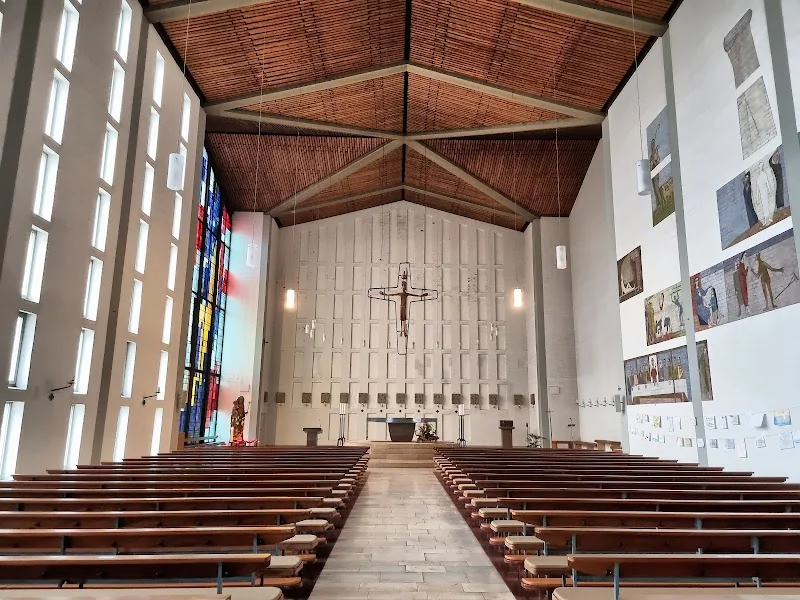
Particularly defining is the artistic decoration. Above the portal is a roughly 6-meter high brick relief by Herbert Bessel depicting Christ and the four Evangelists. Inside, the altar is dominated by a large, light crucifix with a crowned Christ, created by Matthäus Bayer. The stained glass window next to the altar is a work by Hans Langhojer and Georg Weidenbacher; opposite are the frescoes by Eitel Klein, depicting scenes from salvation history. Additionally, there is the baptismal chapel with its concrete-glass window, the confessionals on the closed wall side, and the lower church with early Christian symbols in the visible brickwork. All these elements make Christ the King a church that does not work with excess but with the effect of material, light, and pictorial signs. It is precisely in this restraint that its uniqueness lies: the space does not aim to impress but to concentrate. ([christkoenig-fuerth.de](https://christkoenig-fuerth.de/seiten/menu-2-christkoenig-fierth/03-die-christkoenigkirche?component-id=686b38e0-1012-47be-8497-869087672b16&pageindex=20&utm_source=openai))
Parish Center and Parish Hall: Spaces for Community, Celebrations, and Encounters
The profile of Christ the King includes not only the church but also the parish center. The new parish hall was consecrated and opened on July 8, 2012. The official description emphasizes the direct access to the church, the barrier-free accessibility, the wide glass front, and the good natural light. Movable walls allow the hall to be separated from the connecting corridor between the church and the parish home or spatially expanded. An attached kitchen has been designed so that several people can work in parallel. Thus, the parish hall is not just an auxiliary room but a flexible community space that combines liturgical, social, and organizational purposes. It forms the third section of the parish center project and connects to the grown structure of church, parish house, and community center. ([christkoenig-fuerth.de](https://christkoenig-fuerth.de/menu-2-christkoenig-fierth/04-pfarrzentrum/))
This space is particularly important for community practice because it enables offerings beyond the Sunday service. The parish mentions groups, circles, family formats, youth activities, dance circles, and church meetings in the vicinity of Christ the King. The parish hall is thus a place where the community remains visible even when no mass is being celebrated. It is suitable for meetings, encounters, educational offerings, small celebrations, and events that are to take place in a church-related context. The fact that the parish describes the parish center as a project that has grown in stages also shows how important spatial infrastructure is for the development of a vibrant community. Therefore, those looking for Christ the King Fürth are not only looking for a church space but a whole pastoral environment where organization, hospitality, and everyday life come together. This connection of sacred place and functional community space makes the location particularly practical. ([christkoenig-fuerth.de](https://christkoenig-fuerth.de/menu-2-christkoenig-fierth/04-pfarrzentrum/))
Services, Confession, and Sacraments at Christ the King Fürth
The official parish website shows that Christ the King remains a strongly liturgically shaped place today. The page for services at Christ the King publishes regular Eucharistic celebrations; the current service schedule lists Wednesday mornings, Sunday mornings, and Sunday evenings as recurring times. At the same time, the page makes it clear that Christ the King is not only a place of worship but also a pastoral center for accompanying people in different life phases. The parish provides offerings for baptism, first communion, confirmation, confession, marriage, illness, farewell and mourning, as well as re-entry into the church. This is important because inquiries about Christ the King often do not only refer to the church building but also to the specific question of pastoral care, sacraments, and personal accompaniment. ([christkoenig-fuerth.de](https://christkoenig-fuerth.de/menu-2-christkoenig-fierth/02-gottesdienstordnung-ck))
Particularly practical is the confession arrangement: The official page states that confession opportunities take place every second Saturday at 5:00 PM before the Saturday evening mass; additionally, there are further confession offerings during Advent and Lent. This form of openness is an underestimated added value of a vibrant parish for many people, as it creates reliability while also allowing space for personal conversations. The Word of God celebrations in the Grete-Schickedanz Home also show that Christ the King does not remain limited to the core space of the church but works into the wider social space. Therefore, those searching for Christ the King Fürth, Christ the King church, or Christ the King Sunday will find a community where liturgy is not abstract but present in the everyday life of the city. This connection of binding order and open pastoral care is one of the strengths of the place. ([christkoenig-fuerth.de](https://christkoenig-fuerth.de/menu-2-christkoenig-fierth/02-gottesdienstordnung-ck))
Children, Youth, and Church Music as a Vibrant Community Life
Christ the King Fürth thrives not only on its building history and service schedule but also on a very active community culture. The official website lists several formats for children and youth work: altar servers, KjG Christ the King, children’s and youth groups, summer camps, winter camps, and other spaces for encounter. Additionally, the presence of the DPSG scout troop Sophie Magdalena Scholl is noted. This diversity shows that Christ the King is not just a place for occasional sacraments for young people but a permanent space for experience where community is practiced. This is a strong signal, especially for families, as it creates a reliable structure beyond the Sunday visit. ([christkoenig-fuerth.de](https://christkoenig-fuerth.de/menu-2-christkoenig-fierth/06-gruppen-und-kreise-christkoenig/kinder-und-jugend/?utm_source=openai))
Church music is also exceptionally well established at Christ the King. The homepage mentions church choir, schola, children’s choir, organ, the Gotteslober, and small organ as fixed thematic areas. This profile is complemented by other groups such as dance circles and Taizé prayer, which intensify community life beyond liturgy. The dance circle meets regularly in the parish hall, and the parish even mentions an annual parish carnival. This makes it clear that Christ the King is not only a place of silent devotion but also a place of social warmth and cultural activity. Such offerings often appear unspectacular from the outside but are central to the binding of a community. Those typing in search terms like Christ the King kindergarten, Christ the King church, or Christ the King kingdom will find themselves in an environment where faith, education, music, and encounter are not thought of separately. This is the strongest trademark of the parish. ([christkoenig-fuerth.de](https://christkoenig-fuerth.de/))
Christ the King Festival, Christ the King Sunday, and the Special Place in Western Fürth
The name Christ the King refers to a central feast of the church year. The Archdiocese of Bamberg describes Christ the King Sunday as the conclusion of the church year; katholisch.de explains that the feast looks at the kingship of Christ and is celebrated at the end of the church year before Advent. Thus, the name of the church gains a theological depth that goes beyond the local designation. Christ the King is not just a community name but a confession: Christ is understood as the center and measure of faith. For a parish with this patronage, this is more than symbolism, as the liturgical reference also shapes the perception of the place. Search queries like Christ the King festival, Christ the King Sunday, and Christ the King kingdom therefore show that many people are not just looking for an address but for meaning. ([festtage-im-kirchenjahr.erzbistum-bamberg.de](https://festtage-im-kirchenjahr.erzbistum-bamberg.de/herrenfeste/christkoenigsfest?utm_source=openai))
Practically, the church is located at a well-placed point in western Fürth. The parish and the city of Fürth list Friedrich-Ebert-Straße 5 as the address; the church is also used in event notices as a venue for concerts and church music. This is an important signal for visitors who want to experience Christ the King as a cultural place. The church is listed in the city of Fürth’s calendar for events of the Fürth Church Music Days, and the tourism page highlights the building as a remarkable church ensemble. For orientation, the clear address information in connection with the respective event is usually sufficient. Those planning a visit can rely on the official service schedule, the parish website, and the city’s event notices. Christ the King is thus both a spiritual place, a community center, and a cultural anchor in the district. ([fuerth.de](https://www.fuerth.de/kultur-freizeit/veranstaltungen-termine/veranstaltungskalender/veranstaltungsdetails/chor-und-orchesterkonzert-zum-advent-1700-07-12-2025-384048/?utm_source=openai))
Sources:
- Christ the King Church – Official Parish Christ the King Fürth ([christkoenig-fuerth.de](https://christkoenig-fuerth.de/seiten/menu-2-christkoenig-fierth/03-die-christkoenigkirche?component-id=686b38e0-1012-47be-8497-869087672b16&pageindex=20&utm_source=openai))
- History of the Parish – Official Parish Christ the King Fürth ([christkoenig-fuerth.de](https://christkoenig-fuerth.de/menu-2-christkoenig-fierth/05-geschichte-der-gemeinde?utm_source=openai))
- Parish Hall and Parish Center – Official Parish Christ the King Fürth ([christkoenig-fuerth.de](https://christkoenig-fuerth.de/menu-2-christkoenig-fierth/04-pfarrzentrum/))
- Choir and Orchestra Concert for Advent – City of Fürth ([fuerth.de](https://www.fuerth.de/kultur-freizeit/veranstaltungen-termine/veranstaltungskalender/veranstaltungsdetails/chor-und-orchesterkonzert-zum-advent-1700-07-12-2025-384048/?utm_source=openai))
- Christ the King Festival – Archdiocese of Bamberg ([festtage-im-kirchenjahr.erzbistum-bamberg.de](https://festtage-im-kirchenjahr.erzbistum-bamberg.de/herrenfeste/christkoenigsfest?utm_source=openai))
- Christ the King Festival – katholisch.de ([katholisch.de](https://www.katholisch.de/artikel/168-jesus-als-herrscher?utm_source=openai))
Mehr anzeigenWeniger anzeigen
Christ the King Fürth | Church & Services
Christ the King Fürth is a place where architecture, liturgy, and community life are closely intertwined. The parish in the western part of Fürth is relatively young, but has grown historically dense: Already in the late 1920s, there were considerations for a dedicated Catholic church, a first small church was built in 1939, it was destroyed in 1944, a provisional church followed in 1948, the Carmelites took over pastoral care in 1951, Christ the King was elevated to an independent parish in 1956, and the current church was built between 1959 and 1961. It was consecrated on August 27, 1961. Today, services, church music, youth groups, sacramental pastoral care, and the parish center with its barrier-free hall shape the image of the community. ([christkoenig-fuerth.de](https://christkoenig-fuerth.de/menu-2-christkoenig-fierth/05-geschichte-der-gemeinde?utm_source=openai))
Christ the King Church in Fürth: History from 1939 to Today
The history of Christ the King Fürth is typical of the Catholic reconstruction in post-war Germany and is also very locally rooted. The official chronicle of the parish describes that already in the late 1920s, the idea of a dedicated church location in the west of Fürth arose in the parish of Our Lady. In 1939, a first small church was completed at the Martersäule, but a bombing raid completely destroyed it in 1944. Afterwards, the faithful initially took refuge in the Protestant Martinskirche; after its destruction, services were held in the Wilhelmshöhe inn. In 1948, a provisional church was erected, which remained until 1983. This sequence shows how strong the need for a stable Catholic center in the growing western part of Fürth was. ([christkoenig-fuerth.de](https://christkoenig-fuerth.de/menu-2-christkoenig-fierth/05-geschichte-der-gemeinde?utm_source=openai))
The actual expansion of the community began with the takeover by the Carmelites in 1951. Just a year later, the construction of the parish house, monastery, and kindergarten began; in 1953, the Auerbach Sisters joined in, supporting the kindergarten. In 1956, Christ the King became an independent Catholic parish. The current church was then built between 1959 and 1961 according to plans by Friedrich Richter and Friedrich Feuerlein, with artistic design contributions from Georg Weidenbacher. This time frame makes it clear that Christ the King did not emerge from a single large construction act, but from several layers of emergency solutions, pastoral stabilization, and architectural reorganization. For this reason, the church is more than just a building: it is a visible result of a community that has organized itself and re-established itself during a phase of significant change. ([christkoenig-fuerth.de](https://christkoenig-fuerth.de/seiten/menu-2-christkoenig-fierth/03-die-christkoenigkirche?component-id=686b38e0-1012-47be-8497-869087672b16&pageindex=20&utm_source=openai))
Architecture, Brick, and Artworks in Christ the King Church
Architecturally, Christ the King is one of the most impressive church buildings of post-war modernism in Fürth. The official church description mentions a cross-shaped floor plan, a length of 40 meters, a width of 16 or 20 meters, and a height of 15.5 meters. The freestanding campanile is 40 meters high and bears a 7-meter high cross. The church is made of reinforced concrete, visible brickwork, and glass. Sources also describe that the seating rows can accommodate nearly 500 people. These figures already show that the space is generously conceived without appearing monumental. The facade and the interior follow a clear, factual design language that consciously focused on reduction, light, and symbolic effect during the post-war period. ([christkoenig-fuerth.de](https://christkoenig-fuerth.de/seiten/menu-2-christkoenig-fierth/03-die-christkoenigkirche?component-id=686b38e0-1012-47be-8497-869087672b16&pageindex=20&utm_source=openai))
Particularly defining is the artistic decoration. Above the portal is a roughly 6-meter high brick relief by Herbert Bessel depicting Christ and the four Evangelists. Inside, the altar is dominated by a large, light crucifix with a crowned Christ, created by Matthäus Bayer. The stained glass window next to the altar is a work by Hans Langhojer and Georg Weidenbacher; opposite are the frescoes by Eitel Klein, depicting scenes from salvation history. Additionally, there is the baptismal chapel with its concrete-glass window, the confessionals on the closed wall side, and the lower church with early Christian symbols in the visible brickwork. All these elements make Christ the King a church that does not work with excess but with the effect of material, light, and pictorial signs. It is precisely in this restraint that its uniqueness lies: the space does not aim to impress but to concentrate. ([christkoenig-fuerth.de](https://christkoenig-fuerth.de/seiten/menu-2-christkoenig-fierth/03-die-christkoenigkirche?component-id=686b38e0-1012-47be-8497-869087672b16&pageindex=20&utm_source=openai))
Parish Center and Parish Hall: Spaces for Community, Celebrations, and Encounters
The profile of Christ the King includes not only the church but also the parish center. The new parish hall was consecrated and opened on July 8, 2012. The official description emphasizes the direct access to the church, the barrier-free accessibility, the wide glass front, and the good natural light. Movable walls allow the hall to be separated from the connecting corridor between the church and the parish home or spatially expanded. An attached kitchen has been designed so that several people can work in parallel. Thus, the parish hall is not just an auxiliary room but a flexible community space that combines liturgical, social, and organizational purposes. It forms the third section of the parish center project and connects to the grown structure of church, parish house, and community center. ([christkoenig-fuerth.de](https://christkoenig-fuerth.de/menu-2-christkoenig-fierth/04-pfarrzentrum/))
This space is particularly important for community practice because it enables offerings beyond the Sunday service. The parish mentions groups, circles, family formats, youth activities, dance circles, and church meetings in the vicinity of Christ the King. The parish hall is thus a place where the community remains visible even when no mass is being celebrated. It is suitable for meetings, encounters, educational offerings, small celebrations, and events that are to take place in a church-related context. The fact that the parish describes the parish center as a project that has grown in stages also shows how important spatial infrastructure is for the development of a vibrant community. Therefore, those looking for Christ the King Fürth are not only looking for a church space but a whole pastoral environment where organization, hospitality, and everyday life come together. This connection of sacred place and functional community space makes the location particularly practical. ([christkoenig-fuerth.de](https://christkoenig-fuerth.de/menu-2-christkoenig-fierth/04-pfarrzentrum/))
Services, Confession, and Sacraments at Christ the King Fürth
The official parish website shows that Christ the King remains a strongly liturgically shaped place today. The page for services at Christ the King publishes regular Eucharistic celebrations; the current service schedule lists Wednesday mornings, Sunday mornings, and Sunday evenings as recurring times. At the same time, the page makes it clear that Christ the King is not only a place of worship but also a pastoral center for accompanying people in different life phases. The parish provides offerings for baptism, first communion, confirmation, confession, marriage, illness, farewell and mourning, as well as re-entry into the church. This is important because inquiries about Christ the King often do not only refer to the church building but also to the specific question of pastoral care, sacraments, and personal accompaniment. ([christkoenig-fuerth.de](https://christkoenig-fuerth.de/menu-2-christkoenig-fierth/02-gottesdienstordnung-ck))
Particularly practical is the confession arrangement: The official page states that confession opportunities take place every second Saturday at 5:00 PM before the Saturday evening mass; additionally, there are further confession offerings during Advent and Lent. This form of openness is an underestimated added value of a vibrant parish for many people, as it creates reliability while also allowing space for personal conversations. The Word of God celebrations in the Grete-Schickedanz Home also show that Christ the King does not remain limited to the core space of the church but works into the wider social space. Therefore, those searching for Christ the King Fürth, Christ the King church, or Christ the King Sunday will find a community where liturgy is not abstract but present in the everyday life of the city. This connection of binding order and open pastoral care is one of the strengths of the place. ([christkoenig-fuerth.de](https://christkoenig-fuerth.de/menu-2-christkoenig-fierth/02-gottesdienstordnung-ck))
Children, Youth, and Church Music as a Vibrant Community Life
Christ the King Fürth thrives not only on its building history and service schedule but also on a very active community culture. The official website lists several formats for children and youth work: altar servers, KjG Christ the King, children’s and youth groups, summer camps, winter camps, and other spaces for encounter. Additionally, the presence of the DPSG scout troop Sophie Magdalena Scholl is noted. This diversity shows that Christ the King is not just a place for occasional sacraments for young people but a permanent space for experience where community is practiced. This is a strong signal, especially for families, as it creates a reliable structure beyond the Sunday visit. ([christkoenig-fuerth.de](https://christkoenig-fuerth.de/menu-2-christkoenig-fierth/06-gruppen-und-kreise-christkoenig/kinder-und-jugend/?utm_source=openai))
Church music is also exceptionally well established at Christ the King. The homepage mentions church choir, schola, children’s choir, organ, the Gotteslober, and small organ as fixed thematic areas. This profile is complemented by other groups such as dance circles and Taizé prayer, which intensify community life beyond liturgy. The dance circle meets regularly in the parish hall, and the parish even mentions an annual parish carnival. This makes it clear that Christ the King is not only a place of silent devotion but also a place of social warmth and cultural activity. Such offerings often appear unspectacular from the outside but are central to the binding of a community. Those typing in search terms like Christ the King kindergarten, Christ the King church, or Christ the King kingdom will find themselves in an environment where faith, education, music, and encounter are not thought of separately. This is the strongest trademark of the parish. ([christkoenig-fuerth.de](https://christkoenig-fuerth.de/))
Christ the King Festival, Christ the King Sunday, and the Special Place in Western Fürth
The name Christ the King refers to a central feast of the church year. The Archdiocese of Bamberg describes Christ the King Sunday as the conclusion of the church year; katholisch.de explains that the feast looks at the kingship of Christ and is celebrated at the end of the church year before Advent. Thus, the name of the church gains a theological depth that goes beyond the local designation. Christ the King is not just a community name but a confession: Christ is understood as the center and measure of faith. For a parish with this patronage, this is more than symbolism, as the liturgical reference also shapes the perception of the place. Search queries like Christ the King festival, Christ the King Sunday, and Christ the King kingdom therefore show that many people are not just looking for an address but for meaning. ([festtage-im-kirchenjahr.erzbistum-bamberg.de](https://festtage-im-kirchenjahr.erzbistum-bamberg.de/herrenfeste/christkoenigsfest?utm_source=openai))
Practically, the church is located at a well-placed point in western Fürth. The parish and the city of Fürth list Friedrich-Ebert-Straße 5 as the address; the church is also used in event notices as a venue for concerts and church music. This is an important signal for visitors who want to experience Christ the King as a cultural place. The church is listed in the city of Fürth’s calendar for events of the Fürth Church Music Days, and the tourism page highlights the building as a remarkable church ensemble. For orientation, the clear address information in connection with the respective event is usually sufficient. Those planning a visit can rely on the official service schedule, the parish website, and the city’s event notices. Christ the King is thus both a spiritual place, a community center, and a cultural anchor in the district. ([fuerth.de](https://www.fuerth.de/kultur-freizeit/veranstaltungen-termine/veranstaltungskalender/veranstaltungsdetails/chor-und-orchesterkonzert-zum-advent-1700-07-12-2025-384048/?utm_source=openai))
Sources:
- Christ the King Church – Official Parish Christ the King Fürth ([christkoenig-fuerth.de](https://christkoenig-fuerth.de/seiten/menu-2-christkoenig-fierth/03-die-christkoenigkirche?component-id=686b38e0-1012-47be-8497-869087672b16&pageindex=20&utm_source=openai))
- History of the Parish – Official Parish Christ the King Fürth ([christkoenig-fuerth.de](https://christkoenig-fuerth.de/menu-2-christkoenig-fierth/05-geschichte-der-gemeinde?utm_source=openai))
- Parish Hall and Parish Center – Official Parish Christ the King Fürth ([christkoenig-fuerth.de](https://christkoenig-fuerth.de/menu-2-christkoenig-fierth/04-pfarrzentrum/))
- Choir and Orchestra Concert for Advent – City of Fürth ([fuerth.de](https://www.fuerth.de/kultur-freizeit/veranstaltungen-termine/veranstaltungskalender/veranstaltungsdetails/chor-und-orchesterkonzert-zum-advent-1700-07-12-2025-384048/?utm_source=openai))
- Christ the King Festival – Archdiocese of Bamberg ([festtage-im-kirchenjahr.erzbistum-bamberg.de](https://festtage-im-kirchenjahr.erzbistum-bamberg.de/herrenfeste/christkoenigsfest?utm_source=openai))
- Christ the King Festival – katholisch.de ([katholisch.de](https://www.katholisch.de/artikel/168-jesus-als-herrscher?utm_source=openai))
Christ the King Fürth | Church & Services
Christ the King Fürth is a place where architecture, liturgy, and community life are closely intertwined. The parish in the western part of Fürth is relatively young, but has grown historically dense: Already in the late 1920s, there were considerations for a dedicated Catholic church, a first small church was built in 1939, it was destroyed in 1944, a provisional church followed in 1948, the Carmelites took over pastoral care in 1951, Christ the King was elevated to an independent parish in 1956, and the current church was built between 1959 and 1961. It was consecrated on August 27, 1961. Today, services, church music, youth groups, sacramental pastoral care, and the parish center with its barrier-free hall shape the image of the community. ([christkoenig-fuerth.de](https://christkoenig-fuerth.de/menu-2-christkoenig-fierth/05-geschichte-der-gemeinde?utm_source=openai))
Christ the King Church in Fürth: History from 1939 to Today
The history of Christ the King Fürth is typical of the Catholic reconstruction in post-war Germany and is also very locally rooted. The official chronicle of the parish describes that already in the late 1920s, the idea of a dedicated church location in the west of Fürth arose in the parish of Our Lady. In 1939, a first small church was completed at the Martersäule, but a bombing raid completely destroyed it in 1944. Afterwards, the faithful initially took refuge in the Protestant Martinskirche; after its destruction, services were held in the Wilhelmshöhe inn. In 1948, a provisional church was erected, which remained until 1983. This sequence shows how strong the need for a stable Catholic center in the growing western part of Fürth was. ([christkoenig-fuerth.de](https://christkoenig-fuerth.de/menu-2-christkoenig-fierth/05-geschichte-der-gemeinde?utm_source=openai))
The actual expansion of the community began with the takeover by the Carmelites in 1951. Just a year later, the construction of the parish house, monastery, and kindergarten began; in 1953, the Auerbach Sisters joined in, supporting the kindergarten. In 1956, Christ the King became an independent Catholic parish. The current church was then built between 1959 and 1961 according to plans by Friedrich Richter and Friedrich Feuerlein, with artistic design contributions from Georg Weidenbacher. This time frame makes it clear that Christ the King did not emerge from a single large construction act, but from several layers of emergency solutions, pastoral stabilization, and architectural reorganization. For this reason, the church is more than just a building: it is a visible result of a community that has organized itself and re-established itself during a phase of significant change. ([christkoenig-fuerth.de](https://christkoenig-fuerth.de/seiten/menu-2-christkoenig-fierth/03-die-christkoenigkirche?component-id=686b38e0-1012-47be-8497-869087672b16&pageindex=20&utm_source=openai))
Architecture, Brick, and Artworks in Christ the King Church
Architecturally, Christ the King is one of the most impressive church buildings of post-war modernism in Fürth. The official church description mentions a cross-shaped floor plan, a length of 40 meters, a width of 16 or 20 meters, and a height of 15.5 meters. The freestanding campanile is 40 meters high and bears a 7-meter high cross. The church is made of reinforced concrete, visible brickwork, and glass. Sources also describe that the seating rows can accommodate nearly 500 people. These figures already show that the space is generously conceived without appearing monumental. The facade and the interior follow a clear, factual design language that consciously focused on reduction, light, and symbolic effect during the post-war period. ([christkoenig-fuerth.de](https://christkoenig-fuerth.de/seiten/menu-2-christkoenig-fierth/03-die-christkoenigkirche?component-id=686b38e0-1012-47be-8497-869087672b16&pageindex=20&utm_source=openai))
Particularly defining is the artistic decoration. Above the portal is a roughly 6-meter high brick relief by Herbert Bessel depicting Christ and the four Evangelists. Inside, the altar is dominated by a large, light crucifix with a crowned Christ, created by Matthäus Bayer. The stained glass window next to the altar is a work by Hans Langhojer and Georg Weidenbacher; opposite are the frescoes by Eitel Klein, depicting scenes from salvation history. Additionally, there is the baptismal chapel with its concrete-glass window, the confessionals on the closed wall side, and the lower church with early Christian symbols in the visible brickwork. All these elements make Christ the King a church that does not work with excess but with the effect of material, light, and pictorial signs. It is precisely in this restraint that its uniqueness lies: the space does not aim to impress but to concentrate. ([christkoenig-fuerth.de](https://christkoenig-fuerth.de/seiten/menu-2-christkoenig-fierth/03-die-christkoenigkirche?component-id=686b38e0-1012-47be-8497-869087672b16&pageindex=20&utm_source=openai))
Parish Center and Parish Hall: Spaces for Community, Celebrations, and Encounters
The profile of Christ the King includes not only the church but also the parish center. The new parish hall was consecrated and opened on July 8, 2012. The official description emphasizes the direct access to the church, the barrier-free accessibility, the wide glass front, and the good natural light. Movable walls allow the hall to be separated from the connecting corridor between the church and the parish home or spatially expanded. An attached kitchen has been designed so that several people can work in parallel. Thus, the parish hall is not just an auxiliary room but a flexible community space that combines liturgical, social, and organizational purposes. It forms the third section of the parish center project and connects to the grown structure of church, parish house, and community center. ([christkoenig-fuerth.de](https://christkoenig-fuerth.de/menu-2-christkoenig-fierth/04-pfarrzentrum/))
This space is particularly important for community practice because it enables offerings beyond the Sunday service. The parish mentions groups, circles, family formats, youth activities, dance circles, and church meetings in the vicinity of Christ the King. The parish hall is thus a place where the community remains visible even when no mass is being celebrated. It is suitable for meetings, encounters, educational offerings, small celebrations, and events that are to take place in a church-related context. The fact that the parish describes the parish center as a project that has grown in stages also shows how important spatial infrastructure is for the development of a vibrant community. Therefore, those looking for Christ the King Fürth are not only looking for a church space but a whole pastoral environment where organization, hospitality, and everyday life come together. This connection of sacred place and functional community space makes the location particularly practical. ([christkoenig-fuerth.de](https://christkoenig-fuerth.de/menu-2-christkoenig-fierth/04-pfarrzentrum/))
Services, Confession, and Sacraments at Christ the King Fürth
The official parish website shows that Christ the King remains a strongly liturgically shaped place today. The page for services at Christ the King publishes regular Eucharistic celebrations; the current service schedule lists Wednesday mornings, Sunday mornings, and Sunday evenings as recurring times. At the same time, the page makes it clear that Christ the King is not only a place of worship but also a pastoral center for accompanying people in different life phases. The parish provides offerings for baptism, first communion, confirmation, confession, marriage, illness, farewell and mourning, as well as re-entry into the church. This is important because inquiries about Christ the King often do not only refer to the church building but also to the specific question of pastoral care, sacraments, and personal accompaniment. ([christkoenig-fuerth.de](https://christkoenig-fuerth.de/menu-2-christkoenig-fierth/02-gottesdienstordnung-ck))
Particularly practical is the confession arrangement: The official page states that confession opportunities take place every second Saturday at 5:00 PM before the Saturday evening mass; additionally, there are further confession offerings during Advent and Lent. This form of openness is an underestimated added value of a vibrant parish for many people, as it creates reliability while also allowing space for personal conversations. The Word of God celebrations in the Grete-Schickedanz Home also show that Christ the King does not remain limited to the core space of the church but works into the wider social space. Therefore, those searching for Christ the King Fürth, Christ the King church, or Christ the King Sunday will find a community where liturgy is not abstract but present in the everyday life of the city. This connection of binding order and open pastoral care is one of the strengths of the place. ([christkoenig-fuerth.de](https://christkoenig-fuerth.de/menu-2-christkoenig-fierth/02-gottesdienstordnung-ck))
Children, Youth, and Church Music as a Vibrant Community Life
Christ the King Fürth thrives not only on its building history and service schedule but also on a very active community culture. The official website lists several formats for children and youth work: altar servers, KjG Christ the King, children’s and youth groups, summer camps, winter camps, and other spaces for encounter. Additionally, the presence of the DPSG scout troop Sophie Magdalena Scholl is noted. This diversity shows that Christ the King is not just a place for occasional sacraments for young people but a permanent space for experience where community is practiced. This is a strong signal, especially for families, as it creates a reliable structure beyond the Sunday visit. ([christkoenig-fuerth.de](https://christkoenig-fuerth.de/menu-2-christkoenig-fierth/06-gruppen-und-kreise-christkoenig/kinder-und-jugend/?utm_source=openai))
Church music is also exceptionally well established at Christ the King. The homepage mentions church choir, schola, children’s choir, organ, the Gotteslober, and small organ as fixed thematic areas. This profile is complemented by other groups such as dance circles and Taizé prayer, which intensify community life beyond liturgy. The dance circle meets regularly in the parish hall, and the parish even mentions an annual parish carnival. This makes it clear that Christ the King is not only a place of silent devotion but also a place of social warmth and cultural activity. Such offerings often appear unspectacular from the outside but are central to the binding of a community. Those typing in search terms like Christ the King kindergarten, Christ the King church, or Christ the King kingdom will find themselves in an environment where faith, education, music, and encounter are not thought of separately. This is the strongest trademark of the parish. ([christkoenig-fuerth.de](https://christkoenig-fuerth.de/))
Christ the King Festival, Christ the King Sunday, and the Special Place in Western Fürth
The name Christ the King refers to a central feast of the church year. The Archdiocese of Bamberg describes Christ the King Sunday as the conclusion of the church year; katholisch.de explains that the feast looks at the kingship of Christ and is celebrated at the end of the church year before Advent. Thus, the name of the church gains a theological depth that goes beyond the local designation. Christ the King is not just a community name but a confession: Christ is understood as the center and measure of faith. For a parish with this patronage, this is more than symbolism, as the liturgical reference also shapes the perception of the place. Search queries like Christ the King festival, Christ the King Sunday, and Christ the King kingdom therefore show that many people are not just looking for an address but for meaning. ([festtage-im-kirchenjahr.erzbistum-bamberg.de](https://festtage-im-kirchenjahr.erzbistum-bamberg.de/herrenfeste/christkoenigsfest?utm_source=openai))
Practically, the church is located at a well-placed point in western Fürth. The parish and the city of Fürth list Friedrich-Ebert-Straße 5 as the address; the church is also used in event notices as a venue for concerts and church music. This is an important signal for visitors who want to experience Christ the King as a cultural place. The church is listed in the city of Fürth’s calendar for events of the Fürth Church Music Days, and the tourism page highlights the building as a remarkable church ensemble. For orientation, the clear address information in connection with the respective event is usually sufficient. Those planning a visit can rely on the official service schedule, the parish website, and the city’s event notices. Christ the King is thus both a spiritual place, a community center, and a cultural anchor in the district. ([fuerth.de](https://www.fuerth.de/kultur-freizeit/veranstaltungen-termine/veranstaltungskalender/veranstaltungsdetails/chor-und-orchesterkonzert-zum-advent-1700-07-12-2025-384048/?utm_source=openai))
Sources:
- Christ the King Church – Official Parish Christ the King Fürth ([christkoenig-fuerth.de](https://christkoenig-fuerth.de/seiten/menu-2-christkoenig-fierth/03-die-christkoenigkirche?component-id=686b38e0-1012-47be-8497-869087672b16&pageindex=20&utm_source=openai))
- History of the Parish – Official Parish Christ the King Fürth ([christkoenig-fuerth.de](https://christkoenig-fuerth.de/menu-2-christkoenig-fierth/05-geschichte-der-gemeinde?utm_source=openai))
- Parish Hall and Parish Center – Official Parish Christ the King Fürth ([christkoenig-fuerth.de](https://christkoenig-fuerth.de/menu-2-christkoenig-fierth/04-pfarrzentrum/))
- Choir and Orchestra Concert for Advent – City of Fürth ([fuerth.de](https://www.fuerth.de/kultur-freizeit/veranstaltungen-termine/veranstaltungskalender/veranstaltungsdetails/chor-und-orchesterkonzert-zum-advent-1700-07-12-2025-384048/?utm_source=openai))
- Christ the King Festival – Archdiocese of Bamberg ([festtage-im-kirchenjahr.erzbistum-bamberg.de](https://festtage-im-kirchenjahr.erzbistum-bamberg.de/herrenfeste/christkoenigsfest?utm_source=openai))
- Christ the King Festival – katholisch.de ([katholisch.de](https://www.katholisch.de/artikel/168-jesus-als-herrscher?utm_source=openai))
Upcoming Events
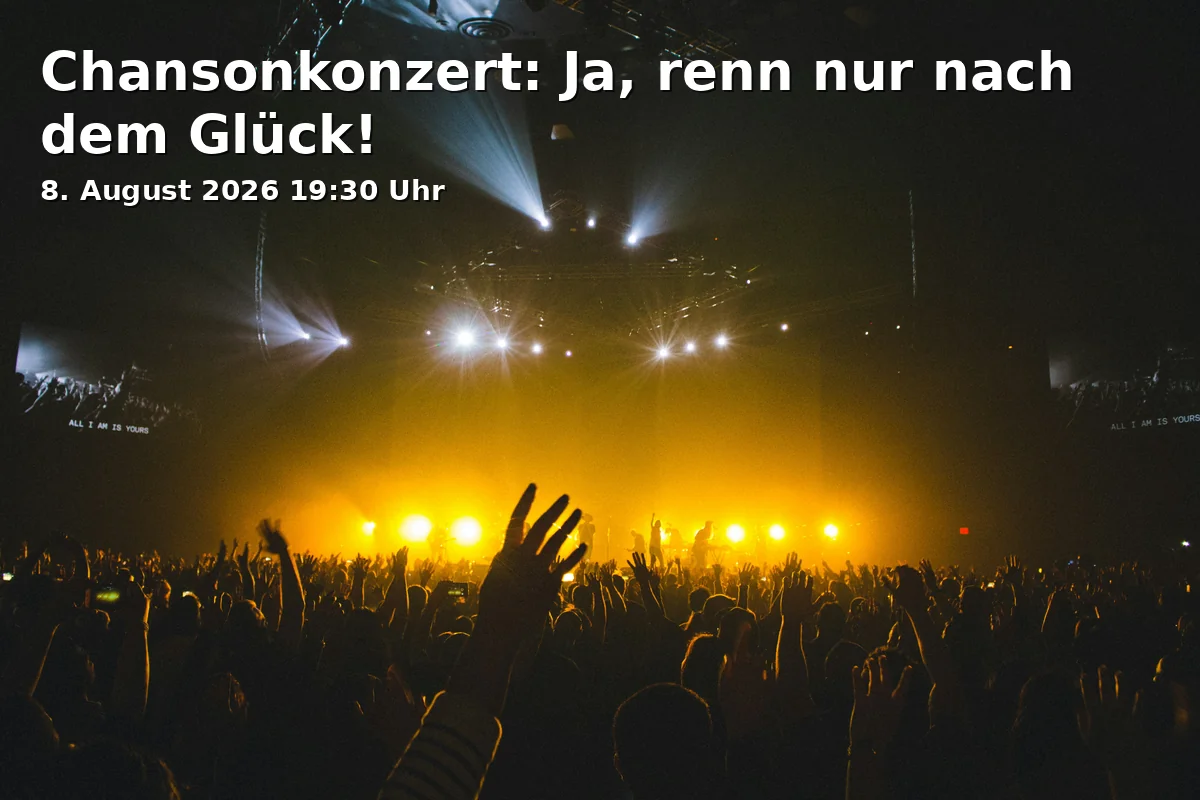
Chanson Concert: Yes, Just Run After Happiness!
A quest for happiness with style in Fürth: Michael Herrschel and Sirka Schwartz-Uppendieck combine chanson, piano, and word art into an evening full of feeling. #Fürth #Chanson
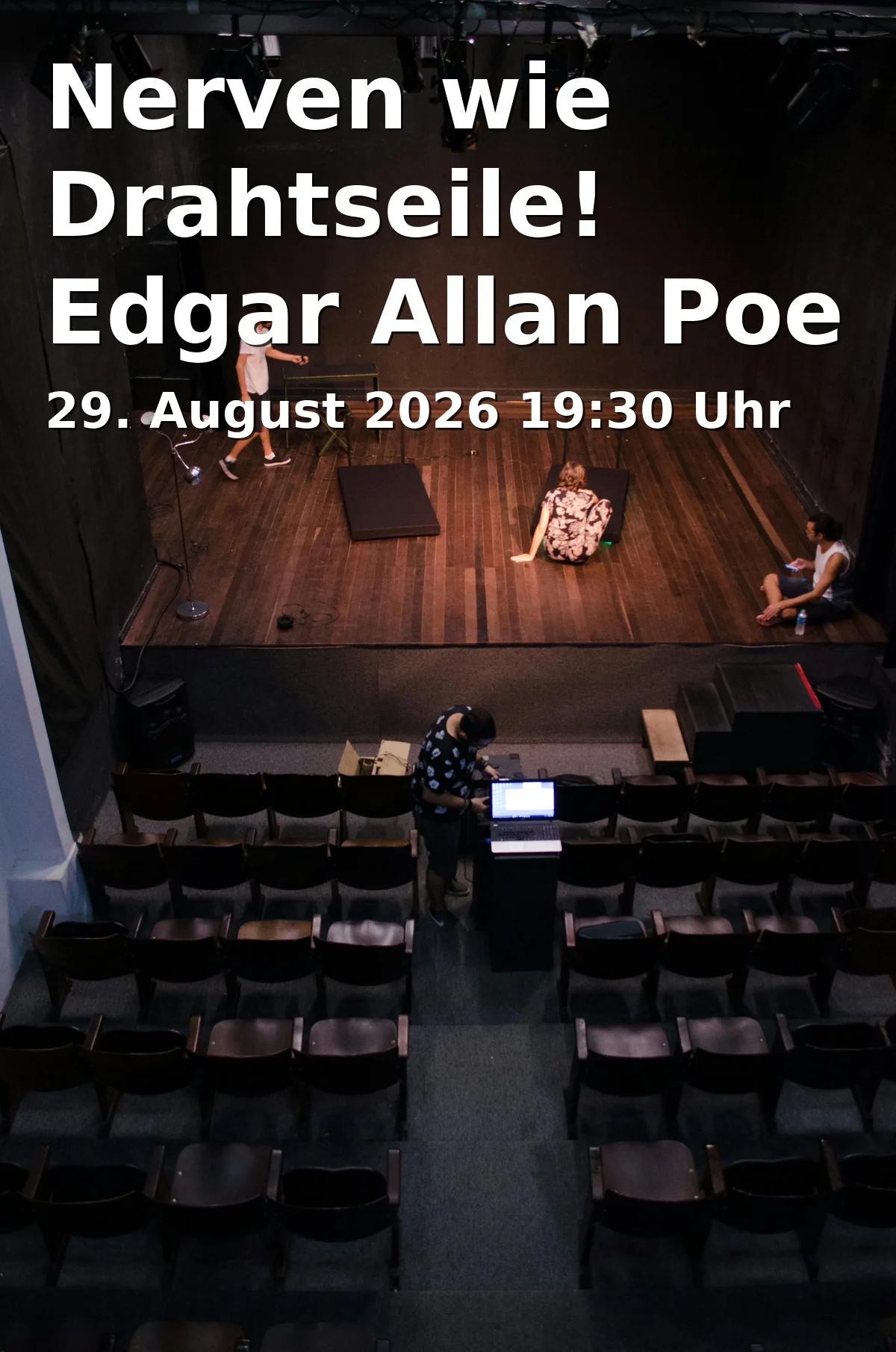
Nerves like Steel Cables! Edgar Allan Poe & Piano Futurism
Poe becomes a sound rush in Fürth: Michael Herrschel and Lorenz Trottmann unleash a live audio play full of horror and precision. 29.08.2026, 19:30, 12 euros. #Theater
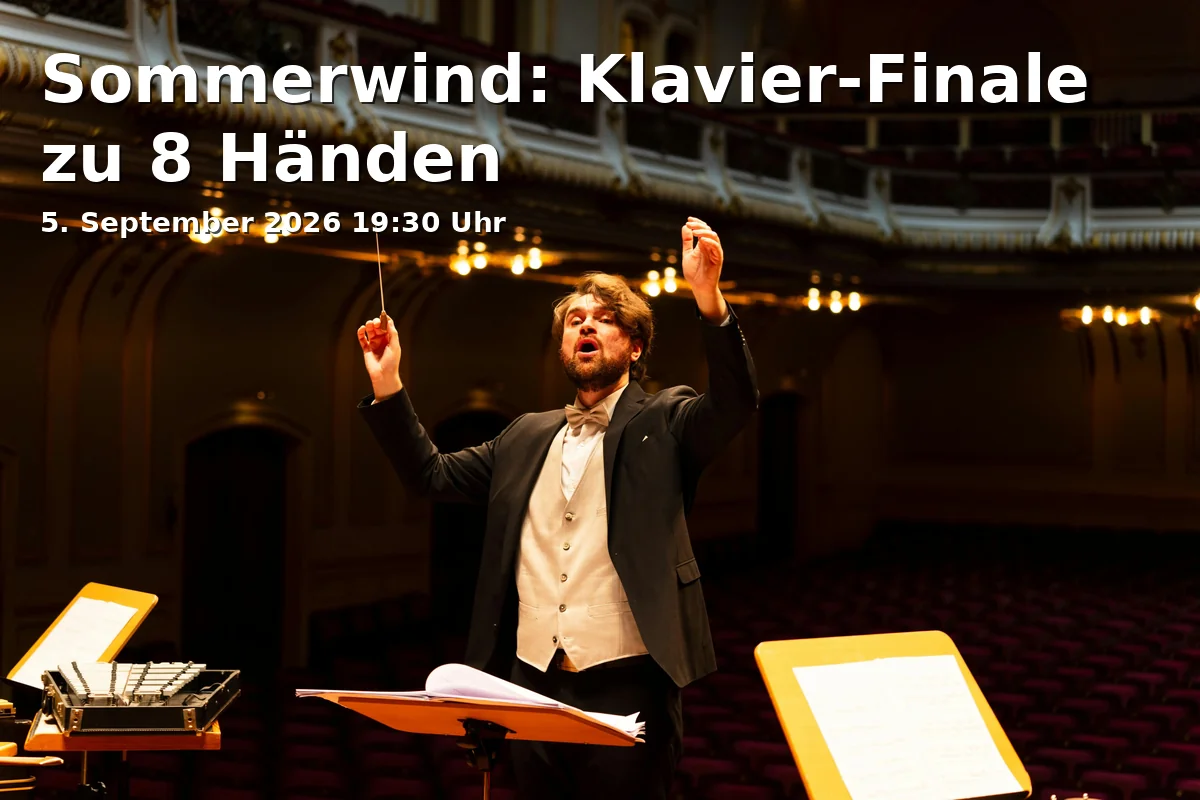
Summer Breeze: Piano Finale for 8 Hands
Four pianists, a hall full of tension: Summer Breeze brings orchestral piano art, recitation, and strong emotions to the stage in Fürth. #Fürth #Concert
Frequently Asked Questions
Reviews
Vinu Joe
23. September 2023
The Catholic Christ the King Church is the most extensive church building project by the architect Friedrich Richter. A very pleasant place and has a peaceful atmosphere. With large room height, it gives a sense of largeness.
Martin Martin
17. January 2020
A modern Catholic church, whose pleasant atmosphere is created by the parish community. Sunday masses at 10:30 are attended by a large number of believers. The spacious interior is austere. It is dominated by a crucifix with a crowned Christ, an altar table on a circular podium, a Stations of the Cross made of stone reliefs, a large wooden statue of the Virgin Mary with the baby Jesus, modern stained glass on the east wall, and murals on the west.
Petra ONDRUSEK
13. September 2020
What a great concert yesterday!
Mario Bauer
8. December 2023
👍👍👍
Alicja Bryzoń
13. April 2026
Every week at the Holy Mass 😇