
Erlanger Str. 97, Fürth
Erlanger Str. 97, 90765 Fürth, Germany
Cemetery Fürth | Cemetery Administration & Opening Hours
Cemetery Fürth is much more than a quiet place of burial: The municipal main cemetery on Erlanger Straße combines established cemetery culture, listed architecture, modern burial offerings, and practical services for relatives. Those looking for cemetery administration, opening hours, types of graves, memorial services, parking, or accessibility will find a place here that is both historically significant and organized for everyday needs. The city of Fürth describes the cemetery as a public institution for a dignified resting place and refers to clear opening hours, advisory services, and a free cemetery mobile for people with limited mobility. This makes the location important not only for mourners but also for visitors who wish to learn about the history and special design of the grounds. ([fuerth.de](https://www.fuerth.de/service-fuerther-rathaus/aemter-von-a-bis-z/detail/friedhofsverwaltung-friedhof-fuerth-312013/))
Cemetery Administration and Opening Hours
The cemetery administration is the central point of contact for everything that needs to be organized at Cemetery Fürth. It schedules appointments for burials and memorial services and provides on-site advice for selecting a grave. Officially, the administration is located at Erlanger Straße 97, 90765 Fürth, and is reachable on weekdays: Monday to Thursday from 7:30 AM to 12:00 PM and 12:30 PM to 3:00 PM, and Fridays until 2:00 PM. Those needing support in case of bereavement can obtain information about burial services, grave rights, and the next steps. The city also explicitly points out that there is no municipal funeral service; relatives should contact a funeral company of their choice in the current case of mourning. ([fuerth.de](https://www.fuerth.de/service-fuerther-rathaus/aemter-von-a-bis-z/detail/friedhofsverwaltung-friedhof-fuerth-312013/))
Accessibility is also clearly regulated. The cemetery itself is open daily, during summer from 6:00 AM to 9:00 PM and during winter from 7:00 AM to 7:00 PM. This is important for many people who wish to visit graves, remember quietly, or visit relatives early in the morning or in the evening. A free electric service mobile is available for people with limited mobility, which drives to the graves; advance booking is possible, and spontaneous rides at the main entrance are also planned depending on availability. This combination of fixed responsibilities, long opening hours, and mobility assistance makes the Cemetery Administration Fürth a very practical and sensitive point of contact. ([fuerth.de](https://www.fuerth.de/fileadmin/redaktion/04-Bildung-Soziales/02-Dokumente-Allgemein/ratgeber-trauerfall.pdf))
Types of Graves, Columbarium, and Special Burial Forms
The cemetery on Erlanger Straße offers a wide range of grave types that cater to different needs and ideas. The statutes of the city of Fürth include choice graves, lawn graves, row graves, urn burial sites, historical communal grave sites for urn and earth burials, vaults, as well as honorary graves and burial sites for war and disaster victims. This spectrum is complemented by a special offer for “stillborn life,” which is expressly provided for at the cemetery on Erlanger Straße. This shows that the location not only covers classic burial forms but also takes into account special life and farewell situations. ([fuerth.de](https://www.fuerth.de/fileadmin/redaktion/01-Rathaus/Ortsrecht/32_2_bestattungs_und_friedhofssatzung.pdf))
Particularly interesting are the low-maintenance and historically influenced forms. Lawn graves are single grave sites for one earth or two urn burials; they can be marked with a lying memorial plaque or remain anonymous, while maintenance is taken care of by the cemetery administration. Historical communal grave sites, on the other hand, are burial places with listed gravestones and are landscaped and maintained by gardeners. For urn burials, the statutes also mention niches in urn walls and niches in the columbarium; the old mortuary of the former cemetery on Nürnberger Straße was dismantled in 1897 and rebuilt on the grounds at Erlanger Straße, where it now serves as a columbarium, i.e., an urn hall. Modern offerings such as the cemetery park, the urn biotope “Oasis of Peace,” and the new facility “Leaves in the Wind” further expand the contemporary spectrum of grave culture. ([fuerth.de](https://www.fuerth.de/fileadmin/redaktion/01-Rathaus/Ortsrecht/32_2_bestattungs_und_friedhofssatzung.pdf))
Access, Parking, and Accessibility
For visitors, orientation at the location is pleasantly simple: The address is Erlanger Straße 97, 90765 Fürth. Those arriving by car will find official disabled parking spaces both at the main entrance of the cemetery and at the north entrance on Erlanger Straße. The city also provides map navigation via the city map as well as route planning via public transport and other traffic routes. For anyone visiting a grave or seeking advice in the office, this is a reliable basis for travel. Even in the sensitive approach in case of mourning, the clear address is an advantage, as funeral directors and relatives can find the place without detours. ([fuerth.de](https://www.fuerth.de/service-fuerther-rathaus/aemter-von-a-bis-z/detail/friedhofsverwaltung-friedhof-fuerth-312013/))
Accessibility is not just a side aspect at Cemetery Fürth, but explicitly part of the location's quality. The city describes the cemetery as accessible and points out a disabled-friendly toilet. Additionally, the cemetery mobile supports people who are not very mobile in bridging larger distances on the expansive grounds. The cemetery regulations also take this into account by providing for a driving permit for severely disabled individuals in special cases and giving pedestrians priority. This combination of barrier-free infrastructure, service mobile, and clear rules creates a dignified access without disturbing the character of the cemetery as a quiet place. This is an important practical advantage, especially for older people, mourners with limited mobility, or visitors with strollers. ([fuerth.de](https://www.fuerth.de/service-fuerther-rathaus/aemter-von-a-bis-z/detail/friedhofsverwaltung-friedhof-fuerth-312013/))
History of the Main Cemetery in Fürth
The history of Cemetery Fürth is closely linked to the growth of the city. When Fürth experienced significant growth during the industrial age, the older cemetery on Nürnberger Straße was no longer sufficient. Therefore, a new site was developed in Ronhof, which was still outside the city limits at the time; on December 29, 1881, the current main cemetery on Erlanger Straße was consecrated. This is not only a historical date but also an indication of how early the city responded to the growing needs of a modern municipality. The cemetery was later reclaimed by the city and is now located in a green zone that connects urban space with nature and memory. ([fuerth.de](https://www.fuerth.de/fileadmin/redaktion/04-Bildung-Soziales/02-Dokumente-Allgemein/ratgeber-trauerfall.pdf))
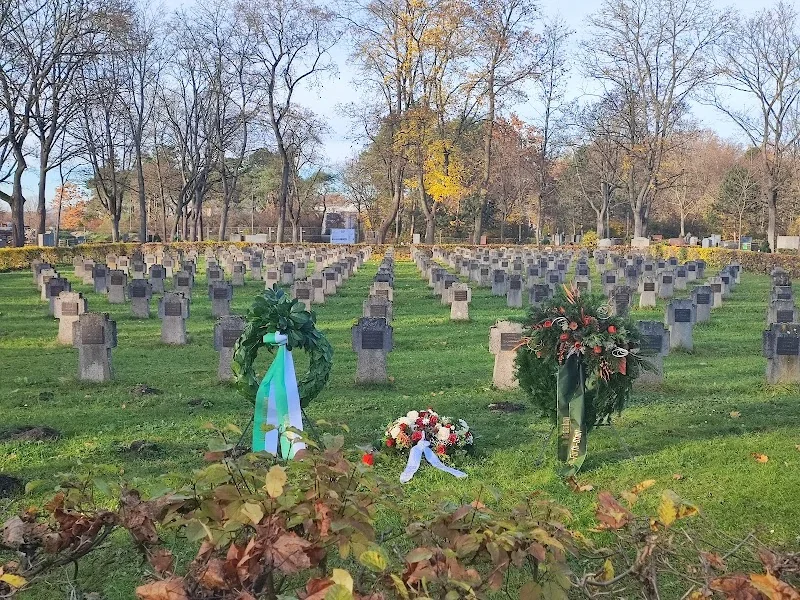
The dimensions of the grounds are impressive. The cemetery now covers around 25 hectares and houses about 25,000 graves, of which approximately 350 are listed. The chapel and the mortuary are also listed. The tree population of over 3,600 trees shapes the site as do the long, tree-lined paths. In the official description, the cemetery is even understood as part of a green zone that stretches from the city limits of Nuremberg to Vach. Particularly striking is also the use of the old mortuary as a columbarium. This combination of historical building substance, scenic expanses, and developed culture of remembrance makes the main cemetery a place where city history can be experienced very directly. ([fuerth.de](https://www.fuerth.de/fileadmin/redaktion/04-Bildung-Soziales/02-Dokumente-Allgemein/ratgeber-trauerfall.pdf))
Memorial Services, Farewell Room, and Service Mobile
A large chapel is available for memorial services at the cemetery on Erlanger Straße, which, according to the official description, offers up to 100 seats. It is complemented by a small farewell room for up to 25 mourners, where direct farewells at the coffin are also possible. For musical arrangements, an organ, a media player, and an electronic piano in the small room are available. The cemetery administration emphasizes that it individually addresses the wishes and needs of the bereaved during memorial services. This is important because it is not about standard procedures, but about a dignified and personal farewell as possible. Even outside regular hours, the small farewell room can be used for individual ceremonies, which gives funeral companies additional flexibility. ([fuerth.de](https://www.fuerth.de/fileadmin/redaktion/04-Bildung-Soziales/02-Dokumente-Allgemein/ratgeber-trauerfall.pdf))
The free service mobile is another offering that noticeably eases everyday life at the cemetery. It was purchased, according to the brochure, in early 2012 and is aimed at people with mobility impairments or frail individuals who could not otherwise reach their graves without assistance. Advance bookings are possible as well as spontaneous use at the main entrance or by phone, provided the vehicle is available. In parallel, the cemetery administration provides advice on burial appointments, cemetery services, new purchases of grave sites, and permits for gravestones or enclosures. This combination of social service, technical support, and administrative advice shows that Cemetery Fürth is not only a place of remembrance but also a well-organized service offering for relatives. Such an environment is a noticeable relief, especially in stressful phases. ([fuerth.de](https://www.fuerth.de/fileadmin/redaktion/04-Bildung-Soziales/02-Dokumente-Allgemein/ratgeber-trauerfall.pdf))
Guided Tours and Cemetery Culture in Fürth
Those who wish to get to know Cemetery Fürth not only as a place of mourning but also as a cultural and historical space can participate in regular guided tours. The cemetery administration offers a free tour every first Wednesday of the month. The meeting point is at 1:30 PM at the general monument between the chapel and the mortuary; no registration is required. During this tour, not only are the halls for memorial services and farewells presented, but also the various burial forms. This creates a compact but very vivid overview of the entire site and its special features. ([fuerth.de](https://www.fuerth.de/fileadmin/redaktion/04-Bildung-Soziales/02-Dokumente-Allgemein/ratgeber-trauerfall.pdf))
The city of Fürth also shows with these tours that cemetery culture can be understood as a living form of remembrance. In the city walking brochure, the cemetery is described as “treasures of cemetery culture,” and the tour refers to its significance as a place where history, art, and memory overlap. It fits that the cemetery not only possesses a large number of listed graves but is also perceived as a green, quiet living space with old trees. The official brochure even points out the diverse wildlife, ranging from birds to squirrels, rabbits, and bats. These nature observations make it clear why the cemetery is appreciated by many not only for mourning but also for quiet walks. Thus, Cemetery Fürth becomes a place where dignity, history, and landscape come together in a special way. ([fuerth.de](https://www.fuerth.de/fileadmin/redaktion/04-Bildung-Soziales/02-Dokumente-Allgemein/ratgeber-trauerfall.pdf))
Sources:
Show moreShow less
Cemetery Fürth | Cemetery Administration & Opening Hours
Cemetery Fürth is much more than a quiet place of burial: The municipal main cemetery on Erlanger Straße combines established cemetery culture, listed architecture, modern burial offerings, and practical services for relatives. Those looking for cemetery administration, opening hours, types of graves, memorial services, parking, or accessibility will find a place here that is both historically significant and organized for everyday needs. The city of Fürth describes the cemetery as a public institution for a dignified resting place and refers to clear opening hours, advisory services, and a free cemetery mobile for people with limited mobility. This makes the location important not only for mourners but also for visitors who wish to learn about the history and special design of the grounds. ([fuerth.de](https://www.fuerth.de/service-fuerther-rathaus/aemter-von-a-bis-z/detail/friedhofsverwaltung-friedhof-fuerth-312013/))
Cemetery Administration and Opening Hours
The cemetery administration is the central point of contact for everything that needs to be organized at Cemetery Fürth. It schedules appointments for burials and memorial services and provides on-site advice for selecting a grave. Officially, the administration is located at Erlanger Straße 97, 90765 Fürth, and is reachable on weekdays: Monday to Thursday from 7:30 AM to 12:00 PM and 12:30 PM to 3:00 PM, and Fridays until 2:00 PM. Those needing support in case of bereavement can obtain information about burial services, grave rights, and the next steps. The city also explicitly points out that there is no municipal funeral service; relatives should contact a funeral company of their choice in the current case of mourning. ([fuerth.de](https://www.fuerth.de/service-fuerther-rathaus/aemter-von-a-bis-z/detail/friedhofsverwaltung-friedhof-fuerth-312013/))
Accessibility is also clearly regulated. The cemetery itself is open daily, during summer from 6:00 AM to 9:00 PM and during winter from 7:00 AM to 7:00 PM. This is important for many people who wish to visit graves, remember quietly, or visit relatives early in the morning or in the evening. A free electric service mobile is available for people with limited mobility, which drives to the graves; advance booking is possible, and spontaneous rides at the main entrance are also planned depending on availability. This combination of fixed responsibilities, long opening hours, and mobility assistance makes the Cemetery Administration Fürth a very practical and sensitive point of contact. ([fuerth.de](https://www.fuerth.de/fileadmin/redaktion/04-Bildung-Soziales/02-Dokumente-Allgemein/ratgeber-trauerfall.pdf))
Types of Graves, Columbarium, and Special Burial Forms
The cemetery on Erlanger Straße offers a wide range of grave types that cater to different needs and ideas. The statutes of the city of Fürth include choice graves, lawn graves, row graves, urn burial sites, historical communal grave sites for urn and earth burials, vaults, as well as honorary graves and burial sites for war and disaster victims. This spectrum is complemented by a special offer for “stillborn life,” which is expressly provided for at the cemetery on Erlanger Straße. This shows that the location not only covers classic burial forms but also takes into account special life and farewell situations. ([fuerth.de](https://www.fuerth.de/fileadmin/redaktion/01-Rathaus/Ortsrecht/32_2_bestattungs_und_friedhofssatzung.pdf))
Particularly interesting are the low-maintenance and historically influenced forms. Lawn graves are single grave sites for one earth or two urn burials; they can be marked with a lying memorial plaque or remain anonymous, while maintenance is taken care of by the cemetery administration. Historical communal grave sites, on the other hand, are burial places with listed gravestones and are landscaped and maintained by gardeners. For urn burials, the statutes also mention niches in urn walls and niches in the columbarium; the old mortuary of the former cemetery on Nürnberger Straße was dismantled in 1897 and rebuilt on the grounds at Erlanger Straße, where it now serves as a columbarium, i.e., an urn hall. Modern offerings such as the cemetery park, the urn biotope “Oasis of Peace,” and the new facility “Leaves in the Wind” further expand the contemporary spectrum of grave culture. ([fuerth.de](https://www.fuerth.de/fileadmin/redaktion/01-Rathaus/Ortsrecht/32_2_bestattungs_und_friedhofssatzung.pdf))
Access, Parking, and Accessibility
For visitors, orientation at the location is pleasantly simple: The address is Erlanger Straße 97, 90765 Fürth. Those arriving by car will find official disabled parking spaces both at the main entrance of the cemetery and at the north entrance on Erlanger Straße. The city also provides map navigation via the city map as well as route planning via public transport and other traffic routes. For anyone visiting a grave or seeking advice in the office, this is a reliable basis for travel. Even in the sensitive approach in case of mourning, the clear address is an advantage, as funeral directors and relatives can find the place without detours. ([fuerth.de](https://www.fuerth.de/service-fuerther-rathaus/aemter-von-a-bis-z/detail/friedhofsverwaltung-friedhof-fuerth-312013/))
Accessibility is not just a side aspect at Cemetery Fürth, but explicitly part of the location's quality. The city describes the cemetery as accessible and points out a disabled-friendly toilet. Additionally, the cemetery mobile supports people who are not very mobile in bridging larger distances on the expansive grounds. The cemetery regulations also take this into account by providing for a driving permit for severely disabled individuals in special cases and giving pedestrians priority. This combination of barrier-free infrastructure, service mobile, and clear rules creates a dignified access without disturbing the character of the cemetery as a quiet place. This is an important practical advantage, especially for older people, mourners with limited mobility, or visitors with strollers. ([fuerth.de](https://www.fuerth.de/service-fuerther-rathaus/aemter-von-a-bis-z/detail/friedhofsverwaltung-friedhof-fuerth-312013/))
History of the Main Cemetery in Fürth
The history of Cemetery Fürth is closely linked to the growth of the city. When Fürth experienced significant growth during the industrial age, the older cemetery on Nürnberger Straße was no longer sufficient. Therefore, a new site was developed in Ronhof, which was still outside the city limits at the time; on December 29, 1881, the current main cemetery on Erlanger Straße was consecrated. This is not only a historical date but also an indication of how early the city responded to the growing needs of a modern municipality. The cemetery was later reclaimed by the city and is now located in a green zone that connects urban space with nature and memory. ([fuerth.de](https://www.fuerth.de/fileadmin/redaktion/04-Bildung-Soziales/02-Dokumente-Allgemein/ratgeber-trauerfall.pdf))
The dimensions of the grounds are impressive. The cemetery now covers around 25 hectares and houses about 25,000 graves, of which approximately 350 are listed. The chapel and the mortuary are also listed. The tree population of over 3,600 trees shapes the site as do the long, tree-lined paths. In the official description, the cemetery is even understood as part of a green zone that stretches from the city limits of Nuremberg to Vach. Particularly striking is also the use of the old mortuary as a columbarium. This combination of historical building substance, scenic expanses, and developed culture of remembrance makes the main cemetery a place where city history can be experienced very directly. ([fuerth.de](https://www.fuerth.de/fileadmin/redaktion/04-Bildung-Soziales/02-Dokumente-Allgemein/ratgeber-trauerfall.pdf))
Memorial Services, Farewell Room, and Service Mobile
A large chapel is available for memorial services at the cemetery on Erlanger Straße, which, according to the official description, offers up to 100 seats. It is complemented by a small farewell room for up to 25 mourners, where direct farewells at the coffin are also possible. For musical arrangements, an organ, a media player, and an electronic piano in the small room are available. The cemetery administration emphasizes that it individually addresses the wishes and needs of the bereaved during memorial services. This is important because it is not about standard procedures, but about a dignified and personal farewell as possible. Even outside regular hours, the small farewell room can be used for individual ceremonies, which gives funeral companies additional flexibility. ([fuerth.de](https://www.fuerth.de/fileadmin/redaktion/04-Bildung-Soziales/02-Dokumente-Allgemein/ratgeber-trauerfall.pdf))
The free service mobile is another offering that noticeably eases everyday life at the cemetery. It was purchased, according to the brochure, in early 2012 and is aimed at people with mobility impairments or frail individuals who could not otherwise reach their graves without assistance. Advance bookings are possible as well as spontaneous use at the main entrance or by phone, provided the vehicle is available. In parallel, the cemetery administration provides advice on burial appointments, cemetery services, new purchases of grave sites, and permits for gravestones or enclosures. This combination of social service, technical support, and administrative advice shows that Cemetery Fürth is not only a place of remembrance but also a well-organized service offering for relatives. Such an environment is a noticeable relief, especially in stressful phases. ([fuerth.de](https://www.fuerth.de/fileadmin/redaktion/04-Bildung-Soziales/02-Dokumente-Allgemein/ratgeber-trauerfall.pdf))
Guided Tours and Cemetery Culture in Fürth
Those who wish to get to know Cemetery Fürth not only as a place of mourning but also as a cultural and historical space can participate in regular guided tours. The cemetery administration offers a free tour every first Wednesday of the month. The meeting point is at 1:30 PM at the general monument between the chapel and the mortuary; no registration is required. During this tour, not only are the halls for memorial services and farewells presented, but also the various burial forms. This creates a compact but very vivid overview of the entire site and its special features. ([fuerth.de](https://www.fuerth.de/fileadmin/redaktion/04-Bildung-Soziales/02-Dokumente-Allgemein/ratgeber-trauerfall.pdf))
The city of Fürth also shows with these tours that cemetery culture can be understood as a living form of remembrance. In the city walking brochure, the cemetery is described as “treasures of cemetery culture,” and the tour refers to its significance as a place where history, art, and memory overlap. It fits that the cemetery not only possesses a large number of listed graves but is also perceived as a green, quiet living space with old trees. The official brochure even points out the diverse wildlife, ranging from birds to squirrels, rabbits, and bats. These nature observations make it clear why the cemetery is appreciated by many not only for mourning but also for quiet walks. Thus, Cemetery Fürth becomes a place where dignity, history, and landscape come together in a special way. ([fuerth.de](https://www.fuerth.de/fileadmin/redaktion/04-Bildung-Soziales/02-Dokumente-Allgemein/ratgeber-trauerfall.pdf))
Sources:
Cemetery Fürth | Cemetery Administration & Opening Hours
Cemetery Fürth is much more than a quiet place of burial: The municipal main cemetery on Erlanger Straße combines established cemetery culture, listed architecture, modern burial offerings, and practical services for relatives. Those looking for cemetery administration, opening hours, types of graves, memorial services, parking, or accessibility will find a place here that is both historically significant and organized for everyday needs. The city of Fürth describes the cemetery as a public institution for a dignified resting place and refers to clear opening hours, advisory services, and a free cemetery mobile for people with limited mobility. This makes the location important not only for mourners but also for visitors who wish to learn about the history and special design of the grounds. ([fuerth.de](https://www.fuerth.de/service-fuerther-rathaus/aemter-von-a-bis-z/detail/friedhofsverwaltung-friedhof-fuerth-312013/))
Cemetery Administration and Opening Hours
The cemetery administration is the central point of contact for everything that needs to be organized at Cemetery Fürth. It schedules appointments for burials and memorial services and provides on-site advice for selecting a grave. Officially, the administration is located at Erlanger Straße 97, 90765 Fürth, and is reachable on weekdays: Monday to Thursday from 7:30 AM to 12:00 PM and 12:30 PM to 3:00 PM, and Fridays until 2:00 PM. Those needing support in case of bereavement can obtain information about burial services, grave rights, and the next steps. The city also explicitly points out that there is no municipal funeral service; relatives should contact a funeral company of their choice in the current case of mourning. ([fuerth.de](https://www.fuerth.de/service-fuerther-rathaus/aemter-von-a-bis-z/detail/friedhofsverwaltung-friedhof-fuerth-312013/))
Accessibility is also clearly regulated. The cemetery itself is open daily, during summer from 6:00 AM to 9:00 PM and during winter from 7:00 AM to 7:00 PM. This is important for many people who wish to visit graves, remember quietly, or visit relatives early in the morning or in the evening. A free electric service mobile is available for people with limited mobility, which drives to the graves; advance booking is possible, and spontaneous rides at the main entrance are also planned depending on availability. This combination of fixed responsibilities, long opening hours, and mobility assistance makes the Cemetery Administration Fürth a very practical and sensitive point of contact. ([fuerth.de](https://www.fuerth.de/fileadmin/redaktion/04-Bildung-Soziales/02-Dokumente-Allgemein/ratgeber-trauerfall.pdf))
Types of Graves, Columbarium, and Special Burial Forms
The cemetery on Erlanger Straße offers a wide range of grave types that cater to different needs and ideas. The statutes of the city of Fürth include choice graves, lawn graves, row graves, urn burial sites, historical communal grave sites for urn and earth burials, vaults, as well as honorary graves and burial sites for war and disaster victims. This spectrum is complemented by a special offer for “stillborn life,” which is expressly provided for at the cemetery on Erlanger Straße. This shows that the location not only covers classic burial forms but also takes into account special life and farewell situations. ([fuerth.de](https://www.fuerth.de/fileadmin/redaktion/01-Rathaus/Ortsrecht/32_2_bestattungs_und_friedhofssatzung.pdf))
Particularly interesting are the low-maintenance and historically influenced forms. Lawn graves are single grave sites for one earth or two urn burials; they can be marked with a lying memorial plaque or remain anonymous, while maintenance is taken care of by the cemetery administration. Historical communal grave sites, on the other hand, are burial places with listed gravestones and are landscaped and maintained by gardeners. For urn burials, the statutes also mention niches in urn walls and niches in the columbarium; the old mortuary of the former cemetery on Nürnberger Straße was dismantled in 1897 and rebuilt on the grounds at Erlanger Straße, where it now serves as a columbarium, i.e., an urn hall. Modern offerings such as the cemetery park, the urn biotope “Oasis of Peace,” and the new facility “Leaves in the Wind” further expand the contemporary spectrum of grave culture. ([fuerth.de](https://www.fuerth.de/fileadmin/redaktion/01-Rathaus/Ortsrecht/32_2_bestattungs_und_friedhofssatzung.pdf))
Access, Parking, and Accessibility
For visitors, orientation at the location is pleasantly simple: The address is Erlanger Straße 97, 90765 Fürth. Those arriving by car will find official disabled parking spaces both at the main entrance of the cemetery and at the north entrance on Erlanger Straße. The city also provides map navigation via the city map as well as route planning via public transport and other traffic routes. For anyone visiting a grave or seeking advice in the office, this is a reliable basis for travel. Even in the sensitive approach in case of mourning, the clear address is an advantage, as funeral directors and relatives can find the place without detours. ([fuerth.de](https://www.fuerth.de/service-fuerther-rathaus/aemter-von-a-bis-z/detail/friedhofsverwaltung-friedhof-fuerth-312013/))
Accessibility is not just a side aspect at Cemetery Fürth, but explicitly part of the location's quality. The city describes the cemetery as accessible and points out a disabled-friendly toilet. Additionally, the cemetery mobile supports people who are not very mobile in bridging larger distances on the expansive grounds. The cemetery regulations also take this into account by providing for a driving permit for severely disabled individuals in special cases and giving pedestrians priority. This combination of barrier-free infrastructure, service mobile, and clear rules creates a dignified access without disturbing the character of the cemetery as a quiet place. This is an important practical advantage, especially for older people, mourners with limited mobility, or visitors with strollers. ([fuerth.de](https://www.fuerth.de/service-fuerther-rathaus/aemter-von-a-bis-z/detail/friedhofsverwaltung-friedhof-fuerth-312013/))
History of the Main Cemetery in Fürth
The history of Cemetery Fürth is closely linked to the growth of the city. When Fürth experienced significant growth during the industrial age, the older cemetery on Nürnberger Straße was no longer sufficient. Therefore, a new site was developed in Ronhof, which was still outside the city limits at the time; on December 29, 1881, the current main cemetery on Erlanger Straße was consecrated. This is not only a historical date but also an indication of how early the city responded to the growing needs of a modern municipality. The cemetery was later reclaimed by the city and is now located in a green zone that connects urban space with nature and memory. ([fuerth.de](https://www.fuerth.de/fileadmin/redaktion/04-Bildung-Soziales/02-Dokumente-Allgemein/ratgeber-trauerfall.pdf))
The dimensions of the grounds are impressive. The cemetery now covers around 25 hectares and houses about 25,000 graves, of which approximately 350 are listed. The chapel and the mortuary are also listed. The tree population of over 3,600 trees shapes the site as do the long, tree-lined paths. In the official description, the cemetery is even understood as part of a green zone that stretches from the city limits of Nuremberg to Vach. Particularly striking is also the use of the old mortuary as a columbarium. This combination of historical building substance, scenic expanses, and developed culture of remembrance makes the main cemetery a place where city history can be experienced very directly. ([fuerth.de](https://www.fuerth.de/fileadmin/redaktion/04-Bildung-Soziales/02-Dokumente-Allgemein/ratgeber-trauerfall.pdf))
Memorial Services, Farewell Room, and Service Mobile
A large chapel is available for memorial services at the cemetery on Erlanger Straße, which, according to the official description, offers up to 100 seats. It is complemented by a small farewell room for up to 25 mourners, where direct farewells at the coffin are also possible. For musical arrangements, an organ, a media player, and an electronic piano in the small room are available. The cemetery administration emphasizes that it individually addresses the wishes and needs of the bereaved during memorial services. This is important because it is not about standard procedures, but about a dignified and personal farewell as possible. Even outside regular hours, the small farewell room can be used for individual ceremonies, which gives funeral companies additional flexibility. ([fuerth.de](https://www.fuerth.de/fileadmin/redaktion/04-Bildung-Soziales/02-Dokumente-Allgemein/ratgeber-trauerfall.pdf))
The free service mobile is another offering that noticeably eases everyday life at the cemetery. It was purchased, according to the brochure, in early 2012 and is aimed at people with mobility impairments or frail individuals who could not otherwise reach their graves without assistance. Advance bookings are possible as well as spontaneous use at the main entrance or by phone, provided the vehicle is available. In parallel, the cemetery administration provides advice on burial appointments, cemetery services, new purchases of grave sites, and permits for gravestones or enclosures. This combination of social service, technical support, and administrative advice shows that Cemetery Fürth is not only a place of remembrance but also a well-organized service offering for relatives. Such an environment is a noticeable relief, especially in stressful phases. ([fuerth.de](https://www.fuerth.de/fileadmin/redaktion/04-Bildung-Soziales/02-Dokumente-Allgemein/ratgeber-trauerfall.pdf))
Guided Tours and Cemetery Culture in Fürth
Those who wish to get to know Cemetery Fürth not only as a place of mourning but also as a cultural and historical space can participate in regular guided tours. The cemetery administration offers a free tour every first Wednesday of the month. The meeting point is at 1:30 PM at the general monument between the chapel and the mortuary; no registration is required. During this tour, not only are the halls for memorial services and farewells presented, but also the various burial forms. This creates a compact but very vivid overview of the entire site and its special features. ([fuerth.de](https://www.fuerth.de/fileadmin/redaktion/04-Bildung-Soziales/02-Dokumente-Allgemein/ratgeber-trauerfall.pdf))
The city of Fürth also shows with these tours that cemetery culture can be understood as a living form of remembrance. In the city walking brochure, the cemetery is described as “treasures of cemetery culture,” and the tour refers to its significance as a place where history, art, and memory overlap. It fits that the cemetery not only possesses a large number of listed graves but is also perceived as a green, quiet living space with old trees. The official brochure even points out the diverse wildlife, ranging from birds to squirrels, rabbits, and bats. These nature observations make it clear why the cemetery is appreciated by many not only for mourning but also for quiet walks. Thus, Cemetery Fürth becomes a place where dignity, history, and landscape come together in a special way. ([fuerth.de](https://www.fuerth.de/fileadmin/redaktion/04-Bildung-Soziales/02-Dokumente-Allgemein/ratgeber-trauerfall.pdf))
Sources:
Upcoming Events
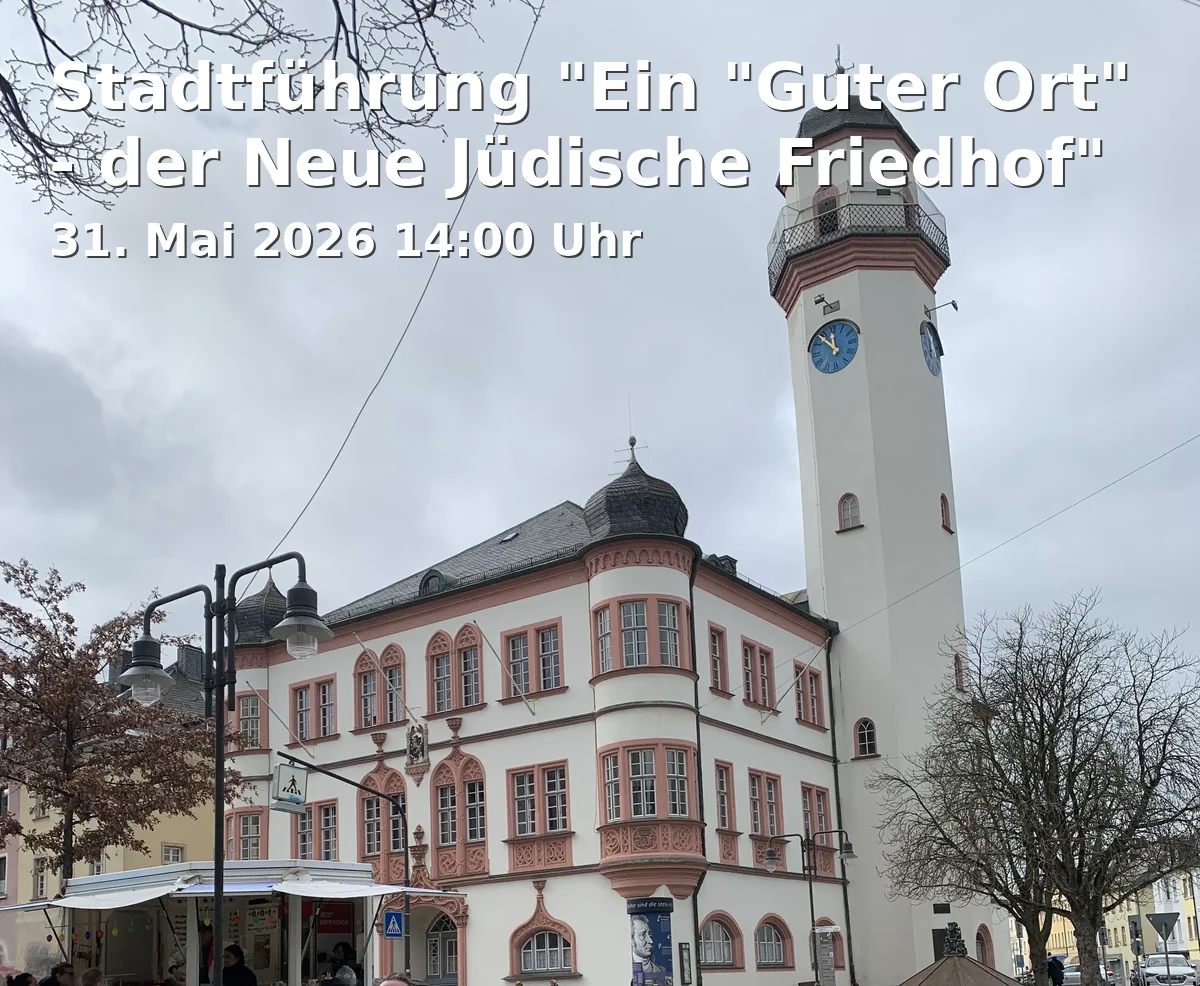
City Tour "A "Good Place" - the New Jewish Cemetery"
A silent place, strong history: Discover the New Jewish Cemetery in Fürth on 31.05.2026. 90 minutes, free, full of remembrance. #Fürth #CityTour #History
City Tour Treasures of Cemetery Culture in Fürth 2026
A special walk through Fürth's cemetery culture awaits you on June 4, 2026. Angel representations, tombstones, and stories create goosebumps with tranquility. #Fürth #CityTour
Frequently Asked Questions
Reviews
Ralf Bahrdt
18. November 2023
Of course, you can also just stroll around the cemetery. It's quite beautiful. Since many oak trees grow between the riverbanks and the graves, it's actually quite easy to come across squirrels.
Martin Wening
27. February 2022
A cemetery founded in 1881, originally located in the middle of the woods in Ronhof, far from the city. It covers 25 hectares with 25,000 graves. Although it's a woodland cemetery, the plots are laid out in a very geometric, rectangular pattern. There are three buildings: the columbarium (for urn burials), originally built in 1855 at the Old Cemetery and later moved here; it's a very beautiful building. Further south is the mortuary and assembly hall, built when the cemetery was founded. Restrooms are also located there. There are special burial plots for those who fell in World War I and World War II and for victims of bombing raids. It's a lovely place for a walk.
Rike Markmann
15. May 2023
We were here for a memorial service for stillborn children and played music on the electric piano and flute. A clergyman from the Protestant chaplaincy at the Fürth Hospital led the service with great sensitivity and offered comfort to the bereaved whose children never saw the light of day or only for a very short time. It was very moving.
guenter reichart
11. July 2023
The largest of the city's cemeteries is very impressive. The Fürth Cemetery was newly established in 1881 and has been maintained by the city administration ever since. Covering 25 hectares, it contains approximately 20,000 graves. It is an oasis of peace and contemplation. A wide variety of burial options are available here.
Ingrid Johnson
10. August 2020
I enjoy walking here. There are plenty of benches and restrooms, one of which is wheelchair accessible. My favorite is the Field of Diversity, a wonderful oasis of well-being.