
Fürth
Waagpl. 2, 90762 Fürth, Deutschland
Old Town Association Fürth e.V. | Events & Tickets
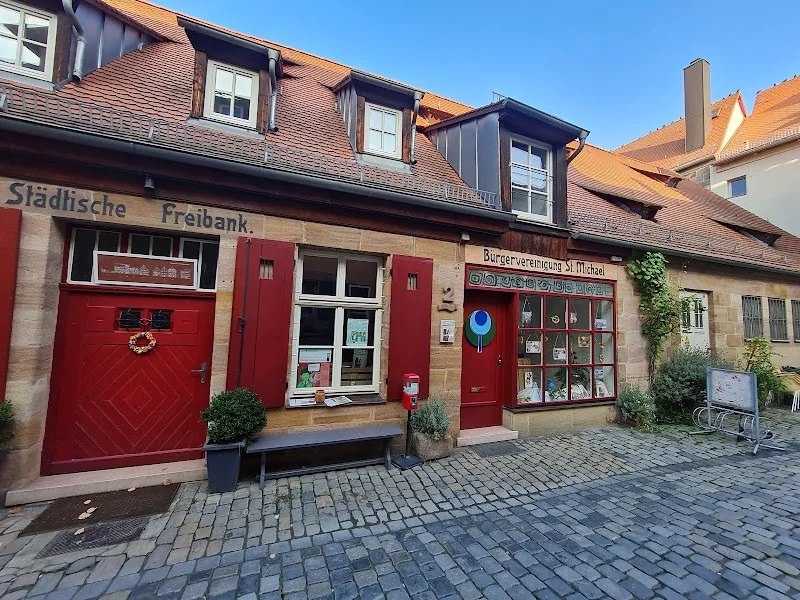
The Old Town Association Fürth e.V. is one of the defining citizen initiatives for the Fürth Old Town and is located at Waagplatz 2 in the district of St. Michael. The history of the association is closely linked to the preservation of the quarter: it was founded in 1974/75 in response to the demolition of large parts of the Old Town and the danger that the Old Town district of St. Michael could also be significantly altered or dismantled. Today, the association stands for cultural engagement, community, monument protection, and the vibrant use of a historical place that is much more than just an administrative address. Those looking for events, dates, or special Old Town moments will find here an association that does not merely conserve tradition but actively fills it with life. The official address at Waagplatz, the association's home Freibank, and the many working groups make the Old Town Association a fixed point of reference for visitors and residents of Fürth. ([altstadtverein-fuerth.de](https://www.altstadtverein-fuerth.de/verein/))
Events, Program, and Dates at the Old Town Association Fürth
Those interested in events should understand the Old Town Association Fürth not only as an association but also as a well-organized cultural and meeting place. Throughout the year, numerous activities are announced on the website, ranging from musical gatherings to committee meetings and social formats. The section on offers makes it clear how broad the association is: there is a choir group that meets regularly, a playgroup that meets monthly at the Freibank, a working group for urban design, a working group for archaeology, and of course the organizational teams around the Grafflmarkt and Old Town Christmas. Current dates include choir rehearsals, board and advisory board meetings, farmers' market meetings, hot jazz jam sessions at the Freibank, and a game night with Michaela and Tobias. This shows that the association does not live off a single major event but from a dense sequence of smaller and larger encounters that take place throughout the year. This is also where the SEO value of this place lies, as search queries for program, event, meeting point, or dates actually encounter a lived reality here. ([altstadtverein-fuerth.de](https://www.altstadtverein-fuerth.de/angebote/))
Particularly interesting is that the Old Town Association does not squeeze its activities into rigid cultural formats but organizes them in working groups that have grown historically. This makes the event structure of the association very authentic. The choir rehearsal takes place on Tuesdays under the slanted roof, the playgroup meets regularly at the Freibank, and the urban design group thinks about the design of the entire city, not just the immediate Old Town. From an SEO perspective, such terms are important because users often search not only for the name of an association but for specific topics such as choir, reading, small arts, game night, urban design, or archaeology. The Old Town Association Fürth offers exactly this breadth of content. So, if you are looking for a vibrant cultural place in Fürth, you will not find an anonymous hall here but a strongly networked association life with real local relevance and regularly updated dates. ([altstadtverein-fuerth.de](https://www.altstadtverein-fuerth.de/angebote/))
Old Town Christmas, Grafflmarkt, and the Historical Waagplatz
The strongest crowd magnets of the Old Town Association are the two traditional formats Old Town Christmas and Grafflmarkt. The Fürth Old Town Christmas has been held annually since 1980 at Waagplatz, in Waagstraße, and in the association's own Freibank. It currently runs from the Friday before the second Advent to the third Advent Sunday and is accompanied by an extensive supporting program. According to the association's website, visitors can shop in the small market town in Waagstraße and at Waagplatz, experience demonstrations by glassblowers or blacksmiths, and let themselves be guided through the diverse program. This makes the Old Town Christmas one of the most atmospheric search topics around Fürth, as Christmas market, crafts, music, and family experiences come together here. For search queries related to Old Town Christmas, Christmas market, Waagplatz, or program, this is a particularly strong thematic bundle. ([altstadtverein-fuerth.de](https://www.altstadtverein-fuerth.de/altstadtweihnachtsmarkt/))
The Grafflmarkt perfectly complements this profile. It is a traditional flea market and, according to the association's website, one of the most popular events in Fürth. Twice a year, on Fridays and Saturdays, trading, bargaining, and browsing take place in the Fürth Old Town. On the association's offers page, the market is described as a place where junk and real treasures find their place and where one can strengthen oneself at association stands with regional beer or liver cheese sandwiches. That the Grafflmarkt is not just a sales format but a social meeting point is also shown by the official tourism page, which describes Waagplatz as a historical square in the heart of the Old Town. There, gastronomy, city history, and event life meet today. The square owes its name to the former city scale, which stood here for a long time and weighed goods and commodities. This mixture of history and everyday life makes Waagplatz so attractive: it is not just a backdrop but part of the experience itself. Those searching for Old Town, market, Waagplatz, or events in Fürth will find here a place with real charisma. ([altstadtverein-fuerth.de](https://www.altstadtverein-fuerth.de/grafflmarkt/))
Additionally, Waagplatz and its surroundings are also used for other regular formats. The Tourist Information Fürth points out that events occasionally take place at Waagplatz, including the Old Town Christmas of the Old Town Association and the Fürth Farmers' Market, which offers regional products on Saturdays. The farmers' market is a very fitting additional topic for search intentions around the location because it showcases Waagplatz as a weekend destination with high quality of stay. In the context of the Old Town Association, this creates a three-part profile: large traditional events, regular market formats, and ongoing association activities. This combination is strong for SEO because it covers various search intentions. People are not only looking for an address but for experiences, dates, market days, and seasonal highlights. The Old Town Association Fürth answers all these questions with a place where cultural identity, community, and historical atmosphere converge. ([tourismus-fuerth.de](https://www.tourismus-fuerth.de/poi/waagplatz))
Tickets, Applications, and Membership at the Old Town Association Fürth
When it comes to tickets, a closer look at the structure of the website is worthwhile. The verified pages do not show a classic central ticket shop but primarily lists of dates, announcements, application forms, and association documents. This is important because the search query for tickets in the case of the Old Town Association usually does not refer to a large advance sale but to specific events, markets, or participation offers. For the Old Town Christmas market, there is a section with current program announcements as well as documents for market vendors, including market regulations and application forms. The downloads page also contains the statutes and membership application, which underscores the character of the association as a participatory organization. So, if you are looking for tickets, you are more likely to land here with information about participation, application, or the respective date rather than a blanket purchasing process. This classification is particularly helpful for users because it clarifies expectations and meaningfully directs the search query to the respective event. ([altstadtverein-fuerth.de](https://www.altstadtverein-fuerth.de/altstadtweihnachtsmarkt/))
Membership is also part of the public communication of the association. The website offers statutes and membership applications in an easily accessible manner, and the association makes it clear that support in many forms is welcome. The offers page even explicitly states that new ideas or events are welcome and that space and time can be provided. This shows that the Old Town Association not only manages events but actively incorporates ideas. For SEO, this information is useful because searchers often enter not only tickets but also membership, participation, joining the association, or organizing events. The Old Town Association Fürth thus answers not only the question about the event but also about participation in it. Those wishing to register a market stall, help out, or engage as a member will find clear points of contact for that. The structure is therefore more communal than commercial, which makes the character of the place particularly authentic. ([altstadtverein-fuerth.de](https://www.altstadtverein-fuerth.de/downloads/?utm_source=openai))
For the search intent of tickets, it is also relevant that individual events appear on the association's pages with times and clear dates, such as choir rehearsal, game night, or hot jazz jam session. This suggests that the information need often lies more in the area of When does it take place? or Where can I participate? rather than in a classic ticket purchase. Therefore, those who visit the website of the Old Town Association should primarily check the event calendar and the sections on Grafflmarkt or Old Town Christmas. There, the crucial hints are published. For search engines and users, this is an important distinction: the site is a strong information and meeting platform with local programs but not an isolated ticket machine. It is precisely this mixture of association, neighborhood care, and event communication that makes the site so valuable. ([altstadtverein-fuerth.de](https://www.altstadtverein-fuerth.de/angebote/))
Directions and Parking at Waagplatz
Waagplatz is located in the middle of the Fürth Old Town and is well connected by traffic. The Tourist Information Fürth describes the square as easily accessible by bus or subway to the Rathaus stop. Additionally, Waagplatz is mentioned as a destination that is easily reachable on foot from the Rathaus. For visitors, this means: those coming without a car have it particularly easy. The location between Königstraße and Gustavstraße also makes the place ideal for a walk through the Old Town, especially since historical buildings, gastronomy, and event life are closely intertwined there. So, those searching for directions, Rathaus, Old Town, or Waagplatz get a very clear picture: central, close, easily accessible, and strongly embedded in the city center. ([tourismus-fuerth.de](https://www.tourismus-fuerth.de/poi/waagplatz))
When it comes to parking, it is advisable to consider not only the place itself but also the urban surroundings. The city of Fürth provides information on the current occupancy of parking garages on its page about vehicles and parking. This is particularly practical for destinations in the city center because Waagplatz itself is not a classic large parking lot but part of a densely built Old Town area. Therefore, those arriving by car should check the current parking garage occupancy in advance and plan with the public parking options in the city center. For visitors to events around Waagplatz, this is usually the most relaxed solution. Since the place is also well accessible by bus and subway, switching to public transport is often the simplest and most manageable option. This also fits the character of the square as a historical and pedestrian-friendly urban space. ([fuerth.de](https://www.fuerth.de/bauen-mobilitaet/mobilitaet/kfz-und-parken/?utm_source=openai))
For search queries related to parking, directions, or location, it is also important that Waagplatz is not isolated but lies in the center of the Old Town and is connected with the farmers' market, Old Town Christmas, and the surrounding gastronomy. This means: those planning a visit should not measure their stay solely by a single program point but by the overall visit to the Old Town. Especially on market days or during the Old Town Christmas, the surroundings can be very lively. Therefore, a combined travel plan is sensible: first check the route via subway or bus, then plan the walking distance, and if driving, consider the current parking situation. This way, the visit to the Old Town Association Fürth does not turn into a parking project but into a relaxed Old Town experience. ([tourismus-fuerth.de](https://www.tourismus-fuerth.de/poi/waagplatz))
Freibank, Hall on the 1st Floor, and Association Home
The heart of the Old Town Association is the Freibank, which today serves as the association's home. The history of this house is closely linked to the neighborhood. Between 1833 and 1940, the property was municipal; the economy Rotes Ross was leased, and on the side front on the ground floor was the municipal scale, from which the name of the square derives. After 1945, people stood in front of the Freibank at night to buy meat cheaply. In 1979, the association rented the building to open its office there. The first renovation began in 1981 and lasted until 1982, and in 1988 the Freibank was finally purchased. A renovation followed in 2005/2006 with new roofing and the expansion of the kitchen. Today, the former Freibank is a meeting point for events as well as a venue for board, advisory board, and committee meetings. This is not only a historical framework but a concrete functional place for association life. ([altstadtverein-fuerth.de](https://www.altstadtverein-fuerth.de/freibank/))
Recent developments also show how intensively the house is used. The association's page reports that the renovation of the attic not only created a beautifully renewed event space but also an additional area under the roof ridge. This area was previously only accessible via a makeshift ladder; a safe ladder has now been installed. This fits perfectly with the profile of the house: historical but functionally modernized. The ticket and venue page for the Hall on the 1st Floor complements this picture with a concrete room description. There, the old Freibank in the St. Michael district is described as the home of the Old Town Association; on the first floor is a renovated small hall with a lot of old timber framing, and on the ground floor is a small bistro. For search queries related to hall, room, event space, or association home, this is a very strong signal because it shows that the place is not just a postal address but a usable, atmospheric interior space. ([altstadtverein-fuerth.de](https://www.altstadtverein-fuerth.de/rubrik/allgemeines/?utm_source=openai))
Particularly important is the social function of the rooms. On the offers page, the association makes it clear that it provides space and time for new ideas. The Freibank is thus not only an administrative center but a cultural workshop. Here, choir groups, game fans, board members, and people who want to actively shape the neighborhood meet. This is exactly what makes the place valuable for SEO: those searching for cozy event space, association home, small hall, historical location, or Old Town Fürth will find here a place with character, use, and history. The space is small in scale but large in its impact because it is open to many different formats. This flexible usage concept is a central reason why the Old Town Association Fürth remains permanently visible. ([altstadtverein-fuerth.de](https://www.altstadtverein-fuerth.de/angebote/))
History of the Old Town Association and Its Significance for St. Michael
The historical role of the Old Town Association Fürth may be its strongest narrative. The association was founded in 1974/75 because there was fear that a large part of the Fürth Old Town could disappear due to area renovations. The demolition of a third of the Old Town was already a reality, and such measures were also planned for the Old Town district of St. Michael. The association opposed this and contributed to the fact that the quarter, which was largely pushed out of public consciousness at the time, is now perceived as a gem in Franconia. This development is not only a local success story but also an example of how citizen engagement can change urban landscapes. For search terms like history, district, Old Town quarter, or St. Michael, the association thus provides not only a location but a clear historical stance. ([altstadtverein-fuerth.de](https://www.altstadtverein-fuerth.de/verein/))
The goals of the association are correspondingly clearly formulated: it supports the beautification, revitalization, and healing of the Old Town district of St. Michael and promotes cultural and historical research as well as monument preservation in Fürth. These are not empty slogans but guidelines that are reflected in the events, working groups, and the use of the Freibank. The Old Town Association simultaneously engages in neighborhood care, cultural work, and historical work with its offerings. This creates a place that is both informative and emotionally interesting for visitors. Those traveling in Fürth and interested in historical places, old houses, monument preservation, or urban development will find here an authentic access to the city's history. The association has not only managed this identity but has actively shaped it. That is why it remains so important for the Old Town of Fürth to this day. ([altstadtverein-fuerth.de](https://www.altstadtverein-fuerth.de/verein/))
The connection to Waagplatz itself is also historically rich. The tourism page describes the square as a former trading place, whose name comes from the city scale. The area is surrounded by restored half-timbered houses, connects Königstraße and Gustavstraße, and is today a lively meeting point with gastronomy, market activities, and occasional events. The Old Town Association is not located here by chance but precisely at the intersection of history, everyday life, and culture. So, those looking for the best entry into the Fürth Old Town will find in the Old Town Association an address that credibly connects the past and the present. The association is thus not only an organizer but also part of the city narrative. ([tourismus-fuerth.de](https://www.tourismus-fuerth.de/poi/waagplatz?utm_source=openai))
Sources:
- Old Town Association Fürth - Homepage
- Old Town Association Fürth - Association
- Old Town Association Fürth - Freibank
- Old Town Association Fürth - Offers
- Old Town Association Fürth - Grafflmarkt
- Old Town Association Fürth - Old Town Christmas Market
- Tourism Fürth - Waagplatz
- Tourism Fürth - Fürth Farmers' Market
- City of Fürth - Vehicles and Parking
- YesTicket - Hall on the 1st Floor in Fürth
Mehr anzeigenWeniger anzeigen
Old Town Association Fürth e.V. | Events & Tickets
The Old Town Association Fürth e.V. is one of the defining citizen initiatives for the Fürth Old Town and is located at Waagplatz 2 in the district of St. Michael. The history of the association is closely linked to the preservation of the quarter: it was founded in 1974/75 in response to the demolition of large parts of the Old Town and the danger that the Old Town district of St. Michael could also be significantly altered or dismantled. Today, the association stands for cultural engagement, community, monument protection, and the vibrant use of a historical place that is much more than just an administrative address. Those looking for events, dates, or special Old Town moments will find here an association that does not merely conserve tradition but actively fills it with life. The official address at Waagplatz, the association's home Freibank, and the many working groups make the Old Town Association a fixed point of reference for visitors and residents of Fürth. ([altstadtverein-fuerth.de](https://www.altstadtverein-fuerth.de/verein/))
Events, Program, and Dates at the Old Town Association Fürth
Those interested in events should understand the Old Town Association Fürth not only as an association but also as a well-organized cultural and meeting place. Throughout the year, numerous activities are announced on the website, ranging from musical gatherings to committee meetings and social formats. The section on offers makes it clear how broad the association is: there is a choir group that meets regularly, a playgroup that meets monthly at the Freibank, a working group for urban design, a working group for archaeology, and of course the organizational teams around the Grafflmarkt and Old Town Christmas. Current dates include choir rehearsals, board and advisory board meetings, farmers' market meetings, hot jazz jam sessions at the Freibank, and a game night with Michaela and Tobias. This shows that the association does not live off a single major event but from a dense sequence of smaller and larger encounters that take place throughout the year. This is also where the SEO value of this place lies, as search queries for program, event, meeting point, or dates actually encounter a lived reality here. ([altstadtverein-fuerth.de](https://www.altstadtverein-fuerth.de/angebote/))
Particularly interesting is that the Old Town Association does not squeeze its activities into rigid cultural formats but organizes them in working groups that have grown historically. This makes the event structure of the association very authentic. The choir rehearsal takes place on Tuesdays under the slanted roof, the playgroup meets regularly at the Freibank, and the urban design group thinks about the design of the entire city, not just the immediate Old Town. From an SEO perspective, such terms are important because users often search not only for the name of an association but for specific topics such as choir, reading, small arts, game night, urban design, or archaeology. The Old Town Association Fürth offers exactly this breadth of content. So, if you are looking for a vibrant cultural place in Fürth, you will not find an anonymous hall here but a strongly networked association life with real local relevance and regularly updated dates. ([altstadtverein-fuerth.de](https://www.altstadtverein-fuerth.de/angebote/))
Old Town Christmas, Grafflmarkt, and the Historical Waagplatz
The strongest crowd magnets of the Old Town Association are the two traditional formats Old Town Christmas and Grafflmarkt. The Fürth Old Town Christmas has been held annually since 1980 at Waagplatz, in Waagstraße, and in the association's own Freibank. It currently runs from the Friday before the second Advent to the third Advent Sunday and is accompanied by an extensive supporting program. According to the association's website, visitors can shop in the small market town in Waagstraße and at Waagplatz, experience demonstrations by glassblowers or blacksmiths, and let themselves be guided through the diverse program. This makes the Old Town Christmas one of the most atmospheric search topics around Fürth, as Christmas market, crafts, music, and family experiences come together here. For search queries related to Old Town Christmas, Christmas market, Waagplatz, or program, this is a particularly strong thematic bundle. ([altstadtverein-fuerth.de](https://www.altstadtverein-fuerth.de/altstadtweihnachtsmarkt/))
The Grafflmarkt perfectly complements this profile. It is a traditional flea market and, according to the association's website, one of the most popular events in Fürth. Twice a year, on Fridays and Saturdays, trading, bargaining, and browsing take place in the Fürth Old Town. On the association's offers page, the market is described as a place where junk and real treasures find their place and where one can strengthen oneself at association stands with regional beer or liver cheese sandwiches. That the Grafflmarkt is not just a sales format but a social meeting point is also shown by the official tourism page, which describes Waagplatz as a historical square in the heart of the Old Town. There, gastronomy, city history, and event life meet today. The square owes its name to the former city scale, which stood here for a long time and weighed goods and commodities. This mixture of history and everyday life makes Waagplatz so attractive: it is not just a backdrop but part of the experience itself. Those searching for Old Town, market, Waagplatz, or events in Fürth will find here a place with real charisma. ([altstadtverein-fuerth.de](https://www.altstadtverein-fuerth.de/grafflmarkt/))
Additionally, Waagplatz and its surroundings are also used for other regular formats. The Tourist Information Fürth points out that events occasionally take place at Waagplatz, including the Old Town Christmas of the Old Town Association and the Fürth Farmers' Market, which offers regional products on Saturdays. The farmers' market is a very fitting additional topic for search intentions around the location because it showcases Waagplatz as a weekend destination with high quality of stay. In the context of the Old Town Association, this creates a three-part profile: large traditional events, regular market formats, and ongoing association activities. This combination is strong for SEO because it covers various search intentions. People are not only looking for an address but for experiences, dates, market days, and seasonal highlights. The Old Town Association Fürth answers all these questions with a place where cultural identity, community, and historical atmosphere converge. ([tourismus-fuerth.de](https://www.tourismus-fuerth.de/poi/waagplatz))
Tickets, Applications, and Membership at the Old Town Association Fürth
When it comes to tickets, a closer look at the structure of the website is worthwhile. The verified pages do not show a classic central ticket shop but primarily lists of dates, announcements, application forms, and association documents. This is important because the search query for tickets in the case of the Old Town Association usually does not refer to a large advance sale but to specific events, markets, or participation offers. For the Old Town Christmas market, there is a section with current program announcements as well as documents for market vendors, including market regulations and application forms. The downloads page also contains the statutes and membership application, which underscores the character of the association as a participatory organization. So, if you are looking for tickets, you are more likely to land here with information about participation, application, or the respective date rather than a blanket purchasing process. This classification is particularly helpful for users because it clarifies expectations and meaningfully directs the search query to the respective event. ([altstadtverein-fuerth.de](https://www.altstadtverein-fuerth.de/altstadtweihnachtsmarkt/))
Membership is also part of the public communication of the association. The website offers statutes and membership applications in an easily accessible manner, and the association makes it clear that support in many forms is welcome. The offers page even explicitly states that new ideas or events are welcome and that space and time can be provided. This shows that the Old Town Association not only manages events but actively incorporates ideas. For SEO, this information is useful because searchers often enter not only tickets but also membership, participation, joining the association, or organizing events. The Old Town Association Fürth thus answers not only the question about the event but also about participation in it. Those wishing to register a market stall, help out, or engage as a member will find clear points of contact for that. The structure is therefore more communal than commercial, which makes the character of the place particularly authentic. ([altstadtverein-fuerth.de](https://www.altstadtverein-fuerth.de/downloads/?utm_source=openai))
For the search intent of tickets, it is also relevant that individual events appear on the association's pages with times and clear dates, such as choir rehearsal, game night, or hot jazz jam session. This suggests that the information need often lies more in the area of When does it take place? or Where can I participate? rather than in a classic ticket purchase. Therefore, those who visit the website of the Old Town Association should primarily check the event calendar and the sections on Grafflmarkt or Old Town Christmas. There, the crucial hints are published. For search engines and users, this is an important distinction: the site is a strong information and meeting platform with local programs but not an isolated ticket machine. It is precisely this mixture of association, neighborhood care, and event communication that makes the site so valuable. ([altstadtverein-fuerth.de](https://www.altstadtverein-fuerth.de/angebote/))
Directions and Parking at Waagplatz
Waagplatz is located in the middle of the Fürth Old Town and is well connected by traffic. The Tourist Information Fürth describes the square as easily accessible by bus or subway to the Rathaus stop. Additionally, Waagplatz is mentioned as a destination that is easily reachable on foot from the Rathaus. For visitors, this means: those coming without a car have it particularly easy. The location between Königstraße and Gustavstraße also makes the place ideal for a walk through the Old Town, especially since historical buildings, gastronomy, and event life are closely intertwined there. So, those searching for directions, Rathaus, Old Town, or Waagplatz get a very clear picture: central, close, easily accessible, and strongly embedded in the city center. ([tourismus-fuerth.de](https://www.tourismus-fuerth.de/poi/waagplatz))
When it comes to parking, it is advisable to consider not only the place itself but also the urban surroundings. The city of Fürth provides information on the current occupancy of parking garages on its page about vehicles and parking. This is particularly practical for destinations in the city center because Waagplatz itself is not a classic large parking lot but part of a densely built Old Town area. Therefore, those arriving by car should check the current parking garage occupancy in advance and plan with the public parking options in the city center. For visitors to events around Waagplatz, this is usually the most relaxed solution. Since the place is also well accessible by bus and subway, switching to public transport is often the simplest and most manageable option. This also fits the character of the square as a historical and pedestrian-friendly urban space. ([fuerth.de](https://www.fuerth.de/bauen-mobilitaet/mobilitaet/kfz-und-parken/?utm_source=openai))
For search queries related to parking, directions, or location, it is also important that Waagplatz is not isolated but lies in the center of the Old Town and is connected with the farmers' market, Old Town Christmas, and the surrounding gastronomy. This means: those planning a visit should not measure their stay solely by a single program point but by the overall visit to the Old Town. Especially on market days or during the Old Town Christmas, the surroundings can be very lively. Therefore, a combined travel plan is sensible: first check the route via subway or bus, then plan the walking distance, and if driving, consider the current parking situation. This way, the visit to the Old Town Association Fürth does not turn into a parking project but into a relaxed Old Town experience. ([tourismus-fuerth.de](https://www.tourismus-fuerth.de/poi/waagplatz))
Freibank, Hall on the 1st Floor, and Association Home
The heart of the Old Town Association is the Freibank, which today serves as the association's home. The history of this house is closely linked to the neighborhood. Between 1833 and 1940, the property was municipal; the economy Rotes Ross was leased, and on the side front on the ground floor was the municipal scale, from which the name of the square derives. After 1945, people stood in front of the Freibank at night to buy meat cheaply. In 1979, the association rented the building to open its office there. The first renovation began in 1981 and lasted until 1982, and in 1988 the Freibank was finally purchased. A renovation followed in 2005/2006 with new roofing and the expansion of the kitchen. Today, the former Freibank is a meeting point for events as well as a venue for board, advisory board, and committee meetings. This is not only a historical framework but a concrete functional place for association life. ([altstadtverein-fuerth.de](https://www.altstadtverein-fuerth.de/freibank/))
Recent developments also show how intensively the house is used. The association's page reports that the renovation of the attic not only created a beautifully renewed event space but also an additional area under the roof ridge. This area was previously only accessible via a makeshift ladder; a safe ladder has now been installed. This fits perfectly with the profile of the house: historical but functionally modernized. The ticket and venue page for the Hall on the 1st Floor complements this picture with a concrete room description. There, the old Freibank in the St. Michael district is described as the home of the Old Town Association; on the first floor is a renovated small hall with a lot of old timber framing, and on the ground floor is a small bistro. For search queries related to hall, room, event space, or association home, this is a very strong signal because it shows that the place is not just a postal address but a usable, atmospheric interior space. ([altstadtverein-fuerth.de](https://www.altstadtverein-fuerth.de/rubrik/allgemeines/?utm_source=openai))
Particularly important is the social function of the rooms. On the offers page, the association makes it clear that it provides space and time for new ideas. The Freibank is thus not only an administrative center but a cultural workshop. Here, choir groups, game fans, board members, and people who want to actively shape the neighborhood meet. This is exactly what makes the place valuable for SEO: those searching for cozy event space, association home, small hall, historical location, or Old Town Fürth will find here a place with character, use, and history. The space is small in scale but large in its impact because it is open to many different formats. This flexible usage concept is a central reason why the Old Town Association Fürth remains permanently visible. ([altstadtverein-fuerth.de](https://www.altstadtverein-fuerth.de/angebote/))
History of the Old Town Association and Its Significance for St. Michael
The historical role of the Old Town Association Fürth may be its strongest narrative. The association was founded in 1974/75 because there was fear that a large part of the Fürth Old Town could disappear due to area renovations. The demolition of a third of the Old Town was already a reality, and such measures were also planned for the Old Town district of St. Michael. The association opposed this and contributed to the fact that the quarter, which was largely pushed out of public consciousness at the time, is now perceived as a gem in Franconia. This development is not only a local success story but also an example of how citizen engagement can change urban landscapes. For search terms like history, district, Old Town quarter, or St. Michael, the association thus provides not only a location but a clear historical stance. ([altstadtverein-fuerth.de](https://www.altstadtverein-fuerth.de/verein/))
The goals of the association are correspondingly clearly formulated: it supports the beautification, revitalization, and healing of the Old Town district of St. Michael and promotes cultural and historical research as well as monument preservation in Fürth. These are not empty slogans but guidelines that are reflected in the events, working groups, and the use of the Freibank. The Old Town Association simultaneously engages in neighborhood care, cultural work, and historical work with its offerings. This creates a place that is both informative and emotionally interesting for visitors. Those traveling in Fürth and interested in historical places, old houses, monument preservation, or urban development will find here an authentic access to the city's history. The association has not only managed this identity but has actively shaped it. That is why it remains so important for the Old Town of Fürth to this day. ([altstadtverein-fuerth.de](https://www.altstadtverein-fuerth.de/verein/))
The connection to Waagplatz itself is also historically rich. The tourism page describes the square as a former trading place, whose name comes from the city scale. The area is surrounded by restored half-timbered houses, connects Königstraße and Gustavstraße, and is today a lively meeting point with gastronomy, market activities, and occasional events. The Old Town Association is not located here by chance but precisely at the intersection of history, everyday life, and culture. So, those looking for the best entry into the Fürth Old Town will find in the Old Town Association an address that credibly connects the past and the present. The association is thus not only an organizer but also part of the city narrative. ([tourismus-fuerth.de](https://www.tourismus-fuerth.de/poi/waagplatz?utm_source=openai))
Sources:
- Old Town Association Fürth - Homepage
- Old Town Association Fürth - Association
- Old Town Association Fürth - Freibank
- Old Town Association Fürth - Offers
- Old Town Association Fürth - Grafflmarkt
- Old Town Association Fürth - Old Town Christmas Market
- Tourism Fürth - Waagplatz
- Tourism Fürth - Fürth Farmers' Market
- City of Fürth - Vehicles and Parking
- YesTicket - Hall on the 1st Floor in Fürth
Old Town Association Fürth e.V. | Events & Tickets
The Old Town Association Fürth e.V. is one of the defining citizen initiatives for the Fürth Old Town and is located at Waagplatz 2 in the district of St. Michael. The history of the association is closely linked to the preservation of the quarter: it was founded in 1974/75 in response to the demolition of large parts of the Old Town and the danger that the Old Town district of St. Michael could also be significantly altered or dismantled. Today, the association stands for cultural engagement, community, monument protection, and the vibrant use of a historical place that is much more than just an administrative address. Those looking for events, dates, or special Old Town moments will find here an association that does not merely conserve tradition but actively fills it with life. The official address at Waagplatz, the association's home Freibank, and the many working groups make the Old Town Association a fixed point of reference for visitors and residents of Fürth. ([altstadtverein-fuerth.de](https://www.altstadtverein-fuerth.de/verein/))
Events, Program, and Dates at the Old Town Association Fürth
Those interested in events should understand the Old Town Association Fürth not only as an association but also as a well-organized cultural and meeting place. Throughout the year, numerous activities are announced on the website, ranging from musical gatherings to committee meetings and social formats. The section on offers makes it clear how broad the association is: there is a choir group that meets regularly, a playgroup that meets monthly at the Freibank, a working group for urban design, a working group for archaeology, and of course the organizational teams around the Grafflmarkt and Old Town Christmas. Current dates include choir rehearsals, board and advisory board meetings, farmers' market meetings, hot jazz jam sessions at the Freibank, and a game night with Michaela and Tobias. This shows that the association does not live off a single major event but from a dense sequence of smaller and larger encounters that take place throughout the year. This is also where the SEO value of this place lies, as search queries for program, event, meeting point, or dates actually encounter a lived reality here. ([altstadtverein-fuerth.de](https://www.altstadtverein-fuerth.de/angebote/))
Particularly interesting is that the Old Town Association does not squeeze its activities into rigid cultural formats but organizes them in working groups that have grown historically. This makes the event structure of the association very authentic. The choir rehearsal takes place on Tuesdays under the slanted roof, the playgroup meets regularly at the Freibank, and the urban design group thinks about the design of the entire city, not just the immediate Old Town. From an SEO perspective, such terms are important because users often search not only for the name of an association but for specific topics such as choir, reading, small arts, game night, urban design, or archaeology. The Old Town Association Fürth offers exactly this breadth of content. So, if you are looking for a vibrant cultural place in Fürth, you will not find an anonymous hall here but a strongly networked association life with real local relevance and regularly updated dates. ([altstadtverein-fuerth.de](https://www.altstadtverein-fuerth.de/angebote/))
Old Town Christmas, Grafflmarkt, and the Historical Waagplatz
The strongest crowd magnets of the Old Town Association are the two traditional formats Old Town Christmas and Grafflmarkt. The Fürth Old Town Christmas has been held annually since 1980 at Waagplatz, in Waagstraße, and in the association's own Freibank. It currently runs from the Friday before the second Advent to the third Advent Sunday and is accompanied by an extensive supporting program. According to the association's website, visitors can shop in the small market town in Waagstraße and at Waagplatz, experience demonstrations by glassblowers or blacksmiths, and let themselves be guided through the diverse program. This makes the Old Town Christmas one of the most atmospheric search topics around Fürth, as Christmas market, crafts, music, and family experiences come together here. For search queries related to Old Town Christmas, Christmas market, Waagplatz, or program, this is a particularly strong thematic bundle. ([altstadtverein-fuerth.de](https://www.altstadtverein-fuerth.de/altstadtweihnachtsmarkt/))
The Grafflmarkt perfectly complements this profile. It is a traditional flea market and, according to the association's website, one of the most popular events in Fürth. Twice a year, on Fridays and Saturdays, trading, bargaining, and browsing take place in the Fürth Old Town. On the association's offers page, the market is described as a place where junk and real treasures find their place and where one can strengthen oneself at association stands with regional beer or liver cheese sandwiches. That the Grafflmarkt is not just a sales format but a social meeting point is also shown by the official tourism page, which describes Waagplatz as a historical square in the heart of the Old Town. There, gastronomy, city history, and event life meet today. The square owes its name to the former city scale, which stood here for a long time and weighed goods and commodities. This mixture of history and everyday life makes Waagplatz so attractive: it is not just a backdrop but part of the experience itself. Those searching for Old Town, market, Waagplatz, or events in Fürth will find here a place with real charisma. ([altstadtverein-fuerth.de](https://www.altstadtverein-fuerth.de/grafflmarkt/))
Additionally, Waagplatz and its surroundings are also used for other regular formats. The Tourist Information Fürth points out that events occasionally take place at Waagplatz, including the Old Town Christmas of the Old Town Association and the Fürth Farmers' Market, which offers regional products on Saturdays. The farmers' market is a very fitting additional topic for search intentions around the location because it showcases Waagplatz as a weekend destination with high quality of stay. In the context of the Old Town Association, this creates a three-part profile: large traditional events, regular market formats, and ongoing association activities. This combination is strong for SEO because it covers various search intentions. People are not only looking for an address but for experiences, dates, market days, and seasonal highlights. The Old Town Association Fürth answers all these questions with a place where cultural identity, community, and historical atmosphere converge. ([tourismus-fuerth.de](https://www.tourismus-fuerth.de/poi/waagplatz))
Tickets, Applications, and Membership at the Old Town Association Fürth
When it comes to tickets, a closer look at the structure of the website is worthwhile. The verified pages do not show a classic central ticket shop but primarily lists of dates, announcements, application forms, and association documents. This is important because the search query for tickets in the case of the Old Town Association usually does not refer to a large advance sale but to specific events, markets, or participation offers. For the Old Town Christmas market, there is a section with current program announcements as well as documents for market vendors, including market regulations and application forms. The downloads page also contains the statutes and membership application, which underscores the character of the association as a participatory organization. So, if you are looking for tickets, you are more likely to land here with information about participation, application, or the respective date rather than a blanket purchasing process. This classification is particularly helpful for users because it clarifies expectations and meaningfully directs the search query to the respective event. ([altstadtverein-fuerth.de](https://www.altstadtverein-fuerth.de/altstadtweihnachtsmarkt/))
Membership is also part of the public communication of the association. The website offers statutes and membership applications in an easily accessible manner, and the association makes it clear that support in many forms is welcome. The offers page even explicitly states that new ideas or events are welcome and that space and time can be provided. This shows that the Old Town Association not only manages events but actively incorporates ideas. For SEO, this information is useful because searchers often enter not only tickets but also membership, participation, joining the association, or organizing events. The Old Town Association Fürth thus answers not only the question about the event but also about participation in it. Those wishing to register a market stall, help out, or engage as a member will find clear points of contact for that. The structure is therefore more communal than commercial, which makes the character of the place particularly authentic. ([altstadtverein-fuerth.de](https://www.altstadtverein-fuerth.de/downloads/?utm_source=openai))
For the search intent of tickets, it is also relevant that individual events appear on the association's pages with times and clear dates, such as choir rehearsal, game night, or hot jazz jam session. This suggests that the information need often lies more in the area of When does it take place? or Where can I participate? rather than in a classic ticket purchase. Therefore, those who visit the website of the Old Town Association should primarily check the event calendar and the sections on Grafflmarkt or Old Town Christmas. There, the crucial hints are published. For search engines and users, this is an important distinction: the site is a strong information and meeting platform with local programs but not an isolated ticket machine. It is precisely this mixture of association, neighborhood care, and event communication that makes the site so valuable. ([altstadtverein-fuerth.de](https://www.altstadtverein-fuerth.de/angebote/))
Directions and Parking at Waagplatz
Waagplatz is located in the middle of the Fürth Old Town and is well connected by traffic. The Tourist Information Fürth describes the square as easily accessible by bus or subway to the Rathaus stop. Additionally, Waagplatz is mentioned as a destination that is easily reachable on foot from the Rathaus. For visitors, this means: those coming without a car have it particularly easy. The location between Königstraße and Gustavstraße also makes the place ideal for a walk through the Old Town, especially since historical buildings, gastronomy, and event life are closely intertwined there. So, those searching for directions, Rathaus, Old Town, or Waagplatz get a very clear picture: central, close, easily accessible, and strongly embedded in the city center. ([tourismus-fuerth.de](https://www.tourismus-fuerth.de/poi/waagplatz))
When it comes to parking, it is advisable to consider not only the place itself but also the urban surroundings. The city of Fürth provides information on the current occupancy of parking garages on its page about vehicles and parking. This is particularly practical for destinations in the city center because Waagplatz itself is not a classic large parking lot but part of a densely built Old Town area. Therefore, those arriving by car should check the current parking garage occupancy in advance and plan with the public parking options in the city center. For visitors to events around Waagplatz, this is usually the most relaxed solution. Since the place is also well accessible by bus and subway, switching to public transport is often the simplest and most manageable option. This also fits the character of the square as a historical and pedestrian-friendly urban space. ([fuerth.de](https://www.fuerth.de/bauen-mobilitaet/mobilitaet/kfz-und-parken/?utm_source=openai))
For search queries related to parking, directions, or location, it is also important that Waagplatz is not isolated but lies in the center of the Old Town and is connected with the farmers' market, Old Town Christmas, and the surrounding gastronomy. This means: those planning a visit should not measure their stay solely by a single program point but by the overall visit to the Old Town. Especially on market days or during the Old Town Christmas, the surroundings can be very lively. Therefore, a combined travel plan is sensible: first check the route via subway or bus, then plan the walking distance, and if driving, consider the current parking situation. This way, the visit to the Old Town Association Fürth does not turn into a parking project but into a relaxed Old Town experience. ([tourismus-fuerth.de](https://www.tourismus-fuerth.de/poi/waagplatz))
Freibank, Hall on the 1st Floor, and Association Home
The heart of the Old Town Association is the Freibank, which today serves as the association's home. The history of this house is closely linked to the neighborhood. Between 1833 and 1940, the property was municipal; the economy Rotes Ross was leased, and on the side front on the ground floor was the municipal scale, from which the name of the square derives. After 1945, people stood in front of the Freibank at night to buy meat cheaply. In 1979, the association rented the building to open its office there. The first renovation began in 1981 and lasted until 1982, and in 1988 the Freibank was finally purchased. A renovation followed in 2005/2006 with new roofing and the expansion of the kitchen. Today, the former Freibank is a meeting point for events as well as a venue for board, advisory board, and committee meetings. This is not only a historical framework but a concrete functional place for association life. ([altstadtverein-fuerth.de](https://www.altstadtverein-fuerth.de/freibank/))
Recent developments also show how intensively the house is used. The association's page reports that the renovation of the attic not only created a beautifully renewed event space but also an additional area under the roof ridge. This area was previously only accessible via a makeshift ladder; a safe ladder has now been installed. This fits perfectly with the profile of the house: historical but functionally modernized. The ticket and venue page for the Hall on the 1st Floor complements this picture with a concrete room description. There, the old Freibank in the St. Michael district is described as the home of the Old Town Association; on the first floor is a renovated small hall with a lot of old timber framing, and on the ground floor is a small bistro. For search queries related to hall, room, event space, or association home, this is a very strong signal because it shows that the place is not just a postal address but a usable, atmospheric interior space. ([altstadtverein-fuerth.de](https://www.altstadtverein-fuerth.de/rubrik/allgemeines/?utm_source=openai))
Particularly important is the social function of the rooms. On the offers page, the association makes it clear that it provides space and time for new ideas. The Freibank is thus not only an administrative center but a cultural workshop. Here, choir groups, game fans, board members, and people who want to actively shape the neighborhood meet. This is exactly what makes the place valuable for SEO: those searching for cozy event space, association home, small hall, historical location, or Old Town Fürth will find here a place with character, use, and history. The space is small in scale but large in its impact because it is open to many different formats. This flexible usage concept is a central reason why the Old Town Association Fürth remains permanently visible. ([altstadtverein-fuerth.de](https://www.altstadtverein-fuerth.de/angebote/))
History of the Old Town Association and Its Significance for St. Michael
The historical role of the Old Town Association Fürth may be its strongest narrative. The association was founded in 1974/75 because there was fear that a large part of the Fürth Old Town could disappear due to area renovations. The demolition of a third of the Old Town was already a reality, and such measures were also planned for the Old Town district of St. Michael. The association opposed this and contributed to the fact that the quarter, which was largely pushed out of public consciousness at the time, is now perceived as a gem in Franconia. This development is not only a local success story but also an example of how citizen engagement can change urban landscapes. For search terms like history, district, Old Town quarter, or St. Michael, the association thus provides not only a location but a clear historical stance. ([altstadtverein-fuerth.de](https://www.altstadtverein-fuerth.de/verein/))
The goals of the association are correspondingly clearly formulated: it supports the beautification, revitalization, and healing of the Old Town district of St. Michael and promotes cultural and historical research as well as monument preservation in Fürth. These are not empty slogans but guidelines that are reflected in the events, working groups, and the use of the Freibank. The Old Town Association simultaneously engages in neighborhood care, cultural work, and historical work with its offerings. This creates a place that is both informative and emotionally interesting for visitors. Those traveling in Fürth and interested in historical places, old houses, monument preservation, or urban development will find here an authentic access to the city's history. The association has not only managed this identity but has actively shaped it. That is why it remains so important for the Old Town of Fürth to this day. ([altstadtverein-fuerth.de](https://www.altstadtverein-fuerth.de/verein/))
The connection to Waagplatz itself is also historically rich. The tourism page describes the square as a former trading place, whose name comes from the city scale. The area is surrounded by restored half-timbered houses, connects Königstraße and Gustavstraße, and is today a lively meeting point with gastronomy, market activities, and occasional events. The Old Town Association is not located here by chance but precisely at the intersection of history, everyday life, and culture. So, those looking for the best entry into the Fürth Old Town will find in the Old Town Association an address that credibly connects the past and the present. The association is thus not only an organizer but also part of the city narrative. ([tourismus-fuerth.de](https://www.tourismus-fuerth.de/poi/waagplatz?utm_source=openai))
Sources:
- Old Town Association Fürth - Homepage
- Old Town Association Fürth - Association
- Old Town Association Fürth - Freibank
- Old Town Association Fürth - Offers
- Old Town Association Fürth - Grafflmarkt
- Old Town Association Fürth - Old Town Christmas Market
- Tourism Fürth - Waagplatz
- Tourism Fürth - Fürth Farmers' Market
- City of Fürth - Vehicles and Parking
- YesTicket - Hall on the 1st Floor in Fürth
Upcoming Events
No events found
Frequently Asked Questions
Reviews
Rain Low
12. June 2019
Good place
Vladan Perisic
10. March 2022
Very nice place in the center of Fürth and close to the old part of the city. The old part of the city is beautiful with lovely facades and fountains with sculptures. At this time of year, they weren't operational, like most summer gardens. It's worth seeing and visiting.
Janett R.
15. March 2024
Charming little alleys everywhere inviting you to explore... incredibly beautiful and interesting houses...
Martin Denk
17. June 2022
The coffee is delicious, the members are friendly/fun. Next time I'll try the cake and the Weisswürste. You can set the amount of the donation yourself.
Andreas Fuhrmann
13. February 2020
Spent 10 days in front of the stage, it was nice. Good mulled wine, good sausages, we're looking forward to next year... :o)