
Stahlmann (Band)
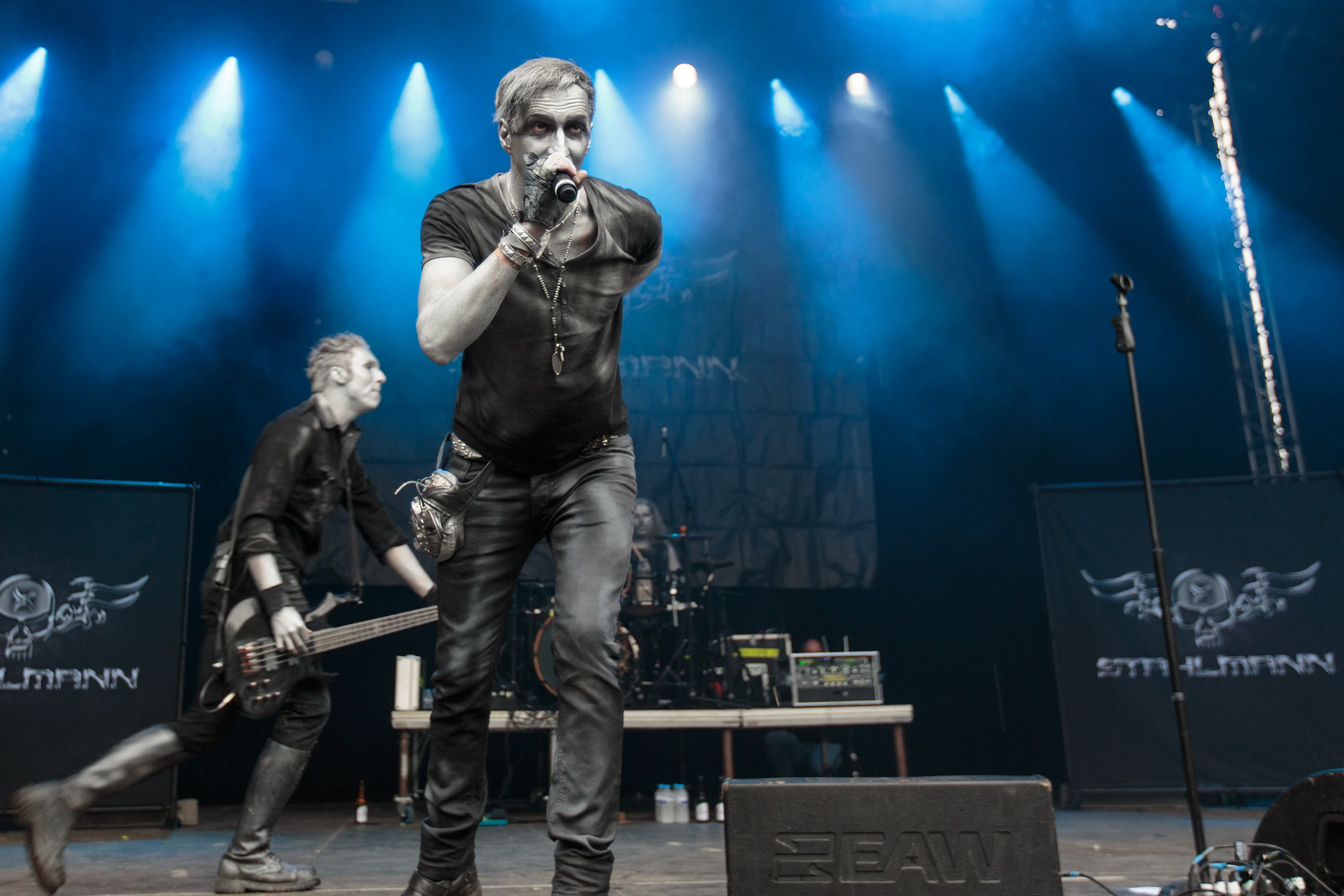
Image from Wikipedia
Image from Wikipedia
Stahlmann: The Steel Weight of Neue Deutsche Härte from Göttingen
A band between mechanical heaviness, dark melody, and consistent live energy
Since their founding in 2008 in Göttingen, Stahlmann has become one of the most prominent names in Neue Deutsche Härte and Dark Rock. The band has carved out a solid place in the German-speaking rock landscape with a clear sound characterized by heavy guitars, electronic elements, and a dark aesthetic. Their name is their program: powerful, metallic, direct, and designed for the stage. ([de.wikipedia.org](https://de.wikipedia.org/wiki/Stahlmann_%28Band%29))
The Beginnings: Göttingen, a Shared Sound, and a Distinctive Concept
The story of Stahlmann begins with Martin Soer and Alexander Scharfe, who came together in 2008 and initially worked on original songs to blend the genre's heaviness with catchy structures. Later, Tobias Berkefeld joined, and the band formed for their first live performances. From early on, Stahlmann focused on a strong visual identity with silver body paint, black clothing, and striking light design, giving the band high recognition in the scene. ([de.wikipedia.org](https://de.wikipedia.org/wiki/Stahlmann_%28Band%29))
The debut EP Herzschlag from 2009 landed the band in the Top 20 of the German Alternative Charts and made it clear that Stahlmann was not just another NDH project, but one with a distinct profile. Concerts with Doro, In Extremo, and Saltatio Mortis helped to rapidly increase their visibility and anchor the band in adjacent metal and medieval rock circles. This early phase laid the foundation for a career characterized by ongoing development and consistent live presence. ([de.wikipedia.org](https://de.wikipedia.org/wiki/Stahlmann_%28Band%29))
The Breakthrough: Debut Album, Support Slots, and Scene Attention
With their self-titled debut album Stahlmann, released on September 17, 2010, through AFM Records, the band took the next step towards public recognition. The single Hass Mich…Lieb Mich made a clear initial impact and anchored the group in the tension between industrialized heaviness and anthemic catchiness. The support for Eisbrecher in Germany, Austria, and Switzerland especially brought additional attention to Stahlmann in the NDH scene. ([de.wikipedia.org](https://de.wikipedia.org/wiki/Stahlmann_%28Band%29))
The reception of the debut was mixed, which is not unusual for a band with a pronounced aesthetic. Music reviews praised the creativity, while other voices criticized the stoic rhythms and simple riffs; Metal.de also complained about a too smooth, radio-friendly production. This range shows how much Stahlmann polarized even then: between uncompromising stylistic fidelity and a desire for broader accessibility. ([de.wikipedia.org](https://de.wikipedia.org/wiki/Stahlmann_%28Band%29))
Musical Evolution: From Quecksilber to Phosphor
The second album Quecksilber was released in 2012 and reached number 39 in the German album charts, allowing Stahlmann to expand their commercial footprint. In 2013, Adamant followed, a work that positioned better in the charts and, with the single Süchtig, made a significant impact in the German Alternative Charts. This phase marked the moment when Stahlmann was no longer seen merely as a newcomer band, but as a serious force in the German-speaking hard sound. ([de.wikipedia.org](https://de.wikipedia.org/wiki/Stahlmann_%28Band%29))
In the following years, CO₂ was released in 2015, an album that further concentrated the band’s aesthetic approach, followed by Bastard in 2017 and Kinder der Sehnsucht in 2019. Quarz entered the charts in 2021 and demonstrated that Stahlmann could maintain a solid fan base even beyond their early breakthrough. With Phosphor in 2024, the band once again reached the German charts and continued the line between powerful production, dark atmosphere, and melodic chorus. ([de.wikipedia.org](https://de.wikipedia.org/wiki/Stahlmann_%28Band%29))
The Current Chapter: Schwarz wie der Tod and New Tour Dates
On their official website, Stahlmann announces their new album Schwarz wie der Tod set to release on February 27, 2026. This proves that the band remains productive even after many years in the business and actively continues their artistic development. The website also highlights current concert dates in cities like Frankfurt, Munich, and Kaiserslautern, underscoring the group's ongoing stage activity. ([stahlmann-band.de](https://www.stahlmann-band.de/))
The current discography on platforms like Apple Music and YouTube Music confirms the continuity of the catalog and simultaneously shows the band's range from their early debut to their latest releases. On Apple Music, Stahlmann is described as a band whose sound combines influences from New Wave, Alternative Metal, Groove Metal, Electro-Industrial, and Techno. This very mix explains why Stahlmann sounds so distinct in the field of Neue Deutsche Härte: hard but precise; electronic but physical; dark but catchy. ([music.apple.com](https://music.apple.com/us/artist/stahlmann/334713823?utm_source=openai))
Line-Up Changes and Artistic Continuity
Like many long-running rock bands, Stahlmann has experienced several line-up changes over the years. Alexander S. temporarily left the band, followed by Tobias Berkefeld, Neill Freiwald, Niklas Kahl, and AblaZ pursuing their paths or taking breaks. However, a constant creative core remains with Martin Soer, who stands for the band's stylistic contour and recognizability. ([de.wikipedia.org](https://de.wikipedia.org/wiki/Stahlmann_%28Band%29))
The current line-up on Wikipedia lists Martin Soer along with Mathis "Terror" Marks, Mario Sobotka, and Keylipp "K." Dallmann. Such changes are not uncommon in the harder rock and metal scene, but with Stahlmann, it seems that this adaptability is part of their artistic system. The band renews itself without losing its core signature, keeping the sound alive between machine aesthetics and emotional urgency. ([de.wikipedia.org](https://de.wikipedia.org/wiki/Stahlmann_%28Band%29))
Style, Production, and Genre Placement
Stahlmann stylistically navigates the tension between Neue Deutsche Härte and Dark Rock, inhabiting a space where rhythmic heaviness, deep guitars, synthetic textures, and German-language lyrics play a central role. The combination of pressing production and clear hooks is precisely what makes their music appealing. The band exists within a tradition shaped by major NDH names but develops its own, more modern handwriting with a stronger focus on atmosphere and theatrical presence. ([de.wikipedia.org](https://de.wikipedia.org/wiki/Stahlmann_%28Band%29))
The reception further confirms this positioning: critics have repeatedly praised individual aspects such as vocals, creativity, and stage presence, yet some have criticized the closeness to genre formulas. This is precisely where a central strength of Stahlmann lies: the band utilizes the familiar building blocks of the genre but shapes them into a functional, audience-friendly, and live-effective unit. For fans of hard German music, this means a very clear promise: pressure, groove, and dark grandeur in a compact space. ([de.wikipedia.org](https://de.wikipedia.org/wiki/Stahlmann_%28Band%29))
Cultural Influence and Fan Connection
Stahlmann has established themselves not only through albums but also through their presence at festivals and tours. Their performances at events like the Amphi Festival demonstrate that the band is firmly anchored in the scene and perceived as a reliable live act. The combination of aesthetics, sound, and stage work has earned Stahlmann a loyal following, who particularly appreciates the band’s consistent focus on the live experience. ([amphi-festival.de](https://amphi-festival.de/en/act/stahlmann/?utm_source=openai))
In a cultural-historical context, Stahlmann represents the formulation of a German rock language that understands heaviness not just as sound but as imagery, attitude, and arrangement. The band employs the means of Neue Deutsche Härte without reducing itself to a rigid schema, thus keeping the interface between industrialized energy and melodic precision open. Anyone seeking to understand the development of German-language heavy guitar music cannot overlook Stahlmann. ([de.wikipedia.org](https://de.wikipedia.org/wiki/Stahlmann_%28Band%29))
Conclusion: Why Stahlmann Remains Exciting to This Day
Stahlmann is exciting because they have maintained a clear artistic profile over the years while also continually opening new chapters. The band merges the weight of Neue Deutsche Härte with a sense for choruses, atmosphere, and visual impact. This blend of consistency, evolution, and stage power makes them a band that should not only be listened to but also experienced live. ([de.wikipedia.org](https://de.wikipedia.org/wiki/Stahlmann_%28Band%29))
Official Channels of Stahlmann:
- Instagram: https://www.instagram.com/stahlmann_official/?hl=de
- Facebook: https://www.facebook.com/p/Stahlmann-100044096423208/?locale=de_DE
- YouTube: https://www.youtube.com/@stahlmanntv7240
- Spotify: No official profile found
- TikTok: No official profile found