
Richard Wagner
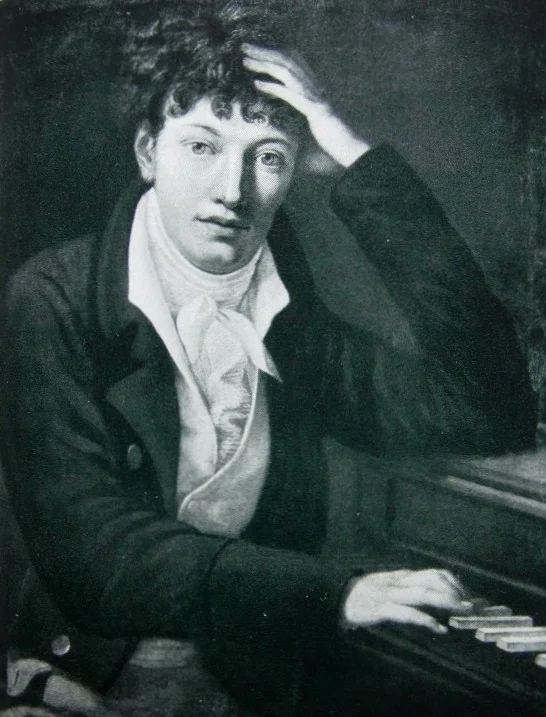
Image from Wikipedia
Image from Wikipedia
Richard Wagner – Visionary of Music Drama and Architect of the Total Artwork
An artist who reimagined opera: Richard Wagner between Revolution, Romanticism, and Modernity
Richard Wagner shaped the 19th century with a music career that transformed opera into music drama and redefined harmony, orchestral sound, and stage aesthetics. As a composer, librettist, conductor, and director, he united composition, poetry, staging, and sound direction into a coherent whole: the total artwork he favored. His works such as Der Ring des Nibelungen, Tristan und Isolde, Die Meistersinger von Nürnberg, and Parsifal set benchmarks – artistically, technically, and ideologically. His stage presence as a musical theater thinker and his artistic evolution from romantic opera sound to radical chromaticism influenced generations of composers into the modern era.
Wagner's biography, shaped by restless relocations, political engagement, and visionary projects, reflects the European upheaval of his time. He developed a distinctive vocabulary of leitmotifs, long melodic arcs, and orchestral psychology that influenced the perception of opera as a dramatic continuum. At the same time, his writing is at the center of a controversial reception due to openly anti-Semitic pamphlets – a tension that continues to shape the discussion around impact and responsibility to this day.
Early Years and Education: Theatrical Air, Self-Study, and Early Compositions
Born in 1813 in Leipzig, Wagner grew up in an environment rich in stage and drama and gained early access to sound, scene, and myth. Formal studies were brief; crucial was his independent study of major scores, especially Beethoven's, as well as practical work as a repetiteur and conductor. In Magdeburg, Riga, and later Dresden, his craft matured: Die Feen and Das Liebesverbot mark early attempts, while Rienzi garnered significant attention for the first time. The artistic development already aimed beyond the number principle – towards a through-composed dramatic flow, driven by motivic work and dramatic coherence.
Life between provincial theaters and metropolises sharpened Wagner's sense of theater mechanics, stage impact, and sound dramaturgy. His experience as a conductor influenced his production: tempos, orchestral balance, vocal lines, and spatial effects became part of an integrated compositional strategy. Thus, the music career gained not only technical sovereignty but also scenic realism and psychological depth.
Revolution and Exile: Politics, Polemics, and the Path to the "Ring"
Wagner's involvement in the Dresden events of 1849 led to Swiss exile – a biographical turning point with productive consequences. From his engagement with philosophy and society emerged the concept of a new music theater: Der Ring des Nibelungen, conceived as a tetralogy, combines mythical thinking, socially utopian reflection, and radical formal design. Simultaneously, Wagner wrote programmatic essays that questioned the relationship between art, society, and nation anew, and condensed his dramatic language into a poetic, symbol-rich libretto that he composed himself for the stage.
The artistic development received a philosophical deepening through encounters with Schopenhauer: suffering, desire, knowledge, and salvation became central themes. From the break in the Ring project emerged Tristan und Isolde – a score that, with chromatic intensity, floating dissonance, and expansive fields of tension, challenged the harmonic grammar of the 19th century and probed the boundaries of musical modernity.
Bayreuth and the Festival House: Laboratory of the Total Artwork
Choosing Bayreuth as a performance venue, Wagner created a production site where architecture, orchestral arrangement, and audience space were conceived dramatically. The concealed orchestra, the amphitheatrical seating arrangement, and the acoustic planning established a new auditory dramaturgy: voices and orchestra merge, the narrative remains uninterrupted, and the leitmotifs become clearly audible and psychologically effective. The opening of the Bayreuth Festival in 1876 with the complete Ring marked a historical culmination point in music history.
Bayreuth developed into a reference space for interpretative tradition and innovation. The festival created a canon of performance practice, consolidating directorial manuscripts, tempo, and sound ideals – constantly reexamined and rewritten by conductors and directors who position Wagner's music dramas between fidelity to the work, historical performance practice, and contemporary interpretation. To this day, Bayreuth remains a benchmark for artistic excellence and a contentious culture of interpretation.
Musical Language: Leitmotif, Orchestral Psychology, and Harmonic Boundaries
Wagner's compositional signature is based on the work with leitmotifs that characterize figures, objects, and ideas and are interwoven in symphonic development. In the arrangement of orchestral voices, he unfolds a differentiated sound dramaturgy: woodwinds as psychological commentators, brass as carriers of heroic signals, string textures as bearers of the infinite melody. In Tristan und Isolde, this language reaches its climax: the so-called "Tristan chord" with its ambivalence lays out a suspension over tonality and dissonance, stretching musical time, charging expectation, and delaying resolution.
Even the rhythmic structure serves psychological modeling. Agogics, breath control, and transitions allow scenes to flow continuously without cuts, while the production – from the score to the stage technology – creates the impression of an organic total form. This artistic development from romantic idiom to pre-modern harmony has profoundly influenced Debussy, Strauss, Mahler, and Schoenberg, who admired, opposed, or advanced Wagner's harmonic emancipation.
Discography and Major Stage Works: from Der fliegende Holländer to Parsifal
Wagner's catalogue focuses on music theater: Der fliegende Holländer (1843) combines sea themes, redemption motifs, and ballad-like form; Tannhäuser (1845) explores tension between sensual Venus world and spiritual order; Lohengrin (1850) tells of Grail mythology, identity, and trust; Tristan und Isolde (1865) unfolds as a love drama of the highest chromatic compression; Die Meistersinger von Nürnberg (1868) reflects on art, guilds, and renewal; Der Ring des Nibelungen (Rheingold, Walküre, Siegfried, Götterdämmerung, 1876) conceives a mythological world order, power, and fate; Parsifal (1882) concludes with ritual contemplation, sound spaces, and transcendent symbolism. This discography of the music dramas defines Wagner's genre as a through-composed, thematically interconnected epic.
Beyond the stage works, Wagner created the Wesendonck Lieder, poetic miniatures on the way to Tristan; the Siegfried Idyll reveals an intimate, chamber-music side. The recording history is immense: from historical Bayreuth documents to legendary studio cycles to live-captured Ring productions, the panorama of cultural memory formation spans wide. In the music press, the recurring tension between monumentality, text comprehensibility, sound balance, and directorial concepts is debated – an ongoing discourse about work, time, and theater.
Reception, Criticism, and Controversy: Antisemitism and Cultural Responsibility
Wagner's writings contain openly anti-Semitic positions, prominently in the pamphlet "Das Judenthum in der Musik" (1850/1869). These facts form a non-negotiable part of his intellectual biography and raise questions about ideological implications in his work. Research spans the gap between the view that Wagner's resentments should be located outside of music and the thesis that ideological patterns permeate choice of material, character development, and sound semantics. The controversial debate surrounds the extent to which artistic greatness and moral error must be considered together without relativizing responsibility.
In the history of reception, the spectrum ranges from passionate veneration to calls for boycott. The entanglement of the Bayreuth environment in Nazi representation policy in the 20th century intensified post-war discussions and raised awareness of the ethical dimensions of performance. At the same time, Jewish and non-Jewish musicians repeatedly performed Wagner's works with critical distance or conscious contextualization. This ambivalence continues to shape the perception and responsibility towards audiences and history today.
Cultural Influence: From the Opera Stage to Philosophy, Literature, and Film
Wagner's ideas radiated far beyond music. Philosophical discourses from Schopenhauer to Nietzsche are reflected in music-dramatic thinking, while literature and visual arts productively reinterpreted his mythopoetic symbolism. In film, motifs such as the "Ride of the Valkyries" became iconic, and the leitmotif technique inspired film music composition and sound design. Wagner's orchestral semantics – from fate tone to redemption figure – acted as a matrix for the narrative sound dramaturgy of the 20th century. His authority as an innovator remains, despite critical engagement, constitutive for cultural history.
Simultaneously, the Bayreuth Festival initiated a specific cosmos of interpretation: conductor legends, radical directorial approaches, singer traditions. The artistic canon is dynamic, not a museum: historical performance practice, new interpretations, and international co-productions prove that Wagner can be continually reinvented and critiqued – as a living repertoire that reflects the present.
Present: Projects, Performance Practice, and Digital Reach
Current festival and orchestra projects examine Wagner's scores both with historical insight and scenically innovative approaches. Historical instruments, contemporary research, and sonic transparency open new perspectives on leitmotif interweavings, tempos, and articulation. Anniversaries and tours keep the repertoire present, while Bayreuth, with varying manuscripts, illuminates the spectrum between tradition maintenance and directorial theater. This diversity reflects a vibrant opera culture that productively intertwines work, context, and presence.
Meanwhile, Wagner's enduring popularity unfolds in streaming catalogs with countless recordings, from live documents to curated orchestral highlights. Canonized interpretations and new readings coexist in global playlists, making repertoire and interpretative history visible at any time. Thus, Wagner remains audible, negotiable, controversial – and artistically relevant.
Conclusion: Why Wagner Endures
Wagner remains compelling because his music theater radically expands the possibilities of opera as a space for thought, a sonic event, and a theatrical myth. His compositions experiment with harmonies that stretch emotions and perceptions of time; his dramaturgy dissolves the number structure in favor of a breathing continuum; his staging ideas create the prototype of a sound theater in which orchestra, scene, and word merge. At the same time, the burdened ideological history challenges critical contextualization – a task that today connects performance and communication with historical responsibility and artistic curiosity.
Those who experience his music live feel how fanfares, string textures, choral blocks, and solo voices create a great breath. Whether in Bayreuth, in international opera houses, or in concert performances: Wagner's music dramas are artistic events that challenge sound, body, and thought. The call is therefore: Experience Wagner live – informed, critical, open – to hear and see the power of this music theater directly.
Official Channels of Richard Wagner:
- Instagram: No official profile found
- Facebook: No official profile found
- YouTube: No official profile found
- Spotify: No official profile found
- TikTok: No official profile found
Sources:
- Encyclopaedia Britannica – Richard Wagner: Biography, Major Works, Innovations
- Encyclopaedia Britannica – Wagner’s antisemitism
- Bayreuther Festspiele – Official Website
- Bayreuth Tourism – The Festival House
- The Guardian – Wagner: where to start with his music
- Dresdner Musikfestspiele – The Wagner Cycles (historical performance practice)
- Mitteldeutsche Zeitung – Dresdner Wagner Project in NYT Best-of 2024
- Apple Music Classical – Richard Wagner (Works and Recordings Overview)
- Kworb – Richard Wagner Spotify Top Songs (Streaming Statistics)
- Wikipedia – Richard Wagner
- Wikipedia: Image and text source
Upcoming Events
Spot(t)-Light. Richard Wagner in Contemporary Caricature
Discover Spot(t)-Light at the Richard Wagner Museum Bayreuth: pointed caricatures, clever curation, media guide included. 19.03.2026, 10:00–17:00, 10 € admission. See, understand, think further – experience it now! #Bayreuth #RichardWagner #Museum
Tour of the Richard Wagner Festival Theatre 'intensive' (English)
Dive into Wagner's sound theatre: 'intensive' tour at the Bayreuth Festival Theatre. 20.03.2026, 17:00, 30 €. Understand architecture, feel acoustics, take culture with you. Book now! #Bayreuth
MET at Kinopolis: Richard Wagner Tristan and Isolde
Experience Wagner intensively at Kinopolis Landshut: Met Live presents Tristan and Isolde with a world-class cast. Starts 21.03.2026, 17:00, approx. 5:10 h with breaks. Great emotions, great sound – secure your ticket. #MetLiveInHD
Museum Tour – Richard Wagner Museum Bayreuth
Authentic Sunday tour at Richard Wagner Museum Bayreuth: Wahnfried, festival history, media guide included. 29.03.2026, 2 PM, admission from €10. Experience insights and atmosphere – plan now! #Bayreuth #Wagner
Curator's Tour – Richard Wagner Museum Bayreuth
Experience an intense curator's tour at the Richard Wagner Museum Bayreuth: three houses, 90 minutes, well-founded context. 31.03.2026, 14:00, 3 € plus admission. Aesthetic experience guaranteed. Secure your spot now! #WagnerMuseum
Parsifal
A rare Wagner evening in Landshut: Parsifal unfolds in the theater tent sacred tension, strong voices, and great images. 02.04.2026, free admission. #Theater
Tour: In the Footsteps of Richard Wagner
Join an atmospheric city tour in Bayreuth: House Wahnfried, Hofgarten, and Friedrichstraße. Sun, 04/05/2026, 1:30 PM. Tickets from 6 €. Understand culture, feel music history. Secure your spot now! #Bayreuth
The Valkyrie
An evening full of power, love, and fire: The Valkyrie unfolds in Duisburg Theater Wagner's grand operatic drama. 05.04.2026, 5 PM, tickets from €19. #Opera #Wagner
The Flying Dutchman
Wagner's The Flying Dutchman shows its full power in Bamberg: opera, puppet art, and historical theater atmosphere. On 12.04.2026 at 5:00 PM. #Bamberg #Theater
Richard Wagner and Bayreuth: Bayreuth Extras
An evening full of Bayreuth history: Stephan Müller talks about Wagners extras and the Green Hill. April 14, 2026, free admission. #Bayreuth #Wagner