
René Freund
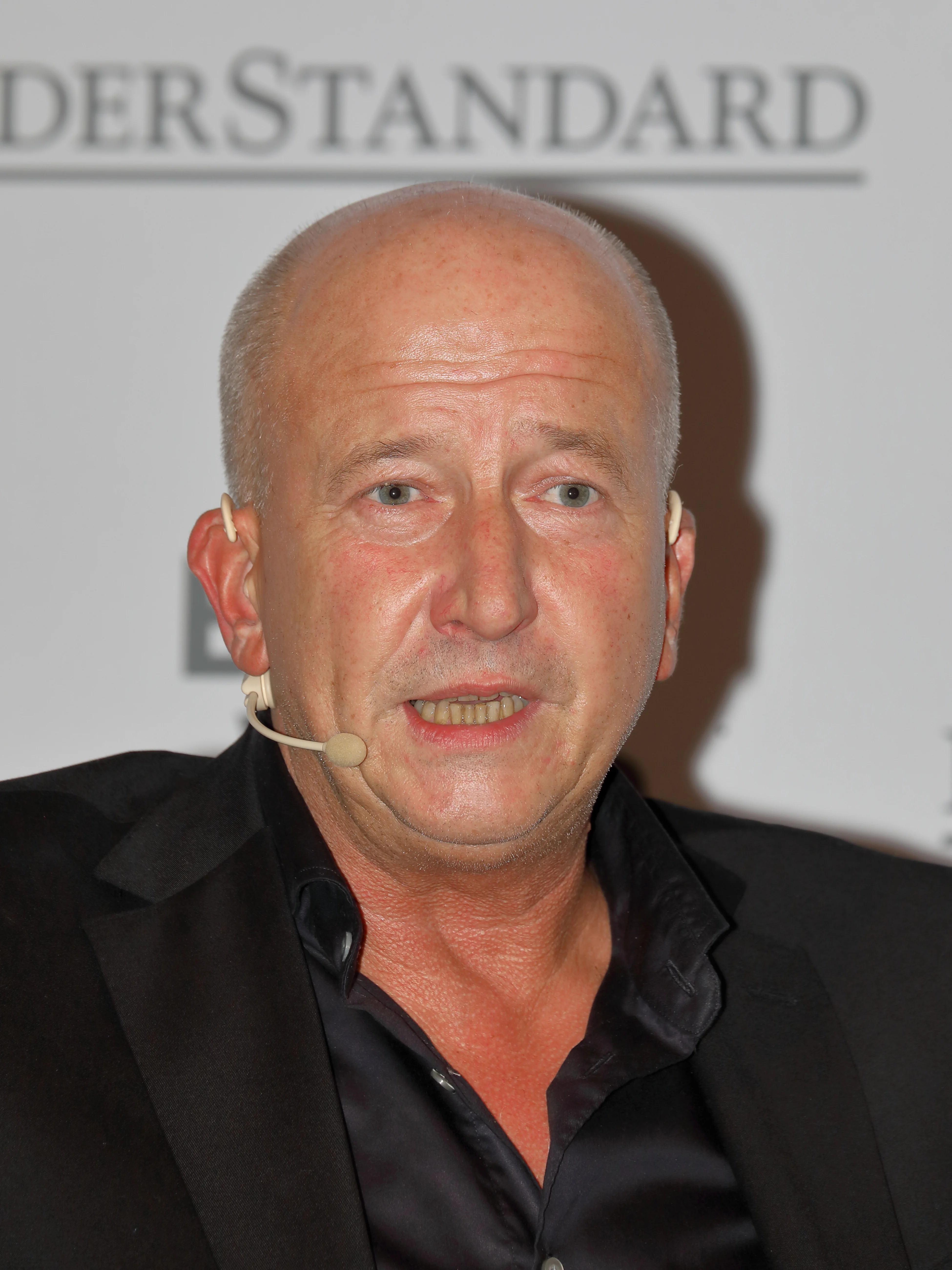
Image from Wikipedia
Image from Wikipedia
René Freund: The Austrian Narrator Between Satire, Psychology, and Fine Social Observation
An Author with Wit, Depth, and Distinctive Voice
René Freund is among those Austrian authors who found their literary voice early and have honed it consistently over decades. Born on February 14, 1967, in Vienna, he grew up in a culturally rich environment that significantly influenced his later artistic development. Today, his name is synonymous with novels, plays, radio dramas, essays, and non-fiction works that utilize linguistic wit, precision, and a keen sensitivity to human flaws. ([de.wikipedia.org](https://de.wikipedia.org/wiki/Ren%C3%A9_Freund))
His texts combine entertainment with sharp observation and showcase a clear signature: friendly in tone but never trivial, comical in approach yet always with a serious core. This very blend makes René Freund interesting to literature enthusiasts as well as to readers seeking pointed contemporary literature with a cultural profile. His works traverse themes of provincial life, urban settings, family histories, relationship novels, and satirical escalation. ([de.wikipedia.org](https://de.wikipedia.org/wiki/Ren%C3%A9_Freund))
Biographical Influence and Literary Beginning
After completing his schooling, René Freund studied philosophy, theater studies, and ethnology at the University of Vienna, finishing in 1992 with a thesis on occultism and the National Socialist worldview; he earned his doctorate in 1994 with a dissertation on the connection between esoteric and fascist ideologies. This academic foundation explains the intellectual agility of his texts, which often consider historical, social, and ideological backgrounds without falling into dry exposition. ([de.wikipedia.org](https://de.wikipedia.org/wiki/Ren%C3%A9_Freund))
From an early age, Freund intertwined writing with theater work: From 1988 to 1990, he served as a dramaturg at the Theater in der Josefstadt in Vienna. The transition from the stage to the literary public was not abrupt but rather a gradual development arising from observation, form consciousness, and a strong sense of dialogue. He already received the Literature Prize from the City of Villach in 1987 for the play “Deschek,” an early indication of his knack for dramatic intensity and societal friction. ([de.wikipedia.org](https://de.wikipedia.org/wiki/Ren%C3%A9_Freund))
Career Between Stage, Novel, and Essay
Freund's artistic career is unusually broad. He writes plays, novels, essays, and non-fiction, translates for English and French, and regularly publishes columns, including for the magazine Servus in Stadt & Land and for Kurier on Sundays. This versatility is not a mere assortment of formats but an expression of a literary stance that understands language as a precise tool for various public spaces. ([de.wikipedia.org](https://de.wikipedia.org/wiki/Ren%C3%A9_Freund))
His position in the Austrian literary landscape has been solidified through numerous awards, including talent development prizes, playwright scholarships, a jubilee scholarship from the Literar-Mechana, and a state scholarship for literature. Such honors mark not only recognition but also a sustained artistic relevance. Since 2011, Freund has been a member of the Graz Authors' Assembly and resides in the Salzkammergut region of Upper Austria, an area that frequently appears as an atmospheric resonance space in his work. ([de.wikipedia.org](https://de.wikipedia.org/wiki/Ren%C3%A9_Freund))
Important Works and Narrative Development
Freund's oeuvre encompasses a remarkable range. Key books include Braune Magie?, Land der Träumer, Aus der Mitte, Bis ans Ende der Welt, Wiener Theaterblut, Stadt, Land und danke für das Boot, Wechselwirkungen, Liebe unter Fischen, Mein Vater, der Deserteur, Niemand weiß, wie spät es ist, Ans Meer, Swinging Bells, Das Vierzehn-Tage-Date, and Wilde Jagd. The development shows an author who continually tests new tones without losing his fundamental qualities: situational humor, psychological accuracy, and a fine ear for social dynamics. ([de.wikipedia.org](https://de.wikipedia.org/wiki/Ren%C3%A9_Freund))
This signature style is particularly evident in his novels, which often derive narrative tension from everyday conflicts. Ans Meer takes a group on a journey that becomes a moment of longing and realization, while Wilde Jagd operates with a summer novel filled with quirky characters, village communities, and underlying tension. Conversely, Das Vierzehn-Tage-Date draws on the experience of quarantine and transforms it into a comedic chamber play about intimacy, repression, and relationship clarification. ([diepresse.com](https://www.diepresse.com/5460556/roadtrip-an-die-adria?utm_source=openai))
Theater, Radio Play, and the Art of Dialogue
Freund's theater work is core to his artistic identity. Early plays such as Parteienverkehr, Solokabine, Am Sessellift, and Totenwache demonstrate his eye for theatrical condensation, while later works like Schluss mit André, Die goldene Nase, Herzfleisch, Swinging Bells, Corinna & David, and Blöde Kröten oder Kleben fürs Leben utilize comedy as a precise instrument of social observation. His plays benefit from a dialogue that not only delivers punchlines but also develops characters. ([de.wikipedia.org](https://de.wikipedia.org/wiki/Ren%C3%A9_Freund))
Friend's sensitivity to rhythm and scenic economy is also evident in his radio plays. Productions such as Klinik unter Almen, Schluss mit André, and Liebe unter Fischen demonstrate how well his texts translate into acoustic drama. This shows how strongly his work is shaped by theatrical experience, compositional thought, and a pronounced sense of coherence in arrangement. ([de.wikipedia.org](https://de.wikipedia.org/wiki/Ren%C3%A9_Freund))
Current Projects and Recent Publications
Freund's recent and current projects mainly include the novel Wilde Jagd from 2023 as well as stage works Blöde Kröten oder Kleben fürs Leben and Alles gut, James! scheduled for 2024 and 2025. This showcases an author who continues to be productive across novels, theater, and satirical observations of contemporary life. His publication list remains open to new materials, new forms, and new social friction points. ([de.wikipedia.org](https://de.wikipedia.org/wiki/Ren%C3%A9_Freund))
Particularly, Wilde Jagd has been described in the press as a fine, light summer novel with quirky characters, underscoring the consistency of Freund's narrative approach. The strength lies less in loud effects and more in controlled development, precise character depiction, and a narrative lightness that makes the seemingly small literary significant. ([diepresse.com](https://www.diepresse.com/13928281/sommer-der-geheimnisse?utm_source=openai))
Critical Reception and Literary Impact
The press has repeatedly reacted to Freund's books with recognition for tone, humor, and character portrayal. Ans Meer was described as a feel-good book with wit, closely associated with a special sense of travel; Liebe unter Fischen received praise for its laconic, humorous treatment of exhaustion, love, and writer's block. Wilde Jagd was characterized as summer reading with atmosphere, tension, and lovable humor. ([diepresse.com](https://www.diepresse.com/5460556/roadtrip-an-die-adria?utm_source=openai))
Such press statements illustrate how well Freund bridges the gap between entertainment literature, literary refinement, and popular accessibility. His cultural influence lies precisely in this balance: he writes books and plays that appear easy to read but delve deep into social observations, milieu portrayals, and precise constructions that go far beyond mere lightness. ([diepresse.com](https://www.diepresse.com/13928281/sommer-der-geheimnisse?utm_source=openai))
Style, Themes, and Literary Signature
René Freund favors clear language, comedic sharpness, and a precise observation of everyday situations. His characters often find themselves in relationships, conflicts, or life situations that initially seem unremarkable but gain depth through psychological intensification and pointed dialogues. This connection of humor and seriousness is a central feature of his literary development. ([de.wikipedia.org](https://de.wikipedia.org/wiki/Ren%C3%A9_Freund))
His strong interest in places and social spaces is also notable: Salzkammergut, Vienna, mountain villages, small-town milieus, travel communities, or cramped living situations become stages of the human experience. Whether in a novel or a play, Freund observes with careful attention how people talk, remain silent, evade, hope, and misunderstand one another. This results in a body of work that entertains, reflects, and narrates with cultural precision. ([de.wikipedia.org](https://de.wikipedia.org/wiki/Ren%C3%A9_Freund))
Cultural Context and Classification
In contemporary Austrian literature, René Freund holds a remarkable position. He connects literary tradition with modern everyday comedy, cultural education with subtle social critique, and theater experience with novelistic narrative power. His texts often feel light, yet carry significant intellectual substance stemming from his studies, stage practice, and long-standing journalism. ([de.wikipedia.org](https://de.wikipedia.org/wiki/Ren%C3%A9_Freund))
The fact that his books and plays are repeatedly picked up by established newspapers and publishers underscores his authority in the literary field. At the same time, his language remains approachable, enabling him to reach readers who view literature not as an academic exercise but as a vibrant form of cultural experience. This is precisely where his work finds its special appeal. ([renefreund.com](https://www.renefreund.com/wilde-jagd/?utm_source=openai))
René Freund is an author who thinks with humor and narrates with a sense of form. Those who experience his books or stage works encounter not a loud effect artist but a precise observer of the present with fine timing, intellectual openness, and a secure literary signature. It is precisely for this reason that it is worth reading his texts and experiencing his theater works live. ([de.wikipedia.org](https://de.wikipedia.org/wiki/Ren%C3%A9_Freund))
Conclusion: Why René Freund Remains Exciting
René Freund captivates with versatility, narrative discipline, and a distinctive tone that blends satire, comedy, and psychological accuracy. His career demonstrates how consistent artistic development across different genres can establish an independent literary brand. Those seeking Austrian contemporary literature infused with wit, perspective, and substance will find in René Freund an author of lasting relevance. ([de.wikipedia.org](https://de.wikipedia.org/wiki/Ren%C3%A9_Freund))
His works invite closer attention: to families, couples, villages, travelers, disrupted lives, and people in the extraordinary circumstances of everyday life. Especially in live settings—on stage or during readings—his language's full energy unfolds. René Freund remains exciting because he transforms the ordinary with literary elegance. ([renefreund.com](https://www.renefreund.com/lesungen/?utm_source=openai))
Official Channels of René Freund:
- Instagram: No official profile found
- Facebook: No official profile found
- YouTube: No official profile found
- Spotify: No official profile found
- TikTok: No official profile found
Sources:
- Wikipedia – René Freund
- renefreund.com – About Me
- renefreund.com – Wilde Jagd
- renefreund.com – Das Vierzehn-Tage-Date
- renefreund.com – Ans Meer
- renefreund.com – Swinging Bells
- renefreund.com – Herzfleisch
- renefreund.com – Readings
- Thomas Sessler Verlag – René Freund / Corinna & David
- Die Presse – Sommer der Geheimnisse
- Die Presse – Roadtrip to the Adriatic
- Die Presse – Romantic Comedy: Burn-out? Now Everyone Has It!
Upcoming Events
Toads in Need – René Freund live in Fürth
When family, climate, and chaos collide, Fürth becomes a laugh stage. Toads in Need brings sharp humor and strong punchlines on 16.04.2027. #Comedy
Toads in Distress – Comedy by René Freund in Fürth
Fürth gets a laughing experience with bite: Toads in Distress combines family chaos, climate satire, and strong stage presence. On April 17, 2027, at the City Theater. #Comedy #Theater