
Norbert Gstrein
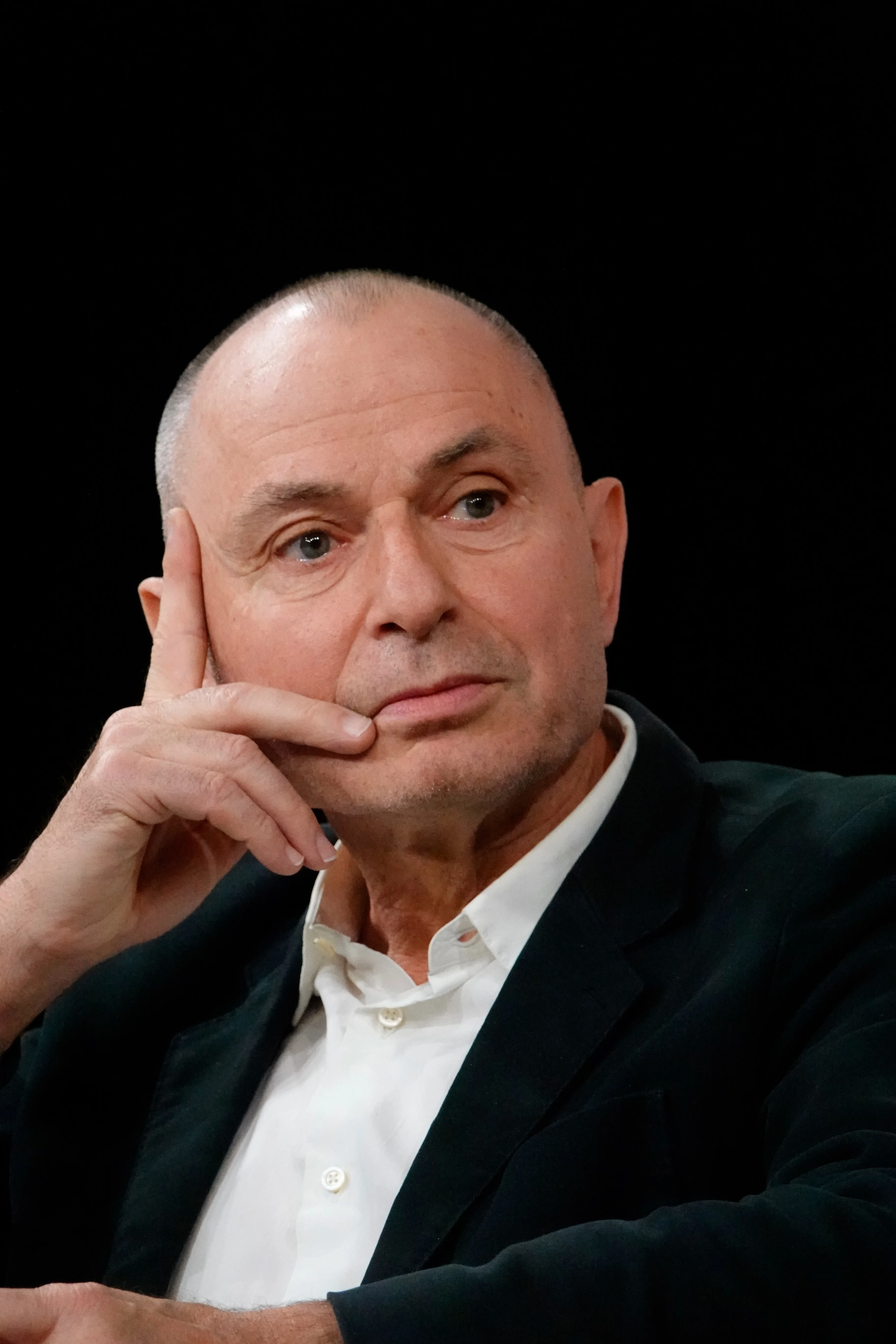
Image from Wikipedia
Image from Wikipedia
Norbert Gstrein – The Great Narrator between Tyrol, Memory, and Literary Precision
An Austrian author who addresses questions of truth, guilt, and identity with rare narrative depth
Norbert Gstrein, born on June 3, 1961, in Mils near Imst in Tyrol, is among the most prominent voices in contemporary Austrian literature. His work revolves around memory, perpetration, family histories, political violence, and the fragility of narratives. The early recognition and sustained presence in the German-speaking literary scene show: Gstrein does not merely write novels; he develops literary frameworks concerning reality itself. ([munzinger.de](https://www.munzinger.de/register/portrait/biographien/Norbert%2BGstrein/00/21131?utm_source=openai))
Biographical Roots: Tyrol, Mathematics, and the Path to Literature
Gstrein grew up in Tyrol and initially studied mathematics in Innsbruck, Stanford, and Erlangen; later he did not complete his doctorate in Innsbruck but pursued a scientific career in the field of logic, language, and precision. This biographical formation explains much about his prose: Gstrein's sentences are meticulously constructed, and his novels often argue as precisely as they narrate. His literary origins lie in the alpine experience, but he has not developed merely a regional writing style; instead, he offers a broad, European perspective on history and the present. ([en.wikipedia.org](https://en.wikipedia.org/wiki/Norbert_Gstrein?utm_source=openai))
The Early Breakthrough: “Einer” and the Look at the Repressed
Norbert Gstrein achieved his literary breakthrough in 1988 with the story Einer. The text immediately made him visible as an author who brings the seemingly marginal into focus and illuminates social and psychological tensions with great precision. Already here, the signature of his musical career is evident in the broader context of his literature: no loud effects, but precise, relentless work on the material of reality. Early critical voices emphasized that Gstrein does not portray the tourist-influenced Tyrolean world folklorically but instead in its inner hardness and complexity. ([news.at](https://www.news.at/menschen/was-bedeutet-es-in-den-krieg-zu-mussen?utm_source=openai))
Career and Development of Work: From the Tyrol Novel to European Contemporary Literature
In the following decades, Gstrein developed a body of work that increasingly distanced itself from regional localization while never denying its origins. Novels such as Die Winter im Süden, Das Handwerk des Tötens, Die ganze Wahrheit, Eine Ahnung vom Anfang, In der freien Welt, Die kommenden Jahre, Als ich jung war, Der zweite Jakob, Vier Tage, drei Nächte, and the novel set to be published in 2026, Im ersten Licht, mark a continuous artistic development. In these works, Gstrein repeatedly examines perspectives, narrative reliability, and the moral burdens of family and contemporary history. ([en.wikipedia.org](https://en.wikipedia.org/wiki/Norbert_Gstrein?utm_source=openai))
Particularly striking are those books where Gstrein connects historical conflicts with psychological precision. Das Handwerk des Tötens engages with the recent Balkan Wars, while In der freien Welt literarily reflects on the Israel-Palestine conflict and Die kommenden Jahre evokes questions of flight, migration, and expectations for the future. In Der zweite Jakob and Als ich jung war, he condenses the themes of guilt, biographical self-deception, and familial upheavals into novels of great narrative tension. ([books.google.com](https://books.google.com/books/about/Das_Handwerk_des_T%C3%B6tens.html?id=_ZtPAgAAQBAJ&utm_source=openai))
Current Projects and New Publications: The Present as a Field of Literary Experimentation
Gstrein's more recent and current works include Vier Tage, drei Nächte from 2022, the essay collection Mehr als nur ein Fremder from 2023, and the novel Im ersten Licht, published in 2026 by Hanser. Im ersten Licht covers an entire century, focusing on a singular life marked by beauty, tragedy, and contradictions. The novel was nominated for the Leipzig Book Fair Prize, underscoring its continued relevance in contemporary literary discourse. ([books.google.com](https://books.google.com/books?id=84WUEQAAQBAJ&utm_source=openai))
Recent reviews also emphasize that Gstrein does not exhaust his themes but continually sharpens them. Literary criticism highlights the emotional weight of his character constellations as well as the formal discipline of his prose. Thus, Gstrein's position as an author, whose projects aim not at quick effects but at long-lasting literary impact, is confirmed. ([swr.de](https://www.swr.de/kultur/literatur/norbert-gstrein-im-ersten-licht-100.html?utm_source=openai))
Discography in a Literary Sense: Books, Themes, and Resonance
Norbert Gstrein does not have a literal discography, but his works can be read as a carefully composed catalog. Key stops include Einer (1988), Das Register (1992), Die englischen Jahre (1999), Das Handwerk des Tötens (2003/2010 in a new edition), Die Winter im Süden (2008), Die ganze Wahrheit (2010), Eine Ahnung vom Anfang (2013), In der freien Welt (2016), Die kommenden Jahre (2018), Als ich jung war (2019), Der zweite Jakob (2021), Vier Tage, drei Nächte (2022), Mehr als nur ein Fremder (2023), and Im ersten Licht (2026). This sequence of works shows no repetition but rather a continuous refinement of composition, perspective, and historical depth. ([en.wikipedia.org](https://en.wikipedia.org/wiki/Norbert_Gstrein?utm_source=openai))
The reception is correspondingly broad. Gstrein's novels have been translated into more than a dozen languages and have received numerous awards, including the Alfred-Döblin Prize, the Uwe Johnson Prize, the Literature Prize of the Konrad Adenauer Foundation, the Anton Wildgans Prize, the Austrian Book Prize 2019, and the Thomas Mann Prize. These accolades not only attest to literary quality but also to the enduring authority of his works within German-language literature. ([literaturfestival.com](https://literaturfestival.com/en/authors/norbert-gstrein/?utm_source=openai))
Style, Attitude, and Cultural Influence
Norbert Gstrein's style combines analytical sharpness with narrative openness. His texts often employ shifts in perspective, uncertainties, and flashbacks, revealing seemingly secured knowledge as fragile constructions. This is where his cultural influence lies: Gstrein writes against simplification and demonstrates how memory, guilt, and narration intersect. ([literaturfestival.com](https://literaturfestival.com/authors/norbert-gstrein/?utm_source=openai))
Also noteworthy is the tension between local origins and a global thematic horizon. Coming from Tyrol, Gstrein writes about wars, migration, family dramas, political ideologies, and the moral disorder of the 20th and 21st centuries. His books thus belong to a literary tradition that connects precise observation, historical reflection, and psychological exploration. ([swr.de](https://www.swr.de/kultur/literatur/norbert-gstrein-im-ersten-licht-100.html?utm_source=openai))
Conclusion: Why Norbert Gstrein Remains So Exciting Today
Norbert Gstrein is an author for readers who seek literature as an intellectual and emotional experience. His novels are not merely stories but precisely constructed spaces where historical violence, private guilt, and the uncertainty of narration converge. Those wishing to experience contemporary German-language literature in its most demanding form will find in Gstrein's work an author of lasting significance. A live encounter with his readings or discussions is as worthwhile as an intensive reading of his books. ([literaturfestival.com](https://literaturfestival.com/en/authors/norbert-gstrein/?utm_source=openai))
Official Channels of Norbert Gstrein:
- Instagram: no official profile found
- Facebook: no official profile found
- YouTube: no official profile found
- Spotify: no official profile found
- TikTok: no official profile found
Sources:
- Wikipedia – Norbert Gstrein
- Suhrkamp Verlag – Norbert Gstrein
- Suhrkamp Verlag – Norbert Gstrein: Einer
- Goethe Institute – Norbert Gstrein
- ORF Ö1 – Norbert Gstrein in Conversation
- SWR Culture – Norbert Gstrein: Im ersten Licht
- Leipzig Book Fair Prize – Norbert Gstrein: Im ersten Licht
- Google Books – Im ersten Licht
Upcoming Events
Norbert Gstrein reads - In the First Light Bielefeld 2026

31st Bielefeld Literature Days