
Maximilian Hornung
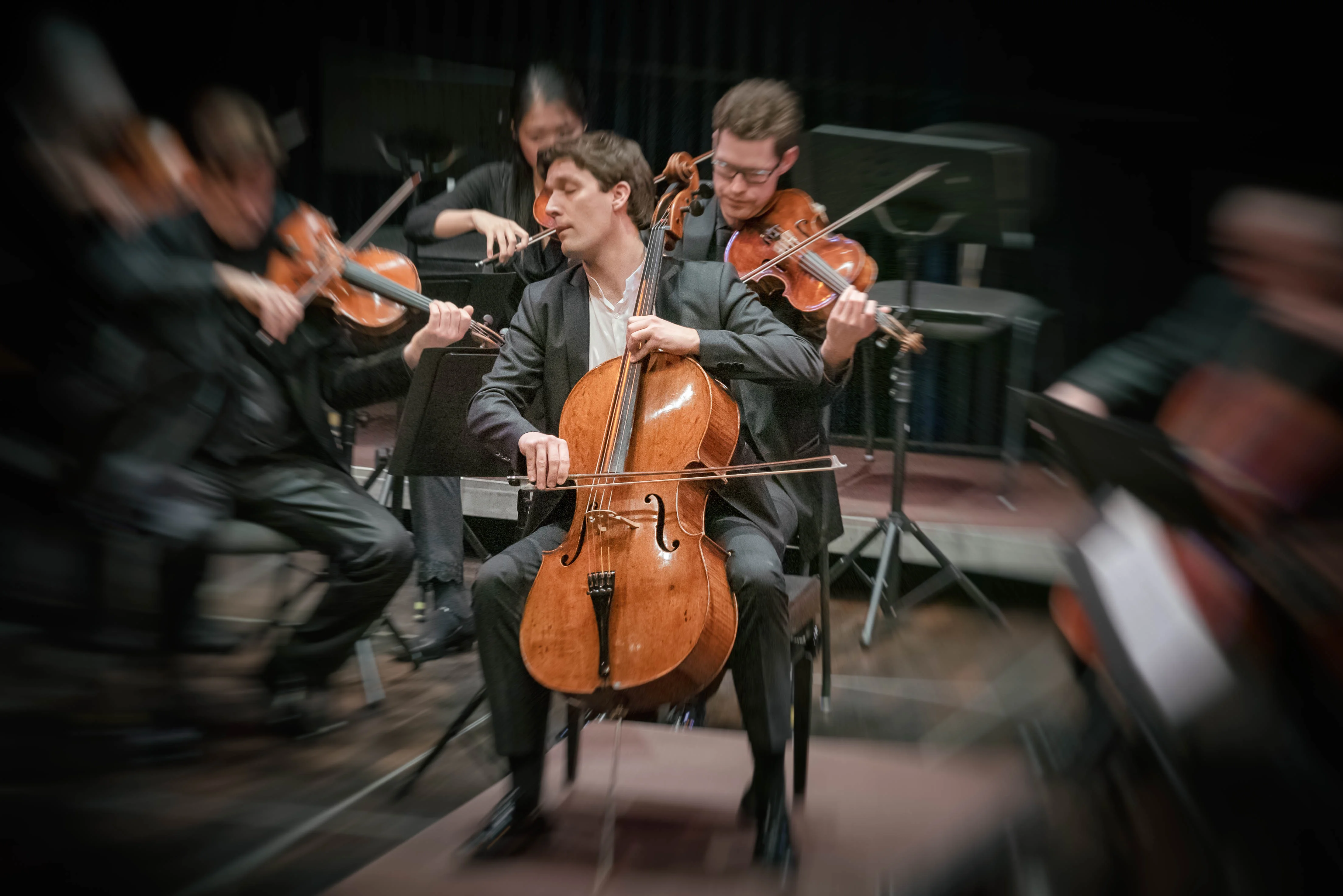
Image from Wikipedia
Image from Wikipedia
Maximilian Hornung – Sound Depth, Virtuosity, and the Art of the Great Cello Tone
A German Cellist with International Appeal
Maximilian Hornung is part of that rare generation of cellists who combine technical mastery, stylistic curiosity, and a strong artistic personality within a single musical career. Born in 1986 in Augsburg, he began cello lessons at the age of eight and early on developed the blend of discipline, tonal awareness, and musical instinct that would characterize his later profile. His training with Eldar Issakadze, Thomas Grossenbacher, and David Geringas laid the foundation for a career that thrives on both solo repertoire and chamber music. ([maximilianhornung.com](https://www.maximilianhornung.com/about?utm_source=openai))
Early Influences and the Path to Professionalism
Hornung grew up in a family of musicians in Dinkelscherben and dropped out of school at the age of 16 to focus entirely on music. This early decision did not mark a leap into the unknown, but the beginning of a purposefully built artistic development. Even at a young age, he combined technical precision with an impressively mature understanding of phrasing and tone production. ([de.wikipedia.org](https://de.wikipedia.org/wiki/Maximilian_Hornung?utm_source=openai))
His educational journey reflects a path that connects both German and international cello schools. The years spent studying with renowned educators provided him with a broad palette of tonal colors and a strong confidence in handling the classical core repertoire. It is particularly in encounters with great teachers that Hornung's openness becomes evident, which would later become his trademark. ([maximilianhornung.com](https://www.maximilianhornung.com/about?utm_source=openai))
Breakthrough in Competitions and Rise in the Orchestra
In 2005, Maximilian Hornung won the German Music Competition, and in 2007 he received first prize at the ARD Music Competition with the Tecchler Trio, which he co-founded. These awards marked a decisive career boost and quickly led him into the top tier of German music life. The international attention for his performance was thus no longer sporadic, but sustainable. ([de.wikipedia.org](https://de.wikipedia.org/wiki/Maximilian_Hornung?utm_source=openai))
At just 23 years old, he became the principal cellist of the Symphonieorchester des Bayerischen Rundfunks – a position regarded in the orchestral scene as a hallmark of the highest class. After four years, he left the position to dedicate himself entirely to the solo and chamber music repertoire. This decision illustrates a clear artistic profile: Hornung sought not the safety of a fixed orchestral career, but the greater freedom of interpretation. ([de.wikipedia.org](https://de.wikipedia.org/wiki/Maximilian_Hornung?utm_source=openai))
Soloist, Chamber Musician, and Musical Networker
Hornung's international presence is based not only on concert performances but also on a remarkably dense chamber music practice. His partners include Anne-Sophie Mutter, Julia Fischer, Antje Weithaas, Hélène Grimaud, Daniil Trifonov, Christian Tetzlaff, and Lisa Batiashvili. These collaborations demonstrate that he is perceived not as a specialist on the sidelines but as a central partner in the dialogue between soloists in the European classical music scene. ([maximilianhornung.com](https://www.maximilianhornung.com/about?utm_source=openai))
As a recitalist, he is also present on major stages, including the Berliner Philharmonie, the Concertgebouw Amsterdam, the Elbphilharmonie Hamburg, the Wiener Musikverein, and the Wigmore Hall in London. Additional performances at festivals such as Salzburg, Rheingau, Lucerne, Verbier, Schleswig-Holstein, and Ravinia enhance his status as a cellist with an international stage presence and high musical authority. ([maximilianhornung.com](https://www.maximilianhornung.com/about?utm_source=openai))
Discography: From Debut to Celebrated Reference Recordings
Hornung's discography is remarkably extensive and combines solo concerts with chamber music formats. Early highlights include Dvořák's Cello Concerto with the Bamberg Symphony under Sebastian Tewinkel, Richard Strauss's key cello works with the Symphonieorchester des Bayerischen Rundfunks under Bernard Haitink, and Haydn's Cello Concertos with the Kammerakademie Potsdam under Antonello Manacorda. Later recordings include Schubert's Trout Quintet with Anne-Sophie Mutter and Daniil Trifonov, as well as the Shostakovich/Tsintsadze album with the German Symphony Orchestra Berlin and Andris Poga. ([audi-mediacenter.com](https://www.audi-mediacenter.com/de/publikationen/weitere/biografie-maximilian-hornung-905/download))
The diversity of his recordings reflects a clear curatorial line: Hornung seeks not only the great standard works but also lesser-known or stylistically intriguing literature. This is a crucial part of his artistic development. His discography documents not merely a repertoire catalog but a consciously constructed profile between canon and discovery. ([maximilianhornung.com](https://www.maximilianhornung.com/about?utm_source=openai))
Critical Reception: Expression, Color, and Reference Character
The music press repeatedly describes Hornung's playing as finely sculpted in sound and independently interpretative. DIE ZEIT highlighted his promising CD debut and the high level of his career back in 2011. CRESCENDO later praised his recording of the Shostakovich and Tsintsadze concertos as a colorful, stylistically rich, and emotionally moving interpretation, going so far as to refer to it as a “reference recording.” ([zeit.de](https://www.zeit.de/2011/03/D-Hornung))
The official artist biography also emphasizes his extraordinary technical mastery, the depth of his tone, and the range of his tonal colors. Such formulations are not mere PR clichés but reflect the way Hornung is perceived in reviews and concert announcements: as a cellist who never makes virtuosity for its own sake but translates it into a clear musical language. ([maximilianhornung.com](https://www.maximilianhornung.com/about?utm_source=openai))
Current Projects and Artistic Presence
In the 2025/26 season, Hornung will debut with the Berliner Philharmoniker performing Henri Dutilleux's Cello Concerto under Thomas Guggeis. Debuts are also scheduled with the Sydney Symphony Orchestra, the Oslo Philharmonic, the Orquesta Sinfónica de Galicia, and the Zürcher Kammerorchester. He is announced as an Artist in Residence at the Staatstheater Nürnberg – as a soloist, chamber musician, and conductor. ([maximilianhornung.com](https://www.maximilianhornung.com/about?utm_source=openai))
His presence remains significant in Germany as well: Recent highlights include engagements with the Tonhalle-Orchester Zürich, the Vienna Symphony Orchestra, the WDR Symphony Orchestra Cologne, the Philharmonia Orchestra, and the Orchestre National de France. Since 2022, Hornung has also been the Artistic Director of the Traunsteiner Summer Concerts, thus expanding his profile from a celebrated soloist to a creative musician with programmatic responsibility. ([maximilianhornung.com](https://www.maximilianhornung.com/about?utm_source=openai))
Awards, Authority, and Pedagogical Impact
Hornung was awarded the ECHO Klassik Prize as Newcomer of the Year, received the Bavarian Arts Promotion Prize, and the European Newcomer Prize. Since 2017, he has held a professorship for cello at the Hochschule für Musik und Theater München. This combination of accolades, an international career, and pedagogical engagement gives him an authority that extends far beyond individual concert successes. ([de.wikipedia.org](https://de.wikipedia.org/wiki/Maximilian_Hornung?utm_source=openai))
As a teacher, Hornung represents a generation that combines virtuosity with reflection. His career demonstrates how musical excellence, ensemble spirit, and institutional responsibility can complement each other. This embodies his cultural value: He shapes not only concert life but also the transmission of knowledge to future cellists. ([maximilianhornung.com](https://www.maximilianhornung.com/about?utm_source=openai))
Conclusion: A Cellist with Substance, Profile, and Future
Maximilian Hornung fascinates through the combination of warm, resonant cello tone, stylistic flexibility, and a musical career that consistently emphasizes substantive depth. He moves confidently between solo repertoire, chamber music, and conducting, bridging the classical canon and rarely performed works. Experiencing him live means encountering an artist who not only plays but opens musical spaces and infuses each work with personality. ([maximilianhornung.com](https://www.maximilianhornung.com/about?utm_source=openai))
It is precisely this mix of tonal nobility, technical control, and interpretative courage that makes him one of the most exciting German cellists of his generation. His performances are worthwhile not just for cello enthusiasts but for all who wish to experience classical music as a vibrant, contemporary art form. Hornung remains a name that should be heard in the concert hall. ([maximilianhornung.com](https://www.maximilianhornung.com/about?utm_source=openai))
Official Channels of Maximilian Hornung:
- Instagram: https://www.instagram.com/maximilianhornung/
- Facebook: https://www.facebook.com/maximilianhornungofficial/?fref=ts
- YouTube: No official profile found
- Spotify: https://open.spotify.com/intl-de/artist/1ezGJEOqpr1Fw2ZfKYt0yC?si=Hpk8OJRGS6CacWaS0hFH7Q
- TikTok: No official profile found
Sources:
- Wikipedia: Maximilian Hornung
- Maximilian Hornung – About
- Maximilian Hornung – Recordings
- Maximilian Hornung – Official Website
- DIE ZEIT – Maximilian Hornung: Pure Musicality
- CRESCENDO – Profile and Expression
- UKARIA Cultural Centre – Maximilian Hornung
- Badisches Staatstheater Karlsruhe – Maximilian Hornung
- Audi MediaCenter – Biography of Maximilian Hornung
Upcoming Events
Concert 3 - Maximilian Hornung, Cello
Experience Bach anew in Munich: Maximilian Hornung performs three cello suites in historic atmosphere in the Mars-Venus Hall. Secure tickets now! #Classical
FREISTIL II: Chamber Music in the Small Golden Hall
Visit an unforgettable concert as part of the Mozart Festival in Augsburg and enjoy works by Puccini and Mahler.
Traunstein Summer Concerts Motto Real Concert V
A special concert evening in Traunstein: Dvořák heard anew, played intensely, close to the music. On 09/05/2026 at the Cultural Forum Klosterkirche. #Traunstein #Classical
Traunstein Summer Concerts Motto Real Concert VII
Romance in finest composition: The Traunstein Summer Concerts conclude with Bruckner and Brahms at the Cultural Forum Monastery Church. #ChamberMusic #Traunstein