
Luciano Biondini
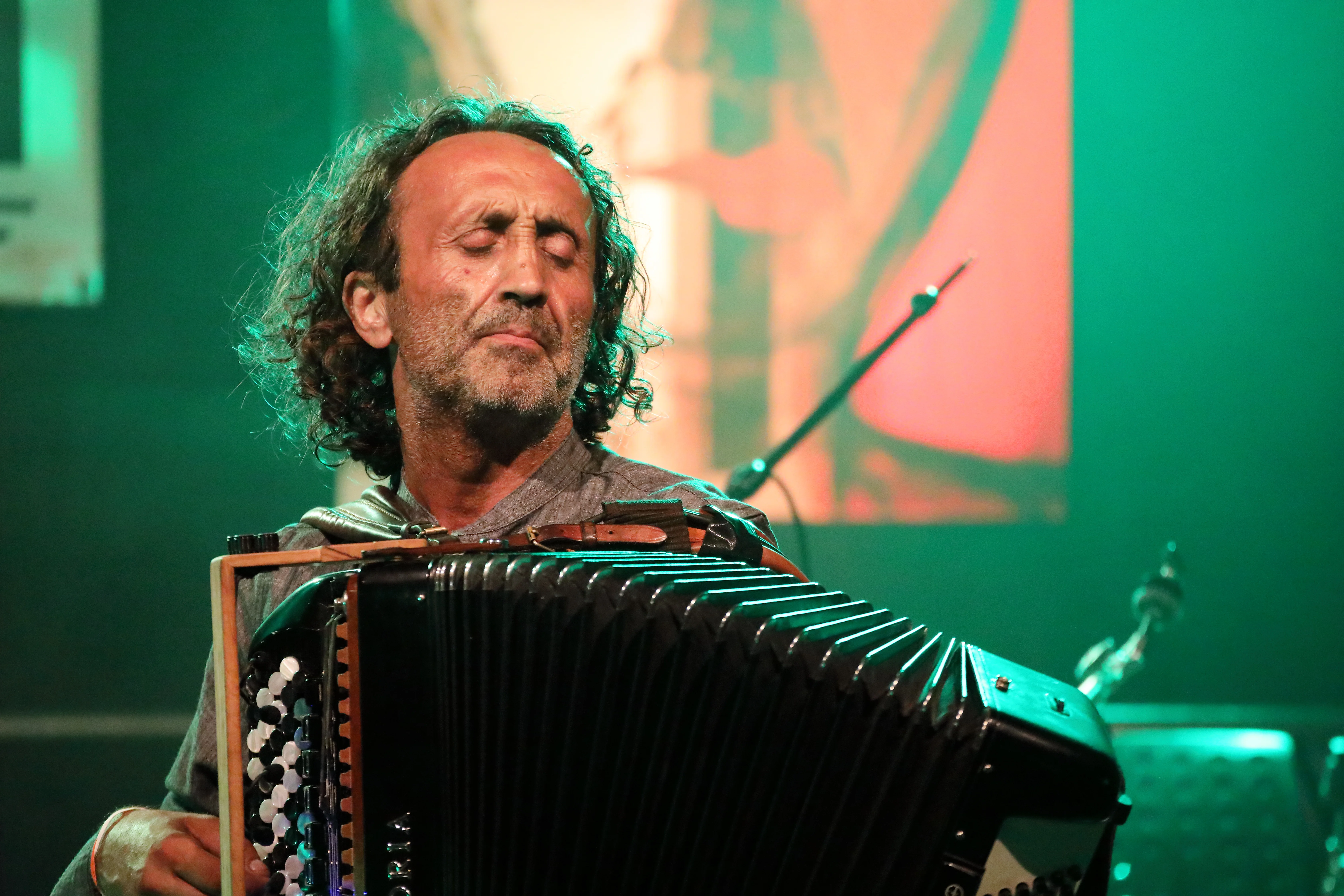
Image from Wikipedia
Image from Wikipedia
Luciano Biondini: The Italian Jazz Accordionist Who Gave a New Voice to the Instrument
Luciano Biondini Between Classical Discipline and Jazz Freedom
Luciano Biondini, born in 1971 in Spoleto, is one of the defining Italian accordionists of his generation. His career combines classical training, international competition successes, and a consistent inclination towards jazz since 1994. Thus, he represents an artist biography where technical precision and improvisational openness are not opposites but fuel each other. ([de.wikipedia.org](https://de.wikipedia.org/wiki/Luciano_Biondini?utm_source=openai))
Biondini developed a close relationship with his instrument early on: he started playing the accordion at the age of ten and initially studied the classical side of the instrument before turning to jazz music. This dual influence explains much of his current stage presence and his distinctive tone, which oscillates between contour and lightness, structure and risk. Consequently, he is regularly described in the music press as a musician who gives the accordion an independent profile in jazz. ([accordions.it](https://www.accordions.it/en/artists/luciano-biondini/))
Biography: From Spoleto to European Stages
Biondini's roots lie in Umbria, but his music career quickly expanded beyond the regional scene. After his classical studies, he garnered numerous awards, including the Trophée Mondial de l'Accordéon, the Premio Internazionale di Castelfidardo, the Premio “Luciano Fancelli,” and the Premio Internazionale di Recanati. Such accolades not only mark virtuosity but also establish early authority in the field: an accordionist who succeeds in competitions often brings with them an exceptional technical foundation. ([de.wikipedia.org](https://de.wikipedia.org/wiki/Luciano_Biondini?utm_source=openai))
The decisive stylistic shift came in 1994 when Biondini turned to jazz music. From then on, his repertoire expanded continuously: he appeared on television and radio shows, played in several European countries, and performed at festivals such as Umbria Jazz Winter, Fano Jazz, the Festival dei Due Mondi, the Festival Klezmer di Ancona, and Metronome. These milestones reflect a musician who did not confine himself to a single scene but asserted his place in various musical contexts. ([accordions.it](https://www.accordions.it/en/artists/luciano-biondini/))
Career: The Accordion as a Solo Instrument in Modern Jazz
In interviews and profiles, Biondini is portrayed as a musician who challenges prejudices against the accordion in jazz. All About Jazz emphasizes that he has carved out a significant place in jazz by freeing the instrument from clichés; at the same time, his playing style is praised for being dramatic, original, and unmistakable. This blend of expressiveness and sensitivity makes him one of the most exciting European jazz accordionists. ([allaboutjazz.com](https://www.allaboutjazz.com/storia-di-un-processo-evolutivo-intervista-a-luciano-biondini-by-aaji-staff?utm_source=openai))
A crucial part of his career consists of high-profile collaborations. His partners include Rabih Abou-Khalil, Dave Bargeron, Michel Godard, Lucas Niggli, Battista Lena, Gabriele Mirabassi, Enrico Rava, Tony Scott, Mike Turk, Ares Tavolazzi, Roberto Ottaviano, Maarten van der Grinten, Martin Classen, and Enzo Pietropaoli. Such names clearly locate him in the European jazz and crossover context, where chamber music, improvisation, and Mediterranean sound colors intertwine. ([de.wikipedia.org](https://de.wikipedia.org/wiki/Luciano_Biondini?utm_source=openai))
Discography: Solo Works, Duos, and Elegant Ensemble Formats
The discographic entries reveal an artist who has particularly productively utilized the duo format. The sources list among others Terra Madre with Javier Girotto, Prima Del Cuore, What Is There What Is Not with Michel Godard and Lucas Niggli, Face To Face with Fabio Bosso, La Strada Invisibile with Rita Marcotulli, Senza Fine, and Cinema Italia with Rosario Giuliani, Enzo Pietropaoli, and Michele Rabbia. These releases illustrate a discography that does not solely focus on virtuoso pieces but rather on dialogue, sound architecture, and finely balanced dramaturgy. ([en.wikipedia.org](https://en.wikipedia.org/wiki/Luciano_Biondini?utm_source=openai))
Particularly revealing is the collaboration with Rita Marcotulli. Deutsche Welle described their interplay as a musical narration full of humor and melancholy, supported by virtuosic interaction. Rondo placed their collaborative work within the tension of modern European piano aesthetics, classical education, and Italian song tradition. This is precisely where Biondini shows his strength: he perceives the accordion not just as an accompanying instrument but as a narrating voice with harmonic depth and melodic responsibility. ([dw.com](https://www.dw.com/en/jazz-live-rita-marcotulli-and-luciano-biondini/a-43500976?utm_source=openai))
Current Projects and Artistic Presence
Biondini remains active in the years 2024 and 2025. A concert date as part of Tuscia in Jazz for Sla in 2024 highlights the Cinema Italia project with Rosario Giuliani, while a performance by Fabrizio Bosso and Luciano Biondini at Jazz in vigna is scheduled for 2025. These events indicate that Biondini continues to be prominent in programmatically strong live formats, developing his music on stage with the same dedication as in the studio. ([tusciaweb.eu](https://www.tusciaweb.eu/2024/10/cinema-italia-rosario-giuliani-luciano-biondini-concerto-al-tuscia-jazz-for-sla/?utm_source=openai))
In addition, he is also involved in current ensemble projects. At ACT Music, Biondini is listed as part of an ensemble featuring Andreas Schaerer, Kalle Kalima, and Lucas Niggli; here, over 100 concerts and significant artistic development are mentioned. For 2024, the label has also noted a recording on which Biondini is contributing as a composer. This indicates that he remains in demand not only as a soloist and duo partner but also as a creatively contributing musician in international projects. ([actmusic.com](https://www.actmusic.com/artists/?utm_source=openai))
Musical Development: Sound, Technique, and Expression
Biondini's style thrives on an unusually close connection between classical methodology and jazz spontaneity. His early competition successes account for his clean articulation, controlled bellows playing, and secure transition in virtuosic registers. At the same time, jazz-related sources speak of an intense, dramatic expressiveness that presents the accordion as a versatile sound medium that goes well beyond folkloristic attributions. ([allaboutjazz.com](https://www.allaboutjazz.com/musicians/luciano-biondini/?utm_source=openai))
This openness makes his interpretations particularly interesting: in chamber music contexts, he works with subtle dynamics; in improvisational situations, he emphasizes rhythm, and in melodic formats, he employs a vocal quality reminiscent of the Italian canzone. Rondo describes the connection between European classical music and the Italian song tradition in his duo with Marcotulli; ACT also points to tango and popular song influences in related current projects. Biondini thus operates in an aesthetic interspace where jazz, folk music, chamber music, and Mediterranean sound culture overlap. ([rondomagazin.de](https://www.rondomagazin.de/kritiken.php?kritiken_id=8900&utm_source=openai))
Cultural Influence: Rethinking the Accordion
Luciano Biondini is among those musicians who have bestowed new dignity to the accordion in European jazz. All About Jazz explicitly notes that he has opened up a distinct terrain for the instrument beyond stereotypes; festival and manufacturer portraits also describe him as one of the most renowned accordionists worldwide. In a scene where sonic identity and individual style are crucial, this achievement holds significant cultural weight. ([allaboutjazz.com](https://www.allaboutjazz.com/storia-di-un-processo-evolutivo-intervista-a-luciano-biondini-by-aaji-staff?utm_source=openai))
His influence is also evident in the choice of his partners. Biondini does not play at the fringes of jazz but at the center of that European music culture which merges improvisational freedom, melodic tradition, and compositional rigor. His ability to work convincingly with jazz trumpeters, clarinetists, double bassists, drummers, and pianists underscores his role as a musical mediator between genres and generations. ([accordions.it](https://www.accordions.it/en/artists/luciano-biondini/))
Reception Voices: What the Media Appreciates About Luciano Biondini
The reactions from the specialized press present a clear picture: Luciano Biondini is regarded as an extraordinary interpretive spirit with strong stage presence and high artistic credibility. All About Jazz highlights his originality, Deutsche Welle praises the narrative quality of his duo with Marcotulli, and Rondo positions him among the elite of contemporary jazz accordionists. Such classifications do not arise by chance but reflect a career that combines substance, maturity, and stylistic independence. ([allaboutjazz.com](https://www.allaboutjazz.com/musicians/luciano-biondini/?utm_source=openai))
Conclusion: An Accordionist with a Distinctive Signature and Great Stage Authority
Luciano Biondini is compelling because he has established the accordion not as a niche instrument but as a fully-fledged voice of modern jazz. His classical training, his accolades, his remarkable discography, and his diverse collaborations create the profile of a musician who takes artistic development seriously while remaining approachable. Anyone who wants to experience European jazz with melodic depth, sonic sophistication, and emotional precision should see Luciano Biondini live. ([accordions.it](https://www.accordions.it/en/artists/luciano-biondini/))
Official Channels of Luciano Biondini:
- Instagram: no official profile found
- Facebook: no official profile found
- YouTube: no official profile found
- Spotify: no official profile found
- TikTok: no official profile found
Sources:
- Wikipedia - Luciano Biondini
- Victoria Accordions - Luciano Biondini
- All About Jazz - Luciano Biondini
- All About Jazz - Interview with Luciano Biondini
- Deutsche Welle - Jazz Live: Rita Marcotulli and Luciano Biondini
- Rondo Magazin - La strada invisibile
- Trentino Cultura - Luciano Biondini
- Moselmusikfestival - Artists in Profile
- ACT Music - Artists
- Bandcamp - Luciano Biondini
- SicilyMag - Jazz in vigna 2025
- Tusciaweb - Cinema Italia