
Loriot
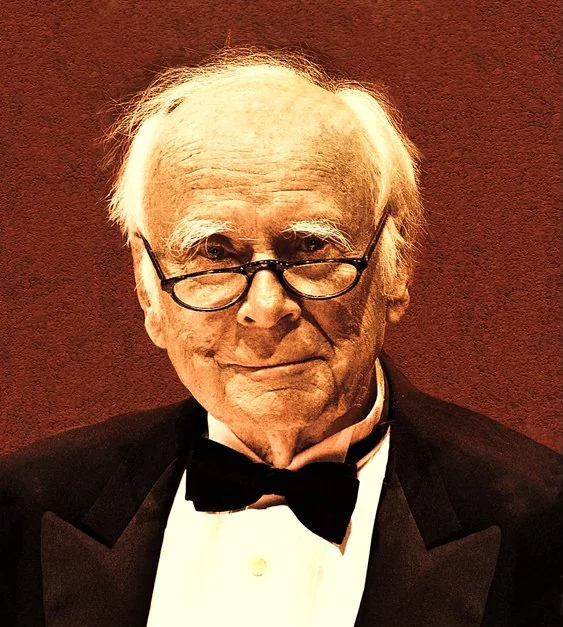
Image from Wikipedia
Image from Wikipedia
Loriot – The Master of Subtle German Humor
Between Sharp Pens, Perfect Timing, and Timeless Observational Skills: Why Loriot Makes Generations Laugh and Think
Loriot, born Bernhard-Viktor Christoph-Carl von Bülow, profoundly influenced the cultural canon of the Federal Republic as a humorist, caricaturist, actor, director, and author like few others. His music career played a minor role, primarily manifesting in radio plays and album releases – his artistic development as a draughtsman, sketch author, and filmmaker was always at the forefront. With an unmistakable stage presence in front of the camera, a stylistically polished language, and a sense for the grotesque in the everyday, he shaped an aesthetic that still resonates in television, theater, literature, and visual arts today. Born on November 12, 1923, in Brandenburg an der Havel and passed away on August 22, 2011, he left behind a body of work that elevates humor, composition, and the arrangement of punchline and pause to high art.
Early Years and Artistic Influences
From an early age, Loriot developed a keen sensitivity to the absurdities of bourgeois conventions. His education and early artistic work led him into the world of caricature, where he condensed the interplay of line, expression, and language into a precise set of tools. His artistic evolution progressed from cartoons to scenic composition: characters, dialogues, and props became building blocks of meticulously timed comedy in his oeuvre. This early focus on form, rhythm, and dramatic climax paved the way for his later successes in television and film.
Breakthrough as a Caricaturist and Architect of Fine Wit
Through his cartoons, Loriot established himself as a distinctive voice of German humor. The witty picture stories with their laconic tone and razor-sharp observations of language, gestures, and etiquette quickly became signatures of a new style. His cartoon work was not merely illustration but a form of visual composition: perspective, character direction, and the relationship between text and image functioned like melody and counterpoint, allowing the punchline to fit together with musical precision. As his popularity grew, doors opened for television productions – the stage where his arrangements of timing, pauses, and repetitions achieved their full impact.
Television as a Laboratory of Perfection: The Cult Series “Loriot” (from 1976)
With the television series "Loriot," which began airing in 1976, the artist created a bible of German sketches, dissecting the mechanics of humor. Alongside the wonderful Evelyn Hamann, he produced classics that are still quoted today. The composition of his scenes – considering props, sightlines, and editing – followed a dramaturgy that fluctuated between linguistic comedy and choreography. The series linked animated and live-action sequences, allowing Loriot to merge his repertoire from cartoon and performance into a comprehensive style that derives its comedy from the tension between rules and subversion.
Animated Films, Mascots, and Pop Culture: Wum, Wendelin, and the “Blue Klaus”
In addition to cartoons, Loriot created iconic animated characters. For the television lottery ("Aktion Sorgenkind"), he created the dog Wum and the elephant Wendelin – characters that became audience favorites with their minimalist design and pointed dialogue. Later, the "Blue Klaus" was introduced as an extraterrestrial concept. This animated film aesthetic showcases Loriot's sensitivity to reduced yet impactful characters: a prime example of the economical "production" of humor, where every visual element and every breath is tuned for effect. His animated films were also shown in curated film programs and revues that highlighted the cultural-historical significance of these works.
Cinematic Successes: “Ödipussi” (1988) and “Pappa ante portas” (1991)
In feature films, Loriot transferred his precise sketchtime into long-form narratives. “Ödipussi” (1988) marked his directorial and screenwriting debut in cinema and is considered one of the most successful German comedies of the post-war era. Three years later, he followed with “Pappa ante portas” (1991), a masterfully composed study of love for order, consumer culture, and family overwhelm. Both films feature finely nuanced character portrayals, dialogical polyphony, and play with everyday rituals that are transformed into satirical tableaux. Historically, they exemplify a German comedy tradition that relies not on slapstick but on linguistic wit, subtext, and mise-en-scène.
Stage, Audio Media, Editions: From Sketch Archives to Audio Releases
Although Loriot was not a musician in the strict sense, his radio plays and audio releases – such as compilations of his sketches – hold significant value in his discography. They document timing and vocal colors as "instruments" of his comedy, which become especially clear in pure audio format. Simultaneously, comprehensive DVD/Blu-ray editions of his television and film works have been published, regarded as essential references for archives, scholars, and enthusiasts. Edition projects, calendar series, and new releases combine curatorial care with the aim of making his work accessible to new generations.
Style, Language, and Artistic Method
Loriot's style is a school of reduction: he composes comedy from silence, glances, and microscopic failures of politeness. His language is musically conceived – repetitions, variations, and the "wrong word at the wrong time" function like thematic work. In arrangement, he pays attention to spatial composition, props (such as folders, telephones, pasta, garden gnomes), and the texture of sound, so that the punchline organically arises from the scene. From a music journalism perspective, this structural work resembles chamber music: few voices, maximum precision, controlled dynamics – a "production" of wit that operates like a well-rehearsed ensemble.
Cultural Influence, Criticism, and Awards
Critics and cultural commentaries position Loriot as a norm-setter of West German humor. His works permeated everyday language and citation culture, leading to his oeuvre often being labeled as "timeless": scenes like the futile romantic dinner with pasta, the overloaded shopping experience, or the tangled phone call function as ciphers for social frictions. In retrospectives and themed features in major magazines, his authority is regularly reaffirmed; cinema retrospectives, museum programs, and curated TV or streaming platform features keep his reception alive. Award ceremonies and honors recognized him extensively during his lifetime; posthumously, exhibitions and revivals demonstrate his unbroken relevance.
Teaching, Editions, and Institutional Anchoring
Through teaching, guest lectures, and editorial work on editions, Loriot served as a bridge between the practice and theory of comedy. His honorary professorship at a Berlin art university underscores this transfer: the exploration of directing, scene construction, costume, and stage design flows into a holistic understanding of composition and production. Institutional partners – from film distributors to labels to agencies – contribute to securing rights, ensuring quality of reissues, and providing curated access for a wide audience.
Current Reception (2024–2026): Exhibitions, Screenings, Reissues
Even years after his death, Loriot remains present: cinemas and film museums showcase his films in series and retrospectives; cultural events dedicate programs to his sketches performed scenically. Editions and digital offerings provide regular access while calendars and themed publications reframe his visual and textual corpus. These projects demonstrate the lasting anchoring of his oeuvre in collective memory – a testament to how strongly his work impacts beyond momentary trends.
Contextualization in the History of German-Speaking Humor
Historically, Loriot can be situated between the linguistic artistry of Karl Valentin, the social acuity of cabaret, and the cinematic precision of classical comedy. He updated the tradition by mirroring bourgeois rituals with modern media awareness: television as the stage of micro-gestures, film as a laboratory of form, and cartoons as the score of punchlines. His contribution is therefore not only iconographic (pug, pasta, folders) but also structural – he redefined the architecture of fine wit in the German-speaking world.
Conclusion: Why Loriot Endures
Loriot endures because his art explores the grammar of interpersonal communication – precisely where convention, expectation, and failure collide. His comedy operates like chamber music: precisely set, delicately balanced, controlled in every beat. Those who experience his films, sketches, and cartoons today recognize them as lessons in observation and arrangement. The recommendation is clear: experience Loriot in the cinema, on stage, or in carefully curated editions – and discover how great art emerges from glances, pauses, and a single misplaced word.
Official Channels of Loriot:
- Instagram: No official profile found
- Facebook: No official profile found
- YouTube: No official profile found
- Spotify: No official profile found
- TikTok: No official profile found
Sources:
- Loriot.de – Official Website/Agency (Our Art Is Ltd.)
- Universal Music – Loriot: Videos and Catalogue
- Der Spiegel – Thematic Page "Loriot" (Press Reviews, Retrospectives)
- Salzgeber – "Loriot's Great Animated Film Review" (Curatorial Information)
- Wikipedia (EN) – Biography, Filmography, Characters
- Wikipedia (EN) – "Ödipussi" (1988)
- visitBerlin – Program Note "Loriot – The Egg is Askew!"
- Filmmuseum Düsseldorf – Program Booklet Featuring "Pappa ante portas"
- Heye Kalender – Loriot Calendar
- Wikipedia: Image and text source
Upcoming Events
Loriot – The Great Loriot Evening
An evening full of Loriot's unforgettable classics awaits you in Schwerin. Excitement, humor, and music in a unique setting.
Loriot - The Great Loriot Evening
Timeless humor in the Sports and Congress Hall Schwerin: The Great Loriot Evening with best-of sketches. 27.03.2026, 15:00, from €99.50. Laughing with style – secure tickets now! #Loriot
LORIOT – The Great Loriot Evening
On March 29, 2026, at HKB Neubrandenburg: An evening full of wit with Loriot's unforgettable sketches.
The Big Loriot Evening
Timeless wit at the Congress at the Park: The Big Loriot Evening with iconic sketches, music, and much sensitivity. 31.03.2026, 20:00, from 44.50 €. Laughing at a high level – secure your seats now! #LoriotLive
LORIOT – The Great Loriot Evening
Experience Loriot's most famous sketches live. A humorous afternoon on May 2, 2026, in Erfurt.
LORIOT - The Great Loriot Evening
An evening of Loriot full of fine wit, cult sketches, and great stage moments in Duisburg. On 09.05.2026 at 3:00 PM, from 44.50 €. Experience it live now! #Loriot #Duisburg
Loriot: Scenes from a Marriage
Visit the humorous scenes by Loriot and enjoy an evening full of laughter and contemplation in Munich.
Loriot: Scenes from a Marriage
An evening full of subtle marital comedy and stage magic at the Prinzregententheater: Loriot with Senta Berger and Friedrich von Thun on 14.06.2026 from 61.60 €. Get your tickets now. #Theater
Loriot's Dramatic Works at the Little Theater
Enjoy Loriot's unforgettable sketches live on stage. An evening full of laughter awaits you at the Little Theater Garmisch-Partenkirchen.
The Art of Seriousness - Loriot at the Wallgraben Theater
Look forward to a Loriot-inspired evening at the Wallgraben Theater with an optional city tour.