
Leonard Bernstein
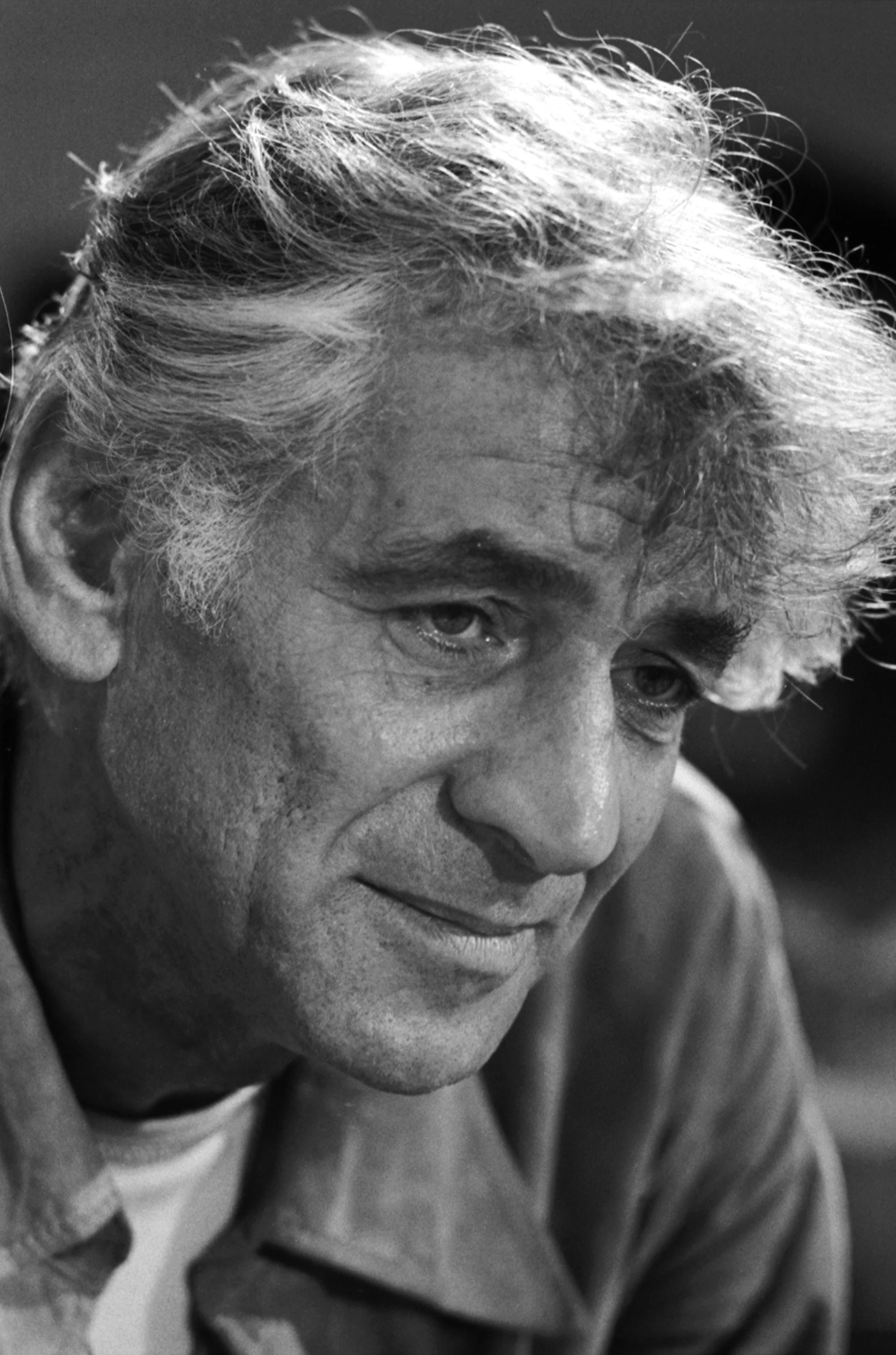
Image from Wikipedia
Image from Wikipedia
Leonard Bernstein – Conductor, Composer, Educator: The Iconic Face of American Music
From Prodigy to World Star: The Inspiring Journey of a Maestro Who Made Music History
Leonard "Lenny" Bernstein (August 25, 1918 – October 14, 1990) shaped the 20th century as an American composer, conductor, pianist, and charismatic music communicator. Between Broadway, Carnegie Hall, and television studios, his music career combined artistic boldness with tireless educational expansion. As the first U.S.-born Music Director of the New York Philharmonic, he profoundly influenced orchestral culture, repertoire policy, and media presence, opening the ears of millions to classical, modern, and musical theatre. His stage works – from the global hit West Side Story to Candide and On the Town – unite rhythmic energy, melodic brilliance, and dramatic intensity into unmistakable sound signatures.
Biography I: Early Years, Education, and Artistic Development
Born in Lawrence, Massachusetts, Bernstein studied at the Curtis Institute in Philadelphia and worked early on with great teachers. His career breakthrough came on November 14, 1943, when he stepped in on short notice for the ill Bruno Walter and conducted the New York Philharmonic at Carnegie Hall – a legendary moment that made him instantly renowned worldwide. His repertoire extended from Beethoven and Mahler to Copland and Stravinsky; his pianistic precision, sense of tone colors, and instinctive timing shaped his stage presence. Biographically and stylistically, he became a musician bridging worlds: classically trained, Broadway-experienced, and curious about jazz, Latin American music, and avant-garde – all sounded organically together in his work. ([time.com](https://time.com/6338605/maestro-leonard-bernstein-time-cover/?utm_source=openai))
Biography II: New York Philharmonic, Television Concerts, and International Impact
In 1957, Bernstein was appointed Music Director of the New York Philharmonic, where he remained solely in charge until 1969. This era saw his groundbreaking Young People’s Concerts on CBS – high-level educational television that made repertoire knowledge, music theory, and listening education mass phenomena. His artistic development as a conductor culminated in widely acclaimed cycles (including Mahler), tours, and recordings that redefined interpretation history and influenced an entire generation. Bernstein's authority stemmed from professional excellence, explanatory brilliance, and a passion that understood music as a societal language. ([en.wikipedia.org](https://en.wikipedia.org/wiki/Leonard_Bernstein?utm_source=openai))
Composer Between Broadway and Concert Hall
As a composer, Bernstein developed a distinctive musical language: jazz-influenced rhythms, syncopated ostinati, modal scales, vibrant orchestration, and a melodic directness that remains instantly recognizable. His most significant stage works include West Side Story (1957), Candide (1956, rev. 1974), On the Town (1944), and Wonderful Town (1953). In the concert realm, his symphonies Jeremiah, The Age of Anxiety, and Kaddish, the Chichester Psalms, the Violin Serenade (after Plato), the grand theater piece MASS, and various orchestral works mark his compositional signature. These works exemplify an artistic evolution oscillating between religious fervor, urban energy, and a humanistic message.
Awards, Honors, and Cultural Authority
Bernstein is among the most decorated musicians: 16 GRAMMY Awards (including Lifetime Achievement), seven Emmys, and two Tonys underscore his authority in the studio, television, and theater. Furthermore, he received international accolades such as the Praemium Imperiale. His discography for leading labels – particularly the editions with the New York Philharmonic, Vienna Philharmonic, and Israel Philharmonic – is still regarded today as a reference for repertoire breadth, interpretative depth, and recording quality. This record makes Bernstein a voice that not only practiced music history but also explained it. ([en.wikipedia.org](https://en.wikipedia.org/wiki/List_of_awards_and_nominations_received_by_Leonard_Bernstein?utm_source=openai))
Discography and Reception: References, Bestsellers, and Milestones
Bernstein’s discography is monumental: it encompasses symphonic cycles (particularly Mahler), operatic excerpts, ballets, choral works, piano and chamber music, as well as complete musical recordings. Numerous titles are continuously reissued, curated, and streamed millions of times – recordings of West Side Story, Mahler cycles, and thematic collections are among the most-streamed classical catalogs. Critics repeatedly highlight his narrative phrasing, precise articulation, dramatic architecture, and orchestral brilliance. His television documentaries and rehearsal recordings – didactically brilliant, aesthetically clear – still shape understanding of interpretation, composition, and arrangement. ([leonardbernstein.com](https://leonardbernstein.com/discography?page=44&utm_source=openai))
Style, Genre, and Technique: Why This Sound Is Instantly Bernstein
Bernstein's style amalgamates genre boundaries: in his compositions, Broadway harmonies, jazz syncopations, classical counterpoint, and colorful orchestral design merge to create dramatic impact. In his conducting practice, he combined a physically expressive conducting technique with a sharp ear for balance, woodwind colors, and brass accents; the tempo narratives felt organic, never mannered. As an arranger and educator, he explained complex forms – fugue, sonata form, variation – with immediate clarity. This expertise in composition, orchestration, and production lent his recordings and live performances a distinctive dramatic tension. ([britannica.com](https://www.britannica.com/biography/Leonard-Bernstein?utm_source=openai))
Cultural Influence: Education, Humanity, and Public Engagement
Bernstein understood music as a social practice. He was actively engaged in civil rights, peace initiatives, and cultural understanding, using the stage as a forum for dialogue. His Young People’s Concerts are considered a blueprint for modern music education; his passionate advocacy for Mahler and for a vibrant mix of repertoire influenced the programming policies of international orchestras. Institutionally, his legacy continues in projects of the Leonard Bernstein Office initiatives, in educational programs, and in awards such as the Leonard Bernstein Award of the Schleswig-Holstein Music Festival. ([en.wikipedia.org](https://en.wikipedia.org/wiki/Leonard_Bernstein?utm_source=openai))
Current Relevance 2024–2026: New Projects, Performances, Releases
Bernstein's music remains contemporary: in 2026, his MASS is scheduled as a major project at the Elbphilharmonie Hamburg, while the SHMF continues its Leonard Bernstein Award. In parallel, curated new editions and thematic albums will be released, and international companies continue to bring West Side Story to the stage. The official Bernstein portal also consolidates news, calendars, and editorial content; streaming platforms and video services are unlocking archival treasures – from symphonic cycles to educational formats. This continuity demonstrates how vital Bernstein's artistic ideas, his repertoire, and his educational videos are in the digital age. ([elbphilharmonie.de](https://www.elbphilharmonie.de/de/programm/leonard-bernstein-mass-omer-meir-wellber/23361?utm_source=openai))
Voices of the Fans
Fan reactions clearly show: Leonard Bernstein captivates people worldwide. On Instagram, a listener raves: “The energy in the Symphonic Dances is timeless – pure goosebumps.” A YouTube comment sums it up: “His Mahler interpretations have changed my listening habits.” And on Facebook, one frequently reads: “Bernstein explains music in a way that you can feel and understand.” These responses reflect why his recordings, concert excerpts, and educational content continue to reach millions. ([pixnoy.com](https://www.pixnoy.com/profile/leonardbernsteinofficial/?utm_source=openai))
Conclusion: Why Leonard Bernstein Is More Important Today Than Ever
Bernstein remains a beacon of artistic development: composer with a dramatic instinct, conductor with narrative breath, educator with unwavering belief in the transformative power of music. His discography offers references, his musicals are canon, and his lectures condense theory into experience. Those who experience his works live – whether MASS as a musical theater piece, Chichester Psalms as a radiant choral work, or the Violin Serenade as a dialogic chamber symphony – encounter music as the language of the present. Recommendation: Listen, compare, discover – and experience Bernstein's sound universe anew in the concert hall. ([elbphilharmonie.de](https://www.elbphilharmonie.de/de/programm/leonard-bernstein-mass-omer-meir-wellber/23361?utm_source=openai))
Official Channels of Leonard Bernstein:
- Instagram: https://www.instagram.com/leonardbernsteinofficial/
- Facebook: https://www.facebook.com/LeonardBernstein
- YouTube: https://www.youtube.com/channel/UCGmGJfwD5NaYvJt57mc1fVw
- Spotify: https://open.spotify.com/artist/2LmyJyCF5V1eQyvHgJNbTn
- TikTok: No official profile found
Sources:
- LeonardBernstein.com – Official Website
- Deutsche Grammophon – Artist Biography
- PBS American Masters – Leonard Bernstein
- Encyclopaedia Britannica – Leonard Bernstein
- Wikipedia: Leonard Bernstein – Image and Text Source
- Praemium Imperiale – Award Recipient Profile Leonard Bernstein
- Schleswig-Holstein Music Festival – Leonard Bernstein Award 2026
- Elbphilharmonie Hamburg – Bernstein: MASS (May 24, 2026)
- LeonardBernstein.com – Accolades
- LeonardBernstein.com – Timeline
- Spotify Newsroom – Bernstein's Legacy (Feature)
- GRAMMY.com – Awards & Nominations
- LeonardBernstein.com – Blog/Carnegie Hall + Mahler Cycle
- Sony Music – Official YouTube Channel (Confirmation)
Upcoming Events
Brassissimo – 35 Years of Leonard Bernstein
Experience an evening full of musical magic in honor of Leonard Bernstein at the Onoldiasaal Ansbach. Immerse yourself in his impressive works.
Candide
Bitterly funny wit meets a big stage: Candide at the Bielefeld City Theatre. On April 20, 2026, at 8:15 PM, a satirical evening full of music, timing, and dark humor awaits. #Bielefeld #Comedy
Opernwerkstatt: On the Town
Experience Bernstein's urban musical live before the premiere: The opera workshop for On the Town brings music, rehearsals, and theater magic to the Great House. Free entry, limited seats. #TheaterDuisburg
On the Town
Bernstein's On the Town shakes up Duisburg's stage: Jazz, dance, and urban magic in the Great House. On 25.04.2026 from €19. Secure your seats now. #Theater
On the Town
New York on Duisburg's stage: On the Town combines jazz, longing, and tempo into a sparkling musical evening. Experience it live on 07.05.2026! #Theater
On the Town
An evening full of jazz, longing, and urban glamour at Duisburg Theater. On the Town brings Bernstein live to the stage. May 16, 2026, from €19. #TheaterDuisburg #Musical
On the Town
Urban glamor, jazz, and longing at the Duisburg Theatre: On the Town brings Bernstein's musical classic vividly to the stage. 05.25.2026, 3:00 PM. #TheaterDuisburg
On the Town
Leonard Bernstein (Music), Betty Comden & Adolph Green (Book & Lyrics), Jerome Robbins (Idea)
On the Town
Broadway feeling at Theater Duisburg: On the Town combines jazz, dance, and urban magic for an evening full of energy. 18.06.2026, from €82. #Theaterlove
On the Town
An evening in New York full of energy: On the Town at the Theater Duisburg combines Bernstein, dance, and urban poetry. On 07.10.2026 from 19:30 at €18. #TheaterDuisburg