
Kammerchor der Frauenkirche Dresden
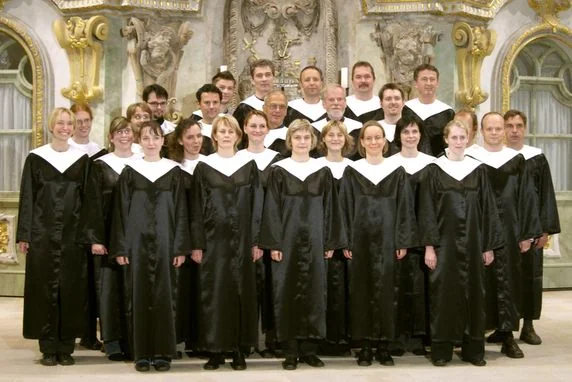
Image from Wikipedia
Image from Wikipedia
Chamber Choir of the Frauenkirche Dresden – Spiritual Sound Art at the Highest Level
A Dresden Ensemble Balancing Liturgical Depth, Historical Responsibility, and International Influence
The Chamber Choir of the Frauenkirche Dresden is one of the most notable choral bodies in the Saxon music landscape. Since its founding in 2005 by Frauenkirchenkantor Matthias Grünert, the ensemble has developed into a recognized presence in Dresden's musical scene with about 30 professional singers. The focus is on a cappella literature and the oratorios of the 17th and 18th centuries, which the choir cultivates with stylistic precision, spiritual concentration, and audible passion. ([frauenkirche-dresden.de](https://www.frauenkirche-dresden.de/kammerchor?utm_source=openai))
Its artistic identity is closely connected to the Frauenkirche in Dresden, whose musical life the choir has shaped from the very beginning. The Chamber Choir sees itself not only as a concert ensemble but also as a liturgical partner and musical ambassador of a place that embodies memory, reconciliation, and cultural renewal like few others in Germany. It is precisely from this connection of space, repertoire, and responsibility that the ensemble derives its unique radiance. ([frauenkirche-dresden.de](https://www.frauenkirche-dresden.de/kammerchor?utm_source=openai))
Establishment and Artistic Profile
The history of the Chamber Choir of the Frauenkirche Dresden began in 2005 with a clear musical mission: to fill the new Frauenkirche not just architecturally, but acoustically. Even the first public performances combined historical symbolism with musical substance, including the participation in the first opening of the Frauenkirche after extensive completion on February 13, 2005, as well as the first a cappella concert during Lent of the same year. Early on, the choir made a statement for a profile that intertwines art, church, and the history of the city. ([de.wikipedia.org](https://de.wikipedia.org/wiki/Kammerchor_der_Frauenkirche_Dresden?utm_source=openai))
The official self-presentation describes the choir as an ensemble dedicated to sacred choral music with dedication and the highest standards. The focus is particularly on important a cappella works, as well as most choral-symphonic works of the 18th century, especially by Bach, Haydn, and Mozart. This repertoire selection reflects a clear aesthetic line: historically grounded, liturgically anchored, and at the same time concert-level elaborated to the highest standards. ([frauenkirche-dresden.de](https://www.frauenkirche-dresden.de/kammerchor?utm_source=openai))
Matthias Grünert and the Shaping of the Ensemble
Inextricably linked to the Chamber Choir is Matthias Grünert, who founded the ensemble in 2005 and has significantly shaped it ever since. As Frauenkirchenkantor, he is responsible for the church music of the Frauenkirche, and his role extends far beyond traditional choir leadership: he is an artistic driving force, a stylistic architect, and a mediator between tradition and the present. In an ensemble that specializes in sacred music, this continuity is a crucial factor for sound culture and repertoire profile. ([frauenkirche-dresden.de](https://www.frauenkirche-dresden.de/musik?utm_source=openai))
The daily work of the choir involves regular rehearsals, vocal training, and careful musical preparation for services, spiritual Sunday music, and concerts. This combination of discipline and spiritual function shapes an ensemble sound that makes homogeneity, transparency, and text comprehension both visible and, above all, audible. In the Frauenkirche, the choir thus functions not only as an interpreting collective but also as part of a vibrant musical infrastructure. ([frauenkirche-dresden.de](https://www.frauenkirche-dresden.de/kammerchor?utm_source=openai))
Repertoire: Bach at the Center, Baroque as Home
The repertoire of the Chamber Choir of the Frauenkirche Dresden reflects a clear prioritization. Johann Sebastian Bach forms the center, supplemented by works from Georg Friedrich Händel, Joseph Haydn, Wolfgang Amadeus Mozart, Antonio Salieri, Gabriel Fauré, Heinrich Schütz, Johann Gottfried Homilius, and other composers of church music. Bachs Christmas Oratorio, St. John Passion, Mass in B minor, the four Lutheran masses, as well as numerous cantatas and motets are particularly frequently performed. ([frauenkirche-dresden.de](https://www.frauenkirche-dresden.de/kammerchor?utm_source=openai))
This selection is more than a best-of of sacred choral literature. It points to a musical practice that considers text, affect, phrasing, and historical performance practice together. The choir moves confidently in the tension between liturgical function and concert aesthetics, between contemplative intimacy and dramatic oratorio rhetoric. Its artistic individuality lies precisely in not merely performing correctly but in making the spiritual dimension of the repertoire tangible as a sound event. ([frauenkirche-dresden.de](https://www.frauenkirche-dresden.de/kammerchor?utm_source=openai))
Performances, Travels, and Representative Tasks
Since its inception, the Chamber Choir of the Frauenkirche Dresden has been active far beyond the city limits. Concert tours have taken the ensemble to France, Italy, Great Britain, Switzerland, Belgium, and Japan, among others. This international presence strengthens the choir's self-image as a musical ambassador of the Frauenkirche and conveys the Dresden sound into different cultural contexts. ([de.wikipedia.org](https://de.wikipedia.org/wiki/Kammerchor_der_Frauenkirche_Dresden?utm_source=openai))
Special attention was received for an appearance on June 5, 2008, when the Chamber Choir musically welcomed Barack Obama in the Frauenkirche Dresden. Such moments illustrate how closely the ensemble is connected with representative events and the public perception of the church space. The choir thus represents not only church music in the narrower sense but also musical diplomacy and symbolic city identity. ([de.wikipedia.org](https://de.wikipedia.org/wiki/Kammerchor_der_Frauenkirche_Dresden?utm_source=openai))
Discography and Recordings
The discography of the ensemble documents its musical range and its strong connection to the repertoire of the Frauenkirche. Recorded works include Christmas Music from the Frauenkirche "From Heaven Above" (2006, Carus), Handel's Jephtha (2008, Carus), Bach's Christmas Oratorio (2012, Berlin Classics), Haydn's Creation Mass (2012, Rondeau), Christmas at the Frauenkirche (2013, Sony), Luther, Music I Have Always Loved (2014, Rondeau), Cherubini's Requiem in c minor (2017, Rondeau), and Bach's St. John Passion (2018, Berlin Classics). ([de.wikipedia.org](https://de.wikipedia.org/wiki/Kammerchor_der_Frauenkirche_Dresden?utm_source=openai))
These recordings not only showcase a well-maintained repertoire but also the development of an ensemble that performs equally convincingly in recordings as in church spaces. The collaboration with renowned labels such as Carus, Berlin Classics, Rondeau, and Sony underscores the authority of the choir in the field of sacred vocal music. At the same time, the discography demonstrates the ability to transfer liturgical presence into permanently available interpretations. ([carus-verlag.com](https://www.carus-verlag.com/personen/kammerchor-der-frauenkirche/?utm_source=openai))
Current Projects and Musical Presence
Even in contemporary musical life, the Chamber Choir of the Frauenkirche Dresden remains firmly established. The official program notes of the Frauenkirche for 2025 and 2026 repeatedly mention the choir as an essential part of services, concert formats, and larger liturgical-concert projects. For 2026, the Frauenkirche announces works such as Bach's St. John Passion, the Mass in B minor, and the Christmas Oratorio, with the Chamber Choir featuring prominently along with the other musical bodies of the institution. ([frauenkirche-dresden.de](https://www.frauenkirche-dresden.de/konzerte?utm_source=openai))
In addition, there is a continuous presence at special events such as festive services, Sunday music, and representative occasions. The official texts of the Frauenkirche describe the choir as a fixed part of its musical profile, taking note of the 20th anniversary of the church's consecration and the jubilee of the Frauenkirche choirs in 2025. This creates an image of an ensemble that cannot be reduced to individual projects but acts as a permanent musical institution. ([frauenkirche-dresden.de](https://www.frauenkirche-dresden.de/kalender/eventleser/festgottesdienst-2968147?utm_source=openai))
Critical Reception and Cultural Influence
The reception of the Chamber Choir of the Frauenkirche Dresden primarily engages with the field of sacred and classical music press, event organizers' texts, and institutional recognition. The Frauenkirche itself describes the choir as a "recognized presence" in the Dresden music scene, while other sources highlight its role as an ambassador of the Frauenkirche. For a choir of this specialization, these are central markers: artistic credibility, stylistic reliability, and cultural visibility. ([frauenkirche-dresden.de](https://www.frauenkirche-dresden.de/kammerchor?utm_source=openai))
Its cultural influence is based on the connection between place and interpretation. The Frauenkirche is not only a performance venue but a resonance space for a musical understanding that combines memory culture, sacred architecture, and historical sound language. In this context, the Chamber Choir gains significance far beyond local boundaries: it represents a Dresden choral culture that derives expressive power from tradition rather than routine. ([frauenkirche-dresden.de](https://www.frauenkirche-dresden.de/kammerchor?utm_source=openai))
Conclusion: Why This Choir is Fascinating
The Chamber Choir of the Frauenkirche Dresden captivates with its clarity of artistic direction and the special connection between spiritual mission and high musical quality. It unites historically informed performance practice, disciplined ensemble work, and a strong spatial identity into a profile that is rare in the German choral scene. Those who hear this choir experience not only beautiful church music but a finely balanced choral body with its own cultural weight. ([frauenkirche-dresden.de](https://www.frauenkirche-dresden.de/kammerchor?utm_source=openai))
Especially live, this ensemble unfolds its full effect: the transparency of the voices, the concentrated text treatment, and the unique acoustics of the Frauenkirche merge into an experience of rare intensity. Therefore, it is worthwhile to experience the Chamber Choir of the Frauenkirche Dresden in concert or during a service – as a musical encounter with history, the present, and a remarkably vibrant choral culture. ([frauenkirche-dresden.de](https://www.frauenkirche-dresden.de/kalender/eventleser/festgottesdienst-2968147?utm_source=openai))
Official Channels of the Chamber Choir of the Frauenkirche Dresden:
- Instagram: No official profile found
- Facebook: No official profile found
- YouTube: No official profile found
- Spotify: No official profile found
- TikTok: No official profile found
Sources:
- Wikipedia – Chamber Choir of the Frauenkirche Dresden
- Frauenkirche Dresden – Chamber Choir of the Frauenkirche
- Frauenkirche Dresden – Music in the Frauenkirche
- Frauenkirche Dresden – Magazine: 20 Years of the Chamber Choir of the Frauenkirche
- Frauenkirche Dresden – The Music Year 2026
- Carus-Verlag – Chamber Choir of the Frauenkirche
- Rondeau Production – Label Overview
- ZDF – Advent Concert from Dresden
- Foundation Frauenkirche Dresden – Press Release Music Year 2025