
Josef Hader
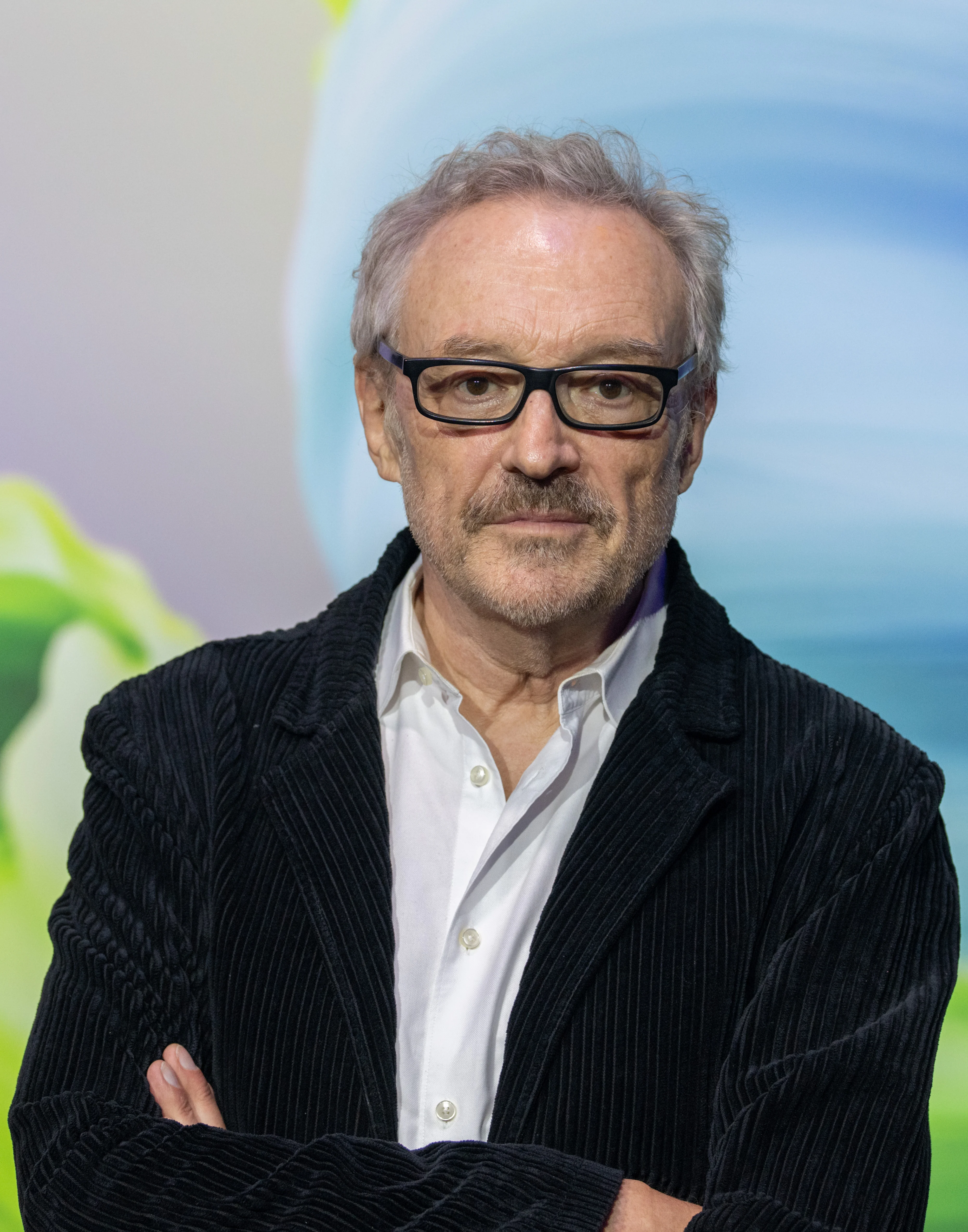
Image from Wikipedia
Image from Wikipedia
Josef Hader: The Great Storyteller Between Cabaret, Cinema, and Directing
Austria's Most Distinct Voice of Melancholic Humor
For decades, Josef Hader has been one of the most prominent personalities in Austrian cultural life. As a cabaret artist, actor, author, and film director, he combines stage presence, linguistic precision, and a keen sense for social and psychological depths. Born on February 14, 1962, in Waldhausen im Strudengau, he evolved from early performances in Lower Austria and Vienna to become one of Austria’s most successful cabaret artists. ([de.wikipedia.org](https://de.wikipedia.org/wiki/Josef_Hader))
Early Years: Background, School, and First Artistic Impulse
Hader's biography begins far from urban cultural centers on his parents' farm in Nöchling in the Waldviertel. The years at the bishop's boys' seminary of the Melk Abbey and at the Stiftsgymnasium Melk shaped his perspective on religion, authority, and social environment – themes that would later consistently appear in his cabaret and roles. Even during his school years, he ventured into cabaret for the first time and began to perform in front of classmates from 1980 onward. ([de.wikipedia.org](https://de.wikipedia.org/wiki/Josef_Hader))
After completing his A-levels, Hader served in civil service with the Red Cross and began studying to become a teacher of German and history. However, in 1982, he wrote his first cabaret program, Fort Geschritten, and presented it in Lower Austrian taverns and Vienna pedestrian zones. This early phase demonstrates a typical characteristic of Hader: his decision to merge observation, language, and stage into his own artistic tone early on. ([de.wikipedia.org](https://de.wikipedia.org/wiki/Josef_Hader))
The Breakthrough in Cabaret: From Number Show to Grand Monologue
The first decisive boost in his career came in 1985 with Der Witzableiter und das Feuer, for which Hader received the Salzburg Stier along with pianist Otto Lechner. By then, it was clear that a mere entertainer was not on stage, but rather an author with a distinctive voice: ironic, precise, and profound. Following this were Im milden Westen and Tausche Witze gegen Geld, before Hader achieved his breakout in 1988 with Biagn oder Brechen. ([de.wikipedia.org](https://de.wikipedia.org/wiki/Josef_Hader))
Especially crucial for his artistic development was the shift from political number cabaret to cabaret one-act plays. With Bunter Abend, Im Keller, and Privat, Hader evolved the format into an associative monologue while employing techniques of “invisible theater,” such as staged interruptions or apparent technical mishaps. Privat became Austria's most successful cabaret program with around 500,000 viewers, solidifying Hader's reputation as a master of slow, pointed storytelling. ([de.wikipedia.org](https://de.wikipedia.org/wiki/Josef_Hader))
Between Stage and Role Study: Cabaret as Character Theater
With Hader muss weg, Hader clearly expanded the boundaries of his cabaret from 2004 onward. The program blended cabaret, theater, and film, featured seven roles, employed cinematic techniques like close-ups and score music, and turned the stage itself into a psychological laboratory. In Hader on Ice, he opted for the “Drunken Act” in 2021 as a starting point for a tour de force through post-Corona society – a work that received both the German Cabaret Prize and the Austrian Cabaret Prize. ([hader.at](https://hader.at/biographie/))
These programs showcase the true strength of the artist: Hader works not just with texts, but with attitudes, breath, pauses, and glances. His cabaret is not a loose string of gags, but a precisely composed performance art. This is where the special authority of his stage work lies; he does not merely tell jokes but constructs small dramatic spaces where melancholy, aggression, self-irony, and social diagnosis collide. ([hader.at](https://hader.at/biographie/))
Film Career: From Screenwriter to Defining Face of Austrian Cinema
The foundation for his film career was laid in 1993 with Indien, which he co-wrote with Alfred Dorfer and Paul Harather and which became one of the most well-known and successful Austrian films. The film garnered the Max-Ophüls-Prize, among others, and helped Hader transition from the cabaret stage to a broad cinema and television audience. This marked the beginning of a second, equally significant career: that of an actor with a strong literary and dramatic awareness. ([hader.at](https://hader.at/biographie/))
Notable works followed, including Komm, süßer Tod, Silentium, Der Knochenmann, and Das ewige Leben, where Hader was regularly involved in the scriptwriting as well. It is this close connection between performance and writing that makes his filmography cohesive: he does not just portray characters; he develops their language and inner logic. His selectivity in projects acts almost like an artistic principle – preferring few but precisely executed appearances. ([hader.at](https://hader.at/biographie/))
Awards, Reception, and Cultural Authority
Hader’s career is marked by numerous awards that underscore his position in the German-speaking cultural space. He received the Austrian Cabaret Prize's promotion award early on; later, he also won the German Cabaret Prize, the Bavarian Cabaret Prize, the Göttingen Elk, the Austrian Cabaret Prize, and the Cornichon Prize at the Oltner Cabaret Days. He has also been honored for his work in film, for instance, with the German Television Award and the Adolf Grimme Prize for Ein halbes Leben. ([de.wikipedia.org](https://de.wikipedia.org/wiki/Josef_Hader))
The trade press regularly highlights his dual talent as both an author and performer. The official press service for Hader on Ice describes the program as a “show and abyss show at the same time”; other press reviews refer to it as a “tour de force,” a “psychological horror trip,” and a work imbued with maturity. This reception shows that Hader's art does not simply aim for popularity, but rather for lasting interpretive power. ([hader.at](https://hader.at/presse-service/))
Current Projects: Presence on Stage and Screen
Hader remains present in 2024 and 2025 as well. The official website lists current dates for Hader on Ice, and the biography on the website documents his recent film work, including Andrea lässt sich scheiden (2024), for which he also directed. He will also appear in Altweibersommer and the television film Sturm kommt auf in 2025. This confirms Hader's rarity in the best sense: he is not a frequent performer but an artist with an exceptionally precise selection. ([hader.at](https://hader.at/))
The current tour also demonstrates that his stage persona is still alive and resonates immediately. In the dates listed on the official website, Hader on Ice is continuously featured as an ongoing live program, underscoring his strong integration into the cabaret scene. This is exciting for the audience: Hader remains no monument but a contemporary artist who perceives and condenses societal moods very accurately. ([hader.at](https://hader.at/))
Style and Impact: Why Josef Hader Remains Unmistakable
Hader's style thrives on a rare mix of linguistic economy, keen observation, and comedic cruelty. His characters are often damaged existences, whose comedy arises from insecurity, vanity, or self-exposure. It is this very quality that achieves a depth that goes far beyond classic entertainment cabaret and marks him as a storyteller of literary quality. ([hader.at](https://hader.at/biographie/))
Even in film, this signature is recognizable: Hader prefers roles where irony and vulnerability stand side by side. Whether as Stefan Zweig, as a cynical pathologist, or as a grumpy provincial observer – his characters always feel grounded, precise, sometimes uncomfortable, and precisely for this reason, credible. This controlled approach to composition, timing, and presentation makes him a fixed presence in the Austrian and German cultural landscape. ([hader.at](https://hader.at/biographie/))
Conclusion: An Artist with Attitude, Precision, and Lasting Impact
Josef Hader connects cabaret, cinema, authorship, and directing into an extraordinarily cohesive body of work. His career embodies the courage to form, pointed characterization, and humor that is never simply frivolous but always offers a glimpse into the abyss of human self-deception. Those who experience Hader live do not witness a routine artist but a master of fine precision who crafts great art from language, silence, and presence. ([hader.at](https://hader.at/biographie/))
For this reason, he remains intriguing: because his work is simultaneously intelligent, funny, and uncomfortable. Anyone who has the chance to see Josef Hader on stage should take it – his cabaret is an event that lingers long after. ([hader.at](https://hader.at/))
Official Channels of Josef Hader:
- Instagram: no official profile found
- Facebook: no official profile found
- YouTube: no official profile found
- Spotify: no official profile found
- TikTok: no official profile found
Sources:
- Josef Hader – Biography (official website)
- Josef Hader – Homepage / Dates (official website)
- Josef Hader – Contact (official website)
- Josef Hader – Press and Service (official website)
- Wikipedia: Josef Hader – Image and text source
- Kabarett.at – Josef Hader
- ORF – Reports and current cultural news about Josef Hader
- Süddeutsche Zeitung – Press reviews of Hader on Ice
- Profil – Press review of Hader on Ice
- Deutschlandfunk Kultur – Press review of Hader on Ice
Upcoming Events
Josef Hader live with HADER ON ICE in Ulm
Josef Hader - HADER ON ICE
Josef Hader – HADER ON ICE in Munich
INDIA – A Treasure Hunt Through the German Province
Josef Hader - Hader On Ice
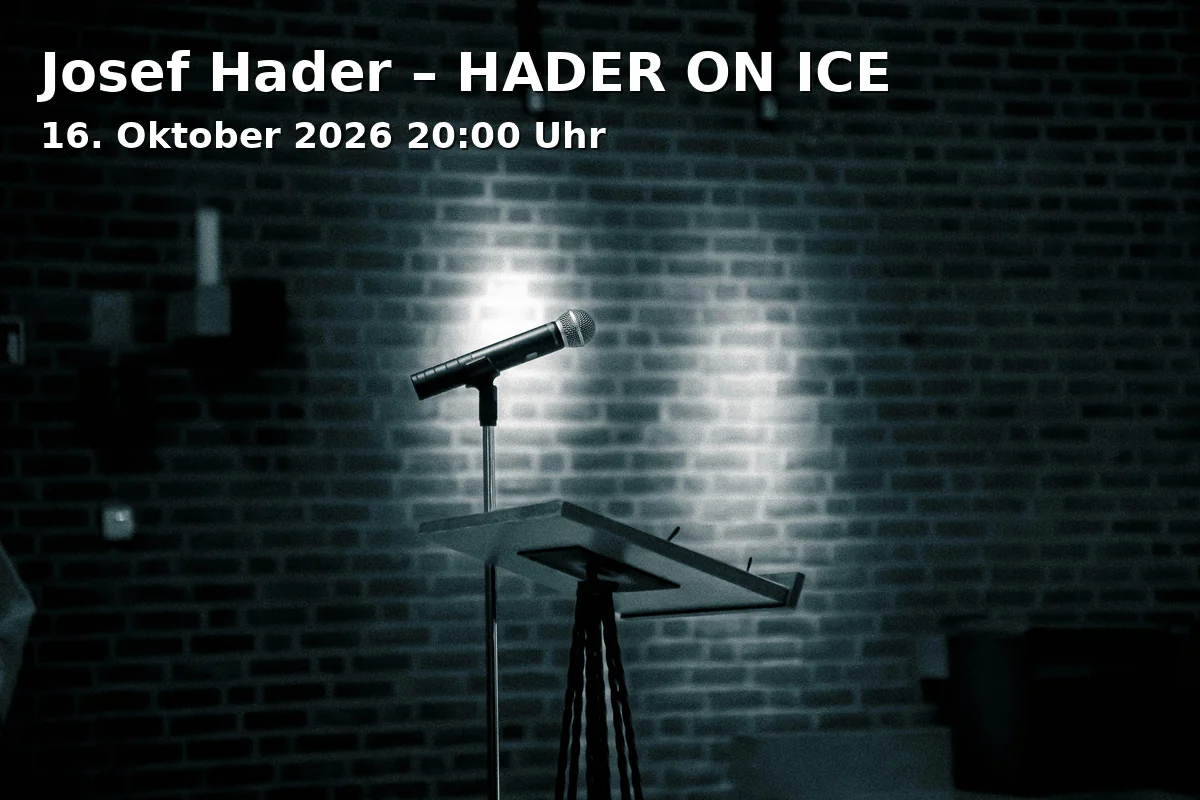
Josef Hader – HADER ON ICE
Josef Hader - Hader on Ice
Josef Hader – Hader on Ice in Augsburg
Josef Hader – Hader on Ice in Mainz