
Johanna Sebauer
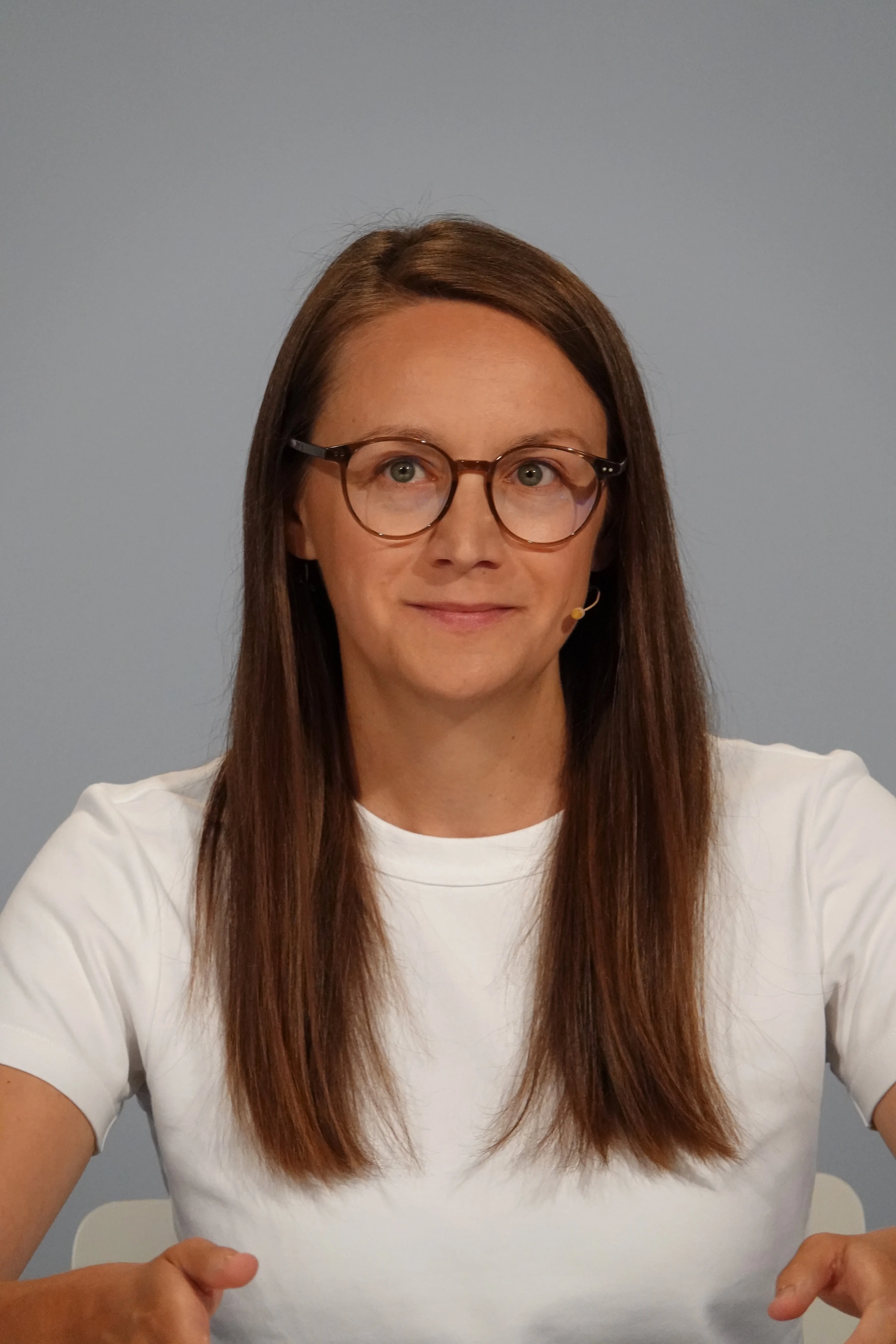
Image from Wikipedia
Image from Wikipedia
Johanna Sebauer – Austrian Author Between Burgenland, Vienna, and Literary Present
A writer with a precise eye for landscape, language, and storytelling from everyday life
Johanna Sebauer, born in Vienna in 1988 and raised in Burgenland, is among those Austrian authors whose literary work thrives on keen observation, fine wit, and a clear linguistic signature. Her biography combines urban educational experiences with rural influences, which is clearly reflected in the themes and atmospheres of her texts. Readers of Sebauer encounter a storyteller who does not folklorically embellish regional reality but instead transforms it into literary tension. ([de.wikipedia.org](https://de.wikipedia.org/wiki/Johanna_Sebauer?utm_source=openai))
Biographical Roots: Vienna, Burgenland, and the Path to Literature
The early influence of Vienna and Burgenland forms the cultural resonance space of her work. Sebauer studied Political Science in Vienna and subsequently undertook journalistic assignments in Aarhus, Santiago de Chile, and Hamburg. From this international experience emerged a perspective that takes societal contexts as seriously as the subtle shifts in the private sphere. During this time, she published her first short stories and publicly read from her own texts. ([johannasebauer.com](https://www.johannasebauer.com/%C3%BCber-mich/?utm_source=openai))
Her development as a writer did not follow a sudden leap but rather a consistent intensification of practice, language, and literary self-understanding. The official website lists a number of scholarships, residencies, and awards that have accompanied this journey, including the Start Scholarship for Literature from the Austrian BMKOES, the Hamburger Writers’ Room Scholarship, and an artist scholarship from the state of Burgenland. This early recognition made it clear that Sebauer is perceived not only as a debut author but as a consistently relevant literary voice. ([johannasebauer.com](https://www.johannasebauer.com/%C3%BCber-mich/?utm_source=openai))
The Breakthrough with “Nincshof”: A Novel that Redefines Origin
Her debut novel Nincshof was published in 2023 by DuMont and quickly became a notable literary event. The novel is set in a fictional village in Burgenland near the Hungarian border and unfolds a very unique narrative world where isolation, community, and self-assertion struggle against each other. The official author website already references the debut prize from the Harbour Front Literature Festival and the shortlist for the Hamburg Book of the Year. ([de.wikipedia.org](https://de.wikipedia.org/wiki/Johanna_Sebauer?utm_source=openai))
Particularly noteworthy is how Sebauer works with the motif of the village: not as a backdrop but as a literary system of memories, routines, conflicts, and linguistic logic. This makes Nincshof a novel about disappearance and the resistance against the visibility of the present. In the reception of the work, this very approach has been repeatedly emphasized, as it connects regional rooting with broader readability. ([de.wikipedia.org](https://de.wikipedia.org/wiki/Johanna_Sebauer?utm_source=openai))
Awards and Reception: Literary Scene, Stage, and Prizes
Among the most significant milestones of her career so far is her participation in the Bachmann Competition in 2024, where she performed the text Das Gurkerl and received the 3sat Prize, the BKS Bank Audience Award, and a city writer scholarship from the city of Klagenfurt. Such awards mark not only formal recognition but also literary authority in the German-speaking world. They demonstrate that Sebauer is equally convincing in the tension between jury verdict and audience response. ([de.wikipedia.org](https://de.wikipedia.org/wiki/Johanna_Sebauer?utm_source=openai))
Before this, she had already received multiple awards, including the Burgenland Youth Literature Prize for Edina in 2014 and the Burgenland Literature Prize in 2019. This continuity speaks to a development that cannot be reduced to a single success. Instead, a literary career is emerging, characterized by persistence, thematic clarity, and continuous artistic maturity. ([de.wikipedia.org](https://de.wikipedia.org/wiki/Johanna_Sebauer?utm_source=openai))
Current Projects: “Das Gurkerl,” Columns, and the Second Novel “Popóm”
The latest phase of her work showcases an author who further differentiates her themes. On the official website, Sebauer announces that the story Das Gurkerl, awarded at the Bachmann Competition, will be released as an illustrated book in May 2026. At the same time, a second novel, Popóm, is anticipated, with its publication scheduled for July 14, 2026. ([johannasebauer.com](https://www.johannasebauer.com/?utm_source=openai))
The numerous readings and appointments for 2026 also clearly indicate that Sebauer is currently very much present. The event calendar lists appearances in Vienna, Graz, Munich, Darmstadt, St. Pölten, and other locations in the German-speaking region. These reading tours are part of her artistic public presence and emphasize how much literary presence today also relies on stage work, conversational situations, and direct encounters with the audience. ([johannasebauer.com](https://www.johannasebauer.com/termine/?utm_source=openai))
Literary Style: Precision, Humor, and the Art of the Exact Tone
Johanna Sebauer’s texts blend linguistic economy with pointed wit and a keen sense of rhythm. Her excerpts from Edina and August reveal an author who intricately weaves inner landscapes, social spaces, and incidental observations together. Especially in these passages, it becomes clear how she condenses everyday details into characteristic scenes. ([johannasebauer.com](https://www.johannasebauer.com/auszuege/edina/?utm_source=openai))
Her tone is neither cold nor sentimental but controlled, lively, and attentive. Political science, journalism, and literary practice have apparently fostered a writing style that intertwines observation, reflection, and narrative flow. The result is prose that remains regionally rooted while simultaneously extending far beyond the local. ([johannasebauer.com](https://www.johannasebauer.com/%C3%BCber-mich/?utm_source=openai))
Cultural Influence: Between Austrian Contemporary Literature and Regional Identity
Sebauer exemplifies a younger Austrian literature that does not romanticize origin but takes complex experience seriously. Burgenland appears in her texts not as a postcard motif but as a cultural interspace with its own tensions, language codes, and social forms. This is where her significance lies: she writes from the region, but is not confined by it. ([de.wikipedia.org](https://de.wikipedia.org/wiki/Johanna_Sebauer?utm_source=openai))
Moreover, her visibility in the literary scene is supported by awards, scholarships, and public readings. The combination of recognition, audience success, and literary independence grants her authority within contemporary German literature. Those seeking voices that describe the present with precise form and cultural sensitivity cannot overlook Johanna Sebauer. ([johannasebauer.com](https://www.johannasebauer.com/%C3%BCber-mich/?utm_source=openai))
Conclusion: An Author with a Unique Resonance
Johanna Sebauer is intriguing because she shapes a distinctive voice from biographical experience, journalistic sharpness, and literary imagination. Her texts are precise, warm-hearted, and socially aware, without ever losing poetic tension. It is in the interplay of village, language, and present that a literature emerges, resonating long after. Those who experience her writing live can feel the power of an author who not only publishes texts but brings them to life on stage. ([johannasebauer.com](https://www.johannasebauer.com/%C3%BCber-mich/?utm_source=openai))
Official Channels of Johanna Sebauer:
- Instagram: https://www.instagram.com/johannasebauer/
- Facebook: no official profile found
- YouTube: no official profile found
- Spotify: no official profile found
- TikTok: no official profile found
- Twitter/X: https://twitter.com/JohannaSebauer
Sources:
Upcoming Events
Park readings in Fürth City Park: Johanna Sebauer with "Popóm"