
Jenny Erpenbeck
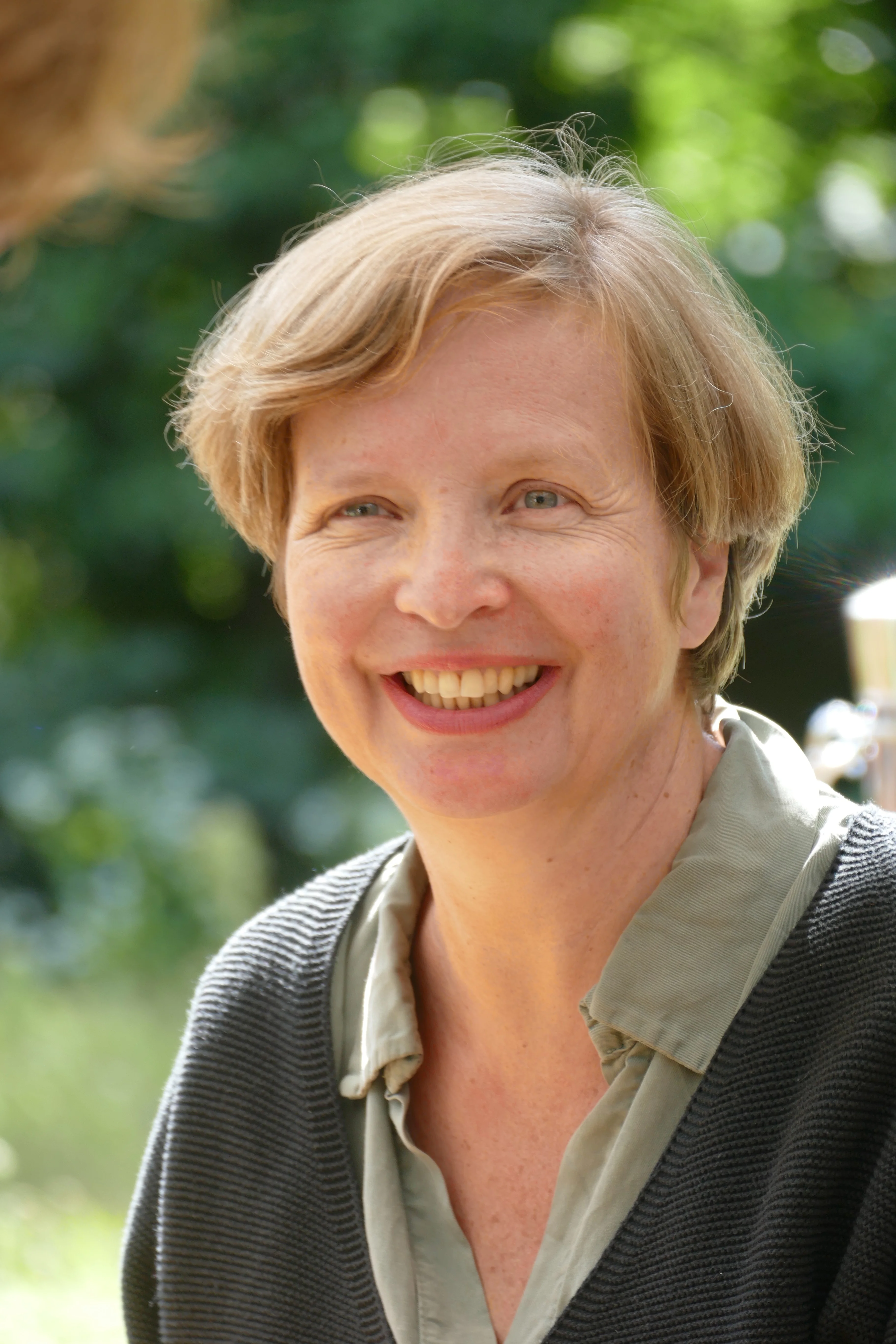
Image from Wikipedia
Image from Wikipedia
Jenny Erpenbeck – the great storyteller of contemporary German literature
Between history, memory, and literary precision
Jenny Erpenbeck is one of the most prominent voices in contemporary German literature. Born in 1967 in East Berlin, she grew up in a culturally rich environment that continues to influence her writing today: family, historical breaks, political systems, and the question of how individual biographies are shaped by major upheavals. Her work combines personal experience with historical depth, making her an author whose novels are read and discussed far beyond Germany. With the 2024 International Booker Prize, she became the first German author to receive this form of international recognition. ([kiwi-verlag.de](https://www.kiwi-verlag.de/autor/jenny-erpenbeck-4000348))
Biography: Origins from a family of writers
Erpenbeck comes from a family where literature and intellectual debate were a matter of course. According to international profiles and publisher portraits, both her grandparents and her parents belonged to the literary milieu; names mentioned include Hedda Zinner, Fritz Erpenbeck, John Erpenbeck, and Doris Kilias. This background explains not only her early access to language but also her confident handling of memory, tradition, and historical perspective. Her literature never feels coincidental but emerges from an environment where thinking, writing, and artistic work are closely intertwined. ([literaturfestival.com](https://literaturfestival.com/en/authors/erpenbeck/))
Education and artistic influence
Before becoming known as an author, Erpenbeck was already deeply involved in the world of theater and opera. She completed an apprenticeship as a bookbinder, worked at the Berlin State Opera in the props department and the costume store, and later studied theater at Humboldt University as well as music theater directing at the Hanns Eisler School of Music. These experiences are central to her later writing: Erpenbeck's prose often has a strong scenic quality, a sense of rhythm, placement, and changes in perspective reminiscent of precise staging. Her work as a director and in music theater also roots her oeuvre in a strong artistic-practical experience. ([literaturfestival.com](https://literaturfestival.com/en/authors/erpenbeck/))
The literary breakthrough: a debut with resonance
Her debut as an author was published in 1999 with the novella Geschichte vom alten Kind. Critics early on highlighted the unique language that combines distance with introspection and unfolds a modern variation of the Kaspar Hauser motif. Even this first text displayed the core features of her later works: formal discipline, psychological accuracy, and a literary density that makes large questions visible in small constellations. With Tand and Wörterbuch, she continued on this path, establishing herself as an author who focuses not on effects but on sustainable literary tension. ([literaturfestival.com](https://literaturfestival.com/en/authors/erpenbeck/))
The major novels: history as personal experience
In Heimsuchung, Erpenbeck condenses German history of the 20th century at a specific location in Brandenburg, connecting private life stories with historical upheavals. Aller Tage Abend unfolds in five hypothetical biographies the power of chance, loss, and possibility, while Gehen, ging, gegangen literarily penetrates the refugee question and the present of Europe. With Kairos, she reached another high point in 2021/2024: the novel tells of a destructive love in late East Berlin and intertwines intimacy with the collapse of the GDR. Erpenbeck's strength lies in treating history not as a backdrop but as an emotional resonance space for her characters. ([literaturfestival.com](https://literaturfestival.com/en/authors/erpenbeck/))
Survey of works instead of discography: the most important books
The central survey of works includes Geschichte vom alten Kind (1999), Tand (2001), Wörterbuch (2004), Heimsuchung (2008), Dinge, die verschwinden (2009), Aller Tage Abend (2012), Gehen, ging, gegangen (2015), Kein Roman. Texte und Reden 1992 bis 2018, as well as Kairos (2021). Additionally, Jenny Erpenbeck über Christine Lavant will be published in 2024/2025, a book that sharpens her literary perspective on another poet and expands her reflection on language, art, and biography. These books showcase an author who never repeats herself but consistently deepens her own poetics. ([literaturfestival.com](https://literaturfestival.com/en/authors/erpenbeck/))
Critical reception, awards, and international authority
Erpenbeck's work has received numerous awards and has found significant resonance both domestically and internationally. Notable mentions include the Independent Foreign Fiction Prize for The End of Days, the Thomas Mann Prize, the Premio Strega Europeo, the Joseph Breitbach Prize, the Hans Fallada Prize, and the Federal Cross of Merit; in 2024, she won the International Booker Prize for Kairos, becoming the first German author to receive this honor. German and international media especially praised her ability to translate historical upheavals into literary density. Her books have been translated into more than 30 languages, making her a globally recognized author. ([kiwi-verlag.de](https://www.kiwi-verlag.de/autor/jenny-erpenbeck-4000348))
Current projects and publications
Even after the Booker triumph, Erpenbeck remains productive and present. The music theater project Rummelplatz, for which she collaborates with Ludger Vollmer on the libretto for an operatic adaptation, will be prominent in 2025; the project is part of the European Capital of Culture Chemnitz 2025. In parallel, Kairos continues to be a topic of discussion internationally, such as in interviews and literary events throughout Europe and beyond. This current phase showcases an author whose work does not appear complete but expands into new artistic forms. ([tu-chemnitz.de](https://www.tu-chemnitz.de/tu/pressestelle/aktuell/13032?utm_source=openai))
Style and cultural influence
Jenny Erpenbeck's style is clear, precise, and highly condensed. Her prose engages with temporal flows, layers of memory, and a finely balanced perspective that intertwines intimate conflicts with political history. This is precisely where her cultural influence lies: she writes not only novels but literary memory spaces for the German division, the post-reunification period, migration, and the fragility of personal orders. In German-language literature, she occupies a position that is simultaneously analytical, poetic, and socially highly relevant. ([literaturfestival.com](https://literaturfestival.com/en/authors/erpenbeck/))
Conclusion: Why Jenny Erpenbeck remains so compelling
Jenny Erpenbeck is an author who does not explain historical experience but makes it palpable. Her books combine an awareness of form, emotional intelligence, and political depth into literature that resonates long after reading and holds significance well beyond national borders. Those seeking contemporary literature with substance will find a distinctive voice here. Her readings and performances are an invitation to experience this precision live. ([dw.com](https://www.dw.com/de/jenny-erpenbeck-gewinnt-den-international-booker-prize/a-69069523))
Official channels of Jenny Erpenbeck:
- Instagram: No official profile found
- Facebook: No official profile found
- YouTube: No official profile found
- Spotify: No official profile found
- TikTok: No official profile found
Sources:
- Kiepenheuer & Witsch – Jenny Erpenbeck
- Internationales literaturfestival berlin – Jenny Erpenbeck
- Deutsche Welle – Jenny Erpenbeck wins the International Booker Prize
- DIE ZEIT – Jenny Erpenbeck: A Kind of Miracle
- Goethe-Institut France – Interview with Jenny Erpenbeck
- TU Chemnitz – Rummelplatz
- Chemnitz 2025 – Rummelplatz
- Wikipedia: Jenny Erpenbeck
Upcoming Events
Visitation - City Theater Fürth Fürth Performance 2026
Heimsuchung
Visitation
Haunting
Visitation
Visitation – Live Radio Play based on Jenny Erpenbeck
Visitation
BAU!halle at St. GeOrgel - Textile with Jenny
BAU!halle at St. GeOrgel - Textiles with Jenny