
Jakob Wassermann
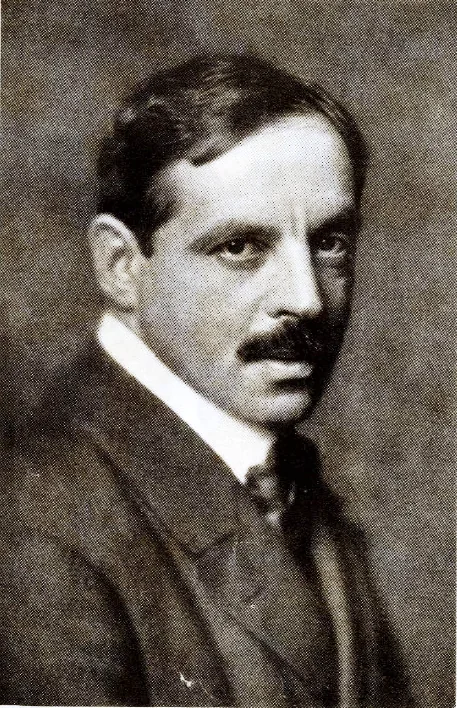
Image from Wikipedia
Image from Wikipedia
Jakob Wassermann – The Great Narrator Between German Literature, Jewish Identity, and Moral Urgency
A Writer of Rare Narrative Force
Jakob Wassermann was born on March 10, 1873, in Fürth and died on January 1, 1934, in Altaussee. He is among the most productive and popular storytellers of his time, an author who infused the German-language novel with psychological tension, social analysis, and moral conciseness. His work stands at the intersection of entertainment literature, the world novel, and critical commentary on his time. ([literaturportal-bayern.de](https://www.literaturportal-bayern.de/autorenlexikon?pnd=118629387&task=lpbauthor.default&utm_source=openai))
Biographical Roots: Fürth, Early Conflicts, and the Emergence into Literature
Wassermann grew up in modest circumstances as the son of a Jewish toy manufacturer and general store owner. His time at the Fürth secondary school brought him face to face with family tensions early on, as he began to attempt literary creations during his teenage years. This early friction between his background, societal expectations, and his own artistic will continues to influence his later writing, including his major novels. ([literaturportal-bayern.de](https://www.literaturportal-bayern.de/autorenlexikon?pnd=118629387&task=lpbauthor.default&utm_source=openai))
After abandoning several apprenticeship attempts and experiencing restless years in Munich, Würzburg, Nuremberg, the Black Forest, and Zurich, Wassermann initially worked as an office clerk before fully dedicating himself to literature. His integration into the literary scene did not take long: Connections with Thomas Mann and Rainer Maria Rilke, proximity to the Young Vienna movement, and his role as a theater correspondent for the Frankfurter Zeitung in Vienna gave him literary prominence early in his career. ([literaturportal-bayern.de](https://www.literaturportal-bayern.de/autorenlexikon?pnd=118629387&task=lpbauthor.default&utm_source=openai))
The Breakthrough: From Early Novels to a Reputation as a Great Prose Artist
Wassermann solidified his literary standing with early works such as Die Juden von Zirndorf and later with novels like Alexander in Babylon and Caspar Hauser or The Lethargy of the Heart. In particular, Caspar Hauser is regarded as a key text of his oeuvre, as it uniquely combines historical figures, psychological interpretation, and societal projection in a particularly dense narrative form. The Deutsche Biographie describes this phase as the foundation for his later reputation as a “world star of the novel.” ([portal.dnb.de](https://portal.dnb.de/opac/showFullRecord?currentPosition=13¤tResultId=swiRef%3D040402355%26any%26dnb.dbsm.studiensammlungen%26leipzig&utm_source=openai))
Wassermann wrote not only novels but also essays, stories, and contributions for Simplicissimus. This versatility made him significantly present in his time: he was not an author on the quiet margins but a literary voice that intervened in debates about anti-Semitism, justice, and national identity. His essay The Fate of the Jews from 1904 marks an early, clear point of this public positioning. ([literaturportal-bayern.de](https://www.literaturportal-bayern.de/autorenlexikon?pnd=118629387&task=lpbauthor.default&utm_source=openai))
Essential Works and Literary Development
Among Wassermann's key books are, in addition to Caspar Hauser, My Path as a German and Jew (1921), Laudin and His Own (1925), The Case of Maurizius (1928), Etzel Andergast (1931), and Joseph Kerkhoven's Third Existence (1934). Literary portals and research highlight The Case of Maurizius as an analytical reflection of its time, where judicial error becomes a moral focal point. Thus, Wassermann shifts the novel from mere narrative to an examination of guilt, truth, and societal order. ([literaturportal-bayern.de](https://www.literaturportal-bayern.de/autorenlexikon?pnd=118629387&task=lpbauthor.default&utm_source=openai))
His work evolved from historical novels and socially critical themes to a more psychological and contemporary prose style. Treccani specifically emphasizes this shift: from historical novels to contemporary and societal prose. This is where Wassermann's enduring strength lies: he wrote novels that not only narrate but interpret, sharpen, and reveal the internal logic of an epoch. ([treccani.it](https://www.treccani.it/enciclopedia/jakob-wassermann/?utm_source=openai))
Jewish Identity, Anti-Semitism, and the Moral Core of His Work
A central theme in Wassermann's biography and literature is the engagement with Jewish identity in the German-speaking cultural area. My Path as a German and Jew serves not only as self-description but also as a literary statement on belonging, exclusion, and the attempt to maintain both in a language of reflection. Research emphasizes that Wassermann positioned himself early and clearly as a critic of anti-Semitism. ([literaturportal-bayern.de](https://www.literaturportal-bayern.de/autorenlexikon?pnd=118629387&task=lpbauthor.default&utm_source=openai))
This tension also permeates his later novels, where family, law, society, and conscience are repeatedly juxtaposed. Wassermann is not interested in mere events, but rather in the moral damage that an event inflicts on a person, a family, or an entire society. This results in prose of high intensity that continues to captivate readers today with its psychological and ethical precision. ([encyclopedia.com](https://www.encyclopedia.com/people/literature-and-arts/german-literature-biographies/jakob-wassermann?utm_source=openai))
Public Recognition, Networks, and Literary Influence
Wassermann was early on integrated into a significant literary network. He met Hugo von Hofmannsthal in Altaussee, established connections with authors like Thomas Mann and Rainer Maria Rilke, and moved in the milieu of Young Vienna with Richard Beer-Hofmann and Arthur Schnitzler. Such connections illustrate how deeply he was embedded in literary modernism and how much his work was shaped by the major debates of his time. ([literaturportal-bayern.de](https://www.literaturportal-bayern.de/autorenlexikon?pnd=118629387&task=lpbauthor.default&utm_source=openai))
In 1926, he became a member of the Academy of Arts, from which he later resigned. This biographical station marks not only institutional recognition but also the distance of an author who did not give up his intellectual independence. The Literature Portal Bavaria further documents how Wassermann's work, his Jewish heritage, and his stance on contemporary history remain present in regional and national memory to this day. ([literaturportal-bayern.de](https://www.literaturportal-bayern.de/component/lpbthemes/?id=1498&task=lpbtheme.default&utm_source=openai))
Critical Reception and Cultural Resonance
The reception of Wassermann's work revolves around his precise societal observation, his rhetorical strength, and the force of his moral inquiries. DNB data and research compilations demonstrate that The Case of Maurizius is particularly associated with themes of judicial error, justice, father-son conflict, and the Weimar Republic. In this way, the novel exemplifies Wassermann's ability to transfer private conflicts into historical and political dimensions. ([portal.dnb.de](https://portal.dnb.de/opac/showFullRecord?currentPosition=13¤tResultId=swiRef%3D040402355%26any%26dnb.dbsm.studiensammlungen%26leipzig&utm_source=openai))
Even after his death, Wassermann remained a reference author for questions of German-Jewish literary history. His novels and essays continue to be read today in the context of exile, identity, anti-Semitism, and literary modernity. The cultural influence of his work lies precisely in his understanding of the novel as a moral instrument while simultaneously endowing it with high literary tension. ([literaturportal-bayern.de](https://www.literaturportal-bayern.de/autorenlexikon?pnd=118629387&task=lpbauthor.default&utm_source=openai))
Conclusion: An Author Who Understood Literature as a Work of Conscience
Jakob Wassermann remains captivating because his work combines great narrative art with ethical consequence. He did not write for the moment but against the narrowing of perspective and judgment, and therein lies the enduring power of his books. Readers of Wassermann encounter an author who enriched German prose with psychological depth, societal precision, and historical sensitivity. ([literaturportal-bayern.de](https://www.literaturportal-bayern.de/autorenlexikon?pnd=118629387&task=lpbauthor.default&utm_source=openai))
His novels invite readers to experience literature as a form of knowledge. Those who engage with Wassermann discover a writer of great inner tension who has lived through questions of justice, belonging, and responsibility with rare intensity. His books belong not on the shelf of the past but in the present of reading. ([katalog.dnb.de](https://katalog.dnb.de/DE/resource.html?id=118629387&sortA=bez&sortD=-dat&v=plist&utm_source=openai))
Official Channels of Jakob Wassermann:
- Instagram: no official profile found
- Facebook: no official profile found
- YouTube: no official profile found
- Spotify: no official profile found
- TikTok: no official profile found
Sources:
Upcoming Events
Jakob Wassermann – A Jewish Successful Author from Fürth
Fürth rediscovering Jakob Wassermann: Digital audio walk at the Jewish Museum Franconia connects literature, history, and atmosphere. 20.11.2026, Admission 6 euros. #Literature
Afterwork at the Museum: Jakob Wassermann
An inspiring evening at the Jewish Museum Franken: Tour of Jakob Wassermann, kosher wine, and vibrant cultural history. #Fürth #Museum