
Hijra
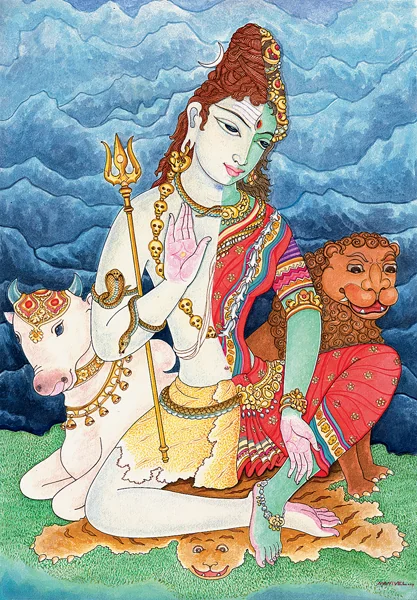
Image from Wikipedia
Image from Wikipedia
Hijra: History, Identity, and the Political Power of a Third Gender in South Asia
One of the Oldest and Most Misunderstood Gender Identities in the World
Hijra, also called Hidschra, refers to trans or intersex individuals in India, Pakistan, and Bangladesh, some of whom choose to undergo castration voluntarily. This designation does not pertain to a music biography but signifies a culturally, religiously, and politically significant community that is recognized as a third gender in several countries. This is where their historical impact lies: Hijra cultures mark a space beyond the binary gender order and have shaped social rituals, language, and societal debates for centuries. ([en.wikipedia.org](https://en.wikipedia.org/wiki/Hijra_%28South_Asia%29?utm_source=openai))
Historical Roots and Linguistic Origins
The term "hijra" derives from a Semitic-Arabic root, meaning "to leave," "to emigrate," or "to be ostracized." Historically, its use in the Indian context is closely associated with notions of gender deviation, social exclusion, and ritual special status. Sources also indicate that Hijras have been documented on the Indian subcontinent since antiquity, including in texts like the Kamasutra. ([en.wikipedia.org](https://en.wikipedia.org/wiki/Hijra_%28South_Asia%29?utm_source=openai))
This long history makes it clear that Hijra is not a modern marginal phenomenon but a deeply rooted social formation. In many South Asian traditions, Hijras represent a distinct gender identity that is neither clearly male nor female. The historical continuity explains why the term continues to play a central role in research, politics, and activism today. ([britannica.com](https://www.britannica.com/topic/gender-binary?utm_source=openai))
Community, Guru-Chela System, and Social Order
Many Hijras live in strictly organized communities with defined roles, hierarchies, and economic dependencies. A central figure in these communities is the Guru-Mother, an experienced leader responsible for the material and spiritual needs of her students, the Chelas. This Guru-Chela system forms the backbone of social organization and structures belonging, loyalty, and daily life. ([en.wikipedia.org](https://en.wikipedia.org/wiki/Hijra_%28South_Asia%29?utm_source=openai))
These communities often form by incorporating youths or young adults who have been rejected by their families due to feminine behavior, poverty, or social stigma. Ethnographic and scholarly work describes how these structures provide protection, identity, and a social framework, while simultaneously relying on economic insecurity. Many Hijras therefore live on the fringes of mainstream society, working in precarious jobs, including sex work or informal employment. ([unfpa.org](https://www.unfpa.org/news/community-community-transgender-advocates-sexual-and-reproductive-health-and-rights?utm_source=openai))
Rituals, Visibility, and Social Role
Hijras occupy a unique position within South Asia’s ritual culture. They are associated with birth, weddings, and religious festivals and appear in certain contexts as auspicious figures. This dual perception shapes their societal position to this day: respected during ritual moments but marginalized in everyday life. ([theweek.com](https://theweek.com/law/indias-reversal-of-transgender-rights?utm_source=openai))
This very ambivalence defines the cultural significance of the Hijra community. They are neither merely a social minority nor just a legal anomaly, but a vibrant part of South Asian cultural history. Their presence points to the limits of binary norms and raises questions about how societies define and recognize diversity. ([britannica.com](https://www.britannica.com/topic/gender-binary?utm_source=openai))
Legal Recognition as a Third Gender
A significant turning point was the official recognition as a third gender in several countries on the subcontinent. India recognized Hijras as a third gender in 2009, and the Supreme Court confirmed in 2014 the legal recognition of Hijras, transgender individuals, eunuchs, and intersex persons as a third gender. Pakistan followed in 2011, Bangladesh in 2013 and 2014, and Nepal in 2015. ([en.wikipedia.org](https://en.wikipedia.org/wiki/Hijra_%28South_Asia%29?utm_source=openai))
This legal development was historically significant as it aimed to strengthen visibility in official documents, access to education, and social participation. However, the recognition did not automatically equate to equality, as discrimination, violence, and social exclusion remain pervasive in many regions. The legal category and the social reality continue to diverge to this day. ([unfpa.org](https://www.unfpa.org/news/increasing-access-sexual-and-reproductive-health-and-hiv-programmes-gender-diverse-communities?element=XGGQEKZH&form=FUNBJGUDYZC&utm_source=openai))
Everyday Life Between Recognition and Exclusion
The social situation for many Hijras remains marked by poverty, exclusion, and significant precarity. Scholarly and institutional sources describe discrimination in access to education, employment, healthcare, and housing. At the same time, established norms, rituals, and networks within the community provide a sense of belonging and survival. ([pmc.ncbi.nlm.nih.gov](https://pmc.ncbi.nlm.nih.gov/articles/PMC9547216/?utm_source=openai))
In Bangladesh, UN sources emphasize the official recognition and specific support measures, yet they also point to ongoing violence and social disadvantage. This illustrates the complexity of the situation: legal recognition creates a framework, but not an automatically secure living reality. The Hijra community thus remains a symbol of the long path from visibility to true equality. ([unfpa.org](https://www.unfpa.org/news/community-community-transgender-advocates-sexual-and-reproductive-health-and-rights?utm_source=openai))
Cultural Influence and Academic Reception
Hijras have attracted cultural and academic attention well beyond South Asia. They appear in research on Gender Studies, Anthropology, Religious Studies, and Social History as key figures for understanding non-binary gender orders. Terms such as "third gender," "gender-diverse communities," and "transgender activism" are continually re-negotiated in this context. ([britannica.com](https://www.britannica.com/topic/gender-binary?utm_source=openai))
The political dimension is also significant. Activists from the Hijra community and allied organizations have worked for decades to push state systems to recognize gender diversity. This has given rise not only to a legal category but also to a public discourse on identity, dignity, and civil rights. ([en.wikipedia.org](https://en.wikipedia.org/wiki/Hijra_%28South_Asia%29?utm_source=openai))
Voices in the Public Debate
Media reports and UN documents reveal that Hijras are perceived both as symbols of visibility and as a group with ongoing vulnerability. The debate revolves around respect, participation, and self-identification, as well as violence, poverty, and institutional barriers. This tension continues to make the issue highly relevant for cultural history and social analysis today. ([asiapacific.unfpa.org](https://asiapacific.unfpa.org/en/%E2%80%9Cthird-gender-people-have-human-rights%E2%80%9D?utm_source=openai))
The public perception oscillates between recognition and stigmatization, between ritual inclusion and social marginalization. This results in a picture that is far more complex than stereotypical notions of "eunuchs" or exoticized outsiders. Hijra represents identity as a lived reality, not just a label. ([en.wikipedia.org](https://en.wikipedia.org/wiki/Hijra_%28South_Asia%29?utm_source=openai))
Conclusion: Why Hijra Continues to Fascinate
Hijra is a key term for understanding gender, belonging, and social order in South Asia. The history of this community connects ancient texts, religious practice, colonial attributions, modern legal reforms, and the long struggle for recognition. This is where their enduring cultural and political power arises. ([en.wikipedia.org](https://en.wikipedia.org/wiki/Hijra_%28South_Asia%29?utm_source=openai))
Engaging with Hijra introduces one to a way of life that challenges the rigid logic of either/or and sharpens the awareness of diversity. This topic remains compelling, as it is not just about rights and traditions but about dignity, voice, and visibility. Attending lectures, exhibitions, or discussion events on South Asian gender cultures is worthwhile because here, history becomes present. ([britannica.com](https://www.britannica.com/topic/gender-binary?utm_source=openai))
Official Channels of Hijra:
- Instagram: no official profile found
- Facebook: no official profile found
- YouTube: no official profile found
- Spotify: no official profile found
- TikTok: no official profile found
Sources:
- Wikipedia – Hijra (South Asia)
- UNFPA – Community, by the community: Transgender advocates for sexual and reproductive health and rights
- UNFPA – Increasing access to sexual and reproductive health and HIV programmes for gender-diverse communities in Bangladesh
- UNFPA Asia and the Pacific – “Third gender people have human rights”
- Britannica – Gender binary
- Journal of Urology – HF01-11 The History of the Hijra: The Third Gender in the Indian Subcontinent
- Wikipedia: Image and text source