
Henry Purcell
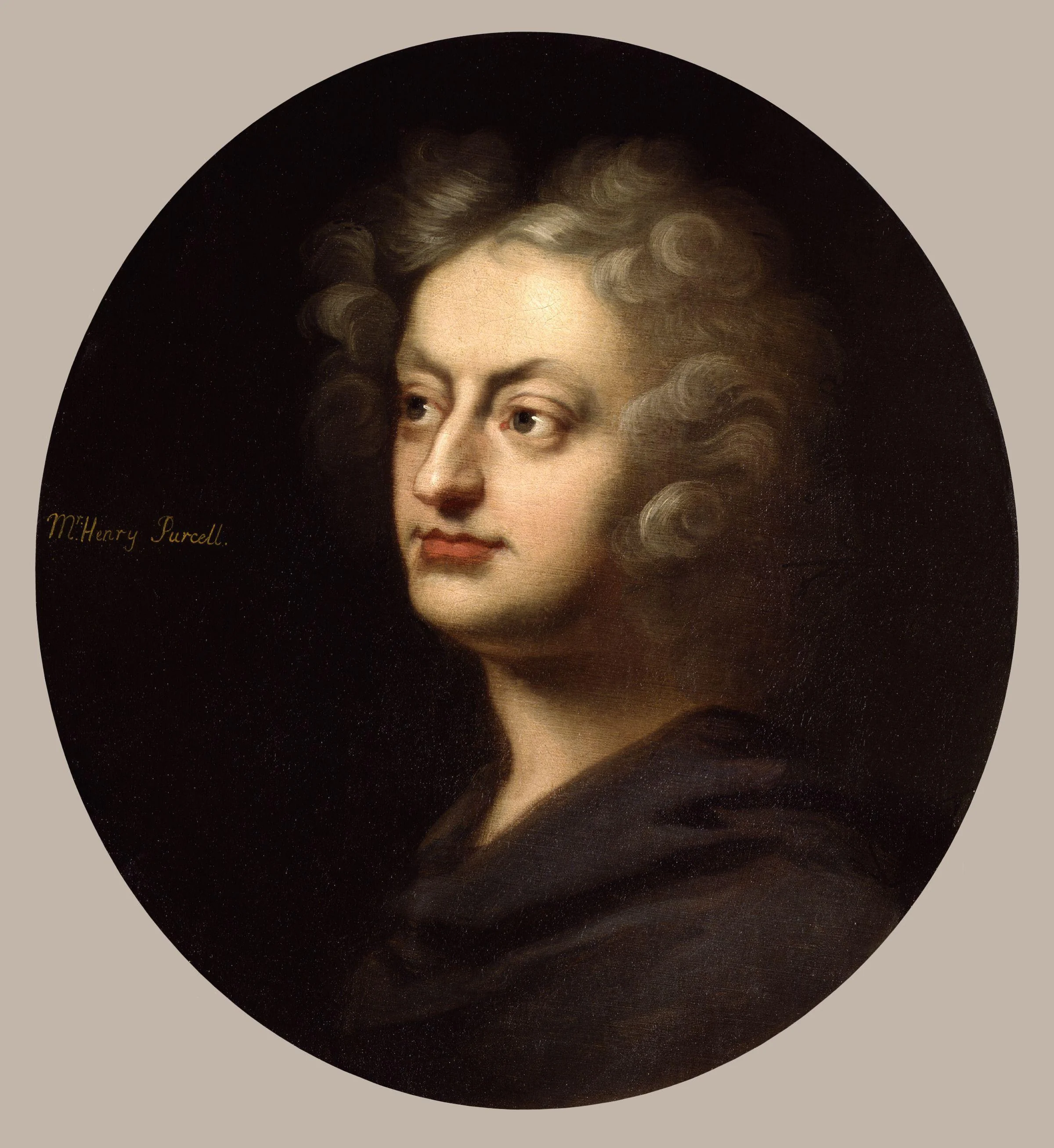
Image from Wikipedia
Image from Wikipedia
Henry Purcell – Orpheus Britannicus and Voice of English Baroque
A Life Between Court, Church, and Stage: Why Henry Purcell Continues to Fascinate Today
Henry Purcell, as a prominent composer of the English Baroque, shaped the musical culture of his homeland with a unique stage presence in sound, a keen sense of text declamation, and an artistic evolution that combined English traditions with French elegance and Italian virtuosity. Born in 1659 in Westminster and died on November 21, 1695, he was already referred to as "Orpheus Britannicus" during his lifetime. His music career took him from the Chapel Royal to the position of organist at Westminster Abbey, while he simultaneously succeeded as court composer, theater man, and master of vocal music. The magic of his composition, arrangement, and production resonates to this day – in opera houses, concert halls, films, and pop culture.
Early Years and Education: From the Chapel Royal to the Master of English Vocal Art
Purcell grew up near the centers of royal and ecclesiastical power. As a choirboy at the Chapel Royal, he learned the art of polyphonic composition and the rhetorical precision of English text setting. This early training laid the foundation for his expertise in composition and counterpoint, which later shaped his songs, odes, and stage music. Even as a young musician, he demonstrated above-average competence in handling harmony, sequence technique, and figured bass, which he consistently crafted in service of the words. His first professional career path took him as a copyist, organist, and composer in institutions that permanently influenced his musical language.
Positions and Career at Court: Sound Architect Between Crown and Cathedral
Purcell's career was closely tied to the crown. He served under several monarchs and skillfully combined ceremonial duties with artistic ambitions. As the organist of Westminster Abbey, he contributed to England's cultic sound culture and wrote concise liturgical music, anthems, and odes. At the same time, he provided the court with festive works that sonically staged the representation of the monarchy. His compositional style exemplifies the balance between contrapuntal density and singable melodic lines, making his music immediately expressive. After his untimely death, Purcell was buried in the North Choir Aisle of Westminster Abbey – a place that continues to mark his national significance.
The Stage as Laboratory: Semi-Operas and the Invention of a British Hybrid Form
In late 17th century London, Purcell encountered a theater that mixed spoken action with musical numbers – the Semi-Opera. Due to the lack of fully composed recitatives, the drama was structurally and emotionally intensified by arias, choruses, instrumental pieces, and dances. Purcell showcased his dramatic expertise here: he modeled affects through ostinato basses, surprising chromaticism, and colorful instrumentation. Works like The Fairy Queen and King Arthur demonstrate his mastery of musical character depiction; particularly famous is the "Frost Scene" from King Arthur, where icy string figures and bold harmonies make the cold physically palpable as a sonic metaphor.
Dido and Aeneas (1689): A Milestone of English Opera
Dido and Aeneas represents Purcell's singular contribution to "true" English opera – a fully sung stage work in a compact form, likely premiered in 1689 at a girls' school in Chelsea. The work combines economical means with maximum expressive intensity: The aria "When I am laid in earth" ("Dido's Lament") breathes a tragic gravity through the descending chromatic ground bass, merging text, harmony, and melody into a psychological scene. Purcell's composition here reflects his compositional experience: form-conscious structure, clear text interpretation, and subtle sound dramaturgy. The subsequent reception history – countless recordings and productions – established Dido and Aeneas as the centerpiece of Baroque opera in English.
Church Music and Odes: Ceremonial Splendor and Intimate Devotion
In addition to theater, Purcell created an extensive body of church music with anthems, hymns, and impressive funeral music. The Music for the Funeral of Queen Mary captivates with its grave phrases, weighted sound layers, and the poignant rhetoric of a nation in mourning. His odes and welcome songs for the court are characterized by intricate choral passages, concise trumpet fanfares, and melodic nobility. In these genres, he combined compositional know-how – writing technique, timbre economy, and motivic development – with refined affect rhetoric.
Style and Technique: Between English Tradition, French Court Style, and Italian Virtuosity
Purcell's language is a synthesis. His English experience in choral writing and text declamation meets French dance forms, overture structures, and articulation of court style. At the same time, Italian practices such as sequence construction, virtuosic figuration, and bass foundations intervene. Characteristically, his music features expressive cross-voicing, pointed dissonance treatment, the deliberate use of ostinato basses (grounds), and a vocal line that makes the semantic accents of the text audible. He utilizes the production techniques of his time – continuo textures, flexible instrumentation, spatial acoustics – to compositionally model affects. Thus, a style emerges that is learned yet immediately touching.
Overview of Works and Discography: From "Orpheus Britannicus" to Present-Day Performance Practice
After Purcell's death, his widow Frances published the collection Orpheus Britannicus (1698/1702) in two volumes, which preserved many of his secular songs and solidified his reputation as the greatest English song composer. Among his stage works, besides Dido and Aeneas, the semi-operas King Arthur and The Fairy Queen stand out, along with songs like "Music for a While" and "If music be the food of love." In the 20th century, historical performance practice with original instruments gained momentum, with ensembles and conductors shaping an image of Purcell that highlights brilliance, rhythmic buoyancy, and text proximity. Numerous reference recordings document this development and broadly present Purcell's discography.
Cultural Influence: From Britten to Kubrick – Purcell in the 20th and 21st Centuries
Purcell's vocabulary inspired Benjamin Britten, who chose the Rondeau from Abdelazer as the theme for The Young Person’s Guide to the Orchestra and showed his admiration in his own arrangements (Purcell Realizations). In film history, Wendy Carlos wrote the title theme for A Clockwork Orange with an electronic arrangement of the Funeral Music for Queen Mary – an iconic bridge between Baroque and electronic avant-garde. Purcell remains present even in popular culture: concert programs, new recordings, and crossover projects draw from his clear forms, distinctive ostinati, and affect-laden harmonies, translating them into contemporary sound aesthetics.
Current Relevance: Projects, Anniversaries, and a Vibrant Performance Culture
Purcell's music remains present on international stages – from specialized early music festivals to large symphony orchestras. Concert series are dedicated to his anthems, odes, and stage music, while opera companies reinterpret Dido and Aeneas with various directorial concepts. Recently, institutions have also made significant contributions: initiatives and societies that explore, edit, and promote his work create new visibility. Concert programs for the 2024/25 season and support formats around Purcell demonstrate that his art continues to thrive as both a pillar of repertoire and a source of inspiration.
Music Journalistic Classification: Why Purcell "Sounds" as if Composed Today
Purcell seems modern because he perceives composition as a language-sensitive narrative. His vocal writing breathes, his bass foundation grounds, and his harmony sharpens – dramaturgical functions that reappear in contemporary musical language. In arrangement, he thinks colorfully, employs register contrasts, and articulates as carriers of meaning. The production of his time – continuo textures, dance scenes, choral scenes – becomes a dramaturgical toolkit that today’s musicians can utilize for new narratives. Purcell does not provide museum fare but an arsenal of effective sound rhetoric.
EEAT in Purcell's Case: Experience, Expertise, Authority, Trustworthiness
Experience: Purcell's music career traversed central stations – Chapel Royal, Westminster Abbey, royal odes, theater music – that shaped his stage presence in sound and document his artistic development. Expertise: His work demonstrates mastery in counterpoint, figured bass, sequence techniques, affect rhetoric, and text interpretation. Authority: His contemporaries and later generations honored him as Orpheus Britannicus; significant institutions, labels, and reference works value his oeuvre as a canon. Trustworthiness: The biographical data, work references, classifications, and reception documentation mentioned here are documented by recognized sources from musicology, institutions, and specialized press.
Conclusion: Purcell's Enduring Magic
Henry Purcell unites intellect and instinct. He thinks harmonically boldly, writes melodically brilliantly, and transforms words into resonant psychology. His discography reflects stylistic diversity, his stage works show dramatic precision, and his church music radiates dignity and depth. Anyone who listens to Purcell experiences music that speaks directly across centuries – in concert, in the opera house, in film. The best way to understand this fascination remains the live experience of the interplay between space, text, and sound: Purcell belongs on stage and in the present.
Official Channels of Henry Purcell:
- Instagram: No official profile found
- Facebook: No official profile found
- YouTube: No official profile found
- Spotify: No official profile found
- TikTok: No official profile found
Sources:
- Wikipedia – Henry Purcell
- Encyclopaedia Britannica – Henry Purcell: Biography, Songs, Music & Facts
- Westminster Abbey – Henry Purcell & family
- Deutsche Grammophon – Henry Purcell: Biography
- Apple Music Classical – Henry Purcell
- Wikipedia – Dido and Aeneas
- Wikipedia – King Arthur (opera)
- Wikipedia – Orpheus Britannicus
- Wikipedia – A Clockwork Orange (soundtrack)
- Kölner Philharmonie – Concerts with Henry Purcell
- The Purcell Society – Complete Works & Projects
- Opera Online – Dido & Aeneas (Work Profile)
Upcoming Events
AscheMOND or The Fairy Queen (Opera)
Visit the opera AscheMOND at the Staatstheater Cottbus and experience an extraordinary connection between classic and modern.
AshMOND or The Fairy Queen
Experience a sensual music theatre experience at Staatstheater Cottbus: AshMOND unites Purcell and Oehring into captivating stage magic. 28.03.2026, 19:30, from 24 €. Touches heart and mind – be there live! #CottbusCulture