
Heinz Krekeler
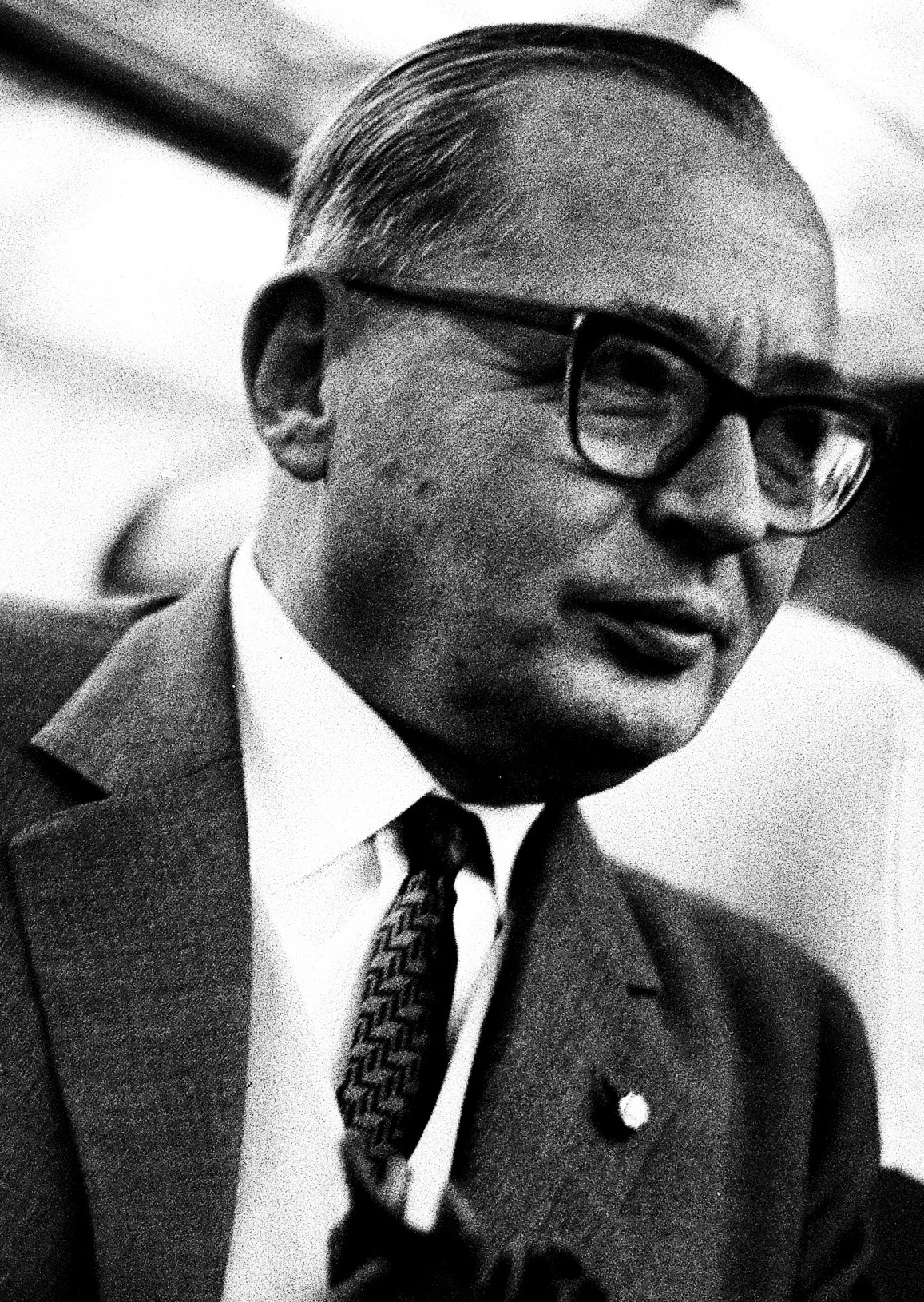
Image from Wikipedia
Image from Wikipedia
Heinz Krekeler – the German diplomat with chemical precision and political stature
A life between science, politics, and international responsibility
Heinz Ludwig Hermann Krekeler was not a musician but a German physical chemist, politician of the FDP, and diplomat, whose life journey took him from Bottrop to the top of West Germany's diplomatic representation in the USA. Born on July 20, 1906, and passing away on August 5, 2003, he belongs to a generation of personalities that uniquely combined scientific competence, political astuteness, and foreign policy experience. His biography tells the story of rising status, reorientation, and a service to the state during a historically sensitive period in the Federal Republic. (de.wikipedia.org)
Early years, education, and scientific foundations
Krekeler grew up in Bottrop and initially pursued a path in the natural sciences. He studied chemistry at several prestigious universities, including Freiburg, Munich, Göttingen, and Berlin, and received his Ph.D. in 1930. This academic breadth shaped his analytical perspective and laid the foundation for a career where scientific methodology and political thought were closely intertwined. (de-academic.com)
Even early on, his closeness to applied research and industrial practice was evident. According to biographical accounts, after his doctorate, he worked as a chemist in Berlin and was an employee of I.G. Farbenindustrie in Ludwigshafen-Oppau from 1934 to 1945. During this phase, professional specialization merged with an industry-oriented career that integrated him into the technical and economic structures of the time. (de-academic.com)
Political new beginnings in the post-war period
After World War II, Krekeler transitioned into politics and played a significant role in the organizational establishment of the FDP in Lippe. Together with newspaper publisher Max Staercke, he consolidated existing district associations and founded the National Committee of the FDP on September 6, 1946. This step marked the transition from scientist to political shaper during a time of institutional renewal. (de.wikipedia.org)
His political profile developed rapidly as he combined expertise with international orientation. In the early Federal Republic, these very attributes were decisive qualifications for diplomatic service. Krekeler embodied a generation of officials who not only managed administration but also had to build new foreign policy credibility. (mpg.de)
The breakthrough as a diplomat in the United States
Krekeler gained his true historical significance through his work in the USA. In 1950, the Federal Government appointed him Consul General in New York, in 1951 he became Chargé d'Affaires at the German mission in Washington, and in 1953 he finally became the first Ambassador of the Federal Republic of Germany to the United States. Thus, he became one of the central figures of West Germany's new beginning in international diplomacy. (mpg.de)
This position was much more than a ceremonial role. It represented the political goal of re-establishing Germany as a reliable partner after the war. Contemporary sources show that Krekeler operated during a phase when the Federal Republic had to re-establish its foreign policy legitimacy. His career in Washington made him an important mediator between Bonn and the USA. (mpg.de)
Public perception and contemporary classification
The press also recognized Krekeler as a prominent figure. DER SPIEGEL noted that he was considered the first German representative to the USA after the war in 1950 and that his FDP membership significantly contributed to his appointment. Such classifications make it clear that Krekeler was viewed not only as a professional but also as a politically trustworthy personality. (spiegel.de)
The Max Planck Society describes his career as an "astonishing career in turbulent times," thereby emphasizing the extraordinary dynamics of his professional life. This blend of scientific background, party allegiance, and diplomatic responsibility makes Krekeler historically interesting. He exemplifies those actors who interwove state continuity with new democratic foreign policy in the early Federal Republic. (mpg.de)
Scientific profile and professional authority
As a physical chemist, Krekeler brought precise, methodical thinking into politics. His scientific work also included a US patent for the production of fluorine through an electrolysis process, highlighting his closeness to technical innovation. This background explains why he was seen as a sober, fact-oriented conversation partner in political and diplomatic contexts. (de-academic.com)
His career demonstrates how strongly professional expertise could open political career paths in the post-war period. Krekeler possessed the rare ability to combine scientific rationality with political practice. This made him an authority in an environment where the Federal Republic had to restore its international reputation. (mpg.de)
Cultural and historical influence
Heinz Krekeler left no musical catalog, no discography, and no hit singles, but a political-historical legacy. His name stands for the early foreign political self-positioning of the Federal Republic, especially in relation to the United States. The historical significance of his role is also evident in later references to him in specialized publications and document collections. (dodis.ch)
In addition, there is a lasting symbolic impact of his life path. The fact that the FDP Lippe established a medal and a citizen's award in his honor shows how resonant his work was regionally and politically. Krekeler remains a figure in German post-war history that embodies competence, ascent, and institutional development. (de.wikipedia.org)
Conclusion: A life of historical relevance
Heinz Krekeler fascinates as a personality bridging the laboratory, party, and embassy. His career spans from chemist to FDP politician to the first ambassador of the Federal Republic in the USA, making him a significant actor in the young West German foreign policy. Those interested in German contemporary history, diplomacy, and political reconstruction will find in his biography an impressive example of responsibility and adaptability. (mpg.de)
Especially because he was not an artist in the musical sense but a leading representative of the Federal Republic, reflecting on his historical role becomes even more worthwhile. His story illustrates how closely specialized knowledge, political trust, and international representation can be interrelated. Krekeler remains a name to know in the context of German post-war history. (dodis.ch)
Official channels of Heinz Krekeler:
- Instagram: No official profile found
- Facebook: No official profile found
- YouTube: No official profile found
- Spotify: No official profile found
- TikTok: No official profile found