
Heike Geißler
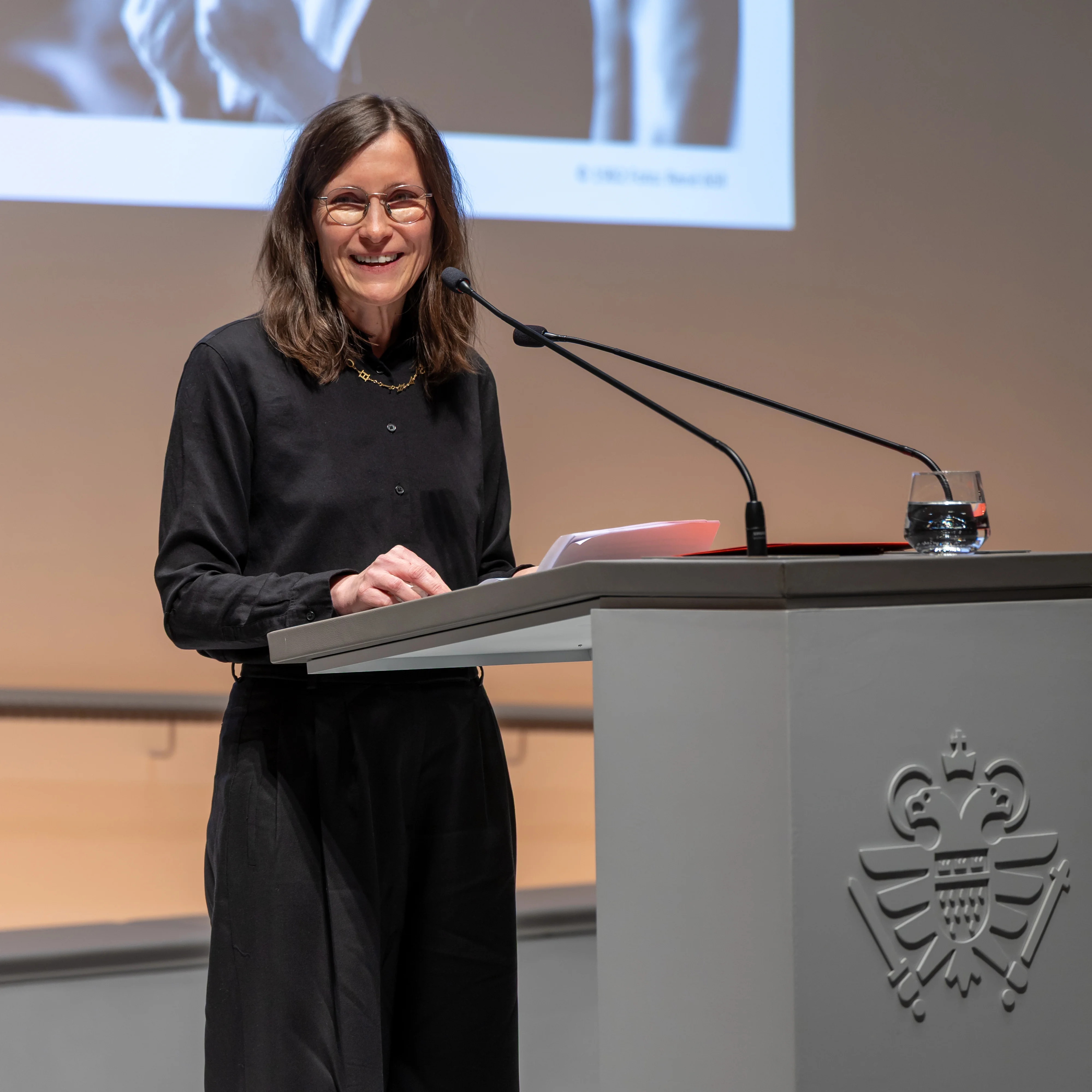
Image from Wikipedia
Image from Wikipedia
Heike Geißler: The Distinctive Voice of an Author Between East Germany, the World of Work, and Literary Radicalism
A Writer Who Transforms the Present into Language
Heike Geißler, born in 1977 in Riesa, is among the most prominent German authors of her generation. Growing up as the child of a steelworker and a postal employee in Riesa and Karl-Marx-Stadt/Chemnitz, she has inscribed biographical fractures, societal upheavals, and the aftershocks of German reunification early into her literary perspective. Her books combine political observation, form-conscious prose, and precise, often pointed language that intertwines personal experience with social analysis. ([de.wikipedia.org](https://de.wikipedia.org/wiki/Heike_Gei%C3%9Fler))
Biography: Background, Influences, and Literary Breakthrough
Geißler's origins from an East German working-class and employee milieu shape her view on work, class, and social reality to this day. The fact that both parents became unemployed after German reunification is one of the formative experiences from which her literature derives its tension. From an early age, she emphasizes not the private as a retreat, but the private as a place of political and social friction. ([de.wikipedia.org](https://de.wikipedia.org/wiki/Heike_Gei%C3%9Fler))
Her literary breakthrough came in 2001 with the Alfred Döblin Prize; a year later, her novel Rosa was published. In the following years, she participated multiple times in the Ingeborg Bachmann Competition, received scholarships in Berlin, Wiepersdorf, and Archangel, and was a fellow at Villa Massimo in 2016/2017. These milestones showcase an author who would not be confined to a single style but consistently advanced her artistic development through shifts in form, research, and project work. ([de.wikipedia.org](https://de.wikipedia.org/wiki/Heike_Gei%C3%9Fler))
Career: From Novels to Essays and Radio Plays
Geißler's work unfolds across various literary formats: novel, essay, children’s book, series of pamphlets, and radio play. Important publications include Rosa (2002), Nichts, was tragisch wäre (2007), Emma und Pferd Beere (2009), Saisonarbeit (2014), Die Woche (2022), Verzweiflungen (2025), Arbeiten (2025), and Michaela Kohlhaas (2026). The range of these titles illustrates that Geißler does not write linear biographies, but instead probes social conditions, conflicts, and self-inquisitions through varying literary arrangements. ([de.wikipedia.org](https://de.wikipedia.org/wiki/Heike_Gei%C3%9Fler))
Her approach to work as a literary subject is particularly striking. Saisonarbeit was born from her experience as a temporary worker in an Amazon logistics center in Leipzig and transforms that experience into a text about work, reading, everyday life, and the political nature of the sensitive. The reception shows how strongly Geißler's writing has influenced the debate on present realities and working conditions; the book's website compiles numerous reviews from the German-speaking press, including voices from Süddeutsche Zeitung, taz, FAZ, and Deutschlandradio. ([de.wikipedia.org](https://de.wikipedia.org/wiki/Heike_Gei%C3%9Fler))
Work Profile: Literature as a Resonance Space for the Social Question
Geißler's literature is most effective where she intertwines observation, self-examination, and societal diagnosis. In the rationale for the Heinrich Böll Prize 2025, it is emphasized that she has responded to optimization pressure and efficiency increases with "comedy, musicality, and documentary research." This formulation captures the essence of her writing: Geißler works with rhythmic condensation, often list-like passages, and a language that does not smooth over but generates friction. ([de.wikipedia.org](https://de.wikipedia.org/wiki/Heike_Gei%C3%9Fler))
Her essay Verzweiflungen also displays this signature style. Suhrkamp describes the book as an engagement with gender roles, heroism, militarization, and hostile structures; at the same time, the text is read as loud, rebellious, and as a means of salvation. In this mix of analytical sharpness and emotional accuracy lies a central appeal of her authorship: Geißler does not write about crises from the outside but from the heart of her contradictions. ([suhrkamp.de](https://www.suhrkamp.de/ebook/heike-geissler-verzweiflungen-t-9783518782491?utm_source=openai))
Current Projects and Publications: Contemporary Literature Under Pressure
Geißler’s recent projects include Verzweiflungen and Arbeiten, both published in 2025, as well as the novel Michaela Kohlhaas from 2026. Michaela Kohlhaas is presented by Suhrkamp as a bold reinterpretation of Heinrich von Kleist’s classic; thus, Geißler continues her exploration of justice, violence, and the present. The publisher's website also points to readings and events related to these titles in 2026, emphasizing her ongoing presence in the literary scene. ([suhrkamp.de](https://www.suhrkamp.de/hintergrund/zur-entstehung-von-heike-geisslers-roman-michaela-kohlhaas-b-5075?utm_source=openai))
In November 2025, Geißler also received the Bavarian Book Prize, and in 2025, she was awarded the Heinrich Böll Prize and the Klopstock Prize for New Literature; in 2026, she was awarded the Saxon Literature Prize. These honors mark not only recognition but also a remarkable continuity: Geißler's work remains relevant because it does not historicize social conflict zones but draws them into the present. ([de.wikipedia.org](https://de.wikipedia.org/wiki/Heike_Gei%C3%9Fler))
Critical Reception: Voice, Attitude, and Cultural Influence
The press repeatedly highlights Heike Geißler's connection between literature and social observation. The New Yorker reviewed the English edition of Seasonal Associate as a labor memoir of the Amazon era, while The Guardian portrayed Geißler in the context of East German experience and consumer criticism. In Germany, voices from Süddeutsche Zeitung, Deutschlandfunk, taz, and other media establish her profile as an author who does not merely comment on social reality but penetrates it literarily. ([de.wikipedia.org](https://de.wikipedia.org/wiki/Heike_Gei%C3%9Fler))
Her cultural influence is also evident in collaborative formats. Geißler works across disciplines with Anna Lena von Helldorff under the name SABOTIQUE and with Charlotte Puder as GEORGE BELE. Such formations extend her writing towards performance, pamphlet culture, and interdisciplinary production, demonstrating that her art does not end on the pages of books but is understood as an open process. ([heikegeissler.de](https://www.heikegeissler.de/%2A/ALLGEMEINES/01?utm_source=openai))
Work Instead of Discography: Why Heike Geißler Remains So Special
Heike Geißler does not have a classical discography; her artistic identity is based on a literary development that can be read like a consistently structured artistic catalog. From Rosa to Michaela Kohlhaas, she shifts perspectives, changes registers, and sharpens her tone from book to book. This is her strength: she combines perceptiveness, formal discipline, and a distinctive attitude towards work, body, language, and society. ([de.wikipedia.org](https://de.wikipedia.org/wiki/Heike_Gei%C3%9Fler))
Conclusion: An Author to Read and Experience Live
Heike Geißler is intriguing because her literature is at once personal, political, and formally idiosyncratic. She writes with analytical clarity about the present, the world of work, social background, and the demands of everyday life, all without ever losing the poetic pressure from the text. Those seeking contemporary literature with conviction, precision, and intellectual tension will find in her one of the most important voices in German-language literature. Her readings and performances are worthwhile as her texts gain even more power, rhythm, and presence on stage. ([de.wikipedia.org](https://de.wikipedia.org/wiki/Heike_Gei%C3%9Fler))
Official Channels of Heike Geißler:
- Instagram: No official profile found
- Facebook: No official profile found
- YouTube: No official profile found
- Spotify: No official profile found
- TikTok: No official profile found