
Hans Werner Henze
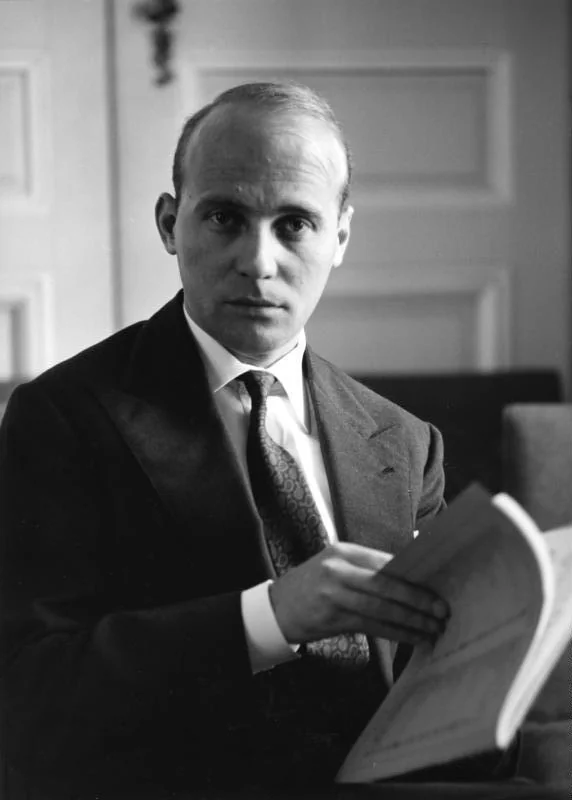
Image from Wikipedia
Image from Wikipedia
Hans Werner Henze – the political sound artist between opera, symphony, and contemporary history
A composer who not only set the 20th century to music but also commented on it
Hans Werner Henze is regarded as one of the defining German composers of the post-war era and one of the most distinctive voices in modern music. Born on July 1, 1926, in Gütersloh and died on October 27, 2012, in Dresden, he combined classical forms with a unique musical language that encompassed opera, ballet, oratorio, symphony, and chamber music. His musical career led him early on out of post-war Germany to Italy, where he lived from the 1950s onward and worked internationally. His works reflect artistic development, aesthetic curiosity, and a political stance with rare consistency. ([britannica.com](https://www.britannica.com/biography/Hans-Werner-Henze?utm_source=openai))
Early years, education, and artistic influences
Henze grew up in a time characterized by political upheaval and cultural breaks. He studied in Germany and gradually immersed himself in a musical world that wavered between tradition, avant-garde, and the desire for renewal after the war. His interest in dramatic forms, colorful orchestration, and music that does not remain in an ivory tower but engages with reality became apparent early on. His early career exemplifies a composer who linked technical skill with aesthetic attitude. ([schott-music.com](https://www.schott-music.com/en/discovering-hans-werner-henze?utm_source=openai))
The escape from restrictive cultural-political conditions had a lasting impact on his path. In 1953, Henze left Germany and settled in Italy, a step that strengthened his artistic freedom and permanently opened his sound language. Schott describes him as one of the most influential voices of music after 1945, whose works combine social responsibility and stylistic diversity. This connection between life path and work created a composer's figure that reaches far beyond the boundaries of German music history. ([schott-music.com](https://www.schott-music.com/en/discovering-hans-werner-henze?utm_source=openai))
The breakthrough: Music for theater, operas, and large dramatic forms
Henze's breakthrough primarily occurred through music theater. In the 1950s, he made a name for himself with stage works, including operas and radio operas, revealing his sense of language, psychology, and dramatic tension. Key works such as Boulevard Solitude, Der Prinz von Homburg, and Der junge Lord were particularly important in solidifying his reputation as an internationally regarded opera composer. The music press consistently highlights that Henze understood the stage as a space for tension, character development, and social reflection. ([encyclopedia.com](https://www.encyclopedia.com/environment/encyclopedias-almanacs-transcripts-and-maps/henze-hans-werner?utm_source=openai))
His operas became cornerstones of the modern repertoire not simply because they aimed to sound modern, but because they developed their own theatrical logic. The Guardian describes him as Europe's leading opera composer in the post-war period, whose works achieved great successes with audiences, despite encountering skepticism in avant-garde circles. This tension between public success and aesthetic controversy makes Henze's career so fascinating: He did not compose for a closed expert milieu but for a vibrant, often contradictory music scene. ([theguardian.com](https://www.theguardian.com/music/2012/oct/27/hans-werner-henze?utm_source=openai))
Style and musical development: between neoclassicism, twelve-tone technique, and a personal touch
Henze's style eludes simple categorization. Schott emphasizes that his music combines neoclassicism, twelve-tone technique, and traditional forms with a distinctive personal touch. This blend of compositional discipline and expressive freedom gives his scores a high degree of recognizability without reducing them to a single stylistic term. In many works, formal clarity meets emotional density, often with a refined treatment of the orchestra and a particular sensitivity to vocal lines. ([schott-music.com](https://www.schott-music.com/en/discovering-hans-werner-henze?utm_source=openai))
The evolution of his sound also demonstrates an open, flexible mind. Earlier works experimented with atonal and serial techniques, while later pieces featured stronger melodic gestures, lyrical passages, and regional or popular echoes. This change is not a break but rather an expression of artistic development that never committed to a single aesthetic dogma. This is where Henze's significance lies in music history: He remained modern without becoming dogmatic, and traditional without sounding academic. ([en.wikipedia.org](https://en.wikipedia.org/wiki/Hans_Werner_Henze?utm_source=openai))
Political consciousness and cultural stance
Henze was not only a composer but also an intellectual voice of his time. His works and public positions show a clear focus on social, political, and humanistic themes, especially evident in the 1960s and 1970s. The Neue Musikzeitung points to his political connections in the context of Voices and his engagement with oppression, violence, and social responsibility. For him, music became a medium of dissent and statement. ([nmz.de](https://www.nmz.de/kritik/oper-konzert/vor-50-jahren-henzes-lied-von-der-erde-erstauffuehrung-der-voices-wiesbaden?utm_source=openai))
This attitude also shapes Henze's cultural influence. He combined musical formality with the desire to audibly interlink history and the present. His works deal not only with individual characters or mythological subjects but often also with collective conflicts, historical traumas, and political empathy. As a result, his discography gained a dimension that goes beyond mere catalogs of works: It reflects an artistic life where aesthetics and world engagement are inseparably intertwined. ([zeit.de](https://www.zeit.de/kultur/musik/2012-10/nachruf-henze?utm_source=openai))
Key works, discography, and artistic highlights
In addition to his operas, central works by Henze include symphonies, ballets, orchestral pieces, and chamber music. The press repeatedly highlights his symphonies, of which he wrote ten; he described the First Symphony as a failure, indicating his high critical self-reflection. Later works such as the Ninth Symphony, Das verratene Meer, or The Bassarids showcase his ability to combine large forms with dramatic compression. His discography therefore emphasizes not individual hits in the popular sense but complex works of lasting significance. ([diepresse.com](https://www.diepresse.com/1597323/hans-werner-henze-symphonien?utm_source=openai))
His chamber music and vocal compositions also deserve special attention. Schott and IRCAM document a wide range of works, from radio operas to ensemble music to smaller settings. Pieces like Ein Landarzt, Das Ende einer Welt, or Carillon, Récitatif, Masque demonstrate Henze's interest in precise dramatic portrayal in smaller formats. This breadth makes his artistic development so exciting: He was never confined to a single genre but utilized each form as a unique field of expression. ([schott-music.com](https://www.schott-music.com/en/ein-landarzt-das-ende-einer-welt-no216038.html?utm_source=openai))
Critical reception and significance in music history
The critical reception of Henze's work ranged during his lifetime from admiration to controversy, which is hardly surprising for such an individual composer. Some regarded him as the master of music theater, while others appreciated his openness to social issues and his ability to translate modern techniques into immediate sound impact. The Guardian emphasizes his great public successes, while contemporary debates from the avant-garde highlight his independence from strictly dogmatic positions. This friction is an essential part of his posthumous reputation. ([theguardian.com](https://www.theguardian.com/music/2012/oct/27/hans-werner-henze?utm_source=openai))
Henze's significance also lies in his international reach. Schott describes him as a defining voice after 1945 and as a composer, teacher, and festival founder who shaped the international music scene from Italy. His works today stand for music that remains intellectually demanding, scenically effective, and emotionally open. For music lovers, this presents a body of work that not only wants to be heard but also discovered. ([schott-music.com](https://www.schott-music.com/en/discovering-hans-werner-henze?utm_source=openai))
Conclusion: Why Hans Werner Henze continues to fascinate today
Hans Werner Henze fascinates because he uniquely combined musical form, political stance, and sensual expressiveness. His career tells the story of an artist who was never satisfied with a single aesthetic position and, precisely because of this, created an extraordinarily rich body of work. Experiencing Henze's music live means encountering not only a significant composer of the 20th century but also an art that continues to provoke, move, and inspire to this day. His works deserve a place on the stage, in the concert hall, and in any serious engagement with music history. ([schott-music.com](https://www.schott-music.com/en/discovering-hans-werner-henze?utm_source=openai))
Official channels of Hans Werner Henze:
- Instagram: No official profile found
- Facebook: No official profile found
- YouTube: No official profile found
- Spotify: No official profile found
- TikTok: No official profile found
Sources:
- Schott Music – Henze 100: Discovering Hans Werner Henze
- Britannica – Hans Werner Henze
- The Guardian – Hans Werner Henze obituary
- The Guardian – A guide to Hans Werner Henze's music
- Neue Musikzeitung – Fifty years ago: Henze's Lied von der Erde
- Neue Musikzeitung – Henze's Ninth: a music drama without a scene
- Schott Music – Ein Landarzt / Das Ende einer Welt
- IRCAM – Das Ende einer Welt
- Wikipedia – Hans Werner Henze
Upcoming Events
19th Music Film Days Oberaudorf: Hans Werner Henze at Kloster Reisach
Hans Werner Henze: Avant-gardist and Free Spirit
Hans Werner Henze: Avant-garde and Free Spirit – Portrait Concert for his 100th Birthday
Future Music »Henze«