
Hans Theessink
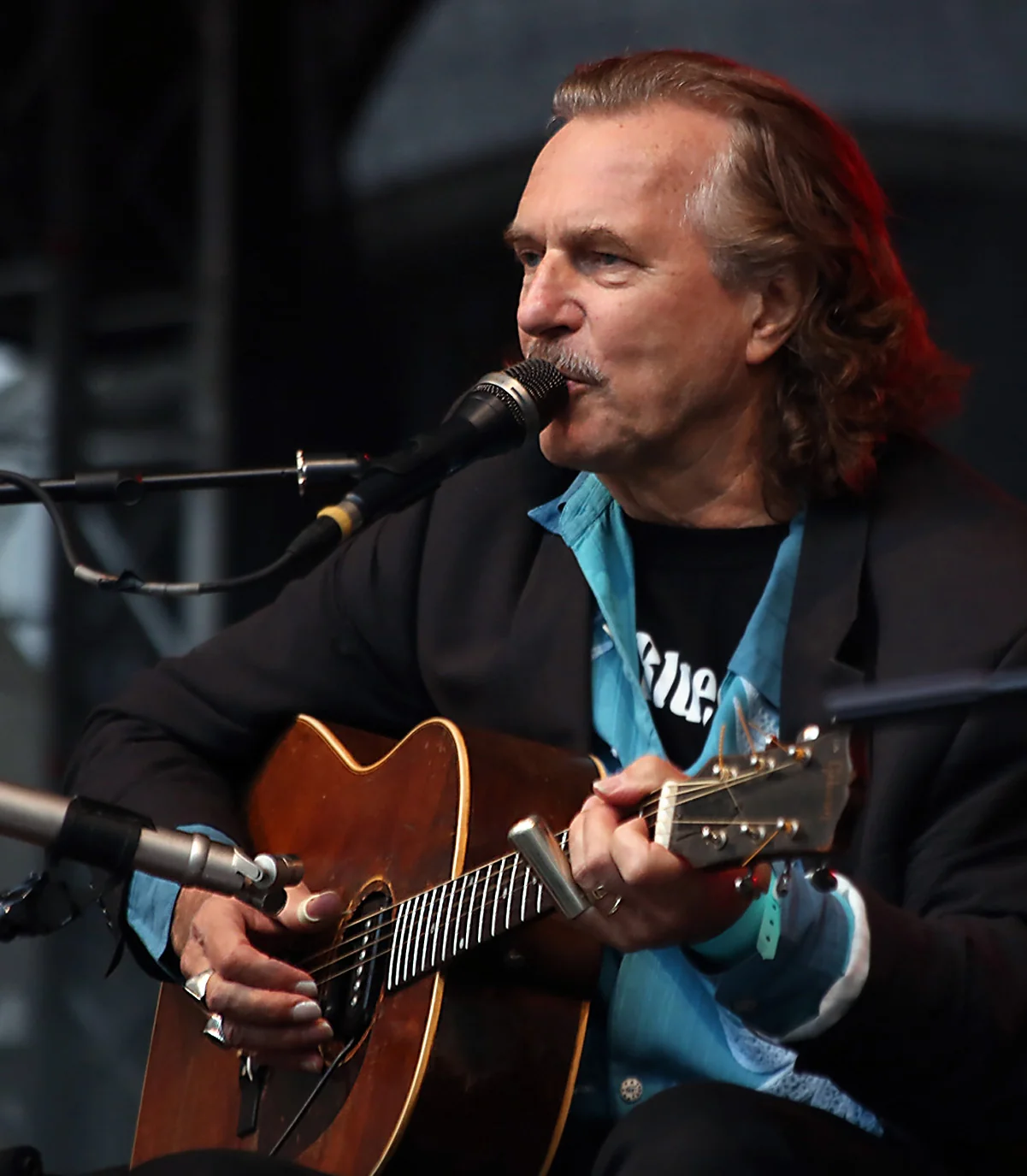
Image from Wikipedia
Image from Wikipedia
Hans Theessink: The European Blues Master Between Roots, Emotion, and Guitar Mastery
An Artist Portrait of International Format
Hans Theessink is one of the most distinctive voices and guitar personalities in European blues. Born on April 5, 1948, in Enschede and based in Vienna since 1982, he has carved out a unique position as a Dutch blues guitarist, singer, and songwriter in the realms of blues, folk, and roots music. His music career combines acoustic depth, stylistic consistency, and a stage presence that has developed over decades. ([de.wikipedia.org](https://de.wikipedia.org/wiki/Hans_Theessink))
What sets Theessink apart is the rare blend of tradition and personal style. He interprets classic blues and folk songs as convincingly as his own compositions, creating an artistic profile that goes far beyond mere repertoire maintenance. The official website describes him as one of Europe’s strongest acoustic players and as a blues artist of international stature. ([de.wikipedia.org](https://de.wikipedia.org/wiki/Hans_Theessink))
From Enschede to Vienna: The Early Years and the Path to Blues
The origin of Hans Theessink's artistic development lies in the early 1960s, when recordings by Big Bill Broonzy and Leadbelly shaped him and he taught himself to play the guitar. At the same time, he learned mandolin and banjo, initially performing as a street musician before playing with the Silly Skiffle Group in his home country and in Germany. This phase shaped the hands-on directness that would later characterize his work as a guitarist and songwriter. ([de.wikipedia.org](https://de.wikipedia.org/wiki/Hans_Theessink))
An important milestone followed in 1970 with his first recording Next Morning at Sunrise, after Theessink had moved to Denmark as a teacher. This early phase marks the beginning of a career that did not orient itself towards short-term trends but focused on a consistent deepening of his acoustic expression. Even here, a distinctive tone emerged that would later become his hallmark: warm, earthy, rhythmically precise, and richly narrative. ([de.wikipedia.org](https://de.wikipedia.org/wiki/Hans_Theessink))
Vienna as an Artistic Home and the Growth of a Music Career
Since 1982, Theessink has lived in Vienna after meeting his current wife and manager Milica Djokic at a concert in the city. This connection to the Austrian music scene has become a central part of his biography: In 2001 he received the Golden Rathausmann from the city of Vienna, a visible sign of his cultural presence in the capital. Thus, the Dutch blues musician evolved into a defining adopted Viennese with a European flair. ([de.wikipedia.org](https://de.wikipedia.org/wiki/Hans_Theessink))
His career has continuously developed over decades, supported by regular performances at major blues, jazz, and folk festivals in Europe and America. Since 1986, he has collaborated with tuba player Jon Sass, and from 2004 he has been performing with the Hans Theessink Band. This long-term continuity is not just an organizational detail but an expression of an artistic attitude: Theessink understands music as a living craft that gains depth through ensemble work, maturity, and touring experience. ([de.wikipedia.org](https://de.wikipedia.org/wiki/Hans_Theessink))
The Breakthrough in Recordings: Albums, Live Moments, and Stylistic Maturation
His discography shows a remarkable development from early formative material to refined studio and live works. Key milestones include Call Me (1992), Hard Road Blues (1994), Crazy Moon (1995), Bridges (2004), Slow Train (2007), Visions with Terry Evans (2008), Jedermann Remixed (2011), Wishing Well (2013), True & Blue - Live with Terry Evans (2015), 70 Birthday Bash (2019), Pay Day with Big Daddy Wilson (2021), and 75 Birthday Bash (2025). This selection illustrates a career that cannot be reduced to a single successful album. ([de.wikipedia.org](https://de.wikipedia.org/wiki/Hans_Theessink))
Particularly, Hard Road Blues exemplifies his closeness to acoustic Delta blues: The album works with minimal instrumentation, focusing on voice and guitar, showcasing that sparse intensity that has always characterized Theessink. Slow Train also received strong acclaim; the reviews on the official site emphasize the fusion of unplugged strumming, sonorous voice, and band into a form of relaxed yet profound roots sound. Such reactions underline his authority as an interpreter with pronounced compositional and sonic control. ([theessink.com](https://www.theessink.com/projekte/hard-road-blues/?utm_source=openai))
Stylistics: Acoustic Country Blues with European Breadth
Theessink's style is rooted in acoustic country blues but is enriched by influences from New Orleans jazz, folk, gospel, soul, Cajun, and African music. Wikipedia describes him as a globally significant stylistic innovator of acoustic country blues, reaching a wider audience in German-speaking areas. This blend of tradition and openness makes his compositions and arrangements uniquely his own: they sound familiar yet unmistakably personal. ([de.wikipedia.org](https://de.wikipedia.org/wiki/Hans_Theessink))
Characteristically, he avoids digital effects, consistently working with acoustic instruments. His stage presence thrives on the interplay of deep baritone, nuanced fingerpicking technique, and the ability to translate classic blues themes such as love, work, travel, and redemption into a timeless, human language. Press reviews on official release pages repeatedly emphasize his emotional directness, timing, and the clear dynamics of his playing. ([de.wikipedia.org](https://de.wikipedia.org/wiki/Hans_Theessink))
Collaborations, Projects, and Recent Release Phase
An important aspect of his career is the collaborations with other outstanding artists. In particular, his work with Terry Evans led to the albums Visions, Delta Time, and True & Blue - Live, while Pay Day with Big Daddy Wilson marked another strong blues and roots connection. Such projects demonstrate how comfortably Theessink works in dialogue: he does not rely on overwhelming force but seeks common sound spaces where voice, guitar, and atmosphere merge. ([de.wikipedia.org](https://de.wikipedia.org/wiki/Hans_Theessink))
Currently, 75 Birthday Bash prominently shapes public perception. The official release sheet from April 2025 documents a double album or vinyl release featuring guests such as Eric Bibb, Ulrika Bibb, Eleanor Shanley, Guy Davis, Dana Gillespie, Ernst Molden, Christian Dozzler, Insingizi, and other musicians. The recordings were made at the Birthday Bash concerts in 2023 and 2024 at the Metropol in Vienna and will be released by Blue Groove; the launch will be supported by international distribution. This underlines that Theessink's artistic presence remains vibrant and well-connected. ([theessink.com](https://www.theessink.com/wp-content/uploads/2025/03/Theessink_75-Birthday-Bash_onesheet-EU.pdf))
The official website also refers to the re-release of Hard Road Blues as 180g vinyl in February 2023. Along with the new material from 2025, it showcases an artist who not only takes his catalog maintenance seriously but also adeptly translates his own history into the present. This balance between archive and contemporaneity is a strong hallmark of quality, especially in roots music. ([theessink.com](https://www.theessink.com/en/))
Awards, Resonance, and Cultural Influence
Hans Theessink enjoys an unusually broad recognition in the European music landscape. In addition to the Golden Rathausmann from the city of Vienna, a recent Austrian program source lists further honors such as the Golden Merit Badge of the City of Vienna, several Amadeus Awards, induction into the Dutch Blues Hall of Fame, a USA Blues Music Award, and a Danish Music Award. Although this listing comes from an external cultural source, it validates the scope of his influence across Austria, the Netherlands, the blues milieu, and the international roots scene. ([de.wikipedia.org](https://de.wikipedia.org/wiki/Hans_Theessink))
His cultural influence is evident not only in awards but also in the long-term promotion of blues as a living art form. Theessink represents a European interpretation of the African American tradition that acts respectfully and transformatively rather than imitating. In the German and Austrian concert landscape, he has established acoustic blues as an intimate, narrative, and simultaneously universal form. ([de.wikipedia.org](https://de.wikipedia.org/wiki/Hans_Theessink))
Voices of the Fans
The official web results primarily document press quotes and curator voices, but there are no reliably retrievable fan comments from verifiable social media posts. Thus, this section deliberately focuses on the documented resonance from official channels and press reviews. This aligns with an artist whose impact derives more from credibility than from volume. ([theessink.com](https://www.theessink.com/en/projekte/slow-train-en/?utm_source=openai))
Conclusion: Why Hans Theessink Continues to Fascinate
Hans Theessink fascinates because he lives the blues not as a style but as an attitude. His career combines craftsmanship, deep knowledge of tradition, and the ability to open vast emotional spaces through acoustic reduction. Those who listen to him encounter not a poseur but a musician with substance, experience, and a distinctive tone. ([de.wikipedia.org](https://de.wikipedia.org/wiki/Hans_Theessink))
Especially live, this art unfolds its full power: the intimate tension between voice, guitar, and ensemble, the fine dynamic nuances, and the great authority of a musician with decades of stage experience make Hans Theessink an experience for blues, folk, and roots fans. Anyone following his music career quickly realizes that here works a true master of his craft. A concert by Hans Theessink is not a nostalgia evening but a lived present in the best musical form. ([theessink.com](https://www.theessink.com/en/))
Official Channels of Hans Theessink:
- Instagram: https://www.instagram.com/hanstheessink/
- Facebook: https://www.facebook.com/hanstheessinkofficial/
- YouTube: https://www.youtube.com/c/HansTheessinkOfficial?sub_confirmation=1
- Spotify: No official profile found
- TikTok: No official profile found
Sources:
- Hans Theessink Official Website - Official Website
- Hans Theessink - 75 Birthday Bash, Release Sheet (April 2025)
- Wikipedia - Hans Theessink
- Hans Theessink Official Website - Slow Train
- Hans Theessink Official Website - Jedermann Remixed
- Hans Theessink Official Website - Hard Road Blues
- Hans Theessink Official Website - Visions
- Press Service Vienna - Hans Theessink Performs at Jazzland
Upcoming Events
Hans Theessink live in Bielefeld - Bielefelder Jazzclub Concert 2026
A blues evening with goosebumps guarantee: Hans Theessink comes to Bielefeld with Solo Acoustic Blues. Support: Michael van Merwyk. #LiveMusic #Blues
Hans Theessink live in Blaubeuren - Nix Concert 2026
An intimate blues evening with Hans Theessink in Blaubeuren: 25 Euro admission, strong songs, great closeness, and real live magic. #Blues #Live