
Georges Bizet
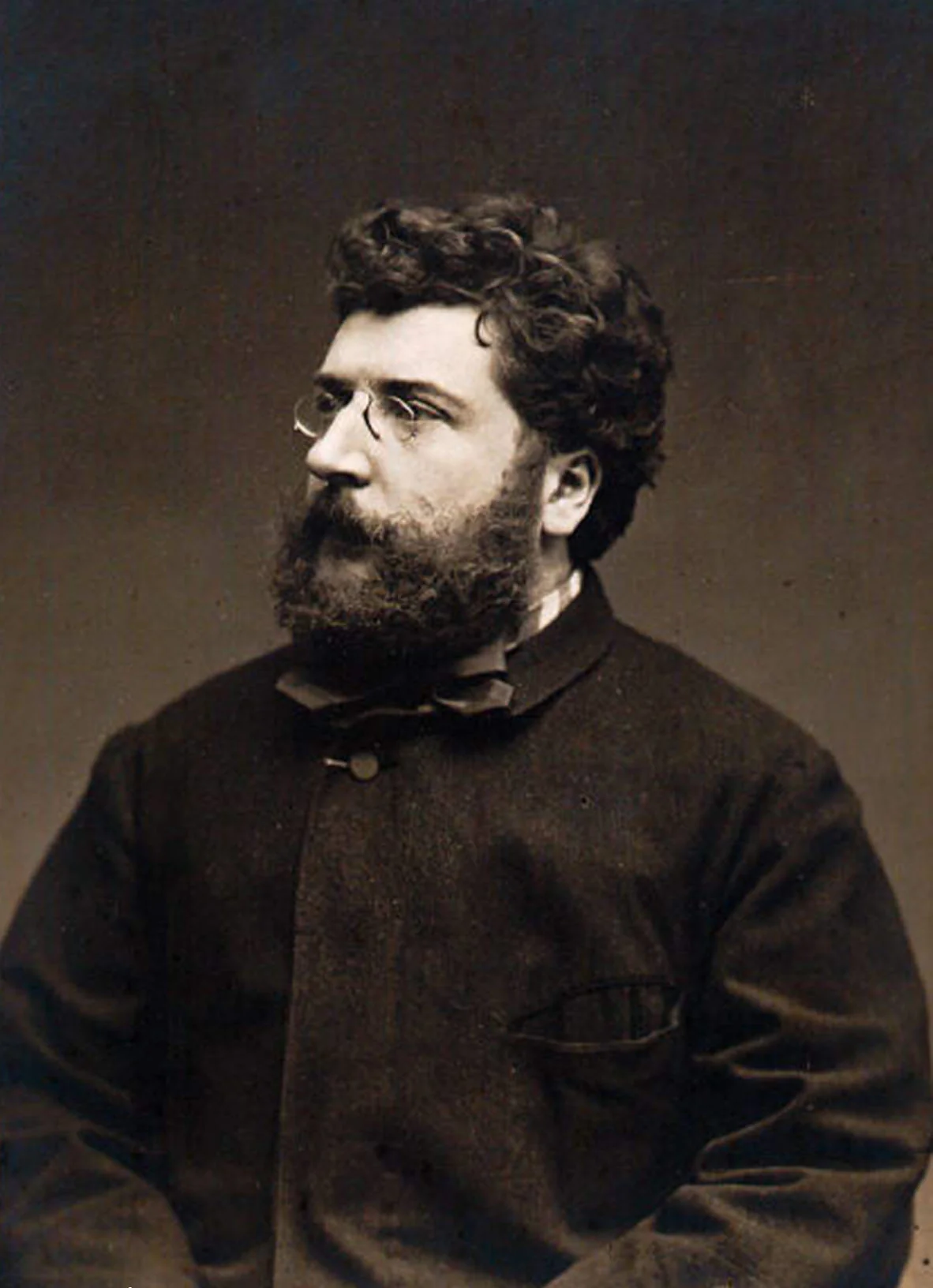
Image from Wikipedia
Image from Wikipedia
Georges Bizet: The Composer Who Reignited Opera
A French Romantic Between Glory, Failure, and Immortal Fame
Georges Bizet is one of the most fascinating figures in music history: a composer of the Romantic era, whose name is now inextricably linked with Carmen, the work that profoundly changed the operatic literature and evolved from a controversial stage event to a global success. Born in 1838 in Paris and shaped early on by exceptional musical talent, Bizet combined precise craftsmanship with dramatic instinct and a subtle, colorful orchestration. However, his life did not unfold like a triumphal procession, but rather like an artistic drama filled with breakthroughs, setbacks, and late recognition. ([britannica.com](https://www.britannica.com/biography/Georges-Bizet?utm_source=openai))
Early Years in Paris: A Talent Takes Shape
Bizet was born as Alexandre-César-Léopold Bizet in Paris and grew up in a musically rich environment. Even as a child, he displayed extraordinary talent and entered the prestigious realm of the Conservatoire de Paris, where he stood out not just as a student, but as a prodigy. His education laid the foundation for a career in which composition, piano playing, and dramatic thinking worked closely together. His early successes at the conservatory culminated in 1857 with the Prix de Rome, one of the most important awards in French music life. ([britannica.com](https://www.britannica.com/biography/Georges-Bizet?utm_source=openai))
His time in Rome shaped Bizet's perspective on style and expression. There, he studied the music of German masters like Schumann, Weber, and Mendelssohn, expanding his horizons beyond the French tradition. This openness remained key to his artistic development: Bizet never merely thought in conventional operatic formulas but sought a distinctive dramatic language that fused lyrical elegance with theatrical tension. Even at this stage, a composer unwilling to settle for routine began to emerge. ([britannica.com](https://www.britannica.com/biography/Georges-Bizet?utm_source=openai))
The Path to Becoming a Stage Composer: Ambition, Learning, Refinement
After his return to Paris, Bizet worked in an operatic landscape marked by expectations, competition, and aesthetic debates. The French opera scene demanded originality, yet it was simultaneously shaped by conventions that frequently challenged Bizet. He composed works in various genres and developed a flexible musical handwriting evident in operas, orchestral music, piano pieces, songs, and cantatas. This stylistic breadth documents a musical career that extends far beyond a single successful piece. ([wfmt.com](https://www.wfmt.com/2025/03/25/portrait-georges-bizet/?utm_source=openai))
His early stage works did not always achieve immediate success, but they sharpened Bizet's sense of theatrical effect, melody, and sonic characterization. In works like La jolie fille de Perth, one can recognize the growing maturity of his compositional language: more elegant lines, stronger character development, and a confident handling of scene and atmosphere. Bizet worked with a fine sense for rhythmic vitality and for that musical color that not only accompanies an opera but also psychologically enriches it. ([britannica.com](https://www.britannica.com/biography/Georges-Bizet?utm_source=openai))
Carmen: The Work That Changed Everything
Carmen premiered in 1875 at the Opéra-Comique and marks a decisive turning point in Bizet's career. The piece, based on Prosper Mérimée's novella, surprised audiences with its realism, social directness, and drastic dramatic consequences that provoked in the operatic context of the time. Rather than featuring courtly distance or romantic idealization, Bizet placed characters from the world of workers, smugglers, soldiers, and outsiders at the center. This is precisely where the opera's modernity lies: it transforms the everyday, the dangerous, and the sensual into a stage of great musical art. ([britannica.com](https://www.britannica.com/topic/Carmen-opera-by-Bizet?utm_source=openai))
In terms of music, Carmen encapsulates all of Bizet's mastery. The opera contains some of the most famous numbers in music history, including the Habanera and the Toreador Song, combining catchy melody with precise dramatic function. Bizet employed regionally colored rhythms, sound characterization, and orchestration that is both transparent and passionate. The initial rejection of the work sharply contrasts with its later status as one of the most performed works in the repertoire. ([britannica.com](https://www.britannica.com/topic/Carmen-opera-by-Bizet?utm_source=openai))
Late Recognition and Tragic Intensification
Bizet's early death just three months after the premiere of Carmen adds painful irony to his biography. Contemporary reactions to the opera were cool to dismissive; Bizet initially perceived the work as a failure. It was only after his death that the realization emerged that a significant step had been taken in the history of opera. The combination of realism, dramatic boldness, and melodic precision made Carmen a landmark for later generations. ([britannica.com](https://www.britannica.com/topic/Carmen-opera-by-Bizet?utm_source=openai))
This stark contrast between his lifetime and posthumous fame continues to shape the perception of Bizet to this day. He exemplifies an artist whose greatest cultural impact did not lie in the applause of the moment, but in the enduring establishment of his musical vision. Bizet's career is therefore often described as short yet extremely concentrated: fewer than two decades in which he wrote works across almost all genres and crafted an unmistakable musical language. ([wfmt.com](https://www.wfmt.com/2025/03/25/portrait-georges-bizet/?utm_source=openai))
Discography, Repertoire, and Lasting Presence
Although Bizet himself did not leave a "discography" in the modern sense, today's releases document the enduring relevance of his works. Deutsche Grammophon maintains its own overviews of Bizet's biography and recording history, including central interpretations of Carmen. These recordings show how lively Bizet's music has remained in the concert and opera world: a reference work for conductors, singers, and orchestras exploring the relationship between French stylistics, dramatic intensity, and rhythmic precision. ([deutschegrammophon.com](https://www.deutschegrammophon.com/en/composers/georges-bizet/discography?utm_source=openai))
Among his most important compositions, besides Carmen, are Les pêcheurs de perles (The Pearl Fishers), L’Arlésienne, and La jolie fille de Perth. These works demonstrate the breadth of his output: lyrical opera, orchestral suite, scenic color art, and a talent for catchy yet non-banal themes. In reception, Bizet is often described as a composer who renewed French opera while simultaneously bridging classical formality and emotional realism. ([encyclopedia.com](https://www.encyclopedia.com/environment/encyclopedias-almanacs-transcripts-and-maps/bizet-georges?utm_source=openai))
Musical Language: Melody, Color, and Dramatic Intelligence
Bizet's style unites singable melody with highly precise orchestration. His music never feels overstuffed but rather clearly shaped, often with a sense of scenic economy that enriches each number dramaturgically. Especially in Carmen, it becomes apparent how Bizet contours characters not only through text and action but also through harmonic coloring, rhythmic intensity, and instrumental details. This artistic development makes him one of the most modern opera composers of the 19th century. ([britannica.com](https://www.britannica.com/topic/Carmen-opera-by-Bizet?utm_source=openai))
The often-cited "exoticism" of his music is more than mere coloristic enhancement. Bizet sought sound worlds that evoke the location of the action on one hand while lending the opera a higher degree of immediacy on the other. In doing so, he anticipated a development that would later play an important role in the operatic art of Verismo. His influence therefore extends far beyond France and touches the entirety of European music history. ([britannica.com](https://www.britannica.com/topic/Carmen-opera-by-Bizet?utm_source=openai))
Cultural Influence: From the Paris Stage to the World
Bizet's greatest cultural influence lies in the status of Carmen as a worldwide repertoire piece. The opera became a blueprint for dramatic intensity, strong female lead characters, and an operatic language that does not shy away from social reality. At the same time, Bizet also remains an interesting symbol of the artist who was underestimated in his lifetime and only posthumously could unfold the full dimension of his achievements. This narrative has deeply embedded his name in the cultural memory. ([britannica.com](https://www.britannica.com/topic/Carmen-opera-by-Bizet?utm_source=openai))
To this day, Bizet's works shape concert programs, opera schedules, academic debates, and popular adaptations. His music lives on in countless recordings, stage productions, and cultural-historical commentaries. This enduring presence makes him a key figure of the Romantic era: a composer whose work appears both classical, theatrical, melodic, and highly modern. Those who listen to Bizet encounter not just a great opera composer but an architect of musical tension. ([deutschegrammophon.com](https://www.deutschegrammophon.com/en/composers/georges-bizet/discography?utm_source=openai))
Conclusion: Why Georges Bizet Continues to Captivate Today
Georges Bizet fascinates because his life's work has infused opera with new authenticity, melodic brilliance, and dramatic sharpness. He embodies the rare combination of formal mastery and immediate stage impact, of French elegance and international effectiveness. Those who discover his music quickly understand why a initially controversial work transformed into one of the greatest legends in operatic history. Bizet remains a composer who is not only studied but experienced. ([britannica.com](https://www.britannica.com/topic/Carmen-opera-by-Bizet?utm_source=openai))
For this reason, it is worthwhile to experience Bizet live, in the opera house or concert hall: his music reveals that tension that remains only hinted at on paper. Between dramatic directness, exquisite orchestration, and timeless melodies, an artist of exceptional power emerges. Bizet is not a name of the past but a lasting invitation to hear opera as a living, burning art form. ([britannica.com](https://www.britannica.com/topic/Carmen-opera-by-Bizet?utm_source=openai))
Official Channels of Georges Bizet:
- Instagram: No official profile found
- Facebook: No official profile found
- YouTube: No official profile found
- Spotify: No official profile found
- TikTok: No official profile found
Sources:
- Britannica – Georges Bizet
- Britannica – Carmen, opera by Bizet
- Britannica – Georges Bizet summary
- Metropolitan Opera – The Opera's Plot and Creation
- Metropolitan Opera – Georges Bizet Program Note (PDF)
- Deutsche Grammophon – Georges Bizet Biography
- Deutsche Grammophon – Georges Bizet Discography
- WFMT – Portrait Georges Bizet
- Wikipedia – Georges Bizet
Upcoming Events
In French - Symphonic
Carmen
CARMEN (Premiere)
Carmen
CARMEN
Carmen at the German Theatre Munich
Carmen - City Theatre Fürth