
Georg Friedrich Händel
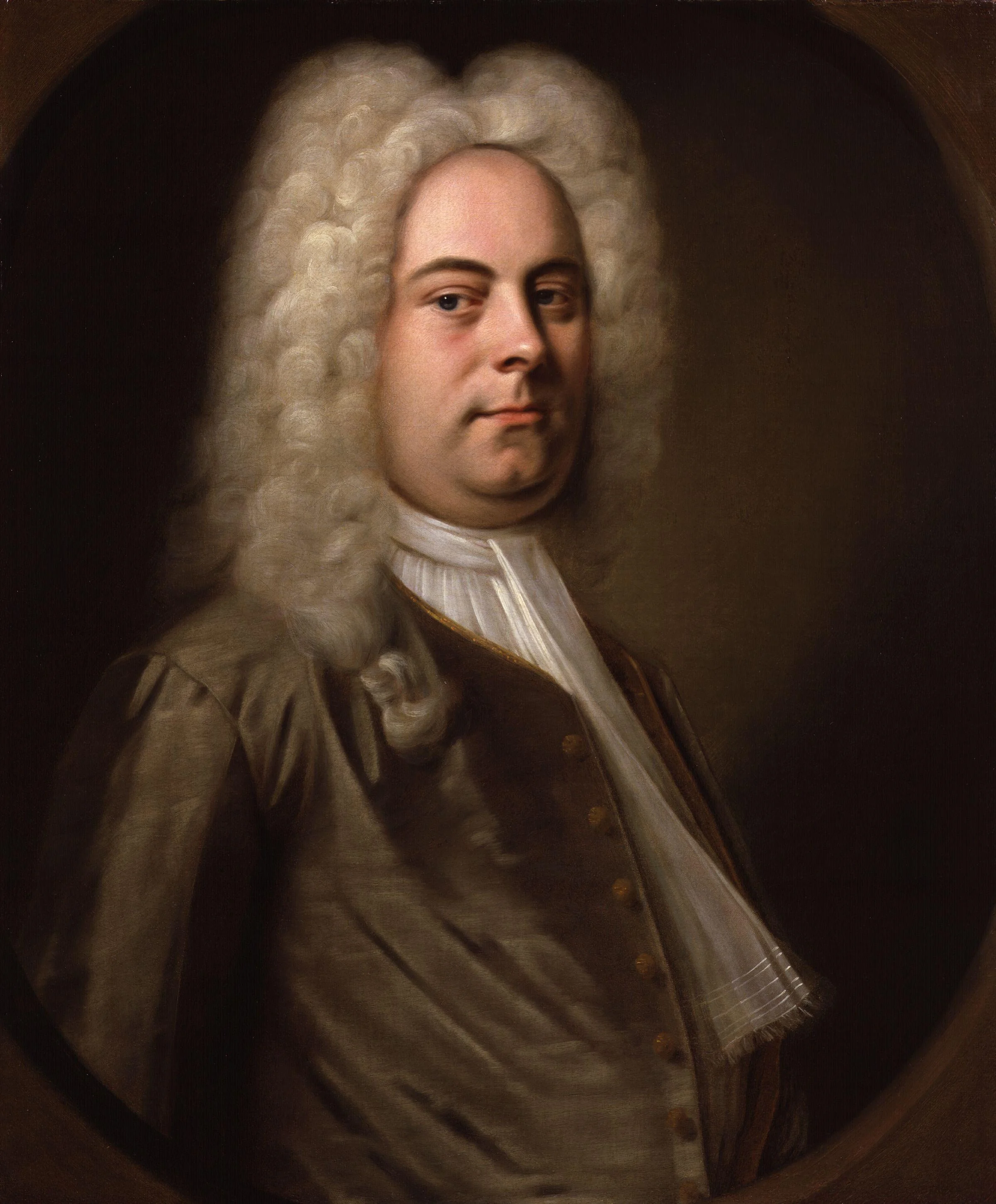
Image from Wikipedia
Image from Wikipedia
George Frideric Handel – Baroque, Brilliance, and Stage Magic between Halle, Italy, and London
The world composer who redefined opera, oratorio, and orchestral music – an inspiring journey through Handel's life, musical career, and artistic development
George Frideric Handel (1685–1759) shaped music history like few others: a German composer who matured in Italy, became a cultural institution in England, and, with unprecedented stage presence as an opera entrepreneur, helped shape London's musical life. His discography, in the sense of a catalog of works, includes 42 operas, 25 oratorios, significant orchestral works such as the Water Music and the Music for the Royal Fireworks, chamber music, cantatas, and keyboard music. With the oratorio "Messiah," he achieved a breakthrough that still resonates in concert halls worldwide today. Handel is regarded as an exceptional artist of Baroque music – his oeuvre combines compositional expertise, dramatic intuition, and an outstanding ability to encapsulate vocal affects in clear musical architecture.
Background and Early Years: Halle as the Foundation of His Musical Career
Handel was born in Halle (Saale) and received foundational instruction from the organist Friedrich Wilhelm Zachow. His artistic development became apparent early on: he mastered the organ, harpsichord, and composition, learning contrapuntal techniques as well as the stylistic diversity of contemporary vocal music. After brief stints as an organist and a short-lived law study, he devoted himself entirely to musical practice – first in Hamburg, where he gained initial stage experience at the opera on Gänsemarkt. The years in Hamburg sharpened his sensitivity to dramatic themes, vocal virtuosity, and effective scene changes that later characterized his operas and oratorios.
Apprenticeship in Italy: Style Exercises between Cantata, Oratorio, and Opera
Between 1706 and 1710, Handel traveled through Italy – to Florence, Rome, Naples, and Venice. Here, he deepened his understanding of Italian melody, coloratura art, and the relationship between recitative and aria. He met Arcangelo Corelli and the Scarlatti family, composing Italian cantatas and oratorios that refined his compositional signature. The Italian phase led to an aesthetic vocabulary that later delighted the London audience: the elegant arcs of the arias, the nuanced affects, and the exquisite balance of voice and continuo became trademarks of his stage works.
Years in London: Opera Entrepreneur, Composer, and Sound Architect of a Musical Metropolis
After initial successes in England – "Rinaldo" (1711) became a box office hit – Handel established himself in London as a central figure in opera production. He collaborated with famous castrati and prima donnas, founded and led opera companies, and simultaneously defined himself as a provider of representative court music. As a British citizen from 1727, he became the composer of the Chapel Royal and created the "Coronation Anthems" as well as music of national significance. Handel's career was that of a creative manager: he sought singers, conducted, arranged rehearsals, negotiated finances – a rare combination of artistic excellence and entrepreneurial energy that defined his stage presence well beyond conducting.
From Opera Reformer to Oratorio Inventor in English Garb
As Italian opera lost its luster in London, Handel found a new form: the English-language oratorio. Works such as "Saul," "Israel in Egypt," "Samson," or "Messiah" combined dramatic narrative power, large-scale choral sections, and striking arias. Unlike in opera, the choir took center stage – as a bearer of collective emotion and moral reflection. In performance practice, Handel utilized flexible arrangements, transposed arias, adapted casts, and demonstrated a modern production aesthetic: music as a living organism that fits the space, singers, and audience without losing coherence.
Masterpieces of Iconic Brilliance: Water Music, Music for the Royal Fireworks, and "Messiah"
Handel's orchestral works testify to his dramatic imagination in public spaces. The "Water Music" (1717), conceived for a performance on the Thames, combines representative fanfares with dance movements whose rhythmic clarity still resonates today. The "Music for the Royal Fireworks" (1749) celebrates peace agreements and state occasions with powerful brass and tympani: an impressive sound architecture between French overture and festive movements. With "Messiah" (1741/42), Handel achieved an oratorio of universal resonance: the biblical texts, compiled by Charles Jennens, unfold in a dramaturgically coherent tripartite structure – Prophecy and Birth, Passion and Resurrection, final triumph of divine order. The "Hallelujah" chorus became a symbol of Baroque choral art. Handel's performances for the Foundling Hospital simultaneously created an early model of culture-driven philanthropy, merging social impact with artistic quality.
Operas and Oratorios: Discography of a Stage Visionary
Handel's operas – from "Almira" through "Agrippina," "Giulio Cesare," "Rodelinda," "Ariodante," and "Alcina" to "Serse" – showcase the full range of Baroque stage rhetoric: da capo arias with rich ornamentation, secco and accompagnato recitatives serving as dramatic hinges, and instrumental ritornellos that consolidate and contrast motifs. His oratorios range from historical subjects ("Saul," "Samson," "Jephtha") through allegorical themes ("The Triumph of Time and Truth") to biblical narratives ("Messiah"). These works today form the foundation of the international performance practice of Baroque vocal music.
Composition, Arrangement, Production: Expertise of a Baroque Master
From a music theoretical perspective, Handel impresses with contrapuntal mastery, harmonic clarity, and a pragmatic, audience-oriented dramaturgy. His choral fugues – often with distinctive themes, clear voice leading, and energetic sequencing – never come across as academic, but rather theatrical. In orchestration, he employs the colors of the oboe, natural trumpet, horns, and tympani, complemented by strings to create affective spaces. His ability to arrange existing material, recontextualize, and adapt for specific ensembles demonstrates professional production competence in the sense of Baroque practice: music as a craft of excellent art that achieves its final brilliance at the moment of performance.
Cultural Influence: From Mozart to Beethoven – Handel as Reference and Authority
Contemporaries recognized Handel's greatness; after his death, his authority continued to grow. Mozart adapted choral and orchestral parts of "Messiah" for the performance needs of his time, and Beethoven openly acknowledged Handel's stature. The appreciation transcended confessional and national boundaries, making Handel an institution in England and a classic in Germany. His music democratized the concert hall: the strong choir, the comprehensible language of forms, and the emotionally direct arias opened Baroque art to a wide audience – a model that continues to resonate to this day.
Performance Practice and Editions: Halle Handel Edition and Museums
The Halle Handel Edition today provides benchmark urtext editions and serves as a central foundation for conductors, singers, and ensembles for historically informed performances. Handel's houses as living memories – his birthplace in Halle (Handel-Haus) and the London Brook Street (Handel Hendrix House) – make music culture an experience for the senses. Here, research, archives, museum education, and concerts converge to convey how the compositions were created, rehearsed, orchestrated, and worked on with singers.
Style, Genre, and Sound Aesthetics: Why Handel Sounds Modern Today
Handel's music impresses with clear form, striking themes, and immediate affect communication. In opera, he employs psychological finesse: aria structures and tempo contrasts delineate character profiles. In oratorio, the focus shifts to choral architecture and biblical interpretive levels without losing scenic energy. Orchestral works blend representation and dance – sensuous-sounding suites that inspired into modernity. The fact that his music resonates in concerts, films, and pop culture attests to its timeless, adaptable dramaturgy.
Current Projects, Festivals, and Research: Handel in the 21st Century
Handel's work remains dynamic: the Handel Festival in Halle anchors new staged interpretations, scientific conferences, and thematic focuses each year, focusing, for example, on Handel's years in Italy. Following a compact festival year in 2025 with over 60 events, a programmatic reorientation has been announced for 2026 – with a stronger opening to the community, new formats, and a curatorial perspective that rediscovers rarely performed operas. Simultaneously, museums and societies promote research – from source criticism to digitization to historical instrument performance practice. This vibrant cultivation – edition, interpretation, education – demonstrates how a Baroque oeuvre can stimulate current debates about repertoire, diversity, and communication.
Legacy and Credibility: Art, Society, and Philanthropy
Handel's philanthropic engagement – particularly in favor of the Foundling Hospital – connects musical events with social responsibility. His benefit performances made "Messiah" a cultural focal point and shaped the understanding of music as a social resource. This tradition continues to strengthen the credibility of his name: an art that does not arise in an ivory tower but resonates with the public, institutions, and future generations.
Conclusion: Why Handel Wants to Be Heard, Seen, and Experienced Today
George Frideric Handel unites compositional mastery, dramatic intelligence, and production-aesthetic foresight. His work is sound theater and reflection on faith, salon music and state action, intimate cantata and monumental choral event. Those who experience his operas in historically informed performances feel the psychology of the characters; those who hear his oratorios experience collective emotion in dialogue with text and theology; those who enjoy his orchestral works encounter representation as joy of life. Handel remains exciting because his music brings people together – in the concert hall, in the museum, at the festival. Call to action: Experience Handel live – the energy of his choruses, the elegance of his arias, and the vibrant colors of his orchestral works unfold strongest in the shared breath of stage and audience.
Official Channels of George Frideric Handel:
- Instagram: No official profile found
- Facebook: No official profile found
- YouTube: No official profile found
- Spotify: No official profile found
- TikTok: No official profile found
Sources:
- Encyclopaedia Britannica – George Frideric Handel (Biography)
- Encyclopaedia Britannica – Messiah (Work Description)
- Wikipedia – George Frideric Handel
- Wikipedia – Water Music
- Wikipedia – Music for the Royal Fireworks
- Handel Hendrix House – About
- Foundation Handel House – Biography of G. F. Handel
- International Handel Society – Scientific Conference 2025
- City of Halle – Handel Festival 2025 (Opening)
- City of Halle – Handel Festival 2025 (Closing)
- The Guardian – How Handel’s Messiah helped London’s orphans
- Foundling Museum – Handel the Philanthropist
- Wikipedia – Samson (Oratorio)
- Wikipedia – List of Operas by George Frideric Handel
- Wikipedia: Image and Text Source
Upcoming Events
Julius Caesar in Egypt
Alcina – Handel's Opera at the Regensburg Theatre
Good Friday Concert: Handel Solomon – Luther Church Cottbus
Alcina
MESSIAH - Georg Friedrich Händel
Family Concert MESSIAH by Georg Friedrich Handel
Handel's Messiah in the Stephanuskirche Munich
MESSIAH by Georg Friedrich Händel
Alcina